This site is supported by our readers. We may earn a commission, at no cost to you, if you purchase through links.

Your first grape harvest can arrive faster than you think—most vines produce fruit within two to three years when you plant them correctly. The difference between a struggling vine and a thriving one often comes down to decisions you make before the roots ever touch soil.
Choosing the right variety for your climate, preparing your site properly, and understanding what young vines need sets you up for decades of reliable harvests. Getting these grape vine planting tips right from the start saves you from years of disappointment and replanting.
Master the fundamentals now, and you’ll be tasting your own grapes while others are still troubleshooting why their vines won’t produce.
Table Of Contents
Key Takeaways
- You’ll harvest your first grapes within two to three years if you match varieties to your USDA zone and soil conditions—European grapes suit zones 6-7, American hybrids push into zone 5, and muscadines thrive in warm zone 7A and higher.
- Your planting site needs six to eight hours of direct sunlight and well-drained soil with pH between 6.0-7.0—south-facing slopes capture 30-40% more solar radiation while mid-slope locations dodge frost pockets where cold air settles.
- Plant bare-root vines in early spring when soil hits mid-40s °F, keeping graft unions 4-6 inches above ground and spacing vines 6-8 feet apart with rows 8-13 feet wide for proper air circulation and equipment access.
- Prune away 85-90% of last year’s wood during late winter dormancy and use training systems like divided canopies to boost yields by 40-80%—grapes won’t ripen after picking, so taste-test for sweetness before harvest.
Choosing The Best Grape Variety
Your first decision sets the stage for everything that follows—skip this step, and you’re building on shaky ground. Not all grapes grow equally well in every climate, and choosing the wrong variety can cost you years of wasted effort.
Let’s break down the three main grape categories and how to match them to your growing conditions.
American, European, and Muscadine Grapes
The foundation of successful grape cultivation starts with understanding the three main grape species—each brings unique strengths to your vineyard. Your choice shapes everything from pest management to fruit quality, so let’s break down what sets American, European, and Muscadine grapes apart:
- American grapes resist phylloxera better than their European cousins, reducing vine mortality on their own roots in infested soils
- European varieties demand grafted rootstocks due to extreme phylloxera susceptibility, but they’re the backbone of premium wine production
- Muscadine grapes excel in humid southeastern climates, offering built-in resistance to Pierce’s disease, phylloxera, and multiple nematode species
- Cold-hardy hybrids blend American toughness with European refinement, tolerating temperatures below -20°F while cutting fungicide needs
- Climate adaptation varies dramatically—muscadines thrive in warm, acidic southern soils, while European types now ripen successfully farther north as temperatures rise
Your grape vine planting success hinges on matching species to your specific conditions—soil type, pest pressure, and winter lows all matter. Understanding grape growing basics is vital for a successful harvest.
Matching Varieties to USDA Zones
Once you’ve picked your grape type, cold hardiness and zone mapping become your best friends—winter lows determine which varieties will thrive, not just survive. European wine grapes handle Zone 6–7 conditions (0 to -10°F), while American and hybrid types push into Zone 5 (-20°F). Super-hardy hybrids now break into Zones 3–4, tolerating brutal -40°F winters. Muscadines? They’re warm-climate specialists, restricted to Zone 7A and warmer since temperatures below 10°F cause serious damage. For growers in colder climates, understanding cold hardy grapes is essential for a successful harvest.
| Grape Type | Zone Range | Cold Tolerance |
|---|---|---|
| European (Vinifera) | 6–7 | 0 to -10°F |
| American/Hybrid | 5 | -10 to -20°F |
| Super-Hardy Hybrid | 3–4 | Down to -40°F |
Regional suitability isn’t just about surviving winter—it’s about ripening fruit. Your local climate considerations must account for growing degree days and spring frost risk, not just USDA minimums. Microclimate matters too: mid-slope sites stay warmer than frost pockets in valleys, even within the same zone. When planting grapes, remember that extreme winters can drop 10°F below your zone’s average, so build in a safety margin when matching grape varieties to your vineyard establishment plan.
Consulting Local Nurseries for Selection
Zone maps narrow your choices, but local nurseries seal the deal—they stock cultivars proven in your exact climate, not generic national bestsellers.
Staff translate Extension trials into plain advice: which varieties dodge Pierce’s disease, which need 160 frost-free days, whether your site suits bare-root vines or grafted stock.
They’ll match grape variety to your purpose—fresh eating, juice, wine—and steer you toward certified, virus-free nursery stock that actually performs on your soil.
Selecting The Ideal Planting Site

Once you’ve picked your grape variety, it’s time to scout out the perfect spot for planting. Your vines won’t forgive a poorly chosen location—they need the right combination of sun, soil, and terrain to thrive.
Let’s walk through the three essential factors that’ll set your vineyard up for success.
Sunlight Requirements for Grape Vines
Your grape vines need at least six to eight hours of direct sunlight each day to fuel photosynthesis rates and produce sweet, flavorful fruit. Full sun exposure maximizes solar radiation capture, which drives sugar accumulation in developing berries. South-facing slopes deliver the most consistent daily sun hours in northern climates.
Without adequate sunlight intensity, you’ll see smaller yields and delayed ripening, no matter how perfect your soil preparation or grapevine care.
Importance of Soil Drainage and Type
Well-drained, loose soil lets oxygen reach your vine roots and prevents waterlogging that kills them within days. Sandy loam or gravelly textures encourage root depth up to six meters, while compacted or clay-heavy ground restricts growth and invites disease.
Well-drained soil prevents deadly waterlogging and encourages roots to plunge six meters deep, while compacted ground invites disease and stunted growth
Test your soil pH—aim for slightly above seven—and consider installing drainage systems if water pools after rain. Proper soil preparation now saves you replanting costs later.
Site Orientation and Slope Considerations
Beyond flat ground, slope aspect and row orientation dramatically shape your vineyard’s success. South-facing slopes in northern climates capture 30–40% more solar radiation, accelerating ripening and sugar accumulation. Mid-slope planting locations offer natural frost protection as cold air drains downhill, while east-facing aspects reduce afternoon heat stress on clusters.
Smart terrain management strategies include:
- Choose convex landforms to avoid frost pockets
- Align rows along contours to prevent soil erosion
- Orient rows to balance sunlight with wind exposure
- Install irrigation on moderate slopes for stability
- Test soil depth before committing to steep sites
Your gardening instincts apply here—work with the land’s natural advantages.
Preparing Soil for Grape Vines
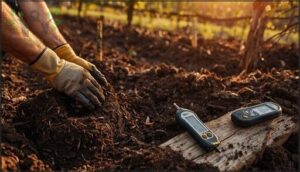
Your site’s set, and now it’s time to get your hands dirty—literally. The dirt your vines will call home needs some attention before you plant, and getting it right now saves you headaches later.
Here’s what you need to tackle to give your grapes the foundation they deserve.
Conducting Soil Tests and Adjusting PH
Think of soil pH testing as your vineyard’s foundation blueprint—getting it wrong means constant uphill battles. Test your soil at least several months before planting, collecting samples from 15 to 20 spots across your site.
Target pH between 6.0 and 7.0 for most grapes. Low pH? Apply lime for acidic correction. Too alkaline? Sulfur treatment gradually lowers it, though you’ll need patience and follow-up nutrient analysis.
Improving Soil Drainage and Texture
Your grapevines won’t tolerate standing water, so drainage improvements aren’t optional. Mounding soil creates deeper root zones while boosting moisture management and yield potential. Consider these proven soil preparation tactics:
- Apply gypsum at 12 tons per hectare to soften surface layers and push water penetration to 250 mm depth
- Build raised mounds to increase root volume and improve drainage from 0-40 cm depth
- Mix compost into sandy soils until organic matter reaches 2-5% for better water retention
- Install drainage tiles in clay-heavy sites to prevent rootzone stagnation
- Plant cover crops like ryegrass to maintain soil structure and infiltration rates
Removing Weeds and Grass Before Planting
Perennial weeds will steal water and nutrients from young vines before they establish deep roots. You need to eliminate all vegetation at least one growing season before planting—start with systemic herbicide applications or repeated tillage to kill established weeds and grass.
For organic weed removal, hand weeding combined with mulching provides effective soil preparation, though it demands more labor than pre-emergence herbicide strategies.
Planting Grapevines Step by Step
You’ve picked your variety and prepped your soil—now it’s time to get those vines in the ground. Timing matters more than you’d think, and how you handle your young plants can make or break their first season.
Let’s walk through the essentials so your grapevines get the strong start they need.
When to Plant Grape Vines
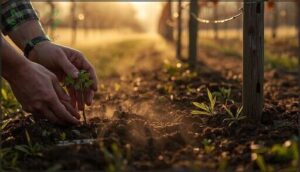
Timing your planting site preparation around frost dates and soil temperature makes all the difference. In most climate zones, you’ll want to plant grapes in early spring—about two to four weeks before the last expected frost—when the dormancy period ends and the ground reaches the mid-40s °F.
This planting window lets roots establish before shoot growth begins, giving your grapevine planting techniques the best shot at success.
Handling Bare-Root Vs. Potted Vines
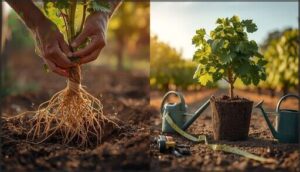
Once you’ve nailed the planting window, choosing between bareroot vines and container-grown nursery stock shapes your whole approach. Dormant rooted cuttings demand immediate planting to prevent root dehydration, while potted grafted vines need plant hardening before you transplant. Your planting method affects survival—here’s what matters:
- Soak bareroot roots 24 hours on dry sites to dodge establishment headaches
- Keep graft unions 4–6 inches above soil to sidestep graft failure
- Acclimate container vines outdoors first so vine acclimation prevents shock and avoids soil saturation issues
Proper Planting Depth and Spacing
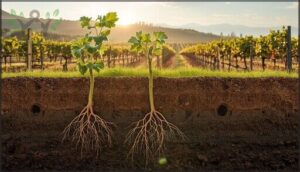
Your planting method works only when holes reach at least twelve inches deep and are wide enough for full root spread. Proper planting depth means keeping two to three buds above ground—about six to twelve inches of cane—while root tips sit flat at the bottom, never curling upward. Spacing matters just as much:
| Spacing Type | Recommended Distance | Purpose |
|---|---|---|
| Row Management | 8–13 feet | Equipment access, light penetration |
| Vine Spacing | 6–8 feet typical | Balances canopy density, trellis fill |
| Planting Holes | 18–20 inches deep | Ensures root depth, soil loosening |
| Root Depth Zone | 24–36 inches minimum | Prevents hardpan restriction, fosters growth |
Nursery stock from a reputable grapevine nursery performs best when soil preparation loosens compacted layers twelve inches below your planting holes, giving roots room to explore and thrive.
Caring for Young Grape Vines
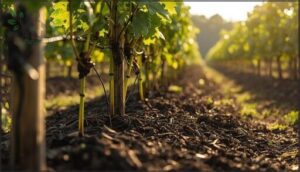
Once your vines are in the ground, the real work begins. The first two years are all about building a strong foundation—roots that dig deep and stems that can handle whatever your climate throws at them.
Let’s walk through the essentials: water, mulch, and the support structures that’ll turn those fragile plants into productive powerhouses.
Watering Needs in The First Years
Young grape vines need consistent moisture to establish strong roots. During the first two years, your vines require about 5 to 10 gallons per week—roughly an inch of water. Here’s how to get watering right:
- Check soil moisture weekly by feeling the top few inches of soil
- Use drip systems to deliver steady, small amounts directly to roots
- Adjust irrigation scheduling when temperatures climb above 90°F
- Water deeply but infrequently to encourage downward root growth
Monitoring evapotranspiration rates helps prevent water stress while avoiding overwatering that keeps roots shallow.
Mulching and Weed Management
Once your vines get consistent water, protect that moisture with a 4-6 inch layer of organic mulching—straw, wood chips, or dry leaves work beautifully. This gardening technique cuts weed suppression work dramatically, keeping soil moisture levels stable while regulating temperature.
Different mulch types perform uniquely: pine bark lasts three seasons, while straw breaks down faster but feeds the soil. Hand-pull any stubborn weeds that push through.
Supporting Vines With Trellises or Wires
Trellis design isn’t optional—your grape vines need strong support to thrive. Install treated wood posts 20-25 feet apart, setting end posts 2 feet deep with proper bracing. String heavy galvanized wire (No. 9 or 10 gauge) at designated heights, maintaining firm wire tension for vine training.
This gardening framework guides cordon management and simplifies future pruning while your developing vines climb skyward.
Pruning, Training, and Harvesting Tips
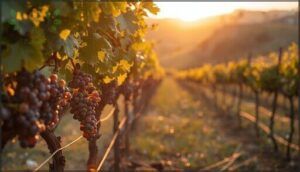
You’ve planted your vines and kept them alive—now it’s time to turn them into productive fruit machines. The secret to a heavy harvest lies in how you prune, train, and pick your grapes.
Here’s what you need to know to boost your yield and bring home the sweetest fruit.
Timing and Methods for Pruning
Pruning grapes transforms your vines from tangled chaos into productive powerhouses. You’ll tackle dormant pruning between late winter and early spring—usually February through March—when vines are leafless and before budbreak.
During this window, remove 85–90% of last year’s wood to control your crop load. You can choose between cane pruning and spur pruning methods, or try double pruning techniques to delay budbreak and dodge late frosts in challenging climates.
Training Vines for Maximum Yield
Your training strategy shapes how much fruit you’ll harvest each season. Divided canopy systems like Scott Henry or Geneva Double Curtain can boost yields by 40–80% compared to vertical shoot positioning—you’re spreading growth across more space and capturing better light.
Quadrilateral cordons add roughly 75% more spur locations than bilateral setups, translating directly into heavier crops without sacrificing grape quality.
Identifying and Harvesting Ripe Grapes
Taste-testing remains your most reliable ripeness indicator—grapes won’t sweeten after you pick them. Commercial table grape varieties usually hit 14–17.5 °Brix at harvest, but sugar levels alone don’t tell the whole story.
Check titratable acidity (around 0.6–0.8 g/100 mL at maturity) and watch for darkened, easily chewed seeds.
Most grape varieties reach peak fruit quality in September or October when color, juice, and flavor align.
Frequently Asked Questions (FAQs)
How do I protect grapes from birds?
Your vineyard isn’t a free buffet. Install bird netting to block access, deploy laser deterrents or UAV protection to spook flocks, and combine visual scare devices with acoustic systems for layered defense during ripening.
What fertilizer works best for grapevines?
For young vines, use balanced NPK fertilizers like 10-10-10, applying about 4 ounces per plant when soil testing indicates moderate fertility.
Mature vineyards require approximately 100–150 kilograms of nitrogen per hectare, delivered through fertigation systems. Split applications ensure ideal grapevine nutrition and growth.
Can grapevines grow in containers or pots?
Yes, grapevines thrive in containers with proper care. Choose pots at least 15–20 gallons with drainage holes, select compact varieties like ‘Pixie’, and water deeply every few days during active growth for healthy root development.
How long until new vines produce fruit?
Your newly planted grape vines usually need two to four years before producing a harvestable crop. Proper pruning and training during establishment accelerates fruit yield, with full production potential reached around five to seven years after planting.
Do grapevines need cross-pollination for fruiting?
Most grape vines are self-fertile and don’t require cross-pollination for fruiting.
However, muscadine varieties with female flowers need a self-fertile pollenizer nearby, and planting multiple vines generally improves fruit set across all types.
Conclusion
Most vineyards fail before they even begin—wrong varieties, poor drainage, forgotten pruning schedules. Yours won’t. You now have the grape vine planting tips that separate thriving harvests from years of frustration.
You’ve chosen varieties that match your zone, prepared soil that drains properly, and learned to train vines that actually produce.
While others replant for the third time, you’ll be filling baskets with fruit you grew from bare roots. That first harvest makes every decision worth it.
- http://www.wine-grape-growing.com/wine_grape_growing/vineyard_site_selection/vineyard_site_selection_climatic_components.htm
- https://aggie-horticulture.tamu.edu/vitwine/2018/05/10/cold-hardiness/
- https://www.groworganic.com/blogs/articles/comprehensive-beginners-guide-to-growing-grapes-at-home
- https://growingfruit.org/t/4x4-ft-growing-height-distance-for-vineyard-design-and-layout/38890
- https://soiltesting.cahnr.uconn.edu/suggested-fertilizer-practices-for-grapes/