
This site is supported by our readers. We may earn a commission, at no cost to you, if you purchase through links.

Most gardeners discover raspberry canes by accident—a neighbor’s plant sprawling over the fence, or a handful of berries at a farmer’s market that taste nothing like the pale, watery ones from the grocery store. Gap in flavor is no accident.
Raspberries decline fast after picking, which means the best ones are always grown close to home. The good news: they’re less demanding than most fruit crops, and a single well‑placed row can produce pounds of berries season after season.
Growing raspberries in your home garden starts with understanding a few key decisions—variety, soil, spacing—that set everything else up for success.
Table Of Contents
- Key Takeaways
- Choose Raspberry Varieties
- Prepare The Planting Site
- Plant Raspberries Correctly
- Care for Raspberry Canes
- Prune, Harvest, and Store
- Frequently Asked Questions (FAQs)
- Can you grow raspberries from your own plants?
- How do you grow raspberries in a garden?
- How far should you space raspberry plants?
- How do raspberries grow?
- Can you grow black raspberries in a home garden?
- How do you grow a red raspberry plant?
- Can raspberries grow in containers successfully?
- How long do raspberry plants typically live?
- When will new plants produce first harvest?
- Can different raspberry varieties cross-pollinate?
- Conclusion
Key Takeaways
- Raspberries follow a two-year cane cycle — first-year primocanes build roots, second-year floricanes fruit and die — so cutting the wrong cane at the wrong time costs you next season’s harvest.
- Soil pH between 5.5 and 6.5, good drainage, and at least six hours of direct sun are non-negotiable foundations that no amount of fertilizer or care can fix after planting.
- Spacing canes 18 inches apart within rows and 4–6 feet between rows isn’t wasted space — it’s what keeps air moving, disease low, and your patch manageable at harvest.
- A well-tended raspberry patch keeps producing for 10–15 years, so early decisions on variety, site, and support structure pay dividends long after the first berry hits the bowl.
Choose Raspberry Varieties

Before you buy a single cane, picking the right variety makes all the difference. Raspberries aren’t one-size-fits-all — your climate, space, and harvest goals all shape which type will actually thrive in your garden. Here’s what to know before you choose.
Think of it as long-term matchmaking — once you know your conditions, you can narrow things down using raspberry harvesting tips that match your growing goals.
Summer-bearing Versus Ever-bearing
When choosing raspberries, the first decision is really about timing. Summer-bearing raspberries produce one large, concentrated crop — usually in June or July — while everbearing raspberries fruit twice, once in fall on new canes and again the following summer.
Here’s what that means practically:
- Crop timing differs noticeably: summer-bearers give you a two-week abundance; everbearers spread harvest across two seasons
- Summer-bearers tend toward larger berry size per plant
- Everbearers tolerate milder winters and suit longer growing seasons
- Pruning strategies vary — summer-bearers need precise floricane removal; everbearers allow simpler management
- Yield management is easier with everbearers if you prefer steady picking over one big harvest
If your climate has distinct, cold winters, summer-bearing types thrive. For milder regions or smaller gardens, everbearers offer more flexibility and a longer harvest timing window. You can identify them by fruit on previous‑year canes versus current‑year growth.
Primocanes and Floricanes
Once you know whether you want summer-bearing or everbearing raspberries, understanding how the canes themselves grow will make everything else click.
Raspberry canes follow a biennial cycle. Each cane lives exactly two years. In year one, it’s called a primocane — green, flexible, and focused entirely on building roots and foliage. It won’t flower. It won’t fruit. It’s just growing.
In year two, that same cane becomes a floricane. Its bark turns brown and woody, and that’s when it finally produces berries. After harvest, it dies. The cane change from primocane to floricane marks the moment your plant shifts from growing to fruiting.
| Cane Stage | Year | Key Characteristic |
|---|---|---|
| Primocane | Year 1 | Green, leafy, no fruit |
| Floricane | Year 2 | Woody, brown, bears fruit |
| After harvest | Year 2+ | Dies back naturally |
| New primocane | Year 1 | Replaces the old floricane |
| Growth cycle restarts | Ongoing | New canes emerge annually |
Knowing this shapes your pruning timing for canes. Cut the right cane at the wrong time, and you’re removing next season’s fruit. That’s a common beginner mistake — and a painful one in July.
Best Cultivars for Beginners
Now that you understand how canes grow, picking the right cultivar makes that knowledge pay off.
For beginners, ‘Heritage’ is hard to beat. It’s an ever-bearing, high-yield variety with strong disease resistance and reliable harvests from zones 4–8. ‘Joan J’ is a bareroot thornless raspberry option — easier to handle and cold hardy down to zone 3.
Climate and Hardiness Zones
Picking the right cultivar is only half the equation — you also need one that can handle your winters. USDA hardiness zones rank regions by minimum winter temperatures, and most raspberries thrive in zones 3 through 8.
Saxony, including Falkenstein, sits roughly in zone 6, so look for cultivars rated there or colder for reliable survival.
Small-space Raspberry Options
Even a small balcony or raised bed can become a productive raspberry patch with the right plants. Compact Varieties like Raspberry Mini Me top out at 2–3 feet, while Dwarf Growth types such as Dwarf Red reach just 3–4 feet — perfect for Balcony Planters.
For best results in tight spaces, pair these compact varieties with smart soil rotation — tips you’ll find in this guide to extending your summer growing season.
Try these container-friendly picks:
- Heritage — reliable fruiter with 18-inch plant spacing
- Raspberry Mini Me — no staking needed
- Fall Gold — low-growing with peach-gold berries
- Joan J — thornless and compact
- Autumn Bliss — ideal for a Vertical Trellis
For Container Gardening, use 15–20 gallon pots. Add drip irrigation to keep roots evenly moist without soaking foliage.
Prepare The Planting Site
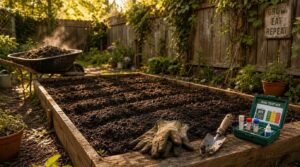
Before your first raspberry cane goes in the ground, the site you choose will do more work than almost anything else you do all season. Get it right, and the plants practically set themselves up for success. Here’s what to look at before you dig.
Full Sun Requirements
Raspberries are sun-hungry plants. They need at least six to eight hours of direct sunlight daily to produce well. Less than that, and you’ll see smaller berries, lighter color, and weaker flavor. For the best results, choose a sunny location with unobstructed southwest exposure, where morning and afternoon sun can reach your canes through most of the day.
| Sun Exposure | Expected Yield | Berry Flavor |
|---|---|---|
| Full sun (8+ hrs) | High | Rich and sweet |
| Partial sun (4–6 hrs) | Moderate | Mild, less intense |
| Shade (under 4 hrs) | Low | Bland, undersized |
Seasonal sunlight needs shift too. Spring sun drives cane growth, while late-summer sun builds sugar concentration in the fruit. That’s why site placement matters so much — avoid spots shaded by fences, trees, or buildings during peak hours.
Soil PH and Drainage
Soil quality can make or break your raspberry patch before you ever plant a cane. Raspberries need a soil pH between 5.5 and 6.5 — slightly acidic — to absorb nutrients properly. Outside that range, iron and phosphorus become locked in the soil, and your plants suffer even in perfect sun.
Soil pH is the silent gatekeeper of your raspberry patch — get it wrong, and perfect sun won’t save you
Here’s why getting this right matters:
- At the wrong pH, your canes stay stunted no matter how much you fertilize.
- Poor drainage drowns shallow roots and invites crown rot almost immediately.
- Correcting both issues before planting saves years of frustration.
Use a simple home test kit or send a sample to your local extension office for soil pH testing. If your reading is too high, sulfur amendments lower it gradually. Too low? Apply lime at rates your test recommends — never guess. For soil drainage, dig a hole about 12 inches deep, fill it with water, and watch. If it hasn’t emptied within an hour, drainage needs work. Break up compacted layers or consider a raised bed. Well-draining soil keeps roots breathing and disease pressure low.
Compost and Organic Matter
Think of compost as a living investment in your soil. Before planting raspberries, work roughly 3.5 cubic feet of compost per 100 square feet into the top 6–8 inches of soil. This improves drainage, feeds beneficial microbes, and delivers a slow, steady nutrient release as organic matter breaks down — far better than a fertilizer spike that fades fast.
| Amendment | Primary Benefit | Application Rate |
|---|---|---|
| Finished compost | Soil structure + nutrients | 3.5 cu ft per 100 sq ft |
| Composted manure | Microbial activity boost | 1–2 inches worked in |
| Leaf mold | Moisture retention | 2-inch top dressing |
Aged manure and microbiallly-rich compost also raise cation exchange capacity — meaning roots absorb nutrients more efficiently. Reapply compost each spring to keep organic matter levels stable.
Avoid Disease-prone Locations
Where you plant raspberries matters almost as much as how you plant them. Avoid any spot where tomatoes, potatoes, peppers, or eggplants grew in the past four years — these crops share soil-borne diseases that linger and quietly devastate new canes.
Choose an elevated, well-draining site with good airflow. Morning sun dries leaves fast, and moving air keeps fungal pressure low.
Raised Beds and Containers
Raised beds give you a head start — you control the soil from day one. Build yours 18 to 24 inches deep for strong root development and drainage. Line the interior with a root barrier to protect the frame.
Use a 2:1 topsoil-to-compost mix, then mulch with wood chips.
Install drip irrigation and space container-grown plants carefully — one plant per large pot, minimum.
Plant Raspberries Correctly
Getting raspberries in the ground the right way makes everything that follows easier. A few key decisions — plant type, timing, and depth — will set your canes up for strong, healthy growth from day one. Here’s what you need to know before you dig that first hole.
Bare-root Versus Container Plants
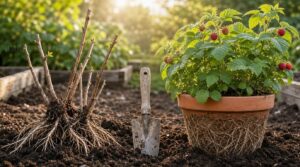
When you’re ready to buy, you’ll face a simple choice: bare-root or container-grown plants.
- Bare-root plants cost less, ship light, and push roots straight into native soil
- Container-grown plants arrive with an established rootball for quicker early canopy
- Bare-root thornless raspberry bushes show lower transplant shock when planted in cool, workable soil
- Potted plants need root-loosening to prevent circling and support healthy seedling establishment
Both deliver strong yield potential with proper care.
Best Planting Times

Once you know your plant type, timing is everything.
Early spring planting is the ideal approach for most home gardeners — aim for April or May, as soon as soil is workable and hits 45–50°F at four inches deep.
In mild climates, fall planting lets roots settle in before winter.
Cold zones should skip fall; stick to spring.
Cane Spacing and Row Spacing

Timing sorted, spacing is next. Set canes 18 inches apart within each row.
Keep rows 4–6 feet apart — enough room for air to move and for you to walk through comfortably at harvest. Tighter rows crowd the canopy and invite disease.
That breathing room isn’t wasted space; it’s how you stay in control of the whole patch.
Crown Planting Depth

Now that your canes have room to breathe, focus on how deep to set them. Crown planting depth makes or breaks early growth.
Place the crown of the plant — the point where roots meet the stem — at or just 1–2 inches above soil level. This keeps moisture away from vulnerable tissue and lets new shoots emerge cleanly.
Watering After Planting
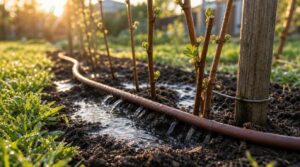
Right after setting your canes, give them a thorough post-planting soak — water slowly at the base for 15–20 minutes until moisture reaches 6–8 inches deep. Use drip irrigation or soaker hoses to keep foliage dry.
Water daily for the first week, then every 2–3 days. If rain delivers an inch or more, skip that day’s watering.
Care for Raspberry Canes
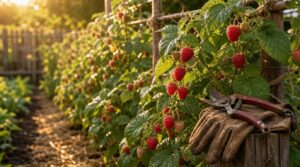
Once your raspberries are in the ground, the real work of keeping them healthy begins. Good cane care comes down to a handful of consistent habits done at the right time. Here’s what your plants need from you throughout the growing season.
Weekly Watering Needs
Raspberries are thirsty plants, but they don’t like wet feet. Aim for one inch of water per week during the growing season, increasing to two or three deep soakings per week in hot, dry weather. Always water in the morning — this aids root uptake before peak heat and lets any splashed foliage dry quickly, which keeps fungal problems at bay.
Drip irrigation or soaker hoses are your best tools here. They deliver water slowly and directly to the root zone, reducing waste and keeping leaves dry. Skip overhead sprinklers when you can. During rainy stretches, skip irrigation altogether to avoid waterlogging. A simple soil moisture check — press a finger two inches deep — tells you more than any schedule.
Mulching for Moisture Control
Think of mulch as a blanket for your raspberry bed. Spread organic mulch — straw, wood chips, or shredded leaves — in a 2–3‑inch layer around your plants.
This cuts evaporation by up to 40%, steadies soil temperature, and blocks weeds that compete for moisture.
Keep mulch a few inches away from the canes to prevent rot.
Trellis and Support Setup
Without support, raspberry canes flop, break, and invite disease. A simple two-wire trellis system fixes that fast.
Sink posts 2–3 feet deep, spaced 6–8 feet apart. Set your main wire at 40–48 inches, then a second wire 12–18 inches above it. Use galvanized wire for longevity, and tension everything with turnbuckles so nothing sags mid-season.
Fertilizing for Healthy Growth
A well-fed plant is a productive plant — and raspberries aren’t shy about what they need.
Start with a soil test before anything else. It tells you exactly where your pH, phosphorus, and potassium levels stand, so you’re not guessing.
- Early spring nitrogen fuels new cane growth
- Post-harvest fertilizing aids root recovery
- Compost as amendment improves nutrient availability naturally
Weed and Sucker Management
Weeds and suckers are quiet thieves — they steal nutrients, light, and space before you notice the damage.
Keep a 2–3 inch mulch layer over your beds to block up to 80% of weed germination.
Hand-weed every 7–14 days, and remove suckers sprouting more than 12 inches from the crown to keep energy focused where it matters.
Prune, Harvest, and Store
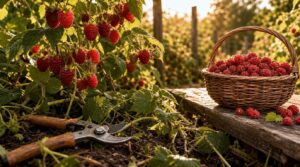
Getting raspberries from cane to kitchen takes a bit of know-how, but it’s easier than you might think. A few key practices — pruning at the right time, recognizing problems early, and picking berries at their peak — make all the difference. Here’s what you need to know to finish the season strong.
Pruning Summer-bearing Raspberries
Once summer-bearing raspberries finish fruiting, remove spent floricanes immediately. These are the brown-barked, second-year canes that just produced your harvest. Cut them to ground level on a dry day using sharp bypass pruners.
- Cut all fruited floricanes to ground level
- Space remaining primocanes 6 inches apart
- Remove weak or crowded canes first
- Disinfect tools if disease is visible
- Mulch lightly after pruning
Pruning Ever-bearing Raspberries
Ever-bearing raspberries give you two chances at a harvest each year — but that flexibility means your pruning schedule needs a little more thought than with summer-bearers.
The simplest approach is the Fall Cane Cut: in late winter, cut every cane to ground level. You’ll lose the early summer crop, but the new primocanes will deliver a strong fall harvest with almost no fuss.
If you want both crops, primocane retention is the move. After the fall harvest, remove only the top portion of canes that fruited. Come late winter, do your winter thinning — keep 6 to 8 strong canes per plant, spaced about 4 inches apart on the wire.
Always practice disease cane removal first: pull any cane that looks weak, spotted, or damaged before deciding what stays. This keeps problems from spreading and improves airflow through the canopy.
Yield balance pruning ties it all together. Too many canes and your berries stay small. Too few and you’re leaving fruit on the table. Keep only your healthiest growth, and your ever-bearing plants will reward you through two full seasons.
Common Pests and Diseases
Once your pruning routine is solid, staying ahead of pests and diseases becomes your next job.
Japanese beetles and spider mites chew foliage fast — hand-pick beetles early and use insecticidal soap for mites. Powdery mildew shows as white patches; improve airflow and spray potassium bicarbonate at first sign. Watch for crown rot, mosaic virus, Botrytis, cane borers, raspberry rust, and leaf spot — all managed best by removing infected canes immediately.
When to Harvest Berries
Once you’ve managed pests, the reward is close. Harvest on dry, sunny mornings — after dew dries but before midday heat — to keep berries firm.
Pick when berries are deep, even red and release with a gentle roll:
- No pale patches
- Slight softness under light pressure
- Sweet fragrance near the cluster
Pick every few days through the two-week ripening window.
Fresh Storage and Freezing
Getting raspberries from garden to freezer quickly is the key to keeping that just-picked flavor. Don’t wash berries until you’re ready to eat them — moisture speeds up spoilage. In the fridge, store unwashed in a breathable container for up to five days.
To freeze, rinse gently, pat completely dry, then flash freeze in a single layer on a tray. Once solid, transfer to airtight freezer bags, remove as much air as possible, and label with the date. Stored at 0°F (−18°C), raspberries hold their best quality for six to twelve months. When you’re ready to use them, thaw slowly in the refrigerator — this protects texture better than quick methods. Never refreeze once thawed.
Frequently Asked Questions (FAQs)
Can you grow raspberries from your own plants?
Yes, you can grow raspberries from your own plants. Use root sucker transplants, cuttings, or layering. Always start with disease-free material and clean tools to avoid spreading problems to new canes.
How do you grow raspberries in a garden?
Growing raspberries takes a bit of planning, but the process is straightforward. Choose your variety, prepare well-draining soil, space canes 18 inches apart, and support them with a trellis from the start.
How far should you space raspberry plants?
Space plants 18 inches apart within rows, with 4–6 feet between rows. Ever-bearing types can go a bit closer; vigorous summer-bearing varieties need the full gap for airflow and healthy fruiting.
How do raspberries grow?
Raspberries grow on biennial canes: first-year primocanes build strength, while second-year floricanes produce fruit, then die. New canes rise from the crown each season, keeping the plant productive year after year.
Can you grow black raspberries in a home garden?
Black raspberries thrive in home gardens, especially in USDA zones 4– They’re compact, productive, and surprisingly manageable once you understand their two-year cane cycle and basic care needs.
How do you grow a red raspberry plant?
To grow a red raspberry plant, start with soil preparation, space canes 18 inches apart, install a trellis, prune spent canes, and mulch well. Good sun and airflow drive berry flavor development.
Can raspberries grow in containers successfully?
Yes, they can. Container-grown raspberries thrive in 18–24 inch pots with well-draining soil and full sun. Compact cultivars like Heritage work best. Expect a slightly smaller yield than in-ground plants.
How long do raspberry plants typically live?
A well-tended raspberry patch can surprise you. While individual canes are biennial, the perennial root system lives on — keeping plants productive for 10 to 15 years with consistent pruning and care.
When will new plants produce first harvest?
Most new plants won’t fruit until year two. Summer-bearing types fruit on floricanes — two-year-old canes — so expect your first harvest in the second season. Ever-bearing varieties can produce a small fall crop from primocanes in year one.
Can different raspberry varieties cross-pollinate?
Yes — different raspberry varieties can cross-pollinate. When bloom times overlap, bees carry pollen between plants. This affects seeds, not your current fruit. Established canes stay true to their variety.
Conclusion
Patient, purposeful planting pays off more than most gardeners expect. Growing raspberries in your home garden isn’t complicated—it rewards the basics done well: the right variety, healthy soil, consistent watering, and timely pruning.
Get those right, and your canes will return year after year with minimal effort.
The berries you pick from your own row will taste like nothing from a store shelf.
That difference is yours to keep.
- https://resprout.com/raspberry-planting-guide-soil-sun-ph-fertilizing-growing-caring
- https://www.epicgardening.com/raspberry-varieties
- https://theoldwalshfarm.com/raspberry-types-of-raspberry-plants
- https://cfaes.osu.edu/fact-sheet/raspberries-home-fruit-planting
- https://extension.umn.edu/fruit/growing-raspberries-home-garden