This site is supported by our readers. We may earn a commission, at no cost to you, if you purchase through links.

Most gardeners underestimate how much fruit a small backyard can produce. A single dwarf apple tree yields up to 100 pounds annually, and a handful of strawberry plants can bury you in fruit by June.
The gap between "I’d love to grow my own" and actually doing it comes down to picking the right varieties for your climate, soil, and space. Some fruits thrive in containers on a balcony; others need room to stretch.
Knowing which is which changes everything. The top fruit varieties for home gardens span a surprisingly wide range—and at least a few will work exactly where you are.
Table Of Contents
- Key Takeaways
- Best Berry Varieties
- Best Tree Fruits
- Choosing Fruits for Your Space
- Top 5 Fruit Plants
- Frequently Asked Questions (FAQs)
- What fruit takes 5 years to grow?
- What are the best fruits to grow at home?
- What is the best fruit to grow at home?
- What is the easiest fruit to grow in a raised bed?
- What is the best fruit to grow for beginners?
- What is the easiest fruit to grow inside?
- What are the best fruit trees to grow?
- Which fruit tree is best for a new gardener?
- What are some easy fruits to grow?
- How do I choose the best fruit trees to grow?
- Conclusion
Key Takeaways
- A dwarf apple tree can yield up to 100 pounds of fruit annually, proving you don’t need a big space to grow serious food.
- Matching your fruit to your climate zone, soil pH, and available sunlight is the single biggest factor in whether your plants thrive or just survive.
- Berries like strawberries and raspberries are the fastest path to a real harvest — strawberries can fruit in as little as 60 days after flowering.
- Self-pollinating, dwarf varieties open up fruit growing to balconies and containers, so even a small sunny spot can become a productive little orchard.
Best Berry Varieties
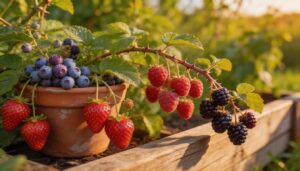
Berries are one of the easiest ways to get fresh fruit from your own garden — and fast. Whether you’ve got a sprawling backyard or just a sunny balcony, there’s a berry variety that’ll work for you.
With a little know-how, keeping them thriving is surprisingly simple — easy fruit garden maintenance means more time enjoying the harvest than tending to it.
Here are the best ones to explore.
Strawberries for Quick Spring Harvests
Strawberries are honestly the best place to start your home fruit journey. early-season varieties like Alpine strawberry thrive in compact container beds and hit their first flush in just 60–70 days after bloom.
Nail your soil pH optimization around 5.5–6.5, add polytunnel protection against late frosts, and you’re picking ripe berries by early spring — seasonal harvest planning doesn’t get sweeter than that.
Blueberries for Acidic Soils
Blueberries are highly rewarding — but they’re picky about one thing: soil acidity. Highbush blueberries need a pH between 4.5 and 5.5. Get that wrong, and your plants sulk.
Here’s your quick-start checklist for perennial berry cultivation success:
- Raised Bed Preparation — Build beds with sandy loam and 2–4 inches of compost
- Soil pH Management — Test every 1–2 years; use sulfur to lower pH if needed
- Acidic Mulch Options — Pine bark or pine needles lock in that low pH naturally
- Drip Irrigation Benefits — Steady root-zone moisture without waterlogging
- Ammonium Fertilizer Use — Choose ammonium-based blends; blueberries love them
Bluecrop and Jewel are reliable picks. Plant 3–5 together for better yields.
Raspberries for Extended Picking Seasons
Unlike blueberries that demand soil chemistry tricks, raspberries are surprisingly forgiving — and generous. Plant autumn bearing varieties like Autumn Bliss or Caroline, and you’ll extend your fruit harvest timing by six to eight weeks beyond summer.
| Variety | Type | Season |
|---|---|---|
| Autumn Bliss | Autumn bearing | Late summer–fall |
| Caroline | Day neutral cultivars | Midsummer–frost |
| Heritage | Everbearing | Summer + fall flush |
Staggered pruning keeps new canes coming. Pair that with consistent irrigation and organic mulching, and successive ripening becomes your new normal. Perennial berry cultivation doesn’t get better than this.
Currants and Gooseberries for Small Gardens
Currants and gooseberries are the small-garden MVPs most people overlook.
Currants are genuinely shade tolerant varieties, thriving on just four to six hours of sun. Gooseberries need a bit more light for sweeter fruit.
Both stay compact — under 1.5 meters — so harvest timing tips are simple: check mid to late summer.
Prune in late winter using smart pruning techniques, and disease management strategies like good airflow handle the rest.
Honeyberries for Cold Climates
If you garden where winters are brutal, honeyberries are your secret weapon. These cold-hardy fruit varieties for northern climates survive down to Zone 2 — yes, really.
Honeyberries are the cold gardener’s secret weapon, surviving brutal winters all the way down to Zone 2
Their frost-resistant buds handle deep freezes, but early spring flowering means wind‑sheltered planting matters.
You’ll get low-temperature fruit set, nutrient‑rich berries with a blueberry‑raspberry flavor, and almost no fuss.
Hardy berry varieties don’t get easier than this.
Best Tree Fruits
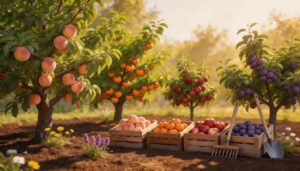
Tree fruits take a little patience, but the payoff is absolutely worth it. From quick-cropping peaches to low-fuss persimmons, there’s a tree out there that fits your space and lifestyle.
Here are some of the best picks to think about.
Apples for Versatile Home Orchards
Few fruits are as adaptable as the apple. Whether you’ve got a wide backyard or just a sunny fence line, there’s a variety that fits.
- Gala Apple delivers firm, sweet fruit on a compact semi-dwarf tree
- Six-in-One Espaliered Apple trains flat against walls — perfect fruit tree spacing solution
- Dwarf Rootstock Benefits include earlier fruiting and easy picking at 6–10 feet
- Pest-Resistant Varieties cut down on spraying and keep things low-maintenance
- Apple Storage Tips: cool, dark spots extend freshness up to six months
Peaches and Nectarines for Faster Yields
If you want faster tree fruit rewards, peaches and nectarines are hard to beat — most start fruiting in just two to three years.
| Variety | What Makes It Special |
|---|---|
| Frost Peach | Cold-hardy, disease-resistant, self-pollinating |
| Stark Saturn Donut Peach | Sweet white flesh, compact at 14 ft |
| Dwarf Early Varieties | Quicker fruit set, easier harvest |
| Nectarine | Firm, sweet-tart, no fuzz required |
Smart Training Systems, a solid Pruning Schedule, and good Soil Fertility keep yields high. Watch Early Bloom Management — late frosts can catch these beauties off guard.
Pears for Dependable Late Harvests
Pears are the patient gardener’s reward — and worth every bit of the wait.
Thanks to late-season ripening, varieties like Bartlett Pear and 20th Century Asian Pear extend your harvest window well into fall.
Cool night benefits deepen their sweetness naturally.
Once picked, keep ethylene control in mind and store them at the right storage temperature — around 32–34°F — for lasting freshness.
Figs for Warm, Compact Spaces
Fig trees are practically made for tight spaces. The Violette de Bordeaux Fig tops the list — compact, container-friendly, and self-pollinating.
Use a 15–20 gallon pot with a quality Container Soil Mix and you’re set.
These Heat-Tolerant Varieties thrive with Weekly Watering and Trellis Training Techniques to increase sun exposure.
When frost hits, just bring them indoors. Low-maintenance fruit trees don’t get much easier.
Persimmons and Jujubes for Low Maintenance
If you want low-maintenance fruit trees that practically take care of themselves, persimmons and jujubes are your answer.
The Fuyu Jiro Persimmon thrives with minimal pruning and natural self-thinning when crops get heavy.
Jujubes are impressively drought tolerant once established — just mulch well and water deeply every week or two.
Both deliver a satisfying late fall harvest, making them perfect for any urban backyard fruit garden.
Choosing Fruits for Your Space
Picking the right fruit starts with knowing your space — not just how big it is, but what it can actually support.
A few key factors will steer you toward varieties that thrive rather than just survive. Here’s what to think about before you plant.
Considering Hardiness Zones First
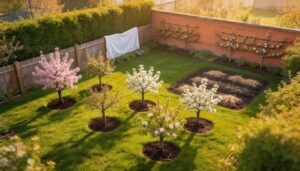
Before you buy a single plant, check your USDA hardiness zones 5–9 rating. Zone Matching saves you from planting something that won’t survive January. And don’t forget Microclimate Adjustments — a south-facing wall can bump your zone up noticeably.
Cold-hardy fruit varieties thrive when you:
- Map your zone accurately before purchasing
- Use windbreaks for Winter Hardiness
- Apply mulch as Frost Protection Strategies
- Choose Zone Driven Variety selections proven locally
Matching Fruit Varieties to Soil Type
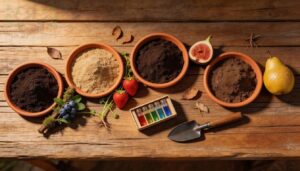
Your zone sorted, now let’s talk dirt — literally. Soil pH Matching matters more than most gardeners expect.
Blueberries demand high soil acidity requirements around pH 4.5–5.5, while strawberries prefer a gentler 5.5–6.5.
Drainage Requirements differ too — figs love sandy, fast-draining ground, but pears want loamy soil with steady moisture retention.
Good soil preparation for fruit means checking texture, acidity, and moisture regulation before you plant anything.
Selecting Dwarf or Standard Sizes
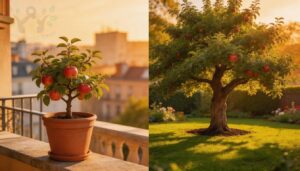
Once your soil’s sorted, size is your next big decision. Rootstock Influence is real — dwarf varieties stay under 8 feet, while standards can tower past 20 feet. Spacing Requirements shift dramatically too: dwarfs need just 4–6 feet apart, standards need 12–18 feet.
Here’s what size affects most:
- Pruning Intensity — dwarfs need lighter, annual shaping
- Production Timeline — dwarfs fruit in 2–3 years vs. 4–6 for standards
- Watering Needs — compact root zones thirst more frequently
- Small space gardening — container-friendly fruit trees for city gardeners thrive as dwarfs
- Choosing dwarf and thornless fruit varieties keeps compact or appropriately sized harvests manageable
Self-pollinating Options for Limited Spaces
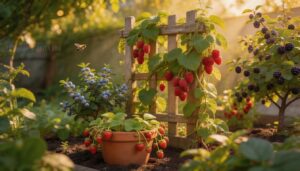
Once you’ve settled on size, pollination is the next puzzle — and honestly, it’s where small-space gardening gets exciting.
Self-pollinating fruit varieties for limited spaces mean one plant does all the work. Alpine Strawberry Runners spread slowly and fruit solo. A Self-Pollinating Blueberry, Bush Raspberry Trellis setup, or Honeyberry Early Harvest all deliver without a second plant.
Low-maintenance fruit trees like dwarf varieties and Serviceberry Compact Shrub round things out beautifully.
Container and Trellis-friendly Fruit Choices
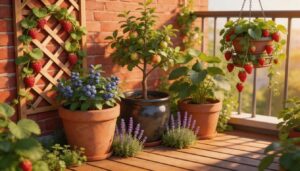
Even a small balcony can become a little orchard with the right setup. Container-friendly fruit trees for city gardeners thrive when you match plants to pot size and use a smart Vertical Trellis Design for climbing canes.
- Strawberries in 8–10‑inch pots with coconut coir Container Soil Mixes
- Blueberries in 2–4‑gallon acidic containers alongside Pollinator-Friendly Herbs
- Raspberries in 15–20‑gallon pots with trellis support
- Compact Rootstock Selection keeps apples and figs manageable with Microclimate Mulching
Pollination, Chill Hours, and Sun Needs
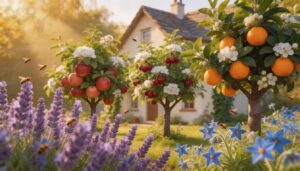
Three things can make or break your harvest: Cross Pollination, chill hours, and Sunlight Exposure. Most fruit trees need 6–8 hours of direct sun daily.
Low Chill Varieties like honeyberries suit mild winters beautifully.
Plant Bee Attracting Plants nearby for pollinator-friendly fruit planting that actually works.
| Factor | What It Means | Quick Tip |
|---|---|---|
| Dormancy Timing | Hours below 7°C needed | Match cold-hardy fruit varieties to your zone |
| fruit tree pollination | Pollen transfer between blooms | Pair overlapping bloomers |
| sunny location | Direct daily sun hours | 6–8 hrs minimum |
Top 5 Fruit Plants
Now that you know what to look for, it’s time to meet some standout picks you can actually bring home. These five fruit plants cover a nice range — from compact citrus to bold persimmons — so there’s something for almost every setup.
Here are the top five worth a spot in your garden.
1. Fig Tree Seeds Grow Your Own
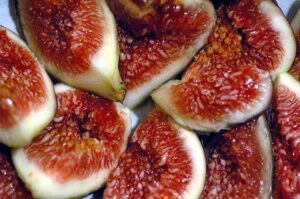
Growing a fig tree from seed is one of gardening’s slow-burn adventures — deeply rewarding if you’ve got patience. Each pack comes with 20 Ficus carica seeds, best started in warm soil between 70–75°F with consistent moisture.
Expect sprouts in two to four weeks. Fair warning: germination rates are low, so treat every seedling like a win.
Figs can fruit in two to five years and even thrive in containers, making them perfect for tight spaces or cold climates with a little winter shelter.
| Best For | Gardeners who love a slow-burn project and want to grow their own edible fig tree from scratch — especially those in zones 7–10 or with space to overwinter containers. |
|---|---|
| Plant Type | Seed pack (20 seeds) |
| Container Friendly | Yes |
| Sunlight Needs | Full sun |
| Climate Zones | Zones 7–10 |
| Shipping Limits | None listed |
| Edible Fruit | Yes (figs) |
| Additional Features |
|
- You get 20 seeds per pack, so plenty of chances even with tricky germination rates
- Figs can fruit within two years and produce twice a season — that’s a solid payoff
- Great for containers, meaning cold-climate gardeners can still make it work by bringing them inside
- Germination is notoriously hit-or-miss, and most experienced growers prefer cuttings for a reason
- You’re playing a long game — it can take weeks just to see a sprout, let alone fruit
- Cold climates add extra work, whether that’s burying stems, wrapping plants, or hauling pots indoors every winter
2. Dwarf Meyer Lemon Tree Gift
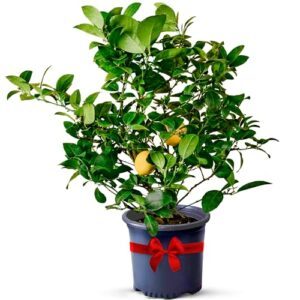
Want a lemon tree that works just as hard indoors as it does on your patio? The Dwarf Meyer Lemon from Via Citrus is exactly that.
It stays a manageable 3 to 6 feet in a container, produces fragrant blooms, and delivers sweet‑tart fruit roughly 6 to 9 months after flowering.
It’s self‑fertile, so no second tree needed.
Bright light, good drainage, and a citrus fertilizer keep it happy.
Honestly, it makes a great gift too.
| Best For | Home cooks, apartment dwellers, and gift-givers looking for a low-maintenance citrus tree that works indoors or outside. |
|---|---|
| Plant Type | Dwarf tree (live) |
| Container Friendly | Yes |
| Sunlight Needs | Bright light |
| Climate Zones | Varies by state |
| Shipping Limits | Several states restricted |
| Edible Fruit | Yes (lemons) |
| Additional Features |
|
- Grows well in containers and adapts to small spaces like balconies, patios, or sunny windowsills
- Self-fertile, so you only need one tree to get fruit
- Arrives with lemons and buds already on it, so you see results right away
- Some plants show leaf drop after shipping, so there’s a bit of a recovery period
- No clear timeline on fruit — it can take several months after flowering
- Restricted from quite a few states and territories, so not everyone can order it
3. Calamondin Tree Live Plant Gift
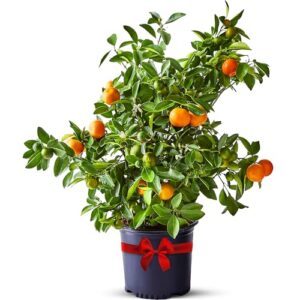
Think of the calamondin as a two-for-one deal — you get a fragrant flowering tree and a fruit bowl in one pot. Via Citrus ships this organic hybrid in a 1-gallon container, grown in Florida and ready to go.
The fruit is small, tart, and sweet-peeled — perfect for cocktails, jams, or marinades.
It blooms year-round, loves bright light, and needs only occasional watering.
At $69.99, it’s a genuinely beautiful gift that keeps producing.
| Best For | Home cooks, plant lovers, and anyone looking for a low-maintenance gift that’s both beautiful and actually useful. |
|---|---|
| Plant Type | Dwarf tree (live) |
| Container Friendly | Yes |
| Sunlight Needs | Bright light |
| Climate Zones | Varies by state |
| Shipping Limits | Several states restricted |
| Edible Fruit | Yes (calamondin) |
| Additional Features |
|
- Blooms and fruits year-round, so it’s always doing something interesting
- Tart little fruits work great in cocktails, jams, and marinades — genuinely versatile
- Easy to care for, even if you don’t have a green thumb
- Can’t ship to several states and territories, so check before you order
- Fruit takes time — don’t expect a harvest right out of the box
- Needs protection from cold temps, which limits where you can keep it in winter
4. Dwarf Pomegranate Live Plant Tree
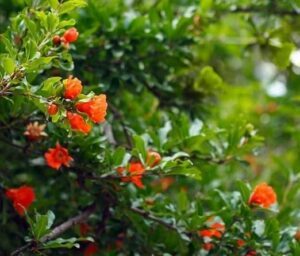
At just $15.95, this dwarf pomegranate punches well above its weight.
It tops out at 6–8 feet in the ground — or a manageable 3–6 feet in a container — so tight patios and sunny balconies are fair game.
It blooms bright orange-red in spring and summer, then rewards you with sweet-tangy fruit by late summer.
Full sun and well-drained soil are all it really asks for.
Honestly, it’s one of the easiest conversation starters you’ll ever grow.
| Best For | Home gardeners with limited space who want a low-maintenance fruit tree that looks great and actually produces. |
|---|---|
| Plant Type | Dwarf tree (live) |
| Container Friendly | Yes |
| Sunlight Needs | Full sun |
| Climate Zones | Zones 5–10 |
| Shipping Limits | None listed |
| Edible Fruit | Yes (pomegranates) |
| Additional Features |
|
- Fits almost anywhere — patios, balconies, or a sunny indoor spot
- Blooms bright orange-red and fruits in the same season
- Super beginner-friendly, just give it sun and decent drainage
- Fruit yield is smaller than a full-size pomegranate tree
- Needs full sun to thrive — shady spots will let you down
- $15.95 runs a bit higher than some comparable dwarf fruit trees
5. American Persimmon Tree Live Plant
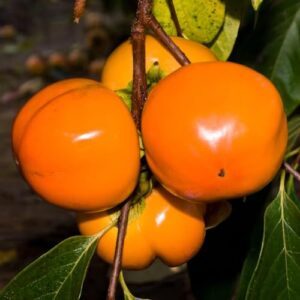
If the pomegranate impressed you, the American persimmon will genuinely surprise you. This native beauty grows slowly at first, then takes off — reaching up to 60 feet in the wild, though it plays nicely with pruning in a backyard setting.
Zones 7–10 are its sweet spot.
Come autumn, you get small, honey-sweet fruit that birds absolutely love too. It’s drought-tolerant once established, low-fuss, and arrives pre-rooted in a 4-inch pot ready to hit the ground running.
| Best For | Gardeners in zones 7–10 who want a low-maintenance native fruit tree that produces sweet autumn harvests and adds real character to a backyard or home orchard. |
|---|---|
| Plant Type | Live tree (sapling) |
| Container Friendly | Yes |
| Sunlight Needs | Full sun |
| Climate Zones | Zones 7–10 |
| Shipping Limits | Excludes CA, AK, HI |
| Edible Fruit | Yes (persimmons) |
| Additional Features |
|
- Arrives pre-rooted and ready to plant — less waiting, faster establishment
- Drought-tolerant once settled in, so it doesn’t need constant babysitting
- Produces sweet, honey-flavored fruit that’s great for people and wildlife alike
- Only works in USDA zones 7–10, so colder climates are out of luck
- Needs full sun to thrive — a shady spot will hurt both growth and fruiting
- The small 4-inch pot means you’ll likely need to repot or transplant it pretty soon after it arrives
Frequently Asked Questions (FAQs)
What fruit takes 5 years to grow?
Like a sleeping giant, some fruits make you wait.
Pears, apples, and persimmons can all take around five years before rewarding you with a real harvest — patience genuinely pays off here.
What are the best fruits to grow at home?
Strawberries, blueberries, raspberries, figs, and apples are top picks for home gardens. They’re beginner-friendly, productive, and suit most spaces — whether you’ve got a backyard or just a sunny balcony.
What is the best fruit to grow at home?
The best fruit to grow at home depends on your space, climate, and patience.
Fast fruiting? Try berries. Want shade and harvests? Go with a tree.
Match the plant to your conditions.
What is the easiest fruit to grow in a raised bed?
If you want quick wins, raised beds are your best friend. Strawberries top the list — they thrive in just 4 to 6 inches of soil and reward you with fruit within weeks.
What is the best fruit to grow for beginners?
If you’re starting from scratch, grow strawberries. They fruit within 60–90 days of flowering, fit any container, and reward beginners fast. Simple, satisfying, and nearly foolproof.
What is the easiest fruit to grow inside?
If you’re growing fruit indoors, strawberries are your easiest bet.
They thrive in a sunny windowsill, fruit continuously with day‑neutral varieties, and only need a pot, good drainage, and a little fertilizer.
What are the best fruit trees to grow?
Figuring out which fruit trees to grow doesn’t have to be overwhelming. Apples, peaches, figs, pears, and persimmons are solid choices — productive, manageable, and rewarding in most home gardens.
Which fruit tree is best for a new gardener?
For new gardeners, a fig tree is hard to beat. It’s forgiving, low-maintenance, and fruits quickly in a sunny spot.
Plus, you can grow it in a container — no big yard needed.
What are some easy fruits to grow?
Strawberries fruit in 60 days. Figs need almost no fuss. Blueberries reward patience with years of harvests.
If you want quick wins, reliable yields, or low‑maintenance growing, there’s a fruit that fits.
How do I choose the best fruit trees to grow?
Start with your climate zone — it shapes everything. Pick varieties that match your soil, sunlight, and space.
Self-pollinating trees simplify things. Dwarf rootstocks keep harvests manageable.
Know your chill hours, and you’re set.
Conclusion
As the seeds of knowledge take root, your backyard transforms into a lush oasis, bursting with flavor and possibility. With the right top fruit varieties for home gardens, every space can become a fruitful haven.
Imagine biting into a juicy, homegrown strawberry or savoring a crisp apple. Your journey to a bountiful harvest begins now.
Explore, experiment, and enjoy the journey. Happy growing, and may your harvest be as sweet as your dreams!