This site is supported by our readers. We may earn a commission, at no cost to you, if you purchase through links.

The best produce you’ll ever taste doesn’t come from a grocery store—it comes from your own hands pulling it off the vine at peak ripeness. There’s something almost rebellious about bypassing the industrial food chain entirely, heading to a local farm, and harvesting your own apples, berries, and peaches exactly when they’re ready.
But homegrown produce picking isn’t just about grabbing whatever looks good and tossing it in a basket. The difference between mealy disappointment and flavor-packed excellence comes down to knowing when crops hit their prime, how to handle them without damage, and what to do with your haul once you’re home.
Master these fundamentals, and you’ll gain access to the freshest food possible while taking full control of what ends up on your plate.
Table Of Contents
Key Takeaways
- Master timing and technique to get the best-tasting produce—know when crops peak, use gentle handling methods, and pick in cool morning hours when fruits are fully hydrated.
- Find U-pick farms fast by using online directories and state agriculture resources, then call ahead to confirm crop availability, hours, and reservation requirements before you drive over.
- Preserve your haul properly by refrigerating immediately to lock in nutrients, eating within 3 days for peak nutrition, and using pressure canning or freezing to extend shelf life for months.
- U-pick farms give you control over food quality while supporting local economies—they generated $1.26 billion in 2022 and let you bypass industrial food chains entirely.
How to Find U-Pick Farms Near You
You don’t need to wander aimlessly hoping to stumble across a farm stand. Finding the perfect U-pick spot is simpler than you think when you know where to look.
Here’s how to track down fresh-pick farms that fit your schedule and cravings.
Searching by Location and Produce Type
Finding pick-your-own farms near you starts with smart geographic search tactics. Use farm locator tools and mapping technology to pinpoint local farms within your preferred radius—most folks want fresh produce within five miles. Filter results by what you’re craving: apples, berries, peaches. Local harvest guides let you narrow down exactly what’s ripe and ready for picking today.
Many farmers are now utilizing precision agriculture tools to improve their crop yields.
Using Online Directories and Farm Platforms
Once you’ve narrowed your search radius, tap into extensive online directories and farm locator tools to discover pick-your-own operations. State agriculture departments publish detailed farm listings—Colorado’s directory hits 90,000 print copies annually—while private platforms connect you directly to local farms through digital marketplaces.
Check farm websites for online reviews, agritourism apps for real-time availability, and some even offer digital payments for farm fresh convenience. Many farms are now listed in the farm fresh directory to increase their visibility.
Checking Farm Hours and Seasonal Availability
After you’ve found promising U-Pick farms near you through online directories, verify they’re actually open. Most operations run mid-May through November, but daily farm schedules and harvest times shift with weather alerts.
Check for:
- Crop availability windows (berries in summer, apples fall, pumpkins September-November)
- Weekday versus weekend hours (some farms close Mondays or require timed weekend tickets)
- Heat or rain closures (pick-your-own fields may shut down above 95°F or during storms)
Seasonal planning prevents wasted trips to your local farmers market or farm fresh source.
Tips for Contacting Farms Before Visiting
Once you’ve confirmed the farm’s open, reach out before you drive over. Most U-Pick operations handle pre-visit planning through Facebook (63% maintain active pages) or farm websites. Ask about admission fees, reservation requirements, and what containers to bring. Many farms now use online booking systems to manage visitor flow—especially during peak berry or apple weekends. Confirm crop readiness through their seasonal updates to avoid showing up when fields are picked clean.
| Contact Channel | Best Use | What to Ask |
|---|---|---|
| Farm website | Hours, policies, directions | Admission fees, payment methods, accessibility features |
| Facebook/Social media | Real-time crop updates | What’s ready now, weekend availability, weather closures |
| Phone call | Reservation questions | Group size limits, cancellation policy, timed-entry slots |
| Detailed planning | Special accommodations, large group bookings, facility info | |
| Farmers market booth | Face-to-face questions | Farm fresh produce varieties, upcoming U-Pick seasons, farm tours |
Best Times to Pick Popular Homegrown Produce

Timing isn’t just important—it’s everything when you’re after the sweetest berries or crispest apples. Show up too early and you’ll find hard, flavorless fruit; arrive too late and the best picks are already gone.
Timing is everything at U-pick farms—arrive too early for hard fruit or too late for empty fields
Here’s what you need to know about when each crop hits its peak, how your region affects harvest schedules, and the simple tricks for spotting ripe produce in the field.
Seasonal Picking Windows for Apples, Berries, Peaches, and More
Pick Your Own farms let you break free from bland grocery store routines and grab fruit at peak harvest season—but timing is everything. Here’s when you’ll hit the sweet spot for fresh produce selection:
- Apple Picking: Late July through October, with storage varieties ripening last
- Summer berries: Strawberries in May, blueberries and raspberries peaking July
- Peaches: May through September depending on your state
- Blackberries: July to August harvest timing
- Late raspberries: Second crop in September
Regional Variations in Harvest Times
Geography rewrites the harvest calendar—strawberries ripen six weeks earlier in Texas than Wisconsin, and Michigan blueberries peak in late July while New Jersey’s finish mid-June.
Climate zones shift planting windows by two months or more, giving Zone 9 gardeners winter tomato harvests while Zone 4 farmers wait until summer.
Temperature effects and regional crops mean your Pick Your Own calendar depends entirely on latitude, transforming local food systems and sustainable farming opportunities across harvest seasons.
How to Tell if Produce is Ripe for Picking
Ready to master ripeness signs at your next Pick Your Own adventure? Fresh produce quality hinges on harvest timing—here’s what to look for during harvest season:
- Color change from green to red, yellow, or purple signals sugar content increases in fruits and vegetables
- Fruit texture firmness decreases rapidly as pickyourown crops ripen—press gently to test
- Glossy skin turning dull indicates overmaturity in eggplants
- Beige netting over green cantaloupe skin means you’ve hit peak ripeness
Proper Techniques for Picking Homegrown Produce
Picking your own produce isn’t just about showing up and yanking fruit off the vine. The way you harvest matters—do it right, and you’ll bring home better-tasting produce that lasts longer.
Here’s what you need to know about proper picking methods, the gear that makes it easier, and how to be a respectful guest on someone else’s land.
Safe and Effective Picking Methods for Various Crops
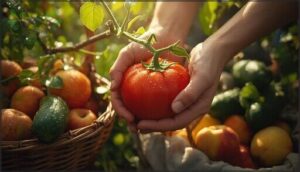
Want to leave the farm with perfect produce? Your picking technique matters more than you think. Handle apples, peaches, and tomatoes with care—they bruise easily when squeezed or dropped.
For crops like melons and cucumbers, gentle pressure tells you they’re ready to slip right off the vine. Leave a small stem attached to prevent decay, and always pick in the cool morning hours when fruits and vegetables are fully hydrated.
Tools and Supplies to Bring for Picking
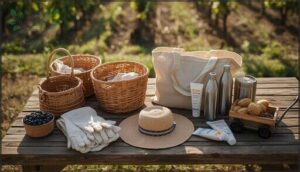
Don’t show up empty-handed—the right gear transforms your farm fresh adventure. Bring harvest containers or farm wagons to haul your UPick farm bounty, plus picking gloves for delicate berries.
Pack sunscreen products, water bottles, and a hat for hours under the sun.
Many operations weigh your containers first, so you’re only charged for that fresh harvest you pick your own.
Farm Safety and Etiquette Guidelines

Breaking farm safety rules doesn’t just risk your harvest—it puts everyone’s health on the line. Field sanitation and visitor policies exist because federal regulations require covered farms to protect produce from contamination during farm visits.
- Wash hands before picking, after touching animals, and before eating
- Stay on marked paths and respect closed fields with “No Pick Your Own” signs
- Leave pets at home—animal control policies keep fecal pathogens out of ready-to-eat crops
- Keep kids supervised at all times around equipment and livestock
- Check in at the farm stand first to learn current farm safety rules and reduce farm liability risks
Preserving and Storing Your Freshly Picked Produce
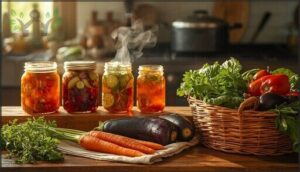
You didn’t brave the sun and dirt just to watch your haul turn to mush in three days. The real work starts when you get home—cleaning, storing, and preserving that produce so it feeds you for months, not minutes.
Here’s how to lock in the freshness and nutrition you worked so hard to pick.
Tips for Cleaning and Storing Fruits and Vegetables
Taking control of food safety starts the moment you bring your pick-your-own bounty home. Proper washing methods and produce handling are your first defense against microbial threats. Rinse fruits and vegetables under running water, scrubbing firm skins with a dedicated brush.
For storage tips, dry everything thoroughly—moisture invites spoilage. Most berries stay fresh 2–3 days refrigerated, while leafy greens last weeks when dried and wrapped. Your harvest, your rules.
Basic Food Preservation Techniques (freezing, Canning, Drying)
Once you’ve mastered storage, food preservation puts you in full command. Freezing methods lock in vitamins—studies show frozen produce often matches or exceeds fresh-stored samples in vitamin C and antioxidants.
Canning safety demands precision; improper sealing caused most botulism cases in one decade.
Drying techniques shine for shelf life: hot air or freeze-drying slashes microbial loads while keeping nutrients intact for months of food dehydration success.
Maximizing Nutritional Value After Harvest
Beyond preservation tactics, you can safeguard every vitamin through postharvest handling that respects nutrient stability. Here’s your vitamin retention battle plan:
- Cold storage wins every time—refrigerate immediately to slow vitamin C loss from 55% down to under 30% in a week.
- Eat within 3 days for peak nutrition and healthy eating benefits.
- Skip washing until serving—pre-rinsing leaches water-soluble vitamins by up to 30%.
- Cut just before cooking—surface exposure accelerates oxidative decay fast.
- Pick your own early morning—field warmth starts nutrient decline the moment fruit leaves the branch.
Lock in local food power with smart timing and sustainable living choices that honor every harvest.
Top Products for Homegrown Produce Preservation
Once you’ve brought home your fresh haul, the right tools make all the difference between produce that lasts weeks and fruit that ends up in the compost bin. You don’t need a fancy setup—just a few solid pieces of equipment that actually work.
Here are three preservation essentials that’ll help you lock in that farm-fresh quality.
1. Presto Pressure Canner Cooker
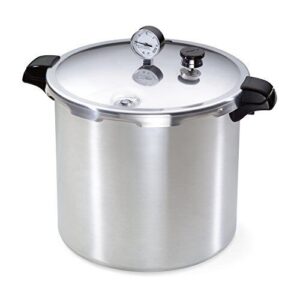
When you’re bringing home bushels of farm-fresh produce from your local UPick, you need serious firepower for food preservation. The Presto 23-quart pressure canner delivers exactly that.
This aluminum workhorse manages both pressure canning techniques for low-acid vegetables and meats, plus doubles as a boiling-water canner for your jams and pickles. It processes up to 20 pint jars at once—perfect for those epic harvest days.
The deluxe dial gauge gives you precise pressure cooking control, while the included rack and 76-page guide walk you through canner maintenance and kitchen safety essentials for sustainable farming lifestyles.
Best For: Home gardeners and farm-to-table enthusiasts who preserve large quantities of vegetables, meats, and fruits in one session.
- Processes up to 20 pint jars at once, making it efficient for big harvest days and batch preservation
- Works as both a pressure canner for low-acid foods and a boiling-water canner for jams and pickles
- Comes with a detailed 76-page instruction book that covers safe canning techniques and recipes
- The dial gauge needs periodic accuracy checks at the start of each canning season
- Requires careful maintenance including regular sealing ring replacement (about every three years)
- Not suitable for high-BTU outdoor propane burners over 12,000 BTU
2. Granite Ware Canning Starter Kit
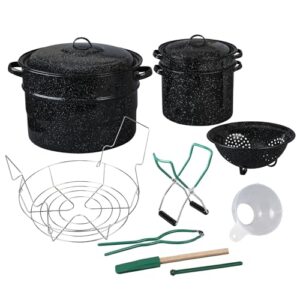
If you’re just breaking into home canning after raiding your local pick-your-own farms, the Granite Ware 12-piece starter kit arms you with every kitchen essential you need. This 21.5-quart water bath canner accommodates 7 quart jars of farm-fresh produce—perfect for those organic produce hauls from sustainable farming operations.
You’ll get the complete food preservation arsenal: jar lifter, funnel, bubble remover, and magnetic lid lifter. The enamel-on-steel construction delivers canner safety without sketchy chemicals, giving you bulletproof canning basics for local food systems domination.
Best For: Beginners looking for a complete, budget-friendly canning kit that includes all the essential tools to get started with water bath canning.
- Complete 12-piece set with all necessary tools (jar lifter, funnel, bubble remover, magnetic lid lifter, and jar wrench) so you don’t need to buy anything separately
- Large 21.5-quart capacity fits 7 quart jars, 9 pint jars, or 12 half-pint jars for flexible batch sizes
- Chemical-free enamel-on-steel construction (PFOA and PTFE free) that’s durable and won’t react with acidic foods
- Not compatible with glass, ceramic, or induction cooktops—only works on gas and electric stovetops
- Requires hand washing and careful drying to prevent rust, especially on the chromed steel rack
- Some users report the jar rack feels flimsy and may develop rust stains over time
3. Wide Mouth Mason Jar Lids
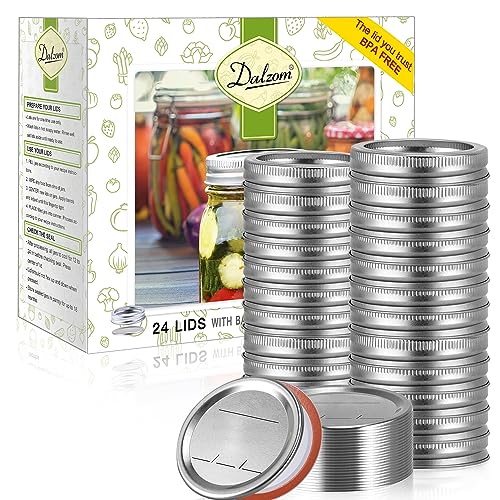
Your pick-your-own haul deserves bulletproof jar sealing. The Dalzom 48-piece wide mouth lid set (24 reusable rings, 24 single-use lids) locks down airtight storage for farms’ organic produce with food-grade metal and BPA-free silicone. These lids fit Ball and Kerr jars perfectly, safeguarding your farm-to-table bounty whether you’re canning stone fruit or freezing berries.
Lid materials matter for canning safety—these deliver reliable food preservation without sketchy compounds. Write harvest dates right on top to track your local food systems stash.
Best For: Home canners who need reliable, affordable lids for preserving seasonal harvests and farm-fresh produce in wide mouth Ball or Kerr mason jars.
- Great value with 48 pieces (24 lids 24 rings) at a budget-friendly price point
- Food-grade metal and BPA-free silicone seals create reliable airtight storage for canning
- Reusable rings let you get multiple seasons of use while replacing only the single-use lids
- Lids are designed for one-time use only, so you’ll need to buy replacements for each canning season
- Packaging can confuse buyers who expect 48 individual lids rather than 24 lids plus 24 rings
- Long-term durability is still uncertain since many customers haven’t tested them through multiple canning cycles yet
Frequently Asked Questions (FAQs)
What are the health benefits of homegrown produce?
Growing your own food supercharges nutrient intake and mental wellness while keeping you active.
You’ll slash chronic disease risk, support healthy aging, and tap into local food systems—farm to table freedom starts in your backyard.
How much does starting a home garden cost?
You don’t need a fortune—garden startup runs $100–$200 for in-ground plots or $200–$650 for raised bed systems, covering soil costs, tool expenses, and initial maintenance fees to launch your sustainable living journey.
Can children safely participate in produce picking activities?
Yes, with proper precautions. Children face real farm injury risks—machinery, pesticides, and animals.
Follow agritourism guidelines: constant adult supervision, child-safe zones, handwashing stations, and age-appropriate tasks at U-Pick farms for agricultural education.
Whats the environmental impact of local produce sourcing?
Every mile your apple travels eats fuel and spits out carbon. Local produce sourcing slashes greenhouse emissions, conserves water through sustainable farming, and cuts your carbon footprint.
Farm-to-table freshness means less waste rotting in transit.
How do U-Pick farms support the local economy?
U-Pick farming drives rural development and job creation through direct spending at local farms. These agricultural tourism operations generated $26 billion in 2022, supporting community engagement and economic growth across farm-based businesses.
Conclusion
Think of homegrown produce picking as your personal declaration of independence from flavorless, mass-produced food. You’ve learned where to find farms, when crops hit their peak, and how to preserve your haul for months.
Now you control exactly what reaches your table—no middlemen, no compromises, just food at its absolute best.
Head out, fill your baskets with whatever’s ripe, and reclaim the experience of eating produce that actually tastes like something worth celebrating.
- https://www.cdc.gov/food-safety/php/data-research/foodborne-illness-sources/index.html
- https://pmc.ncbi.nlm.nih.gov/articles/PMC7881495/
- https://www.sciencedirect.com/science/article/pii/S0362028X25001127
- https://www.fda.gov/food/hazard-analysis-critical-control-point-haccp/potential-infiltration-survival-and-growth-human-pathogens-within-fruits-and-vegetables
- https://www.consumerreports.org/health/food-contaminants/produce-without-pesticides-a5260230325/