This site is supported by our readers. We may earn a commission, at no cost to you, if you purchase through links.
A dull blade doesn’t just make harvesting harder—it damages plant tissue, opens wounds to disease, and can reduce your yield before the season even ends. Most gardeners focus on what to grow, but the tools they reach for at harvest time determine whether that produce makes it to the table in peak condition.
The difference between a clean cut and a crushed stem shows up later, in shorter shelf life and bruised fruit that rots before it’s eaten. Proper tool usage for harvesting produce covers everything from choosing the right blade for each crop to maintaining edges that stay sharp all season.
Table Of Contents
- Key Takeaways
- Essential Harvesting Tools Explained
- Choose Tools by Crop Type
- Step-by-Step Harvest Tool Use
- Maintain Tools and Harvest Safely
- Top 10 Harvesting Tool Essentials
- 1. Fiskars Garden Harvest Basket Colander Caddy
- 2. Fiskars Bypass Pruning Shears Clippers
- 3. DIYSELF Single Edge Razor Blades Refills
- 4. Felco F2 Swiss Pruning Shears
- 5. Corona Forged Classic Bypass Pruner Red
- 6. Zenport Row Crop Harvest Knife Silver
- 7. Nisaku Hori Hori Weeding Knife Tool
- 8. AeroFarms Micro Rainbow Mix 2 oz
- 9. Complete Knife Sharpening Stone Set
- 10. Thirteen Chefs Food Grade Mineral Oil
- Frequently Asked Questions (FAQs)
- What kind of tools are used for harvesting?
- What is a harvesting tool?
- What are the 4 steps of harvesting?
- Whats the best time of day to harvest?
- How do weather conditions affect harvesting decisions?
- Can I harvest produce after applying pesticides?
- Should I wash produce immediately after harvesting?
- How long can harvested produce stay unrefrigerated?
- How do weather conditions affect harvesting tool performance?
- Can harvesting tools be shared safely between workers?
- Conclusion
Key Takeaways
- A dull or mismatched tool doesn’t just slow you down—it bruises stems, opens plants to disease, and cuts shelf life before the produce ever leaves the field.
- Matching your tool to the crop (bypass shears for thick stems, soft-jaw grabbers for tender vegetables, hori-hori knives for root crops) is the single fastest way to protect quality at harvest.
- Clean cuts, gentle handling, and placing produce into padded, ventilated containers are all one chain—break any link and you’re trading peak-condition harvest for early rot.
- Sharpening blades, sanitizing between plants, lubricating joints, and storing tools dry aren’t optional steps—they’re what separates a tool that performs all season from one that fails mid-harvest.
Essential Harvesting Tools Explained
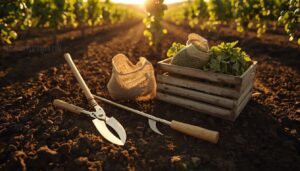
The right tool doesn’t just make harvesting easier — it protects your crop, your body, and your time. From simple hand tools to extendable poles and collection crates, each piece of equipment fulfills a specific purpose in the field.
Understanding which tools suit your specific crops and conditions is easier when you explore a complete guide to tools needed for successful harvesting that breaks it all down by use case.
Here’s a breakdown of the essential harvesting tools you’ll want to know.
What a Harvesting Tool Does
A harvesting tool does one job well: it removes mature produce cleanly without harming the plant or the crop itself. Good tools focus on:
- Clean crop separation that protects both fruit and stem
- Bruise minimization for tender produce like tomatoes and berries
- Worker strain reduction through ergonomic design and proper reach
Matching your tool to the crop ensures an immediate harvest speed boost. Consider using a fruit picker with sharp rods for efficient, damage‑free harvesting of tree fruits.
Hand Tools for Cutting and Picking
Sharp blades and ergonomic grips make an immediate difference once you’ve matched the right tool to the job. Bypass pruning shears with extended arms allow you to reach awkward angles without straining your wrist. Blade coatings like PTFE reduce sap buildup, while lighter tool weight cuts fatigue fast.
Always wear safety gloves—clean cuts protect both you and the plant.
Grabbers for Delicate Produce
Blades handle the cuts, but grabbing tools take over where fingers fall short.
Padded prongs with soft pad materials and ergonomic grips cradle tomatoes, peaches, and plums without leaving a mark.
Jaw contour design follows the fruit’s natural curve, while pressure control mechanisms keep force gentle—usually 2–6 N.
Grip surface texture adds friction without puncturing skin, ensuring confidence and minimized damage with every pick.
Extendable Poles for Tall Fruit
When grabbers can’t quite reach, fruit picking poles close the gap. Consumer models extend 6 to 15 feet; professional versions push past 20. Pole material choice matters here — aluminum stays light, fiberglass adds stiffness, and carbon fiber balances both.
Maximum Reach Planning before buying:
- Measure your tallest tree
- Add your standing height
- Choose extension mechanics with secure flip-locks
- Check head attachment options for basket or cutting styles
Grip Comfort Design reduces arm fatigue on long harvest days.
Knives for Stems, Roots, and Bulbs
A sharp knife is often the most indispensable tool in your harvest kit. Blade geometry determines what each knife manages best — hooked blades, serrated edges, and thin profiles.
| Task | Blade Type | Key Feature |
|---|---|---|
| Stem cutting | Curved/hooked | Clean single pass |
| Root removal | Serrated edge | Rust-resistant steel |
| Bulb planting | Narrow straight | Depth markings |
Handle ergonomics and a safety sheath round out smart tool selection.
Baskets, Crates, and Collection Gear
Stackable plastic crates with ventilated crate design let air circulate and pull away field heat quickly. Stack-and-nest systems dramatically cut return-trip volume.
Food-grade plastics won’t absorb odors or harbor bacteria, ensuring hygiene.
Lined baskets and lightweight collection bags with ergonomic carry grips reduce fatigue during long harvest sessions.
The reusable plastic crate benefits add up quickly over a season.
When Mechanical Tools Make Sense
Once your farm grows beyond what hands can reasonably manage, mechanical tools stop being optional. Large-scale efficiency emerges at around 105 hectares, where machines reduce costs to roughly $40–50 per ton. Labor shortages are effectively addressed when one harvester replaces 20 pickers, making mechanization a practical necessity.
When one harvester replaces 20 pickers, mechanization stops being optional
Uniform crop maturity and processing-grade suitability finalize the decision for mechanization. When crops ripen evenly and withstand handling, mechanical damage reduction during harvest remains manageable, ensuring produce meets processing standards without excessive waste.
Choose Tools by Crop Type
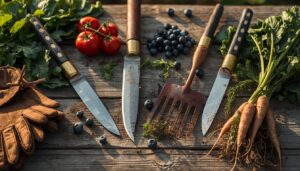
Not every tool works for every crop, and using the wrong one can bruise produce, slow you down, or even damage your plants.
The good news is that matching your tool to your crop type is simpler than it sounds. Here’s a breakdown of the right tool for each job.
Pruning Shears for Thick Stems
When stems run thicker than a pencil, you need pruning shears built for the job. Bypass blade design slices cleanly through live stems up to 25–32 mm, while a ratchet mechanism benefits tired hands by multiplying force threefold.
Ergonomic handle innovation keeps wrist strain low during long rows.
Wipe blades between plants for solid sap management techniques, and sharpen blades each season.
Garden Scissors for Herbs and Greens
Garden scissors are the go-to tool for herbs and leafy greens. Bypass cutting action ensures clean slices for basil and sage without crushing delicate tissue. Needle-nose precision allows easy access to tight clusters, enhancing control during harvest.
Stainless steel construction provides durable rust resistance in humid environments. The rubber overmold grip and spring-loaded release work together to minimize hand strain during extended use.
Sharpen blades seasonally—consistent upkeep of harvesting tools guarantees clean, efficient cuts every time. Proper maintenance preserves both tool performance and plant health.
Fruit Pickers for Tree Crops
Tree crops demand tools that work smarter, not harder. Fruit picking poles eliminate dangerous ladder climbs while giving you real Canopy Access Techniques for branches beyond arm’s reach. Pole Material Choice matters — aluminum stays lightweight during long picking sessions, reducing fatigue greatly.
- Foam-cushioned baskets improve Fruit Drop Control by cradling fruit at release
- Stem Cutting Integration lets blade-equipped heads cleanly detach tough mango or avocado stems
- Picker Efficiency Metrics show dwarfing rootstocks boost harvest rates up to 17%
- Extendable grabber reach tools access dense canopies from multiple angles
- Selecting the right grabbing tool for specific crops depends on fruit size and stem strength
Grabber Tools for Tender Vegetables
Grabbing tender vegetables calls for a different mindset than picking tree fruit. Soft-Finger Jaws cradle cucumbers, peppers, and lettuce without crushing them, while Trigger Pressure Control lets you apply just enough grip.
A Telescopic Shaft keeps your back straight — solid ergonomic practices to reduce back strain during harvest.
Purpose-Built Shapes and Low-Pressure Grip make selecting the right grabbing tool for specific crops straightforward.
Hori-hori Knives for Root Crops
When you’re ready to harvest carrots, beets, or onions, a hori-hori knife becomes your best hand tool for the job. Its Dual Edge design—one sharp knife edge for slicing, one serrated for sawing fibrous roots—manages almost anything underground. The Concave Soil Scoop loosens packed earth cleanly, while Depth Markings ensure precise cuts.
- Leveraged Handle Grip pries deep-set roots with minimal wrist strain
- Material Corrosion Resistance keeps stainless blades sharp through repeated digs
- Full-tang construction prevents bending on clay-heavy soils
- Maintenance of harvesting tools here means wiping, drying, and tool sharpening methods each season
Proper care, including wiping, drying, and seasonal sharpening, ensures longevity for these essential harvesting tools.
Harvest Knives for Row Vegetables
Where a hori-hori tackles underground work, harvest knives take over in the rows. For peppers, cucumbers, and cabbage, blade angle matters — strip knives cut tight rows cleanly, while California-style curved tips handle head lettuce without tearing.
| Feature | Benefit | Crop |
|---|---|---|
| Corrosion Resistance | Stay sharp through humid seasons | Peppers, cucumbers |
| Handle Visibility | Easy to spot in dense rows | All row vegetables |
| Ergonomic Grip | Reduces fatigue on long harvest days | Cabbage, kale |
A sharp knife, maintained with a sharpening stone each season, improves cutting speed and tool safety greatly.
Containers That Prevent Bruising
Even the sharpest knife won’t save produce that lands in the wrong container. Cell trays keep fruit separated so pieces don’t knock into each other, while foam padding absorbs impact during transport. These measures directly prevent fruit bruising by minimizing contact and shock.
Ventilated boxes and corrugated cartons maintain airflow and structure, ensuring produce remains stable and fresh. Their design balances protection with breathability, addressing both physical integrity and environmental needs during transit.
Reusable plastic crates with soft lining and stackable bins offer logistics-friendly solutions. Stackable field containers streamline movement from harvest to storage, reducing handling damage without compromising efficiency.
Matching Tool Size to Plant Spacing
Tool size follows plant spacing like a shadow. Blade Width Fit and Hoe Width Selection matter more than most gardeners realize.
A few rules simplify the decision:
- 1.5-inch narrow hoes for 5 cm carrot rows
- 6-inch pruners (Pruner Size Guidance) for dense 15 cm basil
- 3-inch Scissor Blade Alignment for tight 12 cm clusters
Handle Length Match ties it all together.
Step-by-Step Harvest Tool Use
Knowing which tool to grab is only half the job — using it correctly is what actually protects your crop.
Each step in the harvesting process, from checking ripeness to placing produce in the container, directly affects the quality that ends up on the table. Here’s how to work through it the right way.
Assess Crop Maturity Before Cutting

Before you reach for any tool, take a moment to assess the crop. Color cues come first — most fruits shift from green to red, yellow, or orange as they ripen. Then, check firmness metrics with a gentle squeeze or penetrometer.
Sugar content and heat units confirm internal quality when visual cues alone aren’t sufficient. Combine these maturity indices to ensure you harvest at the correct maturity stage.
Inspect Blades, Hinges, and Locks
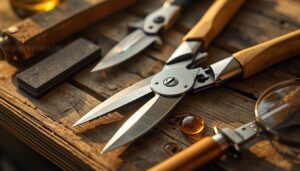
Before using your garden tools, perform a Blade Sharpness Test—dull edges crush stems instead of cutting them.
Check hinge play by wiggling the pivot. If there is more than 1 mm of lateral movement, it is time to tighten.
Test lock grip strength and scan for corrosion spots.
Sharpen cutting edges and lubricate moving parts to ensure smooth operation.
Sanitize Tools Before Entering The Garden

Dirty tools carry disease. Before you step into the garden, cleaning and sanitizing equipment isn’t optional — it’s your first line of pathogen prevention.
- Wash off debris, then do an alcohol dip or apply a bleach dilution (1 part bleach to 9 parts water)
- Respect contact duration — let the sanitizer sit for a few minutes
- Dry tools fully to reduce tool wear and tear
- Practice separate storage for sanitized tools to avoid recontamination
Position Tools for Clean Removal
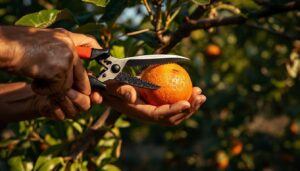
Where you place the tool matters as much as how you use it.
Orient the sharp blade toward the stem you are keeping, and set it just above the branch collar — that small swollen ring at the base. Cut at a 45-degree angle to shed water naturally.
Grip the pruners firmly with your dominant hand while your free hand cups and cradles the fruit, keeping everything steady before you cut.
Use Gentle Pressure to Avoid Bruising
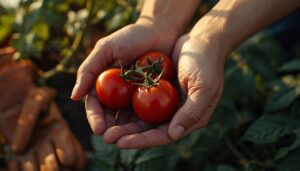
Too much force is one of the fastest ways to ruin a good harvest. Bruising starts when pressure concentrates in one spot — think thumb versus flat fingers — so widen your contact surface to spread the load.
Keep force thresholds low, around the lightest touch that confirms firmness. Pressure timing matters too: a quick, gentle test beats a long squeeze every time.
Support Produce While Detaching It
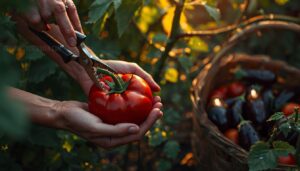
Once you’ve applied gentle pressure, your next move is support. Think of it as catching before cutting.
- Hand Cradling – Cup tomatoes or eggplant fully underneath before snipping; this counters the fruit’s weight and prevents drop bruising.
- Plant Steadying – Grip the stem several inches above the fruit with your free hand to stabilize the plant.
- Tool-Assisted Support – Fruit picker baskets and pole-mounted cut-and-hold picking shears catch tree fruit the instant the stem releases.
- Cluster Stabilization – Support grape or berry bunches from below during the cut; ergonomic harvesting techniques like this protect 95% of cluster integrity.
Place Harvest Into Soft, Clean Containers

Once produce leaves the plant, where it lands is just as important as how it was picked. Always run every reusable plastic crate through a full sanitizing cycle — pre-rinse, wash, rinse, sanitize — then let air drying finish the job before filling.
| Container Feature | Why It Matters | Example Practice |
|---|---|---|
| Soft crates with rounded corners | Reduces bruising on impact | Use for tomatoes, peaches |
| Vented stackable containers | Improves airflow, speeds cooling | Stack field bins on pallets |
| Color-coded flow system | Keeps field and storage containers separate | Red = field, blue = packing |
Store clean harvesting containers off-floor on pallets, covered until needed. Conduct a quick damage inspection before each use — cracks or splinters contaminate produce fast.
Work Methodically to Reduce Missed Produce
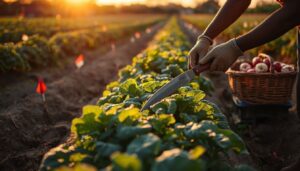
Once your containers are set, it’s time to move through the field with purpose. Row-by-Row Planning keeps you from doubling back or skipping patches. Use Visual Markers — flags or stakes — at row ends to anchor your path.
- Apply Systematic Scanning: step back 3–5 meters and check each block from a fresh angle.
- Follow a Checklist Protocol per crop zone.
- Use Rotation Scheduling so different workers cover different rows each week.
Maintain Tools and Harvest Safely
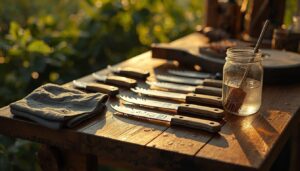
Good tools don’t last on their own — they need consistent care to stay sharp, safe, and ready for the next harvest.
A little routine maintenance goes a long way toward protecting both your produce and your body.
Here’s what you should be doing after every session in the field.
Clean and Dry Tools After Each Use
Every drop of water left on a blade invites rust. After each harvest session, prioritize moisture elimination—wipe down blades, handgrips, and joints thoroughly.
Joint drying techniques are critical, as hinges trap water longest. Once fully dry, apply a rust inhibitor to all exposed metal surfaces.
Sanitize Cutting Surfaces Properly
Sanitizing your cutting surfaces properly keeps pathogens from hitchhiking between plants. To disinfect with bleach, mix two teaspoons of household bleach per gallon of water, keep surfaces wet for two minutes, and then rinse thoroughly. For alcohol-based sanitization, ensure 30 seconds of contact time followed by air-drying between cuts. Hydrogen peroxide is also effective, leaving no harmful residue behind.
Monitor sanitizer strength daily using test strips to maintain efficacy. Finally, always finish with post-sanitation drying to prevent rust and corrosion on metal surfaces.
Sharpen Blades for Efficient Cuts
A dull blade doesn’t just slow you down — it bruises stems and invites disease. Cutting edges should be sharpened every few weeks during peak season or whenever cuts start tearing instead of slicing. Stone grit selection matters: start around 200–400 grit, then enhance with 400–600 for cleaner results. Light honing every couple of days keeps edges aligned between full sessions.
- Match your consistent bevel to the tool’s original angle (20°–30°)
- Use medium grit for everyday garden tool maintenance, coarse only for badly dulled blades
- Apply the test cut technique: a clean slice through a thin stem confirms readiness
- Practice regular maintenance and care of garden harvesting equipment before each harvest session
- Avoid over-finishing — very fine grits above 1000 can actually reduce grip on plant tissue
Lubricate Joints and Moving Parts
Moving parts seize up faster than you’d think — especially after wet harvests. Pivot oil application is simple: place one drop of 3-in-1 oil on pruner pivot joints, then open and close the blades ten times to spread it evenly.
For spring tension maintenance, a single drop of sewing machine oil restores smooth snap-back.
Grease pocket replenishment protects blade-to-anvil contact surfaces, ensuring clean cuts and reducing friction.
Check Grips, Screws, and Baskets
Small flaws become big problems mid-harvest. Build grip wear inspection into your routine — rubber grips crack after roughly 50 uses in moist conditions, and plastic ones lose traction after six months of UV exposure.
Check these five things before every session:
- Grip seams for gaps wider than 1 mm
- Pivot screws torqued firmly, not wobbling
- Basket cracks at stress points and drop zones
- Handle seams for splinters or separation
- Screw tightness on all blade attachments
Store Tools in a Dry Locked Area
Dry, locked cabinet or shed protects against moisture absorption and prevents metal corrosion, extending storage lifespan.
Use pegboard organization to keep tools separated and visible, ensuring easy access and clutter-free storage.
For maintenance, remove batteries to preserve their longevity, and apply rust-prevention oil on blades to safeguard against degradation.
Use Ergonomic Techniques to Prevent Strain
Your body is your most important harvest tool — treat it that way.
Practice Wrist Neutrality by keeping grip aligned with your forearm, and apply Safe Bending by squatting rather than stooping.
Leg Lifting protects your spine when moving crates.
Posture Rotation every 15 minutes cuts fatigue greatly.
Height Matching your tools to your frame makes harvest ergonomics feel smooth, not exhausting.
Avoid Branch Shaking and Rough Handling
Protecting your body matters just as much as protecting your crop. Rough branch shaking causes mechanical damage that bruises the fruit and stresses plant tissue. Instead, use smooth motion paths and dual‑hand stabilization to guide stems gently. Soft gripper design and force‑feedback control keep pressure within safe limits.
Low‑drop collection into padded containers finishes the job right — gentle hands make all the difference.
Top 10 Harvesting Tool Essentials
Having the right tools on hand makes every harvest faster, cleaner, and less stressful on both you and your crops. The ten items below cover everything from cutting and digging to collecting and maintaining your gear.
Each one earns its place in your toolkit for a reason, ensuring efficiency and care for your crops.
1. Fiskars Garden Harvest Basket Colander Caddy
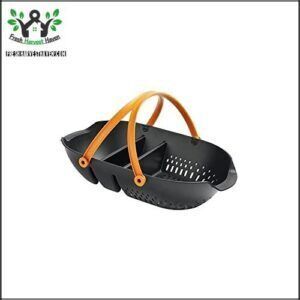
The Fiskars Garden Harvest Basket Colander Caddy is a tool that earns its spot every single harvest. One side drains rinse water through built-in holes, while the other keeps clean produce dry and separate.
Two sets of handholds—fixed side grips and folding interlocking ones—ensure comfortable carrying for light or heavy loads.
The integrated tool compartment keeps snippers within reach, adding practicality to its design.
Built from durable plastic and backed by a lifetime warranty, it’s engineered to last through years of use.
| Best For | Home gardeners who harvest regularly and want one basket that handles rinsing, storing, and tool hauling without the extra trips. |
|---|---|
| Primary Material | Durable plastic |
| Weight | Not specified |
| Price Range | Mid-range |
| Warranty | Lifetime |
| Best Use Case | Home harvesting |
| User Level | Home gardener |
| Additional Features |
|
- The dual-sided design lets you rinse produce right in the basket — no extra colander needed.
- Built-in tool compartment keeps your shears handy so you’re not hunting for them mid-harvest.
- Lifetime warranty and tough plastic construction mean it’ll hold up season after season.
- It’s a big basket — storage can get awkward if your shed or kitchen is on the smaller side.
- The folding handles can pinch fingers if you don’t lock them in properly before carrying.
- Only one size available, so if you need something compact, you’re out of luck.
2. Fiskars Bypass Pruning Shears Clippers
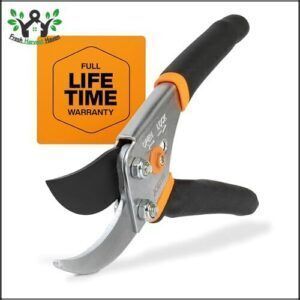
For clean cutting, these bypass pruning shears from Fiskars are hard to beat. Priced at $9.92, they use a scissor-like bypass action that slices stems cleanly rather than crush them — which matters for plant health.
The precision-ground steel blade manages branches up to 5/8 inch, while a low-friction coating reduces sap buildup after each cut.
At just 0.65 lb, your hand won’t tire quickly, even during long harvest sessions. A lifetime warranty backs the whole package.
| Best For | Home gardeners and plant lovers who do a lot of trimming and want a clean, reliable cut without breaking the bank. |
|---|---|
| Primary Material | Precision-ground steel |
| Weight | 0.65 lb |
| Price Range | Budget |
| Warranty | Lifetime |
| Best Use Case | Stem trimming |
| User Level | Home gardener |
| Additional Features |
|
- Bypass action slices instead of crushing, so your plants stay healthier after each cut
- Super lightweight at 0.65 lb — easy on the hands during long pruning sessions
- Backed by a lifetime warranty for a tool that costs under $10
- Won’t handle anything thicker than 5/8 inch, so bigger branches are off the table
- Steel blades still need regular cleaning, especially in wet or humid conditions
- Strictly manual — not a replacement for loppers or saws on heavier jobs
3. DIYSELF Single Edge Razor Blades Refills
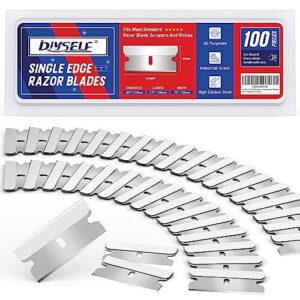
When precision cutting demands something slimmer than pruning shears, DIYSELF single-edge razor blades earn their place in your toolkit. Ideal for adhesive removal, surface trimming, and tight scraping tasks, their high-carbon steel edge ensures clean performance.
A 100-pack with a storage case guarantees you won’t run short mid-project, while the blades’ compatibility with most standard razor scrapers eliminates compatibility concerns.
Handle with care—sharp blades demand respect. At just 7 ounces, the entire pack is lightweight, making storage and replacement effortless.
| Best For | DIYers, hobbyists, and tradespeople who need a reliable long-term supply of sharp, precise blades for scraping, trimming, or adhesive removal across a variety of surfaces. |
|---|---|
| Primary Material | High-carbon steel |
| Weight | 7 oz (100-pack) |
| Price Range | Budget |
| Warranty | Not specified |
| Best Use Case | Scraping and trimming |
| User Level | DIYer/tradesperson |
| Additional Features |
|
- 100 blades per pack means you’re stocked up for a long time — no constant reordering.
- High-carbon steel holds a sharp edge well, making cuts clean and controlled.
- Works with most standard scrapers and utility tools, so no new gear needed.
- Blades can dull faster when used on very hard materials like tablets or dense surfaces.
- No blade holder included — you’ll need your own scraper tool to use them.
- Single-edge design still requires careful handling to avoid nicks and accidental cuts.
4. Felco F2 Swiss Pruning Shears
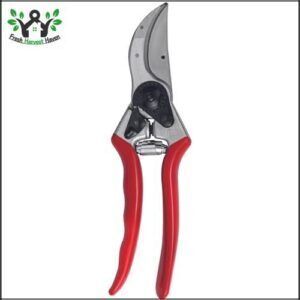
Few pruning tools have earned the kind of lasting trust that the Felco F2 has — and for good reason. Its hardened carbon-steel bypass blade cuts cleanly through stems up to one inch thick, which covers most harvesting situations you’ll face in the field.
The forged aluminum grips remain lightweight in your hand, and the built-in rubber shock absorber reduces wrist fatigue during long sessions.
Parts wear out? Just replace them. That’s a tool built to outlast entire growing careers.
| Best For | Serious gardeners, professional landscapers, and anyone with arthritis or hand fatigue who wants a precision pruner built to last decades. |
|---|---|
| Primary Material | Forged aluminum and steel |
| Weight | Not specified |
| Price Range | Premium |
| Warranty | Lifetime parts |
| Best Use Case | Heavy pruning |
| User Level | Professional/serious |
| Additional Features |
|
- Swiss-engineered bypass blade makes clean, effortless cuts on roses, shrubs, and woody stems up to 1 inch thick
- Fully replaceable parts (blade, spring, catch) mean this tool can last an entire gardening career
- Ergonomic angled head and rubber shock absorber cut down on wrist strain during long pruning sessions
- At $71.52, it’s a bigger upfront investment than most entry-level shears
- Left-handed users are out of luck — they’d need a different model like the Felco F-6
- Requires regular sharpening and oiling to keep it performing at its best
5. Corona Forged Classic Bypass Pruner Red
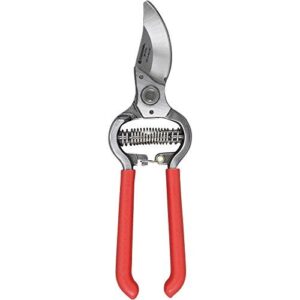
At $28.55, the Corona Classic Bypass Pruner delivers exceptional value. Its forged steel blade effortlessly cuts stems and branches up to one inch thick, making it ideal for orchard work, vineyard maintenance, and general garden pruning.
The tool features a sap groove to ensure smooth blade movement and high-visibility red grips that are easy to locate in tall grass.
Users with arthritis may find the spring tension a bit stiff, though this does not detract from its overall reliability as a daily-use pruner.
| Best For | Gardeners, orchardists, and vineyard workers who need a reliable, everyday pruner for branches up to 1 inch thick. |
|---|---|
| Primary Material | Forged steel |
| Weight | Not specified |
| Price Range | Mid-range |
| Warranty | Not specified |
| Best Use Case | Orchard pruning |
| User Level | Gardener/orchardist |
| Additional Features |
|
- Forged steel construction feels solid and holds up to heavy use over time.
- The sap groove and spring-loaded action keep things moving smoothly between cuts.
- High-visibility red handles make it easy to spot when you set it down in the garden.
- Spring tension runs stiffer than older Corona models, so it can be tough on hands with arthritis or carpal tunnel.
- Only handles branches up to 1 inch — anything thicker and you’ll need a different tool.
- Sap and residue build up on the blade, so regular cleaning and occasional sharpening are a must.
6. Zenport Row Crop Harvest Knife Silver
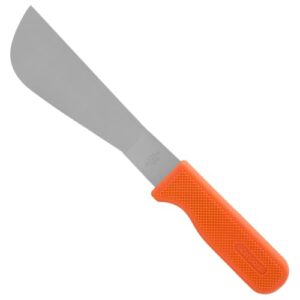
When you’re cutting through rows of broccoli, cauliflower, or squash all day, you need a knife that keeps up. The Zenport Row Crop Harvest Knife delivers exactly that. Its 6-inch stainless steel blade slices cleanly through thick stems without tearing, ensuring efficient fieldwork.
The bright orange handle stays visible in dense foliage, reducing the risk of misplacement, while its design provides a firm, non-slip grip for precision and safety.
At just 0.2 pounds, the knife is exceptionally lightweight, minimizing wrist strain during prolonged use. This makes it an ideal companion for extended harvesting sessions.
Ultimately, it’s a dependable tool built for real fieldwork, combining durability, functionality, and user-centric design.
| Best For | Farmers and field workers who need a reliable, fast-cutting knife for harvesting vegetables like broccoli, cauliflower, and squash or tackling cotton sampling across long workdays. |
|---|---|
| Primary Material | Stainless steel |
| Weight | 0.2 lb |
| Price Range | Budget |
| Warranty | Not specified |
| Best Use Case | Row crop harvesting |
| User Level | Farmer/field worker |
| Additional Features |
|
- The 7.25-inch weighted blade delivers serious striking power for clean, effortless cuts through thick stems
- Bright orange handle is easy to spot in the field and gives you a solid, non-slip grip all day
- Stainless steel is simple to clean and sanitize between uses, which matters when you’re moving row to row
- Some knives arrive dull and need sharpening right out of the box before they’re field-ready
- A few users noticed early corrosion after just the first use, which is a concern for a stainless steel tool
- The plastic handle gets the job done but may not hold up as well as a metal handle under heavy, daily use
7. Nisaku Hori Hori Weeding Knife Tool
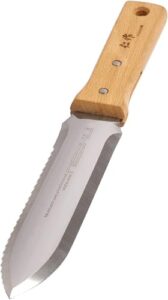
The Nisaku Hori Hori Weeding Knife is a versatile tool that combines digging, cutting, and measuring into one. Its 7.25-inch chrome-plated stainless steel blade handles multiple tasks, while the beech wood handle ensures a steady grip at just 10 oz.
One side features a razor-sharp edge for slicing roots and stems, while the opposite side is serrated to tackle tougher woody growth.
Depth markings etched directly onto the blade eliminate guesswork during bulb planting. For root crops and tight spaces, this knife remains an unmatched choice.
| Best For | Gardeners, foragers, and campers who want one tool that digs, cuts, and measures without hauling a whole kit. |
|---|---|
| Primary Material | Chrome-plated stainless steel |
| Weight | 10 oz |
| Price Range | Mid-range |
| Warranty | Not specified |
| Best Use Case | Digging and cutting |
| User Level | Gardener/forager |
| Additional Features |
|
- Dual-edge blade handles both clean cuts and tough, woody stems with ease
- Built-in depth markings take the guesswork out of planting bulbs or transplants
- Lightweight at 10 oz, so it won’t weigh you down on long days in the garden or field
- The vinyl sheath feels cheap and tends to wear out faster than the knife itself
- The wooden handle can loosen over time and needs occasional tightening to stay solid
- Both edges are seriously sharp, so you’ll want gloves — and it’s not built for heavy chopping
8. AeroFarms Micro Rainbow Mix 2 oz
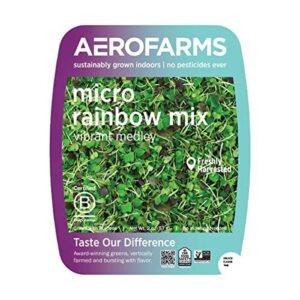
Not every harvesting essential is a blade or a basket. The AeroFarms Micro Rainbow Mix is a 2 oz ready-to-eat microgreen blend — featuring bok choy, arugula, kale, mustard, cabbage, and kohlrabi — grown indoors using controlled-environment agriculture with no pesticides ever.
This innovative approach uses 95% less water and 99% less land than field farming, demonstrating a commitment to sustainability.
For consumers, it offers no washing needed and a resealable tray that maintains freshness for up to a week.
Ultimately, this product sets the standard for what a well-harvested, nutrient-dense crop looks like at its best.
| Best For | Eco-conscious eaters and health-focused folks who want a quick, no-prep nutrient boost they can toss straight onto a salad or sandwich. |
|---|---|
| Primary Material | Mixed greens blend |
| Weight | 2 oz |
| Price Range | Budget |
| Warranty | Not applicable |
| Best Use Case | Ready-to-eat greens |
| User Level | General consumer |
| Additional Features |
|
- Grown with 95% less water and 99% less land than traditional farming — a genuine win for the planet
- No washing needed, resealable tray, and six flavorful greens in one mix — super convenient
- Pesticide-free with a solid stack of certifications (B Corp, Non-GMO, Kosher) so you know exactly what you’re getting
- At $4.79 for just 2 oz, it’s pricier per ounce than your typical bag of salad greens
- Shelf life is short — expect peak freshness for about 4–7 days, so you’ll need to use it quickly
- The small portion size means frequent trips back to the store if microgreens are a daily staple for you
9. Complete Knife Sharpening Stone Set
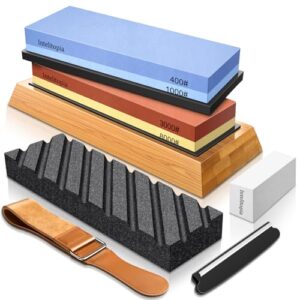
A dull blade tears instead of cuts — and that costs you quality produce. This complete knife sharpening stone set gives you four grit surfaces: 400/1000 for repairing worn edges and 3000/8000 for a clean, polished finish.
At $29.98, it’s a practical investment for anyone maintaining harvest knives, pruning shears, or hori-hori blades at home.
The non-slip bamboo base keeps things steady, and the angle guide helps beginners hit that consistent 15–20° bevel without guesswork.
Soak the stones for 10–15 minutes before use, and you’re set.
| Best For | Home cooks and gardening hobbyists who want a budget-friendly way to keep their knives and blades sharp without paying for professional services. |
|---|---|
| Primary Material | Aluminum oxide stone |
| Weight | Not specified |
| Price Range | Mid-range |
| Warranty | Not specified |
| Best Use Case | Blade maintenance |
| User Level | Home hobbyist |
| Additional Features |
|
- Four grit surfaces in one kit — you can go from fixing a dinged-up edge all the way to a polished finish without buying extra stones
- The angle guide takes the guesswork out of sharpening, which is a genuine lifesaver if you’re just starting out
- At $29.98, it’s hard to beat the value for everything you get in the box
- The leather strop isn’t always genuine cowhide — some people get what feels like a synthetic stand-in, which affects that final polish
- Stones need a 10–15 minute soak before every session, so you can’t just grab it and go
- It won’t satisfy serious professionals or high-end blade enthusiasts — the grit density and overall build aren’t quite at that level
10. Thirteen Chefs Food Grade Mineral Oil
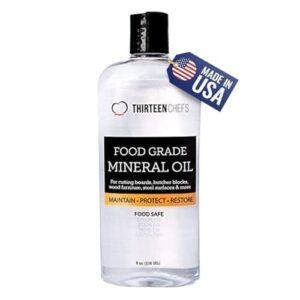
Sharp blades need more than a good edge — the wood grips holding them require care too. Thirteen Chefs Food Grade Mineral Oil prevents wooden handles on harvest knives, pruning shears, and hori-hori from drying out and cracking between seasons.
The oil is 100% pure, colorless, odorless, and NSF-certified food-safe, ensuring no harmful residue near produce. At $8.99 for 8 oz, one bottle lasts years, offering long-term value.
Apply about 1 oz with a rag, let it soak for 4 hours, and the treatment is complete. This simple process maintains tool durability and safety.
| Best For | Home cooks and gardeners who want a simple, affordable way to keep their wooden cutting boards, knife handles, and tool grips in good shape year after year. |
|---|---|
| Primary Material | Food-grade mineral oil |
| Weight | 8 oz |
| Price Range | Budget |
| Warranty | Not specified |
| Best Use Case | Wood conditioning |
| User Level | Home cook/gardener |
| Additional Features |
|
- Completely food-safe — colorless, odorless, and tasteless, so there’s nothing sketchy near your food or produce
- A little goes a long way — one 8 oz bottle can last years with regular use, making it easy on the wallet
- Dead simple to use — just wipe it on, wait a few hours, and you’re done with no greasy mess left behind
- Really dried-out wood might need several coats before it fully soaks in, so older tools take more patience
- It’s not a disinfectant, so you still need to clean your surfaces properly before or after oiling
- The 8 oz bottle might run short if you’re treating large butcher blocks often or have a lot of tools to maintain
Frequently Asked Questions (FAQs)
What kind of tools are used for harvesting?
From simple harvesting knives and pruning shears to telescoping fruit pickers, grabbers, and mechanical harvesters, the right tool depends entirely on your crop type, plant height, and farm scale.
What is a harvesting tool?
The right tool for the right job. A harvesting tool is any hand-held or powered implement designed to cut, grip, or collect mature crops cleanly from the plant without causing damage.
What are the 4 steps of harvesting?
Harvesting breaks down into four steps: assess maturity, cut or pick cleanly, handle gently, and collect into clean containers.
Each step protects quality and keeps your produce shelf-ready, from field to table.
Whats the best time of day to harvest?
Early morning is your best window — ideally after the dew dries.
Crops are coolest, most hydrated, and at peak flavor during this time.
Leafy greens, herbs, and fruiting vegetables all benefit from that cool, crisp start.
How do weather conditions affect harvesting decisions?
Weather shapes your harvest window more than most people expect. Rain softens fields, delays safe equipment use, and pushes grain moisture too high for storage.
When a dry window opens, you move.
Can I harvest produce after applying pesticides?
No, don’t harvest right after spraying. Every pesticide label lists a pre-harvest interval — the minimum days you must wait before picking.
Harvesting too soon is illegal and leaves unsafe residues on your produce.
Should I wash produce immediately after harvesting?
Not right away. Washing adds moisture that speeds up mold and decay. Store produce dry, and wash it just before eating to keep it fresh longer.
How long can harvested produce stay unrefrigerated?
Berries spoil within a day or two, citrus lasts up to two weeks, and root vegetables like potatoes can sit for months unrefrigerated.
How do weather conditions affect harvesting tool performance?
Conditions outside shape how your tools perform. Rain makes grips slippery and blades corrode faster. Heat softens grips, and frost stiffens springs.
Match your maintenance routine to the season. Your tools will keep up.
Can harvesting tools be shared safely between workers?
Sharing tools between workers can open a Pandora’s box of contamination risks.
Yes, it’s possible safely — but only if you clean, rinse, and sanitize every shared knife or shears before passing it on.
Conclusion
Think of your harvest tools as an extension of your hands—what they do to a stem, the plant remembers. Mastering proper tool usage for harvesting produce isn’t about having the most expensive gear; it’s about using the right tool cleanly, keeping edges sharp, and handling each crop with intention.
Build that habit now, and your garden will reward you with produce that reaches the table fresher, longer, and in better shape than ever before. Happy harvesting!
- https://extension.umn.edu/growing-safe-food/cleaning-and-sanitizing-tools-harvest-containers-and-surfaces
- https://caff.org/food-safety-resources/rfsi-food-safety-equipment-resources/
- https://foodsafety.uconn.edu/tools-for-farmers-harvest/
- https://www.pubs.ext.vt.edu/FST/FST-42/FST-42NP.html
- https://www.fao.org/4/ae075e/ae075e23.htm