
This site is supported by our readers. We may earn a commission, at no cost to you, if you purchase through links.

Pull a grape too early and you’re left with sour, underripe clusters that won’t deliver the sweetness or flavor you expect. Wait a day too long and you risk split berries, mold, or a drop in quality that ruins weeks of careful vine management. The difference between a perfect harvest and a compromised one often comes down to a 48-hour window—and knowing exactly what to look for.
Mastering how to harvest grapes means reading sugar levels, tracking seed development, and timing your cut when texture, aroma, and taste align at their peak. Get the timing right, use the proper tools, and handle your fruit with precision, and you’ll lock in maximum quality from vine to storage.
Table Of Contents
- Key Takeaways
- When is The Best Time to Harvest Grapes?
- How to Tell if Grapes Are Ripe
- What Tools Are Needed for Grape Harvesting?
- Should Grapes Be Picked Individually or in Clusters?
- Step-by-Step Guide to Harvesting Grapes by Hand
- How to Handle Grapes After Picking
- What is The Best Time of Day to Harvest Grapes?
- How to Store Freshly Harvested Grapes
- Can You Freeze or Dry Grapes for Preservation?
- Varietal Considerations When Harvesting Grapes
- Frequently Asked Questions (FAQs)
- Conclusion
Key Takeaways
- Harvest timing hinges on a 48-hour window where sugar levels hit 16–25 Brix, seeds turn brown and hard, and berry texture shows slight softness—miss it and you’re stuck with sour fruit or spoiled clusters.
- Early morning harvesting preserves 2–5% more juice and delivers 8–12% better efficiency than midday picks, while immediate cooling to 0–4°C within two hours slashes decay by up to 40%.
- Table grapes demand gentle cluster handling at 16–24° Brix for fresh eating, while wine grapes need higher sugar concentration at 20–28° Brix and tolerate more aggressive mechanical methods.
- Clean bypass pruners deliver 12–15% less berry bruising than anvil styles, and proper post-harvest storage at 90% humidity with immediate debris removal cuts spoilage and rot by 20–70%.
When is The Best Time to Harvest Grapes?
You can’t just walk into your vineyard and start cutting. The window for perfect grapes is narrow, and missing it means you’re stuck with fruit that’s either too tart or already past its prime.
Let’s break down the three factors that tell you exactly when your grapes are ready to come off the vine.
Key Signs of Grape Ripeness
You’ll nail the perfect harvest when sugar levels hit 16–25 Brix—use a refractometer to measure this Brix content precisely. Check berry texture for slight softness and watch skin color shift to varietal hues.
You’ll nail the perfect harvest when sugar levels hit 16–25 Brix—use a refractometer to measure precisely
Seed development matters: brown, hard seeds signal readiness. The aroma profile intensifies at peak ripeness.
Don’t guess—taste-test for sweetness and run a proper ripeness test before cutting.
Optimal Harvest Season
Once you’ve confirmed grape ripeness through testing, timing your harvest season becomes your next power move. Most grapes hit peak sugar accumulation during late August through October in northern regions—that’s when climate factors align with ideal ripening patterns.
Your specific harvest timing depends on cultivar maturation rates and local temperature swings. Wine grapes demand tighter windows than table varieties, so track your vineyard’s unique ripeness progression religiously.
Weather and Environmental Factors
Beyond cultivar timing, weather conditions can make or break your harvest quality. You’ll want to track these environmental markers closely:
- Humidity levels: Keep relative humidity between 60–70% to minimize berry cracking and mold development
- Morning temperatures: Target 10–20°C (50–68°F) during picking to preserve aromatics and reduce moisture loss
- Wind effects: Calm conditions (under 10 km/h) prevent berry desiccation and drop
- Recent rainfall: Rain within 48 hours reduces firmness by 12% on susceptible varieties
Temperature fluctuations and soil conditions directly influence grape quality, so adjust your harvest timing accordingly.
How to Tell if Grapes Are Ripe
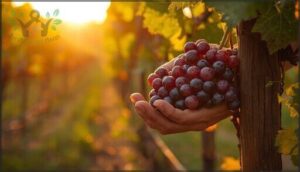
You can’t rely on the calendar alone to tell you when your grapes are ready. The vine will give you clear signals if you know what to look for.
Here’s how to read those signs and take control of your harvest timing.
Color and Texture Indicators
Color inspection reveals more than meets the eye. When you lightly squeeze a grape, berry firmness should show gentle give—not rock-hard, not mushy. Ripe berries exhibit skin integrity with less than 2% cracking, plus a translucency in the flesh that signals peak sweetness. Anthocyanin levels drive that deep purple or red hue, hitting 40–120 mg/kg depending on variety.
But here’s the catch: color develops 7–21 days before true ripeness. Physical texture analysis and ripeness testing through touch matter most. Fruit ripening isn’t just about looks—texture analysis and grape ripeness and quality go hand in hand.
Checking Stems and Seeds
To determine grape ripeness, crack open a few berries and examine their seeds. Seed Color Analysis is key: brown, hardened seeds indicate lignification is complete, while green seeds suggest you’re 10–20 days early. Seed Texture Evaluation is equally important—ripe seeds should feel crunchy and brittle, not soft or chewy.
For Stem Check, assess Peduncle Firmness and Stem Lignification. Partially brown, flexible stems allow for clean Berry Detachment without tearing. Stem Inspection provides a more accurate measure of Grape Ripeness and Quality than sugar content alone.
These Grape Harvesting Techniques refine Harvest Timing and Management, reducing underripe flavors by up to 30%.
What Tools Are Needed for Grape Harvesting?

You don’t need a lot of fancy equipment to harvest grapes, but the right tools make all the difference between a clean cut and a damaged cluster. The essentials come down to three categories: sharp cutting tools, collection containers, and a few basics to protect both you and your fruit.
Here’s what belongs in your harvest kit.
Choosing Pruners, Scissors, or Razor Forks
Your pruner selection directly impacts grape quality. Bypass pruners cut cleanly without crushing, slashing berry bruise rates by 12–15% compared to anvil styles. Razor forks deliver precision on woody stems, reducing tears by up to 8%. Lightweight scissors under 240 grams speed picking in tight canopies and cut fatigue by 7%.
Master your blade materials and cutting techniques—your harvest tools define your control.
Using Buckets or Baskets
Momentum counts at harvest. A good harvest basket cushions clusters—wicker weaving keeps berries plump and moisture steady, trimming dehydration and skin splits.
Prefer light-colored buckets for grape handling, as they show missed fruit and minimize bruising with mesh liners. Harvest efficiency jumps by 12% with smooth basket designs.
Always sanitize your container; a single pass with ethanol keeps mold and off-flavors at bay.
Safety and Handling Equipment
Want to keep all ten fingers and bring in a clean crop? You need more than just sharp garden pruners—you need real Personal Protection. Slip-resistant gloves, cut-resistant sleeves, and high-visibility vests are the unsung heroes of grape harvesting tools and equipment.
Good handling techniques and a sanitized harvest basket set you up for safe storage solutions and a job well done.
Should Grapes Be Picked Individually or in Clusters?
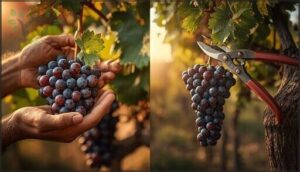
Regarding picking grapes, you’ve got options—pluck them one by one or snip whole clusters from the vine. The choice depends on what you plan to do with your harvest and how you want to handle each bunch.
Here’s what you need to know before you get started.
Methods for Table Grapes Vs. Wine Grapes
Ever noticed how vineyard management changes the rules depending on what you’re picking? With table grapes, you harvest entire clusters—quick, efficient, and gentle for better fruit quality and crop yield.
For wine grapes, the game is more strategic. Here, cluster selection isn’t just about ripeness; timing means everything. Some vintners pick only the ripest clusters to dial in harvest timing, fine-tuning the flavors.
The Grape Variety and your end goal—fresh eating or fermentation—will always shape how you approach harvesting grapes, guiding every cut and every decision in the vineyard.
Pros and Cons of Each Approach
Choosing your harvest approach? The trade-offs matter. Mechanical harvesting slashes labor costs by 40–60% and speeds through your blocks fast, but you’ll see 1–3% more skin damage on delicate varieties—a real concern in viticulture. Hand picking preserves berry integrity beautifully, keeping bruising under 0.5%, yet it demands serious time and crew coordination during your harvest window.
Here’s what you’re weighing:
- Speed vs. precision in grape handling
- Cost efficiency vs. fruit quality
- Cluster selection control in harvesting grapes
- Equipment investment vs. labor availability
- Variety sensitivity during grape harvest
Harvest timing optimization can boost marketable yield 5–12% when you align method with ripeness.
Step-by-Step Guide to Harvesting Grapes by Hand
You’ve got your grapes at peak ripeness—now it’s time to get them off the vine without bruising or crushing them. The right approach keeps your fruit intact and saves you from losing quality to careless handling.
Here’s how to harvest grapes like you mean it, from prep to the final cut.
Preparing Your Equipment
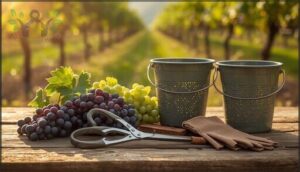
Before you step into your vineyard, get your tools in line. Sharp bypass pruners or garden scissors work best—bypass designs deliver cleaner cuts and preserve those critical pedicels. Clean everything with basic sanitation protocols; pre-harvest cleaning cuts fruit contamination by about 41%.
Grab harvest buckets with solid grips and perforated sides to boost airflow. Weather-resistant gear prevents dropped berries, and cut-resistant gloves slash hand injuries by more than half.
Proper Cutting Techniques

Position your bypass pruners or scissors at the cluster stem’s base, about 1–2 cm above the main vine. Apply steady pressure to cut cleanly through—tearing jerks the vine and invites infection. Don’t twist or yank.
Grip the cluster gently with your free hand as you snip, catching it before it drops. Clean, decisive cuts keep your fruit intact and your vines healthy.
Preventing Damage During Harvest
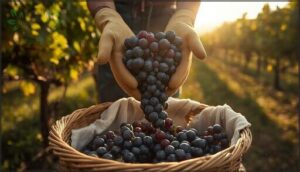
Once you’ve made that clean cut, the real test begins. Gentle handling separates pros from amateurs—bruised berries spoil fast and drag down your entire harvest. Keep these damage control priorities sharp:
- Avoid stacking clusters too high in your bucket; weight crushes lower fruit and leaks juice.
- Move baskets carefully—sudden jolts tear skins and invite rot.
- Shield grapes from direct sun during picking; heat accelerates deterioration and microbial growth.
Crop preservation starts the moment you touch the vine.
How to Handle Grapes After Picking
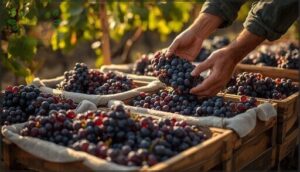
Your harvest doesn’t end when the grapes leave the vine. What you do in those first few hours makes the difference between fruit that stays fresh for weeks and clusters that turn to mush by tomorrow.
Let’s cover the essential steps that protect your hard-earned harvest from field to storage.
Immediate Post-Harvest Steps
Think of your just-picked grapes as a ticking clock—every minute counts. Temperature control is your first move: get them to 0–4°C within two hours to slash decay by up to 40%.
Moisture management matters too—maintain 95–100% humidity to stop weight loss cold.
Gentle handling and cooling techniques lock in firmness, while ethylene regulation delays overripening, giving you total command over post-harvest care and fruit storage.
Cleaning and Removing Debris
Clean your grapes like a pro—debris control and fruit sanitation slash defects by up to 12%. Harvest cleanup within 24 hours cuts rot by 6%, giving you total command over quality.
Your post-harvest management checklist for vineyard maintenance:
- Remove leaf litter and stems immediately after grape picking
- Rinse clusters gently to eliminate surface contaminants
- Inspect for insects or spiders before storage
- Use vacuum collectors to capture airborne particulates
- Maintain debris loads under 2% for peak washing efficiency
Master these harvesting techniques now.
Protecting Grapes From Pests
Against pest invasion, your integrated control arsenal delivers decisive protection. Chemical alternatives and biological methods reduce post-harvest losses by 25–40%.
Inspect clusters within 24 hours for 90% detection success in crop monitoring.
Deploy sanitation protocols: sterilize bins with 1% sodium hypochlorite to cut grape disease by 50–70%.
Master these viticulture defenses during grape picking, and your harvesting grapes operations achieve vineyard management mastery.
What is The Best Time of Day to Harvest Grapes?

Timing your harvest isn’t just about the season—it’s about the hour. The temperature and condition of your grapes change dramatically throughout the day, which directly impacts their quality and how well they’ll store.
Let’s look at the two windows that give you the upper hand.
Early Morning Harvest Benefits
Harvesting grapes at dawn gives you command over quality from the first cut. Cooler temperatures in those early hours preserve berry integrity—your fruit holds 2–5% more juice than midday picks and stays firmer during handling. Morning dew reduces moisture loss while reduced respiration keeps sugars and acids stable, protecting flavor preservation throughout storage.
You’ll also see harvest efficiency jump by 8–12% as your crew works without battling heat. Grape harvesting in the cool morning delivers tighter control over ripeness indicators and post-harvest handling, giving you fruit that looks better and lasts longer.
Late Evening as an Alternative
When morning harvests aren’t feasible, late evening picking delivers comparable cooling advantages without the dawn rush. You’ll harvest grapes under cooler temps that mirror early-morning conditions, keeping berry firmness intact and reducing microbial load by up to 35% when you cold-shock fruit within two hours.
Evening labor also sidesteps midday heat stress on your crew, maintaining picking precision when ripeness matters most.
Late day picking cuts disease pressure in dense canopies where daytime humidity lingers, and proper post-harvest handling immediately after sunset preserves the quality gains you’ve earned through strategic timing.
How to Store Freshly Harvested Grapes
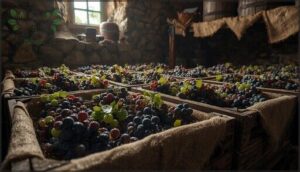
You’ve done the hard work—now don’t let it go to waste. Proper storage makes the difference between grapes that stay fresh for weeks and ones that turn to mush in days.
Here’s how to keep your harvest in peak condition.
Short-Term Storage Methods
You’ve got the grapes—now move fast. Refrigeration tips are simple: get your harvest into cold storage within an hour to lock in freshness. Aim for 0°C (32°F) with humidity control around 90% if your setup allows it. Use perforated bags so air circulates without trapping moisture.
This post-harvest handling keeps fruit storage and preservation on point for grape harvesting success.
Preventing Spoilage and Odor Absorption
Store grapes separately from onions, garlic, or any pungent produce—they’ll absorb those odors fast.
For spoilage prevention and fruit handling best practices, inspect clusters daily and remove any damaged berries immediately. Control humidity at 90% to prevent mold while maintaining that 0°C sweet spot.
These fresh storage tips and odor control methods keep your post-harvest care tight and your fruit preservation and storage game strong.
Best Containers for Storage
Your container choice controls the outcome. Skip porous materials—glass and polypropylene tubs with tight lids cut moisture loss by 6–12% over 48 hours. For cooling systems and humidity control at 90–95%, use food-grade vented boxes that slash mold risk by 20–35%. Dark, airtight containers protect pigment and lock in quality during postharvest care.
- Climate-controlled bins retain 92–98% firmness after seven days
- Vented plastic reduces condensation hotspots by 30–50%
- Opaque storage cuts pigment oxidation by 15–25%
- Polypropylene outperforms open crates in moisture retention
Can You Freeze or Dry Grapes for Preservation?
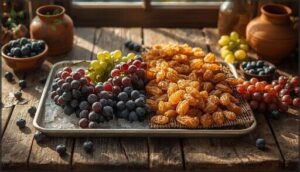
You don’t have to consume all your grapes fresh—preserving them gives you options that stretch way beyond harvest season. Freezing locks in flavor for months, while drying transforms them into raisins you can store indefinitely.
Here’s how to take control of both methods and keep your harvest working for you long-term.
Freezing Grapes Properly
You can freeze grapes straight off the vine to lock in freshness for up to 12 months. Rinse and dry them first, then spread berries on trays for flash freezing before transferring to airtight bags.
This fruit preservation method beats room-temperature storage for vitamin retention. Frozen grape uses range from smoothies to cold garnishes—no blanching required, just proper packaging methods and consistent freezer storage.
Drying Grapes to Make Raisins
Raisin production demands grapes at 20–26 °Brix sugar content—your signal for peak dehydration potential.
Sun drying takes 2–4 weeks in warm, low-humidity conditions, while food dehydration systems finish in 4–10 days.
Harvest “Thompson Seedless” or similar varieties when firm yet sweet, then spread clusters on racks with airflow.
This grape dehydration transforms fresh fruit into shelf-stable raisins, preserving harvest bounty through drying methods you control.
Long-Term Storage Tips
Beyond freezing and drying, controlled atmosphere storage extends your grape shelf life by 2–6 months when you dial in 1–3% oxygen and manage ethylene with scrubbers.
Cooling methods matter—drop temperatures to 0–2°C within two hours of harvesting and postharvest handling.
Humidity control at 85–95% in proper storage containers prevents shriveling, giving you mastery over food preservation and food storage long after harvest.
Varietal Considerations When Harvesting Grapes

Not all grapes are created equal, and the variety you’re growing changes everything about your harvest. Table grapes, wine grapes, and raisin varieties each demand their own timing and handling strategies.
Here’s what you need to know about harvesting different grape types the right way.
Table Grapes Vs. Wine Grapes
Your harvest strategy hinges on the grape varieties you’re growing—table grapes and wine grapes demand completely different approaches. Here’s what separates them:
- Table grapes ripen at 16–24° Brix with lower sugar content, prioritizing sweetness and crisp texture for fresh eating
- Wine grapes push 20–28° Brix, targeting higher sugar levels and balanced acidity for fermentation
- Harvest methods differ: wine grapes tolerate cluster cuts, while table grapes need gentle handling to prevent bruising
- Vineyard management adjusts yields—table grapes deliver 20–40 t/ha versus wine’s focused 5–15 t/ha for grape quality
Seedless Vs. Seeded Varieties
Seedless grapes offer faster harvest timing, ripening 5–10 days earlier than seeded varieties and providing tighter picking windows. This makes them a compelling choice for growers seeking efficiency in vine management.
| Factor | Seedless Grapes | Seeded Grapes |
|---|---|---|
| Berry size | Smaller individual mass | 15–25% heavier per cluster |
| Seed yield | Zero—pure fruit quality | Higher total cluster weight |
| Harvest timing | 10–14 day window | 14–21 day window |
| Vine management | Lower vigor (0.6–1.0 ratio) | Higher vigor (0.9–1.3 ratio) |
| Fruit quality | 68–84% consumer preference | Better for juice/wine production |
Seedless varieties require precise timing—missing the harvest window can lead to a crash in sugar-acid balance. This sensitivity underscores the need for careful planning and execution in their cultivation.
Special Handling for Raisin Grapes
Sugar concentration defines everything when harvesting grapes for raisins. You’re targeting Brix levels between 22–28%, which takes patience—expect to wait 2–4 weeks beyond when table varieties reach peak ripeness.
- Monitor berry moisture at 70–75% before drying begins
- Pick during 60–90 consecutive dry days to prevent rot
- Handle clusters gently—bruising increases microbial spoilage risk
- Sort immediately in the field within 2–4 hours after harvest
- Consider deficit irrigation pre-harvest to boost sugar concentration by 2–6 °Brix
Frequently Asked Questions (FAQs)
How do you prune grapevines after harvest?
Disciplined post-harvest pruning improves vine balance by 3–6 points, directly stabilizing next-year yields within ±8%.
After harvest, wait 6–8 weeks until dormancy, then use bypass pruners to remove old wood and shape fruiting canes strategically.
What diseases affect grapes during harvest season?
Powdery mildew can strike 60–80% of vines during harvest, while Botrytis bunch rot thrives in humid conditions.
Black rot and downy mildew also threaten your crop, demanding vigilant vineyard management to protect fruit quality.
How much water do grapevines need before harvest?
Your vines won’t “tell you” when they’re thirsty—you control it.
Maintain soil moisture at 60–80% capacity during ripening, adjusting irrigation timing 2–6 weeks before harvest to balance grape yield optimization with sugar concentration through strategic water stress management.
Can you harvest grapes in the rain?
You can harvest grapes in the rain, but expect berry splitting, diluted sugars, and increased rot risk. Wet conditions demand immediate sorting and careful handling to minimize damage and preserve quality through rapid post-harvest processing.
How do you calculate yield per grapevine?
Calculating yield per grapevine isn’t guesswork—it’s vineyard management grounded in real numbers. Weigh sample grape clusters at harvest timing, then multiply average cluster weight by clusters per vine.
Track sugar accumulation and crop management data to adjust predictions yearly.
Conclusion
Harvesting grapes is like conducting an orchestra—every element must hit its mark at precisely the right moment. Miss the beat on ripeness, timing, or technique, and the entire performance falls flat.
You now control the variables that separate mediocre fruit from outstanding quality. Apply these methods with precision, trust your observations over guesswork, and you’ll consistently pull perfect clusters when it matters most.
Your vines have done their part—finish what they started.