This site is supported by our readers. We may earn a commission, at no cost to you, if you purchase through links.
Most gardeners lose their first harvest before they ever plant a seed. Not to pests, not to drought—to impatience and guesswork. They till cold, wet soil in March, crowd their seedlings together, and transplant tomatoes two weeks before the last frost. Then they wonder why summer feels more like damage control than abundance.
Spring gardening rewards the people who think ahead, not the ones who rush. Knowing how to plan a spring garden—your hardiness zone, your soil’s drainage, your first realistic planting dates—turns a frustrating season into one that actually produces.
Table Of Contents
- Key Takeaways
- Why Planning a Spring Garden Matters
- Assessing Your Garden Site and Soil
- Determining Your Spring Planting Timeline
- Designing Your Spring Garden Layout
- Selecting The Best Plants for Spring
- Preparing Soil for Spring Planting
- Essential Spring Garden Tasks
- Top 7 Tools and Products for Spring Planning
- Creating a Spring Garden Maintenance Schedule
- Frequently Asked Questions (FAQs)
- How do I plan my spring garden?
- What is the 3-hour gardening rule?
- What are common spring gardening mistakes?
- What companion plants work best together?
- How do you protect seedlings from pests?
- When should you start hardening off seedlings?
- What are the best organic fertilizers for spring?
- How do you manage garden watering schedules?
- How do I protect seedlings from late frosts?
- What watering schedule works best for spring gardens?
- Conclusion
Key Takeaways
- Knowing your USDA hardiness zone and last frost date before you touch a single seed is the foundation that every smart planting decision builds on.
- soil needs to be tested, amended, and loose enough for roots to push through before you plant anything — skipping this step is the fastest way to a disappointing harvest.
- Planning your layout on paper first — mapping sunlight, spacing crops properly, and pairing companions like tomatoes with basil — saves you from costly mistakes once plants are in the ground.
- Sticking to a regular maintenance rhythm of deep morning watering, succession planting every 2–3 weeks, and twice‑weekly pest scouting is what turns a good start into a full, productive season.
Why Planning a Spring Garden Matters
A little planning in late winter can make the difference between a garden that thrives and one that just survives.
Pairing your crops strategically can give them a real head start — check out these companion planting tips for winter vegetables to set your garden up for a strong season.
Before you dig your first hole or buy your first seed packet, there are a few things worth thinking through. Here’s what to keep in mind as you get started.
Benefits of Early Garden Planning
Early garden planning pays off in almost every direction. Start seeds indoors 4 to 6 weeks before your last frost, and you’re already stretching your harvest window.
Smart garden design cuts waste, saves money on supplies, and helps long-term soil health through proper rotation.
Honestly, a little early spring prep gives you stress relief all season long.
Learn about the early garden planning benefits.
Common Mistakes to Avoid
That early momentum can unravel fast if a few key mistakes slip through.
Late frost planting tops the list — putting tomatoes or basil out too soon often means blackened stems overnight. Wet soil tilling compacts structure into hard clods, and roots can’t push through. Overcrowded seeds, excessive mulch against stems, and overfertilizing seedlings are equally common traps.
Spring gardening tips, garden planning and design, soil testing, and pest and weed control all start with knowing what not to do.
Avoid working wet soil early because it compacts the soil and harms seedlings.
Setting Realistic Garden Goals
Once you know what to avoid, the next step is being honest with yourself about what you can actually manage. Realistic goal-setting is the backbone of good Garden Planning and Design.
- Time budgeting — Even 30–60 minutes daily keeps a small plot thriving
- Space constraints — A 100 sq ft bed is a smart, manageable start
- Skill assessment — Begin with lettuce and beans, not finicky heirlooms
- Budget limits — Plan for $250–$500 to set up a solid 10×10 garden
- Yield expectations — Match what you grow to what you’ll actually cook and eat
Assessing Your Garden Site and Soil
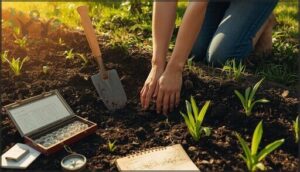
Before you buy a single seed packet, it pays to really look at what you’re working with. Your garden site has a lot to say — if you know how to listen.
Here’s what to check first.
Evaluating Sunlight and Microclimates
Your garden’s success starts with honest sun mapping techniques. Walk your space hourly from 8 AM to 6 PM on a clear day, noting which beds catch full sun and which fall into shadow.
Walk your garden hourly from 8 AM to 6 PM — honest sun mapping is where garden success truly begins
Morning vs afternoon light matters too — morning sun suits leafy greens, while afternoon rays push tomatoes and peppers.
Understanding your microclimate zones puts you in control from day one.
Checking Drainage and Soil Structure
Checking your drainage and soil structure might save you a season of frustration.
Run a simple Percolation Test — dig 12 inches down, fill with water, and watch for a 1–3 inch drop per hour.
Too slow? Amendments are needed.
Pair that with a Jar Texture Analysis to map your soil science, then use a Compaction Probe to catch hidden density before roots do.
Determining Your Spring Planting Timeline
Getting your planting timeline right is what separates a garden that thrives from one that struggles to catch up.
It all starts with knowing your zone, your frost dates, and what worked — or didn’t — last season. Here’s what to figure out before you put a single seed in the ground.
Identifying Your USDA Hardiness Zone
Your USDA Plant Hardiness Zone is the foundation on which everything else builds. Head to planthardiness.ars.usda.gov and use the Zip Code Search — it pulls from 13,412 weather stations using 1991–2020 data for half‑mile resolution.
Once you’ve got your zone, factor in Microclimate Adjustments: south‑facing walls run a full zone warmer, while low spots trap cold air. Zone Boundary Variability is real, so always account for your specific conditions.
Calculating Your Last Frost Date
Once you know your Plant Hardiness Zone, pinning down your Last Frost Date is the next move.
Use Frost Calculator Tools like Almanac.com or the National Gardening Association’s Probability Percentile Charts — both pull from decades of Historical Weather Data. Aim for the 90% probability column, then factor in Microclimate Adjustments for your specific spot. That gives you a reliable Safe Planting Window to work from.
Reviewing Past Garden Performance
Your old garden journal is a goldmine. Flip back through your yield analysis notes — if bush beans hit only 180 grams per plant during dry spells but jumped 40 percent with supplemental watering, that’s a clear weather impact signal.
Check pest trends, soil test history, and tool usage logs too. A simple garden checklist keeps this review fast and focused.
Designing Your Spring Garden Layout
Now comes the fun part — putting it all on paper. A good layout saves you time, prevents headaches, and helps every plant get what it needs to thrive.
Here’s what to think through as you start mapping out your space.
Measuring and Mapping Garden Space
base sketch as the foundation of your entire garden layout. Start by measuring each bed with a tape measure, then draw it to a 1:50 scale on graph paper.
Use triangulation techniques from two fixed points to place irregular features accurately. Offset measurements every few feet capture curves. Digital mapping apps simplify this further, automatically calculating square footage for smarter garden design and preparation.
Planning Beds, Paths, and Crop Placement
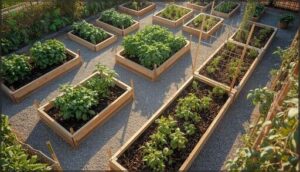
Your garden layout lives or dies by how well you plan beds, paths, and crop placement before you plant a single seed.
- Follow Bed Width Guidelines: 4 feet wide for freestanding beds, 2 feet against walls.
- Apply Raised Bed Height of 6–12 inches depending on root depth.
- Use Path Material Selection like 4-inch wood chips or gravel for durability.
- Build your Crop Pairing Strategy around companions like tomatoes with basil.
- Apply Microclimate Zoning to match crops to your warmest, most sheltered spots.
Factoring in Sunlight, Shade, and Spacing
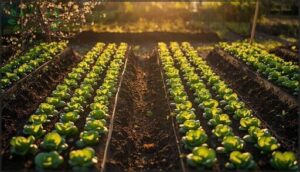
Once your beds and paths are set, sunlight mapping pulls everything together.
Check your spots at 9am, noon, and 3pm — most vegetables need 6 to 8 hours of direct sun daily.
Shade timing matters too; deciduous trees let full light through in early spring, so use that window wisely.
Orient rows north-south for even exposure, and space plants properly — 10 to 12 inches for lettuce, 12 for broccoli — so air moves freely and disease stays out.
Selecting The Best Plants for Spring
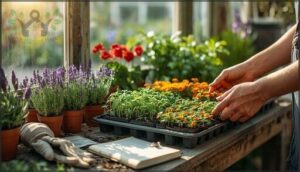
Picking the right plants is where your spring garden really starts to take shape.
A few key decisions — like whether to grow annuals or perennials, and which crops suit your climate and kitchen — will shape everything that follows.
Here’s what to think about before you put a single seed in the ground.
Annuals Vs. Perennials
Regarding plant selection and care, knowing the difference between annuals and perennials changes everything. Annuals like marigolds bloom all season but need yearly replanting — higher ongoing cost, maximum design flexibility. Perennials cost more upfront but deliver longevity benefits, returning each spring with less water requirements over time.
Here’s a quick comparison:
- Bloom duration — Annuals bloom continuously; perennials offer 2–4 week windows
- Cost comparison — Annuals are cheaper per plant; perennials save money long-term
- Water requirements — Established perennials need less frequent watering
- Design flexibility — Annuals let you reinvent your garden each season
- Garden preparation — Mix both for structure plus season-long color
Cool-Season Vs. Warm-Season Crops
Beyond annuals and perennials, timing your crops around temperature requirements makes or breaks a spring harvest.
Cool-season crops — lettuce, spinach, peas — germinate in soil as cold as 40°F and handle frost tolerance down to 28°F, so you can start them 4 to 6 weeks before your last frost date.
Warm-season crops like tomatoes won’t budge until soil hits 65°F.
Disease-Resistant and Bolt-Resistant Varieties
Picking the right varieties is where spring gardening gets smart. Resistant lettuce like Starfighter and Xalbadora fend off downy mildew and mosaic viruses without extra effort. For bolt-resistant spinach, Kolibri and Escalade handle mid‑spring temperature swings well. Consider these workhorses:
- Belstar broccoli: heat‑tolerant broccoli with intermediate disease resistance
- Zlata: a cracking‑resistant radish with weeks of extended harvest
- Marathon: cold‑tolerant broccoli with firm, shelf‑stable heads
- Red Russian kale: winter‑hardy kale with downy mildew resistance
Matching Plants to Cooking Preferences
lands on your plate, then work backward.
Italian Herb Pairings start with basil and oregano for pesto and pizza.
Asian Flavor Profiles call for bok choy and minari.
Mexican Spice Matching means cilantro and jalapeños.
French Culinary Herbs like tarragon and chervil enhance sauces.
Mediterranean Garden Edibles — fava beans, mint, dill — round out your seasonal gardening goals beautifully.
Preparing Soil for Spring Planting

Good soil is the foundation that everything else builds on.
Before you put a single seed in the ground, there are a few key steps that’ll make a real difference in how your garden grows.
Here’s what to focus on first.
Adding Compost and Organic Matter
Compost is the backbone of healthy soil — and getting your compost timing right makes all the difference. Spread it in early spring as the ground warms, working 2 to 3 inches into the top 6 to 8 inches of soil. For organic matter types, consider these layering techniques:
- Well-rotted manure — boosts nitrogen and potash
- Leaf mold — improves moisture retention dramatically
- Worm castings — deliver concentrated nutrients and beneficial microbes
- Aged grass clippings — support nutrient balance with nitrogen, phosphorus, and potassium
Finish with a 2 to 3 inch compost mulch layer for mulch integration that suppresses weeds and locks in moisture.
Adjusting Soil PH and Fertility
Once you’ve got your soil test results in hand, interpreting those numbers tells you exactly what needs fixing. For soil pH between 6.0 and 7.0, most vegetables thrive without adjustment.
Too acidic? Lime application rates around 1,000 pounds per acre raise pH effectively. Too alkaline? Sulfur pH reduction works well in spring.
Micronutrient balancing and organic fertilizer timing round out smart soil and fertilizer management.
Loosening Compacted Soil
Compacted soil is the silent enemy of a thriving garden. Before you plant anything, check for Soil Compaction Signs — pooling water, patchy growth, or soil that resists a finger push beyond 2 inches. Then loosen it with the right tool:
- Garden Fork Aeration — rock tines back and forth, spacing holes 4–6 inches apart
- Broadfork Deep Loosening — reaches 18 inches, preserving microbial layers
- Hand Cultivator Technique — perfect for tight raised beds, breaks surface crust to 9 cm
- Spring Aeration Timing — wait until soil crumbles easily after squeezing
- Soil Preparation depth — loosen 6–8 inches before planting
Incorporating Cover Crops
Cover crops are one of the smartest moves in sustainable and organic gardening.
For timing termination, cut them down about two weeks before planting — this gives decomposing biomass time for nutrient release into the soil.
Mix species selection matters too: try oats, field peas, and radish together for weed suppression, nitrogen fixing, and deep loosening.
Turn residue into the top 4–6 inches using simple incorporation methods, then wait 10–14 days before sowing your spring crops.
Essential Spring Garden Tasks
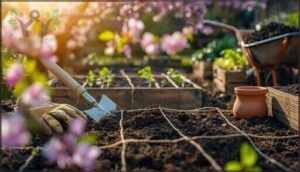
With your soil prepped and your layout mapped out, it’s time to roll up your sleeves and get the garden physically ready.
A few key tasks done right now will save you a lot of headaches once planting season hits.
Here’s what to tackle first.
Cleaning and Sharpening Tools
Dull, dirty tools make every spring task harder than it needs to be.
Start with the right brush types — stiff bristles for shovels, a toothbrush for pruner crevices.
Use bleach disinfection (10% solution, 10 minutes) to kill pathogens, then rinse completely.
For rust, vinegar rust removal overnight works wonders.
Sharpen pruners at a 20–30 degree angle, then finish with an oil protection layer.
Removing Weeds and Debris
Once your tools are sharp and clean, it’s time to clear the slate. Solid weed management starts before anything goes in the ground:
- Use stand-up weed puller techniques to extract roots up to 10 inches deep without straining your back.
- Apply debris raking strategies to expose soil for warmth and airflow.
- Lay 2‑inch mulch weed suppression layers after clearing for 90% germination control.
Root extraction tips matter here — pull weeds young, before they seed.
Pruning Trees and Perennials
With weeds cleared, pruning is next on your spring gardening list. Dormant season pruning — done before trees leaf out — is your best window for clean deadwood removal and crown thinning.
Cut perennials back to about 2 inches above the ground. Time your bloom timing cuts carefully: spring-blooming trees get pruned right after flowers fade. Always practice tool sterilization between cuts to stop disease from spreading.
Setting Up Supports and Mulching
Once pruning’s done, spring gardening shifts to support and protection. Push bamboo stakes 6 to 8 inches deep near plant bases — cage installation for tomatoes works best before vines hit 12 inches.
For trellis design, aim 4 to 6 feet high.
Finish with mulch depth of 2 to 3 inches in flower beds, cutting watering needs nearly in half.
Top 7 Tools and Products for Spring Planning
Having right tools makes spring prep feel less like a chore and more like a head start. A smart picks can save you hours of work and help your garden hit the ground running.
Here are seven tools and products worth keeping in your corner this season.
1. Rapitest Soil Test Kit
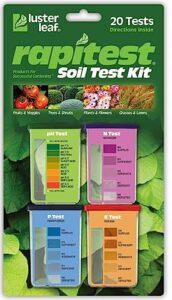
Before you amend anything, you need to know what you’re working with. The Luster Leaf Rapitest 1602 gives you exactly that — a clear, at-home picture of your soil’s pH, nitrogen, phosphorus, and potash levels.
The kit includes 40 test capsules total, with 10 for each nutrient, plus a color comparator system that makes reading results surprisingly straightforward. It even includes a pH preference guide for over 450 plants.
For early spring planning in Saxony’s often clay-heavy soils, that kind of baseline knowledge is genuinely invaluable.
| Best For | Home gardeners — beginners and seasoned growers alike — who want a quick, affordable way to understand their soil before planting or fertilizing. |
|---|---|
| Primary Use | Soil Testing |
| Skill Level | Beginner-Friendly |
| Material | Plastic/Chemical |
| Indoor/Outdoor | Both |
| Gift Suitable | Yes |
| Brand | Luster Leaf |
| Additional Features |
|
- Tests four key nutrients (pH, N, P, K) all in one kit, so you get a solid overall picture of your soil health
- The color comparator system makes reading results simple, even if you’ve never tested soil before
- Comes with a pH preference guide for 450 plants, which is genuinely handy for planning what to grow where
- Only five tests per nutrient, so if you’re testing multiple garden beds, you’ll burn through them fast
- Replacement capsules can be hard to track down, which limits the kit’s long-term usefulness
- Results can be a little tricky to read accurately, and some users have questioned how precise they really are
2. Nazhura Dual Chamber Compost Tumbler
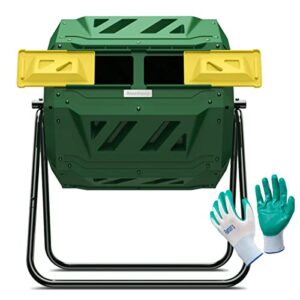
Once your soil test reveals what’s missing, compost is usually your fastest fix — and the Nazhura Dual Chamber Tumbler makes producing it genuinely manageable. The dual-chamber design lets you cure one batch while you’re already loading the next, so you’re never waiting on compost when spring planting calls.
At 43 gallons total, it manages kitchen scraps and yard waste without taking over your patio. The rotating drum aerates materials every few turns, speeding up breakdown considerably compared to a static pile.
| Best For | Home gardeners who want a steady supply of compost without the hassle of managing a traditional pile. |
|---|---|
| Primary Use | Composting |
| Skill Level | Beginner-Friendly |
| Material | Plastic & Galvanized Steel |
| Indoor/Outdoor | Outdoor |
| Gift Suitable | Yes |
| Brand | Nazhura |
| Additional Features |
|
- Dual chambers let you keep adding scraps to one side while the other batch finishes — no downtime between cycles.
- The rotating drum means aeration is just a few spins away, so breakdown happens faster than a regular static pile.
- At 43 gallons, it’s big enough to handle real kitchen and yard waste without eating up your whole outdoor space.
- Assembly is a bit of a project — lots of screws and instructions that aren’t always clear.
- The doors run small, so adding materials can get messy if you’re not careful.
- Being plastic, it may fade or warp after a few seasons of sun and weather exposure.
3. Maotong 240ft Drip Irrigation Kit
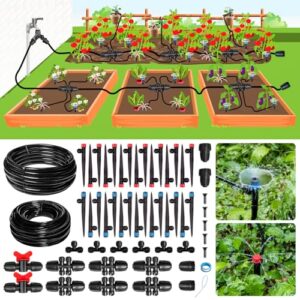
With 240 feet of tubing and 136 pieces total, the Maotong Drip Irrigation Kit gives you serious coverage for a fraction of the effort. Two faucet connectors let you split into dual zones, and the mix of drip emitters and misting nozzles covers everything from tomatoes to herbs.
The quick-connect design means no tools, no frustration — just snap it together and go. It can save up to 80% on water, which adds up fast through a long growing season.
| Best For | Home gardeners and greenhouse growers who want an easy, low-maintenance watering system that saves water and covers a decent-sized garden without a big setup headache. |
|---|---|
| Primary Use | Drip Irrigation |
| Skill Level | Beginner-Friendly |
| Material | Polyethylene (PE) |
| Indoor/Outdoor | Both |
| Gift Suitable | Yes |
| Brand | Maotong |
| Additional Features |
|
- 240 feet of tubing gives you solid coverage for up to 250 square feet, with enough pieces to customize your whole garden
- Quick-connect design means you can get it up and running without tools or a manual deep-dive
- Can cut water use by up to 80%, which is a real win over a full growing season
- The main 1/2" hose feels short for larger setups, and the kit leans heavy on 1/4" distribution line
- Some sprinklers in the kit may not work right out of the box and need swapping out
- Getting the water pressure just right can take some trial and error, especially for beginners
4. Rocklin Stand Up Weed Puller
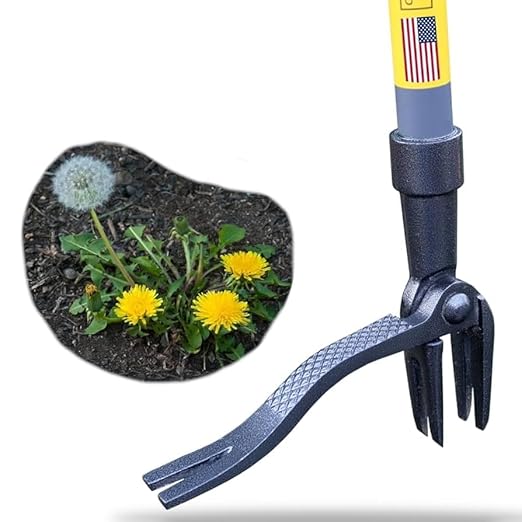
Weeds don’t wait, and neither should you. Rocklin Stand Up Weed Puller handles dandelions, thistles, and deep taproot weeds without making you get on your knees.
Its 48-inch handle keeps your back straight, and the four-claw steel head drives down into the soil with just a foot press — pulling the entire root so the weed won’t bounce back. At under 3 pounds and $33.99, it’s a smart, durable pick for any spring garden.
| Best For | Anyone with back or knee pain who wants to pull weeds without ever bending down. |
|---|---|
| Primary Use | Weed Removal |
| Skill Level | Beginner-Friendly |
| Material | Alloy Steel |
| Indoor/Outdoor | Outdoor |
| Gift Suitable | Yes |
| Brand | Rocklin Industry |
| Additional Features |
|
- Pulls the full root so weeds don’t grow back
- 48-inch handle keeps you fully upright — no kneeling, no crouching
- Lightweight at under 3 lbs and priced right at $33.99
- Struggles in hard, rocky, or compacted soil
- The long handle can be awkward to store in smaller spaces
- Not the most portable option if you’re moving between multiple garden spots
5. Scuddles Garden Tool Set Bag Bag
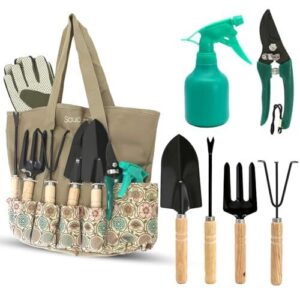
Think of this as your garden’s go-bag. The Scuddles 8-piece tool set comes with everything you actually need — shovel, fork, rake, transplanter, digger, shear, sprayer, and gloves — packed into a reinforced, washable tote that stands upright on its own.
The stainless steel tools handle everyday planting and pruning well, and the bag’s elastic interior loops keep each tool in its place.
At just 2 pounds, it’s easy to grab and go every time you head outside.
| Best For | Home gardeners and beginners who want a solid starter set they can grab and go without hunting down tools one by one. |
|---|---|
| Primary Use | General Gardening |
| Skill Level | Beginner-Friendly |
| Material | Stainless Steel |
| Indoor/Outdoor | Both |
| Gift Suitable | Yes |
| Brand | Scuddles |
| Additional Features |
|
- Comes with everything you need in one bag — no piecing together a set from scratch
- Lightweight at 2 pounds, so it’s easy to carry around the yard or store in a small space
- The reinforced tote keeps tools organized and upright, which is a small thing that makes a big difference
- Tools can bend or break with heavier use, so it’s not great for tough or overgrown garden work
- The pruning shears struggle with thicker stems and branches
- Gloves wear out faster than you’d hope, especially with regular use
6. Open Seed Vault Heirloom Vegetable Seeds
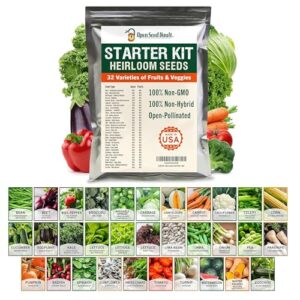
If you want to grow a serious kitchen garden, your seeds are everything. The Open Seed Vault gives you 32 heirloom, non‑GMO vegetable varieties — over 15,000 seeds total — for just $27.99. That’s impressive value.
Cool‑season favorites like Buttercrunch lettuce, Spinach Bloomsdale, and Radish Cherry Belle are ready to go straight into your spring beds.
Everything arrives sealed in resealable mylar bags, which can keep seeds viable for up to 10 years.
It’s an honest, reliable variety built for real growing.
| Best For | Home gardeners, homesteaders, and beginners who want a solid variety of heirloom seeds without spending a lot of money. |
|---|---|
| Primary Use | Seed Starting |
| Skill Level | Beginner-Friendly |
| Material | Heirloom Organic |
| Indoor/Outdoor | Both |
| Gift Suitable | Yes |
| Brand | Open Seed Vault |
| Additional Features |
|
- 32 non-GMO heirloom varieties with 15,000 seeds for just $27.99 — genuinely hard to beat on value
- Seeds come in resealable mylar bags, so they stay fresh and can last up to 10 years with proper storage
- Works for indoor or outdoor growing, making it flexible no matter your setup
- Some seed types come in smaller quantities than others, so you may run out of favorites faster
- Germination rates can vary depending on your soil, climate, and care — not a guaranteed win in every condition
- Limited info on exact shelf life per variety, which can make long-term planning a little tricky
7. NadaKin T Shape Plant Labels
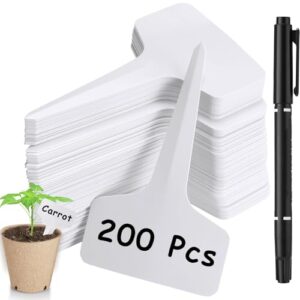
Once your seeds are in the ground, you’ll forget what you planted where — and that’s where the NadaKin T-Shape Plant Labels earn their spot.
Each label gives you about 2 inches of writing space, and the 6‑inch spike anchors firmly even in loose spring soil.
They’re waterproof, UV‑resistant, and reusable season after season.
Use an oil‑based marker and your notes won’t wash off in the rain.
A pack of 24 covers most home garden beds without a problem.
| Best For | Gardeners who want a simple, no-fuss way to keep track of what’s planted where — especially if you’re juggling multiple seedlings, raised beds, or greenhouse pots. |
|---|---|
| Primary Use | Plant Labeling |
| Skill Level | Beginner-Friendly |
| Material | PVC Plastic |
| Indoor/Outdoor | Both |
| Gift Suitable | Yes |
| Brand | NadaKin |
| Additional Features |
|
- Waterproof and UV-resistant, so they hold up through rain, sun, and multiple growing seasons
- Sharp pointed tip makes them easy to push into soil without any extra effort
- Smooth edges mean no accidental scratches on your hands or plant stems
- The plastic can feel a little thin and flimsy, especially if you’re used to sturdier labels
- Marker ink may fade or wear off over time, particularly if you’re not using an oil-based marker
- Not the best fit for large or heavy plants that need more visible, heavy-duty markers
Creating a Spring Garden Maintenance Schedule
great garden doesn’t run on autopilot — it needs a rhythm you stick to week after week.
Once your beds are planted and your tools are sharp, the real work shifts to keeping everything healthy and on track.
Here’s what your spring maintenance schedule should cover.
Watering and Mulching Strategies
Morning deep watering sets the foundation for a thriving spring garden. Water early, letting moisture soak 6 to 8 inches down, then let foliage dry before evening to keep fungal issues at bay.
- Use drip system scheduling: 15–20 minutes, twice weekly per zone
- Follow mulch depth guidelines: 1–2 inches for vegetables, 2–3 for flowers
- Explore organic mulch benefits: straw, compost, or shredded leaves feed soil as they break down
- Practice soil moisture monitoring: check 3–4 inches deep before each watering session
Succession Planting and Crop Rotation
Once your watering rhythm is dialed in, keeping beds productive comes down to two things: succession planting and crop rotation.
| Strategy | Key Interval |
|---|---|
| Lettuce succession | Every 2 weeks |
| Bean rotation | Every 3 weeks post-frost |
Crop family sequencing closes seasonal plant gaps while soil nutrient cycling stays balanced. Rotating solanaceae away from brassicas manages rotation pest management naturally.
Monitoring for Pests and Diseases
With your beds in rotation, staying ahead of problems means keeping your eyes open — regularly.
- Use sticky trap placement near transplants for early pest detection.
- Set a scouting frequency of twice weekly for aphids and mites.
- Practice symptom identification — curled leaves, slime trails, powdery patches.
- Apply weather-driven alerts after rain for gray mold checks.
- Know your pest thresholds before reaching for any pest control.
Regular Fertilization and Upkeep
Once pests are under control, feeding your plants on a solid fertilizer timing schedule keeps everything moving.
Follow your NPK ratio — leafy greens want 10-5-5, while tomatoes do better with 5-10-10.
Side-dressing techniques, like sprinkling nitrogen down the row middles, make a real difference mid-season.
Explore organic fertilizer options like compost tea or blood meal for gentler micronutrient management without synthetic overload.
Frequently Asked Questions (FAQs)
How do I plan my spring garden?
Studies show gardeners who plan ahead harvest up to 30% more.
Start with a garden journal setup, review seed catalogs, sketch your layout, prep your soil, and schedule planting around your last frost date.
What is the 3-hour gardening rule?
The 3-hour gardening rule means skipping outdoor work between 11 a.m. and 2 p.m., when midday heat and UV radiation peak.
It’s a simple scheduling tip that protects your health and your plants.
What are common spring gardening mistakes?
Spring gardening mistakes sneak up fast.
Planting too early, working wet soil, overwatering seedlings, premature pruning, and skipping hardening off are the most common—and the most avoidable with a little patience and preparation.
What companion plants work best together?
Some classic pairings stand out in companion planting: Tomato-Basil Pairing boosts yields.
the Carrot-Onion Duo deters flies.
the Three Sisters Method fixes nitrogen.
Brassica-Dill Allies repel moths, and Lettuce-Mint Protection keeps slugs away.
How do you protect seedlings from pests?
Use floating row covers, seedling collars, diatomaceous earth barriers, companion planting defense, and sticky trap setups to shield young plants.
These simple pest and disease management tools keep seedlings safe without chemicals.
When should you start hardening off seedlings?
Start hardening off seedlings 7–10 days before transplanting. Watch temperature thresholds, leaf development, and exposure duration daily. Once nights stay above 45°F and seedlings handle full days outside, they’re ready.
What are the best organic fertilizers for spring?
Compost benefits your soil first — mix 1 to 2 inches into your top 6 inches.
Blood meal nitrogen feeds leafy greens fast. Fish emulsion, worm castings, and alfalfa meal round out any organic gardening routine beautifully.
How do you manage garden watering schedules?
Water early — between 6 and 10 AM — to cut evaporation and let leaves dry before nightfall. Check soil moisture daily using the finger-test or soil moisture sensors for accuracy.
How do I protect seedlings from late frosts?
Row covers, cloches, and cold frames all shield seedlings from late frosts.
Know your last frost date and Plant Hardiness Zone, warm soil with mulching, and keep heat mass nearby on cold nights.
What watering schedule works best for spring gardens?
Your spring garden thrives on deep watering once or twice weekly. Morning deep soaks between 5–9 AM cut evaporation in half.
Pair drip timing with soil moisture checks and mulch water retention for best results.
Conclusion
proof is in the pudding—and for gardeners, the pudding is that first real harvest.
When you know how to plan a spring garden properly, guesswork gives way to confidence.
mapped your space, matched plants to your zone, prepped your soil, and built a schedule that actually holds.
That’s not luck.
system working exactly the way it should.
Start now, stay consistent, and let the season reward the work you put in before it began.
- https://www.plantmaps.com/interactive-germany-last-frost-date-map.php
- https://garden.org/apps/frost-dates/
- https://blog.greatgardenplants.com/frost-dates-explained-gardening-for-each-zone-in-spring-fall/
- https://www.higarden.eu/blog/spring-planting-site-selection-and-soil-preparation/
- https://dug.org/gardening-resources/soil-prep/