
This site is supported by our readers. We may earn a commission, at no cost to you, if you purchase through links.
Your tomato plants looked perfect in June. By August, they’re wilting from the same fungal disease that struck last year. You planted them in a different corner of the garden, but the pathogen was already waiting in the soil. This scenario plays out in gardens everywhere because many growers underestimate how long disease organisms persist in the ground.
Organic gardening crop rotation methods offer a straightforward solution to this problem. When you systematically move crops through different beds based on their botanical families and nutrient needs, you break pest cycles and rebuild soil fertility at the same time.
The strategy works because different plants feed the soil in different ways and attract different problems. A well-planned rotation turns your garden into a self-renewing system that gets stronger with each growing season.
Table Of Contents
Key Takeaways
- Rotating crops by botanical family every three to four years prevents soil-borne diseases and pest buildup while breaking the life cycles of pathogens that would otherwise accumulate in one spot.
- Diversified crop rotations boost organic yields by roughly 20% compared to monoculture by improving soil structure, increasing microbial diversity, and naturally cycling nutrients through legumes and deep-rooted plants.
- A simple four-bed system that rotates leafy greens, root vegetables, fruiting crops, and legumes each season maintains soil fertility without synthetic inputs and reduces weed pressure by up to 90% in some trials.
- Written garden records tracking crop families, planting dates, and soil amendments transform rotation from guesswork into a reliable system that protects your harvest and builds long-term soil health.
What is Crop Rotation in Organic Gardening?
Crop rotation is one of the oldest and most reliable tools in an organic gardener’s toolkit. Simply put, it means moving different types of plants around your garden year after year instead of planting the same crops in the same spots.
Let’s break down what this practice really means, why it works so well for organic growers, and how understanding plant families makes the whole system easier to follow.
Definition and Key Principles
Crop rotation means growing different crops in the same spot across growing seasons, not repeating the same vegetable families in one area for at least three years. Organic standards require this practice to maintain soil health and manage pests naturally. The ecological principles behind rotation focus on nutrient cycling and diversity:
Implementing this practice helps improve overall soil health.
- Prevent soil-borne diseases and pests
- Improve soil structure and fertility
- Reduce weed pressure naturally
- Increase crop yields over time
- Support sustainable organic gardening methods
Why Crop Rotation Matters for Organic Growers
For organic growers, rotating crops delivers tangible results. Research shows diversified rotations generate an organic yield boost of roughly 20% compared to monoculture by preventing garden pests and diseases, improving soil health, and enhancing nutrient availability through the soil food web.
Crop rotation boosts organic yields by roughly 20% by preventing pests, improving soil health, and cycling nutrients naturally
This is supported by a global farming analysis showing increased yields. Pest cycle disruption reduces reliance on synthetic inputs, supporting long-term sustainability while balancing nutrients naturally and strengthening your harvest year after year.
Understanding Plant Families and Crop Groups
To rotate effectively, you need to know which vegetables belong to which botanical families. Think of plant families as extended relatives that share vulnerabilities to the same pests and diseases.
Extension guides group over 40 common vegetables into about 9 key families—Solanaceae (tomatoes, peppers), Brassicaceae (cabbage, broccoli), Fabaceae (beans, peas), and others. Grouping vegetables by family simplifies rotation decisions and protects your soil.
Major Benefits of Crop Rotation Methods

You might wonder why so many organic gardeners swear by crop rotation. The answer lies in a handful of powerful benefits that improve your garden from the ground up.
Let’s look at what crop rotation can do for your soil, plants, and harvest.
Preventing Soil-Borne Diseases and Pests
One of the strongest reasons to rotate your crops is disease prevention and pest control. When you plant the same family in one spot year after year, soilborne diseases and nematode populations build up in the soil. Rotating to non-host crops breaks this cycle.
A rotation cycle length of at least three years helps create disease-suppressive soils by supporting a healthier soil microbiome.
Enhancing Soil Health and Fertility
Beyond keeping pests at bay, crop rotation builds genuine soil fertility through biological and physical processes. Your garden soil becomes a living system when you diversify what you grow.
- Organic Matter Increases: Conservation rotations with high-residue crops can boost soil organic carbon by roughly 15.5%, enriching the topsoil gradually each season.
- Microbial Diversity Expands: Rotating between legumes and non-legumes, deep-rooted and shallow-rooted plants, increases bacterial and fungal diversity—communities that drive nutrient cycling.
- Soil Structure Improves: Deep-rooted perennials like alfalfa lower bulk density and increase porosity, helping water infiltrate and roots penetrate compacted layers.
Managing Weeds and Reducing Chemical Inputs
When you diversify what you plant each season, weed seedbank reduction becomes a powerful tool in your garden. Foxtail seeds declined by almost 90% after corn followed hay in Iowa trials, and waterhemp dropped steadily across three years of rotation.
You break weed life cycles without herbicide dependence costs, lowering chemical inputs while improving soil health. Cover crops and mechanical cultural controls fit naturally into rotations, delivering economic environmental co-benefits that keep your organic gardening system thriving.
Improving Crop Yields and Stability
When you embrace the right rotation, your harvest becomes both more abundant and more dependable. A 2025 global analysis found that diversified rotations boosted yields by 13–25% over monoculture, with legumes providing up to 50% gains in low-input settings.
- Rotation yield gains reach 20% on average across diverse organic systems
- Yield stability improves dramatically during drought years with multi-crop sequences
- Nutrient supply from legumes reduces synthetic fertilizer needs while lifting production
- Risk reduction delivers 10% higher long-term profits in corn–soybean rotations
- Climate resilience buffers severe weather, protecting both soil health and income
Popular Crop Rotation Methods Explained
You don’t need a complicated system to start rotating your crops successfully. Several proven methods exist, and each one offers a different way to organize your garden beds and planting schedule.
Let’s look at the most popular approaches so you can choose what works best for your space.
Leaf, Root, Fruit, Legume Rotation System
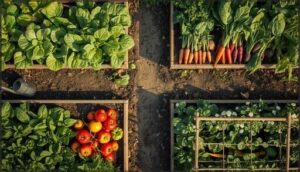
The Leaf Root Fruit Legume system divides your garden into four beds that rotate annually. Each bed hosts one crop group—leafy greens, root vegetables, fruiting crops, or legumes—before moving to the next position.
This simple method prevents the same crop families from depleting soil nutrients or attracting pests year after year. Legumes fix nitrogen, improving soil health for the next cycle of vegetable gardening.
Botanical Family-Based Rotation
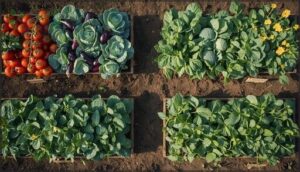
Instead of grouping by plant parts, you can rotate by botanical families—tomatoes, peppers, and potatoes are all Solanaceae, while cabbage and broccoli are Brassicaceae. This method targets family disease suppression and nutrient demand patterns.
For practical garden mapping:
- Rotate Solanaceae, Brassicaceae, Cucurbitaceae, and Fabaceae through separate beds
- Wait 3–4 years before repeating crop families in the same spot
- Control weeds from the same family to maintain rotation benefits
- Track plant families yearly for better yield stability
Heavy Feeder Vs. Light Feeder Strategies
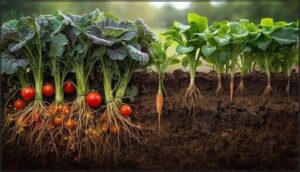
Some crops pull nitrogen and minerals hard from the soil—think cabbage, tomatoes, corn, and squash—while others like carrots, lettuce, and onions barely touch reserves.
In crop rotation, you place heavy feeders after legumes or cover crops to satisfy their high nutrient needs, then follow them with light feeders to prevent soil depletion and slash your fertilizer needs without sacrificing yield.
Intercropping and Succession Planting Integration
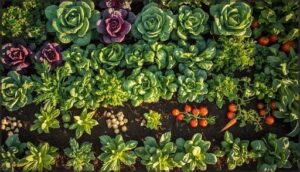
Beyond simply swapping beds year to year, you can weave intercropping and succession planting techniques directly into your crop rotation to get the most from space optimization and continuous harvest. These planting strategies work together to boost yields and keep pests guessing:
- Pair quick crops with slow growers—plant radishes between cabbages for yield maximization.
- Replant harvested rows immediately to maintain soil enrichment and pest management.
- Stagger sowings every two weeks to extend picking windows and stabilize income.
Intercropping reduced pest damage by nearly half in recent trials, while succession planting squeezed double the production from the same bed. Combined with rotation, they form a powerful system for small-scale organic growers.
Planning and Implementing Crop Rotations

Understanding crop rotation is one thing, but putting it into practice takes a bit of planning. You need to think about how to organize your garden space and how to keep track of what goes where each season.
The following sections will walk you through the practical steps to set up a rotation system that works for your garden.
Mapping and Dividing Your Garden Beds
Before you draw up a garden map, decide how to split your space into distinct beds for rotation. Most home gardeners create three or four raised beds so each crop family moves to fresh soil every year. Physical separation prevents soil mixing and limits disease spread between zones.
Example Four-Bed Layout for Rotation
| Bed | Size | Year 1 Family | Year 2 Family | Year 3 Family |
|---|---|---|---|---|
| Bed 1 | 4×8 ft | Tomato family | Cabbage family | Root crops |
| Bed 2 | 4×8 ft | Cabbage family | Root crops | Legumes |
| Bed 3 | 4×8 ft | Root crops | Legumes | Tomato family |
| Bed 4 | 4×8 ft | Legumes | Tomato family | Cabbage family |
| Cover crop rotation | varies | follows main crops | follows main crops | follows main crops |
Extension guidance recommends mapping each bed with a number and listing which families you’ll plant there. Even small spaces work well—split one 4×8 bed into two sections or add a sunny 4×4 spot for family zoning. Sketch your garden layout on paper and mark each bed clearly. This simple mapping tool keeps you organized and ensures no family returns to the same place too soon.
Creating a Multi-Year Rotation Plan
Once you’ve mapped your beds, build a rotation planning system that spans at least three to four years. Write each crop sequence on paper so you know exactly where tomatoes, brassicas, legumes, and root crops will grow each season.
A documented multi-year plan prevents you from accidentally planting the same family in one spot two years running and helps you track soil-building phases across your vegetable garden.
Adapting Rotation Methods for Small Gardens
Your multi-year plan works even when you’re managing a small vegetable garden. Limited space rotations don’t require acres—divide a 100-square-foot plot into four equal sections and shift crop families annually. This simple adjustment delivers crop rotation benefits in tight quarters:
- Combine related crops like tomatoes and peppers into one rotation group
- Practice intensive bed planting with succession crops during a single season
- Use intercropping integration to mix unrelated families within each garden bed
Rotation frequency matters more than plot size.
Using Cover Crops and Fallow Periods
Weaving cover crops into your rotation plan boosts soil fertility between main plantings. Choose legumes like clover for nitrogen fixation—they add 50 to 150 pounds of nitrogen per acre—while non-legumes such as cereal rye provide erosion control and weed suppression. Fallow period benefits include nutrient recovery, but active cover crop use often delivers better results than leaving fallow land bare.
| Cover Crop Type | Primary Benefit |
|---|---|
| Legumes (clover, vetch) | Nitrogen fixation |
| Grasses (rye, ryegrass) | Erosion control |
| Brassicas (radish, mustard) | Soil structure improvement |
| Mixed blends | Combined advantages |
Tips for Successful Crop Rotation
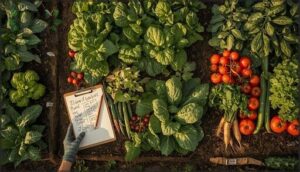
Even the best crop rotation plan can fall short without a few practical habits to keep things on track. Good record-keeping and flexibility make the difference between a rotation that works and one that feels like guesswork.
Let’s look at some simple strategies that help you stay organized and avoid the most common pitfalls.
Record-Keeping and Garden Journals
Written records transform crop rotation from guesswork into a reliable system. Keep track of what you plant and where each season to prevent repeating mistakes. Your garden journal should capture:
- Historical planting dates and yields to improve timing
- Soil amendments and fertilizers applied to each bed
- Pest issues and plant health observations by location
- Garden layouts showing crop families for proper rotation
Rotation software like Croptracker analyzes yield data for smarter garden planning.
Detailed records maintain organic eligibility and improve soil quality over time through informed organic gardening methods.
Adjusting Rotations for Crop Failures or Changes
Even with careful garden planning, weather or pests can derail your best-laid plans. Contingency planning keeps your crop rotation on track when failures occur. A 2023 organic farming manual recommends listing backup options for every planned crop—substitute oats with corn or swap soybeans for corn when planting delays strike.
| Strategy | How It Preserves Rotation Integrity |
|---|---|
| Family substitution | Replace failed cabbage with pumpkin to maintain heavy-feeder sequence |
| Cover cropping | Insert legume cover when cash crop fails to build soil quality |
| Sequence adjustments | Advance next season’s crop to fill gap without breaking rotation |
| Alternative timing | Plant late-season lettuce if early leafy greens fail |
| Documented changes | Record substitutions to prevent future pest management or disease management conflicts |
Rotation integrity depends on maintaining botanical family intervals and nutrient patterns. When you substitute crops within the same family—like snap beans for soybeans—you preserve the legume phase that disrupts pest cycles and boosts nitrogen. Studies show diverse rotations with built-in flexibility reduce vulnerability to repeated crop losses under poor growing conditions.
Common Mistakes to Avoid
Poor planning and short rotation intervals sabotage even well-intentioned efforts. Planting tomatoes every two years instead of waiting three to four years invites Verticillium and Fusarium wilt. Family repetition—swapping tomatoes for peppers in the same bed—keeps pests thriving.
Cover neglect and input overreliance undermine soil health management. Detailed records prevent nutrient depletion and preserve rotation benefits against diseases.
Frequently Asked Questions (FAQs)
Can crop rotation work in container gardens?
Yes, crop rotation works in container gardens. Rotating plant families between pots every season helps disrupt disease cycles, balance media nutrients, and reduce pest buildup—just like in-ground beds, but on a smaller scale.
How does climate affect rotation timing decisions?
Think of climate as the invisible conductor of your vegetable garden orchestra. Growing seasons dictate when frost-free periods allow planting; temperature effects and precipitation patterns shape crop planning timing to protect soil quality while managing pest/disease timing.
What happens if you skip rotation accidentally?
Skipping rotation allows pests and diseases to multiply unchecked in the soil.
You’ll see nutrient depletion from consecutive cropping, increased weed pressure, and yield reduction as microbiome shifts favor pathogens over beneficial organisms.
Are there crops that dont need rotation?
Perennial vegetables like asparagus and rhubarb stay put for years, while flexible crop choices such as sweetcorn, peas, and salads fit anywhere in your vegetable garden without strict rotation rules, though organic gardening still benefits from some movement.
How do perennials fit into rotation schemes?
Most perennial crops can’t move around your garden beds easily. Instead, rotate cover crops in their alleys and plant different companions nearby each season to improve soil health and manage pests effectively.
Conclusion
Your garden won’t fix itself overnight. But organic gardening crop rotation methods give you a proven path forward. Each season you rotate plants through different beds, you’re building immunity into your soil and reducing the problems that once held you back.
The work becomes simpler over time. Your plants grow stronger. And the cycle sustains itself year after year. That’s the real payoff of a rotation plan done right.
- https://pmc.ncbi.nlm.nih.gov/articles/PMC12572145/
- https://www.nature.com/articles/s41467-022-32464-0
- https://vlsci.com/blog/crop-rotation-benefits/
- https://attra.ncat.org/publication/tipsheet-crop-rotation-in-organic-farming-systems/
- https://carolinafarmstewards.org/main/wp-content/uploads/2025/05/7-CEFS-Crop-Rotation-on-Organic-Farms.pdf