This site is supported by our readers. We may earn a commission, at no cost to you, if you purchase through links.
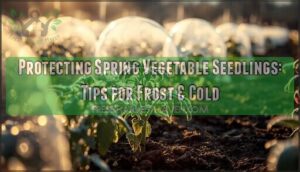
You plant your seedlings on a mild April afternoon, and two nights later, a surprise frost turns those promising greens into blackened, wilted casualties. Spring weather plays cruel tricks—one day you’re in shirtsleeves, the next you’re scraping ice off your windshield.
The trouble is that seedlings don’t bounce back from frost damage the way established plants sometimes do. When ice crystals form inside those tender cells, they rupture from the inside out, and your carefully started tomatoes or peppers are done for.
The good news? Protecting spring vegetable seedlings doesn’t require expensive equipment or a degree in meteorology. With a handful of practical strategies and some basic materials you probably already have, you can shield your young plants from temperature swings and give them the strong start they need to thrive.
Table Of Contents
- Key Takeaways
- Why Spring Seedlings Need Frost Protection
- Monitoring Weather to Prevent Seedling Loss
- Essential Materials for Protecting Seedlings
- Best Covering Techniques for Spring Seedlings
- Creating Microclimates for Seedling Survival
- Timing and Planning for Safe Seedling Transplants
- Additional Strategies to Safeguard Seedlings
- Frequently Asked Questions (FAQs)
- Conclusion
Key Takeaways
- Frost kills seedlings by forming ice crystals inside their cells that rupture tissue, and warm-season crops like tomatoes and peppers can’t tolerate temperatures below 50°F while cool-season varieties handle light frosts down to 28°F.
- You’ll prevent most seedling loss by monitoring weather forecasts within a 24-72 hour window and deploying covers like row covers, cloches, or heavy-duty plastic sheeting two hours before predicted frost hits.
- Simple materials you already have—straw, mulch, recycled bottles, bricks, or water barrels—create effective microclimates that raise soil temperature by 2-6°C and cut frost damage by up to 70%.
- Timing your transplants based on soil temperature (not just air temperature) and choosing frost-hardy varieties bred for colder zones boosts seedling survival rates by 25-40% during unpredictable spring weather.
Why Spring Seedlings Need Frost Protection
Spring frosts can sneak up on even the most careful gardeners, and your seedlings pay the price when cold air settles in overnight. Understanding how frost works—and which plants are most vulnerable—gives you the upper hand in protecting your early plantings.
Let’s break down what’s really happening when temperatures drop and how you can spot the danger before it strikes.
How Frost Damages Young Plants
Frost damage isn’t just about cold air—it’s about ice formation inside your seedlings’ cells. When temperatures drop to 32°F or below, water freezes and expands, causing cell rupture that leaves stems blackened and leaves wilted within days.
Frost kills seedlings when ice crystals form inside their cells, rupturing tissue and turning stems black within days
Young plants lack the cold hardiness to fight back, making seedling vulnerability during spring frost events your biggest challenge. That’s why frost protection matters.
Vulnerability of Cool Vs. Warm-Season Seedlings
Not all seedlings face the same risk when spring frost strikes. Cool-season transplants like lettuce and spinach show decent cold hardiness, tolerating light frosts down to about 28°F before serious damage sets in.
Warm-season seedlings—tomatoes, peppers, cucumbers—can’t handle that. They’ll suffer when nighttime temperatures drop below 50°F, making frost protection absolutely necessary.
Understanding these differences helps you plan smarter.
Recognizing Frost Risk Thresholds
Knowing your frost thresholds makes all the difference. Most cool-season seedlings handle temperatures down to 28°F before showing real frost damage, but warm-season varieties suffer below 32°F. When nighttime temps drop 5–9°F below a seedling’s cold hardiness limit, you’re looking at tip burn and stunted growth.
Transplants under six weeks old show two to three times higher seedling vulnerability than established plants, so frost protection timing matters. Understanding the importance of literature reviews can help gardeners make informed decisions.
Monitoring Weather to Prevent Seedling Loss
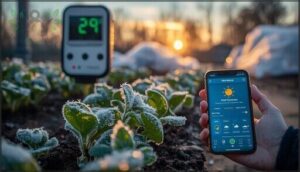
You can’t fight what you can’t see coming, and with spring frosts, your best defense starts with knowing what’s headed your way. Weather patterns shift fast this time of year, so staying on top of forecasts isn’t optional—it’s essential.
Let’s break down how to read the warnings, track conditions accurately, and time your protection efforts so your seedlings make it through unscathed.
Interpreting Frost and Freeze Warnings
Your local forecast just dropped a frost advisory—now what? Frost warnings signal temperatures at or below 32°F (0°C), while freeze alerts mean you’re looking at 28–31°F or lower, which can rupture seedling cells within 24 hours. NOAA and weather services usually give you a 24–72 hour window to act, so treat those notifications like your garden’s early alarm system.
When dealing with unexpected issues, checking the error log reports can help identify problems.
Tools for Accurate Weather Tracking
Beyond watching NOAA’s Last Frost Date projections and Storm Tracking updates, you’ll want gear that sharpens your Weather Forecasting. A basic wireless thermometer placed near your beds gives real-time Temperature Monitoring—accuracy within 0.5°C helps you catch Frost Alerts before damage hits.
Climate Modeling apps now factor in Climate Change shifts, so pair forecasts with ground-level sensors for the clearest picture.
Timing Protection Measures Effectively
Once your Frost Alerts signal risk—especially when forecasts dip to 2°C or below—you’ve got a narrow window. Deploy Frost Protection Methods within two hours to avoid the 25–40% seedling loss that hits unprepared beds. Here’s how to time Seedling Care right:
- Cover seedlings the afternoon before predicted Spring Frost, not morning-of
- Use Cold Frames or row covers to manage your Microclimate Management zone
- Check Frost Dates and Gardening calendars after Last Frost Date for late surprises
Early Seedling Hardening and sharp Weather Forecasting keep you ahead.
Essential Materials for Protecting Seedlings
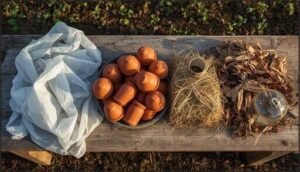
Having the right materials ready before frost strikes can mean the difference between thriving seedlings and a garden setback. You don’t need expensive gear—many effective frost protections use simple, affordable items you might already have around your property.
Let’s look at three essential categories of materials that form the backbone of any solid seedling protection strategy.
Choosing Insulation: Straw, Mulch, and More
You’ve got several reliable options for plant insulation. Straw bale or loose straw makes an excellent frost barrier, raising soil warmth by 2–6°C on cold nights. Mulch benefits are similar, boosting temperatures 1–3°C while improving drainage.
For stronger frost protection methods, try layering row cover with breathable blankets or cardboard cloches—they trap thermal mass and create cozy microclimates your seedlings will love.
Benefits of Heavy Duty Plastic Sheeting
Heavy-duty plastic sheeting is one of the smartest frost protection methods you can deploy. UV-stabilized polyethylene (2–4 mil thickness) delivers seedling insulation that cuts frost damage by up to 70%, while boosting soil warmth 2–6°C.
These garden coverings last 12–24 months, shrugging off hail and wind-driven debris. Secure edges firmly to optimize plant protection during cold snaps.
Stocking Up on Covers and Supports
Think of your frost-protection arsenal as insurance—the more you have on hand, the safer your seedlings. When temperatures threaten to plunge, you’ll want these three essentials ready:
- Frost blankets and row covers (lightweight to heavy-weight fleece)
- Seedling frames and cold frame hoops (metal or PVC, 4–6 ft tall)
- Cloches, thermal mass bricks, and frost barriers for individual plant protection
Best Covering Techniques for Spring Seedlings
When frost threatens, the right cover can mean the difference between thriving seedlings and a lost crop. You have several solid options, from simple hooped row covers to creative DIY solutions made from materials you probably already have.
Let’s walk through the most effective techniques so you can choose what works best for your garden.
Using Row Covers and Hoops

When cold snaps threaten your young plants, row covers paired with hoop frames become your best defense. Lightweight spun-bonded fabric reduces frost damage by 2–4°C, boosting seedling survival rates by 10–30% during spring frosts. Hoops create 1–2 feet of clearance, allowing air circulation and faster warming when the sun returns.
Secure your hoops every 12–18 inches to prevent billowing during windy nights. On sunny days, remove covers to avoid overheating—balance is everything. Keep 2–4 replacement covers and extra hoops on hand so you’re ready when frost warnings hit. Anchoring with weighted cables cuts cover movement by 70%, protecting your investment and your seedlings through unpredictable spring weather.
| Cover Type | Temperature Benefit | Best Use |
|---|---|---|
| 0.6 oz/yd² fabric | +2°C protection | Light frosts, early spring |
| 1.0 oz/yd² fabric | +3–4°C protection | Hard freezes, tender seedlings |
| Vented plastic film | +1–2°C with moisture control | Extended cold periods |
| Double-layer system | +4–5°C combined | Severe frost events |
| Straw + row cover | +2–4°C soil warmth | Root zone protection |
DIY Cloches From Recycled Materials
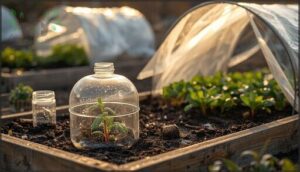
You don’t need expensive gear to shield seedlings from frost—your recycling bin holds the answer. Recycled bottle cloches trap 4°C of extra warmth on frosty nights, costing nothing while delivering serious plant protection strategies.
Here are five homemade greenhouses you can build today:
- Cut 2-liter bottles in half for instant individual covers
- Plastic sheet covers draped over wire hoops
- Wooden frame designs using scrap lumber and old windows
- Milk jugs with bottoms removed for quick placement
- Clear storage bins inverted over seedling trays
Seal edges with soil to block drafts and boost gardening success.
Windproofing and Securing Plant Covers

Your homemade cloches won’t do much good if wind rips them away. Hoop-supported row covers cut wind contact by 40–60%, making them your first line of defense.
Anchor edges with bricks or sandbags—they slash displacement by 70% during spring gusts. Use zip ties every few feet on hoops to stop flapping. These windproof materials and securing techniques turn flimsy frost barriers into reliable protective layers.
Creating Microclimates for Seedling Survival

You can create warmer pockets of air around your seedlings by controlling their immediate environment. Small adjustments—like choosing the right structure or adding heat-absorbing materials—make a real difference when temperatures drop.
Let’s look at three proven ways to build these protective zones.
Leveraging Greenhouses and Polytunnels
Greenhouses and polytunnels create the ideal controlled environment for climate resilience. These structures—ranging from simple cold frames to heated polytunnels—trap warmth during the day and shelter your seedlings from biting winds.
When you combine smart greenhouse design with row covers or cloches inside, you’re layering protection. This microclimate control helps with seedling hardening, gradually preparing plants for the real world outside.
Thermal Mass Materials: Bricks, Stones, Water
Beyond structures, you can utilize thermal mass to warm soil around your seedlings. Set dark bricks along bed edges, arrange water barrels nearby, or place heavy stones between rows. These materials soak up heat during sunny days and release it slowly at night, raising soil temperature by 2–4°C.
That extra warmth keeps roots active and shields tender growth from frost damage, giving you a vital advantage in unpredictable cold weather gardening.
Maximizing Soil Warmth With Mulch
Mulch benefits go beyond weed control—they’re your secret weapon for frost prevention. A 5–7 cm layer of organic materials raises soil temperature by 2–4°C on cold nights, keeping roots warm when it matters most:
- Dark mulch heats soil faster than light colors
- Straw insulation cuts frost heave by 30%
- Combined with irrigation, it stabilizes temperature swings
- Cost-effective garden insulation boosts seedling survival 10–15%
Timing and Planning for Safe Seedling Transplants

Knowing when to transplant isn’t just about checking the calendar—it’s about reading the signals your soil and air are giving you. The difference between a thriving seedling and a stunted one often comes down to timing your transplants right and choosing varieties that can handle what spring throws at them.
Let’s break down the key factors that’ll help you make smart decisions about getting those seedlings safely into the ground.
Understanding Soil and Air Temperature Needs
You can’t rush spring—soil temperature matters more than air temperature for seedling care. Cool-season crops like lettuce tolerate soil around 40–50°F for seed germination, but warm-season seedlings need 60–65°F to avoid stunting.
Air temperature below 32°F brings frost risk, threatening frost tolerance even in hardy plants.
Monitor both temperatures closely; soil warms slower than air, helping you time thermal management and protect against damaging spring frost.
When to Sow Indoors Vs. Outdoors
Timing is critical for sowing seedlings. Start warm-season crops indoors 6–8 weeks before your last freeze date to dodge frost risk, then harden them off gradually over 7–10 days before transplanting.
Cool-season seeds can go directly outdoors 2–4 weeks earlier, but indoor starts give you control over climate considerations and speed up your harvest window.
Choosing Hardy Seed Varieties
Your seed variety choice shapes survival more than you might think. Frost-hardy brassicas—broccoli, kale, cauliflower—handle early cold far better than standard types, showing 60% higher survival after spring freezes.
Look for varieties bred one or two hardiness zones colder than yours; that simple seed-starting strategy boosts transplant success by 25–40%. Seed origin and cold tolerance matter when frost threatens your vegetable garden planning.
Additional Strategies to Safeguard Seedlings
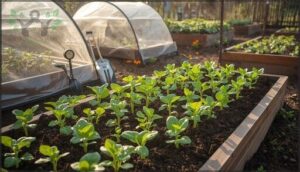
Beyond frost protection and timing, you’ll want a few backup strategies to keep your seedlings thriving through spring’s curveballs. Rotating crops, managing pests, and staying flexible when the weather turns unpredictable all play a role in your garden’s success.
Let’s walk through these extra layers of defense that can make the difference between a bumper crop and a disappointing season.
Crop Rotation for Healthier Seedlings
Rotating your crops isn’t just gardening tips passed down—it’s a proven way to boost seedling health. When you move plant families around your vegetable garden each season, you’re building microbial balance and preserving soil nutrient levels that seed starting depends on.
A simple three-year rotation plan increases plant diversity by about 25% and cuts disease pressure by 40%, giving your seedlings the strong start they deserve.
Protecting Against Wildlife and Pests
Even with perfect frost protection and garden covers, your seedlings aren’t safe from birds, deer, and rodents—wildlife causing about 9% of pest challenges and worms like cutworms another 17.5%.
Layer your crop protection with physical seedling barriers like garden fencing paired with organic repellents.
Combine wildlife deterrents with proper pest control methods to handle garden pests and diseases, ensuring your plant protection and growth strategies work together.
Adapting to Unpredictable Spring Weather
Spring gardening in cold climates demands frost resilience when weather forecasting misses the mark. Your microclimate management and soil temperature monitoring become your real defenses—check frost pockets nightly and keep covers ready when overnight lows swing unexpectedly.
Climate adaptation means staying flexible with seedlings: if cold snaps return after warmth, double-layer your crop protection strategies rather than hoping conditions stabilize.
Frequently Asked Questions (FAQs)
How do I revive frost-damaged seedlings?
After frost strikes, remove damaged leaves, but don’t fertilize yet—that stresses weakened plants more. Keep soil lightly moist and apply mulch for warmth. Recovery usually takes two to four weeks.
Can frost cloth be reused each season?
Yes, your frost cloth usually lasts 2–5 seasons with proper care. Higher-grade fabrics offer better longevity, but UV exposure and tears reduce reuse viability. Clean, repair, and store it properly for maximum frost protection.
Whats the ideal watering schedule before frost?
Water your seedlings the morning before frost to guarantee Soil Moisture levels support Frost Tolerance without waterlogging.
Proper Water Timing and Seedling Hydration aid Cold Hardening while preventing ice crystal formation that damages tender tissue overnight.
Do seedlings need ventilation under protective covers?
Absolutely—airflow management prevents moisture buildup and mold under row covers. Ventilation needs vary by cover materials, but breathable fabrics or vented cloches balance frost prevention with microclimate control, keeping your seedlings healthier without overheating.
Should I fertilize seedlings before cold snaps?
Hold off—cold snap prep means pausing fertilizer timing. New growth from seedling nutrition reduces frost tolerance.
Instead, focus on soil conditioning and plant hardening beforehand.
Feed your seedlings after the freeze passes to support recovery and seedling care.
Conclusion
Think of protecting spring vegetable seedlings like teaching someone to ride a bike—you stay close at first, offering steady support until they find their balance. Your seedlings need that same watchful guidance through unpredictable spring weather.
Monitor forecasts, keep covers ready, and don’t rush transplanting when your gut says wait.
The plants that survive those tricky early weeks will reward your patience with vigorous growth and abundant harvests all season long.
- https://harris.agrilife.org/files/2014/01/Protecting-Plants-from-Frosts-Freezes-EHT-048.pdf
- https://extension.illinois.edu/blogs/garden-scoop/2023-04-15-frost-dates-and-spring-vegetable-planting
- https://www.udel.edu/academics/colleges/canr/news/2022/march/spring-vegetable-planting-changing-climate/
- https://edis.ifas.ufl.edu/publication/CV201
- https://ir.library.oregonstate.edu/downloads/wd376037p