This site is supported by our readers. We may earn a commission, at no cost to you, if you purchase through links.
Your garden can become a refuge for monarch butterflies, native bees, and songbirds while using half the water and zero synthetic chemicals. Sustainable gardening practices transform ordinary yards into thriving ecosystems that work with nature instead of against it.
When you choose plants adapted to your local climate and soil, you’re not just reducing maintenance—you’re creating habitat corridors that support pollinators traveling miles between feeding sites. The shift starts with simple changes: swapping thirsty turf for drought-tolerant natives, letting beneficial insects handle pest control, and feeding your soil with compost instead of bags of fertilizer.
These methods build resilience into your landscape, so your garden flourishes even during dry spells and helps repair the larger web of life around you.
Table Of Contents
- Key Takeaways
- Choosing Native and Climate-Resilient Plants
- Building Healthy Soil Naturally
- Water Conservation Strategies for Your Garden
- Natural Pest and Disease Management
- Reducing Waste and Chemical Dependency
- Frequently Asked Questions (FAQs)
- What are sustainable gardening practices?
- How do I start composting in small spaces?
- What trees sequester the most urban carbon?
- Can sustainable gardens reduce my water bills significantly?
- How often should I apply organic fertilizers?
- What wildlife should I attract to my garden?
- How can I attract birds to my sustainable garden?
- What tools are most eco-friendly for garden maintenance?
- Can sustainable gardens thrive in small urban spaces?
- How do I transition my existing garden sustainably?
- Conclusion
Key Takeaways
- Switching to native plants cuts water use by up to 70 percent while creating habitat corridors that support pollinators, beneficial insects, and songbirds traveling between feeding sites.
- Building healthy soil naturally through composting, cover crops, and minimal tillage strengthens root systems and locks carbon in place without synthetic fertilizers or excessive disturbance.
- Installing drip irrigation, collecting rainwater in barrels, and applying 2-3 inches of organic mulch delivers moisture directly to roots while reducing evaporation and runoff by significant margins.
- Attracting beneficial insects through native wildflowers and companion planting provides natural pest control that protects your garden without the chemical hangover of synthetic pesticides.
Choosing Native and Climate-Resilient Plants
Choosing the right plants for your garden isn’t just about what looks good—it’s about working with your local environment instead of against it.
One of the best ways to start is by exploring regional spring gardening advice tailored to your specific growing zone.
Native and climate-resilient plants need less water, fewer chemicals, and minimal fussing once they’re established. Let’s look at three key strategies that’ll help you build a garden that practically takes care of itself while supporting local wildlife.
Benefits of Native Plant Species
Native plants are your garden’s secret weapon for a thriving ecosystem. They offer four powerful benefits:
- Biodiversity support – They feed local pollinators and wildlife year-round, strengthening the regional food web.
- Climate resilience – Deep roots stabilize soil and reduce erosion along slopes.
- Ecosystem services – They improve soil health through natural organic matter.
- Wildlife habitat – Native species create shelter for beneficial insects and birds. Planting a diverse mix of species fosters a balanced and healthy ecosystem.
Selecting Drought-Tolerant Varieties
Once you’ve chosen native plants, take water efficiency a step further by selecting drought-tolerant varieties. These champions thrive on less moisture thanks to deep root systems that tap into lower soil layers and waxy leaves that reduce water loss.
Check your local extension service for proven cultivars suited to your soil type and sun exposure. Understanding the diverse features of drought-tolerant plant characteristics can help guide your plant selection.
| Plant Trait | How It Saves Water | What to Look For |
|---|---|---|
| Deep roots | Access moisture below surface during dry spells | Taproot-dominant varieties for your soil texture |
| Efficient stomata | Reduce transpiration on hot days | Cultivars with demonstrated arid-region performance |
| Leaf adaptations | Minimize water loss through coatings or reduced area | Waxy or succulent foliage types |
| High transpiration efficiency | Produce more growth per water unit | Varieties labeled for summer heat tolerance |
Removing Invasive Species for Ecosystem Health
While drought-tolerant natives do the heavy lifting in water-scarce conditions, invasive species can undermine all your ecosystem restoration work. These aggressive plants outcompete natives for light, water, and nutrients, threatening biodiversity conservation and wildlife habitat.
Choosing pollinator-friendly flowers alongside your natives helps create a resilient garden that supports beneficial insects while naturally crowding out invasive threats.
Hand-pull shallow-rooted invaders before they set seed, then revegetate bare spots with locally adapted native plants. Repeated removal methods over multiple seasons support native restoration and long-term ecological recovery in your eco-friendly yard.
Building Healthy Soil Naturally
Building healthy soil naturally is the foundation of any thriving, sustainable garden. When you focus on enriching the earth beneath your plants, you’re creating a living ecosystem that fosters strong root systems and reduces your need for chemical inputs.
Healthy soil is the foundation of sustainable gardening—enrich the earth beneath your plants to build a living ecosystem that thrives on its own
Here are three essential practices that’ll help you build nutrient-rich soil the natural way.
Incorporating Compost and Organic Matter

Think of your soil as a living community that needs feeding. When you add finished compost, you’re delivering steady nutrients and boosting organic matter that helps roots thrive.
Here’s what organic soil amendments do for your garden:
- Supply nitrogen, phosphorus, and potassium at levels plants can use right away
- Improve soil structure so water and air reach deeper
- Support helpful microbes that cycle nutrients naturally
Layer one to three inches of compost on your beds each season for best results.
Using Cover Crops and Mulches
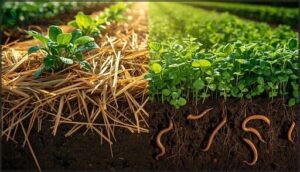
You’ll cut water loss by up to 70 percent when you spread straw or leaf mulch two to three inches deep—plus you’ll suppress weeds naturally.
Between planting seasons, sow cover crops like clover or rye to fix nitrogen and add organic matter that keeps soil structure healthy. These sustainable gardening practices deliver real ecosystem services: better moisture retention, organic weed suppression, and less soil erosion control work for you.
Avoiding Excessive Soil Disturbance
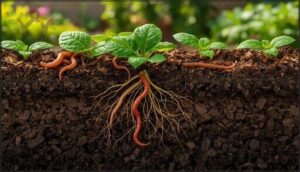
Minimal tillage keeps beneficial microbes thriving and carbon locked in your upper soil layers—that’s real soil health at work. When you leave root zones undisturbed, you’re building resilient soil structure that water and air can move through easily.
Here’s how sustainable gardening practices protect your ground:
- Leave surface residue on beds to prevent soil erosion and support helpful soil creatures
- Use wide row spacing to minimize compaction and preserve natural aggregates
- Keep equipment on designated paths for soil compaction prevention
- Direct-seed or transplant without prior cultivation for effective soil conservation
These organic gardening techniques deliver soil erosion prevention and strong root zone management season after season.
Water Conservation Strategies for Your Garden
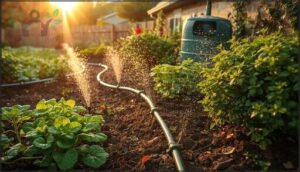
Water is one of your garden’s most valuable resources, and using it wisely doesn’t mean sacrificing plant health.
Smart conservation starts with choosing the right tools and techniques to deliver moisture where it’s needed most. Let’s look at three practical methods that reduce waste while keeping your plants thriving.
Installing Drip Irrigation and Soaker Hoses
If you want to cut water waste right at the root zone, drip irrigation and soaker hoses are your sustainable gardening allies. These irrigation systems deliver moisture slowly and precisely, boosting water efficiency by reducing evaporation and runoff.
Position emitters 12 to 24 inches apart for even coverage, and keep pressure around 10 to 25 psi. Regular hose maintenance—like flushing debris and checking for leaks—ensures long-term water conservation and soil health.
Collecting and Reusing Rainwater
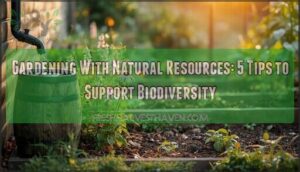
Your roof catchment can become a free water source when you channel rain into a rain barrel or storage tank. Rainwater harvesting cuts reliance on municipal supplies and aids water conservation by capturing runoff for irrigation systems.
Add a first flush device to screen out debris, and you’ll have clean water ready for drip irrigation or spot watering. It’s practical water management that benefits your plants and the planet.
Mulching to Retain Soil Moisture
A 2- to 3-inch layer of organic mulches acts like a shield against the sun, locking moisture into the soil and moderating soil temperature. You’ll see fewer weeds and better water conservation as wood chips or straw decompose, enriching your soil naturally.
This simple mulch thickness keeps roots hydrated while supporting sustainable gardening and long-term soil health.
Natural Pest and Disease Management
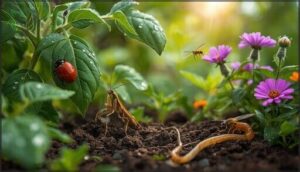
You don’t need harsh chemicals to keep pests and diseases under control in your garden. Nature offers plenty of ways to protect your plants while supporting the beneficial insects and microorganisms that keep ecosystems balanced.
Here are three effective strategies you can start using today.
Attracting Beneficial Insects and Pollinators
Your garden can become a refuge for bees, butterflies, and helpful predators through simple, intentional choices. Native flowers in pollinator gardens draw beneficial insects that patrol for pests while supporting biodiversity.
Try these pollinator conservation steps:
- Plant native wildflowers that bloom spring through fall.
- Set up insect hotels for shelter.
- Keep shallow water dishes with landing stones.
- Skip synthetic pesticides in your organic gardening.
- Leave leaf litter for overwintering habitats.
Using Companion Planting to Deter Pests
Strategic plant pairings create natural barriers that confuse and repel pests without chemicals. Basil near tomatoes reduces hornworm damage, while marigolds suppress nematodes in vegetable beds—classic companion planting techniques.
This natural pest control approach fits perfectly into integrated pest management and sustainable gardening. Try planting nasturtiums as trap crops to lure aphids away from peppers, or use dill around cucumbers to attract beneficial insects.
Crop rotation between these biological controls keeps pest populations guessing season after season.
Applying Organic and Non-Toxic Pest Controls
When companion planting isn’t enough, organic sprays and biological agents step in as your next line of defense.
Insecticidal soap disrupts soft-bodied pests like aphids on contact, while Bacillus thuringiensis targets caterpillars without harming beneficials.
These non-toxic methods support integrated pest management and soil health, keeping your eco-friendly gardening on track without synthetic chemicals that undermine composting and organic gardening methods.
Reducing Waste and Chemical Dependency
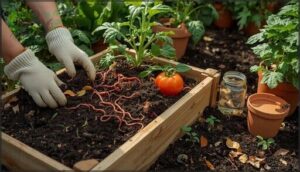
Cutting back on waste and chemicals might sound challenging, but you’ll find it’s one of the most rewarding shifts you can make. Small adjustments—like composting scraps or choosing organic options—reduce your garden’s environmental footprint while keeping your soil and plants healthier.
Here are three practical ways to lighten your impact and grow a more sustainable garden.
Composting Yard and Kitchen Waste
You can transform food scraps and yard clippings into rich soil amendments through composting, one of the most rewarding organic recycling methods.
Aim for a two-to-one browns-to-greens ratio—think dry leaves with veggie trimmings—and turn your pile weekly to keep microbes thriving.
The result is a dark, crumbly mulch that boosts soil health naturally, reduces waste headed to landfills, and helps your sustainable gardening goals.
Avoiding Synthetic Pesticides and Herbicides
Swapping synthetic sprays for organic pest control and natural herbicides protects beneficial insects while keeping pest populations in check.
Eco-friendly methods like botanical oils and biological solutions let you manage trouble spots without harming soil life, ensuring chemical free gardening that promotes sustainable gardening goals.
These organic gardening techniques strengthen your ecosystem naturally, helping you build healthier ground for the long haul.
Using Organic Fertilizers Wisely
Organic fertilizer feeds your soil without the chemical hangover, supporting sustainable gardening through natural nutrient cycling and steady soil enrichment.
You’ll find different fertilizer types—blood meal for nitrogen, bone meal for phosphorus, compost tea for trace minerals—each delivering organic matter that fuels eco-friendly gardening and healthy microbial activity.
- Apply manure-based products less often than synthetics, since slow release reduces leaching risk
- Test your soil first to match fertilizer types with actual nutrient gaps
- Blend composting waste into your organic gardening techniques for long-term benefits
Frequently Asked Questions (FAQs)
What are sustainable gardening practices?
Sustainable gardening practices minimize environmental impact through water-wise techniques, native plant selection, natural pest management, and soil health building.
These methods support local biodiversity and reduce chemical dependency in your landscape.
How do I start composting in small spaces?
You’ll need a compact compost bin or worm tower that fits on a balcony or under your sink—both handle steady kitchen scraps while keeping smells in check and speeding up waste reduction.
What trees sequester the most urban carbon?
Large oaks and maples lead urban carbon storage thanks to their substantial trunk diameter and rapid early growth.
Native species adapted to city stress maintain steady carbon sequestration rates over decades, maximizing climate change mitigation benefits.
Can sustainable gardens reduce my water bills significantly?
You’ll see real savings when you adopt water conservation techniques like drip irrigation and rainwater harvesting.
Rain barrels, drought tolerance, and improved soil moisture can slash outdoor water use 20 to 40 percent.
How often should I apply organic fertilizers?
A tomato grower I know tested her soil first, then fed monthly during peak growth—her plants thrived. Application timing depends on soil testing, plant type, and fertilizer schedules, but most organic gardening techniques recommend feeding every four to eight weeks.
What wildlife should I attract to my garden?
Focus on native pollinators like bees and butterflies, beneficial predators such as ladybugs and lacewings, and songbirds that eat pests.
Creating diverse wildlife habitats with layered vegetation fosters eco balance and biodiversity naturally.
How can I attract birds to my sustainable garden?
Install a shallow bird bath with clean water, plant native shrubs for shelter and berries, and add flowering plants to support insects.
Layered plantings with ground covers and small trees create safe nesting sites.
What tools are most eco-friendly for garden maintenance?
As the old saying goes, “The right tool makes the job easier.”
Manual pruners, bamboo tools, drip irrigation, and soil testers minimize your environmental footprint while keeping your garden thriving with sustainable gardening techniques.
Can sustainable gardens thrive in small urban spaces?
Absolutely—container gardens, vertical gardening systems, and balcony plots let you practice sustainable landscaping in tight quarters.
Urban garden design embraces eco-friendly materials, drip irrigation, and native species that transform small space optimization into thriving green space management.
How do I transition my existing garden sustainably?
Start small by swapping synthetic fertilizers for compost and replacing a few thirsty plants with drought-tolerant native species.
Add a rain barrel, mulch your beds deeply, and let beneficial insects handle pest control naturally.
Conclusion
Picture your garden five years from now: monarchs clustering on milkweed stalks, soil rich enough to crumble in your hands, rainwater flowing into beds instead of storm drains.
These sustainable gardening practices turn that vision into daily reality. You’re not just growing plants—you’re rebuilding connections between soil, water, insects, and birds that industrial landscapes severed decades ago.
Each choice you make sends ripples through the ecosystem, proving that restoration begins right outside your door.