This site is supported by our readers. We may earn a commission, at no cost to you, if you purchase through links.
Most farmers who abandon crop rotation don’t do so because they doubt it works—they leave because they never grasped the fundamental principles that make it work. The difference between haphazardly swapping crops and implementing a strategic rotation lies in understanding how plant families interact with soil biology, nutrient cycles, and pest populations.
When you alternate deep-rooted crops with shallow feeders, rotate legumes that fix nitrogen with heavy consumers like corn, and strategically break disease cycles by switching between plant families, you transform your soil from a depleted resource into a self-renewing system.
Understanding crop rotation principles isn’t about memorizing complex charts or following rigid schedules—it’s about recognizing the ecological relationships that govern soil health, then designing rotations that utilize those natural processes to reduce inputs, boost yields, and build fertility year after year.
Table Of Contents
Key Takeaways
- Effective crop rotation alternates deep-rooted with shallow-rooted plants and strategically rotates legumes that fix nitrogen with heavy feeders like corn, transforming soil from a depleted resource into a self-renewing system that reduces inputs while boosting yields.
- Strategic rotation breaks pest and disease cycles by interrupting host-crop sequences for 3-7 years, cutting pest populations by up to 90% and reducing soilborne pathogens like Fusarium by 52% without heavy chemical reliance.
- Diversified crop rotations deliver measurable economic benefits including 20-23% higher yields, 14-27% increased farm revenue, and 41-46% reduction in fertilizer costs while cutting greenhouse gas emissions by up to 92%.
- The fundamental principle isn’t about memorizing complex charts but understanding ecological relationships between plant families, soil biology, and nutrient cycles so you can design rotations that work with natural processes rather than against them.
Core Principles of Crop Rotation
When you rotate crops thoughtfully, you’re working with nature instead of against it. The system isn’t complicated, but it does rest on a few foundational ideas that make all the difference in keeping your soil healthy and productive.
Let’s walk through the core principles that guide effective crop rotation and explain why they matter for your garden or farm.
Alternating Deep-Rooted and Shallow-Rooted Crops
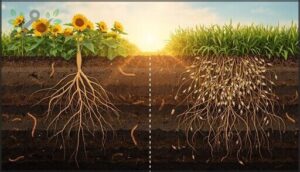
You’ll find that alternating deep-rooted crops like alfalfa and sunflowers (reaching 1.5–2.0 m) with shallow-rooted crops such as oats (around 0.6–1.0 m) unlocks significant soil health benefits. Deep-rooted crops create biopores that improve water infiltration rates and soil aeration benefits, while their nutrient uptake strategies access subsoil resources.
This crop rotation approach improves soil structure and optimizes root depth variations across growing seasons. By adopting a sustainable farming practice, farmers can further improve the benefits of crop rotation and promote ecosystem health.
Rotating Dicots and Monocots
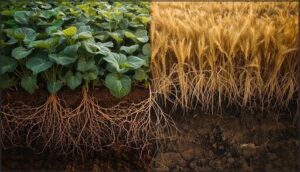
Rotating dicots and monocots strengthens crop diversity by alternating functional groups with different root structures and nutrient demands. When you switch between broadleaf crops like soybeans or cotton and grasses such as wheat or corn, you’ll disrupt pest cycles while enhancing soil microbes.
Research shows this rotation boosts yields by 26–32% in wheat–maize systems, demonstrating how dicot benefits and monocot rotation work together for improved soil health.
Effective crop rotation involves understanding vegetable families to minimize disease risk and maximize soil health.
Leveraging Legumes for Nitrogen Fixation

You can slash fertilizer costs by planting legumes like fava beans or red clover, which fix 50–465 kg of nitrogen per hectare annually through symbiotic soil microbes.
This nitrogen fixation naturally enriches your soil for the next crop in your rotation sequence.
Proper legume selection and inoculation boost fixation efficiency—alfalfa and pigeon pea lead the pack, while even lentils contribute measurably to long-term soil health.
Preventing Pest and Disease Cycles

Beyond nitrogen enrichment, crop rotation acts as your front-line defense in integrated pest management and disease resistance. When you break host-crop sequences for five to seven years, you’ll prevent soilborne pathogens from reaching damaging thresholds. This biological management approach disrupts pest life cycles naturally:
- Rotating away from corn reduces rootworm survival without chemical intervention
- Three-year breaks from Solanaceae crops slash potato scab incidence
- Strategic crop monitoring during nonhost intervals enhances soil remediation and long-term soil health
Enhancing Soil Health and Fertility

Healthy soil is the foundation of any successful crop rotation system. When you rotate crops thoughtfully, you’re actively managing nutrient cycles, preventing soil exhaustion, and building resilience in the ground beneath your feet.
Let’s look at four practical ways crop rotation strengthens and protects your soil over time.
Maintaining Nutrient Balance in Soil
Think of your soil as a bank account—withdrawals without deposits leave you broke. Different crops pull different nutrients, so when you rotate legumes with cereals, you’re balancing withdrawals through biological nitrogen fixation and diverse root uptake.
Treat your soil like a bank account: rotate legumes with cereals to balance nutrient withdrawals through biological deposits
Research shows rotations maintain nitrogen, phosphorus, and potassium levels far better than monocultures, cutting fertilizer needs by up to 46% while keeping yields strong.
| Nutrient | Depletion Risk (Monoculture) | Rotation Benefit |
|---|---|---|
| Nitrogen | High annual deficit | Legumes fix +20 kg/ha/year |
| Phosphorus | Gradual soil mining | Enhanced microbial cycling |
| Potassium | Long-term depletion | Balanced uptake patterns |
Smart crop rotation transforms nutrient management from constant input to sustainable cycling, letting soil microbiology and organic amendments work together naturally.
Preventing Soil Degradation
Soil erosion control starts with keeping roots in the ground year-round. When you rotate crops—especially deep-rooted species with high-residue producers like corn and wheat—you slash erosion by up to 60% compared to monocultures.
Diversified rotations prevent compaction, safeguard carbon sequestration, and maintain soil structure that resists wind and water damage. You’re not just growing crops; you’re building resilience into every layer of your field.
Improving Organic Matter and Soil Structure
When you diversify your crops, you’re catalyzing a transformation beneath the surface. Rotations boost soil carbon by 3.6%—and adding cover crops pushes that to 8.5%.
These changes strengthen aggregate stability by nearly 16% and cut bulk density by 3.2%. Root system development from varied species fuels microbial biomass enhancement by over 20%.
This turns organic matter management into a natural engine for soil health and lasting fertility.
Reducing Dependence on Synthetic Inputs
Legume integration cuts your nitrogen fertilizer needs by 41% to 46% while maintaining yields—a practical shift toward natural fertilizers and organic practices. You’ll also see input reduction across phosphorus and potassium, as diverse root systems capture nutrients more efficiently.
This eco-friendly farming approach lowers pesticide use by disrupting pest cycles, making sustainable agriculture economically viable and regenerative for your soil health.
Crop Rotation for Pest and Disease Control
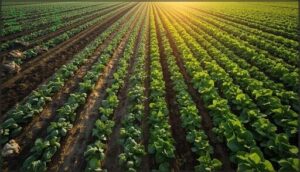
One of the most practical reasons to rotate your crops is how effectively it handles pests and diseases without relying heavily on chemicals. When you change what you plant each season, you’re basically pulling the rug out from under the insects and pathogens that would otherwise thrive year after year.
Let’s look at four key ways crop rotation protects your soil and plants from these common threats.
Disrupting Pest Life Cycles
When pests find the same host crop season after season, they thrive—but you can break that cycle. Crop rotation strategies built on host removal techniques deliver powerful integrated pest control by starving specialized insects and nematodes.
Consider these proven soil pest management tactics:
- Rotate away from vulnerable crops for 3–4 years to cut pest populations by up to 90%
- Alternate crop families to disrupt feeding and reproduction
- Coordinate field placement across your landscape to reduce reinfestation pressure
These crop rotation and pest management practices form the backbone of effective disease management and pest control, protecting your yields without excessive chemicals.
Minimizing Disease Carryover
Rotating crops disrupts the survival of pathogens that would otherwise accumulate in your soil. Two-year breaks reduce foliar disease inoculum, while four-year rotations cut Fusarium levels by 52% and deliver effective disease suppression. For tougher threats like clubroot, you’ll need seven-year intervals to achieve proper pathogen control.
These rotation-driven soil sanitation practices boost microbial balance, improve crop resistance, and strengthen overall disease management without heavy chemical reliance.
Reducing Weed Pressure
You’ll cut weed density by nearly half when you diversify your crop rotation—49% on average according to global field data. Changing planting dates and crop types disrupts weed emergence patterns, making it harder for any single species to dominate.
Under no-till systems, diversified rotation design drops weed pressure by 65%, giving you effective weed suppression while protecting soil health and reducing herbicide dependence.
Supporting Beneficial Soil Microbes
When you rotate crops, you’re feeding microbial balance below ground—bacterial diversity jumps up to 15%, and fungal networks thrive when you alternate host plants.
This microbe diversity powers nutrient cycling, breaking down residues and fixing nitrogen naturally. Diversified sequences support soil ecology that continuous cropping can’t match, building soil health and fertility while advancing sustainable agriculture through improved soil conservation.
Economic and Environmental Benefits
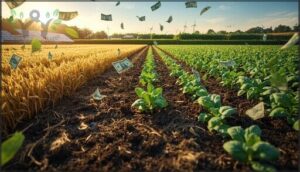
Crop rotation isn’t just good for your soil—it makes real financial sense while protecting the environment around you. When you rotate your crops thoughtfully, you’ll see measurable improvements in both your bottom line and your land’s long-term health.
Let’s look at four key ways this practice pays off economically and environmentally.
Increasing Crop Yields and Farm Revenue
You’ll see real gains when you diversify your planting approach. Research shows multi-crop rotations boost total yields by 23% on average compared to monoculture, with farm revenue strategies increasing 14–27% through rotational cropping benefits.
This isn’t just about soil fertility optimization—it’s agricultural productivity that pays. Legume-based sequences alone can lift cereal yields by 20% globally, strengthening your crop yield management while supporting sustainable agriculture and long-term soil health.
Lowering Production Costs
Higher yields mean more income, but you’ll also reduce what you spend. Crop rotation delivers fertilizer savings of up to 46% on cereals by utilizing nitrogen fixation, while herbicide dependence drops 25–51% in diversified systems. Labor efficiency improves when conservation tillage cuts field passes, lowering machinery costs and fuel reduction. These input optimization strategies strengthen your agricultural productivity while building soil health for lasting sustainable agricultural practices.
- Legume-inclusive rotations offset 50+ pounds of nitrogen fertilizer per acre, slashing fertilizer costs during high-price periods
- Diverse crop sequences reduce herbicide use by 25–81% while maintaining effective weed control and stable yields
- Conservation tillage within rotations lowers fuel consumption and machinery wear through fewer field passes
- Improved soil structure from rotation decreases emergency spending on corrective inputs and pest management
- Multi-year diversified systems stabilize costs by spreading fixed expenses over higher total output
Promoting Sustainable Land Use
By diversifying rotations, you release land efficiency that delivers 20% more output from existing farmland without expanding your footprint. This sustainable farming approach embodies environmental stewardship—enhanced soil conservation, stronger soil health, and improved soil fertility work together. Crop rotation and diversification transform your acres into eco-friendly systems that produce more while protecting resources for generations ahead.
| Land Use Metric | Monoculture System | Diversified Rotation |
|---|---|---|
| Yield increase | Baseline | +20% average |
| Ecosystem value | 1.0× GDP output | 1.27–1.69× GDP |
| Food supply stability | Variable year-to-year | Reduced variability |
Contributing to Environmental Conservation
Through crop rotation, you actively contribute to environmental conservation on multiple fronts. This sustainable farming practice delivers measurable ecosystem services:
- Climate change mitigation: Diversified rotations cut greenhouse gas emissions by up to 92% while sequestering over 2 tonnes of carbon per hectare annually
- Biodiversity conservation: Enhanced microbial diversity strengthens soil health and natural pest control
- Water pollution reduction: Lower fertilizer needs decrease nutrient runoff and eutrophication
- Soil erosion prevention: Improved aggregate stability protects topsoil integrity
Top Crop Rotation Options for Home Gardens
You don’t need a sprawling farm to put crop rotation principles into practice. Home gardens can benefit just as much from thoughtful plant sequencing, even in raised beds or small plots.
Let’s look at a few accessible crops that work well in rotation and help you build healthier soil season after season.
1. Frozen Green Peas Amazon Grocery
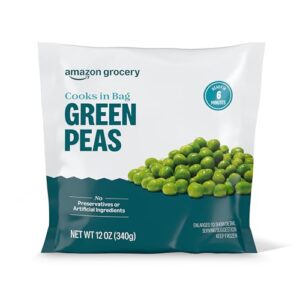
When you think about leguminous crops in rotation, frozen green peas deserve serious consideration. These shallow-rooted annuals fix atmospheric nitrogen through rhizobia symbiosis, naturally enriching soil fertility for your next planting. You’ll find that green pea farming fits perfectly into rotation schemes—alternating them with deeper-rooted crops maximizes root-zone diversity while disrupting pest cycles.
The frozen peas benefits extend beyond nutrition: a 100g serving provides 5.2g protein and substantial fiber. Sustainable pea production, paired with proper frozen vegetable storage, bolsters both soil health and crop yield improvements in home gardens.
Best For: Home cooks looking for a convenient, nutritious vegetable that cooks quickly and works in everything from soups to side dishes.
- Ready in just 6 minutes with microwaveable bag—no prep work or draining required
- Solid nutritional profile with 5g protein, 4g fiber, and useful amounts of vitamin C, iron, and folate per serving
- No preservatives or artificial ingredients, plus it’s vegan-friendly and versatile enough for multiple recipes
- Must stay frozen at all times, which limits portability and requires dedicated freezer space
- Peas may lose their shape when microwaved (though you can avoid this by heating them in a pot of water instead)
- Packaging is changing from Happy Belly to Amazon Grocery, so the bag you receive might look different than expected
2. Amazon Whole Kernel Corn Can
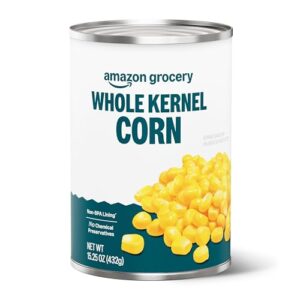
Corn stands as a vigorous monocot that complements pea rotations beautifully. By alternating these deep-rooted plants with shallow legumes, you’ll enhance soil health and fertility while implementing proven crop rotation strategies.
Research confirms corn yields jump 6.4% following legume crops, and two-year rotations boost output by 29% compared to continuous planting. Each bushel removes 0.67 lb nitrogen, making soil health management vital.
Amazon Whole Kernel Corn Can offers 70 calories and 3g protein per serving—perfect for understanding corn nutrition and kernel benefits while your rotation cycle enhances farm revenue through strategic crop yield improvements.
Best For: Home cooks and meal preppers looking for an affordable, versatile pantry staple with no chemical preservatives and long shelf life.
- Sweet, crisp kernels work great in salads, soups, stews, or as a quick side dish
- Vegetarian and vegan friendly with simple ingredients (just corn, water, and salt)
- Good value for the price with 3g protein and 3g fiber per serving
- Some customers receive dented cans due to shipping and handling issues
- Packaging inconsistencies during the Amazon Fresh to Amazon Grocery rebrand
- May not satisfy those who prefer established name-brand products
3. Organic Black Beans By Wholefoods
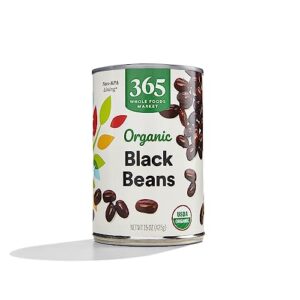
Legumes like black beans work as natural soil architects, fixing atmospheric nitrogen while you build rotation resilience. The 365 by Wholefoods Market organic offering delivers 7g protein and 9g fiber per half-cup—nutritional density that mirrors these leguminous crops’ agricultural value.
When you incorporate black beans into your rotation plan, you’re investing in soil health and fertility. Their nitrogen-fixing capability reduces synthetic input needs while supporting organic farming principles. Consider bean recipe ideas that showcase this sustainable crop—each serving reflects decades of research confirming legumes boost subsequent yields by 20% through enhanced nutrient cycling.
Best For: Home cooks looking for a convenient, certified organic source of plant protein and fiber that fits vegetarian, vegan, and gluten-free diets without the prep time of dried beans.
- Delivers solid nutrition with 7g protein and 9g fiber per serving while keeping fat at zero and sodium low at just 85mg
- USDA organic and Non-GMO verified with a clean three-ingredient list—just organic black beans, water, and sea salt
- Ready to use straight from the can, saving you the overnight soaking and long cook times that dried beans require
- Some buyers report the beans have a harder texture than expected, which may not work if you prefer softer canned beans
- Mixed feedback on liquid content—while some appreciate less excess water, others find it creates issues when draining or using in recipes
- Priced higher than conventional options, which could add up if you’re buying in bulk or on a tight grocery budget
4. Fresh Red Radish Produce Bag
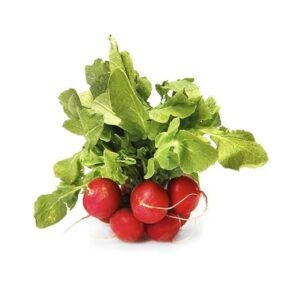
Radish cultivation exemplifies how fast-maturing catch crops improve crop rotation strategies. You’ll harvest this Fresh Red Radish Produce Bag in just 3–4 weeks, filling gaps between longer-season plantings while improving soil management techniques through crop diversification.
Red radish benefits extend beyond their 15% daily vitamin C content—their shallow roots complement deeper-rooted species in rotation plans, supporting soil fertility without demanding heavy inputs.
Store your radishes with a damp towel in the fridge for up to two weeks, then explore radish recipes that celebrate this rotation workhorse. Their rapid turnover and compact spacing make them ideal cover crops for intensive home gardens.
Best For: Home gardeners and health-conscious eaters who want a low-sodium, vitamin C-rich vegetable that’s ready to harvest in under a month and works great in salads or as a crunchy snack.
- Delivers 15% of your daily vitamin C in a low-calorie, fat-free package that supports your nutrition goals without adding sodium to your diet.
- Sustainably farmed in the USA with a resealable bag that keeps radishes fresh in the fridge for up to two weeks when stored with a damp towel.
- Fast 3–4 week growth cycle makes it perfect for filling gaps in your garden rotation, and you can plant multiple rounds in one season for continuous harvests.
- Mixed customer reviews point to inconsistent quality, with some buyers reporting incorrect package weights or radishes with wormholes.
- Price may feel steep compared to other fresh produce options, especially given the quality concerns some customers have experienced.
- Without the greens attached, these radishes may be more prone to moisture loss and quality issues during storage compared to bunched radishes.
Frequently Asked Questions (FAQs)
How do I start crop rotation on small farms?
Think of your farm as a canvas—map out 3–4 blocks by crop family, test your soil regularly, and rotate annually.
This farm planning foundation cuts pest problems markedly while boosting soil fertility naturally.
What happens if I skip a rotation cycle?
Skipping crop rotation invites soil erosion, nutrient depletion, and pest outbreaks—consequences that compound over time.
You’ll likely face yield decline, increased pest pressure, and weakened agricultural resilience as monoculture strips away soil fertility and crop rotation benefits.
Can crop rotation work in container gardens?
You can absolutely rotate crops in containers—think of each pot as its own field. Switching plant families between seasons prevents nutrient depletion, breaks pest cycles, and extends media reuse while optimizing your limited garden space.
How long should each rotation cycle last?
You’ll want to aim for at least three to four years between planting the same crop family in one spot. This rotation interval gives your soil time to recover and disrupts pest cycles effectively.
Which crops should never follow each other?
You should never plant crops from the same family consecutively—potatoes after potatoes, nightshades after brassicas, or legumes after alliums.
These monoculture sequences intensify soilborne diseases, deplete soil fertility, and undermine effective pest management rotation strategies.
Conclusion
Give a man a fish, and you feed him for a day; teach him to fish, and you feed him for a lifetime.” The same holds true for your soil.
Once you grasp crop rotation principles—how roots explore different depths, how legumes replenish what grains consume, how strategic sequencing starves pests—you’ll never view your fields the same way.
You’re not just growing crops anymore; you’re orchestrating an ecosystem that feeds itself, season after season.
- https://www.inrae.fr/en/news/crop-rotation-global-lever-yield-nutrition-and-revenue
- https://vlsci.com/blog/crop-rotation-benefits/
- https://www.ars.usda.gov/news-events/news/research-news/2024/diverse-crop-rotations-reduce-risk-of-crop-loss-under-poor-growing-conditions/
- https://pmc.ncbi.nlm.nih.gov/articles/PMC12034216/
- https://www.sciencedirect.com/science/article/pii/S0378429023001454