This site is supported by our readers. We may earn a commission, at no cost to you, if you purchase through links.
Most gardeners pack away their tools when the first frost arrives, convinced the season is over.
It isn’t.
Snowdrops push through frozen soil in January.
Witch hazel unfurls its spidery blooms on bare branches while snow still clings to the ground.
Hardy cyclamen dots shaded beds with color when almost nothing else dares to grow.
Winter has its own flowering calendar—quieter than summer’s abundance, but no less rewarding.
Knowing what flowers bloom in winter means your garden never fully goes dark, and windowsills can carry color and fragrance straight through to spring.
Table Of Contents
- Key Takeaways
- What Flowers Bloom in Winter?
- Best Outdoor Winter-Blooming Flowers
- Winter-Flowering Shrubs and Trees
- Cold-Hardy Bulbs and Ground Covers
- Indoor Flowers That Bloom in Winter
- Frequently Asked Questions (FAQs)
- What is winter’s favorite flower?
- Are any flowers in season in winter?
- What flowers bloom in winter?
- What flowers make a difference in winter?
- Do flowers bloom in winter?
- Do perennials bloom in winter?
- What are winter blooming bulbs?
- What flowers can still bloom in the winter?
- What is the most common winter flower?
- Which one of the following flowers blooms in winter?
- Conclusion
Key Takeaways
- Winter-blooming plants like snowdrops, hellebores, and witch hazel use biological adaptations — waxy leaves, sugar-rich sap, and compact forms — to flower through frost when most gardens go quiet.
- You can layer outdoor bulbs, cold-hardy shrubs, and indoor pots like amaryllis or orchids to keep color and fragrance running straight through to spring.
- Over 200 plant species bloom between December and February, meaning a bare winter garden is a choice, not an inevitability.
- Knowing your plants’ specific needs — soil drainage, light, pruning timing, and planting depth — is what separates a garden that survives winter from one that actually thrives in it.
What Flowers Bloom in Winter?
Winter brings its own palette of blooms, each with unique traits and charm. Some flowers push through cold soil or brighten indoor spaces when little else grows.
From snowdrops to hellebores, these cold-hardy winter-blooming flowers prove that even the harshest season has something beautiful to offer.
Here’s a look at the types you can expect to see during the season.
Key Traits of Winter-Blooming Flowers
Cold adaptation is the secret behind winter blooming flowers. These cold‑hardy plants combine thick, waxy leaves, high sugar content, and compact growth for true flower resilience.
Frost tolerance and cellular protection let them bloom even under snow, offering steady color when most gardens sleep. Their traits make plant care easier and ensure your winter garden stays alive with seasonal flowers.
- Thick, waxy or hairy leaves protect from frostbite
- High internal sugars act as natural antifreeze
- Compact forms reduce wind chill exposure
- Buds shielded by tough sepals for cellular protection
How Winter Blooms Differ From Other Seasons
You’ll notice winter blooming flowers play by their own rules. Unlike spring’s rush, these plants stretch their bloom over weeks, storing energy underground and relying on heat‑retaining shapes, frost‑resistant sap, and UV‑contrast signaling. Their pollinator timing is sharper, attracting cold‑active insects. That’s why cold weather gardening feels so different—your winter garden becomes a quiet stage for seasonal flowers.
Winter’s garden blooms on its own terms, a quiet stage where cold-adapted flowers outlast the season’s silence
Research shows that hanging bells temperature boost can keep flowers several degrees warmer than the surrounding air.
| Pollinator Timing | Heat‑Retaining Shapes | Energy Storage Strategies |
|---|---|---|
| Bumblebee queens | Cup‑shaped petals | Underground bulbs |
| Hoverflies | Nodding blooms | Thick roots |
| Beetles | Dense clusters | Minimal leaf growth |
| Cold‑active insects | Mini‑greenhouses | Rapid seed set |
| High visitation | Radiant energy | Extended bloom period |
Benefits of Planting Winter Flowers
unique survival traits pay off in real, practical ways. Winter gardening with cold hardy plants does more than fill an empty bed — it helps soil health by reducing erosion and keeping nutrients from leaching away in wet months. Seasonal flowers like hellebores feed pollinators through lean times, while their color contrast against bare branches lifts your mood on the grayest days.
Incorporating native shrubs for structure enhances winter interest.
Best Outdoor Winter-Blooming Flowers
You don’t need a bare, colorless garden just because the temperature drops.
Several outdoor flowers handle the cold surprisingly well, giving you real color and texture from fall straight through to early spring.
Here are five worth planting before the season gets away from you.
Pansies and Violas
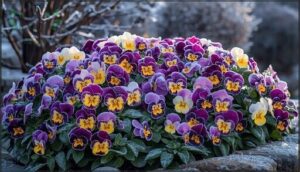
Pansies and violas are the workhorses of cool‑season color — frost‑tolerant bedding plants that keep blooming when most gardens have gone quiet. Both thrive as compact border design plants in USDA zones 4 to 8, and violas even offer shade‑tolerant options under shrubs.
For more inspiration on pairing pansies and violas with other frost-tolerant plants, check out these seasonal container garden ideas for winter color.
Try these cold‑hardy plants for colorful edge planting:
- ‘Icy Wave’ pansies — wide‑faced winter flowers that shrug off light frost
- ‘Sorbet’ violas — self‑seeding varieties that return year after year
- ‘Matrix’ pansies — dense, uniform growth ideal for winter gardening in containers
- ‘Penny’ violas — compact, long‑blooming, and perfect for edging borders
Cyclamen (Hardy and Persian)
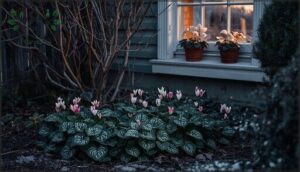
Cyclamen brings quiet elegance to cold weather gardening, whether you choose hardy cyclamen for outdoor groundcover or Persian cyclamen as indoor plants. You’ll find heart-shaped leaves and flower color varieties ranging from pink to white.
For best flower care, focus on soil drainage and shade tolerance. Container planting works well, and winter mulching helps protect roots through chilly months.
Hellebores (Christmas and Lenten Roses)
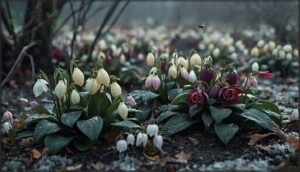
Hellebores are among the most dependable perennial plants for cold weather gardening. Their evergreen foliage holds up through frost, and their late winter bloom arrives when most beds are still bare. For a winter garden that genuinely works, consider these qualities:
- Shade Tolerance — they thrive under deciduous trees
- Pollinator Appeal — early bees visit readily
- Garden Pairings — snowdrops and cyclamen complement them beautifully
Sweet Alyssum
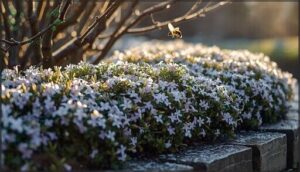
Sweet alyssum offers a steady hand in seasonal gardening, weaving a continuous bloom cycle into your winter garden.
As a low-growth groundcover, it thrives where cold weather flowering plants are needed most.
You’ll notice its pollinator-friendly flowers and honey‑like scent, making it a top fragrant border plant.
Choose heat‑tolerant varieties for borders or containers, ensuring winter blooming flowers persist.
Winter Aconite
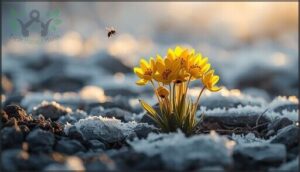
Winter aconite is one of the earliest cold weather flowering plants you can grow, often pushing bright yellow flowers through frozen ground before most bulbs even stir.
It fits naturally into a rock garden and pairs well with snowdrops.
Plant it in fall, keep soil moisture consistent but never waterlogged, and watch it draw early pollinators into your winter garden each season.
Winter-Flowering Shrubs and Trees

Shrubs and trees are often the backbone of a winter garden, holding their ground when most everything else has gone quiet.
A few of them do something even better — they bloom, sometimes in the coldest weeks of the year. Here are some of the best winter-flowering shrubs and trees worth making room for.
Camellia (Including Camellia Sasanqua)
Ever wonder what brings color to winter flower gardening when most shrubs fade? Camellia, especially Camellia sasanqua, offers waxy blooms in white, pink, or red, spanning the bloom season from autumn into mid‑winter.
For best results, favor acidic, well‑drained soil, prune after flowering, and plant in sheltered spots—essential cold‑hardy plant care for evergreen shrubs with impressive frost hardiness and color range.
Witch Hazel
When you crave a spark of life in winter landscaping, Witch Hazel stands out.
Its spidery blooms—yellow, orange, or red—unfurl on bare branches, often shrugging off snow.
Choose fragrant cultivars for pollinator attraction, and prune right after flowering to shape these cold‑weather plants.
Witch Hazel’s winter hardiness and reliable flowering timing make it a staple for winter flower gardening.
Mahonia
Mahonia is a hardy evergreen shrub that brings bold, architectural foliage and bright yellow blooms to the coldest months.
Its fragrant winter flowers are a genuine pollinator food source on mild days — a quiet gift for early bees.
- Tolerates cold and shade better than most cold weather plants
- Flowers from late autumn through late winter, bridging gaps left by witch hazel
- Produces blue-black berries after blooming, feeding birds well into spring
Daphne
Few cold weather plants match the daphne shrub for sheer fragrance profile. Its dense clusters of pink, white, or purple-tinted flowers carry a powerful perfume on mild winter days — something no garden near a path should be without.
Cold hardiness holds steady to around -12°C, suiting USDA zones 7–9.
Give it well-drained soil and skip hard pruning; pruning timing matters, as daphne resents heavy cutting.
Winter Jasmine
Winter jasmine stands apart among shrubs for winter, with arching green stems that bloom bright yellow even in cold weather. You’ll find its flowers open on bare branches, offering a reliable nectar source.
Wall training improves frost tolerance, especially in hardy zones. Pruning timing matters—wait until after flowering.
For seasonal planting and winter flower care, this shrub brings steady cheer.
Cold-Hardy Bulbs and Ground Covers
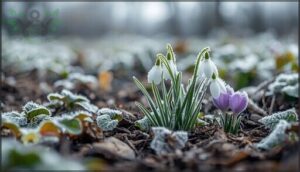
Some of the most reliable winter color comes from bulbs and ground covers that don’t ask much of you. They push through cold soil on their own schedule, quietly doing what they were bred to do.
Here are five worth planting if you want early-season interest without a lot of fuss.
Snowdrops
quiet trailblazers are often pushing through frost before hellebores, crocuses, or hardy cyclamen even stir.
planting timing matters: get the bulbs in the ground right after purchase, since they dry out fast.
They prefer partly shaded spots with consistent soil moisture and naturalize beautifully over time, spreading into soft drifts — a gentle form of propagation that rewards patience.
Glory of The Snow
Star-shaped blossoms of Glory of the Snow bring a welcome lift to early-season groundcover, blooming just as Snowdrops and Hardy Cyclamen fade.
Hardy in USDA zone 3–8, these bulbs thrive with good soil drainage—think loose, crumbly earth, not soggy. Their naturalizing spreads create soft carpets, weaving among Winter Aconite and cool season annuals for layered spring interest.
Crocus
Crocus are among the smallest but most rewarding additions to a cold weather garden. Plant the bulbs in fall — that’s your planting time window — in well-drained soil with full to partial sun.
naturalize beautifully, spreading into generous clusters alongside Snowdrops, Hardy Cyclamen, and Winter Aconite. Color varieties range from purple to white to gold, weaving cheerful threads through your soil preparation efforts.
Scilla
Blue drifts of Scilla can anchor your cold‑weather gardening, weaving color between Snowdrops, Crocus, and Winter Aconite.
These flower bulbs thrive in well‑drained Scilla soil, handling full sun or partial shade—Scilla light needs are flexible.
For Scilla propagation, leave bulbs undisturbed; they multiply naturally.
Scilla color variants range from vivid blue to soft white, adding depth to your garden design.
Heather
Heather is one of those quiet workhorses in cold-weather gardening — evergreen, low-growing, and genuinely useful as a ground cover between larger bulbs. It needs acidic soil and full sun to perform well; heavy, wet soil will rot the roots quickly.
Winter-flowering varieties attract pollinators when little else is blooming. A light trim after flowering keeps the mat tidy and encourages fresh growth.
Indoor Flowers That Bloom in Winter
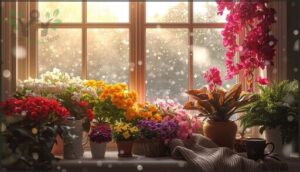
You don’t need a garden to enjoy flowers in winter — a sunny windowsill works just fine.
Plenty of plants bloom reliably indoors during the coldest months, and some of them put on a better show than anything growing outside.
Here are five worth keeping around.
Amaryllis
Few flowering bulbs deliver quite the drama of amaryllis in midwinter. Plant the bulb so the top third sits above the soil — following those potting depth guidelines makes a real difference. Place it on a bright windowsill to meet its light requirements, water lightly at first, then more as growth takes off.
One key note for households with pets or small children: the bulb carries toxic alkaloids, so keep it out of reach.
5 Tips for Growing Amaryllis Indoors:
- Time your planting — bulb dormancy timing matters; plant 6–8 weeks before you want blooms for a perfect holiday centerpiece design.
- Choose the right pot — snug fits encourage flowering bulbs to perform their best.
- Prioritize light — a south- or west-facing window helps strong, upright stalks.
- Mind toxicity safety tips — keep the plant away from cats, dogs, and curious kids.
- After bloom, let it rest — cool dormancy each fall sets up reliable winter garden ideas for years ahead.
Paperwhites (Narcissus)
Ever wondered how a winter flower arrangement can fill your kitchen with scent in just weeks? Paperwhites (Narcissus tazetta) are indoor gardening favorites—easy to force, with bold fragrance profiles. Choose pebbles or soil container options, keep temperatures cool, and mind toxicity tips if you’ve got pets. They’re a cold hardy plant care classic, perfect alongside cyclamen.
| Forcing Techniques | Fragrance Profile | Toxicity Tips |
|---|---|---|
| Pebbles or soil | Spicy, musky | Keep from pets |
| Stagger blooms | Strong scent | Bulbs toxic |
| Cool temperatures | Ventilate room | Out of reach |
| Bright light | Lasts 2 weeks | Don’t ingest |
African Violets
Unlike African violets, African violets don’t ask for much.
With the right light requirements — bright, indirect light or a grow light placed about 30 centimeters above — they’ll bloom nearly year‑round.
Use a porous soil mix of peat, perlite, and vermiculite, keep humidity around 40 to 50 percent, and fertilize monthly.
Propagation methods are simple: one healthy leaf cutting is all you need.
Christmas Cactus
Christmas cactus is one of those holiday plants that rewards patience.
To trigger blooming, it needs around 13 hours of darkness daily for six to nine weeks in fall — that’s your main temperature trigger.
Cooler nights, around 12–14°C, deepen flower color variation from pale pink to rich magenta.
Propagation tips, twist off two- to three-segment cuttings and root in moist mix.
Watch for mealybugs.
Orchids
If you’re curious about indoor gardening, orchids offer steady winter blooms with the right care.
Phalaenopsis holds flowers for months when given bright indirect light and steady temperatures.
Keep humidity up, water every 7–14 days, and use weak fertilizer monthly.
These flowering plant care basics help you enjoy:
- Long-lasting blooms
- Reliable reblooming
- Balanced humidity
- Practical winter garden ideas
Frequently Asked Questions (FAQs)
What is winter’s favorite flower?
Hellebores hold the title of winter’s favorite flower, and it’s well earned. Their nodding blooms push through frost with quiet reliability, offering color when almost nothing else does.
Are any flowers in season in winter?
Yes, plenty of flowers bloom in winter.
From snowdrops pushing through frost to pansies holding color in a cold frame, winter garden ideas come alive when you lean into seasonal winter gardening.
What flowers bloom in winter?
Plenty of flowers bloom in winter — from frost-tolerant petals like pansies and snowdrops to indoor favorites like amaryllis. Your garden doesn’t have to go quiet just because temperatures drop.
What flowers make a difference in winter?
Even a single well-placed Camellia or patch of Snowdrops can shift the whole feel of a winter garden — lifting mood, supporting pollinator nectar sources, and quietly holding soil through frost.
Do flowers bloom in winter?
Flowers absolutely bloom in winter.
From frost-resistant Snowdrops and Camellia to cool season annuals like Winter Jasmine, nature doesn’t fully pause — it just quiets down, rewarding patient gardeners with unexpected color.
Do perennials bloom in winter?
Some perennials absolutely do bloom in winter.
Hellebores, cyclamen, and winter aconite are classic examples — cold‑adapted perennial flowers that time their bloom timing to cooler soil temperatures, offering quiet pollinator support when little else dares to flower.
What are winter blooming bulbs?
Winter blooming bulbs—like crocus and daffodils—store energy underground, using antifreeze compounds to survive cold.
Bulb planting depth and mulch insulation benefits are key for cold-weather gardening, while their early blooms offer important nectar for pollinators.
What flowers can still bloom in the winter?
Cold doesn’t mean colorless. Pansies, violas, and cyclamen keep blooming through frost, while frost-tolerant foliage and soil insulation techniques help them hold on all season long.
What is the most common winter flower?
Pansies take the top spot. Their cold tolerance, wide color varieties, and easy market availability make them the go-to choice.
You’ll find them filling containers, borders, and window boxes from the first frost onward.
Which one of the following flowers blooms in winter?
Spotting winter blooms is like finding gems in the snow—Violas, Cyclamen, and Winter Hazel stand out for their frost tolerance traits.
These flowers that bloom in winter support pollinators, shaping garden design timing and cold climate testing.
Conclusion
over 200 plant species bloom between December and February—proof that winter is far less barren than most gardeners assume. Once you know flowers bloom in winter, the season stops feeling like a gap to endure and becomes a quieter chapter worth tending.
Layer a few outdoor bulbs, one or two shrubs, and a windowsill pot, and your garden never fully goes dark. Winter color isn’t a bonus—it’s something you can plan for.
- https://www.gardendesign.com/flowers/winter.html
- https://lawnlove.com/blog/winter-flowers-that-bloom-in-the-cold/
- https://www.epicgardening.com/winter-blooming-flowers/
- https://blog.fantasticgardeners.co.uk/winter-blooming-flowers/
- https://bloomranchofacton.com/pages/what-are-flowering-plants-that-bloom-in-winter-cold-weather-flowers-to-grow-in-winter