
This site is supported by our readers. We may earn a commission, at no cost to you, if you purchase through links.

Most houseplants take winter as a cue to sulk—dropping leaves, stalling growth, demanding nothing and offering less. A handful, though, do the opposite.
Amaryllis sends up thick stalks topped with trumpet-shaped flowers stretching 8 inches across. African violets keep blooming week after week under a south-facing window. Christmas cactus bursts into pink or red right when the light disappears.
These aren’t botanical oddities—they’re plants engineered by evolution to flower precisely when days shorten and temperatures drop. Getting them to perform indoors comes down to matching their light, temperature, and watering needs with surprising precision.
Table Of Contents
- Key Takeaways
- Best Winter Flowering Plants Indoors
- Easy Low-Maintenance Winter Bloomers
- Winter Light and Placement Tips
- Watering, Soil, and Feeding Needs
- Winter Watering Schedules for Flowering Houseplants
- Bottom Watering African Violets and Cyclamen
- Dry-down Needs for Kalanchoe and Succulents
- Well-draining Soil Mixes for Indoor Bloomers
- Orchid Bark, Bulb Mixes, and Cactus Soil
- Fertilizing Indoor Flowering Plants in Winter
- Preventing Root Rot and Salt Buildup
- Keep Winter Flowers Blooming Longer
- Ideal Indoor Temperature Ranges
- Humidity Needs for Tropical Flowering Plants
- Cool Nights for Longer-lasting Blooms
- Dormancy Care for Reblooming Plants
- Pruning Spent Flowers and Yellow Leaves
- Troubleshooting Buds That Drop or Fail
- Pet-safe Winter Flowering Plant Options
- Safe Decorating With Indoor Winter Flowers
- Frequently Asked Questions (FAQs)
- What indoor plants bloom in winter?
- What indoor plants are good for eczema?
- Are there indoor plants that flower all year?
- What indoor flower blooms in the winter?
- What is the best plant to grow indoors in winter?
- What are the top 5 winter special flowering plants?
- What flowering plants survive winter?
- What indoor plants bloom in the winter?
- Which indoor plants can survive winter?
- What flowers to plant in September and October?
- Conclusion
Key Takeaways
- A small group of plants—amaryllis, African violets, Christmas cactus, cyclamen, and kalanchoe—are wired by evolution to bloom precisely when winter light fades, making them reliable color sources when most plants go dormant.
- Matching each plant to the right light condition is the single biggest factor in winter bloom success, whether that means bright indirect light 3–8 feet from an east-facing window or 12–16 hours under a full-spectrum grow light on the shortest days.
- Watering strategy has to fit the plants: succulents and kalanchoe need the soil fully dry between drinks every 7–14 days, while African violets and cyclamen need bottom watering at 68–72°F to keep crowns and leaves dry.
- Cool nights around 60–65°F slow flower aging and deepen petal color, so letting temperatures dip slightly after dark is one of the easiest ways to extend bloom time through the coldest months.
Best Winter Flowering Plants Indoors
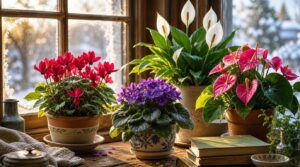
Winter doesn’t have to mean bare windowsills and dull rooms. The right plants can bring real color and fragrance through the coldest months, and some of them are surprisingly easy to keep happy indoors.
If you’re not sure where to start, this guide to flowers that bloom indoors through winter makes it easy to find varieties that actually thrive when it’s cold outside.
Here are eight best winter flowering plants worth growing this season.
Amaryllis for Bold Winter Blooms
indoor flowering plants make a statement quite like amaryllis. Through careful bulb conditioning — a cool winter dormancy period of 8–12 weeks around 50–55°F — you trigger impressive trumpet-shaped blooms up to 8 inches across.
Once shoots emerge, move your bulb into bright indirect light for 12–16 hours daily.
Staking provides stalk stabilization as flowers open, while a balanced fertilizer gives the nutrient boost your bulb needs to rebloom next season.
African Violets for Compact Color
If bold amaryllis feels dramatic, African violets offer something quieter — consistent, colorful, and wonderfully low maintenance. These compact indoor blooming plants form tidy rosette shapes, usually 6–9 inches across, with petal color variations ranging from deep purple to soft pink and white.
To manage seasonal color fading, maintain bright indirect light for 14–16 hours daily, keep humidity around 50%, and apply a balanced nutrient fertilizer every three to four weeks.
Christmas Cactus and Holiday Cactus
Christmas Cactus and Holiday Cactus bring a different kind of energy — trailing stems with flat, scalloped segments bursting into red, pink, or white blooms right when winter feels its greyest.
For ideal bloom, it follows short-day conditioning essential.
These winter indoor flowering plants respond to bud initiation cues like cooler nights around 50–60°F and shorter days under 12 hours.
Master watering balance, avoid leaf scorch management pitfalls from direct sun, and propagate through segment cutting propagation effortlessly.
Cyclamen for Cool Indoor Spaces
Cyclamen thrives where most winter bloomers struggle — cool rooms between 50–65°F suit it perfectly. Set it near an east-facing window for bright, indirect light, keeping it away from heating vents that dry the air and shorten bloom time.
Water only when your soil moisture indicator (the barely dry surface test) signals it’s time, always from below to prevent foliage spotting.
Seasonal color variations — pink, red, white, purple — make cyclamen a beautiful cool-season centerpiece.
Kalanchoe as a Low-water Bloomer
Kalanchoe earns its reputation as one of the most rewarding succulent winter bloomers for good reason.
Its fleshy leaves are built for water storage — a natural adaptation that makes demanding watering schedules for winter indoor plants almost unnecessary.
Allow the top inch of soil to dry completely before watering, keep it in bright indirect light, and enjoy clusters of vibrant blooms from late winter into early spring.
Poinsettia for Seasonal Displays
Few holiday decorative plants rival the poinsettia’s ability to anchor a winter indoor garden design with pure color.
Master your seasonal display with these four essentials:
- Bract Color Schemes — Choose red, white, pink, or bicolor bracts to match your décor
- Container Height Stacking — Layer tabletop and floor arrangements for dramatic depth
- Seasonal Lighting Effects — Warm LED accents heighten bract vibrancy without heat stress
- Post Display Care — Prune, fertilize, and repot for future reblooming
Give poinsettias bright indirect light and temperatures around 65–70°F to keep those bracts vivid through the season.
Phalaenopsis Orchids for Elegant Flowers
Regarding winter indoor flowering houseplants, few rival the Phalaenopsis orchid’s natural elegance. Managing humidity for tropical houseplants like this one means keeping levels at 50–70%, and lighting requirements for indoor blooms settle around 1,000–2,000 lux of bright, indirect light.
| Care Factor | Requirement | Why It Matters |
|---|---|---|
| Bloom Timing | Once yearly, 2–3 months | Sets realistic expectations |
| Root Aeration | Bark and perlite mix | Prevents rot, bolsters health |
| Pot Selection | Clear plastic or mesh | Monitors moisture and roots |
| Pest Prevention | Alcohol swabs for mealybugs | Protects blooms and foliage |
Color variations range from pure white to deep magenta — beautiful choices for any winter windowsill.
Indoor Jasmine for Fragrant Winter Blooms
Few houseplants fill a winter room quite like jasmine — that unmistakable fragrance stops people mid-step.
For peak scent and blooms, focus on three essentials:
- Light Spectrum — 6–8 hours of bright indirect light daily
- Air Circulation — keep it away from heat vents
- Container Size — repot every 2–3 years for healthy roots
These winter houseplant care guidelines keep your jasmine flowering beautifully indoors.
Easy Low-Maintenance Winter Bloomers
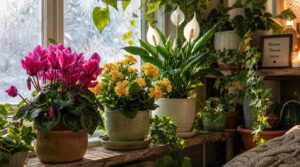
Not every winter bloomer demands constant attention — some practically take care of themselves. Whether you’re just starting out or simply want color without the fuss, there’s a plant on this list that fits your space and schedule.
Here’s what to keep in mind when choosing your easiest winter bloomers.
Best Beginner-friendly Flowering Houseplants
Starting with the right plant makes all the difference. African violets bloom year-round with just 12–14 hours of soft, indirect light — no complicated fertilizer types or seasonal repotting required. Christmas cactus is equally forgiving, thriving in low-light houseplant conditions with minimal fuss.
Both reward simple winter houseplant care guidelines: proper pot size selection, basic pest management, and occasional propagation tips to expand your collection effortlessly.
Long-blooming Plants for Steady Winter Color
Some plants just keep going — and that’s exactly what you want in winter.
Kalanchoe holds color for 6–8 weeks with simple bloom longevity techniques like light rotation and nutrient timing during active growth. African violets offer reliable seasonal indoor garden color with minimal fuss.
Smart growth habit management and photoperiod awareness make these low‑maintenance indoor plants for winter genuinely rewarding.
Succulent Winter Bloomers for Dry Homes
Dry indoor air in winter isn’t a problem — for succulents, it’s practically ideal.
Kalanchoe blossfeldiana and jade plant are reliable succulent winter bloomers that thrive with low-humidity tolerant conditions and smart soil moisture management.
Plant them in a gritty succulent mix with perlite, place them in bright indirect light, 4–6 hours daily, and water every 2–3 weeks for a low-maintenance indoor plant for winter that practically takes care of itself.
Bulbs That Flower Indoors in Winter
Unlike succulents, bulbs need a little planning — but the payoff is impressive.
Amaryllis blooms 6–8 weeks after bulb planting indoors with no chilling required, while paperwhites flower in just 3–5 weeks using simple bulb forcing in water or soil.
Smart Bulb Storage Strategies and Forcing Temperature Control around 60–65°F keep stems strong.
After flowering, Post-Bloom Rest and Bulb Dormancy Management set up reliable reblooms all winter.
Compact Plants for Windowsills and Small Rooms
Not every windowsill garden needs dramatic height. African violets stay just 6–9 inches tall, offering leaf pattern diversity and steady seasonal color changes with minimal fuss.
Kalanchoe and Cape primrose fit shelf-friendly designs beautifully. These low light houseplants thrive in bright indirect light, making mini pot choices simpler than you’d think.
For small rooms, indoor plant size considerations matter — compact indoor flowering plants for winter win every time.
Larger Statement Plants for Bright Indoor Spaces
When small spaces call for compact plants, bright open rooms deserve something impressive. A Bird of Paradise, reaching 5–8 feet with broad, banana-like leaves, commands any sun-drenched corner with its tall stature and architectural foliage impact.
Vertical space utilization matters here—large pot selection and leaf size considerations influence how tropical foliage transforms winter indoor decor. Direct sunlight exposure and bright indirect light are essential for this transformation.
Winter Light and Placement Tips
Light is everything for winter blooms — get it wrong and even the healthiest plant will sulk through the season.
The good news is that a few smart placement choices can make a real difference, no matter what direction your windows face.
Here’s what you need to know to set your plants up for their best winter yet.
Bright Indirect Light for Indoor Flowers
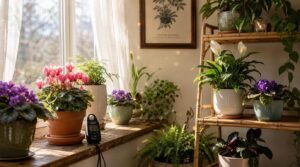
Most winter indoor flowering houseplants thrive in bright indirect light — roughly 2,000 to 5,000 lux.
Position plants 3 to 8 feet from an east-facing window, or soften direct sun through sheer curtains (curtain filtering cuts intensity about 30%).
Use a light meter app for lux level guides, and try reflective surfaces like light-colored walls to boost output.
Seasonal light adjustment matters — extend exposure to 12–14 hours as winter days shorten.
Direct Sunlight Needs for High-light Plants
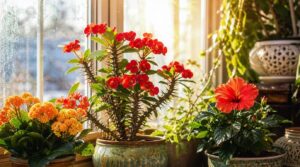
Some indoor flowering plants genuinely need direct sun — not just bright light — to bloom their best. Crown of thorns, for example, requires at least 6 hours of direct sunlight daily.
Morning sun benefits these high-light plants most, since afternoon heat mitigation becomes necessary to prevent leaf scorch. For seasonal sun adjustment, reposition plants closer to south-facing glass as winter light weakens.
North-, East-, and South-facing Window Placement
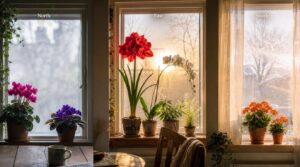
Where you place your plants matters as much as what you grow.
North-facing windows offer steady bright indirect lighting — perfect for cyclamen and African violets that hate harsh glare. East-facing glass delivers gentle morning sun, ideal for amaryllis and orchids.
South-facing sills increase your window sill garden’s bloom potential, though seasonal angle adjustment and a sheer curtain help balance orientation and light balance without scorching leaves.
Using Grow Lights During Short Winter Days
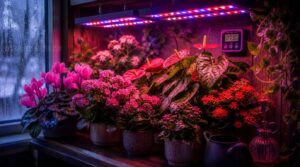
When daylight drops to eight hours or less, your flowering plants simply can’t photosynthesize enough to bloom well. That’s where a quality grow light changes everything.
Aim for 12 to 16 hours of light daily, positioning LEDs with a 4000–6500K Spectrum Balance just 6–12 inches above the canopy, targeting 40–60 PPFD for reliable blooms. Timer Automation keeps Photoperiod Scheduling consistent without guesswork.
- Use full-spectrum LEDs for balanced blue and red wavelengths
- Set Timer Automation to deliver 14 to 16 hours of light on cloudy days
- Maintain Light Distance Optimization by keeping fixtures 6–12 inches above foliage
- Perform PPFD Calibration by watching for stretched, pale growth as an early warning sign
- Meeting lighting requirements for winter houseplants promotes steady, beautiful flowering all season
Photoperiod Needs for Holiday Bloomers
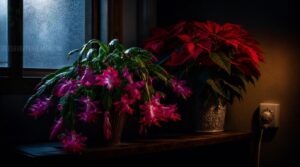
Some plants don’t just respond to light — they respond to darkness. Christmas cactus and poinsettia rely on continuous darkness of at least 12 hours nightly to trigger blooming.
Even a small light leak prevention failure can reset the clock.
Start your photoperiod induction schedule 6–8 weeks early, use timer programming for consistency, and try dark period extension of 1–2 hours if blooms stall.
Avoiding Leaf Scorch and Weak Growth
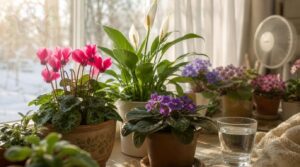
Even bright indirect light can scorch leaves if your window glass heats up to 90–100°F on sunny afternoons. A few adjustments make a real difference:
- Hang sheer curtains for light diffusion on south-facing windows
- Keep daytime temperature 60–70°F, avoiding heating vents and cold drafts
- Improve air circulation with a low-speed fan
- Use room-temperature water and consistent watering schedules for winter indoor plants
Watering, Soil, and Feeding Needs
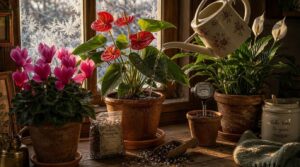
Getting water and soil right in winter is where most indoor bloomers are won or lost. Each plant on your windowsill has its own rhythm — some like to dry out completely, others prefer consistently moist roots, and a few need a very specific potting mix to thrive.
Winter indoor bloomers live or die by water and soil — get both right, and they thrive
Here’s what you need to know to keep them all happy through the cold months.
Winter Watering Schedules for Flowering Houseplants
Winter houseplant watering isn’t guesswork — it’s a schedule built around your home’s conditions.
Check soil weekly with a moisture meter, targeting 40–60% for most flowering plants. Adjust your watering interval planning based on humidity-adjusted watering needs, since dry heated air changes everything.
Always use room-temperature water around 68–72°F, and run drainage efficiency checks to confirm pots shed excess water fully before the next cycle.
Bottom Watering African Violets and Cyclamen
Both African violets and cyclamen share one golden rule: keep water off their leaves and crowns. Bottom watering does exactly that.
Set each pot in a shallow tray with about ½ inch of room-temperature water — Water Temperature Control matters here, so aim for 68–72°F to avoid shocking the roots.
Follow these five steps for clean, consistent results:
- Tray Soak Duration — Let African violets sit 15–20 minutes; limit cyclamen to 30 minutes maximum to protect the tuber.
- Pot Elevation Technique — Place pots on a rack after soaking so air circulates beneath and excess water drains fully.
- Drainage Tray Maintenance — Rinse saucers between sessions to prevent mineral salt buildup and algae growth.
- Moisture Monitoring Methods — Check soil 24 hours later; it should feel evenly moist, never soggy.
- Water sparingly — If the medium stays wet beyond a day, shorten your next soak interval immediately.
These watering schedules for winter indoor plants keep both beauties thriving without the guesswork.
Dry-down Needs for Kalanchoe and Succulents
Unlike cyclamen, kalanchoe and other succulents actually want you to let the soil go completely dry between waterings. That’s your Drying Cycle Timing — usually 7–14 days in winter.
Watch for Root Shrinkage Signals: slightly papery leaves and softening stems.
These low‑maintenance indoor plants for winter thrive when you water sparingly, applying a Ventilation Strategy and Temperature‑Driven Drying approach to prevent rot.
Well-draining Soil Mixes for Indoor Bloomers
Soil drainage matters as much as how often you water.
A well-draining potting mix for indoor flowering plants usually balances a Perlite Proportion of 15–25%, a Coarse Sand Ratio for quick runoff, and a Vermiculite Blend to retain just enough moisture.
40–60% inert particle mix with a pH Buffering range of 6.0–6.5, keeping roots aerated through winter indoor flowering cycles.
Orchid Bark, Bulb Mixes, and Cactus Soil
Each medium works best when matched to the plant it nurtures.
Orchid bark — chunky fir or pine pieces — delivers aeration benefits that epiphytic roots crave, staying loose for 1–2 years before needing a refresh.
Bulb propagation for indoor flowers calls for gritty mixes with mineral additives for vigor.
Holiday cacti and other indoor flowering plants for winter thrive in well-draining soil with proper pH management and container compatibility.
Fertilizing Indoor Flowering Plants in Winter
Fertilizing indoor flowering plants in winter calls for a lighter touch than most gardeners expect. Your plants aren’t hungry — they’re resting. Match your fertilizer timing to visible growth, not the calendar.
- Use a diluted liquid solution at half-strength monthly
- Choose a low-nitrogen fertilizer or phosphorus-heavy feed like 10-30-20
- Apply the bottom-feeding method to protect sensitive roots
- Organic fertilizer options like fish emulsion work well at quarter-strength
Preventing Root Rot and Salt Buildup
Root rot sneaks up quietly, but your defense starts at the pot’s base. A drainage layer of coarse bottom media — gravel or pottery shards — keeps water moving freely, supporting root aeration through winter. Practicing leaching water every four to six months, flushing salts completely through, prevents slow, invisible damage.
Salt monitoring is equally important: white crust on soil signals buildup. Well-draining soil and consistent fertilizing schedules for indoor blooms are critical to avoiding harm.
Keep Winter Flowers Blooming Longer
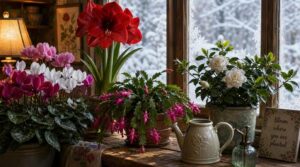
Getting flowers to open is one thing — keeping them going is another.
The good news is that few consistent habits make a real difference, and none of them require a greenhouse or expert-level skills.
Here’s what to focus on to get the most out of your winter bloomers.
Ideal Indoor Temperature Ranges
Temperature is the silent dial controlling your winter blooms. Most indoor favorites thrive with daytime warmth between 65–75°F and nighttime temperatures around 59–64°F — that gentle cool-down matters more than most gardeners realize.
Seasonal stability is key: temperature fluctuations beyond 5–7°F can trigger dormancy or cause bud drop.
Keep rooms consistently within those ranges, and your plants will reward you beautifully.
Humidity Needs for Tropical Flowering Plants
Tropical indoor plants are drama queens regarding moisture — and winter heating makes it worse. Peace lily, anthurium, and orchids need 60–70% humidity to hold their blooms.
Use humidity trays, a pebble tray with water, or group plants together for microclimate creation.
Mist leaf surfaces 2–3 times weekly, monitor with a digital hygrometer for humidity monitoring, and always maintain ventilation balance to prevent fungal problems.
Cool Nights for Longer-lasting Blooms
Think of cool nights as your secret bloom-extender. Nighttime temperature drops to 60–65°F (15–18°C), dramatically slowing flower senescence — that’s the natural aging process — keeping amaryllis, cyclamen, and African violets looking fresh longer.
Cool night benefits include richer petal pigmentation and reduced metabolic stress. Keep evening air circulation gentle, maintain night humidity balance around 40–60%, and never let temps dip below 55°F.
Dormancy Care for Reblooming Plants
After cool nights slow flower aging, rest becomes the next tool in your kit. Managing dormancy in houseplants means reading their signals — reduced growth, leaf drop, and halted flowering.
Store dormant bulbs at 35–50°F, practice careful moisture management to prevent rot, and watch for dormancy stress signs like wilting.
Time reactivation with a gradual light increase to coax beautiful new blooms.
Pruning Spent Flowers and Yellow Leaves
Once dormancy ends, your plants need a clean start. Prune back spent blooms using sharp tools, cutting just above a healthy node — node cuts redirect energy into fresh growth rather than fading flowers.
Do a yellow leaf check at the base monthly; yellowing usually signals a watering imbalance.
After pruning, care is simple: wipe leaves, move plants to indirect light, and avoid leaf scorch.
Troubleshooting Buds That Drop or Fail
Buds that drop before opening usually point to one of five fixable problems.
Watering Balance matters most — too much or too little stresses developing buds directly. Temperature Consistency keeps bloom initiation on track, since even a 10°F overnight swing can trigger bud abort.
Humidity Control, Pest Management, and steady Light Requirements for indoor bloomers round out your checklist.
Check roots first; Root Health tells the whole story.
Pet-safe Winter Flowering Plant Options
Once you’ve steadied those budding issues, it’s worth asking: are your winter indoor flowering houseplants safe around your pets? African violets, Phalaenopsis orchids, and Christmas cactus are reliable non-toxic bloomers with low-odor profiles.
Use pet-friendly soil in elevated displays — a countertop or hanging planter keeps pet-safe indoor flora out of curious reach while adding beautiful seasonal color.
Safe Decorating With Indoor Winter Flowers
Safe decorating means thinking beyond just beauty.
Keep poinsettia and holiday cacti away from electrical cords — dried foliage is a real fire risk.
Use non-slip surfaces under pots on tile or hardwood floors.
Remove wilted blooms promptly for mold-free maintenance, and label arrangements clearly for toxin labeling and child-safe placement.
Pet safe indoor flowering species and lowlight tolerant flowering plants make stunning, worry-free winter indoor garden design ideas.
Frequently Asked Questions (FAQs)
What indoor plants bloom in winter?
Several winter indoor flowering houseplants can brighten your home when outdoor gardens go quiet.
Amaryllis, African Violets, Christmas Cactus, Cyclamen, and Poinsettia each offer distinct color variations and growth habits suited to different indoor conditions.
What indoor plants are good for eczema?
Aloe vera, chamomile, calendula, and lavender offer anti-inflammatory herbs with moisture-boosting properties. These plants provide soothing benefits for sensitive skin.
Their low-pollen nature ensures suitability for sensitive individuals, while being pet-safe adds versatility.
The fragrance-free options support gentle, daily eczema comfort routines, promoting consistent skincare without irritation.
Are there indoor plants that flower all year?
Yes — plants like African violets, Cape primrose, and anthuriums offer genuine year‑round color indoors, cycling through continuous bloom with minimal photoperiod manipulation, making them ideal low‑maintenance indoor plants for winter and beyond.
What indoor flower blooms in the winter?
Plenty of houseplants bloom beautifully through the coldest months.
Amaryllis, African violets, Christmas Cactus, cyclamen, and Paperwhites are reliable winter-blooming houseplants that bring steady color and, in Jasmine’s case, genuine fragrance indoors.
What is the best plant to grow indoors in winter?
African violets top the list for winter indoor flowering houseplants — compact growth, pet-safe, and budget-friendly. They bloom repeatedly with minimal fuss, making them a perfect choice for holiday indoor gardening.
What are the top 5 winter special flowering plants?
Poinsettia, Christmas Cactus, Paperwhites, Cyclamen, and Kalanchoe top the list. Each brings compact container choices, seasonal fragrance trends, and striking color contrast ideas to brighten any indoor space through winter.
What flowering plants survive winter?
Winter doesn’t have to mean bare shelves and blank windowsills.
Amaryllis, African violets, Christmas cactus, cyclamen, and kalanchoe all thrive indoors, each managing cold hardiness through smart dormancy period cycles and bloom timing control.
What indoor plants bloom in the winter?
indoor plants bloom in winter, from amaryllis and African violets to kalanchoe and Christmas cactus.
Each brings its own seasonal color palette, rewarding you with vibrant flowers when the world outside feels grey.
Which indoor plants can survive winter?
Most Cold-Hardy Varieties and Low Light Survivors — like kalanchoe, cyclamen, and holiday cactus — handle winter well indoors.
These Humidity-Resilient Plants and Drought-Tolerant Houseplants tolerate temperature fluctuations, cold drafts, and reduced light with minimal fuss.
What flowers to plant in September and October?
September and October are the sweet spot for getting winterblooming houseplants started. Plant amaryllis bulbs, pot up cyclamen, and repot phalaenopsis orchids now for vivid color through the coldest months.
Conclusion
Winter doesn’t stand a chance when you’ve matched the right plant to the right window, watered with intention, and let dormancy do its quiet work. Your home becomes something remarkable—a place where amaryllis towers, jasmine scents the cold air, and orchids bloom like they’ve forgotten the calendar entirely.
Mastering winter flowering plants indoors isn’t just about keeping something alive. It’s about commanding color and fragrance from the season most people write off completely.