This site is supported by our readers. We may earn a commission, at no cost to you, if you purchase through links.
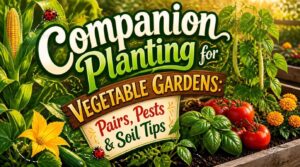
Centuries before synthetic fertilizers existed, farmers across Mesoamerica had already cracked a code modern gardeners are still rediscovering: grow the right plants together, and they protect and feed each other. The Three Sisters—corn, beans, and squash—weren’t planted in combination by accident. That trio represents thousands of years of observed results, not folklore.
Your vegetable garden works the same way. Basil planted near tomatoes releases compounds that genuinely suppress aphids. Marigold roots excrete chemicals that kill nematode larvae underground. These aren’t gardening myths—plant science backs them up.
The pairings, pest allies, and layout strategies ahead will change how you think about every square foot of growing space.
Table Of Contents
- Key Takeaways
- Best Vegetable Companion Planting Pairs
- Companion Plants for Pest Control
- Soil-Boosting Companion Planting Ideas
- Herbs and Flowers for Vegetables
- Companion Planting Layout Tips
- Frequently Asked Questions (FAQs)
- What vegetable plants cannot be planted next to each other?
- What vegetables can you plant in October?
- What plants grow best together in a vegetable garden?
- What is companion planting?
- What is a companion vegetable garden?
- How do you grow a vegetable garden with a companion plant?
- What is a companion planting chart for vegetable gardens?
- What vegetables can you grow with a companion plant?
- Why is it beneficial to plant companion plants?
- Which vegetables should not be planted next to each other?
- Conclusion
Key Takeaways
- Pairing the right plants together isn’t just tradition—it’s backed by real science, like basil’s oils repelling tomato pests and marigold roots killing nematode larvae in the soil.
- Trap crops like nasturtiums work by luring pests away from your vegetables into predictable, easy-to-monitor spots, so you can manage problems before they spread.
- Legumes like beans, peas, and clover naturally fix nitrogen in the soil, feeding nearby crops and cutting down your need for synthetic fertilizer.
- Smart layout matters just as much as plant choice, so give crops proper spacing, keep incompatible plants (like fennel and tomatoes) apart, and rotate your pairings each season.
Best Vegetable Companion Planting Pairs
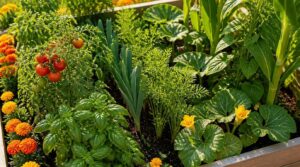
Some plants just work better together, and your garden will thank you for the right matches. These pairings aren’t random—each one solves a real problem, from pest control to better flavor. Here are five tried-and-true combos every vegetable gardener should know.
Science backs up these pairings too — check out this guide to vegetables and herbs that naturally thrive together for even more combinations worth adding to your rotation.
Tomatoes With Basil
If you only try one pairing this season, make it tomatoes and basil. This classic duo isn’t just folklore—it’s real plant synergy. The linalool enhances sweetness effect is scientifically documented. Basil’s volatile oils, like linalool and eugenol, sweeten tomato flavor while suppressing aphids and thrips.
Their shallow and deep roots share soil efficiently. Plant 12–18 inches apart, and harvest basil young for maximum aroma and pest suppression!
Corn With Pole Beans
While basil pampers your tomatoes, corn and pole beans build something tougher: a true plant synergy. Corn’s sturdy stalks give beans vertical growth support, skipping trellises entirely.
Wait until corn hits 6–8 inches before sowing beans, so corn shading doesn’t stunt them. Beans return the favor through nitrogen fixation, feeding corn’s roots. Stagger planting, and you’ll enjoy overlapping harvest windows from one thriving bed.
Squash With Nasturtiums
Once corn and beans are settled, give your squash a colorful bodyguard. Nasturtiums work as a trap crop, luring aphids and flea beetles away from leaves and vines.
Their peppery scent confuses pest host-finding, while blooms draw hoverflies and bees for pollination. Better yet, both flowers and leaves are edible—toss them in salads for a peppery garnish!
Carrots With Onions
After all that climbing and trapping, let’s talk pest control with a simpler trick. Carrots and onions confuse each other’s pests: onion scent masks carrot fly cues, while loose, sandy soil suits both root systems.
Cooking-wise, sauté onions first to caramelize their sweetness, then add carrots—you’ll boost flavor while pairing fiber, vitamin A, and vitamin C in one nutrient-dense dish.
Brassicas With Dill
Once cabbage and broccoli plants settle in, dill becomes their quiet companion planting partner for pest control.
- Hoverfly larvae control cabbage aphids effectively
- Predatory wasps target cabbage loopers
- Time dill flowering to overlap early brassica growth
- Manage dill bolting with staggered, successive sowing
- Beneficial insects deter brassica pests
Space dill 12–18 inches away, sown two weeks ahead, for steady protection.
Companion Plants for Pest Control

Pests don’t stand a chance once you know which plants to put on guard duty. Certain herbs and flowers release scents or compounds that confuse, repel, or distract unwanted insects before they ever reach your vegetables.
Nasturtiums are a classic example — planted just ahead of season and spaced strategically, they lure aphids away like pros, as detailed in this organic pest control companion planting guide.
Here are five reliable plant allies and the specific pests they help keep in check.
Marigolds for Nematodes
Tiny soil dwellers called nematodes can wreck root systems fast. French marigolds fight back through alpha-terthienyl, a root exudate causing oxidative stress that kills nematode larvae.
This targets root‑knot nematodes especially well. Plant marigolds as borders or zonal rings around tomatoes and peppers.
Suppression builds over a full season, working through soil contact, not direct planting next to crops.
Basil for Tomato Pests
Basil is one of tomato’s best allies in the garden. Its essential oils — linalool and eugenol — repel aphids, whiteflies, and hornworms on contact with airborne scent.
- Plant 4–6 basil plants per 10 feet of tomato row
- Space basil 12–18 inches from tomato stems for airflow
- Choose Genovese variety for strongest oil production
- Prune regularly to sustain scent output all season
Nasturtiums as Trap Crops
Nasturtiums are a gardener’s secret weapon — and one of the most effective forms of biological pest control you can grow.
These cheerful plants release mustard oil volatiles through their foliage and flowers, creating an irresistible signal for aphids, cabbage white butterflies, whiteflies, and flea beetles. Pests choose the nasturtium over your vegetables almost every time.
That preference makes them a powerful aphid trap crop. Instead of scattering across your beds, insects concentrate in predictable spots — what horticulturists call pest concentration zones. That actually works in your favor, because concentrated pests are far easier to spot and manage than a garden-wide infestation.
Nasturtiums lure aphids into predictable zones, turning a garden-wide threat into a problem you can actually manage
Trap crop proximity matters. Position nasturtiums 12–18 inches from vulnerable crops, in a ring or border around the beds you’re protecting. Plant them two to four weeks before your main crops reach their most vulnerable stage so the trap is already established and attractive when pests arrive.
Monitoring insect pressure becomes simpler too. Check your nasturtiums daily — when aphids cluster on the leaves, that’s your early warning signal to act before populations spread.
Don’t ignore managing pest spillover, though. If nasturtiums become heavily infested, remove affected foliage promptly or replace exhausted plants mid-season. A neglected trap crop can backfire and push pests onto the very crops you’re protecting.
| Pest Diverted | Nasturtium Attraction Mechanism | Main Crop Protected |
|---|---|---|
| Aphids | Mustard oil volatiles in foliage | Leafy greens, tomatoes |
| Cabbage white butterfly | Egg-laying preference for nasturtiums | Brassicas |
| Whiteflies | Foliage scent interception | Peppers, beans |
| Flea beetles | Preferential sampling behavior | Brassicas, potatoes |
| Leaf miners | Diverted by foliage density | Spinach, chard |
Used well, nasturtiums don’t just distract pests — they give you control.
Rosemary for Bean Protection
Rosemary is one of those quiet workhorses in the companion garden. Its essential oil compounds — released continuously from mature foliage — disrupt how pest insects locate and land on nearby beans.
Aphids and beetles find bean plants far less attractive when rosemary’s aromatic barrier is close by. Plant rosemary 18–24 inches from bean rows for protection without unwanted shading.
Mint for Slug Deterrence
Slugs have met their match with mint. This herb creates a natural aroma barrier — its menthol oils confuse and repel soft-bodied molluscs, especially during cool, damp mornings when slugs are most active.
Plant mint in containers near lettuce for precise placement control.
Combine it with copper barriers for a stronger, multi-point defense.
Soil-Boosting Companion Planting Ideas
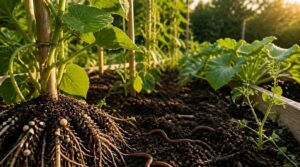
Healthy soil doesn’t happen by accident — the right plant neighbors can quietly work underground to build fertility while you focus on growing.
Some of your best allies are everyday crops like beans, peas, and squash that pull double duty, feeding the soil as they feed your table. Here’s how each one earns its place in a soil‑smart garden.
Beans for Nitrogen
Few garden moves pay off quite like growing beans near nitrogen‑hungry crops. As legumes, beans form a partnership with symbiotic rhizobia bacteria in their root nodules, converting atmospheric nitrogen into a form plants can actually use.
Inoculating seeds beforehand boosts this process, especially in new beds.
When residues decompose after harvest, soil microbial communities release that stored nitrogen, feeding your next planting naturally.
Peas for Fertility
Beans aren’t the only legumes worth planting. Peas pull their weight too, fixing 20 to 80 kg of nitrogen per hectare through root nodules packed with rhizobia bacteria.
Inoculation matters here, especially in poor or sandy soils. As pea residue breaks down, it boosts soil porosity, feeds microbes, and supplies nitrogen for hungry leafy greens nearby.
Clover Cover Crops
While peas feed your soil row by row, clover blankets it wall to wall. This low-growing legume fixes nitrogen and builds soil structure through its dense root mat.
- White clover: cool-season cover, quick establishment
- Crimson clover: fast spring biomass, easy termination
- Red clover: longer cover, bigger nitrogen payoff
Mow before bolting, and that nitrogen release feeds whatever you plant next!
Cowpeas Under Corn
Cowpeas take that nitrogen-fixing magic underground, right beneath your corn rows. Their roots transfer nitrogen efficiently, cutting fertilizer needs while vines climb stalks naturally.
This polyculture gardening combo boosts soil moisture conservation and weed suppression, plus you’ll harvest pods alongside corn. For managing climbing growth, prune vines before tasseling—this intercropping yield optimization keeps both crops thriving without competition.
Squash for Soil Shading
Once squash vines sprawl out, they turn into a living mulch that protects everything beneath them. This shade cropping technique cools soil, locks in moisture, and stabilizes the root zone for nearby corn or beans.
- Cuts evaporation up to 30%
- Suppresses weed germination
- Buffers soil temperature swings
- Builds a beneficial microclimate
Try Blue Hubbard squash, but watch for squash vine borers—they’re the one downside to this soil moisture management win!
Herbs and Flowers for Vegetables

Vegetables don’t have to go it alone — herbs and flowers are some of the hardest-working allies in your garden. When chosen thoughtfully, they pull in beneficial insects, shade sensitive crops, and keep your plot humming with natural balance. Here are five plants worth adding to your next garden plan.
Dill Attracts Hoverflies
Tiny flowers can pack a mighty punch! Dill’s umbrella-shaped umbel flower structure offers wide landing pads loaded with nectar, drawing hoverflies in droves.
Hoverfly larvae feast on aphids, giving you free pest management. Time your seasonal bloom timing right, and dill becomes natural aphid biocontrol, protecting nearby brassicas without lifting a finger.
Alyssum Supports Brassicas
Sweet alyssum is one of those quiet workhorses your brassica bed truly deserves. Its nectar-rich blooms draw hoverflies, parasitic wasps, and lady beetles — the exact predators that keep cabbage aphids and flea beetles in check.
As a living mulch, alyssum also suppresses weeds and locks in soil moisture. Space plants 15–20 cm apart along your brassica rows for best results.
Calendula Brings Pollinators
Calendula is a pollinator magnet worth planting throughout your vegetable beds. Its open, shallow blooms offer easy nectar access to bees, hoverflies, and butterflies — no specialized feeding behavior needed.
Blooms stretch from early summer to first frost, sustaining pollinators when other flowers fade. That steady traffic directly improves fruit set in nearby tomatoes and cucumbers.
Let a few plants self-seed, and you’ll have calendula returning each year effortlessly.
Borage Boosts Biodiversity
Think of borage as your garden’s biodiversity engine. Its blue, star-shaped blooms drive up pollinator visitation rates, drawing bees, hoverflies, and butterflies all season long.
Beyond pollinators, borage offers natural predator support, hosting lady beetles and parasitic wasps that hunt aphids nearby.
Its deep taproots pull up soil mineral accumulation from lower layers. That mix of life builds real ecosystem resilience buffers against pest outbreaks.
Cosmos Shades Lettuce
Cosmos is one of those quiet overachievers that earns its place in any vegetable garden. Growing 2 to 4 feet tall, it casts dappled shade over lettuce beds below, lowering soil temperature and preventing lettuce bolting during hot spells. That gentler light also keeps leaves tender and mild-tasting — real summer lettuce texture at its best.
As a bonus, cosmos draws bees and butterflies, boosting pollinator visit increases by around 20 percent at peak bloom. And because it self-seeds readily, those cosmos self-seeding cycles mean you’re automatically set up for shade next season too.
Companion Planting Layout Tips
Good plant pairings only work when you put them in the right places. Layout decisions — spacing, bed design, crop rotation — are what turn smart combinations into a garden that actually thrives. Here are the key layout tips to make companion planting work for you.
Three Sisters Spacing

The Three Sisters system works best when you build it right from the ground up.
Form mounds 12 inches high and 18 inches in diameter to improve drainage and give roots room to spread. Space mounds four feet apart in all directions.
Plant corn first, wait until stalks reach six inches, then add beans.
Raised Bed Planning
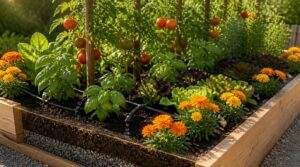
Once your Three Sisters mounds are mapped out, raised beds make companion planting even more manageable.
Ideal bed dimensions — 4 by 8 feet — let you reach every plant from the sides without stepping on soil. Add a soil drainage layer of coarse gravel beneath your mix, and set up drip irrigation for consistent moisture.
Avoid Overcrowding Crops
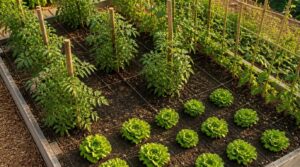
Good raised beds can quickly become chaotic if you ignore planting density. Leave 12–18 inches between tomatoes and 8–12 inches between lettuce plants.
Use grid mapping methods before planting to visualize spacing. Thin seedlings early — removing crowded plants improves light and reduces root competition management issues.
Vertical trellis benefits free ground space, while succession planting schedules keep beds productive without overcrowding.
Separate Incompatible Plants
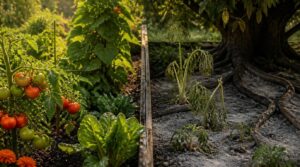
Spacing plants well doesn’t stop at density — it also means keeping certain plants away from each other entirely. Allelopathic plants release chemicals that actively harm neighbors. Fennel, for instance, stunts tomatoes and beans.
Black walnut trees emit juglone, toxic to vegetables within 50 feet. Keep incompatible pairs separated, and match irrigation needs so one plant’s water habits don’t stress another.
Rotate Companion Groupings
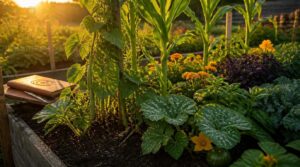
Think of your garden as a living ecosystem — one that thrives on change. Rotating companion groupings every season prevents pests from adapting to fixed neighbors.
Swap at least two partner species annually, cycling nitrogen-fixing legumes through heavy-feeder beds.
Document each pairing by bed so next year’s plan builds smarter, not harder.
Frequently Asked Questions (FAQs)
What vegetable plants cannot be planted next to each other?
Some plants are natural enemies. Tomatoes and corn share diseases and compete for nutrients. Fennel and brassicas stunt each other. Beans and onions clash, reducing yields. Keep incompatible pairs apart.
What vegetables can you plant in October?
October is a great time to sow cool-season crops. Garlic, broad beans, spinach, and lettuce can all go in now — establishing strong roots before winter and rewarding you with harvests come spring.
What plants grow best together in a vegetable garden?
Some plants are natural allies. Tomatoes with basil, corn with pole beans, and carrots with onions are proven vegetable pairings that boost yields, deter pests, and support healthier soil throughout the growing season.
What is companion planting?
Companion planting means growing two or more plants close together so they help each other thrive. It’s a simple form of polyculture that boosts garden biodiversity, improves pest control, and makes smarter use of your growing space.
What is a companion vegetable garden?
A companion vegetable garden pairs plants that naturally support each other — sharing nutrients, deterring pests, and attracting beneficial insects — to create ecosystem balance and healthier yields through plant relationships rather than synthetic inputs.
How do you grow a vegetable garden with a companion plant?
Growing a vegetable garden with companion plants means strategically pairing crops so each one helps the others — boosting soil health, deterring pests naturally, and making the most of every inch of space.
What is a companion planting chart for vegetable gardens?
A companion planting chart maps which vegetables, herbs, and flowers grow well together — and which don’t. It’s your go-to planning tool for organizing layouts, selecting smart pairings, and maximizing yields across your vegetable garden.
What vegetables can you grow with a companion plant?
You’ve got plenty of good companions to choose from! Pair tomatoes with basil, corn with pole beans, squash with nasturtiums, carrots with onions, and brassicas with dill for nutrient-dense pairings and natural pest deterrents in your vegetable garden design.
Why is it beneficial to plant companion plants?
Think of your garden as a tiny ecosystem, each plant covering another’s weak spot. These pairings sharpen pest management, boost soil nitrogen, and pull in pollinators—maximizing garden yields while building garden resilience against shifting weather.
Which vegetables should not be planted next to each other?
Keep tomatoes away from potatoes (shared blight risk), fennel away from beans and peppers (allelopathic interference), and onions away from beans (soil moisture competition). Cucumbers and squash also clash, competing hard for the same soil nutrients.
Conclusion
Pair plants with purpose. Group them with intention. Rotate them with care.
That’s the rhythm behind companion planting for vegetable gardens, felt in your soil, your harvest, and your confidence. Basil still guards your tomatoes. Marigolds still patrol underground. Beans feed the soil corn depends on. None of that’s luck; it’s design, refined over thousands of years.
Plant smart this season, and watch your garden work as a team, not a collection of strangers.
- https://www.elmdirt.com/blogs/news/companion-planting-chart-20-pairs
- https://ucanr.edu/blog/hort-coco-uc-master-gardener-program-contra-costa/article/companion-planting-vegetable-garden
- https://extension.umn.edu/planting-and-growing-guides/companion-planting-home-gardens
- https://journeywithjill.net/gardening/2019/02/26/companion-planting-pest-control
- https://www.theorganicharvest.com/companion-planting-natures-secret-to-a-healthier-garden