This site is supported by our readers. We may earn a commission, at no cost to you, if you purchase through links.
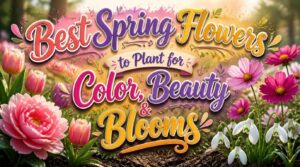
A peony planted today can still be blooming in your yard fifty years from now. That’s not a metaphor—it’s one of the more quietly significant facts in gardening, and it captures something true about spring flowers in general: the right choices pay dividends long after the planting is done.
Spring has a way of making every gardener ambitious. The catalogs arrive, the soil finally softens, and suddenly you’re eyeing bare beds with serious intentions. The challenge isn’t motivation—it’s knowing which plants will actually reward your effort, whether you want fragrance, long bloom windows, low maintenance, or all three.
From snowdrops pushing through frozen ground in February to cosmos swaying in early summer heat, the options span every skill level, sun exposure, and garden size.
Table Of Contents
- Key Takeaways
- Best Early Spring Bulbs
- Best Spring Perennials
- Flowering Shrubs for Spring Color
- Easy Annuals to Plant in Spring
- Spring Flower Planting Tips
- Frequently Asked Questions (FAQs)
- Which flowers bloom longest in spring?
- What to plant in October for spring flowers?
- When should I start planting flowers for spring?
- What flowers are best to plant in spring?
- Which spring flowering plants bloom the longest?
- What is the number one spring flower?
- What are the common mistakes in spring planting?
- Which spring flower lasts the longest?
- What is the most beautiful spring flower?
- What spring flowers are easy to grow?
- Conclusion
Key Takeaways
- Peonies and other spring perennials are a one-time investment that keeps paying off — a well-placed peony can bloom for 50 years or more with minimal fuss.
- Timing is everything: fall is when you plant spring bulbs like tulips, daffodils, and crocuses, so the groundwork for a stunning spring display happens months before the first bloom appears.
- Matching plants to your actual conditions — sun exposure, drainage, and soil pH — matters more than picking the prettiest option in the catalog.
- Deadheading spent flowers on annuals like zinnias, petunias, and cosmos redirects energy back into blooming, stretching your color display from a few weeks into an entire season.
Best Early Spring Bulbs
Spring bulbs are the first real sign that winter is losing its grip — and planting them the previous fall means you barely have to lift a finger come March.
Getting the timing right makes all the difference, so it helps to know when to plant fall bulbs based on your local frost dates and soil temperatures.
The five bulbs below are some of the easiest and most rewarding you can grow, whether you’re filling a border or tucking a few into containers. Each one has its own personality, so here’s what to know before you plant.
Crocuses
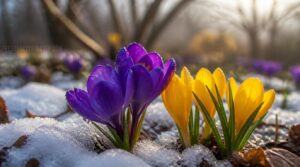
Few spring flowers signal the season quite as early — or as reliably — as crocuses. These compact beauties push through cold soil in early March, sometimes even poking through a last dusting of snow, reaching just 3–6 inches tall once fully open.
Crocuses grow from corms, not true bulbs — small, nutrient-packed structures wrapped in a papery tunic that fuel each year’s bloom cycle. They thrive in well‑drained gritty soils for best growth.
Daffodils
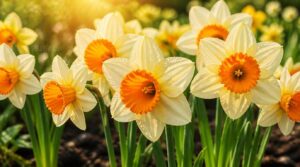
Where crocuses tease, daffodils deliver.
These early spring flowering bulbs rise 6–22 inches tall, their hollow stems lifting each bloom high above the foliage.
Each flower carries six petal-like tepals arranged around a central trumpet-shaped corona — often in a two-tone combination where orange cups contrast creamy white petals.
Bulbs store food reserves underground, fueling reliable blooms year after year.
Tulips
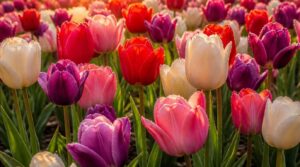
If daffodils are the reliable workhorse of early spring, tulips are the showstopper. Six tepals arranged in a cup shape catch morning light beautifully, and with colors spanning red, purple, soft pink, and white, there’s a cultivar for every border plan.
- Plant 6–8 inches deep in fall for reliable bloom
- Deadhead spent flowers, but let foliage yellow naturally
- Avoid wet soil — poor drainage invites botrytis rot
Grape Hyacinths
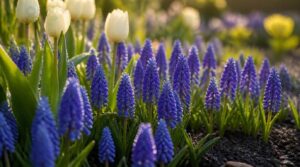
Tulips earn the spotlight, but grape hyacinths do something more quietly impressive — they fill the gaps between bigger blooms with dense cobalt spikes that somehow make the whole border look intentional.
Native to the Mediterranean, Muscari armeniacum naturalizes steadily, slowly spreading into charming drifts. Plant bulbs 3–4 inches deep in fall, keep them in full sun, and they’ll largely take care of themselves.
Snowdrops
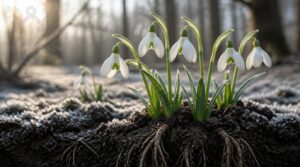
Few flowers signal winter’s surrender quite like the snowdrop. Galanthus nivalis pushes through frozen ground as early as February, producing nodding white blooms with three outer tepals and distinctive green-tipped inner ones.
Plant bulbs 2–4 inches deep in autumn, space them 2–3 inches apart, and let them naturalize into clusters beneath deciduous trees.
Best Spring Perennials
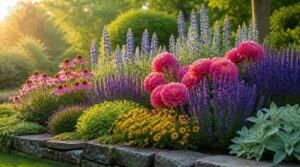
If bulbs are spring’s opening act, perennials are the ones that keep coming back for an encore — year after year, with almost no replanting on your part. These plants build real staying power in a garden, often growing fuller and more beautiful as they settle in.
To keep classics like lilacs at their best, brush up on smart pruning timing for spring bloomers — a small habit that protects next year’s flowers.
Here are five spring perennials worth making room for.
Peonies
Few perennials reward patience the way peonies do. Plant them once and, with decent care, they can bloom for 50 years or more — practically an heirloom in your garden.
Plant a peony once and it may outlive you, blooming faithfully for 50 years or more
Bearded Irises
Six upright petals — three arching standards and three downward falls with a fuzzy beard — give bearded irises that unmistakable, almost regal silhouette. Colors run from soft pastels to near-black purples, sometimes with contrasting beard shades on a single bloom.
Plant the rhizomes just below the surface in full sun and well-drained soil. Divide iris rhizomes every 3–5 years to keep them blooming strong.
Hellebores
If you want reliable color when almost nothing else dares to bloom, hellebores are your answer. These tough perennials push up nodding, cup-shaped blossoms — white through deep burgundy — from late winter into early spring, often before their own new leaves fully emerge.
They thrive in partial to full shade and keep their deeply lobed, evergreen foliage looking tidy all year.
Columbines
Columbines (Aquilegia spp.) are one of those spring flowers that stop you mid-step. Each bloom carries five nectar-filled spurs curving backward like tiny horns, drawing hummingbirds and long-tongued moths straight to the plant’s reproductive centre.
- Their lacy, three-lobed leaves create beautiful texture even before blooming begins
- Self-seeding quietly fills gaps in your garden design each year
- Colors shift subtly with soil pH, making every season a little different
Deadhead spent blooms to extend flowering, or leave a few to self-sow. Watch for powdery mildew in damp spots — good airflow helps.
Bleeding Hearts
Few spring flowers command attention quite like bleeding heart (Lamprocapnos spectabilis). Those arching stems carry pendant blooms — each a perfect heart-shaped perennial flower with blush-pink outer petals and a tiny white droplet tip — creating a cascade that looks almost too delicate to be real.
Plant it in partial to full shade with consistently moist, rich soil and a mulch layer to hold moisture through warming spring days.
Flowering Shrubs for Spring Color
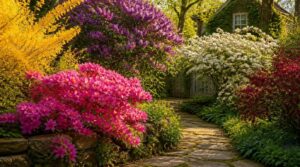
If you want spring color without replanting every year, flowering shrubs are your best investment.
They show up reliably each season, often getting more impressive with age, and many do double duty as privacy screens or wildlife habitat.
Here are five shrubs worth making room for in your yard.
Forsythia
Few shrubs announce spring quite like forsythia. Before a single leaf appears, its arching branches burst into massed yellow blooms that can stop you mid‑stride.
Growing 2–3 feet per year, it reaches 8–10 feet tall with ease.
Plant it in full sun with good drainage, prune right after flowering, and it rewards you reliably for decades.
Lilacs
If forsythia is the opening act, lilacs are the main event. Few flowering shrubs match their combination of dense bloom clusters and that unmistakable sweet fragrance drifting across a garden on a warm afternoon.
Plant lilacs in full sun with neutral to slightly alkaline soil, make sure they get a cold winter to set buds, and prune right after flowering. Miss that pruning window and you’ll cut off next year’s blooms.
Magnolias
If lilacs win the garden on fragrance alone, magnolias win it on pure spectacle. Large cup-shaped blooms — white, pink, purple, or yellow depending on the cultivar — often open before the leaves even appear, giving the whole tree a dramatic, almost sculptural look in early spring.
Plant yours in full sun to partial shade, mulch the root zone well, and keep pruning to a minimum.
Azaleas
Magnolias bring the drama, but azaleas bring the color. Few shrubs pack a spring punch quite like these, smothering themselves in brightly colored petals — coral, red, white, lavender, or soft pink — just as the garden is waking up. Kurume and Satsuki varieties stay compact and bloom abundantly, making them easy fits for borders or shaded spots under taller trees.
Soil pH is the thing most gardeners get wrong. Azaleas need acidic soil between pH 4.5 and 6.0, and if your soil runs alkaline, you’ll see it quickly — new leaves turn yellow, a condition called chlorosis. Pine needle mulch or aged compost helps nudge pH down gradually while also keeping roots cool and moist.
Prune right after flowering finishes. Wait too long and you’ll cut off next year’s buds before they even form.
Flowering Quince
When the rest of the garden is still half-asleep, Flowering Quince (Chaenomeles spp.) blazes into action — coral, red, pink, or white blossoms erupting along bare stems before a single leaf appears.
That stark contrast against winter‑brown wood makes it one of the most striking early season color plants you can grow.
Easy Annuals to Plant in Spring
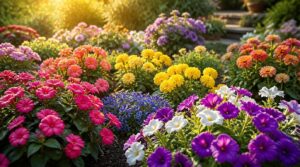
If you want reliable color without a lot of fuss, annuals are your best friends in the spring garden. They grow fast, bloom hard, and don’t ask for much in return. Here are five easy ones worth planting this season.
Marigolds
Few annuals deliver as reliably as marigolds. Whether you choose compact French marigolds (Tagetes patula) at 6–12 inches, tall African marigolds (Tagetes erecta) reaching 3–4 feet, or low-mounding Signet types, there’s a size for every spot.
| Type | Height | Best Use |
|---|---|---|
| French (T. patula) | 6–12 in | Borders, containers |
| African (T. erecta) | 3–4 ft | Back of bed, screens |
| Signet (T. tenuifolia) | Under 6 in | Edging, edible garnish |
Plant them in full sun with well-drained soil, and they’ll bloom from late spring straight through frost. Their strong scent deters pests naturally — tuck them beside vegetables to suppress nematodes and discourage aphids. Deadhead spent blooms to keep color coming all season.
Zinnias
If you want bold, non-stop color from midsummer to frost, zinnias (Zinnia elegans) are hard to beat. These warm-season annuals thrive in full sun and well-drained soil — sow seeds directly after the last frost when soil temperatures are reliably warm.
Key reasons zinnias belong in every spring planting plan:
- Butterflies and bees flock to their nectar-rich blooms all season long
- Heights range from 8 inches to 4 feet, suiting borders, beds, and containers
- Colors span white, orange, red, purple, and stunning bi-color varieties
Deadhead spent flowers regularly to keep new blooms coming and plants looking tidy. Water at the base — never overhead — to prevent powdery mildew, a common problem in humid summers. Tall cultivars also make beautiful, long-lasting cut flowers for bouquets.
Petunias
Few annuals pack as much color into a single season as petunias (Petunia × hybrida). From trailing Wave and Surfinia varieties spilling over hanging baskets to upright Grandifloras with blooms up to six inches across, there’s a form for every spot in your garden.
| Petunia Type | Best Use |
|---|---|
| Wave (trailing) | Hanging baskets, ground cover |
| Surfinia (trailing) | Containers, window boxes |
| Grandiflora | Beds, borders, focal points |
| Multiflora | Mass plantings, dense color |
Colors run the full spectrum — deep purples, bi-color veined blooms, soft pinks, and clean whites. Plant in full sun with well-drained soil, feed every two to three weeks with a balanced fertilizer, and deadhead regularly to keep blooms coming. Watch for aphids and whiteflies on leaf undersides, catching them early prevents real damage.
Cosmos
Few annuals reward as little effort with as much beauty as Cosmos bipinnatus. Feathery foliage, papery blooms in pinks, whites, and deep crimsons — and all you do is sow seeds directly after the last frost.
- Thrives in full sun with minimal watering once established
- Genuinely drought-tolerant after roots settle in
- Draws bees and butterflies all season
- Self-seeds freely, returning next year without replanting
Sweet Alyssum
Sweet alyssum (Lobularia maritima) punches well above its weight for such a small plant. Spreading 12–24 inches wide in a fragrant honey-scented carpet, it fills gaps between spring bulbs and tumbles softly over container edges.
It’s low-maintenance, self-seeds reliably, and pulls in bees and butterflies — genuinely earning its place as one of the best annual spring flowers you can grow.
Spring Flower Planting Tips
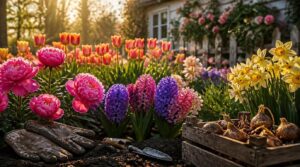
Getting the most out of your spring garden comes down to a handful of solid habits. From timing your plantings right to keeping curious pets away from toxic blooms, the details really do matter. Here’s what to keep in mind before you put a single bulb or seedling in the ground.
Planting by Bloom Time
Think of your garden as a relay race — each plant passes the baton to the next.
Bloom succession starts with snowdrops and crocuses in early spring, hands off to daffodils two to three weeks later, then tulips carry the color through mid-spring.
Staggering your flowering periods keeps the garden visually alive from late winter straight through to early summer.
Matching Sun and Shade
Once you’ve mapped out your bloom times, look around at how sunlight actually falls across your beds.
Sun-loving plants like tulips and marigolds want at least six hours of direct light, though morning shade keeps them cooler on hot days.
North-facing beds suit shade-tolerant bloomers — impatiens, violas, and snowdrops all handle lower light without complaint.
Preparing Well-Drained Soil
Once you know where your light lands, the next question is what’s underneath.
Well-draining soil is non-negotiable for nearly every spring flower. Bulbs rot fast in waterlogged ground. Work 2–4 inches of aged compost into your beds to a depth of six to eight inches — this improves drainage, feeds soil life, and loosens compaction in one pass.
Clay soil? Build a raised bed six to twelve inches high.
Protecting Pets and Pollinators
Soil sorted — now think about who shares your garden.
Some spring flowers are beautiful but quietly harmful. Grape hyacinth and iris contain toxins that can hurt pets, so plant them where dogs and cats can’t graze. Lavender, coneflowers, and sweet alyssum attract bees and butterflies without posing risks to animals.
Separate pet zones from pollinator beds using low borders or defined paths.
Extending Flowers With Deadheading
Clip spent blooms as soon as they fade, and your spring flowers will reward you with a second — sometimes third — flush of color. Redirecting energy away from seed production is the whole idea. Use sterilized bypass pruners to cut just above a healthy leaf or bud.
These plants respond especially well:
- Zinnias
- Cosmos
- Petunias
- Coneflowers
Frequently Asked Questions (FAQs)
Which flowers bloom longest in spring?
Snowdrops and grape hyacinths punch above their weight here, holding color for 4–6 weeks each. Staggering bloom cycles — from early crocuses to late tulips — stretches your spring display across months.
What to plant in October for spring flowers?
October is prime time to plant bulbs — tuck tulips 6–8 inches deep, daffodils at 6 inches, and crocuses 3 inches down before the first hard frost locks the ground.
When should I start planting flowers for spring?
Timing is everything — and it turns out, the best planting window depends on your local frost dates. Most spring flowers get their start in autumn or early spring, once soil hits 40–60°F.
What flowers are best to plant in spring?
Spring offers a wide window for planting. Bulbs like daffodil, tulip, crocus, and grape hyacinth go in fall, while annuals, perennials, and shrubs fill beds from late frost onward.
Which spring flowering plants bloom the longest?
Annuals like marigolds and petunias bloom longest, often flowering 8–12 weeks with deadheading. For perennials, columbines last 3–4 weeks. Smart succession blooming keeps your garden colorful all season.
What is the number one spring flower?
The tulip is often crowned the number one spring flower — beloved across gardens worldwide for its bold colors and clean, iconic shape. Even so, daffodils and crocuses rival tulips in sheer seasonal impact.
What are the common mistakes in spring planting?
Even small missteps — improper bulb depth, poor soil drainage, or incorrect sun exposure — can ruin a season. Overwatering young plants and inadequate plant spacing invite rot and disease fast.
Which spring flower lasts the longest?
Daffodils tend to outlast most early season bloomers, holding their flowers for two to three weeks — longer than tulips, crocuses, or snowdrops, which usually fade within one to two weeks.
What is the most beautiful spring flower?
Beauty is personal — but peonies, tulips, and daffodils top most lists. Whether you love the ruffled blowsiness of peonies, tulips’ clean cups, or daffodils’ cheerful trumpets, spring flower beds offer something stunning for every taste.
What spring flowers are easy to grow?
Some of the easiest spring flowers to grow include daffodils, tulips, and grape hyacinth — low-maintenance bulbs that require little more than well-drained soil and a sunny spot to thrive.
Conclusion
What’s the cost of planting something that outlives your ambitions? Usually, it’s just a little patience.
The best spring flowers to plant aren’t necessarily the showiest ones in the catalog—they’re the ones that suit your soil, your light, and your life.
A peony returns without asking. Snowdrops arrive before you’re ready.
Choose even one plant from this list, give it the right start, and your garden will quietly thank you for years.
- https://www.dutchgrown.com/blogs/the-dutchgrown-blog/top-10-best-spring-flowering-bulbs
- https://www.almanac.com/when-plant-flowers
- https://www.goodhousekeeping.com/home/gardening/g32673850/best-perennial-flowers-plants
- https://www.dutchbulbs.com/blogs/blog-post/bulbs-to-plant-in-spring
- https://www.hollandbulbfarms.com/new-for-2026