This site is supported by our readers. We may earn a commission, at no cost to you, if you purchase through links.
Most gardeners think spring starts when the temperatures climb and the last frost finally clears. But some of the boldest flowers disagree—snowdrops push through frozen ground in January, and crocuses follow before most people have even thought about seeds.
These early risers aren’t just tough; they’re the ones that set the whole season in motion, feeding the first pollinators and shaking the garden out of its winter stillness. Knowing which spring garden early blooming flowers to plant—and how to layer them—means color that builds from February through May without gaps or guesswork.
Table Of Contents
- Key Takeaways
- Best Early Spring Blooming Flowers
- Shade-Loving Early Bloomers
- Shrubs That Bloom First
- Planting Early Spring Flowers
- Designing a Spring Flower Display
- Frequently Asked Questions (FAQs)
- Which flowers bloom earliest in spring?
- Does baking soda make flowers bloom fuller?
- What two flowers are the first to bloom in the spring?
- What are the best flowers to plant in early spring?
- What flowers bloom the earliest in spring?
- What flowers bloom in February and March?
- When should I start my spring flower garden?
- What are the small purple flowers that bloom in early spring?
- When should I plant spring bulbs?
- How do I divide overgrown bulb clumps?
- Conclusion
Key Takeaways
- Snowdrops and crocuses are your first movers — they push through frost as early as January, feeding pollinators before anything else in your garden stirs.
- Layering bulbs by bloom time (snowdrops → crocuses → daffodils → grape hyacinth) keeps your garden colorful from February through May without any gaps.
- Plant bulbs in fall when soil hits 50–60°F, at a depth three times the bulb’s height, in well-drained soil — those three steps prevent rot and guarantee strong spring emergence.
- Shade isn’t a dead end — hellebores, lungwort, and brunnera thrive in dim spots and bloom early, turning overlooked corners into some of the most interesting parts of your garden.
Best Early Spring Blooming Flowers
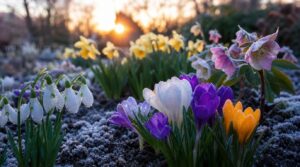
Some flowers don’t wait for warm weather — they push up while frost still lingers and make the garden feel alive again.
From snowdrops to hellebores, early spring blooms that thrive in cold weather can transform a bare winter garden weeks before anything else dares to grow.
The good news is that a handful of early bloomers are easy to grow and incredibly rewarding.
Here are the best ones to get you started.
Snowdrops for The First White Blooms
Snowdrops are your winter garden signal — the first true proof that spring is coming. These cold-hardy bulbs push through frost and even snow as early as January, thriving in zones 3–9.
Plant them under trees where they naturalize beautifully over time through bulb offset propagation.
Mulching helps with frost heave protection, keeping roots safe.
Early bees love them too.
Their ability to generate heat through thermogenesis helps melt surrounding snow for early emergence.
Crocuses for The Earliest Color
Right after snowdrops fade, crocuses take the stage with a colorful crocus palette that stops you in your tracks. Their crocus bloom timing kicks in as soil thaws, making them your earliest season color.
Plant smart for best results:
- Space 20–40 bulbs per square meter for massed impact
- Maintain crocus soil moisture with well-drained beds
- Apply crocus mulch benefits to protect emerging corms
- Follow crocus division frequency every 3–4 years
Daffodils for Bright Yellow Spring Impact
Once crocuses fade, cheerful daffodils steal the show. Their trumpet bloom architecture — bold, upward-facing cups above strap-like leaves — delivers spring garden color that practically glows.
Thanks to narcissus alkaloid defense, deer leave them alone, making them a smart deer deterrence strategy for vulnerable borders.
Extended bloom duration of four to six weeks means your early spring garden planting stays bright, long, and reliably beautiful.
Siberian Squill for Blue Carpeted Drifts
After daffodils, Siberian Squill takes things in a completely different direction — painting the ground blue.
This shade tolerant bulb delivers stunning early season color, spreading naturally through bulb offset division into a true blue carpet design. Plant 50 or more bulbs for lawn underplanting magic:
- Tuck them 2–3 inches deep under deciduous trees
- Choose partial shade placement for best spread
- Pair with snowdrops for layered texture
- Enjoy cold hardiness through zone 2
Glory of The Snow for Low-maintenance Charm
If you want early color without fuss, Glory of the Snow delivers.
These cold-hardy little bulbs push up star-shaped blue blooms just 4–6 inches tall, thriving through zones 3–8.
Their offset propagation fills gaps slowly and naturally.
| Feature | Detail | Benefit |
|---|---|---|
| Frost Hardiness | Zones 3–8 | Reliable early spring garden planting |
| Low Water Needs | Rain-dependent | Less work for you |
| Deer Resistance | Naturally avoided | Blooms stay intact |
| Foot Traffic Tolerance | Sturdy stems | Border and lawn-friendly |
| Offset Propagation | Self-spreading | Low-maintenance early spring flowers |
Grape Hyacinth for Compact, Fragrant Borders
Grape hyacinths are quiet overachievers in any spring garden. Plant bulbs in groups of 6 to 12 for strong bulb grouping and real border edge definition along your garden borders.
Planting near a south-facing wall gives your clusters a head start, since the extra warmth can coax blooms out days earlier—more tips like this live in this spring bulb placement guide.
Their fragrance release on warm days fills a hyacinth fragrance corner with a sweet, musky scent. Bulbil propagation rate is slow and tidy, and container flexibility makes these early bloomers perfect for movable grape hyacinth pathway edge accents.
Shade-Loving Early Bloomers
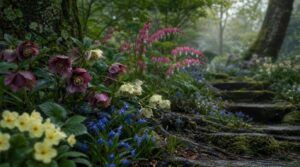
Not every garden gets full sun, and that’s actually a good thing. Some of the most beautiful early bloomers do their best work in the shade, quietly brightening up spots that other plants ignore.
Here are a few worth getting to know.
Hellebores for Long-lasting Woodland Color
Elegant Hellebores are the quiet stars of shade-tolerant spring flowers, offering woodland garden early-season color when little else stirs. Their freckled petal patterns in white, pink, and deep purple last four to eight weeks, while evergreen foliage backdrop keeps beds looking full year-round.
They’re naturally deer resistant, pollinator-friendly early spring plants, and easy to multiply through division propagation timing—right after flowering.
Lungwort for Spotted Foliage and Spring Flowers
Few plants do double duty quite like Speckled Lungwort — its spotted leaf patterns brighten dim corners before most early bloomers even wake up.
- Early bee attraction starts in March with pink-to-violet blooms
- Moisture-rich soil keeps foliage lush all season
- Companion planting tips: pair with hellebores for layered texture
- Clump division schedule: every 3–5 years maintains vigor
A true Lungwort Pollinator Spot for your early spring color palette.
Brunnera for Cool, Shady Garden Beds
Brunnera macrophylla is a quiet star in shade-tolerant woodland garden early-season color. Its heart-shaped leaves — some with beautiful silver edge variegation — add texture from spring onward, while soft leaf fuzziness gives them a touchable charm.
Small sky-blue flowers bloom above the foliage in mid-spring.
Moisture retention matters here, so mulch well. Deer tolerance makes it low-stress, and division timing every four to five years keeps clumps thriving.
Primrose for Cheerful Early-season Blooms
Few early bloomers match the cheerful energy of colorful Primrose (Primula) in a shady spring garden. These evergreen rosettes push out clusters of fragrant foliage and blooms when little else dares to show up.
- Double varieties and bi-color blooms add layered texture
- Rhizome propagation spreads them naturally over time
- Early season color arrives in zones 4–8
Plant them where dappled light meets rich, moist soil.
Bergenia for Structure and Seasonal Interest
Bold Bergenia cordifolia brings something primrose simply can’t — structure that holds through every season. Its dense evergreen mat of thick, glossy leaves manages weed suppression quietly, covering bare soil all winter long.
That foliage shifts from deep green to rich bronze-red in the cold, giving you real winter foliage interest.
Come spring, pink flower clusters rise above, making it a standout in garden design with early blooming perennials.
Shrubs That Bloom First
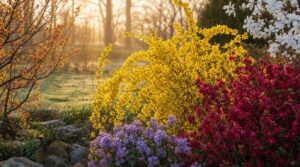
Shrubs are the unsung heroes of early spring, blooming weeks before most plants even wake up. While everyone’s waiting on perennials, these woody plants are already putting on a show.
Here are five shrubs worth planting if you want color before the season really gets going.
Forsythia for Bold Yellow Branches
Few shrubs announce spring quite like forsythia. Its Branch Architecture — long, arching stems — bursts into vivid yellow before a single leaf appears, making it a standout Forsythia Accent Shrub Zone 5–8.
Its impressive Growth Rate means your spring garden fills fast.
Get Pruning Timing right with these three rules:
- Prune immediately after flowering
- Skip fall cuts to protect buds
- Remove old wood annually for fresh color
Flowering Quince for Vivid Pink-red Blossoms
If forsythia’s yellow isn’t quite your style, flowering quince brings something bolder — vivid pink-red blossoms bursting on bare branches before leaves appear.
Color Variations range from soft rose to deep crimson, so your spring garden color palette has real options.
Practice smart Pruning Timing right after bloom, stay mindful of Thorn Management near pathways, and try Companion Planting with early bulbs for layered color.
Witch Hazel for Late-winter Fragrance
Witch hazel takes bold color a step further — it adds fragrance. As one of the best winter interest shrubs, it blooms on bare branches with a light citrus aroma, strongest during a warm spell boost.
Cultivar fragrance variation is real: Hamamelis mollis smells sweeter, while native types lean medicinal.
Cut branches indoors and let scent timing work its magic — they’ll fill a room beautifully.
Camellia for Elegant Early Flowers
If you want a true winter garden focal point, Japanese camellia delivers. Frost tolerant varieties hold glossy evergreen structural foliage all year, so your garden never looks bare.
They prefer morning sun and acidic soil, producing elegant blooms in early season shades of white, cream, and pink.
Among early bloomers, few match camellia’s quiet, refined presence in garden design with early spring blooms.
Dwarf Flowering Almond for Compact Spring Display
Dwarf flowering almond is one of those early bloomers that punches above its weight. compact shrub reaches just 4 to 5 feet, making it perfect for hedge design near paths or entrances.
pale pink double flowers arrive before the leaves, drawing in pollinators with delicate fragrance.
Light pruning right after bloom keeps it tidy.
moisture management and crown rot prevention, plant it in well-drained soil and mulch generously.
Planting Early Spring Flowers
Getting early spring flowers right starts long before the first bloom appears. A few key decisions—when you plant, where you put them, and how you prep the soil—make all the difference.
Here’s what you need to know to set your garden up for success.
Fall Planting for Bulbs and Corms

Think of fall as your secret head start on spring. The moment soil temps dip to 50–60°F, it’s bulb planting time. Good Fall Soil Preparation makes all the difference for early spring flowering bulbs.
- Follow Bulb Spacing Guidelines: space 2–4 times each bulb’s width apart
- Apply Root Zone Fertilization with balanced, phosphorus-rich fertilizer
- Use Corm Orientation Tips: growing tip always faces up
- Try Labeling Planting Sites so you don’t disturb them later
Late fall planting strategies for early spring blooms work beautifully when you water thoroughly after planting, and mulch well.
Planting Depth for Healthy Emergence
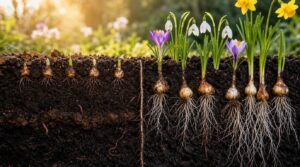
Depth is everything for healthy emergence. Plant too shallow, and roots struggle; too deep, and seedlings exhaust their energy reserves before breaking the surface. Bulb planting depth guidelines follow a simple rule: three times the bulb’s height. Your Soil Moisture Zone and Temperature Gradient both influence how quickly shoots push through.
| Bulb Type | Planting Depth |
|---|---|
| Snowdrops | 3 inches |
| Crocuses | 3–4 inches |
| Daffodils | 6 inches |
| Siberian Squill | 3 inches |
Compacted Soil Adjustment matters too — loosen it first so shoots aren’t fighting concrete. Depth Calibration aligned with the active moisture layer gives your bulbs the best possible start.
Well-drained Soil for Rot Prevention
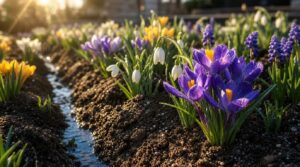
Good drainage isn’t optional — it’s your bulbs’ lifeline. Without it, rot moves fast and quietly underground.
Focus on these essentials for healthy early spring perennials and hardy spring perennials alike:
- Soil Texture Balance with loam or sandy loam keeps Root Zone Aeration strong
- Perlite Incorporation opens up heavy clay and prevents waterlogging
- Drainage Bed Planning with raised rows directs excess water away
- Pest-Resistant Soil develops naturally when drainage stays consistent
Well-drained soil protects everything you’ve planted.
Sun Versus Shade Placement
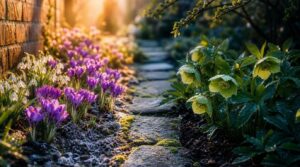
Where you place your plants matters as much as how you plant them.
Morning Sun Placement gives early bloomers like crocuses and snowdrops a gentle, productive start. Afternoon Shade Cooling protects shade tolerant spring flowers such as hellebores from heat stress.
Watch for Seasonal Light Shifts as trees leaf out.
Wall Heat Reflection near south-facing surfaces also speeds up bloom timing, keeping Soil Moisture Balance steady.
Watering, Mulch, and Frost Protection
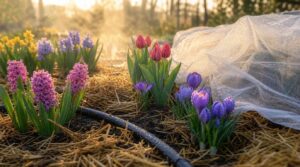
Once placement is set, keeping your bulbs alive through cold snaps comes down to three things: water, mulch, and protection.
Deep soaking once or twice a week moistens soil 6–8 inches deep — drip irrigation timing makes this easy and efficient.
Soil moisture monitoring keeps rot at bay.
Layer 2–3 inches of mulch insulation around crowns, and keep frost cloth usage ready for surprise freezes.
USDA Zones for Flower Selection
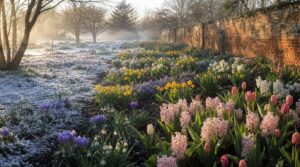
Zone Mapping Basics make flower selection so much simpler. Your USDA hardiness zones tell you exactly which plants survive your winters — and that’s your spring bulb selection guide, in short.
Cold hardiness ratings matter most for borderline picks:
- Zones 3–4: Crocuses, snowdrops, Siberian squill
- Zones 5–7: Glory of the Snow, daffodils
- Zone 8+: Earlier bloom windows, fewer frost concerns
Microclimate Adjustments — like a sheltered south-facing wall — can shift your effective zone up a full tier.
Designing a Spring Flower Display
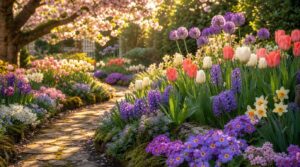
Planting the right flowers is just the beginning — how you arrange them is where the real magic happens. A thoughtful design can turn even a small yard into something that stops people in their tracks.
Here are some simple ways to make your spring display look its best.
Mass Planting for Stronger Color Impact
Want serious color impact this spring? Plant in drifts, not dots.
Mass planting of early perennials like crocuses and daffodils creates bold, sweeping color that stops you in your tracks.
Use Height Layering Techniques and Color Rhythm Planning to build depth, then anchor edges with evergreens for year-round structure.
| Strategy | Key Technique | Best Plants |
|---|---|---|
| Drift Spacing Strategies | 5–15 bulbs per drift | Crocus, Siberian Squill |
| Wind Resistant Stems | Choose sturdy varieties | Daffodil, Bergenia |
| Edge Evergreen Accents | Border with low evergreens | Bergenia, Hellebore |
Naturalizing Bulbs Under Trees and Lawns
Naturalizing bulbs under trees feels like letting nature do the decorating for you. The key is working with the canopy, not against it — Canopy Light Timing matters because snowdrops and crocuses bloom before leaves block sunlight.
Naturalizing bulbs under trees lets nature decorate for you, blooming before the canopy even wakes up
- Soil Moisture Management by mixing organic matter into the top 6–8 inches.
- Root Competition Mitigation by using a bulb planter instead of digging wide holes.
- Mulch Application Techniques lightly — never mounded against trunks.
- Bulb Division Timing every 2–4 years to keep drifts dense.
- Choose naturalizing perennials like Siberian squill and snowdrops for reliable shade tolerance.
Rock Garden and Border Arrangements
Rock gardens reward you with drama when you pair Stone Texture Contrast — lichen-covered boulders against smooth pebbles — with Border Height Gradation.
Tuck early crocus and snowdrops at the front, Bergenia clumps mid-border for structure.
Rock Layout Patterns using irregular angles create Microhabitat Creation for alpine bulbs.
Seasonal Mulch Strategies with 2–3 cm of bark chips keep moisture steady without smothering crowns.
Pollinator-friendly Flower Combinations
Pairing flowers for early pollinators isn’t just pretty — it’s strategic. Stack snowdrops, crocuses, and grape hyacinth for Nectar Succession Planning, so bees always find food.
Tubular Bloom Mixes like crocuses attract short-tongued bees, while open daffodil cups feed others.
Native Plant Partnerships with primroses deepen your Layered Height Stacking, making your space genuinely welcoming to bees and butterflies all season.
Color Pairings for a Layered Spring Look
Think of your garden as a painting — layered, intentional, alive.
Neutral base tones like soft cream daffodils anchor the scene, while midtone bridging hues such as pale lavender grape hyacinth ease color transitions from winter to spring.
Foliage contrast accents and texture color interplay deepen the look naturally:
- Pair Siberian squill blue with soft yellow for an airy morning feel
- Use repeated color motifs — white snowdrops, white alyssum — to unify the bed
- Let bold green foliage frame your seasonal color progression beautifully
Cut-flower Ideas for Indoor Arrangements
Bring your spring garden indoors with simple, stunning arrangements. Cut dainty snowdrops and vibrant crocuses early, matching stem lengths so that nothing crowds the vase.
Layer seasonal color schemes by adding elegant hellebores alongside exquisite dwarf irises for quiet drama. Try fragrance layering with hyacinth behind shorter blooms.
Finish with greenery accents and graceful trout lily stems — vase pairings like these last up to nine days.
Frequently Asked Questions (FAQs)
Which flowers bloom earliest in spring?
Before the last frost loosens its grip, snowdrops, crocus, and winter aconite respond to soil temperature triggers — pushing color into cold gardens and fueling early pollinator networks weeks ahead of anything else.
Does baking soda make flowers bloom fuller?
Baking soda can nudge soil pH slightly higher, which may support fuller blooms in alkaline-loving flowers.
Use about one tablespoon per gallon monthly, but monitor the plant response closely — too much harms roots.
What two flowers are the first to bloom in the spring?
Even before spring officially arrives, snowdrops and crocus beat the cold.
These cold-hardy perennials cross the temperature threshold first, acting as phenological indicators that pollinator arrival and the bloom sequence are finally beginning.
What are the best flowers to plant in early spring?
Snowdrops, crocus, daffodil, and Hellebore are your early spring bloomers.
These cold-hardy favorites reward simple soil amendments and smart companion planting with weeks of color before most gardens wake up.
What flowers bloom the earliest in spring?
Crocuses and snowdrops lead the charge, pushing up while frost still lingers. Soil temperature triggers their emergence, often before you expect early spring color to arrive.
What flowers bloom in February and March?
February and March belong to the snowdrop, crocus, daffodil, and Siberian squill.
These early bloomers rely on soil warmth cues and frost tolerance to push through, delivering early spring garden color when little else dares.
When should I start my spring flower garden?
Start when soil temperatures hit 40–45°F. In Saxony, that’s late February to early March—about six to eight weeks before your last frost date in mid-to-late April.
What are the small purple flowers that bloom in early spring?
Some of the best small purple flowers for early spring include Pulsatilla vulgaris, Iris reticulata, Crocus tommasinianus, Scilla siberica, Anemone blanda, Grape hyacinth, Viola, and native violets.
When should I plant spring bulbs?
Plant spring bulbs in fall, ideally 6–8 weeks before your first hard frost. That late-fall planting window lets roots establish before winter, following your regional climate calendar for best results.
How do I divide overgrown bulb clumps?
Divide overgrown bulb clumps every three to five years.
Wait until foliage yellows, then gently lift, separate, and replant healthy bulbs in groups of three to five for the best display.
Conclusion
You don’t need a big garden or years of experience to pull this off. Even a small patch of ground rewards you when you plant the right spring garden, early blooming flowers in the right spots.
Snowdrops and crocuses do the heavy lifting before you’ve even picked up a trowel in earnest. Layer in daffodils, hellebores, and forsythia, and your garden wakes up in waves—each one more alive than the last.