This site is supported by our readers. We may earn a commission, at no cost to you, if you purchase through links.
Spring has a short memory. One week your garden blazes with tulips and crocuses, and the next you’re staring at a bare patch where all that color used to be. Most gardeners plant for the peak and forget everything else—then wonder why their beds look tired by May.
The fix isn’t more plants; it’s smarter timing. Gardening for spring color that actually lasts means layering early bulbs with fast annuals, reading your soil temperature like a schedule, and handing off the bloom relay before gaps even appear.
These ten tips make that easier than it sounds.
Table Of Contents
- Key Takeaways
- Plan Spring Color Waves
- Choose Cohesive Color Schemes
- Build Colorful Garden Spaces
- 10 Top Spring Color Picks
- 1. Perennial Farm Amsonia Blue Ice
- 2. Survival Garden Pale Purple Coneflower Seeds
- 3. Sweet Yards Edible Wildflower Seed Mix
- 4. GevaGrow Northeast Wildflower Seed Mix
- 5. A M Leonard Deluxe Soil Knife
- 6. Seed Needs Hummingbird Butterfly Seed Mix
- 7. BuggyBeds Perennial Iris Flower Seeds
- 8. Burpee Wildflower Seed Mix
- 9. Groundio Hummingbird Butterfly Wildflower Mix
- 10. Turnmeon Outdoor Artificial Flower Set
- Maintain Long-Lasting Spring Color
- Frequently Asked Questions (FAQs)
- What can I plant now for spring color?
- How do I protect spring bulbs from pests?
- When should I deadhead spring-flowering plants?
- Can I grow spring flowers in shade?
- How do I divide and store bulbs?
- What are native alternatives to common spring bulbs?
- When should I divide overcrowded perennial clumps?
- How do I protect spring blooms from late frost?
- Which spring flowers grow well in deep shade?
- Can spring bulbs be forced indoors before planting out?
- Conclusion
Key Takeaways
- Layer early bulbs with fast annuals like zinnias and marigolds so something new blooms before the last flower fades.
- Raised beds warm up faster than ground soil, giving you a head start on color weeks before your neighbors see their first crocus.
- Deadhead spent flowers every week and feed blooming plants every one to two weeks — those two habits alone keep your garden looking sharp all season.
- Picking one color and repeating it across your beds ties the whole garden together so it looks designed, not just planted.
Plan Spring Color Waves
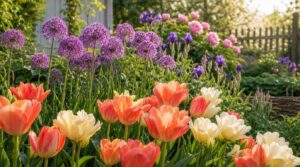
Spring color doesn’t have to stop when your first tulips fade. The secret is thinking in waves — layering plants so something new takes over just as the last bloom drops.
Staggering bloom times is easier than it sounds — this guide to the best spring flowers to plant walks you through which bulbs to pair for seamless color from crocus season all the way to early summer.
Here’s how to keep that momentum going all season long.
Early Bulb Bloom Windows
Spring flowering bulbs are nature’s earliest promise — and timing is everything. Most early species like crocuses and snowdrops need soil to cross that warmth threshold (around 40°F) before they’ll push up.
To achieve blooms even sooner, force them indoors with 12–15 weeks of chilling, then move to bright light. A minimum chilling period of 12 to 15 weeks at 40–45°F is essential for successful forcing.
- Crocuses carpet beds from late February onward
- South-facing beds warm fastest, accelerating early spring bloom
- Short-lived bulbs peak in 7–14 days, so sequence plantings carefully
Fast Annual Color Gaps
Once your bulbs start fading, annuals step in fast. Zinnias, marigolds, and cosmos are your best Fast-Growing Flowers for quick spring color — most bloom within six to eight weeks.
The Plug Tray Method skips germination delays entirely, giving you a Sunlit Container Burst in days. Warm Soil Boost accelerates everything, while the Pinch Growth Technique keeps plants bushy.
Early-season planting with staggered sowings locks in continuous color.
Spring-to-summer Transitions
As soil hits that Soil Temperature Shift sweet spot around 10–12°C, your garden’s whole rhythm changes. Cool-season favorites start stepping back, and warm-season plants take the lead. This Photoperiod Adjustment — longer days pushing toward 15 hours — tells your plants it’s time to shift gears.
- Watering Strategy Change matters now: deeper, less frequent watering beats daily misting
- Watch the Pollinator Seasonal Shift as bees chase new blooms into summer
- Shade Dynamics Evolution reshapes borders as taller plants rise and crowd out early growers
Succession Planting Schedule
Once your warm-season plants find their footing, a simple Succession Spreadsheet keeps everything moving. Think of it as your spring bloom schedule on paper.
Bi‑Weekly Planting Intervals every 14 days ensure consistent progress, while Maturity Staggering eliminates gaps in growth cycles.
Track Soil Temperature Thresholds to precisely time each planting wave, allowing the Bloom Overlap Matrix to harmonize the sequence.
Plant succession planning truly is that straightforward.
Pollinator Bloom Timing
Bees don’t wait for your schedule — they show up when the first blooms open. That’s why early nectar sources matter so much. Build your spring bloom schedule around overlapping bloom windows to ensure continuous forage.
Bloom succession planning, combined with smart weather timing, keeps floral longevity effects working in your favor. A pollinator-friendly garden isn’t luck — it’s a seasonal planting schedule built around plant bloom time.
Choose Cohesive Color Schemes
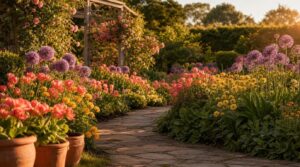
Color is where your garden either clicks or feels like a random jumble. A little planning goes a long way toward making everything look intentional.
Here are five color approaches that work beautifully for spring.
Pastels for Soft Borders
Pastel borders work like a whisper — soft, intentional, and surprisingly powerful. Pair Pastel Pink and Lavender with silvery foliage to keep things light without losing depth. Low growth perennials tucked behind soft stone edging create subtle height tiers that feel uncontrived.
A native pastel mix of White and Lavender, or Soft Peach and Ivory gives your spring color combinations a garden’s color palette that actually holds together.
Bright Bulbs With Annuals
Few combinations hit harder than bright bulbs paired with annuals. Think red tulips rising above a carpet of yellow marigolds — instant contrast pairings that pop.
For lasting spring color combinations, try these:
- Pale petunias with white Narcissus
- Orange calendula over blue Muscari
- Salmon snapdragons beside purple Alliums
- Lavender alyssum edging blue Iris
To ensure vibrant blooms, space bulbs 4–6 inches apart (spacing strategy), add compost for a nutrient boost, and prioritize drainage solutions to keep roots happy all season.
Purple and Yellow Pairings
Purple and yellow are nature’s high-contrast duo — complementary colors that make each other pop. Use deep purple tulips as contrast anchors and dot lemon-yellow daffodils along pathway highlights.
Try height layering with tall purple alliums behind yellow zinnias for a bold spring planting effect.
This companion planting approach and seasonal succession strategy gives your color palette vibrant energy from first bloom to early summer.
White and Green Calm
Sometimes the quietest garden color palette says the most. White and green strips away noise and lets texture do the talking.
In your spring garden, try this combo:
- Edge beds with whitewashed edging and plant white alyssum along the front
- Layer sage foliage behind for depth
- Add minimalist trellises with soft groundcovers beneath
Reflective surfaces and white and green garden design keep everything feeling open and calm.
Repeated Colors for Unity
Pick one color and let it run through your whole garden like a thread. That’s Palette Rhythm — and it’s what separates a scattered yard from a designed space.
| Color Echoing Technique | Effect |
|---|---|
| Consistent hues in borders | Guides the eye naturally |
| Repeating accents in containers | Ties spaces together |
| Unified plantings by bloom time | Sustains seasonal color scheme |
| Weaving color contrast and cohesion | Sharpens garden color harmony |
Build Colorful Garden Spaces
Where you grow matters just as much as what you grow. The right setup can mean the difference between a garden that struggles and one that pops with color from March through summer.
Here are five ways to build spaces that work hard for your spring display.
Raised Beds for Warmth
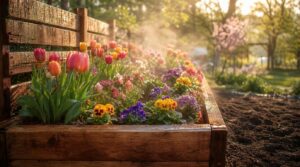
Raised beds give you a real head start in spring. Thanks to their heat-absorbing borders and thermal bed materials, the soil warms 5–10°F faster than ground plots. That built-in microclimate means earlier blooms and stronger roots.
Pre-warm soil a week before planting, and smart windbreak placement locks in nighttime heat retention.
Good garden bed preparation and solid soil structure make all the difference.
Containers for Small Spaces
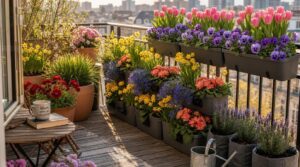
Not everyone has a yard — and that’s fine. Container gardens thrive on balconies, patios, and windowsills, offering flexible solutions for small spaces. Compact self-watering pots efficiently handle window box essentials, while Balcony Railing Planters maximize space by freeing up floor areas entirely.
For durability and convenience, consider Lightweight Fiber Clay pots for freeze resistance, Collapsible Fabric Pots for easy storage, or Stackable Module Systems to create layered spring color without sacrificing square footage. These innovative designs ensure every inch counts, blending functionality with aesthetic appeal.
Vertical Color Accents
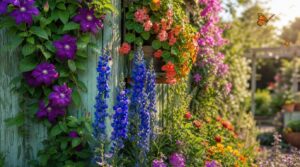
A Colorful Trellis Paint treatment or Painted Fence Panels instantly add height and personality without planting a single bulb. Pair those with Climbing Vine Ribbons — clematis works beautifully — and your fence becomes a living color wall.
Vertical Planter Walls and Tall Plant Columns of delphiniums stack seasonal color upward, turning flat beds into layered spring color ideas worth showing off.
Edging for Clean Lines
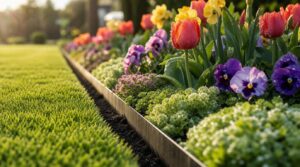
Sharp edges make every flower pop. Steel edging maintains a crisp line for years without bending, while composite edging blends quietly into your garden’s aesthetic.
A 1–2 inch vertical drop between lawn and bed is a simple design principle that elevates the entire look.
Groundcover borders soften edges naturally, and good edge drainage ensures tidiness after rain.
Edge maintenance remains effortlessly quick.
Focal Points With Flowers
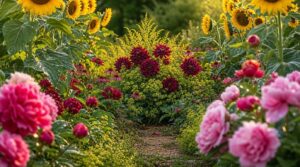
Every great garden has a "wow" moment—and bold bloom anchors create exactly that. A peony or sunflower placed at the end of a path naturally draws the eye. Strategic placement matters more than quantity.
- Contrast color pairings like deep red against lime green sharpen focus
- Texture spotlight: ruffled or spiky flower varieties command attention
- Extended bloom period keeps garden focal points fresh across spring
10 Top Spring Color Picks
The right plants and tools make all the difference when you’re chasing color from March through summer.
These ten picks cover everything from pollinator-friendly wildflowers to no-fuss perennials that come back year after year.
Here’s what’s worth adding to your garden this season.
1. Perennial Farm Amsonia Blue Ice
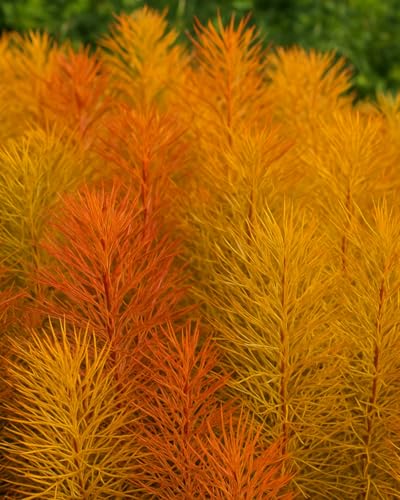
Amsonia Blue Ice earns its spot in any spring garden. It blooms in late spring with soft, star-shaped periwinkle flowers that cluster together like a low blue cloud.
The foliage stays blue-green all summer, then flips to golden yellow in fall — so you’re getting three seasons of interest from one plant.
It’s drought-tolerant, deer-resistant, and grows into a tidy 2–3 ft mound.
Plant it in full sun with well-drained soil and let it do the work.
| Best For | Gardeners who want a low-fuss, multi-season perennial that looks great from spring blooms through fall color without a lot of babying. |
|---|---|
| Product Type | Live Perennial Plant |
| Price | $34.99 |
| Maintenance Level | Low |
| Beginner Friendly | Yes |
| Outdoor Use | Yes |
| GMO Free | Yes |
| Additional Features |
|
- Three seasons of interest — soft blue spring flowers, blue-green summer foliage, and golden fall color all from one plant.
- Drought-tolerant and deer-resistant, so it handles neglect and wildlife pressure better than most perennials.
- Compact, tidy habit (2–3 ft) makes it easy to fit into borders, beds, or smaller garden spaces.
- Ships to a limited number of states — buyers in AK, AZ, CA, CO, ID, MT, NV, OR, UT, WA, and HI can’t order it due to agricultural regulations.
- Plants shipped in winter may arrive dormant and trimmed, so expect a slower start if you’re ordering between November and March.
- At $34.99 per plant, it’s a reasonable investment, but at least one customer reported the plant didn’t survive after planting — suggesting it can be a bit fussy about planting conditions.
2. Survival Garden Pale Purple Coneflower Seeds
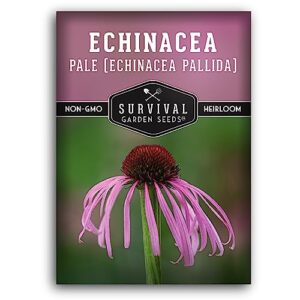
Few plants earn their keep quite like Echinacea pallida. These pale purple coneflowers are native to North American prairies, so they’re built tough — drought-tolerant once established and a genuine magnet for bees and butterflies.
Survival Garden Seeds packs about 24 heirloom, non-GMO seeds per packet for just $4.84, with planting instructions included. Expect seedlings in 14–21 days, though full blooms usually arrive in year two.
Plant them in full sun, well-drained soil, and let them naturalize into something beautiful.
| Best For | Home gardeners and pollinator enthusiasts who want a low-maintenance, native wildflower that pulls double duty as both a beautiful ornamental and a natural habitat boost. |
|---|---|
| Product Type | Wildflower Seeds |
| Price | $4.84 |
| Maintenance Level | Low |
| Beginner Friendly | Yes |
| Outdoor Use | Yes |
| GMO Free | Yes |
| Additional Features |
|
- Drought-tolerant once established, so you’re not babysitting it through every dry spell
- Attracts bees and butterflies without any extra effort — just plant and let nature do its thing
- Heirloom, non-GMO seeds with a planting guide included, making it beginner-friendly right out of the packet
- Only about 24 seeds per packet, so it’s not the move if you’re covering a large area
- Full blooms typically don’t show up until year two, so you’ll need a little patience
- May need cold stratification depending on your climate and planting season, which adds a small extra step
3. Sweet Yards Edible Wildflower Seed Mix
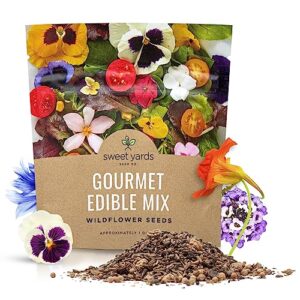
Sweet Yards packs over 7,000 seeds into a single one-ounce packet — enough to cover 100 square feet with 16 edible wildflower species. Flowers, leaves, stems: all are consumable. Toss them into salads, use them as garnishes, or steep them for tea.
The non-GMO, open-pollinated seeds come in resealable packaging with planting instructions included. Beginners love it for good reason — germination rates are solid, and the color payoff is real.
| Best For | Beginner gardeners who want an easy, low-maintenance way to grow edible flowers and greens for cooking, salads, or tea. |
|---|---|
| Product Type | Wildflower Seed Mix |
| Price | Not listed |
| Maintenance Level | Low |
| Beginner Friendly | Yes |
| Outdoor Use | Yes |
| GMO Free | Yes |
| Additional Features |
|
- Over 7,000 seeds in one packet — great value for covering up to 100 sq ft
- All 16 species are fully edible (flowers, leaves, and stems), so nothing goes to waste
- High germination rates and minimal watering needed make it genuinely beginner-friendly
- Seed mix composition can vary — some buyers received species that didn’t match what was listed
- Heavy on foliage but light on blooms for some growers, depending on conditions
- Poor or clay-heavy soil will hurt your results, so soil prep matters more than the packet suggests
4. GevaGrow Northeast Wildflower Seed Mix
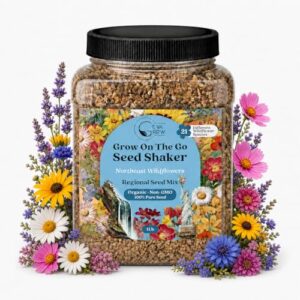
If you’re in the Northeast and want color with zero fuss, GevaGrow has you covered. This 1-pound bulk tub holds 21 native and adaptive wildflower species—annuals and perennials working together to stretch bloom time from late spring into fall. It’s non-GMO, certified pure, and comes with a shake-and-sow dispenser for easy spreading.
Germination can vary depending on your soil and site, so prep matters. But once established, you’ve got a pollinator-friendly meadow that practically runs itself.
| Best For | Northeast gardeners and outdoor enthusiasts who want a low-maintenance, pollinator-friendly wildflower patch without a lot of setup work. |
|---|---|
| Product Type | Wildflower Seed Mix |
| Price | $49.99 |
| Maintenance Level | Low |
| Beginner Friendly | Yes |
| Outdoor Use | Yes |
| GMO Free | Yes |
| Additional Features |
|
- 21 native and adaptive species means better odds of real, lasting growth in Northeastern climates
- Non-GMO and certified pure seed — good for pollinators and peace of mind
- Shake-and-sow design makes spreading seed quick and easy, no tools needed
- Germination can be hit or miss depending on your soil and site prep
- The shaker has let some customers down — a few report it doesn’t work as smoothly as advertised
- At $49.99, it’s a bigger spend than generic mixes, which might sting if you’re covering a large area
5. A M Leonard Deluxe Soil Knife
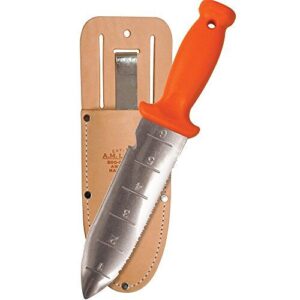
One tool, a dozen jobs. The A.M. Leonard Deluxe Soil Knife earns its place in any spring kit fast. Its six-inch stainless-steel blade has a tapered slicing edge on one side and a deep serrated edge on the other —
so you’re cutting roots, transplanting seedlings, and loosening soil without ever setting it down.
Built-in depth markings take the guesswork out of bulb planting, and a twine-cutting notch means one less tool to grab.
Compact, tough, and backed by a lifetime warranty.
| Best For | Gardeners who want one compact tool that handles planting, weeding, transplanting, and twine cutting without hauling a whole kit around. |
|---|---|
| Product Type | Garden Tool |
| Price | Not listed |
| Maintenance Level | N/A (tool) |
| Beginner Friendly | Yes |
| Outdoor Use | Yes |
| GMO Free | N/A (tool) |
| Additional Features |
|
- Built-in depth markings make bulb planting precise — no guessing, no measuring tape.
- Dual-edge blade (slicing serrated) handles roots, soil, and cords without swapping tools.
- Lifetime warranty and a corrosion-resistant blade mean you buy it once and move on.
- Short handle limits leverage, so it’s not the right call for heavy digging jobs.
- The leather sheath can be stiff at first and awkward to use until it breaks in.
- Some buyers report receiving the knife without the sheath — worth double-checking your order.
6. Seed Needs Hummingbird Butterfly Seed Mix
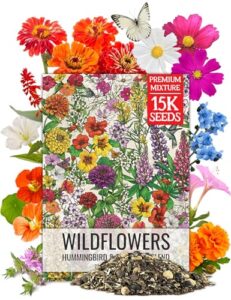
Seed Needs Hummingbird Butterfly Seed Mix accomplishes the reward. This blend packs 23 flower varieties—cosmos, snapdragons, butterfly milkweed, and more—into a single $7.99 pouch. Scatter it across roughly 16 square feet, keep the soil moist, and sprouts will appear in 7 to 14 days.
The mix is GMO-free and beginner-friendly, designed to draw butterflies, bees, and hummingbirds all season. Its vibrant assortment thrives with minimal effort, making it ideal for gardeners seeking both beauty and simplicity.
Results may vary, as germination depends on your soil and climate. While the mix guarantees a diverse, pollinator-friendly garden, outcomes are influenced by local conditions.
| Best For | Beginners, casual gardeners, and anyone who wants a low-effort, pollinator-friendly garden without a lot of fuss. |
|---|---|
| Product Type | Wildflower Seed Mix |
| Price | $7.99 |
| Maintenance Level | Low |
| Beginner Friendly | Yes |
| Outdoor Use | Yes |
| GMO Free | Yes |
| Additional Features |
|
- 23 flower varieties in one $7.99 pouch — solid value for the price
- GMO-free and heirloom seeds that attract butterflies, bees, and hummingbirds
- Super easy to plant — just scatter, water, and wait
- Germination can be hit or miss depending on your soil and climate
- You won’t know exactly which flowers or colors you’ll get until they bloom
- The 1 oz pouch might be more seeds than you need for a small garden bed
7. BuggyBeds Perennial Iris Flower Seeds
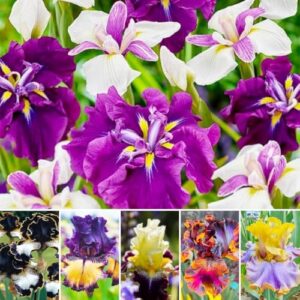
BuggyBeds Perennial Iris Flower Seeds offer a reliable, low-maintenance option for gardeners seeking yearly blooms without reseeding. For $5.99, each packet contains 199 seeds that grow into classic bearded irises—tall plants with fan-shaped leaves and rich blue-to-purple blooms appearing in late spring.
Plant seeds approximately a quarter-inch deep in well-drained soil with good sun exposure. While these irises are slow starters, requiring two-to-three seasons before reaching full flowering potential, they establish resilience once mature.
After the initial establishment period, these perennials hold their ground and keep delivering vibrant flowers season after season, making them a durable, long-term addition to any garden.
| Best For | Gardeners who want a low-effort, long-term flower bed that comes back every year without a lot of fuss. |
|---|---|
| Product Type | Iris Seeds |
| Price | $5.99 |
| Maintenance Level | Low |
| Beginner Friendly | Yes |
| Outdoor Use | Yes |
| GMO Free | Not specified |
| Additional Features |
|
- 199 seeds for just $5.99 — solid value if even a good chunk of them take root
- Once established, they come back year after year with no replanting needed
- Easy enough for beginners, but a nice addition for experienced gardeners too
- Germination can be hit or miss, especially if you’re planting late in the season
- Needs well-draining soil — clay-heavy yards may struggle
- Packaging is pretty bare-bones, with no variety info or detailed care instructions
8. Burpee Wildflower Seed Mix
If Burpee’s Wildflower Seed Mix is your fast, colorful, and almost easy alternative to slow-growing irises, it delivers vibrant blooms quickly. One affordable bag contains 25,000 non-GMO seeds, covering up to 1,000 square feet for under $9. The mix features 18 flower varieties, including coneflowers, coreopsis, and black-eyed Susans, attracting bees and butterflies from spring through fall.
Planting requires minimal effort: scatter seeds in a sunny spot, rake lightly, and water until seedlings settle in. Ensure adequate spacing, as crowding slows growth significantly. This low-maintenance blend thrives with basic care, offering continuous color and pollinator support throughout the seasons.
| Best For | Gardeners who want an easy, budget-friendly way to fill large spaces with color while supporting local pollinators. |
|---|---|
| Product Type | Wildflower Seed Mix |
| Price | $8.97 |
| Maintenance Level | Low |
| Beginner Friendly | Yes |
| Outdoor Use | Yes |
| GMO Free | Yes |
| Additional Features |
|
- Incredible value — 25,000 seeds covering up to 1,000 sq ft for under $9
- Perennial mix means blooms come back year after year with no replanting
- Draws bees, butterflies, and hummingbirds all season long
- Germination can be slow — some gardeners wait weeks or months to see results
- Needs full sun and good spacing; crowded or shaded spots tend to disappoint
- Some bags reportedly contain more filler than seeds, so results can vary
9. Groundio Hummingbird Butterfly Wildflower Mix
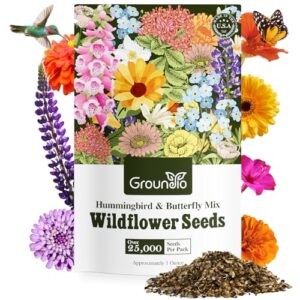
Groundio Hummingbird Butterfly Wildflower Mix offers a vibrant blend of 24 varieties—annuals, perennials, and biennials—in a resealable foil packet. For just $6.99, it covers approximately 194 square feet, delivering blooms in 35 to 75 days.
Plants grow to heights of 12 to 48 inches, creating a naturally layered aesthetic. This mix thrives in sunny meadow patches or pollinator borders, requiring minimal maintenance while ensuring lasting color.
| Best For | Casual gardeners, beginners, or anyone looking for an easy, low-maintenance way to add color and attract pollinators like butterflies and bees. |
|---|---|
| Product Type | Wildflower Seed Mix |
| Price | $6.99 |
| Maintenance Level | Low |
| Beginner Friendly | Yes |
| Outdoor Use | Yes |
| GMO Free | Yes |
| Additional Features |
|
- 24-variety mix means you get a nice range of colors and heights without having to buy multiple seed packets.
- Germinates fast—sprouts in as little as 5 days, with blooms showing up in just over a month.
- The resealable foil packaging keeps unused seeds fresh, which is a handy touch.
- Germination can be hit or miss—some buyers report little to no sprouting despite the "99% pure live seed" claim.
- One ounce only covers about 194 sq ft, so if you have a bigger yard, you’ll need to buy several packets.
- Hummingbird attraction isn’t guaranteed—it really depends on your region and what’s already in your garden.
10. Turnmeon Outdoor Artificial Flower Set
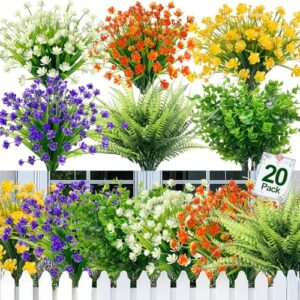
Not every garden space plays by nature’s rules — and that’s where the Turnmeon Outdoor Artificial Flower Set earns its place. You get 20 bundles across six styles, including camellia in four colors, Boston fern, and eucalyptus.
The UV-resistant PVC holds color for up to 90 days without watering, pruning, or replanting. This durability makes it a practical choice for low-maintenance areas.
It’s ideal for cemetery plots, shaded patios, or deer-prone yards where real plants struggle to thrive.
Just know the flower heads run small, so pair them with bold living plants for balance.
| Best For | Homeowners, memorial site visitors, and anyone with low-maintenance outdoor spaces who want year-round color without the upkeep. |
|---|---|
| Product Type | Artificial Flowers |
| Price | Not listed |
| Maintenance Level | None |
| Beginner Friendly | Yes |
| Outdoor Use | Yes |
| GMO Free | N/A (artificial) |
| Additional Features |
|
- 20 bundles across six styles give you a solid mix of colors and textures right out of the box
- UV-resistant PVC holds color for up to 90 days — outlasting most similar products by months
- Zero maintenance needed, and deer won’t touch them
- Flower heads are tiny (around 1 cm) and can look noticeably plastic up close
- Some bundles arrive with broken or missing buds, and a few users report brittleness after months in strong sun
- Individual bundle width may be closer to 3 inches rather than the advertised 9.5 inches, so plan your arrangements accordingly
Maintain Long-Lasting Spring Color
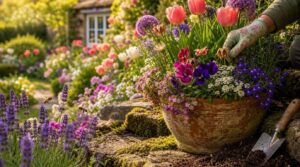
Getting color to last all season isn’t about luck — it’s about a few steady habits. The good news is none of them are complicated.
Here’s what actually keeps your garden looking its best from early spring through summer.
Compost for Healthier Soil
Good compost is basically a slow-release multivitamin for your garden soil. Mix in 2–3 inches of well-rotted compost each spring, and you’ll boost microbial diversity, improve soil structure, and deliver a gentle, slow nutrient release that feeds plants for weeks.
Two to three inches of compost each spring feeds your soil like a slow-release multivitamin for weeks
It also buffers pH swings, aids carbon sequestration, and even helps suppress disease. Few soil amendments do more with less effort.
Mulch to Protect Bulbs
Mulching is one of the simplest garden maintenance tips you’ll ever use.
Bark insulation slows frost heave, while a straw light barrier lets shoots push through easily.
Pine needle pH control suits acid-loving spots, and a leaf nutrient layer breaks down into free fertilizer.
For heavy clay, coarse drainage mulch keeps short-lived bulbs breathing.
Two inches is plenty.
Watering Spring Containers
Spring containers dry out faster than you’d think — especially in a sunny spot.
- Morning watering keeps foliage dry overnight and slows evaporation
- Soil moisture testing is simple: one finger, one inch down
- Pot drainage holes prevent soggy roots from killing your spring flower variety
- Mulch retention and drip scheduling take the daily guesswork out of container gardening tips
Water conservation starts with consistency, not quantity.
Deadheading Spent Flowers
Deadheading is one of those garden maintenance habits that pays back immediately. Snip spent blooms from your annuals and perennial plantings weekly — timing strategies matter here, so don’t wait until petals drop.
Sharp snips are your best tool choices; cut just above a leaf node.
Removing faded flower varieties redirects energy benefits toward new buds and improves air circulation, keeping disease management simple all season.
Feeding Blooming Plants
Your blooms are only as good as what’s in your soil. Nutrient timing shapes everything — start with phosphorus boost formulas in early spring to kick off strong flower development.
- Switch to bloom-focused organic fertilizers once buds appear
- Feed every 1–2 weeks during active flowering
- Keep soil pH between 6.0–6.8 for best nutrient uptake
Compost and organic matter do the heavy lifting underneath.
Frequently Asked Questions (FAQs)
What can I plant now for spring color?
Cool-weather annuals like pansies and violas are your best bet right now. Direct sowing edible flower mixes works well too. Low-maintenance perennials and early-blooming bulbs thrive with soil warming underway.
How do I protect spring bulbs from pests?
Unwanted visitors love your spring flowering bulbs as much as you do.
Barrier mesh under beds, repellent sprays, companion bulbs like alliums, beneficial nematodes, and a predator habitat nearby keep them away.
When should I deadhead spring-flowering plants?
Start right after petals drop. For early bulbs like daffodils, remove faded flowers promptly but leave the foliage green.
Mid-season pinching on pansies every week or two keeps color strong.
Can I grow spring flowers in shade?
Yes, you can. Shade-tolerant bulbs like snowdrops and Scilla siberica thrive with just a few hours of light.
Pair them with light-reflecting foliage and maintain consistent moisture levels for best results.
How do I divide and store bulbs?
Wait until foliage dries fully before clump division — that’s your signal that the bulb has stored enough energy.
Clean off soil, batch-label by species, then cool storage at 35–50°F manages the rest.
What are native alternatives to common spring bulbs?
Native bulbs like wild columbine, bloodroot, and Virginia bluebells rival any tulip for early color. They naturalize, skip the fuss, and feed pollinators — a quiet win for any spring garden.
When should I divide overcrowded perennial clumps?
Divide overcrowded perennials during the early spring timing window, just as new shoots emerge.
Fall division works well too — aim for the fall division window before the first hard frost hits.
How do I protect spring blooms from late frost?
A late spring frost can sneak up overnight. Drape row covers or frost cloths over tender blooms before temperatures drop, and prop them on hoops so fabric doesn’t crush petals.
Which spring flowers grow well in deep shade?
Brunnera blossoms, Hosta flower spikes, Astilbe moisture lovers, Lungwort early color, and Bleeding heart shade prove that deep shade doesn’t mean no color.
These early-blooming perennials thrive where sun rarely reaches.
Can spring bulbs be forced indoors before planting out?
Yes — spring bulbs can be forced indoors. Cold stratification tricks them into blooming early. Water forcing works great for hyacinths and paperwhites.
Post-bloom care matters if replanting viability is your goal.
Conclusion
Like Monet painting Giverny one season at a time, gardening for spring color rewards patience and intention. Your garden doesn’t peak once—it performs in movements.
Now you know how to conduct each one. Layer your bulbs early, bridge the gaps with fast annuals, and keep the soil fed.
Every deliberate choice stacks into something bigger than a single bloom. That’s not luck—that’s a gardener who finally knows how to stay ahead of spring.
- https://fieldreport.caes.uga.edu/publications/B918/flowering-bulbs-for-georgia-gardens/
- https://www.almanac.com/when-plant-flowers
- https://www.bhg.com/gardening/flowers/bulbs/planting-charts-for-spring-flowering-bulbs/
- https://menagerieflower.com/blogs/growing-wonder/discover-2024s-new-pre-cooled-tulip-bulb-varieties?srsltid=AfmBOoqgw_KBuaiQFnYW-R26l9gWLLgzCxAqSBY5wNp1oOn-1l-7a9_8
- https://www.gardensillustrated.com/plants/bulbs/bulbs-colour-every-season