This site is supported by our readers. We may earn a commission, at no cost to you, if you purchase through links.
You pop the lid off a jar of last summer’s green beans and hear a hiss that wasn’t there before. Maybe it’s nothing. Maybe it’s not.
Here’s the uncomfortable truth: the most dangerous signs that home canned food has gone bad are often the ones you can’t see, smell, or taste. Botulism doesn’t announce itself with a stink or a funky color half the time—it just sits there, quiet and deadly, in food that looks perfectly fine.
That’s why knowing what to check, from the seal to the seams to the smell, matters more than trusting your gut.
Table Of Contents
- Key Takeaways
- Inspect Home-Canned Containers for Damage
- Test Jar Seals Before Eating
- Watch for Pressure and Gas
- Recognize Sensory Spoilage Signs
- Discard Unsafe Food Without Delay
- Frequently Asked Questions (FAQs)
- How to tell if homemade canned food is bad?
- Is it safe to eat 20 year old canned food?
- What happens if I eat bad canned food?
- What is the shelf life of home canned food?
- How long does home canned food typically last?
- Can spoiled canned food be made safe by boiling?
- What causes home canning to fail in the first place?
- Is it safe to can food again after spoilage?
- Which foods are riskiest for home canning spoilage?
- Conclusion
Key Takeaways
- The scariest part about spoiled home-canned food is that dangerous botulism often shows zero signs—no smell, no bubbles, no funky color—so you can’t rely on your senses alone to catch it.
- Before opening anything, check the container itself: deep dents, rust, cracked glass, dried residue, or a bulging lid all mean it’s time to toss the jar, no questions asked.
- Once you’re ready to open a jar, listen and feel for clues like a proper hiss and pop, a firm unmoving lid center, and no squirting liquid or fizzing, since these tell you the seal actually held.
- If you spot mold, slime, odd texture, weird color, or a bad smell after opening—or if you’re just not sure—don’t taste it and don’t try to save it; when in doubt, throw it out.
Inspect Home-Canned Containers for Damage
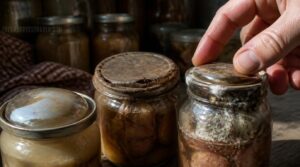
Before you even open that jar or can, give it a good once-over. Your eyes and fingers can catch trouble before it ever hits your plate. Here’s exactly what to look for.
Check for bulging lids, spurting liquid, or off smells, and if you’re canning your own goods at home, these step-by-step canning recipes for preserving your harvest can help you avoid these issues from the start.
Deep Dents Along Can Seams
Run your thumb along the seam before you even think about opening that can. Deep dents along can seams signal container deformation and seam distortion risks. Sharp edges near the end seam mean coating impairment and a possibly compromised seal.
- Sharp dents near seams
- Ring area distortion
- Wall dent effects
- Visibly damaged seal
When in doubt, toss it. A visual inspection can reveal signs of unsafe dents that compromise can integrity.
Rust Around Rims and Lids
Once you’re past the dents, check the rim itself. Reddish brown staining around the lid means protective coating failure—moisture snuck through chipped paint and started corroding metal underneath.
Rust near seals often signals hidden container failure, even when the food looks fine. If cleaning doesn’t remove staining, or you spot pitting, don’t gamble. Toss it.
Cracked or Chipped Glass Jars
Rust warns you about metal. Glass tells its own story. Tilt each jar toward light and check the rim for hairline cracks or chips—glass rim inspection catches what your eyes might skip.
Even tiny chips create stress fractures under canner heat, risking thermal shock damage and sudden breakage. Cracked sealing edges destroy jar seal integrity. Feel with a fingernail. Any roughness means container failure—retire that jar.
Leaks and Dried Food Residue
Cracks let air in, but leaks tell you moisture’s already escaping. Check for streaks of dried food running down the jar, crusty residue near the seam, or a sticky ring where liquid evaporated. These signal broken jar seal integrity.
Pinhole rust on metal cans works the same way—slow, sneaky seal failure. Any dried gunk means: toss it.
Bulging Cans or Puffy Lids
See a lid that curves outward instead of sitting flat? That’s gas buildup from bacteria feeding inside the jar, and it’s a screaming red flag.
Don’t press it, don’t shake it, don’t open it. Pressure release can spray contaminated liquid everywhere.
Bag it, trash it, wash your hands. Lid deformation always means seal failure—no exceptions, no taste tests.
Test Jar Seals Before Eating
The jar looks fine from the outside, but that’s not the whole story. Before you dig in, your lid needs to pass a quick hands-on check. Here’s exactly what to look and listen for.
Give the center of the lid a firm press with your finger, and if it stays put with no give, follow this beginner’s guide to water bath canning to double-check your seal before storing.
Raised or Clicking Lid Centers
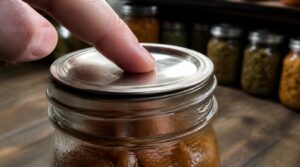
Push on that lid center. Does it click, pop, or feel higher than it should? That’s lid center deformation, a red flag for vacuum loss.
Clicking lid sounds mean internal pressure fluctuation and a compromised seal edge, not a quirky lid divot. A jar that pops instead of staying flat never sealed right, or lost its seal since canning. Don’t gamble on it—check further before eating.
Lids That Flex When Pressed
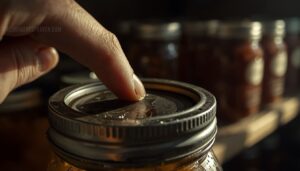
Give that lid a gentle press. Does it bow a little, then bounce right back within a second or two? That’s normal gasket elasticity—common on wide-mouth jars with rubberized seals.
But if it keeps flexing noticeably, or won’t return flat, seal integrity is failing. Aging rubber cracks and hardens over time. Persistent flex means disposal, not dinner.
Missing Vacuum Resistance When Opened
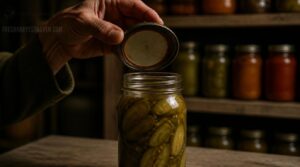
Pop the lid and listen. A proper audible hiss and pop means the vacuum seal test passed—air rushed in because pressure was working right.
Silence, though? That’s missing vacuum resistance when opened, a red flag for seal integrity loss. No fizz, no fight, no fun. Air entered too easily, long before you touched it. Don’t trust that jar.
Loose or Failed Lid Seals
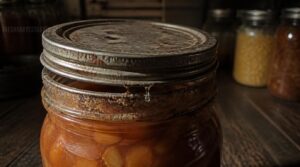
A wiggly lid isn’t just annoying—it’s a warning. If the safety button won’t stay down or the lid shifts under light pressure, that’s a bad seal, plain and simple.
Gaskets lose elasticity with age. Rims dent, rust, or collect residue, and suddenly your vacuum seal never had a fighting chance. Loose or bulging lids mean one thing: skip it.
Food Trapped Beneath Lids
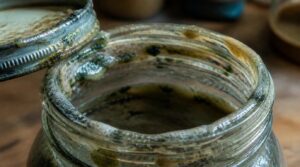
Ever popped a lid and found gunk clinging underneath? That’s food residue accumulation, and it’s not just messy—it’s a red flag.
Trapped food detection matters because under-lid contamination breeds bacteria fast. Check for:
- Visible mold or slime
- Sticky, foamy buildup
- Foul or off odors
- Discoloration near the rim
Any of these? Toss it. Spoilage doesn’t ask permission.
Watch for Pressure and Gas
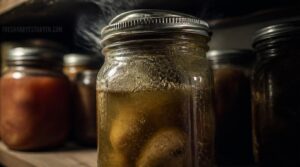
Sealed jars passed, but your jar’s already whispering trouble. That’s gas talking, and gas means bacteria are throwing a party in there. Here’s what to watch for before you twist that lid open.
Bubbles in Undisturbed Jars
Set the jar down and just watch it. If you see rising bubbles in the liquid with nobody touching the jar, that’s active gas formation, not settled air.
Gently tilt it: inert bubbles stay put, but active ones keep moving. Persistent bubble indicators over several days mean real pressure buildup inside—not a jar you should trust.
Fizzing or Foaming Liquids
Now listen for it. A hiss or soft fizz when you crack the lid means gas is escaping right then—active fermentation, not your imagination.
- Active foaming that lingers for minutes signals real gas buildup
- Warmer storage makes fizzing more vigorous
- Thick, syrupy liquids trap bubbles longer
- Dense foam with off odors? Toss it, don’t taste it
Liquid Squirting When Opened
That fizz can escalate fast. If liquid squirts out when you open the jar, gas pressure has built to dangerous levels—spoilage organisms have been busy.
Crack the lid slowly and vent first; don’t twist it wide open. Point the jar away from your face, and consider protective eyewear. High-moisture foods squirt worst. If it happens, discard the whole thing—don’t taste it, don’t second-guess it.
Unexplained Leaks During Storage
Not every warning sign is loud. Sometimes it’s a faint damp spot at the lid edge, or dried residue near the seams that shouldn’t be there.
Check for:
- Moisture on the exterior or sticky closure areas
- Crusty buildup around rims from slow leaks
- Rim corrosion where gas pockets pushed liquid past the seal
Any of these? Toss it. Silent leaks still mean broken seals.
Cloudiness in Clear Liquids
Hold the jar up to the light. A cloudy liquid where it should be clear often means bacteria are active, though harmless causes exist too—Temperature Solubility Changes or Emulsion Light Scattering from spices.
Pair visual inspection with odor detection. Sour smell plus haze? That’s contamination, not chemistry. When unsure, don’t gamble—toss it.
Recognize Sensory Spoilage Signs
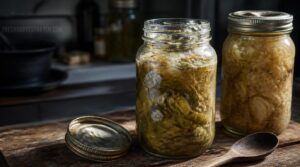
Sometimes your nose and eyes catch what a pressure test misses. Once you open that jar, your senses become your best safety tool. Here’s exactly what to look, smell, and feel for before that food gets anywhere near your mouth.
Mold on Food or Lids
Fuzzy patches—green, black, pink, or white—mean one thing: toss it. Mold can grow within 24-48 hours and often creeps into the lid groove or seal, letting air sneak in.
- Any color mold on food
- Mold on the lid’s underside
- Fuzzy growth near jar threads
- Mold plus off odors
- Mold you can’t fully wipe clean
Don’t scrape and eat. When in doubt, ditch it.
Slime or Abnormal Textures
Run your finger across that jar—does it feel tacky, slick, or gluey? That’s a texture change worth trusting.
Slime, a gel texture, or paste consistency all signal bacterial breakdown. Watch for film formation on top or a slippery sheen coating the glass.
Visible mold or slime means immediate disposal. Any odd texture changes? Don’t taste it—just toss it.
Unexpected Darkening or Discoloration
Color changes in brine deserve a second look, not a shrug. Oxidation effects on food, metal-induced tinting from lids, heat-related blotching, and spore-related darkening can all cause discoloration.
Deep brown or black coloration paired with texture change or off smell? Discard immediately. Mild darkened food alone might be harmless aging—but never taste-test to find out.
Foul or Unusual Odors
Your nose knows. Rotten egg sulfur, sharp vinegar, weirdly sweet, or musty basement smells all scream spoilage. Sniff near the rim right when you open it.
Mild odors need a closer look. Strong or very strong ones? Trust that gut alarm. If the smell shifts or lingers after opening, don’t second-guess it. Separate the jar and toss it.
Never Taste Suspicious Canned Food
Curious enough to take a bite and see? Don’t. Never taste suspicious canned food—not even a tiny lick. Contamination doesn’t announce itself on your tongue.
Clostridium botulinum toxin can be odorless, tasteless, invisible. Bulging lids or squirting liquid mean stop, full stop.
Trust your eyes, not your mouth. When doubt creeps in, discard immediately. Safety beats curiosity, every single time.
Discard Unsafe Food Without Delay
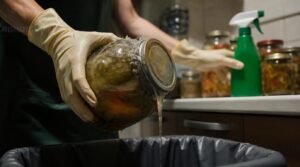
So you’ve spotted a warning sign, now what? This is where hesitation can actually hurt you. Here’s exactly how to handle it when something seems off.
Botulism May Show No Signs
Here’s the scary part: Clostridium botulinum thrives in anaerobic conditions and needs zero visible spoilage to produce lethal toxin. No smell, no bubbles, nothing.
Clostridium botulinum needs no smell, bubbles, or visible spoilage to produce a lethal toxin
Watch for:
- Drooping eyelids
- Slurred speech
- Double vision
- Facial weakness
These nerve symptoms first signs beat any stomach upset. Silent toxin risk means asymptomatic carriers exist too. When suspected, seek care immediately—don’t wait for confirmation.
Treat Broken Seals as Unsafe
Botulism doesn’t announce itself, so don’t wait for proof. If the lid doesn’t pop or you spot a broken seal, that jar’s done—do not consume it, no exceptions.
Cracked, chipped, or loose lids let pathogens in even without visible gas pressure. Discard immediately, avoid reuse of that lid, and prevent contamination by keeping it away from other food. Safety first, always.
Avoid Opening Bulging Containers
A jar with a swollen lid isn’t asking to be opened—it’s warning you to back off. That dome shape means gas pressure has built up inside, likely from bacteria having a field day.
Never pop that lid at the sink. Squirting liquid, sudden fizzing, even a small rupture can spray contaminated food onto your skin or eyes. Move it outside, ventilate the area, and let it be.
Discard When Safety is Uncertain
Once you’ve stepped away from a bulging lid, the next question is simple: what if you’re just not sure? Trust your instincts. Strange flavor, altered texture, a whiff of "off"—any of it means when unsure, discard. This isn’t the moment to save a jar of tomatoes. Safety over salvage, always. Botulism risk doesn’t announce itself, so err on caution—better safe than sorry.
Prevent Spoilage With Tested Methods
Prevention beats detection every time. Follow tested canning methods—pressure canning for low-acid foods, water bath canning for high-acidity items—and check acidity levels carefully.
Keep jars refrigerated below 40°F, use oxygen absorbers, and practice FIFO rotation. Wash hands, sanitize surfaces, and store jars away from heat.
Do this right, and botulism risk drops dramatically.
Frequently Asked Questions (FAQs)
How to tell if homemade canned food is bad?
Think of a locked treasure chest guarding gold from pirates—that’s your seal. Check the seal button test, lid flex check, and vacuum pop absence. Watch for bulging lids, fizzing, odd texture, or weird color before trusting a single bite.
Is it safe to eat 20 year old canned food?
Twenty years is pushing it. Store-bought cans in intact, rust-free condition might still be edible, though quality tanks.
Home-canned? Skip it entirely—botulism risk climbs with age, and swollen lids or funky smells mean toss it immediately.
What happens if I eat bad canned food?
You risk digestive distress (vomiting, cramps) or serious foodborne illness. Worse case? Clostridium botulinum toxin causes neurological symptoms, even respiratory failure. Kids and elderly face higher danger—this needs medical urgency, not a wait-and-see approach.
What is the shelf life of home canned food?
That jar in Grandma’s cellar lasted decades—but luck isn’t a plan. One year in a cool, dark spot keeps quality high; low-acid veggies slip faster, high-acid fruits hold longer. Heat above 70°F speeds decline fast.
How long does home canned food typically last?
Best quality lasts about one year in cool, dark storage. High-acid foods (jams, tomatoes) fade faster than low-acid meats.
Proper pH balance and stable temperature slow decline, but sealed jars may stay safe well beyond that window.
Can spoiled canned food be made safe by boiling?
No. Botulinum toxin is surprisingly heat resistant, and a quick boil won’t undo it. Acid levels matter, but once toxin forms, discard when unsure—boiling home canned food that’s already spoiled just risks toxin ingestion, not safety.
What causes home canning to fail in the first place?
Most failures start small: incorrect headspace, skipped altitude adjustments, untested recipes, or cooling the canner with water mid-process. Add poor jar placement or temperature abuse in storage, and microbial growth gets the opening it needs.
Is it safe to can food again after spoilage?
No. Reprocessing risks outweigh any benefit—heat can’t guarantee toxin destruction or reach spores hiding in already-spoiled homecanned goods. Seal uncertainty remains too, so just discard the batch and follow proper waste disposal for safety.
Which foods are riskiest for home canning spoilage?
Some jars are just born risky. Low acid vegetables, meat, poultry, seafood, soups, and oil-based recipes create anaerobic bacteria havens perfect for botulism toxin production—these home canning hazards demand pressure canning, never shortcuts, to stay safe.
Conclusion
A hiss, a bulge, a whiff of something wrong—your senses are your last line of defense, but they’re not foolproof. Spotting signs that home canned food has gone bad means checking seals, watching for gas, and choosing caution over curiosity every single time. When in doubt, throw it out. That jar won’t argue back.
Botulism doesn’t send warnings, so you’re the only inspector your pantry will ever get. Take the job seriously.
- https://www.mayoclinic.org/diseases-conditions/botulism/symptoms-causes/syc-20370262
- https://nchfp.uga.edu/how/can/general-information/identifying-and-handling-spoiled-canned-food/
- https://whatsapp.com/channel/0029VbCcvi3DJ6GvLp4rDz2L
- https://www.instagram.com/simmies_kitchen/
- https://www.fsis.usda.gov/food-safety/foodborne-illness-and-disease/pathogens/clostridium-botulinum