This site is supported by our readers. We may earn a commission, at no cost to you, if you purchase through links.
Catnip beats DEET in lab trials, deterring 70% more mosquito landings than the chemical spray sitting in your medicine cabinet. That’s not a fluke. Nature packed real chemical weapons into ordinary plants, and your garden can wield them without a single toxic spray.
Aphids, cabbage moths, and root-knot nematodes cost gardeners entire harvests every season. Yet a border of marigolds or a pot of rosemary near your brassicas can quietly turn the tide. Companion plants repel garden pests through scent, chemistry, and clever placement, not luck.
Here’s how to put 19 of these natural defenders to work, from aromatic herbs to trap crops that lure trouble away from your tomatoes.
Table Of Contents
Key Takeaways
- Certain herbs and flowers, like catnip, basil, marigolds, and nasturtiums, release natural compounds that repel pests or lure them away from your prized crops, no chemical sprays needed.
- Marigolds fight root-knot nematodes underground through a light-activated compound in their roots, while nasturtiums work as a "trap crop" that pulls aphids away from your beans and tomatoes.
- Smart placement matters as much as plant choice, so give aggressive spreaders like mint their own container, keep fennel isolated since it stunts nearby veggies, and space most companions 12 to 18 inches apart.
- Companion planting won’t fully replace chemical pesticides during a heavy outbreak, but it’s a solid first line of defense that works best when you replant your herbs and flowers fresh each season.
5 Aromatic Herbs That Repel Garden Pests

Your garden doesn’t need harsh chemicals to stay pest-free. Certain herbs pack natural compounds that bugs simply can’t stand, and planting them nearby does the heavy lifting for you. Here are five aromatic standouts worth adding to your beds this season.
Pairing these herbs with the right neighbors matters too, so check out this guide to companion planting combinations for natural pest control before mapping out your beds.
Basil Deters Flies and Mosquitoes
Crush a basil leaf and you’ll understand instantly why mosquitoes steer clear. Its oils contain eugenol and linalool, compounds that scramble insect sensory receptors on contact. Studies suggest basil rivals DEET-level effectiveness for short bursts near seating areas.
Plant it in containers by doors, or tuck it among tomatoes for natural mosquito control that smells like dinner prep, not chemical spray.
For outdoor gatherings, apply fresh basil leaves every 30 minutes to maintain 30–45 minute protection.
Mint Repels Ants and Mice
Ants hate a scrambled scent trail, and mint delivers exactly that. Menthol disrupts their pheromone paths, making it a reliable natural insect repellent.
Grow it in containers, since mint spreads aggressively without limits.
For mice, place peppermint-soaked cotton near cabinets; rodent scent disruption discourages nesting. Reapply seasonally, and pair mint with companion planting basics for lasting ant control as part of smart integrated pest management.
Rosemary Discourages Cabbage Moths
Where mint scrambles ant trails, rosemary throws off cabbage moths hunting for egg-laying spots. Its camphor-rich oils mask the scent cues moths rely on, creating a natural rosemary scent barrier.
Try this:
- Plant 12–18 inches from brassicas
- Choose full sun, well-drained soil
- Harvest regularly to refresh oils
- Prune after flowering
- Mulch lightly for volatilization
Thyme Helps Repel Cabbage Worms
Rosemary confuses moths; thyme takes on their caterpillars directly. Thymol-rich oils disrupt how cabbage worms locate brassicas, creating a genuine Thyme Pest Barrier against egg-laying butterflies.
Plant thyme 12–18 inches from cabbage rows for full Cabbage Worm Defense. Its compact, sun-loving habit suits interplanting, while brushing leaves boosts the Aromatic Repellent Effect—smart companion planting for lasting natural pest control.
Catnip Offers Mosquito-deterring Nepetalactone
Once cats ignore it, gardeners take notice: catnip’s real power lies in nepetalactone, a natural mosquito repellent activating insects’ TRPA1 receptors.
- Matches DEET in lab trials
- Works as spatial repellent
- Cuts landings 70%+
- Sustainable via steam distillation
Lotions with 2% oil rival synthetics—proof that companion planting doubles as smart, natural pest control.
5 Pest-Repelling Flowers for Vegetable Gardens

Flowers don’t just add color to your vegetable garden, they work as hardworking allies against pests. Certain blooms release compounds that confuse, repel, or lure insects away from your prized crops. Here are five flowers worth planting for their pest-fighting power.
Marigolds Target Root-knot Nematodes
Root-knot nematodes attack tomato roots from below, and marigolds fight back with chemistry. Their roots release alpha terthienyl, a compound activated by light that damages nematode cells and slashes egg production. This photoactivated nematode control also triggers soil microbial shifts, boosting beneficial bacteria.
Choose French marigold varieties, planted in preplant marigold strips, for reliable companion planting and lasting organic pest control.
Chrysanthemums Provide Natural Pyrethrin
A flower garden double-agent, chrysanthemums pack natural pyrethrin right into their petals. This chrysanthemum pest control works through the pyrethrin extraction process, pulling active esters that scramble insect nervous systems on contact.
Pairing chrysanthemums with companion plants like basil and tomatoes rounds out a broader strategy for safe pest control methods for edible gardens.
Aphids, thrips, and beetles don’t stand a chance. Pyrethrin’s environmental impact stays low, breaking down quickly in sunlight—true organic insecticide benefits without lingering residue in your companion planting beds.
Petunias Deter Aphids and Hornworms
Don’t underestimate a petunia’s charm—it’s doing real pest-control work. Petunia aphid deterrence comes from volatile compounds disrupting aphid host-finding, while dense foliage creates a physical barrier effect limiting hornworm movement.
Petunia flower spikes also work as a predator insect lure, drawing lacewings and lady beetles that hunt aphids.
- Reduces aphid landing rates
- Limits hornworm feeding pressure
- Attracts beneficial predators
Nasturtiums Lure Aphids From Crops
Ever wonder why aphids ignore your beans and swarm one flower bed instead? That’s trap cropping in action. Nasturtiums release peppery volatiles aphids find irresistible, pulling them off crops.
Nasturtiums lure aphids away from crops with peppery volatiles the pests find irresistible
| Practice | Timing | Benefit |
|---|---|---|
| Edge planting | Season start | Concentrates pests |
| Pruning | Ongoing | Limits spread |
| Predator draw | Mid-season | Natural control |
Prune infested growth regularly to keep this pest deterrent working.
Lavender Repels Moths and Fleas
That heady purple bloom does more than smell lovely, it confuses moths and fleas trying to find a target. Lavender scent benefits include disrupting sensory cues these pests rely on.
Plant it as garden border protection, or try essential oil sprays indoors. Sachets work too, for lasting flea repellent application and moth deterrent techniques without harsh chemicals.
4 Strong-Scented Plants for Pest Defense
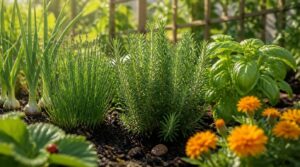
Some of the best pest fighters in your garden aren’t flowers at all. They’re the pungent, savory plants sitting in your kitchen right now. Here are four strong-scented allies worth adding to your beds.
Garlic Deters Sap-sucking Insects
Since aphids and whiteflies find host plants by scent, garlic’s sulfur compounds mask that signal. Diallyl sulfide disrupts their receptors, cutting aphid colonization noticeably.
- Sprays last 5–14 days
- Use 1–3% oil concentration
- Rain shortens protection
Interplanting garlic borders every 12–18 inches helps integrated pest management—true companion planting your tomatoes will thank you for.
Chives Discourage Japanese Beetles
Garlic isn’t the only allium worth planting. Chives bring their own sulfur aroma barrier, confusing Japanese beetles before they land on roses or grapevines.
Keep chive planting spacing at 12–18 inches for dense coverage. Beetles feed most during beetle activity timing—morning and late afternoon—so scent matters most then.
Pair chives with other companion scent strategies for real integrated pest management results.
Lemongrass Provides Citronella Protection
Chives deal with beetles; lemongrass experiences mosquitoes. Its citronella scent barrier comes from citronellal and geraniol, masking the CO2 and lactic acid that draw bites your way.
Plant it near seating for a natural garden mosquito shield, or crush the foliage for a stronger, short-lived crushed lemongrass effect. A lemongrass oil spray extends that fresh foliage aroma anywhere companion planting alone can’t reach.
Fennel Placement and Compatibility Cautions
Fennel repels slugs and snails, but it doesn’t play well with others. Its roots trigger real allelopathic soil impact, stunting tomatoes, peppers, and beans nearby.
Give it its own space: spacing requirements run 2 to 3 feet minimum, or try container planting to manage aggressive root system management altogether. Choose companion plant choices wisely, since good plant relationship depends on keeping fennel solo.
5 Companion Planting Strategies That Work
Knowing which plants to use is only half the job. Real results come from how you arrange and manage them in the garden. Here are five strategies that turn good intentions into a genuinely pest-resistant space.
Match Plants to Target Pests
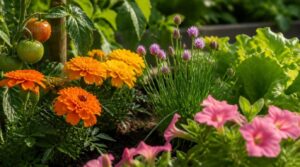
Random planting rarely works as well as targeted herb selection. Match each repellent plant to the pest actually bothering your beds. Aphids? Pair with chives or petunias. Nematodes damaging tomato roots? Marigolds handle that job through natural pyrethrin-adjacent compounds.
This kind of pest specific pairings approach, paired with seasonal plant matching, turns companion planting into real, deliberate natural pesticide strategy.
Place Trap Crops Beside Vegetables
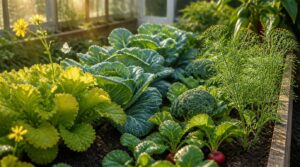
Around the edges of a bed, positioning matters as much as plant choice. Border plant arrangement creates pest attraction zones that pull invaders away from your main crop before damage starts.
- Mustard near cabbage lures flea beetles
- Radish beside broccoli distracts egg-laying moths
- Dill borders reduce hornworm damage on peppers
This companion trap layout works as a genuine natural pesticide strategy.
Attract Beneficial Insect Predators

Recruit an army you’ll never see punch a clock: lady beetles, lacewings, hoverflies. Predator habitat design matters most—flowering herbs like basil and thyme feed adults via nectar. Try nectar succession planning with early and late bloomers.
| Predator | Prey |
|---|---|
| Lady beetles | Aphids |
| Lacewings | Whiteflies |
This companion planting builds garden biodiversity that quietly does your pest control work.
Contain Aggressive Spreading Herbs

Mint’s rhizomes travel fast, colonizing beds within a season. Keep this vigorous herb contained: Mint Pot Management or sunken barriers stop underground spread cold. Rhizome Barrier Installation works for creeping thyme and oregano too—sink edging 10 inches deep.
Basil Self-Seeding Control matters less urgently, but pinch spent flowers anyway. Smart Herb Container Design keeps your aromatic herbs productive without hijacking neighboring repellent plants.
Space Companions 12–18 Inches Apart
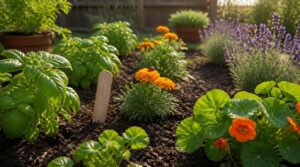
Crowded beds breed trouble—poor airflow, root competition, sulking plants. Good plant spacing solves this fast.
- Basil, catnip: 12–18 inches
- Marigolds, nasturtiums: 8–12 inches
- Garlic, chives: 6–8 inches
- Lavender, fennel: 18 inches
- Trap crops: 12–18 inches from vegetables
Good companion planting layout prevents nutrient competition while boosting airflow benefits. Thoughtful garden zone planning keeps your insect-repellent companion plants thriving, protected, and productive all season.
Top 7 Products for Pest-Repelling Gardens
You’ve learned the strategies, so now it’s time to gather your supplies. Building a pest-repelling garden gets a lot easier with the right seeds, plants, and tools on hand. Here are seven products worth adding to your cart.
1. Heirloom Chrysanthemum Flower Seeds
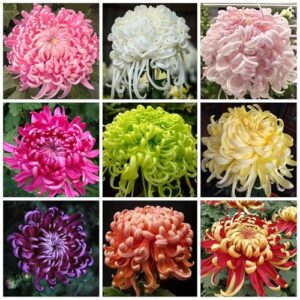
Chrysanthemums do double duty: gorgeous fall color and a natural pyrethrin defense against ants, beetles, and fleas. These heirloom, GMO-free seeds trace back to early-1900s cultivars, breeding true with quill and spoon petal forms in purple, orange, rose, and yellow.
Start seeds indoors 2–4 weeks before last frost, two per plant, in well-drained soil under full sun. Germination can be spotty, so sow generously. Blooms arrive late summer through fall, drawing pollinators while guarding nearby vegetables.
| Best For | gardeners who want long-lasting fall color and a natural pest deterrent for nearby vegetable beds without relying on chemical sprays. |
|---|---|
| Plant Type | Flower seeds |
| Sunlight Needs | Full sun to low light |
| Pest/Pollinator Role | Attracts pollinators |
| Growth Cycle | Perennial |
| Watering Needs | Regular watering |
| Price Listed | Not specified |
| Additional Features |
|
- Heirloom, GMO-free seeds in a vibrant rainbow mix that attracts pollinators
- Doubles as ground cover, helping reduce erosion and suppress weeds
- Easy to start indoors and pairs well with companion plants like marigolds
- Germination can be inconsistent, so seeds need to be sown generously
- Seed mix has been reported to contain contaminants like wild spinach or China asters
- Only a 30-day refund window, which is tricky given how long the plants take to grow
2. Petite French Marigold Seed Mix
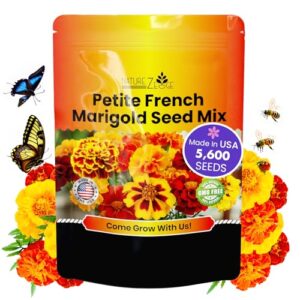
If chrysanthemums bring the fall drama, this dwarf French marigold mix takes care of the everyday border patrol. Plants stay 8 to 10 inches tall, blooming gold, orange, and yellow from summer through fall.
Sow after frost danger passes; germination arrives in 7 to 14 days in warm soil. Space plants 8 to 12 inches apart for airflow. Deadhead regularly to keep blooms coming, and let a few self-seed for next year’s volunteers.
| Best For | Gardeners who want an easy-care border or container flower that stays compact, blooms all season, and helps keep pests in check naturally. |
|---|---|
| Plant Type | Flower seeds |
| Sunlight Needs | Full sun |
| Pest/Pollinator Role | Repels pests |
| Growth Cycle | Annual |
| Watering Needs | Consistent moisture |
| Price Listed | $9.99 |
| Additional Features |
|
- Compact 8–10 inch plants with cheerful gold, orange, and yellow blooms from summer through fall
- Naturally attracts helpful pollinators like bees, ladybugs, and lacewings while deterring pests
- Huge seed count (5,600 per packet) means plenty of seeds for multiple seasons of planting
- Germination can be inconsistent, so some seeds may not sprout even with proper care
- Needs regular moisture and full sun, which means less flexibility for hands-off gardeners
- Plants can get crowded and need thinning and deadheading to keep blooms full and healthy
3. Jewel Mixed Nasturtium Seeds by Seed Needs
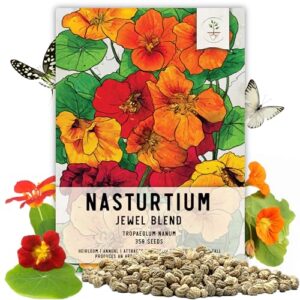
Want a plant that pulls double duty as decoy and dinner garnish? Seed Needs’ Jewel Mix nasturtiums grow 12 to 18 inches tall, blooming red, orange, yellow, and mahogany.
Planted beside beans or tomatoes, they lure aphids away from your real crops. Petals and leaves taste peppery, packed with vitamin C for salads.
Sow after frost; germination takes 7 to 14 days. Space seeds 10 to 12 inches apart, and let vining stems cascade over container edges.
| Best For | Gardeners with small spaces, containers, or vegetable beds who want an easy-care plant that adds color, edible flair, and natural pest control. |
|---|---|
| Plant Type | Flower seeds |
| Sunlight Needs | Full sun |
| Pest/Pollinator Role | Natural pest deterrent |
| Growth Cycle | Annual |
| Watering Needs | Moderate watering |
| Price Listed | Not specified |
| Additional Features |
|
- Compact, quick-germinating plants with vibrant jewel-toned blooms perfect for borders and containers
- Edible flowers and leaves bring a peppery kick and vitamin C to salads and other dishes
- Naturally attracts pollinators while helping deter pests like aphids from nearby crops
- As an annual, plants die off with the first frost, so they need replanting each year
- Vining stems may need support as they mature and can require some maintenance
- Germination and flower production can suffer in poor soil, crowded spacing, or too much shade
4. Lagunamoon Essential Oil Set
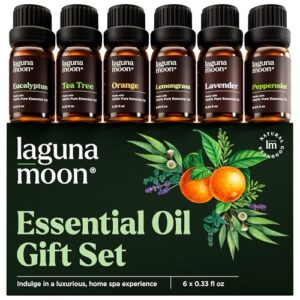
Nasturtiums handle daytime pests, but evenings call for something different. Lagunamoon’s six-oil set—peppermint, tea tree, lavender, eucalyptus, orange, and lemongrass—turns your patio diffuser into a mosquito deterrent after dusk.
Lemongrass supplies citronella, while peppermint and lavender add layered fragrance. Each 10 mL bottle sits in dark glass, protecting potency for up to three years when stored away from sunlight.
At $8.46, it’s an affordable way to extend your pest-repelling strategy from soil to seating area.
| Best For | Homeowners and renters who want an affordable, multi-purpose oil set for evening aromatherapy and natural pest deterrence on patios or outdoor seating areas. |
|---|---|
| Plant Type | Essential oils |
| Sunlight Needs | N/A |
| Pest/Pollinator Role | N/A |
| Growth Cycle | N/A |
| Watering Needs | N/A |
| Price Listed | $8.46 |
| Additional Features |
|
- Six versatile oils (including citronella-rich lemongrass) work well for diffusing, DIY projects, and warding off mosquitoes after dusk
- FrostProtect dark-glass bottles help preserve potency for up to three years when kept out of direct sunlight
- Budget-friendly price point and gift-ready packaging make it easy to try or share
- Scents are lighter than premium oils, so you may need extra drops for a strong aroma
- A few users noted minor leaks during shipping
- Not ideal for those wanting intense or highly complex fragrance profiles
5. No Till Cover Crop Mix
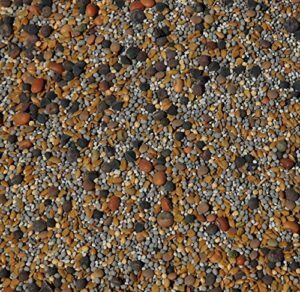
Once dusk fades, your attention can shift back to the soil itself. A no-till cover crop mix builds long-term pest resistance from below.
This 13-species mix—clovers, vetch, cowpeas, buckwheat, and more—fixes nitrogen and feeds soil biology without disturbing structure. Nitro-coated seeds germinate in 48–72 hours, perfect for summer green manure.
At just 1 lb, it suppresses weeds, reduces erosion, and improves soil for whatever you plant next. Keep it watered; cowpeas germinate slower.
| Best For | gardeners and small-scale growers who want an easy, no-till way to improve soil health and fight erosion between growing seasons. |
|---|---|
| Plant Type | Cover crop seeds |
| Sunlight Needs | N/A |
| Pest/Pollinator Role | N/A |
| Growth Cycle | Cover crop cycle |
| Watering Needs | Regular watering |
| Price Listed | Not specified |
| Additional Features |
|
- 13-species blend fixes nitrogen and boosts soil biology naturally
- Nitro-coated seeds germinate fast (48–72 hours), ideal for summer cover cropping
- Works in containers, raised beds, or broadcast—no tilling required
- Needs consistent watering while establishing, especially in heat or dry spells
- Cowpeas and a few other species germinate slower, requiring patience
- Not ideal for very arid climates without extra irrigation
6. Better Boy Tomato Live Plant
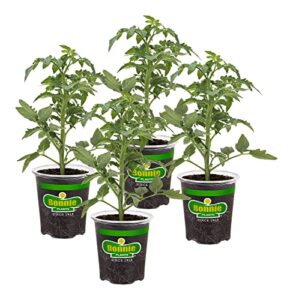
Beefsteak tomatoes deserve pest-savvy neighbors, and Better Boy delivers both flavor and strength. This indeterminate hybrid resists fusarium wilt and nematodes, matching perfectly with marigolds planted nearby for extra nematode defense.
Each pack includes six live plants, maturing in 90 days with meaty fruit ideal for sauces and burgers.
Pair Better Boy with basil to cut hornworm damage by up to 25%. Stake it well, water consistently, and let companion planting do the rest.
| Best For | Home gardeners with a full growing season who want disease-resistant, meaty beefsteak tomatoes for slicing, sauces, and burgers. |
|---|---|
| Plant Type | Live tomato plants |
| Sunlight Needs | Full sun |
| Pest/Pollinator Role | Disease resistant |
| Growth Cycle | Indeterminate season |
| Watering Needs | Consistent watering |
| Price Listed | Not specified |
| Additional Features |
|
- Resists fusarium wilt and nematodes, cutting down on chemical treatments
- Indeterminate growth means fresh tomatoes all season long, with late-season fruit extending harvest into fall
- Meaty texture is perfect for burgers, sandwiches, salsa, and sauces
- Needs staking or caging since the vines grow indeterminately
- Requires full sun and steady watering to thrive
- Late maturity (90 days) may not suit short growing seasons or areas with early frost
7. Fresh Green Asparagus Bunch
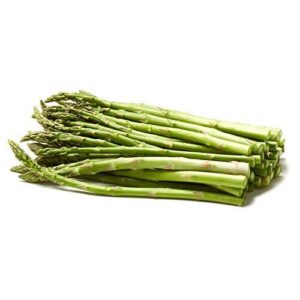
After tending your pest-repelling garden, reward yourself with fresh green asparagus, ranked third in its category and prized for crisp, firm stalks. Look for tightly closed, purple-tinged tips signaling peak freshness, and snap each spear where it breaks cleanly.
Store bunches upright in a jar with an inch of water, keeping spears crisp for up to five days. Sauté, roast, or grill them alongside your harvest, a well-earned, vitamin-rich reward for your garden’s hard work.
| Best For | Home cooks who want a versatile, nutrient-packed vegetable that works equally well in quick weeknight meals and special occasion dishes. |
|---|---|
| Plant Type | Fresh vegetable |
| Sunlight Needs | Full sun |
| Pest/Pollinator Role | N/A |
| Growth Cycle | Seasonal |
| Watering Needs | N/A |
| Price Listed | Not specified |
| Additional Features |
|
- Sweet, tender flavor with crisp, firm stalks that hold up to sautéing, roasting, grilling, or steaming
- Packed with vitamins A, C, K, and fiber, making it an easy way to boost a meal’s nutrition
- Adds flavor and texture to salads, pasta, and main dishes for both everyday and special occasions
- Spear quality can vary, with some turning out thick or woody
- Woody ends need to be snapped off before cooking, adding a small extra step
- Best judged in person, since thickness and freshness are hard to gauge without seeing the bunch
Frequently Asked Questions (FAQs)
How do amish keep bugs out of their gardens?
No secret formula here, just patience and observation. Amish gardeners lean on healthy soil, compost-fed and mineral-balanced, plus insectaries, row covers, and dawn inspections, letting nature’s own predators and barriers handle pests before chemicals ever enter the conversation.
What is the most common plant that repels garden pests?
Marigolds top the list. Their roots release thiophenes that eliminate soil nematodes, while their blooms deter beetles and attract ladybugs. Gardeners plant them everywhere, from vegetable rows to flower beds, for good reason: they work.
What plants keep bugs away from your vegetable garden?
Sometimes the best defense smells sweet, not sour. Basil, marigolds, and garlic keep bugs at bay, while lavender deters moths and fleas, and nasturtiums lure aphids away from your prized tomatoes and peppers entirely.
Can companion planting fully replace chemical pesticides?
Not entirely. It reduces pesticide reliance by attracting predators and confusing pests, but heavy outbreaks or resistant species still slip through. Think of it as your first line of defense, not a complete replacement for targeted intervention.
Should companion plants be replanted each new growing season?
Yes—a million times yes. Fresh transplants release oils more reliably than aging perennials. Replanting each season refreshes root exudates, aligns blooms with peak pest windows, and keeps your garden’s natural defenses working at full strength.
Conclusion
Picture your garden as a walled village, herbs and flowers standing sentry at every gate. Basil guards the flies’ entrance, marigolds hold the underground line, nasturtiums draw invaders toward their own quiet trap. No moat, no poison, just strategic planting. This is how companion plants repel garden pests: through partnership, not warfare.
Choose a few allies, give them room, and watch your soil quiet down. Your harvest will thank you, one season at a time.