This site is supported by our readers. We may earn a commission, at no cost to you, if you purchase through links.
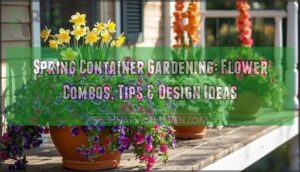
Your porch is begging for a makeover, and spring container gardening flower combinations are about to become your new obsession. Forget those predictable planter boxes you see at every garden center—the real magic happens when you break free from the rulebook and start pairing unexpected bloomers that actually thrive together.
Picture butter-yellow daffodils poking through a carpet of deep purple pansies, or trailing petunias cascading over the edge while upright snapdragons stand tall in the back; these aren’t just pretty accidents, they’re strategic partnerships that turn ordinary pots into showstoppers.
Whether you’re working with a sunny balcony or a shaded stoop, the right combinations transform cramped spaces into miniature gardens that punch way above their weight.
Table Of Contents
- Key Takeaways
- Essential Tips for Spring Container Gardening
- Best Flower Combinations for Spring Containers
- Using Color and Texture for Visual Impact
- Design Ideas for Eye-Catching Spring Containers
- Care and Maintenance of Spring Flower Containers
- Frequently Asked Questions (FAQs)
- What flowers look good together in pots?
- What is the best mix for container gardening?
- What is the most common mistake made with container plants?
- What to put in planters in spring?
- How do I attract pollinators to spring containers?
- What are pet-safe spring flowers for containers?
- Can spring containers thrive in partial shade?
- How to prevent pests in spring container gardens?
- When should I start planting spring container flowers?
- When should I start planting spring containers?
- Conclusion
Key Takeaways
- The “thriller, filler, spiller” formula—pairing one tall centerpiece plant with mid-height fillers and cascading edge plants—creates professional-looking containers that balance visual drama with practical maintenance.
- Strategic plant pairings like daffodils with pansies or petunias with calibrachoa work because they share identical light and water requirements while offering contrasting colors and textures that make each bloom pop.
- Container success hinges on three non-negotiables: drainage holes to prevent root rot, quality potting soil with 40-60% organic matter, and matching your plant selections to your space’s actual sunlight hours rather than wishful thinking.
- Regular deadheading redirects plant energy from seed production back into fresh blooms, extending your container’s flowering period by 30-50% throughout the season with just a few minutes of weekly maintenance.
Essential Tips for Spring Container Gardening
Before you start tossing plants into pots, there are a few key moves that’ll set you up for a knockout spring display. Getting the basics right—from picking the perfect vessel to nailing your soil game—means your flowers will thrive instead of just survive.
Let’s break down the essentials that’ll make your container garden absolutely flourish.
Choosing The Right Containers
Your container choice sets the stage for a thriving spring container garden! Here’s what matters most:
- Material impact: Plastic containers hold moisture longer than porous terracotta, which dries faster—pick based on your watering style and plant needs.
- Size matters: Aim for 6 to 12 inches deep for most spring bloomers; shallow containers suit trailing pansies perfectly.
- Drainage systems: Drainage holes are non-negotiable to prevent root rot in your spring container gardening setup.
Selecting Quality Potting Soil and Drainage
Quality potting soil makes or breaks your spring container garden! Look for mixes with 40–60% organic matter like coco coir for water retention, balanced with perlite for drainage systems that keep roots happy.
A slightly acidic pH (5.5–6.5) suits most bloomers perfectly, and incorporating slow-release fertilizer management into your potting mixes saves you from constant feeding—gardening tips that actually work!
Assessing Sunlight and Placement Needs
Once you’ve nailed the soil, sunlight requirements determine your plant placement success! Most flowering annuals need at least six hours of direct sun daily, but morning rays beat harsh afternoon heat for delicate bloomers. If you’re just starting out, consider easy spring flowering plants for beginners that thrive in full sun without demanding constant attention.
Scout your space for microclimate assessment—walls reflect light, corners create shade, and wind affects moisture. Smart container orientation and light optimization transform ordinary spring planter ideas into thriving container garden design that delivers on those ambitious spring gardening ideas with practical gardening tips! Testing wind patterns with ribbons and positioning containers near walls are simple techniques that can dramatically improve your balcony setup—summer gardening tips for small balconies offer more strategies for working with challenging microclimates year-round.
Best Flower Combinations for Spring Containers
Spring is when you can really play with color and texture in your containers, mixing bold blooms with softer accents to create combinations that turn heads. The right pairings don’t just look good—they work together, sharing similar needs for light and water while offering visual contrast that makes each plant pop.
Here are some tried-and-true flower combinations that’ll give your spring containers that “wow, how did you do that?” factor. Check out these easy spring container garden ideas to see how different vessels can make your flower combos pop even more.
Classic Spring Bulb Pairings (e.g., Daffodils & Pansies)
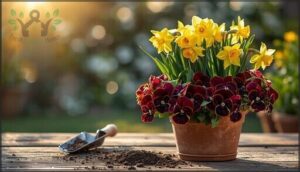
There’s something magical about pairing bold yellow daffodils with burgundy or purple pansies—it’s one of those spring gardening ideas that never fails! This classic container garden combo works because you’re layering bulb care tips (plant daffodil varieties about three times their depth) with cool-season pansies that tolerate frost. You can also experiment with spring garden flower arrangements that mix different heights and textures for even more visual interest.
Try these spring planter ideas for knockout garden design principles:
- Use white pansies with soft yellow daffodils for harmony
- Choose deep purple pansy colors to contrast bright blooms
- Position your spring flower arrangements where they’ll catch 4–6 hours of sun
Vibrant Annual Mixes (e.g., Petunias & Calibrachoa)
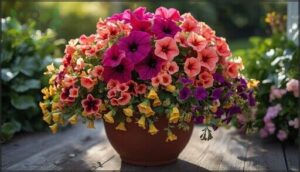
Petunias paired with calibrachoa varieties deliver knockout vibrant potted plants that’ll bloom nonstop from late spring to frost—perfect for your container garden rebellion against boring pots! These companions share petunia care tips (full sun, regular deadheading) and create flower texture mix magic; petunias bring bold color harmony principles while calibrachoa adds delicate, trailing charm throughout the annual bloom cycle. Swap them out mid-season with fresh seasonal blooms for an instant container makeover that keeps your patio looking vibrant all year long.
| Feature | Petunias | Calibrachoa |
|---|---|---|
| Flower Size | Larger blooms (2-4″) | Tiny bells (1″) |
| Growth Habit | Bushy, spreading | Fine, trailing |
| Texture | Bold, statement | Delicate, airy |
| Best Use | Filler & thriller | Spiller & accent |
Romantic Pastel Arrangements (e.g., Lobelia & Double Calibrachoa)
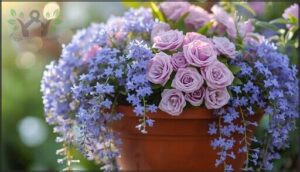
You’ll fall in love with lobelia varieties paired with double calibrachoa in your spring container garden—these soft bloom combinations create dreamy, low-maintenance displays!
Pastel color theory comes alive when you mix blue lobelia’s airy 6-12” blooms with double calibrachoa’s layered pink or lavender flowers, forming gentle hues that echo romantic garden vibes.
Just guarantee well-draining soil and follow simple calibrachoa care: regular watering plus half-strength fertilizer every two weeks!
Shade-Loving Flower Combos
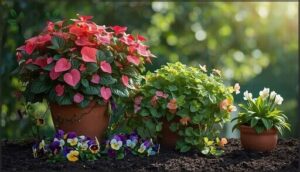
Transform those shady garden layers with impatiens walleriana delivering summer-long color alongside polka dot plant’s spotted leafy greens! You’ll love combining begonias with creeping wire vine for vibrant flower texture without direct sun—just provide moisture-retentive soil and dappled light.
Pansies and violas bring cheerful spring blooms to partial shade containers, while hellebores anchor your design with elegant, low-maintenance shrubs through late winter!
Using Color and Texture for Visual Impact
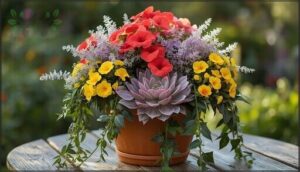
Color and texture are where your spring container really comes alive—they’re the secret ingredients that turn a nice arrangement into something people stop and stare at! You don’t need fancy design training to pull this off; it’s all about pairing bold hues with soft pastels, mixing smooth leaves with ruffled blooms, and playing with different plant heights.
Let’s break down three straightforward ways to create containers that pack serious visual punch.
Contrasting Color Schemes
Want your spring container gardens to stop passersby in their tracks? Contrast theory is your secret weapon! Pair complementary colors—think bold yellow daffodils against deep purple pansies—to create visual balance that practically vibrates with energy.
Here’s how to nail hue combinations for serious color harmony:
- Position warm oranges opposite cool blues on the color wheel for maximum pop
- Use white blooms as neutralizing anchors between high-contrast flower combinations
- Repeat one contrasting shade at intervals to unify multicolor palettes
- Let darker foliage backdrop bright accent colors for dramatic garden design payoff
Layering Leafy and Flowering Plants
Layer like you mean it—place tall, leafy thrillers at the back or center, then add mid-height foliage contrast and finish with flowering spillers at the edges for stunning vertical layering! Mix fine-textured leaves beside bold blooms to heighten color brightness; varied plant height and leaf texture create visual balance in any container garden.
Match watering needs across all layers for healthier plant combinations and easier seasonal change maintenance.
Incorporating Trailing and Upright Varieties
Trailing plants and upright varieties together form the perfect match for spring flowers! Position upright petunias or penstemon at the center for bold color harmony, then add trailing calibrachoa or verbena at the rim for cascading texture contrast.
Proper container depth accommodates both root systems, while regular maintenance keeps upright forms compact—so your plant combinations create stunning flower arrangements without one overpowering the other!
Design Ideas for Eye-Catching Spring Containers
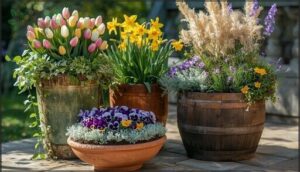
Now that you’ve got color and texture down, let’s talk about pulling it all together into containers that actually stop people in their tracks. The secret isn’t just what you plant—it’s how you arrange it and where you put it.
Here are three design approaches that’ll transform your spring pots from pretty to unforgettable.
Thriller, Filler, Spiller Arrangements
The classic thriller-filler-spiller formula brings instant drama to your spring container gardening! Start with one tall thriller (18-36 inches) as your focal point, add two or three mid-height fillers to bulk up the middle, then finish with trailing spillers that cascade beyond the rim.
This balanced plant ratio creates vertical interest while keeping maintenance simple—just match sun and water needs across all three layers for seasonal refresh success.
Monochromatic Vs. Multicolor Designs
Once you’ve nailed your plant layers, it’s time to choose your color strategy! Monochromatic schemes use hue variations within one color family—think soft pink petunias paired with deep rose calibrachoa—creating design unity through subtle tonal shifts.
Multicolor designs break the rules with bold contrasts that grab attention; those orange tulips against purple hyacinths prove visual balance doesn’t require color harmony. Both approaches deliver knockout spring container gardening results!
Creative Container Choices and Placement
Your container choice shapes more than aesthetics—it controls microclimate too! Terracotta dries soil faster than plastic vessels, directly impacting your watering schedule, while drainage holes prevent waterlogging disasters (add saucers under patio garden containers to avoid staining).
Smart placement strategies matter; raise potted plants on stands to capture sunlight shifts, and group similar-thirst container gardens together to slash maintenance time without sacrificing your design vision!
Care and Maintenance of Spring Flower Containers
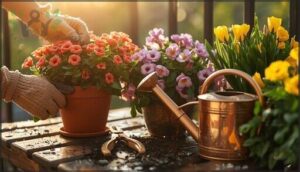
You’ve designed a stunning spring container that turns heads—now let’s keep it that way all season long! Your plants won’t thrive on good looks alone; they need consistent care to keep pumping out those gorgeous blooms.
Here’s how to water, prune, and refresh your containers so they stay vibrant from early spring straight through to summer.
Watering and Fertilizing Strategies
Think of watering as your container’s heartbeat—steady beats keep everything thriving! Most spring containers need consistent soil moisture; check the top inch daily, and water when it feels dry to the touch. Start light fertilizing about two to three weeks after planting with a balanced, water-soluble fertilizer at half-strength every 14–21 days.
- Monitor soil moisture two to four centimeters deep using the finger test method, not just surface dryness
- Apply fertilizers carefully following label directions to prevent salt buildup and root damage
- Switch to higher-phosphorus formulas during flowering bursts while maintaining moderate nitrogen levels
- Consider controlled-release options like Osmocote or organic amendments such as worm castings for gentler feeding
Deadheading and Pruning for Prolonged Bloom
Snipping away spent blooms with sharp pruning tools might feel ruthless, but you’re actually gifting your plants a second act! Regular deadheading redirects energy from seed production to fresh flower regrowth, extending bloom cycles by 30–50% throughout the season.
Deadheading spent blooms redirects plant energy from seed production to fresh flowers, extending bloom cycles by up to 50 percent
Every one to two weeks, trim just above healthy leaves or buds; this simple pruning schedule keeps geraniums, petunias, and calibrachoa pumping out vibrant color all spring long.
Refreshing Containers as The Season Progresses
As temperatures climb, your containers need a midseason makeover to keep the show going! Here’s your seasonal refresh playbook:
- Swap tired foliage for fresh flowering selections—plant rotation maintains visual punch through peak season.
- Shift to balanced fertilizers—water-soluble formulations fuel continuous blooms and foliage renewal.
- Move containers to cooler spots during afternoon heat—strategic heat management prevents stress and extends your spring container arrangements’ lifespan.
Frequently Asked Questions (FAQs)
What flowers look good together in pots?
You’ll want blooms that share light and water needs—daffodils with pansies for spring color harmony, or petunias paired with calibrachoa for summer-to-fall vibrancy, matching bloom timing and soil quality perfectly!
What is the best mix for container gardening?
The best mix for container gardening balances thriller, filler, and spiller varieties with complementary color harmony and contrasting foliage textures.
Prioritize soil quality, seasonal refresh timing, and plant ratio adjustments based on your available sunlight.
What is the most common mistake made with container plants?
Like a plant drowning in quicksand, ovewatering tops the list of container gardening mistakes. Poor drainage traps moisture, causing root rot—so skip the heavy hand and develop consistent watering discipline for thriving plants!
What to put in planters in spring?
Fill your spring planters with hardy pansies, cheerful daffodils, and trailing lobelia for instant color!
Layer in foliage like caladiums or creeping wire vine to add garden textures that make your container planting truly sing.
How do I attract pollinators to spring containers?
Choose nectar-rich, pollinator-friendly blooms like crocuses and primroses in bright blues, purples, and yellows. Place containers in full sun, deadhead regularly for seasonal blooms, and mix early spring garden ideas to keep bees visiting your butterfly gardens constantly!
When designing gardens, consider using scientific study methods to create a thriving ecosystem.
What are pet-safe spring flowers for containers?
You don’t need to sacrifice color for safety! Snapdragons, pansies, and calibrachoa are non-toxic flowers perfect for pet-friendly container gardens, letting you create stunning spring displays without worry about curious nibbles.
Can spring containers thrive in partial shade?
Shade tolerant annuals like impatiens and lobelia flourish with just three to six hours of indirect light daily, making partial shade plants perfect for spring container gardening in cooler spots around your home.
How to prevent pests in spring container gardens?
Start with sterile potting mix and inspect new plants closely—pest inspection catches trouble early!
Use barrier methods like fine mesh, biological controls such as beneficial insects, and integrated management practices for sustainable, thriving containers.
When should I start planting spring container flowers?
Wait for daytime temps to hold steady above 45–50°F and overnight lows past 35–40°F; after your area’s frost date, harden plants outdoors over five to seven days before final container placement.
When should I start planting spring containers?
Your best move? Check your area’s last frost date, then wait two to six weeks beyond it—once soil temps hit 50–60°F consistently, you’re good to go!
Conclusion
You could stick with those same tired petunia-marigold duos everyone else plants, or you could blow past the basics and craft spring container gardening flower combinations that stop neighbors mid-stride.
The difference between forgettable and unforgettable isn’t luck—it’s layering textures, pairing unlikely bloomers, and treating your containers like the tiny ecosystems they actually are.
Your porch doesn’t need permission to steal the show; it just needs you to break a few rules and plant with confidence.