This site is supported by our readers. We may earn a commission, at no cost to you, if you purchase through links.
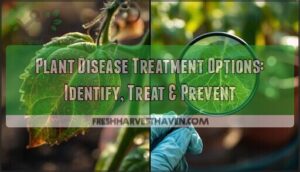
That brown spot on your tomato plant’s leaf isn’t just cosmetic—it’s a warning sign that could spread to your entire garden within days. Plant diseases cost global agriculture over $220 billion annually, and while your backyard garden operates on a smaller scale, the principles of infection and treatment remain identical.
The good news? Most plant diseases can be stopped, reversed, or prevented entirely when you understand what you’re dealing with and act quickly. Whether you’re facing fungal powdery mildew, bacterial blight, or viral mosaic patterns, effective plant disease treatment options exist for nearly every pathogen—from targeted chemical interventions to organic remedies that work with your plant’s natural defenses.
Table Of Contents
- Key Takeaways
- Common Types of Plant Diseases
- How to Identify Plant Disease Symptoms
- Immediate Steps for Treating Infected Plants
- Treatment Options: Chemical and Natural Solutions
- Preventing Future Plant Disease Outbreaks
- Frequently Asked Questions (FAQs)
- What are the methods of plant disease management?
- What are the 5 plant diseases?
- What are the four major principles of plant disease management?
- How are plant diseases treated?
- How can plant diseases be prevented?
- What is effective Plant Disease Control?
- How do you treat a plant disease in a greenhouse?
- What are some common plant diseases?
- How can a farmer prevent a disease?
- What is the best way to solve plant diseases?
- Conclusion
Key Takeaways
- Most plant diseases can be stopped or reversed when caught early, whether you’re dealing with fungal infections like powdery mildew, bacterial blight, or viral pathogens—the key is swift identification and immediate action through isolation, surgical removal of infected tissue, and targeted treatment.
- Prevention beats treatment every time: rotating crops every three to four years, selecting disease-resistant varieties, managing water to avoid leaf wetness, and conducting weekly garden inspections will stop 80% of infections before they establish.
- Treatment options span a spectrum from chemical fungicides and bactericides (applied preventively or at first symptoms) to organic remedies like neem oil and beneficial microbes such as Trichoderma, with the best approach combining multiple strategies tailored to your specific pathogen.
- Viral diseases have no cure once established—only prevention through resistant cultivars, strict sanitation, and vector control works—while fungal and bacterial infections respond well to integrated management that pairs cultural practices with biological or chemical interventions.
Common Types of Plant Diseases
Plant diseases come from several distinct sources, each with its own signature symptoms and treatment demands. Understanding the major categories—fungal, bacterial, viral, and parasitic—helps you pinpoint what’s attacking your plants and respond effectively.
A detailed guide to identifying plant diseases walks you through recognizing each pathogen’s telltale signs before damage spreads.
Let’s break down the four most common disease types you’ll encounter in your garden.
Catching them early and treating them with natural remedies for plant diseases can save your plants before the damage spreads.
Fungal Infections (e.g., Powdery Mildew, Root Rot)
Fungal diseases—from the telltale white dusting of powdery mildew to the hidden devastation of root rot—are some of the most common threats you’ll face in your garden.
Understanding the symptoms and causes of common vegetable garden plant diseases will help you catch problems early and protect your crops before damage spreads.
Understanding fungal biology and ecology helps you recognize these soil fungi and foliar pathogens early. With proper fungus identification and targeted fungicides or cultural practices, you can stop fungal infections before they spread, protecting your plants through informed plant disease treatment.
Overwatering creates the perfect environment for root rot and other fungal diseases, so learn to spot the signs of overwatering in your garden before pathogens take hold.
Effective powdery mildew management strategies are essential for maintaining healthy plants.
Bacterial Diseases (e.g., Blight, Fire Blight)
While fungi operate in the shadows—beneath the soil or on leaf surfaces—bacterial diseases are fast-acting invaders that can turn healthy stems and blossoms into blackened, oozing wreckage in a matter of days. Bacterial diseases, such as those treated with copper streptocycline, can have devastating effects on plant health.
You’re facing an enemy that moves through water, tools, and even rain splashes, spreading bacterial blight and fire blight with alarming speed. Understanding bacterial diseases requires recognizing three critical realities:
- Bactericides offer limited control once infection takes hold—prevention through plant sanitation and disease resistance is your strongest defense.
- Infected tissue must be removed immediately, cutting well below visible damage (sterilize your pruners between each cut).
- Water-soaked lesions signal active bacterial invasion, demanding swift plant disease treatment before the pathogen colonizes nearby plants.
Viral Diseases (e.g., Mosaic Virus, TMV)
If bacteria strike fast, viral diseases like mosaic virus and tobacco mosaic virus (TMV) are the diseases you can’t cure—only prevent. Once established, no treatment exists. That’s why disease resistance through resistant cultivars, cross-protection with mild strains, and emerging technologies like RNA interference and CRISPR editing represent your only viable defenses. Early plant disease identification and strict sanitation prevent viral transmission before it devastates your garden.
Viral diseases like mosaic virus can’t be cured—only prevented through resistant varieties, sanitation, and early detection before transmission spreads
| Virus Type | Primary Spread Method | Your Best Defense |
|---|---|---|
| Tobacco Mosaic Virus | Contaminated hands, tools, contact | Sterilize tools; wash hands between plants |
| Cucumber Mosaic Virus | Aphids (seconds of feeding) | Control vectors; choose virus resistance varieties |
| Pepino Mosaic Virus | Mechanical contact in greenhouses | Cross-protection strains; resistant cultivars |
| Seed-Transmitted Viruses | Infected seed (1-10% transmission) | Purchase certified disease-free seed only |
Nematode and Other Pathogen Threats
Below your soil line, invisible enemies work in tandem—plant parasitic nematodes like Meloidogyne and oomycetes such as Phytophthora compound root damage when they attack together. These nematode infestations cost global agriculture $125–160 billion annually, yet symptoms remain nonspecific until devastation’s underway.
Effective nematode control and pathogen control demand host resistance cultivars, crop rotation that disrupts life cycles, and biological controls that employ microbial ecology to suppress these hidden threats.
How to Identify Plant Disease Symptoms
Spotting disease early can mean the difference between saving a plant and losing it entirely. The key is knowing what to look for—and understanding that not every drooping leaf or brown spot signals the same problem.
Let’s walk through the telltale signs that help you separate real disease from other issues your plants might be facing.
Leaf Spots, Discoloration, and Wilting

Your plant’s leaves are often the first to sound the alarm—and learning to read their distress signals can mean the difference between a quick fix and total crop loss.
Leaf spots—those brown, black, or yellow circles—usually signal fungal or bacterial invasion, while uniform yellowing points to nutrient deficiency or compromised soil quality.
Incorporating biological controls like Trichoderma can help suppress these pathogens naturally while strengthening your plant’s defenses from the ground up.
Wilting plants aren’t always thirsty; they might be drowning from poor water management or suffering root damage that blocks nutrient flow.
Stem, Root, and Fruit Abnormalities
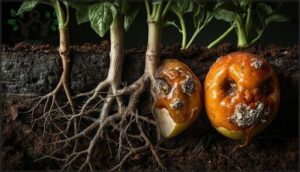
Below the soil line and along stems, tissue discoloration reveals hidden battles—darkened roots signal root rot, while brittle or thickened stems point to vascular diseases.
Fruit lesions, from corky scabs to oozing sap, expose fungal and bacterial diseases before wilting plants collapse entirely.
Stem deformities, root decay, and plant necrosis demand the same vigilance you’d give leaf spots, because effective plant disease management starts with recognizing symptoms you can’t always see.
Differentiating Disease From Environmental Stress
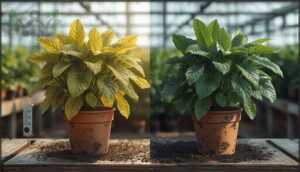
Not every wilted leaf or yellowing margin signals plant diseases—sometimes environmental stressors masquerade as infection, and stress diagnosis demands a sharper eye.
Disease patterns versus plant abiotics diverge in telltale ways:
- Uniform burn patterns across many plants suggest environmental factors, not pathogens.
- Rapid onset after weather events points to abiotic stress rather than disease progression.
- Symmetrical chlorosis indicates nutrient deficiency, while irregular necrosis suggests viral diseases.
- Context matters—recent watering changes or temperature swings reveal environmental stressors behind declining plant health.
Symptom analysis anchors disease prevention.
Diagnostic Tools and Techniques
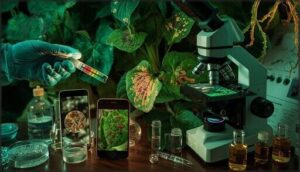
Accurate pathogen identification transforms guesswork into precision—and the right diagnostic tools make all the difference in plant health management and disease prevention.
Field testing delivers rapid answers with color-coded strips, while molecular diagnostics (PCR) confirm infections at the DNA level. Laboratory analysis through microscopy and culture isolates the exact culprit. Mobile apps now offer diagnostic imaging for preliminary pest and disease control, though pathogen identification often requires professional plant pathology expertise to distinguish mixed infections from single-agent outbreaks.
| Diagnostic Method | Speed | Best For |
|---|---|---|
| Field test kits | Minutes | On-site screening |
| Mobile image apps | Instant | Symptom comparison |
| PCR molecular tests | 24–48 hours | Virus confirmation |
| Laboratory culture | 3–7 days | Fungal/bacterial ID |
| Tissue microscopy | 1–2 hours | Cellular examination |
Early, accurate diagnosis anchors effective diagnostic tools use and long-term plant health management.
Immediate Steps for Treating Infected Plants
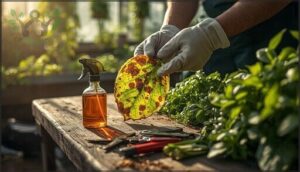
When you spot disease on a plant, your first instinct might be to panic—but the next few minutes matter more than you think. Acting quickly and methodically can mean the difference between saving your garden and watching an infection spread unchecked.
Here’s exactly what you need to do, step by step, to contain the problem and give your plants their best shot at recovery.
Isolating and Quarantining Affected Plants
Think of quarantine as your first line of defense—swift isolation can stop disease from sweeping through your entire collection. Move infected specimens immediately to a separate, clearly labeled area with dedicated tools (sanitize these after every use), and maintain physical barriers to block airflow and water splash.
Inspect nearby plants daily, extending isolation if new symptoms emerge, because biosecurity measures protect everything you’ve worked to grow.
Pruning and Removing Diseased Tissue
Surgical precision matters here—removing diseased tissue protects the healthy growth you’ve nurtured. Prune during dry conditions to minimize wounding infection risk, cutting at a slight angle just beyond visible damage to promote proper sealing.
- Sterilize your tools between every cut to prevent cross-contamination
- Remove only diseased portions, preserving as much healthy tissue as possible
- Target infected stems and leaves systematically, working from outer to inner areas
- Dispose of pruned material away from your garden immediately
This targeted tissue removal stops disease progression while your plants heal.
Cleaning and Disinfecting Tools
Your pruners now carry invisible threats—pathogens that’ll hitchhike to healthy plants if you don’t break the chain. Tool sanitation isn’t optional when disease control matters.
Dip your hand tools in 70% ethanol or 10% bleach solution after each cut, letting them stay wet for at least one minute. This equipment sterilization creates a sterile environment that stops cross-contamination cold, protecting your garden’s future.
Safe Disposal of Infected Material
Once your gardening tools are clean, the infected waste itself demands attention—pathogens don’t vanish on their own. Bag all diseased tissue and check disposal regulations in your area; most municipalities ban infected waste from proper composting programs.
If burning is legal where you live, incinerate thoroughly. This biohazard control protects soil health and sanitation, closing the loop on disease control without chemical methods.
Treatment Options: Chemical and Natural Solutions

Once you’ve isolated and removed the worst of the infection, it’s time to choose your treatment approach. You have more options than you might think—from targeted chemical solutions to gentle organic remedies that work with your plant’s natural defenses.
Let’s look at what works, when to use it, and how to match the treatment to your specific situation.
Fungicides and Bactericides (when and How to Use)
Fungicides and bactericides can stop plant diseases in their tracks—but timing and technique matter. Apply fungicides preventively or at the first hint of trouble, repeating every 7–14 days during active disease pressure. Bactericides, often copper-based, work best before symptoms explode. Rotate products with different modes of action to outsmart resistance.
- Thorough spray coverage protects hidden leaf surfaces where pathogens lurk
- Systemic fungicides move within tissues, guarding zones you can’t reach
- Follow label intervals religiously—chemical safety and harvest timing depend on it
Organic Remedies (neem Oil, Baking Soda, Sulfur)
If harsh chemicals don’t align with your gardening philosophy—or you simply want gentler options for edibles and sensitive plants—organic remedies offer surprisingly effective disease control without the synthetic footprint.
Neem oil benefits include antifungal action and natural pest control, while sulfur uses span powdery mildew to black spot.
Baking soda-based homemade remedies create alkaline barriers fungi can’t tolerate—organic gardening’s quiet workhorses.
Biological Controls and Microbial Solutions
Living microbes—nature’s microscopic allies—offer biocontrol agents that suppress plant diseases through competition, antagonism, and induced systemic resistance. Fungal antagonists like Trichoderma colonize roots before pathogens arrive, while Bacillus subtilis produces antibacterial compounds. Understanding soil microbiology strengthens your disease control toolkit:
- Apply as soil drenches, seed treatments, or foliar sprays
- Combine beneficial bacteria with fungi for broader pathogen suppression
- Refrigerate products to maintain viability and microbe applications effectiveness
Cultural Practices for Disease Suppression
Your daily garden routines—crop rotation, sanitation practices, soil conditioning, and water management—form the backbone of cultural practices for disease control. Proper air circulation through strategic spacing reduces humidity that fuels infections, while drip irrigation minimizes leaf wetness.
These integrated pest management strategies, combined with garden maintenance tips like disinfecting tools and removing debris, create environments where pathogens struggle to establish themselves.
Preventing Future Plant Disease Outbreaks
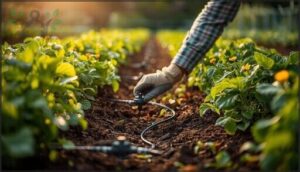
Once you’ve treated an existing infection, the real work begins—keeping disease from returning to your garden. Prevention isn’t about luck; it’s about building a system of smart practices that stop pathogens before they take hold.
Let’s look at four foundational strategies that’ll protect your plants season after season.
Crop Rotation and Garden Sanitation
Crop rotation and sanitation aren’t just gardening best practices—they’re your most powerful weapons against recurring disease cycles. By rotating plant families through different beds every three to four years, you starve soil-borne pathogens of their preferred hosts while improving soil health naturally.
Your rotation schemes should include:
- Garden mapping that tracks which crops occupied each space (essential for planning effective four-year cycles)
- Prompt removal of crop residues after harvest, eliminating overwintering disease sources
- Tool sanitation methods between beds—clean pruners and boots prevent cross-contamination
Think of crop planning and garden maintenance as proactive medicine rather than reactive treatment.
Selecting Disease-Resistant Varieties
Resistance breeding has revolutionized variety selection—think of it as installing a built-in security system for your garden. When you choose cultivars with documented disease tolerance (evaluated through standardized scoring), you’re utilizing genetic engineering and crop improvement advances that protect against diverse pathogens.
Extension services regularly update disease-resistant varieties recommendations, so you’ll stay ahead of evolving threats while maintaining vigorous plant health through smart plant care strategies.
Proper Watering and Soil Management
Water is the lifeblood of your garden—but too much or too little invites disease. Smart soil and water management transforms your plant care strategies into a defensive front line.
- Soil moisture sensors guide irrigation systems, cutting water use by 20–50% while keeping soil conditions ideal
- Mulching techniques slash evaporation by 50–70%, stabilizing root-zone temperature
- Drainage methods prevent waterlogging in heavy soils (add compost for structure)
- Drip irrigation beats overhead systems—directing water conservation efforts where roots need it, not on vulnerable leaves
Routine Inspection and Early Intervention
Catching disease early—before symptoms spiral—can mean the difference between saving a single leaf and losing an entire plant. Regular monitoring (weekly walk-throughs) facilitates early detection of leaf spots, powdery mildew, or black spot. You’ll spot trouble when it’s still manageable.
Plant surveillance isn’t complicated—just consistency. Disease forecasting tools and proactive management transform garden disease prevention from reactive scrambling into confident, methodical care.
Frequently Asked Questions (FAQs)
What are the methods of plant disease management?
You’ll manage plant diseases through Integrated Pest Management—combining Disease Monitoring, Biological Management, and Fungal Control with cultural practices like Soil Remediation, Plant Quarantine, strategic Fungicides, and NonChemical Disease Control Methods for thorough Plant Disease Prevention.
What are the 5 plant diseases?
You might think plant diseases are too varied to categorize, but five major types dominate: Fungal Infections like Powdery Mildew and Root Rot, Bacterial Blight, Viral Outbreaks (Mosaic Virus), Black Spot, and various Leaf Diseases.
What are the four major principles of plant disease management?
You’ll want to focus on four core strategies: Disease Prevention through Sanitation Methods and resistant varieties, early detection with Pathogen Monitoring, Integrated Control combining cultural and chemical approaches, and Adaptive Management based on continuous assessment.
How are plant diseases treated?
You’ll treat plant diseases through targeted fungicides or organic treatments like neem oil, coupled with strategic pruning of infected tissue, soil remediation practices, and thorough pest control—creating an integrated disease management approach that prioritizes plant recovery.
How can plant diseases be prevented?
You’ll prevent plant diseases through sustainable gardening practices—maintaining soil health, ensuring proper air circulation, managing water correctly, practicing plant hygiene, using sterile potting mix, and implementing integrated pest control alongside targeted fungicides when necessary.
What is effective Plant Disease Control?
Studies show that 80% of crop losses stem from unmanaged infections. Effective plant disease control combines early detection, soil ecosystem health, integrated pest control, and biological pest management to produce disease-free plants consistently.
How do you treat a plant disease in a greenhouse?
In a greenhouse, you’ll isolate infected plants immediately, verify the diagnosis through careful symptom analysis, and apply targeted fungicide or biological controls.
Then, adjust environmental controls—better airflow and reduced humidity—to suppress powdery mildew and prevent recurrence.
What are some common plant diseases?
You’ll encounter three main categories: Fungal Diseases like Powdery Mildew, Black Spot, and Root Rot; bacterial issues including Plant Blight; and viral infections—each producing distinct Leaf Symptoms and Root Infections requiring different approaches.
How can a farmer prevent a disease?
An ounce of prevention beats a pound of cure—you’ll want to rotate crops, use certified seeds, keep fields clean, manage irrigation wisely, and apply integrated pest management to stop disease forecasting and spread.
What is the best way to solve plant diseases?
The best approach combines rapid isolation and precise diagnosis through lab confirmation. It integrates disease management by blending cultural practices with targeted fungicides or biological controls.
Additionally, maintaining rigorous plant hygiene and soil remediation is crucial to address root rot, leaf spots, and fungal pathogens.
Conclusion
Even if you’ve lost plants before, you’re now equipped with plant disease treatment options that actually work—from targeted fungicides to preventive pruning protocols. Picture your garden six months from now: healthy foliage, vigorous growth, and that confidence that comes from knowing exactly what to look for and how to respond.
Disease management isn’t about flawlessness; it’s about catching problems early, acting decisively, and learning from each season. Your plants are counting on that knowledge.
- https://www.montana.edu/extension/plantpath/resources/fungicide_use_in_field_crops.html
- https://pmc.ncbi.nlm.nih.gov/articles/PMC8541133/
- https://www.epa.gov/safepestcontrol/integrated-pest-management-ipm-principles
- https://ohioline.osu.edu/factsheet/plpath-gen-4
- https://salem.njaes.rutgers.edu/2025/11/23/principles-of-integrated-pest-management-for-home-gardens-and-landscapes/