This site is supported by our readers. We may earn a commission, at no cost to you, if you purchase through links.
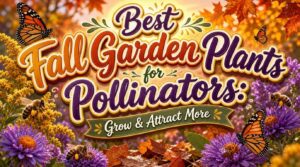
Most gardeners pack away their trowels when the first leaves turn, but that’s exactly when pollinators need you most. Monarchs are fueling up for a 2,000-mile flight to Mexico. Native bees are scrambling to store enough to survive winter. The fall garden isn’t winding down—it’s doing some of its most important work.
The good news is that a handful of tough, beautiful plants can carry that weight without much fuss on your part. Goldenrod, asters, and Joe Pye Weed don’t just look good in October—they’re running a full-service diner for every pollinator passing through your yard.
Table Of Contents
- Key Takeaways
- Best Fall Pollinator Plants
- Native Flowers for Autumn Nectar
- Plants for Bees and Butterflies
- Choosing Plants for Your Garden
- Fall Pollinator Garden Care
- Frequently Asked Questions (FAQs)
- How to winterize a pollinator garden?
- Is it too late to plant fall vegetables in October?
- What are the best pollinator plants for fall?
- What are the best pollinator plants for vegetable gardens?
- How do I attract pollinators without pesticides?
- When should I stop watering fall plants?
- Which pollinators are most active in autumn?
- Do fall flowers need deadheading for blooms?
- Can I plant pollinator gardens in containers?
- When should I start planting fall pollinator flowers?
- Conclusion
Key Takeaways
- Goldenrod, asters, and native plants like Joe Pye Weed and Bee Balm are your best fall bets, offering late-season nectar when monarchs, bumblebees, and hummingbirds need it most.
- Staggering bloom times from late August through October creates a continuous nectar relay that keeps pollinators fed without any gaps in your garden’s productivity.
- Skipping synthetic pesticides and leaving seed heads standing through winter does double duty — protecting beneficial insects underground while feeding finches and sparrows above.
- Choosing native species matched to your hardiness zone means less watering, less fertilizing, and stronger plants that pollinators have evolved alongside for thousands of years.
Best Fall Pollinator Plants
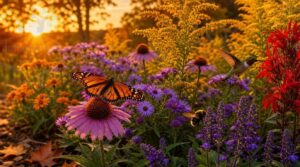
Fall is actually one of the best times to see your garden buzzing with activity, if you’ve planted the right things. A handful of native species do most of the heavy lifting regarding feeding bees, butterflies, and hummingbirds late in the season. Here are five plants worth making room for.
Stocking up on native plants for fall bee foraging from your local garden center is one of the easiest ways to give pollinators a real boost when they need it most.
Goldenrod
Goldenrod is one of those fall pollinator plants that do almost everything right. It grows anywhere from 1 to 6 feet tall, spreads through rhizomes to fill gaps naturally, and blooms late summer through October when nectar sources are thinning out.
Bees, butterflies, and migrating monarchs all depend on it.
After bloom, the seed heads feed finches and juncos straight through winter. The genus includes roughly about 150 goldenrod species across North America.
Asters
Asters (Symphyotrichum spp.) pick up right where goldenrod leaves off. Their daisy-like blooms in purple, pink, white, and lavender often peak from late summer through October, keeping your garden buzzing well past the first chill.
New England asters reach 2–4 feet, while New York types stay shorter and bushier — both are excellent nectar sources for bees, butterflies, and moths.
Black-Eyed Susan
If asters are the warm goodbye of summer, Black-Eyed Susan (Rudbeckia hirta) is the golden handshake into fall. Those bold yellow rays around a dark center bloom from midsummer well into autumn, giving late summer pollinators a reliable stop.
Native bees especially love them — and planting in drifts makes your garden impossible for passing butterflies to ignore.
Anise Hyssop
While Black-Eyed Susan manages the golden visuals, Anise Hyssop (Agastache foeniculum) brings something extra — licorice foliage that smells delightful when you brush past it. Those blue-violet spikes are serious fall nectar sources for bees and butterflies alike.
Here’s what makes it a standout for your pollinator garden:
- Late summer blooms stretch from July well into October
- It’s a genuine bee magnet — bumble bees, honey bees, and sweat bees all visit
- Culinary teas and garnishes are easy wins from your harvest
- Division care every 3–4 years keeps plants full and productive
Growing 3–4 feet tall, it fits beautifully into border edges and herb beds. Space plants 18–24 inches apart for good airflow, and deadhead spent spikes to keep new blooms coming.
Bee Balm
Few native plants earn their spot in a pollinator garden quite like Bee Balm (Monarda spp.). Its tubular red, pink, and purple flowers are practically a hummingbird invitation, and butterflies can’t resist them either. Growing 2–4 feet tall, it blooms into fall — exactly when fall nectar sources thin out.
| Feature | Detail |
|---|---|
| Bloom Time | Midsummer into fall |
| Height | 2–4 feet |
| Pollinators Attracted | Hummingbirds, butterflies, bees |
| Aromatic Foliage | Minty-citrus scent |
| Top Monarda Varieties | didyma, Bubbles series |
Bee Balm care is straightforward — give it full sun, consistent moisture, and space plants 18–24 inches apart to reduce mildew. Divide clumps every 2–3 years to keep them vigorous. That aromatic foliage also quietly discourages garden pests, which is a nice bonus.
For more color alongside your bee balm, seasonal flower gardening ideas like drought-tolerant coreopsis pair beautifully without competing for moisture.
Native Flowers for Autumn Nectar
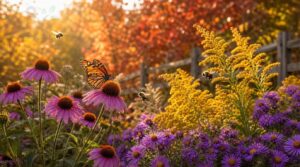
Native plants are your best bet for keeping pollinators fed deep into autumn. These species evolved alongside local bees, butterflies, and birds, so they deliver exactly what’s needed when other blooms have called it a season. Here are five native flowers worth adding to your fall garden.
Joe Pye Weed
If you want a plant that pulls pollinators in during the quiet stretch of late summer and early fall, Joe Pye Weed (Eutrochium spp.) is hard to beat.
Those purple flower clusters rise 5 to 8 feet tall, drawing butterflies and bees with reliable late season nectar when most other blooms have faded.
Swamp Milkweed
Swamp Milkweed (Asclepias incarnata) earns its place in any fall pollinator garden, especially if your yard has a low, damp corner you’re not sure what to do with.
This monarch butterfly host plant thrives in moist to wet soils, growing 4 to 6 feet tall and serving as an essential late summer nectar source well into September.
New York Ironweed
If you want a late-season showstopper, New York Ironweed (Vernonia noveboracensis) is hard to beat. It rises 4 to 7 feet tall with a clean, upright garden silhouette and vivid deep purple flower heads that bloom August through October — long after many other plants have called it a season.
It thrives in moist, fertile soil and draws monarchs, bees, and butterflies with its nectar-rich blooms.
Blue Mistflower
Few fall bloomers match the soft, cloud-like charm of Blue Mistflower (Conoclinium coelestinum). Those fuzzy blue-violet clusters appear from late summer straight into autumn, giving you late summer color right when the garden needs it most.
Here’s why gardeners love it:
- Pollinators flock to it — bees and butterflies can’t resist the abundant nectar
- Rhizome colonization makes it a reliable erosion control plant on slopes and stream banks
- It thrives in moist soil, naturalizing beautifully in wet spots others struggle with
Tickseed
Tickseed (Coreopsis spp.) might just be the hardest-working plant in your fall pollinator garden. Bright yellow daisy-like blooms keep butterflies and bees fed from late spring well into autumn, especially with regular deadheading. It’s drought-tolerant once established, thrives in full sun, and even doubles as a long-lasting cut flower.
| Feature | Detail | Benefit |
|---|---|---|
| Bloom Period | Late spring–early fall | Extended nectar window |
| Drought Tolerance | High once established | Low-maintenance care |
| Pollinators Attracted | Bees, butterflies | helps sustain diverse wildlife |
Plants for Bees and Butterflies
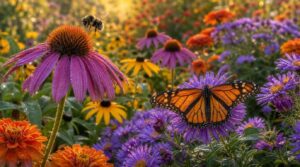
Not every pollinator works the same way, and that’s actually what makes a fall garden so interesting. Bees, butterflies, hummingbirds, moths, and birds each look for something a little different when they visit your yard. Here’s a breakdown of which plants deliver for each group.
Bumble Bee Favorites
Bumble bees are the workhorses of your fall garden, and a few bee magnet plants make all the difference.
Goldenrod tops the list — its tall yellow plumes deliver high nectar volume right when colonies need it most.
Pair it with anise hyssop and black-eyed Susan for a trio of late-season, fall-blooming plants that keep bumble bees foraging efficiently until frost.
Monarch Migration Nectar
While bumble bees stay local, monarchs are passing through — and your fall garden can be a critical fueling stop.
Goldenrod and asters are the heavy hitters here. They deliver the high-sugar nectar monarchs need during their fat-building period before reaching Mexico.
Plant both together, and you’ve basically set out a welcome mat for one of nature’s most memorable journeys.
Hummingbird-Friendly Blooms
Monarchs aren’t the only visitors worth rolling out the red carpet for. Hummingbirds pass through fall gardens too — and they’re looking for one thing: tubular flower shapes that fit their slender bills perfectly.
- Bee balm’s red-pink clusters keep blooming well into autumn
- Anise hyssop’s violet spikes offer high-sugar nectar all season
- Both are native plants that refill quickly between visits
Moth-Supporting Flowers
Most gardeners don’t think about moths, but they’re quietly doing real work after dark.
Pale, tubular blooms like evening primrose draw them in with fragrance that peaks at dusk. White and light-colored native plants such as anise hyssop guide moths through dim fall evenings. These late season bloomers keep your fall pollinator garden productive long after the sun goes down.
Bird-Feeding Seed Heads
Seed heads are the unsung heroes of the fall garden.
When you leave Echinacea and Rudbeckia standing after bloom, finches and sparrows move right in. Solidago gigantea holds seeds well into winter, giving overwintering birds a reliable buffet.
Group these native plants in clumps so birds can find them easily.
Choosing Plants for Your Garden
Picking the right plants doesn’t have to feel overwhelming, even with so many great options out there. A few key factors will help you narrow things down and build a garden that actually works for your space. Here’s what to reflect on before you start planting.
Match Your Hardiness Zone
Think of your hardiness zone as the starting line for every planting decision you make. The USDA Plant Hardiness Zone map divides the country by average minimum winter temperatures, so matching your fall blooming plants to the right zone keeps them alive through the cold months.
Microclimate adjustments matter too:
- South-facing walls can bump your zone up by one or two levels.
- Low frost pockets may behave a zone colder than your map shows.
- Elevation shifts change minimum temperatures more than most gardeners expect.
- Proximity to water moderates winter extremes and can extend your fall pollinator garden season.
For seasonal planting, cooler-edge zones need earlier establishment before first frost hits, while warmer zones allow later transplanting. Native perennials rated for zones 3–9, like goldenrod and black-eyed Susan, offer the widest zone compatibility and take the guesswork out of hardiness planning.
Prioritize Native Species
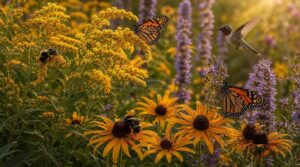
When you choose native species for your fall pollinator garden, you’re giving pollinators exactly what they’ve evolved to expect. Native plant benefits go beyond the obvious — these plants match local soil chemistry, seasonal rainfall, and regional insect life cycles naturally.
| Native Plant | Key Benefit |
|---|---|
| Goldenrod | Feeds bees, butterflies, and songbirds |
| Black-eyed Susan | Deep roots resist drought and erosion |
| Anise Hyssop | Low maintenance, pest-resistant bloomer |
Local soil adaptation means less fertilizer, less watering, and stronger plants overall. That’s a win worth leaning into.
Plan Staggered Bloom Times
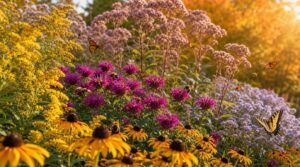
A well-timed fall pollinator garden works like a relay race — one plant hands off to the next without a gap.
A fall pollinator garden thrives when each plant hands off to the next, leaving no gap in bloom
Start with goldenrod and black-eyed Susan in late August, layer in bee balm through September, then let Joe Pye weed and blue mistflower carry nectar into October.
That continuous bloom sequence keeps pollinators fed when they need it most.
Include Drought-Tolerant Choices
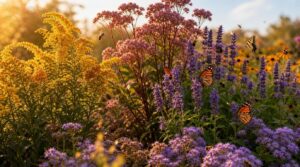
Dry spells don’t have to shut down your fall pollinator garden. Many native drought plants pull through with surprisingly little water once their roots settle in. Here’s what to lean on:
- Goldenrod develops deep root systems that tap moisture well below the surface
- New York Ironweed holds up in full sun with minimal irrigation
- Anise Hyssop stays fragrant and bee-friendly even during dry autumn stretches
- Joe Pye Weed manages summer drought well in good drainage
- Blue Mistflower thrives with light watering and frequent fall sun
A 2–3 inch mulch layer slows evaporation and keeps soil temperatures steady — two things that matter a lot when fall rains are unpredictable. Grouping your water wise planting by similar needs also prevents overwatering the tougher species while keeping everyone happy.
Balance Sun and Shade
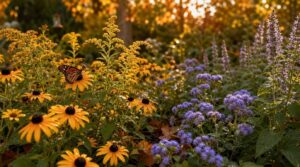
Not every corner of your yard gets the same light — and that’s actually a good thing.
Full-sun plants like Black-eyed Susan and Goldenrod thrive with six-plus hours of direct light, while Anise Hyssop and Blue Mistflower handle partial shade gracefully.
Place taller plants on the north side to create gentle shade below, giving you a layered, pollinator-friendly garden design that works all season.
Fall Pollinator Garden Care
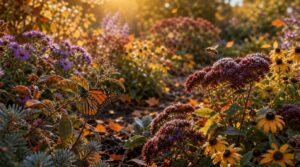
Once your plants are in the ground, a little thoughtful care goes a long way toward keeping pollinators coming back season after season.
Fall is actually the perfect time to set things up so your garden works harder with less effort from you.
Here are a few simple practices that make a real difference.
Skip Synthetic Pesticides
Synthetic pesticides are one of the fastest ways to undermine everything you’ve worked to build. They don’t just kill the bad guys — they take out beneficial insects, soil microbes, and the very pollinators you’re trying to attract.
- Swap chemical sprays for microbial biopesticides like Bacillus species that target pests specifically
- Use horticultural oils to smother soft-bodied pests without harming bees
- Set up pheromone traps to disrupt pest mating cycles naturally
- Feed your soil with compost to boost soil microbial health and natural pest resistance
- Pull weeds by hand and mulch heavily to reduce pest habitat
Leave Winter Seed Heads
Once you’ve stopped spraying, let your garden do one more thing for wildlife: leave the seed heads standing. Finches, sparrows, and juncos depend on them when food gets scarce.
Plants like Black-eyed Susan and Goldenrod hold seeds right through frost. That untidy look? It’s actually a winter buffet for birds.
Add Logs and Stems
Seed heads feed the birds, but logs and stems take care of what’s underground. Fallen logs and hollow stems give solitary bees, beetles, and overwintering insects somewhere safe to ride out the cold. Stack a few logs in a corner for log pile design, leave standing stems intact, and you’ve built a whole network of deadwood microhabitats without spending a dime.
- Bark roughness shelters insects from wind and temperature swings
- Hollow stems host overwintering bees through the coldest months
- Log piles support ground-nesting bees that emerge come spring
Divide Spreading Perennials
While logs shelter what’s crawling, your spreading perennials need attention above ground.
Fall is the perfect window for division — roots reestablish in cool, moist soil before winter arrives.
Lift the clump, choose outer edges with strong growth, and cut sections with at least two or three shoots. Replant at the original crown depth, water deeply, and mulch lightly.
Save Seeds for Spring
Once your perennials are divided and settled, turn your attention to the seed heads you’ve been leaving untouched all season. Plants like black-eyed Susan and goldenrod produce seeds worth saving.
Harvest when pods turn papery and brown, dry them for one to two weeks in a warm spot, then store in labeled airtight containers away from moisture.
Spring starts here.
Frequently Asked Questions (FAQs)
How to winterize a pollinator garden?
Winterizing your pollinator garden starts before the first frost. Leave Leaf Mulch, bundle Stem Bundles, add Brush Piles, protect Ground Nest Sites, and provide water through cold snaps to support cold hardiness and overwintering birds food.
Is it too late to plant fall vegetables in October?
October isn’t too late — quick-maturing crops like radishes, spinach, and lettuce can reach harvest in 30–45 days. Check your frost date, use cold-tolerant varieties, and you’re still very much in the game.
What are the best pollinator plants for fall?
The best fall pollinator plants include goldenrod, asters, and black-eyed Susan — all blooming late into the season. They keep nectar flowing when most gardens go quiet.
What are the best pollinator plants for vegetable gardens?
For vegetable gardens, companion plant selection matters most. Anise hyssop, bee balm, and goldenrod draw bees that boost yields. Even a small border of natives makes a real difference.
How do I attract pollinators without pesticides?
Skip synthetic pesticides and let native plants do the work. Plants like goldenrod and asters naturally draw pollinators, while water sources and log piles create shelter habitats they’ll return to all season.
When should I stop watering fall plants?
Stop watering when your soil stays dry 4–6 inches down for more than a week. Reduce irrigation 2–3 weeks before first frost to ease plants into dormancy without encouraging frost-vulnerable new growth.
Which pollinators are most active in autumn?
Honey bees, native bees, and late-season bumblebees stay active into autumn. Monarch butterflies migrate through, fueling up on nectar. Hoverflies, nighttime moths, and hummingbirds are busy too before temperatures drop.
Do fall flowers need deadheading for blooms?
Yes — deadheading spent blooms redirects energy from seed production to new flowers. Asters, goldenrod, and anise hyssop all rebloom with light trimming. A quick weekly check keeps late-season color going until frost.
Can I plant pollinator gardens in containers?
Absolutely — container pollinator gardens work beautifully. Use pots with drainage holes, a quality potting mix, and a sunny spot getting at least 6 hours of light daily. Group containers together to create a bigger floral target for visiting bees and butterflies.
When should I start planting fall pollinator flowers?
Start planting 4–6 weeks before your first hard frost. That gives roots time to settle in before the ground freezes. In most zones, late September to mid-October is your sweet spot.
Conclusion
You might just save a monarch’s life this fall—and that’s not even an exaggeration. The right fall garden plants for pollinators turn your yard into a critical waystation when the natural world needs it most.
Plant goldenrod, asters, or ironweed, skip the pesticides, and leave those seed heads standing through winter.
What looks like a garden going quiet is actually a garden doing its most meaningful work. That’s worth every minute you spend in it.
- https://www.thegrowingplace.com/creating-a-fall-pollinator-garden
- https://www.extension.iastate.edu/linn/fall-pollinator-plants
- https://www.fws.gov/story/how-build-pollinator-garden
- https://www.planetbee.org/post/fall-gardening-for-pollinators-5-simple-steps-to-support-native-bees
- https://site.extension.uga.edu/newtonextanr/2025/08/planting-pollinator-plants-in-the-fall