This site is supported by our readers. We may earn a commission, at no cost to you, if you purchase through links.
Most gardeners lose their best blooms before summer peaks—not from neglect, but from planting at the wrong time. A zinnia dropped into cold soil two weeks too early can stall for a month, while the same seed started indoors on schedule bursts into color by July.
Timing, soil chemistry, and plant selection work together like gears; miss one, and the whole season slips.
This summer flower planting guide walks you through every stage—from reading your frost dates and fixing your soil to choosing heat-tolerant varieties that carry color straight through to fall.
Table Of Contents
- Key Takeaways
- Build Your Summer Planting Calendar
- Choose Summer Flower Types
- Prepare Soil Before Planting
- Start Seeds Indoors Correctly
- Plant Transplants and Bulbs
- Sow Heat-Loving Flowers Outdoors
- Care for Summer Blooms
- Prevent Pests and Heat Stress
- Top 10 Summer Flower Planting Picks
- 1. Home Grown English Lavender Seeds
- 2. Outsidepride Lemon Bee Balm Seeds
- 3. KVITER Liatris Spicata Blazing Star Seeds
- 4. KVITER Red Cardinal Flower Seeds
- 5. Heliotrope Marine Flower Seeds
- 6. Moss Rose Heirloom Seed Mix
- 7. Costa Farms Peace Lily Decorative Plant
- 8. Dwarf Sunspot Sunflower Seeds
- 9. Blue Star Sea Holly Seeds
- 10. Dark Rose Heirloom Garden Seeds
- Frequently Asked Questions (FAQs)
- Which flowers can be planted in October?
- What flowers can you plant now for summer?
- When should summer flowers be planted?
- What is the easiest summer flower to grow?
- Is August too late to plant flowers?
- What is the 3 year rule in gardening?
- Is September too late to plant flowers?
- Can container flowers survive extreme summer temperatures?
- How do you transplant summer flowers mid-season?
- What companion plants work best with summer flowers?
- Conclusion
Key Takeaways
- Your last frost date is the anchor for everything — get it wrong and your whole planting calendar shifts, leaving even healthy seedlings struggling to catch up.
- Timing, soil prep, and variety selection work together like gears, so skipping soil testing, deep loosening, or compost amendment before planting can quietly cost you a full season of blooms.
- Starting annuals indoors 6–8 weeks before your last frost and hardening seedlings over 7 days outdoors gives transplants the best shot at thriving without shock.
- Heat-tolerant flowers like zinnias, Lantana, and moss rose are your safest bet for consistent summer color, especially in hot spots or containers where other plants tend to quit.
Build Your Summer Planting Calendar

Getting your timing right is the difference between a garden that thrives and one that struggles to catch up. A solid planting calendar takes just a few key details — your frost dates, your zone, and a little math.
Once you’ve nailed down those basics, this guide to planning a spring garden walks you through turning those numbers into an actual schedule that works.
Here’s exactly what you need to figure out before putting anything in the ground.
Find Your Last Frost
Before you plant a single seed, you need to know your last frost date. Use frost date calculators like the National Gardening Association’s zip-code lookup tool — they pull historical freeze data and show frost probability charts so you can see local temperature trends at a glance.
Your last frost date is the anchor for everything. Get it right first.
Remember that a hard freeze definition means temperatures below 28 °F, which can damage tender seedlings.
Check Your USDA Zone
Once you’ve determine your frost date, check your USDA Zone using a ZIP code lookup on the official USDA hardiness zones map. The 2023 zone map updates shifted some areas, so verify yours.
Subzone differences—like 7a versus 7b—matter more than you’d think.
Microclimate pockets near walls or slopes can also shift your hardiness zone verification up or down a full zone.
Count Back Seed Weeks
With your zone confirmed, count back from your last frost date. Check each seed pack timing — most flowers need 6–10 weeks of indoor seed starting before transplanting.
Use a weekly scheduling guide to map exact sow dates. Build in a frost date buffer of 1–2 weeks, and factor in germination rate adjustment for slower sprouters.
That’s your transplant synchronization locked in.
Plan Fall Perennial Timing
Fall perennial timing isn’t just an afterthought — it’s its own planting schedule. Your root development window opens 6–8 weeks before your first frost date, when soil temperatures sit between 50–65°F. This creates perfect conditions for perennial establishment without stressing new growth.
Fall perennials demand their own planting schedule, with roots established 6–8 weeks before first frost
To optimize planting, use local frost forecast scheduling to count back from that date. Check your hardiness zones and prioritize native perennial selection, as these choices ensure stronger overwintering success.
Adjust for Microclimates
Your yard holds more than one climate. South-facing warm zones heat up faster, letting you transplant heat-lovers 1–2 weeks earlier. Cool shade corners stay moist longer, so moisture-retaining soils there need less frequent watering. Wind-sheltered spots improve transplant survival noticeably.
Microclimate mapping takes your USDA Zone from a starting point to a precise planting strategy — matching sun exposure requirements and garden zone mapping to every corner.
Choose Summer Flower Types
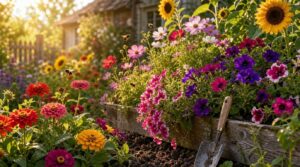
Picking the right flower type is where your whole summer garden starts to take shape.
Each category brings something different to the table—whether that’s quick color, year-after-year reliability, or serious heat toughness.
Here are the main types worth knowing before you start planting.
Annuals for Fast Color
Want fast color without the wait? Annuals are your best shortcut.
Zinnias, petunias, and cosmos are top annual flower selections that fill gaps quickly — most bloom within 60–70 days from seed.
Their vivid color palettes range from fiery oranges to soft pastels.
Use compact spacing tips like planting 12–18 inches apart for dense, fast-fill borders that peak all summer long.
Perennials for Yearly Blooms
Unlike annuals, perennials come back every year — meaning you plant once and enjoy continuous bloom season after season. Hardy perennials like coneflower, yarrow, and black-eyed Susan are true long-blooming perennials with impressive bloom longevity.
Strong soil moisture tolerance keeps them thriving with minimal maintenance.
Top picks for color succession and flowering period:
- Coneflower – blooms mid-summer through fall
- Yarrow – bright color from early to late summer
- Lavender – weeks-long flowering period per flush
- Dianthus – reflowers with light trimming
Bulbs, Corms, and Tubers
Not all summer color starts with seeds. Bulbs, corms, and tubers each work differently underground.
Bulb storage mechanics rely on layered scales, while corm propagation techniques use solid stem tissue that rebuilds each season.
For tubers, eye positioning matters: always plant eyes facing up.
Wait until after your last frost to plant summer-blooming bulbs, setting them at a depth two to three times their height.
Pollinator-friendly Flower Choices
Your garden becomes a landing strip when you pick the right flowers. Nectar-rich colors like purple and blue — think Bee Balm and native coneflowers — draw bees and butterflies fast.
Tubular bloom varieties signal hummingbirds through flower color signaling, while flat open faces suit short-tongued bee-friendly plants.
Layer bloom succession timing across your butterfly garden so pollinator attractants never run dry.
Heat-tolerant Bloomers
Some plants just laugh at the heat. Heat tolerance mechanisms like deep root systems let lantana and coreopsis pull moisture from lower soil layers, keeping blooms going strong from midsummer through fall.
- Drought Tolerance in the Garden: Lantana and moss rose need almost no water once established
- Pollinator Magnetism: Multi-colored clusters draw butterflies all season
- Container Adaptability: Portulaca thrives in hot, sunny pots with minimal care
Prepare Soil Before Planting

Good soil is the foundation for everything else is built on.
Before you drop a single seed or transplant into the ground, a few simple prep steps will make a real difference come bloom season.
Here’s what to do first.
Test Soil PH First
Before anything goes in the ground, run a soil test. Your pH should land between 6.0 and 7.0 for most summer flowers—that’s the sweet spot where nutrients stay available.
Timing matters when testing: check at the start of each season. Use a home kit or send a sample to a lab for interpretation.
If the pH is off, amendment options include lime to raise it or elemental sulfur to lower it.
Improve Drainage With Compost
Once your pH is balanced, good drainage is next. Work compost into the top 6–8 inches of soil. This layered application opens pore spaces and prevents roots from drowning after heavy rain.
For dense clay soils, a compost-perlite blend breaks up compaction quickly.
- Use compost bulking agents like straw to boost porosity
- Maintain particle size balance for steady water movement
- Annual compost topdressing rebuilds garden soil’s drainage each spring
Loosen Twelve Inches Deep
Good drainage means nothing if compaction blocks roots six inches down. That is why loosening soil twelve inches deep matters so much for summer garden plants.
Use a digging fork or rototiller to break compaction relief zones and create macropores throughout the root zone.
Deep moisture infiltration, improved soil structure, and stronger root zone aeration follow — giving every flower a real foundation to thrive.
Use Raised Beds Early
Once your soil is loose and deep, raised beds take things further. They warm up 2–3°F faster in spring, giving you an Extended Bloom Window by moving your planting schedule weeks ahead.
The key advantages include:
- Early Soil Warmth speeds Faster Seed Germination
- Raised Bed Drainage prevents root rot
- Custom mixes boost summer heat tolerance
- Ergonomic Garden Access reduces fatigue
Your garden irrigation schedule stays more consistent too.
Mulch Before Summer Heat
Before summer heat sets in, mulch is your best defense. Apply 2–3 inches of organic material — straw, wood chips, or composted bark — directly over prepared beds. This locks in soil moisture, cuts your garden irrigation schedule by up to 40%, and keeps root zones cooler by 2–4°C.
For heat-tolerant and drought-tolerant plants, these application depth guidelines and temperature regulation benefits make all the difference.
Start Seeds Indoors Correctly
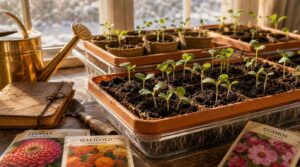
Starting seeds indoors gives your flowers a real head start before the outdoor season begins.
Knowing when to start, how much light to give, and when to move seedlings outside makes all the difference. Here’s what you need to get it right.
Start Annuals Six Weeks Early
Six weeks before your last frost date is the sweet spot to start seeds indoors for most annuals. For Falkenstein, that means getting going in mid-to-late February.
- Set trays on Heat Mats at 70–75°F to speed seed germination
- Use a Labeling System so you never mix up varieties
- Practice smart Moisture Management — ½ inch weekly, no waterlogging
- Begin Growth Tracking to time hardening off and avoid transplant shock
Start Perennials Earlier
Perennials need a head start — most require 8–10 weeks indoors before frost dates, and slow growers like Asclepias and Foxglove need 10–12 weeks. Mark these on your garden calendar now.
Fast-dormancy varieties bounce back quickly after cold stratification, so prioritize ground-level planting once soil hits 55–60°F.
Early Soil Warmth and Microclimate Exploitation give roots the runway they need before summer heat arrives.
Provide Warmth and Light
Seeds need two things to thrive indoors: steady warmth and consistent light. Keep your trays near a south-facing window for full sun exposure or supplement with warm LED lighting at 2700K—it mimics ambient glow layering that heat-tolerant plants love. Think of it as your own soft dusk lighting setup, year-round.
- Maintain soil temperature at 65–70°F for best germination
- Run grow lights 14–16 hours daily to meet sunlight requirements
- Position trays away from cold drafts near windows
Harden Seedlings Seven Days
Think of seedling hardening as your seedlings’ boot camp before the real world hits. Spend seven days on this process by gradually increasing sun exposure one hour daily, starting in partial shade. Practice daily temperature logging to keep daytime temps above 60°F.
Add a gentle wind intro using a low fan and boost humidity by grouping pots. These steps help seedlings acclimate to outdoor conditions.
Maintain consistent moisture monitoring throughout the acclimation period before transplanting seedlings outdoors.
Track Germination Times
Keeping a germination log eliminates guesswork in flower seed germination. Record your sowing date, soil temperature at planting depth, and daily sprout activity. Older seeds germinate more slowly, making seed age documentation essential.
- Temperature Tracking: Aim for 65–75°F consistently
- Moisture Monitoring: Keep trays damp, never soggy
- Progress Photo Log: Shoot every other day to spot patterns
Plant Transplants and Bulbs
Getting transplants and bulbs into the ground the right way comes down to timing, spacing, and steps.
Rush it, and you risk losing plants you worked weeks to grow.
Here’s what to do at each stage.
Wait Past Frost Danger
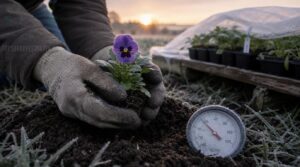
Don’t rush your transplants outside until overnight lows stay reliably above 40–45°F. Nighttime Temperature Checks are your first line of defense. Use Row Cover Usage and frost protection if late cold snaps appear. Soil Warmth Strategies, such as Mulch Insulation, help keep roots settled after the last frost date.
| Strategy | When to Apply | Why It Helps |
|---|---|---|
| Nighttime Temperature Checks | Nightly before transplanting | Confirms frost risk assessment |
| Row Cover Usage | When frost dates threaten | Shields from sudden cold |
| Gradual Sun Exposure | 7–10 days before planting | Reduces transplant shock |
Plant Frost-sensitive Flowers Later
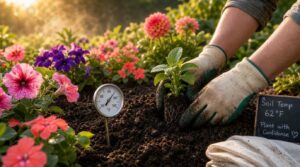
Frost-sensitive flowers need warm soil to thrive — aim for 60°F or higher before transplanting. Delayed planting benefits your blooms more than rushing ever could. Use Frost Forecast Tracking to confirm safe windows, and keep Row Cover Strategies handy for surprise cold snaps.
- Wait 1–2 weeks after your last frost date
- Confirm Microclimate Warmth with a soil thermometer
- Apply Warm Soil Transplant practices for faster root establishment
- Review summer planting guidelines for your hardiness zone
- Use frost protection if frost risk assessment shows cold nights ahead
Space Plants for Airflow
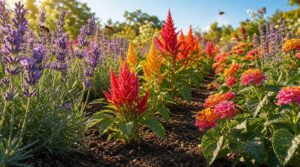
Once your transplants are in warm soil, spacing them right makes a real difference. Dense plantings cut airflow by up to 40%, raising disease risk fast. To mitigate this, employ Staggered Row Design and Aisle Gap Optimization to guide air through your flower bed spacing.
Additional strategies include Open Foliage Selection and Elevated Container Placement, which further enhance airflow. These methods collectively reduce humidity and fungal threats while maintaining plant health.
| Plant Type | Recommended Spacing |
|---|---|
| Lavender | 18–24 inches |
| Bee Balm | 18–24 inches |
| Cardinal Flower | 12–18 inches |
| Lantana | 18–24 inches |
| Celosia | 6–12 inches |
Plant Summer Bulbs in Spring
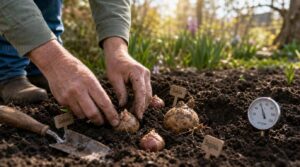
With spacing sorted, now it’s time to get your summer bulbs in the ground. Follow spring planting guidelines closely: wait until soil temperature hits 50°F (10°C) and frost dates have passed. Use Bulb Depth Guidelines from your packaging and consider Cold Stratification Timing for each variety.
Plant tall varieties like gladiolus and dahlias with staking in mind — staking tall varieties early prevents stem damage later.
Water After Planting
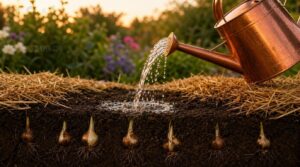
Once your bulbs are in, watering is what brings everything to life. Use the Slow Soak Method — water slowly and evenly to achieve a Watering Depth Control of 6 to 12 inches for full Root Zone Saturation.
Check Moisture Monitoring 1 to 2 inches down before rewatering.
Then mulch for Mulch Moisture Retention and maintain a steady irrigation schedule of 1 to 2 inches weekly.
Sow Heat-Loving Flowers Outdoors

Some flowers don’t need a head start indoors — they grow best when you sow them right where they’ll bloom. Getting the conditions right before you scatter those seeds makes all the difference between a patch that thrives and one that struggles.
Here’s what to check before you put a single seed in the ground.
Check Soil Temperature
Your soil thermometer is the most honest tool in your kit. Before sowing anything heat-loving, push it 4–8 cm down for a Morning Reading — that’s your most reliable number.
Use these Depth Guidelines and Temperature Thresholds for Microclimate Mapping across your beds:
- Target range: 18–24°C (64–75°F)
- Too hot: above 30°C — wait or add mulch
- Check time: early morning, same spot daily
- Raised beds: warm 2–3 weeks faster than ground beds
Direct-sow Sunflowers Late
Don’t let a late start stop you from growing sunflowers this summer. Direct sowing works well when soil hits at least 55°F — usually 2 to 4 weeks after your last frost. For Dwarf Sunflower Selection, compact varieties fit tight spaces and finish faster, which matters for Early Harvest Planning.
Plant seeds 1 to 2 inches deep, focus on Seed Bed Preparation with compost, and you’re set.
Plant Moss Rose Shallowly
Moss Rose is one of the easiest flowers you can add to your summer garden — but only if you get the planting right from day 1. Surface sowing is the key: these seeds need light germination, so don’t bury them.
- Press seeds onto gritty soil mix in full sun
- Space 12 inches apart for wide spacing and airflow
- Use well-drained soil and minimal watering after planting
Keep Seedbeds Evenly Moist
Think of your seedbed like a sponge — damp, not dripping. Use a moisture meter or a quick touch test to maintain consistent dampness throughout the top 1–2 inches.
Bottom watering works great here, pulling moisture up without disturbing seeds. A humidity dome technique locks in evaporation, preserving ideal conditions for germination.
Watering early in the day prevents surface crust formation, ensuring seedlings emerge without obstruction.
Thin Crowded Seedlings
Crowded seedlings quietly steal from each other — light, water, nutrients. That competition triggers etiolation, where stems stretch and weaken reaching for the sun. Early thinning is your best garden maintenance move: once seedlings hit one inch tall, remove the weakest ones.
Follow spacing guidelines for each species, opening gaps that improve airflow and benefits while giving remaining roots room for healthy root development.
Care for Summer Blooms
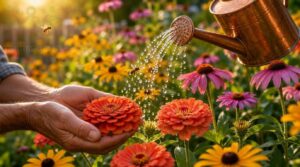
Getting your flowers in the ground is only half the job. Summer blooms need consistent care to keep performing week after week through the heat.
Here’s what to focus on once the growing season is in full swing.
Water One Inch Weekly
Your summer flowers need about one inch of water every week — that’s roughly six gallons per square yard. Deep soaking once a week outperforms light daily sprinkling, as it encourages deeper root zone hydration and builds genuine drought resistance in your garden.
- Adjust irrigation scheduling based on your soil type
- Sandy soil drains quickly — water slightly more
- Clay holds moisture longer — water less often
- Check soil moisture before adding more water
- Water in the early morning for best results
Fertilize Lightly in Heat
Once watering is consistent, feeding becomes your next lever. In peak heat, less is more — apply a balanced fertilizer (equal NPK) at half-strength, and only at dawn or dusk for Dawn-Dusk Feeding.
Moist Soil Timing matters: always water first, then feed. Choose Slow-Release Fertilizer or organic fertilizers like compost tea. Avoid Granular Salts that burn heat-tolerant plants.
Deadhead Spent Flowers
After fertilizing, don’t let spent blooms drain your plants’ energy. Deadheading is one of the simplest garden maintenance tips that pays off fast.
Snip faded flowers just above a healthy leaf node using clean, sharp pruners — tool hygiene matters here.
This redirects energy allocation toward new buds, extending your bloom cycle. For perennials that bloom all summer, deadhead every one to two weeks.
Stake Tall Flower Stems
Tall stems like sunflowers and tall verbena will flop without support. Place stakes 1 to 2 inches from the stem at planting time — that’s your best stake timing for avoiding root damage. Use soft tie materials like fabric strips every 6 to 8 inches.
For top-heavy perennials that bloom all summer, a three-stake triangle improves wind resistance noticeably.
Refresh Mulch as Needed
As summer heat peaks, your mulch layer quietly thins from watering and settling. Check depth every spring and do a mid-summer Seasonal Mulch Refresh if coverage drops below 2 inches.
Mulch Depth Monitoring keeps roots 2–3°F cooler and locks in moisture.
Choose shredded bark for strong Organic Mulch Benefits — it breaks down into natural compost, supporting soil amendment and Pest Prevention Mulch goals without chemicals.
Prevent Pests and Heat Stress
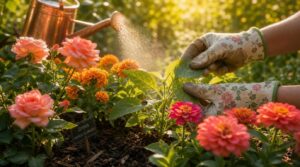
Even the best-kept garden can run into trouble when summer heat peaks and pests move in.
A few smart habits go a long way toward keeping your flowers healthy all season. Here’s what to watch for and do.
Watch Aphids and Whiteflies
Tiny sap-suckers like aphids and whiteflies can quietly wreck your blooms before you notice. Stick to a weekly scouting schedule and flip leaves over — leaf underside inspection catches both pests early. Watch for honeydew spotting, a sticky residue that signals active feeding and invites sooty mold.
- Check for winged form detection, which means populations are spreading
- Monitor population thresholds before damage escalates
- Remove heavily infested stems immediately
Use Companion Flowers
Planting insect allies like marigolds and lavender alongside your blooms does double duty. Marigolds deliver nematode suppression at the roots, while lavender acts as a natural pest repellent, confusing aphids and whiteflies with its scent.
That color diversity camouflage also hides weaker plants from herbivores.
For successional bloom planning, mix bee-friendly plants to keep pollinator attraction strong all season.
Improve Airflow Between Plants
Good airflow is one of your best tools for disease prevention. Implement Staggered Row Design to create Vertical Air Channels between plants, ensuring at least 12 inches between canopies. This spacing prevents overcrowding and promotes circulation.
Elevate vines using Light Trellis Placement to reduce ground-level humidity. Complement this with Open Bed Edging and Mulch Air Permeability, which prevent moisture buildup and eliminate stagnant pockets beneath plants.
Consistent Smart garden planning and strategic border planting maintain optimal airflow throughout the growing season, safeguarding plant health.
Shade Stressed Containers
Shade-stressed containers need a few smart tweaks to stay healthy. Use light-colored containers or Reflective Potting materials to bounce heat away from roots. Add a Thick Mulch Layer on top — it drops soil surface temps by up to 10°F. Fabric Pot Breathability prevents soggy roots in partial shade.
Stick to Frequent Light Watering, around 0.5 to 1 inch weekly, for well-drained soil.
Remove Diseased Foliage Quickly
One sick leaf can quietly take down the whole bed. The moment you spot yellowing, spots, or mushy tissue, cut it off with sanitized pruning tools and bag and discard it immediately — never compost it. Wear disposable gloves to prevent cross-contamination between plants.
Weekly foliage checks help catch problems early, keeping your pest management and flower pruning techniques effective before small issues turn serious.
Top 10 Summer Flower Planting Picks
You’ve done the hard work — prepped the soil, timed your frost dates, and gotten your seeds started right. Now comes the fun part: picking what to grow.
Here are ten summer flowers worth every inch of garden space.
1. Home Grown English Lavender Seeds
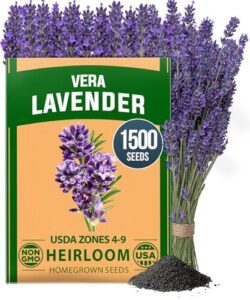
Few seeds pack this much value — 1,500+ heirloom Lavandula angustifolia ‘Vera’ seeds for just $6.99.
Before sowing, give them 2–4 weeks of cold stratification or germination rates will disappoint. Surface-sow without covering since these seeds need light to sprout. Keep soil at 65–70°F and consistently moist but never soggy. Expect seedlings in 14–21 days.
Once established, this drought-tolerant, full-sun beauty earns its place in borders, containers, or raised beds year after year.
| Best For | Home gardeners — beginners to experienced — who want a fragrant, low-maintenance heirloom lavender that works in containers, borders, or raised beds. |
|---|---|
| Seed Type | Heirloom, GMO-Free |
| Sun Requirement | Full Sun |
| Pollinator Friendly | Yes |
| Soil Drainage | Well-Drained |
| USDA Zones | Cold-Hardy Perennial |
| Price | $6.99 |
| Additional Features |
|
- Incredible value — 1,500 non-GMO heirloom seeds for under $7
- Once established, it’s tough: drought-tolerant, cold-hardy, and thrives in full sun with minimal fuss
- Genuinely versatile — grow it for fragrance, cooking, wellness products, or just a gorgeous garden border
- Cold stratification is non-negotiable; skip it and your germination rates will likely suffer
- Sprouting can be hit or miss — some gardeners report no germination even when doing everything right
- This isn’t a fast grower — budget several weeks for seedlings to appear and months before the plant fully matures
2. Outsidepride Lemon Bee Balm Seeds
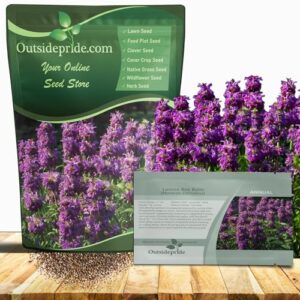
Lemon Bee Balm brings energy. OutsidePride’s Monarda citriodora fills borders with lavender-pink blooms from mid to late summer, reaching up to 36 inches tall with a lemon-mint scent that pollinators can’t resist.
Each packet holds 5,000 seeds — real value for larger plantings.
Direct-sow after your last frost date, spacing plants 18 inches apart for good airflow. Soil pH should sit between 6.6 and 7.8. Expect germination in 14–21 days at around 70°F.
| Best For | Gardeners who want a low-maintenance, pollinator-friendly wildflower that doubles as a cut flower and edible herb. |
|---|---|
| Seed Type | Open-Pollinated Annual |
| Sun Requirement | Full Sun to Part Shade |
| Pollinator Friendly | Yes |
| Soil Drainage | Well-Drained |
| USDA Zones | 3–10 |
| Price | Not Listed |
| Additional Features |
|
- 5,000 seeds per packet gives you serious coverage for the price — great for filling large borders or meadow-style plantings.
- Attracts hummingbirds, bees, and butterflies while staying deer-resistant, so you get the wildlife without the headaches.
- Self-seeding habit means it can come back year after year with minimal effort on your end.
- It’s an annual, so re-establishment isn’t guaranteed — self-seeding can be hit or miss depending on your conditions.
- Needs well-drained soil; if your garden holds water, germination will likely disappoint.
- Germination is sensitive to depth, moisture, and timing, so skipping the prep steps can lead to poor results.
3. KVITER Liatris Spicata Blazing Star Seeds
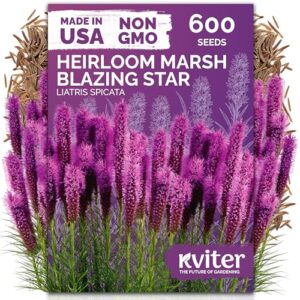
KVITER’s Liatris Spicata Blazing Star sends up bold pink-to-purple spikes reaching 2 to 4 feet tall — a real crowd-stopper in any border or container.
Each packet contains 600 heirloom, GMO-free seeds for $6.99. Start indoors 6–8 weeks before your last frost, or surface-sow outdoors once soil warms.
Crucially, do not skip the 60-day cold stratification — without it, germination drops fast. Once established, the plant is drought-tolerant and returns annually in zones 4–10.
| Best For | Gardeners who want a low-maintenance, pollinator-friendly perennial that adds bold vertical color to borders, containers, or meadow plantings year after year. |
|---|---|
| Seed Type | Heirloom, GMO-Free |
| Sun Requirement | Full Sun to Part Shade |
| Pollinator Friendly | Yes |
| Soil Drainage | Well-Drained |
| USDA Zones | 4–10 |
| Price | $6.99 |
| Additional Features |
|
- Great value — 600 heirloom, GMO-free seeds for just $6.99, giving you plenty to work with.
- Comes back every year in zones 4–10 and handles drought well once it’s settled in.
- Pulls in butterflies, bees, and hummingbirds all season long, making it a win for any pollinator garden.
- Germination rates can be hit or miss (anywhere from 40% to nearly 100%), so results aren’t always predictable.
- Cold stratification is non-negotiable — skip the 60 days and you’ll likely end up with very few sprouts.
- Young seedlings are slug magnets, so you’ll need to keep an eye on them early on.
4. KVITER Red Cardinal Flower Seeds
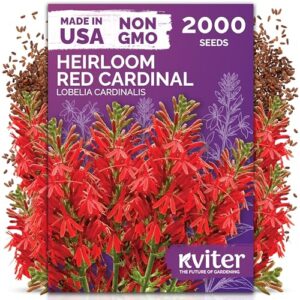
If you love bold vertical color near water, KVITER’s Red Cardinal Flower Seeds are worth a close look. Lobelia cardinalis shoots up to 48 inches tall with striking scarlet spikes that hummingbirds can’t resist from late summer into fall.
Sow seeds on the surface—they need light to germinate—after 8 weeks of cold stratification in your fridge. Keep soil consistently moist.
At $8.49, it’s an affordable pick for rain gardens or pond edges in zones 3–10.
| Best For | Gardeners with water features or rain gardens who want to attract hummingbirds and don’t mind doing a bit of prep work before planting. |
|---|---|
| Seed Type | Perennial Wildflower |
| Sun Requirement | Full Sun |
| Pollinator Friendly | Yes |
| Soil Drainage | Moist to Wet |
| USDA Zones | 3–10 |
| Price | $8.49 |
| Additional Features |
|
- Stunning 48-inch scarlet spikes that light up any garden from late summer to fall
- Works across a huge range of climates (zones 3–10) and naturally resists deer and rabbits
- Great pollinator magnet — hummingbirds, butterflies, and bees all show up
- Advertised as 2,000 seeds, but many buyers report getting closer to 200 — a big gap for the price
- Seeds are tiny and dust-like, making them tricky to handle and sow evenly
- Needs cold stratification, surface sowing, and constant moisture — not the most beginner-friendly setup
5. Heliotrope Marine Flower Seeds
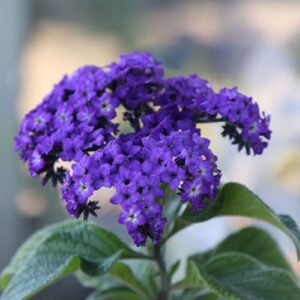
Want fragrance and deep violet color in one compact plant? Heliotrope Marine delivers both. Start seeds indoors 10–12 weeks before your last frost — these need a longer runway than most annuals. Germination takes 10–14 days, and plants reach 12–18 inches tall at maturity.
Transplant after frost danger passes, spacing plants 12 inches apart in full sun. Keep soil consistently moist, and deadhead regularly to extend blooms.
At $13.37 for roughly 500 seeds, it’s a fragrant bargain.
| Best For | Gardeners who want fragrant, colorful cut flowers and don’t mind giving their plants a little extra attention. |
|---|---|
| Seed Type | Non-GMO Annual |
| Sun Requirement | Full Sun to Part Shade |
| Pollinator Friendly | Yes |
| Soil Drainage | Well-Drained |
| USDA Zones | Annual |
| Price | $13.37 |
| Additional Features |
|
- About 500 seeds for $13.37 — great value for a full season of blooms
- Works indoors and out, so you can start early and even overwinter plants
- That violet fragrance is a genuine bonus for pollinators and cut flower arrangements
- Toxic to pets and livestock, so not a good fit for homes with curious animals or grazing areas
- Needs consistently moist soil — skip a few waterings and it’ll let you know
- Requires regular deadheading to keep blooming, which adds to the upkeep
6. Moss Rose Heirloom Seed Mix
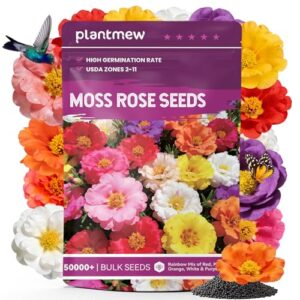
If you want big color from tiny seeds, moss rose delivers. Each pack holds over 50,000 Portulaca grandiflora seeds — enough to carpet an entire border without buying multiple bags.
Sow them directly after your last frost once soil hits 65°F, gently pressing seeds into the surface. They need light to germinate.
Expect blooms in 8–10 weeks, showcasing vibrant hues of red, pink, orange, yellow, white, and purple.
Heat and drought don’t slow these down, making them perfect for hot, dry spots where other flowers quit.
| Best For | Gardeners who want to fill large areas with low-maintenance, drought-tolerant color — especially beginners, xeriscape enthusiasts, and anyone gardening in hot, sunny climates. |
|---|---|
| Seed Type | Heirloom |
| Sun Requirement | Full Sun |
| Pollinator Friendly | Yes |
| Soil Drainage | Well-Drained |
| USDA Zones | 2–11 |
| Price | Not Listed |
| Additional Features |
|
- Over 50,000 seeds in one pack means you can cover a wide area without multiple purchases.
- Extremely low-maintenance — heat, drought, and neglect don’t faze these plants.
- Fast payoff: expect a full rainbow of blooms in just 8–10 weeks.
- Seeds are tiny and tricky to sow evenly, so precise placement is tough.
- Germination can be hit or miss — some gardeners report spotty results.
- Needs full, direct sun to really shine; shady spots will leave you disappointed.
7. Costa Farms Peace Lily Decorative Plant
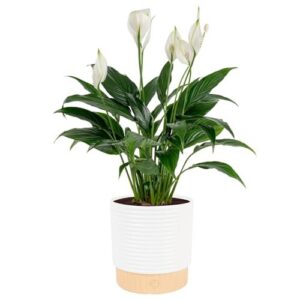
Not every summer bloom belongs outdoors. The Costa Farms Peace Lily thrives inside, arriving at around 15 inches tall in a decorative bamboo-style pot — ready to set on a desk or shelf.
It prefers bright, indirect light and about one cup of water per week. Let the top inch of soil dry out between waterings, or you’ll risk root rot.
With proper care, it blooms multiple times a year, making it a practical, low-maintenance pick for any indoor space.
| Best For | Anyone who wants a low-fuss indoor plant that actually looks good — great for desks, shelves, or as a gift for a housewarming or birthday. |
|---|---|
| Seed Type | Live Plant |
| Sun Requirement | Bright Indirect Light |
| Pollinator Friendly | No |
| Soil Drainage | No Drainage Hole |
| USDA Zones | 10b–11 (Indoor) |
| Price | $26.99 |
| Additional Features |
|
- Arrives ready to display at around 15 inches tall in a decorative bamboo-style pot
- Easy to care for — just a cup of water a week and some indirect light
- Blooms multiple times a year and helps clean indoor air
- The pot has no drainage holes, so overwatering is a real risk
- Plant size can vary — what shows up may not match exactly what’s advertised
- Shipping can stress the plant, and occasional transit damage has been reported
8. Dwarf Sunspot Sunflower Seeds
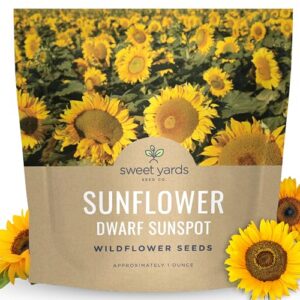
Big blooms don’t always need big space. Dwarf Sunspot sunflowers top out at just 2 to 3 feet tall, yet each flower head stretches about 10 inches wide — golden yellow petals around a rich chocolate center.
Direct sow after your last frost once soil hits 60°F, spacing plants 12 to 18 inches apart. Water about an inch per week.
One packet holds over 500 seeds, enough to fill roughly 50 square feet with color from midsummer through early fall.
| Best For | Gardeners with limited space who want big, cheerful blooms — great for beginners, container growers, and anyone who loves cutting fresh flowers for the house. |
|---|---|
| Seed Type | Non-GMO |
| Sun Requirement | Full Sun |
| Pollinator Friendly | Yes |
| Soil Drainage | Well-Drained |
| USDA Zones | Annual |
| Price | Not Listed |
| Additional Features |
|
- Over 500 seeds per packet covers about 50 sq ft, so you get a lot of color for the price.
- Germination is fast — many growers see sprouts in as little as 5 days, even with no prior experience.
- Compact 2–3 ft height makes these perfect for pots, borders, and small yards without sacrificing flower size.
- Not the right pick if you want tall, classic sunflowers — these stay short by design.
- Seed freshness can vary, so germination rates aren’t always consistent across batches.
- One packet might not be enough for larger garden projects, meaning you’d need to buy multiple.
9. Blue Star Sea Holly Seeds

Few flowers stop people in their tracks like Blue Star Sea Holly. Those spiky, steel-blue flower heads look almost otherworldly — and they hold their shape when dried, so your arrangements last well beyond summer.
Each $5.99 packet includes 25 seeds. Start indoors before last frost, then transplant once the danger passes. Plants grow 36 to 48 inches tall, so space them 18 to 24 inches apart.
They thrive in full sun and sandy, well-drained soil with almost no fuss.
| Best For | Gardeners who want a low-maintenance, eye-catching plant that thrives in tough conditions like sandy soil, coastal spots, or dry sunny borders. |
|---|---|
| Seed Type | Open-Pollinated |
| Sun Requirement | Full Sun |
| Pollinator Friendly | Yes |
| Soil Drainage | Well-Drained |
| USDA Zones | 2–8 |
| Price | $5.99 |
| Additional Features |
|
- Those spiky blue-silver heads look stunning in the garden and hold up beautifully as dried flowers
- Incredibly tough — handles poor soil, salt, and drought where most plants would give up
- At $5.99 for 25 seeds, it’s a genuinely affordable way to add something unusual to your garden
- Germination can be hit or miss, so don’t be surprised if not every seed sprouts
- Those spines are no joke — wear gloves when planting or pruning
- Needs full sun and well-drained soil to do well, so wet or shady spots are a no-go
10. Dark Rose Heirloom Garden Seeds
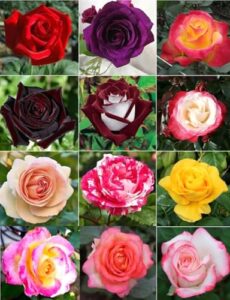
BULBORIUM’s Dark Rose Heirloom seeds bring dark, velvety blooms that shift from deep burgundy to near-black to your garden. Each $7.59 packet holds 100 seeds, and the plants reach 3 to 5 feet tall with lush rosette blooms 2 to 3 inches across.
These seeds require cold stratification before germination and thrive in soil temperatures between 68°F and 75°F. Space them 18 to 24 inches apart and plant after your last frost date for optimal growth.
| Best For | Gardeners who love rare, dramatic blooms and don’t mind putting in the extra work to get there. |
|---|---|
| Seed Type | Heirloom |
| Sun Requirement | Full Sun |
| Pollinator Friendly | Yes |
| Soil Drainage | Well-Drained |
| USDA Zones | Not Specified |
| Price | $7.59 |
| Additional Features |
|
- Deep burgundy-to-black tones that stand out in any garden bed
- Heirloom variety means you’re growing something genuinely rare, not a mass-market hybrid
- 100 seeds for $7.59 is solid value if even a good portion germinate
- Germination can take weeks or even months, so don’t expect quick results
- Cold stratification and precise soil temps are a must — skip a step and you may get nothing
- Some growers report zero sprouting even when following instructions to the letter
Frequently Asked Questions (FAQs)
Which flowers can be planted in October?
October is surprisingly generous for planting, as the soil remains warm enough to encourage solid root establishment before winter arrives.
You can tuck in pansies, violas, hellebores, crocus, daffodils, tulips, alliums, and bare-root roses while the soil stays warm enough to foster growth.
What flowers can you plant now for summer?
Right now, you can plant zinnias, cosmos, marigolds, and dahlias for summer color. Lavender, salvia, and echinacea work great too.
Most thrive once soil hits 60°F and frost danger is gone.
When should summer flowers be planted?
Plant summer flowers after your last frost date, once soil reaches 60°F.
For most of the U.S., that’s mid-spring to early summer — roughly late April through June, depending on your zone.
What is the easiest summer flower to grow?
Bloom where you’re planted — and if you’re new to this, start with zinnias.
They grow fast, need almost no fuss, and deliver bold color all summer long from a single planting.
Is August too late to plant flowers?
No, August isn’t too late. In zones 8–11, you can still plant heat-tolerant annuals like marigolds and zinnias for fall color. Just mulch well and water deeply twice a week.
What is the 3 year rule in gardening?
Think of it like rotating your dinner menu — same idea.
The three-year rule means you don’t plant the same flower family in the same bed more than once every three years, protecting soil health and breaking pest cycles.
Is September too late to plant flowers?
September isn’t too late — it depends on your zone and what you’re planting.
Cool-season flowers, perennials, and spring bulbs all do well with September planting, especially in zones 6a through 8b.
Can container flowers survive extreme summer temperatures?
Yes—container flowers can survive extreme summer heat. Choose lantana, moss rose, or zinnias.
Water deeply each morning, use light-colored pots, and group containers together to create a cooler shared microclimate.
How do you transplant summer flowers mid-season?
Transplant on a cool, cloudy evening. Water your plant deeply the day before. Dig a hole twice as wide as the root ball, backfill gently, and water again immediately after planting.
What companion plants work best with summer flowers?
Marigolds, basil, and dill are your best allies. They repel aphids, attract beneficial insects, and keep pests away naturally. Plant them between your summer flowers for the strongest effect.
Conclusion
Think of your garden as a clock—every decision you make now sets the hands in motion. Your summer flower planting guide isn’t just a checklist; it’s a system where timing, soil, and variety selection work together to keep color running from June straight through fall.
Pick the right plants, prep your beds before the heat lands, and stay consistent with water and deadheading. Do that, and your garden won’t just survive summer—it’ll own it.
- https://www.provenwinners.com/learn/how-plant/beat-heat-annuals
- https://www.gardendesign.com/plants/heat-tolerant.html
- https://beaufort.ces.ncsu.edu/news/heat-tolerant-annuals-that-shine-all-summer/
- https://longwoodgardens.org/blog/2025-07-30/heat-loving-annuals-top-picks-summer-garden
- https://www.preen.com/learn/lawn-garden-tips/plants-trees-shrubs/annuals/5-annual-flowers-that-can-take-the-heat/