
This site is supported by our readers. We may earn a commission, at no cost to you, if you purchase through links.

Your grocery-store basil wilts by Wednesday, but somewhere across town, a windowsill herb garden keeps pumping out fresh leaves in the dead of winter. That’s not luck. It’s picking plants that actually want to live indoors.
Most people quit growing herbs because they start with fussy ones, then blame their "black thumb." The truth: a handful of easy herbs to grow indoors practically take care of themselves, needing little more than sun, water, and a decent pot.
Get the right herbs and setup, and you’ll harvest fresh flavor year-round, no garden required.
Table Of Contents
- Key Takeaways
- Easiest Herbs to Grow Indoors Year-Round
- More Beginner-Friendly Indoor Herbs
- Indoor Herb Garden Setup Essentials
- Light, Water, and Soil Requirements
- Harvesting, Pruning, and Common Mistakes
- Frequently Asked Questions (FAQs)
- What herbs are low maintenance?
- What herbs don’t grow well indoors?
- What herbs can I grow indoors all year round?
- What herbs are best for beginners?
- What is the mother of all herbs?
- What herbs are easy to grow for beginners?
- What herbs are most fragrant to grow indoors?
- Are herbs easy to grow indoors?
- What are some indoor herb garden ideas?
- What are indoor herbs for beginners?
- Conclusion
Key Takeaways
- Basil, mint, chives, parsley, and oregano are your best bet for year-round indoor herbs, since they handle low light and forgive missed waterings.
- Most herbs want the same basics: 6 to 8 hours of bright light, well-drained soil, and a pot with drainage holes at least 6 inches deep.
- Pinching stems above a leaf node every 10 to 14 days triggers bushier growth instead of tall, leggy stems.
- Overwatering causes more problems than underwatering, so check soil moisture two inches down before giving your herbs another drink.
Easiest Herbs to Grow Indoors Year-Round
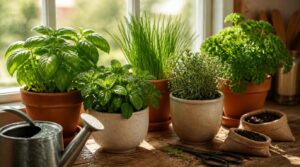
Some herbs just fit right into everyday indoor life, no green thumb required. They forgive missed waterings, bounce back fast, and keep producing fresh leaves all year long. Here are five easy-going options worth starting with.
If you’re not sure where to start, this guide to beginner-friendly herbs for indoor gardens breaks down which varieties handle low light and irregular care the best.
Basil
If you only grow one herb, make it basil. This kitchen windowsill plant loves a sunny windowsill, well-drained soil, and regular watering. Its sweet, peppery aroma comes from linalool-rich oils, strongest in fresh leaves. Pinch stems often to keep it bushy, and watch for aphids or mildew when airflow’s low. Rewarding and fragrant, basil earns its beginner-favorite status.
For the best growth, make sure the plant receives full sun and well‑drained soil, as detailed in the Botanical name Ocimum basilicum guide.
Mint
Basil loves attention, but mint practically grows itself. This one thrives on a sunny windowsill with well-drained soil and regular watering.
Keep it contained, though:
- Invasive growth control matters most
- Use container containment, never open beds
- Harvest leaves weekly for bushy plants
- Peppermint vs. spearmint flavor varies
- Oils extract for teas, toothpaste
Chives
If mint’s wild streak had you nervous, chives are your calm, tidy friend. They grow in neat clumps on a sunny windowsill with well-drained soil and regular watering—no containment needed.
| Task | Frequency |
|---|---|
| Harvesting | Every 7-10 days |
| Division | Every 2-3 years |
| Pruning | Regularly |
| Winter care | Mulch if kept outdoors |
Snip chive flowers for salads, and divide clumps once they hit 6-8 inches wide.
Parsley
Chives keep things tidy, but parsley brings a fresh, garden-fresh punch to your kitchen. This biennial loves a sunny windowsill, well-drained soil, and regular watering to move past its first-year rosette stage.
Harvest outer leaves first, letting the center keep producing. Plant near tomatoes as a companion, and watch for aphids—wipe leaves weekly to keep pests away naturally.
Oregano
Round out your herb lineup with oregano—it’s about as forgiving as container gardening gets. Give it a sunny spot on your windowsill, well-drained soil, and regular watering.
As a perennial, it’ll keep producing year after year with minimal fuss, so check out these tips for extending your herb harvest season to make the most of it.
Greek oregano wins for flavor, prized for its high carvacrol content. Prune regularly to stop legginess and manage flowering. Beyond cooking, oregano’s oil offers antimicrobial perks when diluted properly.
More Beginner-Friendly Indoor Herbs
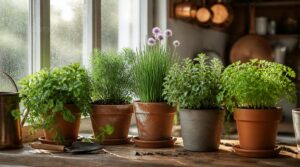
Once you’ve got the basics down, it’s time to branch out a little. These next five herbs are just as forgiving for beginners, each with its own personality on your windowsill. Here’s what to try next.
Thyme
Tiny leaves, huge payoff: thyme is a low-fuss culinary herb that thrives on neglect. Give it full sun and well-drained soil, and it won’t ask for much else.
Skip heavy watering; let soil dry between drinks. Mix in perlite for drainage, and boost light indoors if needed. Prune regularly to keep it bushy. Propagate easily through stem cuttings—rewarding and simple.
Rosemary
With its piney scent and needle-like leaves, rosemary feels fancy but grows easy. Give it full sun and well-drained soil, water only when soil feels dry, and prune regularly for bushy shape.
- Woody cuttings root well in sandy, humid mediums
- Keep temps 60-70°F
- Fertilize lightly every 4-6 weeks
- Use containers with drainage holes
- Trim tips to prevent legginess
Lemon Balm
Brush the leaves and you’ll get an instant burst of lemon, no candy needed. Lemon balm loves bright light and moist, well-drained soil, making it a natural fit for windowsill gardening setups.
- Propagate easily from stem cuttings
- Pinch tips for bushier growth
- Water when topsoil feels dry
- Use in teas for therapeutic uses
- Prune often to control spreading
Sage
Sage brings soft, silvery leaves and a savory punch to your indoor herb collection. Give it full sun and well-drained soil with regular watering—let it dry slightly between drinks. Good air circulation keeps mildew away.
Beyond the kitchen, sage offers real medicinal benefits, easing sore throats as tea. Try Berggarten or Tricolor varieties for extra visual charm alongside classic culinary use.
Tarragon
Ever wondered why fancy sauces taste so bright? That’s often tarragon’s anise-like flavor at work.
Give it a sunny spot with well-drained soil and regular watering—no soggy roots allowed. Skip seeds; propagate through cuttings or root division instead, since French tarragon rarely grows true from seed.
Harvest leaves before flowering for the strongest flavor, and watch for aphids in your indoor herb garden.
Indoor Herb Garden Setup Essentials
Once you’ve picked your herbs, the right setup makes all the difference. Good containers, soil, light, and a few handy tools set your plants up to thrive from day one. Here’s what you need to get started.
Best Containers and Drainage
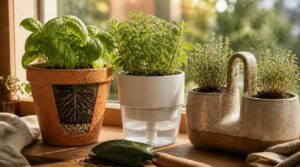
The right pot makes or breaks your indoor herb garden. Look for drainage holes sized 1/4 to 1/2 inch, and add a shallow gravel layer for airflow.
Terracotta breathes better than plastic, drying faster between waterings. No holes? Try a self-watering system or double-pot method, and pick containers at least 6 inches deep for happy roots.
Herb-Friendly Potting Mix
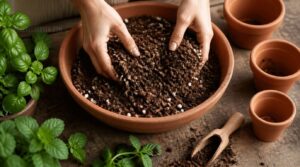
A good pot means nothing without the right mix inside it. Skip regular garden soil, it compacts fast and drowns roots.
Look for a well-draining potting mix with:
- Coconut coir or peat-free moss base
- Perlite for airflow
- Worm castings for nutrients
- Bark fines for structure
- pH between 6.0-7.0
That balance keeps soil moisture steady without sogginess.
Windowsill Garden Placement
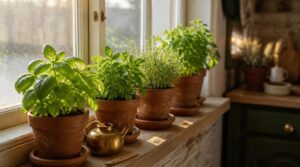
Once your mix is ready, find the right spot to set it. A south-facing windowsill gives the strongest light for sun-loving herbs. East or west windows work too, just gentler.
Rotate pots weekly for even growth, and keep them off cold window glass in winter to protect roots from shock.
LED Grow Light Options
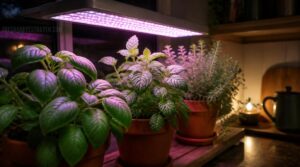
No sunny window? No problem. Full-spectrum LED grow lights mimic natural sunlight, delivering blue and red wavelengths for healthy growth.
Position them 6 to 12 inches above plants, running 12 to 16 hours daily. Aim for 200 to 400 micromoles of light intensity.
LEDs stay cool and sip energy, making them cheaper to run than old-school bulbs while boosting your herbs’ sunlight exposure indoors.
Small-Space Garden Tools
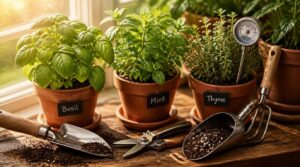
Tiny tools make container gardening so much easier. A compact hand trowel digs precisely without disturbing roots, while folding pruning shears save drawer space.
A mini cultivator fork loosens tight corners, and a soil scoop keeps potting mix tidy. Don’t skip a moisture meter probe—it takes the guesswork out of watering your windowsill garden.
Light, Water, and Soil Requirements
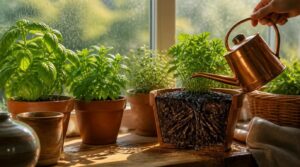
Your herbs are only as happy as the light, water, and soil you give them. Get these three basics right, and everything else falls into place. Here’s what your plants actually need to thrive.
Daily Sunlight Needs
How much sun does your herb pot really need? Aim for 6 to 8 hours of bright light daily. A south-facing window offers the strongest exposure, while east or west spots work with a bit more patience.
Morning sunlight is gentle on leaves. Less than 4 hours slows growth and causes legginess, so consistency matters most.
Watering Without Root Rot
Once soggy roots set in, your herbs struggle to recover, so avoiding overwatering matters most. Check soil moisture by feeling down two inches before watering again.
When you do water, go deep until it drains from the holes, then empty the saucer. Try bottom watering occasionally, soaking pots for 15 minutes for even, root-rot-free moisture.
Soil PH and Texture
Dirt isn’t just dirt—your herbs care deeply about what’s under them. Aim for soil pH between 6.0 and 7.0, and test it every 6-12 months to catch drift early.
For texture, go loamy with added perlite for drainage. Mix in compost or worm castings for nutrient retention. This combo keeps roots happy, well-drained, and ready to feed your plants consistently.
Humidity and Airflow
Ever notice your herbs droop even when the soil’s moist? Humidity’s likely the culprit. Keep RH between 40 and 60 percent—a pebble tray helps.
Good airflow matters just as much:
- Prevents mold on basil and mint
- Crack a window for fresh exchange
- Run a small fan nearby
- Use kitchen exhaust fans when cooking
Temperature for Healthy Growth
Your herbs have preferences, just like people do. Basil loves it warm—21 to 26°C by day, no lower than 15°C at night. Mint and parsley enjoy cooler temperatures, around 18 to 24°C, while chives stay happy near 15 to 20°C. Oregano’s the toughest, handling brief spikes above 30°C. Adjust for seasons to keep growth steady.
Harvesting, Pruning, and Common Mistakes
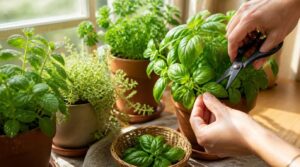
Growing your herbs is only half the job, harvesting them right keeps them coming back strong. A few simple habits make the difference between a bushy, productive plant and a sad, leggy one. Here’s what you need to know to keep your indoor garden thriving.
Pinching for Bushier Growth
Snip the growing tip just above a leaf node, and you’ll trigger two new side shoots instead of one tall stem. This breaks apical dominance, the plant’s habit of pushing all energy upward.
Pinch a stem’s tip above a leaf node, and one plant becomes two thriving shoots instead
Pinch every 10-14 days during active growing season. Basil loves this treatment weekly; mint and chives tolerate it just as well, rewarding you with fuller, bushier growth all around.
Harvesting Leaves Correctly
Once pinching gives you that bushy shape, proper harvesting keeps it going. Cut in the morning, after dew dries, using clean scissors just above a leaf node.
Take no more than a third of the plant, and rotate which stems you trim. Rinse leaves gently, pat dry, and store in the fridge wrapped loosely for up to a week.
Preventing Leggy Herbs
That leggy, stretched-out look almost always comes back to light. Herbs need bright light for 6 to 8 hours daily, ideally from a south-facing window or grow lights placed 6 to 12 inches above leaves.
Rotate pots weekly for even growth, and keep pruning for bushiness. Pair good light placement strategy with regular pinching, and stems stay short and full instead of thin and sparse.
Avoiding Overcrowded Pots
Good spacing matters just as much as good light. Give each herb room for its root zone, since crowded roots compete for water and stunt growth.
Pot depth matters too—shallow pots suit chives, deeper ones suit rosemary. Skip mixing aggressive spreaders like mint with anything else, and always keep airflow between plants to prevent mold and disease.
Managing Pests Indoors
Even indoor herbs attract unwanted guests, so regular leaf checks matter—flip leaves weekly, looking for stippling or sticky honeydew.
Yellow sticky traps catch fungus gnats early. For aphids or mites, spray with water or neem oil.
Boost air circulation with a small fan, keep humidity moderate, and avoid overwatering—damp soil invites gnats and root rot fast.
Frequently Asked Questions (FAQs)
What herbs are low maintenance?
Think of low-maintenance herbs as the houseplants that forgive you for forgetting them. Oregano, thyme, and rosemary are drought tolerant herbs with minimal watering needs, while chives and sage handle low light tolerance beautifully, perfect hardy indoor perennials for beginner gardening guides.
What herbs don’t grow well indoors?
Cilantro bolts fast without cool temps and intense light. Dill needs long daylight hours hard to match indoors.
Tarragon and mint often turn leggy and weak without steady bright light and good airflow, causing yellow leaves or stunted growth.
What herbs can I grow indoors all year round?
Basil, mint, chives, parsley, and oregano top the list for year-round indoor herbs. They handle low light, tolerate regular pruning, and reward you with continuous harvest all year, making them perfect easy herbs for beginners starting an indoor herb garden.
What herbs are best for beginners?
Thyme, rosemary, lemon balm, sage, and tarragon make a great beginner herb selection. They forgive missed waterings, tolerate windowsill gardening well, and need only a basic care routine—bright light, good drainage, and regular pruning—to reward you generously.
What is the mother of all herbs?
Rosemary doesn’t just season your roast, it steals the whole show. Called the mother of all herbs, this Mediterranean native carries centuries of history, cultural weight, and aromatic benefits that make it a beginner’s best indoor companion.
What herbs are easy to grow for beginners?
For a starter herb garden, lean on forgiving varieties: mint, chives, and parsley. They handle beginner slip-ups well, need only bright light and steady watering, and reward you with fresh leaves after light, regular pruning.
What herbs are most fragrant to grow indoors?
Your whole apartment can smell like an herb shop with the right picks. For pure inviting aroma, grow mint, basil, lemon balm, sage, and thyme—crushing their leaves releases essential oils packed with peppery flavor and soothing fragrance.
Are herbs easy to grow indoors?
Yes, most herbs are genuinely easy to grow indoors. Give them full sun, well-drained soil, and regular harvesting, and basil, chives, or oregano will thrive—no green thumb required, just consistent care and a sunny windowsill.
What are some indoor herb garden ideas?
Picture a sunny windowsill turned mini farm. Try vertical herb gardens to save space, group pots by cuisine for herb pairing, or set up a kitchen herb station for fresh clippings within arm’s reach.
What are indoor herbs for beginners?
Mint, chives, and parsley top the list for beginner herb selection—forgiving with watering basics, adaptable to average light, and perfect for kitchen windowsill plants.
They forgive rookie mistakes, making container gardening feel achievable rather than intimidating right from your first indoor herb garden.
Conclusion
Picture your windowsill as a tiny green pantry, always stocked, always within reach. That’s what growing easy herbs to grow indoors gives you: a steady harvest without the guesswork.
Start with basil, mint, or chives, add decent light and a well-draining pot, and the rest follows naturally. You won’t need a green thumb, just consistency. Snip a little often, and your kitchen stays stocked with fresh flavor, season after season, no garden required.