This site is supported by our readers. We may earn a commission, at no cost to you, if you purchase through links.
The average American yard drinks roughly 9 billion gallons of water every summer—and about half of that never reaches a single root. It evaporates off hot pavement, runs down driveways, or soaks into soil already too dry to absorb it. That’s a quiet crisis happening right outside your door.
Summer gardening water conservation isn’t about sacrificing a lush garden; it’s about working smarter with what you already have. Small shifts in timing, plant selection, and soil care can cut your outdoor water use dramatically while keeping your beds healthier than ever.
Table Of Contents
- Key Takeaways
- Choose Drought-Tolerant Summer Plants
- Optimize Summer Watering Techniques
- Use Mulch to Retain Soil Moisture
- Install Water-Saving Tools and Systems
- Reduce High-Water Lawn and Garden Areas
- Frequently Asked Questions (FAQs)
- How often should containers be watered daily?
- What soil amendments improve water retention naturally?
- When should rainwater harvesting systems be installed?
- How do wind barriers reduce garden evaporation?
- Which companion plants share water most efficiently?
- How often should I check soil moisture levels?
- Can greywater be safely used for edible plants?
- What soil amendments improve water retention best?
- How do I calculate my gardens water needs?
- When should I adjust watering for seasonal changes?
- Conclusion
Key Takeaways
- Swapping thirsty turf for native plants can save your yard up to 79,000 gallons of water a year, and pairing them with 2–3 inches of mulch cuts evaporation and weeds at the same time.
- Watering deeply every 7–14 days before 9 AM trains roots to grow downward and reduces evaporation by up to 40% compared to midday watering.
- Drip irrigation runs at 90% efficiency, and adding soil moisture sensors means you’re only watering when your plants actually need it.
- Single inch of rain on a 1,000-square-foot roof collects around 600 gallons, so a rain barrel setup can quietly handle a big chunk of your summer watering needs.
Choose Drought-Tolerant Summer Plants
The plants you choose make a bigger difference than you might think when summer heat sets in. Some are built to thrive with very little water, and they’ll save you time, money, and effort all season long.
If you’re not sure where to start, this guide to gardening in hot weather walks you through the best drought-tolerant picks for a low-maintenance summer garden.
Here’s what to look for when picking the right ones for your garden.
Benefits of Native and Perennial Species
Native plants and perennial plants are the backbone of sustainable gardening.
Once established, drought tolerant plants can cut your outdoor water use by up to 80 percent compared to conventional turf.
Their deep root benefits are real — roots reach far below the surface, improving soil moisture retention naturally.
You’ll spend less time watering, enjoy low maintenance beds, and support local habitat all season long.
The deep root systems enable plants to tap underground water, boosting drought resistance.
Selecting Sun-Loving and Shade-Tolerant Varieties
Knowing your garden’s microclimates make all the difference. For sunny, west‑facing spots — especially during a heatwave — reach for full sun drought‑tolerant plants with clever leaf adaptations:
- Lavender and coneflower thrive in reflected heat with minimal watering
- Silvery, waxy foliage slows moisture loss on hot afternoons
- Deep root depth pulls water from lower soil layers naturally
For shadier corners, coralberry or mahonia handle dry soil beautifully, supporting sustainable gardening year‑round.
For added biodiversity, try pollinator‑friendly drought‑tolerant plants like Dark Matter Meadow Sage.
Low-Water Herbs and Vegetables for Hot Months
Beyond sun and shade choices, your plant list matters just as much.
A Mediterranean herb blend — rosemary, thyme, sage, oregano — only needs deep watering every 7 to 10 days once established.
For heat-resistant vegetables, try cowpeas or sweet potatoes; both handle scorching summers without complaint.
These drought tolerant plants are your best allies for waterwise gardening when temperatures climb.
Optimize Summer Watering Techniques
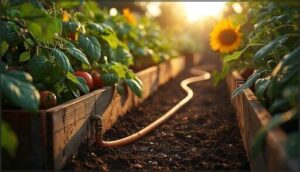
How you water matters just as much as how often you do it. Small adjustments to your routine can save thousands of gallons over a single summer while keeping your plants healthier.
If you want to take it even further, xeriscaping and seasonal garden planning can cut outdoor water use by half or more while your yard actually thrives.
Here are the key techniques that make the biggest difference.
Early Morning Vs. Evening Watering
Timing your watering is one of the simplest water conservation tips you can act on today. Early morning watering, between 5 and 9 AM, helps evaporation reduction by up to 40 percent compared to midday.
It also helps with disease prevention — leaves dry quickly after sunrise.
Evening watering leaves foliage damp overnight, increasing fungal risk and pest control problems.
Stick to early morning for real water efficiency.
Deep, Infrequent Watering for Root Growth
Think of roots like a drill — they go where the water is. Water deeply and less often, and you train them to reach down into cooler, stable soil.
- Wet the root zone depth to 6–12 inches per session
- Water every 7–14 days using smart water conservation techniques
- Use soil moisture sensors to avoid guesswork
Drought‑tolerant plants especially reward this approach.
Hand Watering, Drip Irrigation, and Soaker Hoses
Choosing the right watering method makes all the difference in summer.
Here’s how the three main options compare:
| Method | Flow Rate | Best Use |
|---|---|---|
| Hand Watering | 5–14 gal/min | Spot treatment |
| Drip Irrigation | 1–2 L/min/meter | Rows and beds |
| Soaker Hoses | ~0.5 gal/min | Dense plantings |
Drip irrigation reaches 90% efficiency — far better than overhead sprinklers. Pair nozzle control and water pressure regulation with soil moisture sensors for truly waterwise gardening. Seasonal system maintenance keeps emitters clear and your water conservation strategies working all summer long.
Proper Sprinkler Placement and Coverage
Placing sprinklers well is one of those watering tips that quietly saves hundreds of gallons each summer. Head-to-head spacing ensures each head’s spray reaches the next, eliminating dry patches without cranking up run times.
- Keep heads one foot back from pavement for overlap avoidance strategy
- Use sprinkler arc adjustment to prevent drift onto hardscape
- Balance zone pressure so every head in your irrigation system hits its full radius
Use Mulch to Retain Soil Moisture
Mulch is one of the simplest tools you can use to hold moisture in the ground all summer long. A good layer around your plants means less watering, cooler roots, and fewer weeds fighting for space.
Here’s what you need to know to use it well.
Best Organic Mulch Materials for Summer
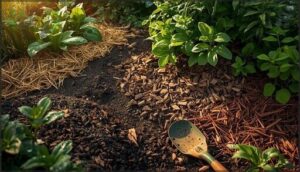
Not all mulches are created equal.
For summer gardening, straw mulch keeps vegetable beds noticeably cooler and slows evaporation quickly.
Wood chip mulch lasts longer around trees and shrubs.
Compost mulch feeds the soil while holding moisture — two jobs at once.
Pine needle mulch works beautifully around shrubs.
Cocoa shell mulch insulates well but keep it away from dogs.
Correct Mulch Depth and Application Tips
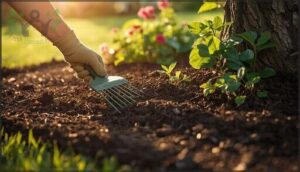
Depth makes all the difference.
For most summer beds, 2 to 3 inches of mulch hits the sweet spot for soil moisture management and outdoor water efficiency.
Trees need a bit more — up to 4 inches — but follow stem distance guidelines and keep mulch 3 to 6 inches from trunks to prevent rot.
Prevent mulch compaction by fluffing it seasonally, and top it up every one to two years.
Mulching to Reduce Weeds and Evaporation
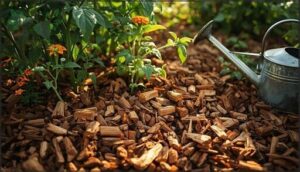
Mulch does more than just look tidy — it’s a quiet workhorse for soil conservation and water savings all summer long. A thick layer works in four key ways:
- Light Blocking cuts weed germination by up to 90 percent
- Physical Barrier smothers seedlings before they root
- Moisture Deprivation keeps the surface dry so weed seeds can’t sprout
- Allelopathic Effects from cedar or eucalyptus mulch chemically suppress stubborn weeds
Combined, these benefits seriously boost drought tolerance and slash summer watering needs through steady evaporation reduction.
Install Water-Saving Tools and Systems
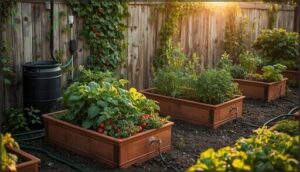
The right tools make water conservation feel less like a chore and more like second nature.
A few smart upgrades to your setup can save thousands of gallons over a single summer.
Here’s what’s worth adding to your garden this season.
Rain Barrels and Rainwater Harvesting
Collecting rainwater is one of the smartest sustainable gardening practices you can adopt this summer. A single inch of rain on a 1,000-square-foot roof yields around 600 gallons — barrel sizing matters.
Pair your setup with first-flush diverters and mosquito-proof screens to keep water clean and safe.
Don’t forget overflow management and check local legal incentives, since many municipalities actively encourage rainwater harvesting and rainwater collection.
Automated Irrigation Timers and Sensors
Once your rain barrels are full, let technology handle the rest.
Smart irrigation systems with weather-based controllers and soil moisture sensors take the guesswork out of watering.
They read real conditions, not a fixed clock.
Add rain-delay functions, multi-zone scheduling, and smart app integration, and you’ve got serious water savings strategies working quietly in the background — true waterwise gardening made simple.
Choosing Water-Efficient Containers and Planters
Your containers matter more than you think. The right planter quietly saves gallons every week.
- Self-watering pots with strong Reservoir Capacity cut watering to once every one to two weeks
- Material Insulation from fiberglass or glazed ceramics keeps roots cool and moisture locked in
- High Color Albedo in light-colored pots reduces heat absorption by up to 90 percent
- A proper Drainage Layer of perlite prevents root rot without losing stored moisture
- Matching Container Size to your DroughtTolerant Plants means less evaporation, healthier roots, and real Water Conservation
Reduce High-Water Lawn and Garden Areas
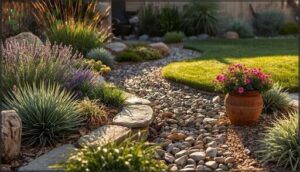
Your lawn might be the thirstiest part of your whole yard — and honestly, it doesn’t have to be.
Swapping out high-water areas for smarter alternatives can make a real difference in how much water you use each summer.
Here are a few practical ways to get started.
Replacing Turf With Native Plant Beds
Swapping out thirsty turf for native plants could save your yard nearly 79,000 gallons of water a year.
Replacing thirsty turf with native plants can save your yard nearly 79,000 gallons of water a year
Start with solid soil preparation — work in compost, loosen compacted ground, and group plants by water needs.
This xeriscaping approach cuts outdoor water use by up to 60 percent, delivers stunning aesthetic design, invites wildlife habitat, and slashes your maintenance load season after season.
Hardscaping for Water Conservation
Replacing lawn with smart hardscaping puts you firmly in control of your water use.
Permeable Pavers let rainfall soak straight into the soil rather than rush off your property.
Gravel Hardscapes need zero irrigation and cut landscape water use by up to 60%.
Rock Gardens, Retaining Walls, and Dry Stream Beds work together beautifully — slowing runoff, preventing erosion, and supporting Xeriscaping and Sustainable Landscape Design without the constant watering.
Converting Lawns to Paths or Edible Gardens
Converting your lawn into paths or edible beds is one of the smartest moves in WaterWise Gardening. Use Sod Removal Methods like sheet mulching — layering cardboard and compost — to smother grass without digging.
Vegetable gardens use 66% less water than turf annually. Add a Permeable Path Design between raised beds, and you’ve built a functional, Sustainable Landscape Design that practically waters itself.
Frequently Asked Questions (FAQs)
How often should containers be watered daily?
How often depends on the pot. small containers under 5 gallons can dry out within hours in summer heat, often needing water twice daily.
larger pots hold moisture longer, so always check the soil first.
What soil amendments improve water retention naturally?
Compost is your best starting point. It holds up to 20 times its weight in water.
Biochar integration adds micropores that slow drainage.
Mulch and organic matter boost moisture retention naturally, reducing how often you water.
When should rainwater harvesting systems be installed?
Install rainwater harvesting systems in early spring or fall, ideally after post-gutter cleaning and before your rainy season. Pre-season setup ensures tanks are ready to capture the first major storm.
How do wind barriers reduce garden evaporation?
Think of a wind barrier as a shield that calms the air around your plants.
Reduced wind speed cuts evapotranspiration, boosts microclimate humidity, and improves soil moisture retention — key wins for eco-friendly landscaping.
Which companion plants share water most efficiently?
Pair tomatoes with basil for deep‑shallow root pairing that splits moisture across soil layers.
Living mulch groundcovers like thyme reduce evaporation by 25%.
Shade‑casting nurse plants and intercropping water efficiency strategies can cut irrigation needs by 40%.
How often should I check soil moisture levels?
Check soil moisture daily in summer. Most garden beds need one check each morning. Containers and pots dry faster, so check those twice a day when temperatures climb above 30°C.
Can greywater be safely used for edible plants?
Yes, but with care.
Use greywater only through subsurface irrigation on fruit trees or shrubs — never on root crops or leafy greens.
Always follow local regulatory guidelines and choose plant-friendly detergents to minimize pathogen risks.
What soil amendments improve water retention best?
Compost integration is your best starting point. A coco coir mix holds moisture like a sponge.
Add a biochar amendment for dry spells, or try a vermiculite boost as peat-moss alternatives for containers.
How do I calculate my gardens water needs?
How much water does your garden actually need?
Multiply your garden area by evapotranspiration rates and crop coefficient use, then apply the volume conversion formula to get precise gallons — smart water management starts with knowing your numbers.
When should I adjust watering for seasonal changes?
Adjust as seasons shift. In spring, water 1–2 times weekly once temps rise above 50°F. Summer demands deeper, more frequent soaks. Fall tapers off. Winter? Nearly nothing unless soil dries completely.
Conclusion
Steady, small steps make summer gardening water conservation more manageable than it looks.
Swap thirsty turf for native plants. Layer mulch thick around your beds. Water deep and early, before the sun starts pulling moisture straight from the soil. Set up a rain barrel and let the sky do some of the work.
Every change you make compounds over time—your garden grows stronger, your water bill shrinks, and your yard stops being part of the quiet crisis.
- https://openknowledge.fao.org/server/api/core/bitstreams/b3c465c7-4c71-4f0f-8e5d-2ce1000244d4/content
- https://wilkes.ces.ncsu.edu/2025/06/watering-wisely-how-much-your-summer-vegetable-garden-really-needs/
- https://earthsally.com/gardening-basics/water-conservation-in-your-garden.html
- https://www.gardena.com/za/c/discover/gardening/magazine/water-saving-tips-for-a-sustainable-garden
- https://beta.connexionfrance.com/practical/map-find-out-the-water-restrictions-in-your-part-of-france/372013