This site is supported by our readers. We may earn a commission, at no cost to you, if you purchase through links.

Most gardeners assume winter gives their plants a break from pests and disease. It doesn’t. Aphids shelter on evergreens, spider mites explode in dry, heated rooms, and slugs quietly work through damp beds while you’re indoors staying warm.
Fungal diseases like botrytis and powdery mildew thrive in the still, cool, slightly humid conditions that winter creates.
The damage often goes unnoticed until spring, when recovery is slow and sometimes impossible.
Staying ahead of winter garden pest and disease control means knowing what to look for, when to act, and which low-toxicity solutions actually work.
Table Of Contents
- Key Takeaways
- Common Winter Garden Pests
- Winter Plant Disease Warning Signs
- Inspecting Plants During Winter
- Preventing Winter Pest Problems
- Safe Winter Control Methods
- Frequently Asked Questions (FAQs)
- How to get rid of overwintering garden pests?
- Which smell do termites hate?
- What is the hardest bug infestation to get rid of?
- What is the bug that goes around every winter?
- What month do you start a winter garden?
- What does basil repel?
- How can I safely store leftover pesticides?
- What should I do after heavy rain in winter?
- Are homemade remedies effective for garden pest control?
- How do I protect pollinators during treatments?
- Conclusion
Key Takeaways
- Winter pests like aphids, spider mites, slugs, and rodents stay active all season, so waiting until spring to check your garden means damage is already done.
- Fungal diseases including botrytis, powdery mildew, and root rot thrive in winter’s cool, damp, still conditions — catch the early warning signs before they spread beyond recovery.
- Low-toxicity solutions like insecticidal soap, dormant oil, predatory mites, and physical barriers handle most winter pest problems without reaching for harsh chemicals.
- Consistent habits — clearing debris, improving airflow, managing mulch depth, and doing weekly inspections — prevent most winter pest and disease problems before they start.
Common Winter Garden Pests

Winter in Florida doesn’t mean your garden gets a break from pests — it just means different ones show up. A few key troublemakers tend to take over when temperatures drop and conditions shift.
Knowing which pests to expect each season makes a real difference — a solid winter garden pest control guide can help you stay one step ahead.
Here’s what you’re likely dealing with.
Aphids on Evergreen and Greenhouse Plants
Aphids don’t take winters off — especially in greenhouses and on evergreens. Species like the green peach aphid move quickly through their life cycles, producing multiple generations even in cooler months. These pests extract sap, leave behind honeydew accumulation that triggers sooty mold, and pose a significant virus transmission risk. A key identifier is their tiny cornicles.
Managing sap-sucking insects on evergreen plants begins with insecticidal soaps and Integrated Pest Management (IPM) monitoring routines. Early detection is critical, as infestations can escalate rapidly.
Implementing weekly visual scouting allows for timely intervention, minimizing damage and reducing reliance on reactive treatments.
Spider Mites in Dry Indoor Conditions
While aphids work the outdoor shift, spider mites clock in indoors — especially when your heating system drops humidity below 40 percent. These nearly invisible pests thrive near heating vents (Vent Proximity matters more than you’d think), leaving telltale stippling and fine webbing behind.
Combat them with integrated pest management:
- Humidity management for mites — use Water Trays beneath pots and a humidifier
- Dust Management — wipe leaves regularly to remove mite habitats
- Moisture Boosters — group susceptible plants together to raise local humidity
For active infestations, insecticidal soap manages indoor pest control effectively. Chemical pest control is rarely needed if you catch it early. Choose Resistant Varieties when restocking your collection.
Scale Insects on Stems and Leaves
Scale insects are sneaky — they look like tiny bumps on stems, not bugs at all. That waxy shell structure is their armor, and it works well. Crawler identification matters most in early spring, but winter is when you get ahead of them.
| Scale Fact | What It Means |
|---|---|
| Wax shell structure | Shields eggs through freezing temps |
| Crawler identification | Only mobile stage — easiest to treat |
| Host shrub susceptibility | Euonymus, camellia, citrus most at risk |
| Scale honeydew effects | Triggers sooty mold on leaves |
| Systemic treatment timing | Apply before crawlers settle permanently |
Applying dormant oil sprays for scale insects in late winter smothers overwintering eggs before they hatch. Integrated pest management keeps your winter garden on track without heavy chemicals — protecting plant health from the ground up.
Slugs and Snails in Damp Beds
Slugs and snails are a different kind of trouble — slow, silent, and surprisingly destructive. They thrive in damp beds with shady microhabitats, feeding after dark when soil moisture peaks.
Dawn Hand-Removal catches them before they hide. Beer Trap Placement lures them overnight.
Slug-Specific Nematodes work through the soil, while Ground Beetle Promotion and Moisture-Reducing Mulch make your beds far less welcoming.
Rodents Damaging Roots, Bulbs, and Bark
Mice, voles, and their cousins don’t wait for spring to cause damage. During winter, they quietly gnaw bark, sever roots, and hollow out bulbs — sometimes killing young trees before you notice anything is wrong. Rodent and vole damage mitigation in winter starts with knowing where to look and acting fast.
- Trunk Barrier Installation using a Hardware Cloth Shield protects the lower bark from gnawing
- Bulb Bed Exclusion with wire mesh stops underground foraging on tulips and other favorites
- Root Zone Monitoring weekly helps you catch wilting or dieback before it becomes irreversible
- Vole Trap Placement along active runs provides reliable rodent removal without harsh chemicals
- Rodent exclusion techniques combined with professional rodent and wildlife control solutions offer lasting results
These proactive measures safeguard gardens and landscapes from persistent winter pest activity.
Knowing exactly what you’re dealing with helps too—identifying common garden pests by their damage patterns lets you target the right treatment before winter problems carry into spring.
Winter Plant Disease Warning Signs
Pests aren’t the only threat your winter garden faces. Diseases can creep in quietly, and by the time you notice something’s wrong, the damage is already done.
Here are the warning signs to watch for.
Powdery Mildew on Leaves and Stems
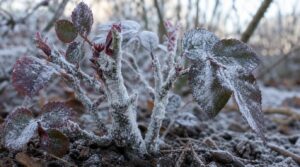
That white, powdery coating on your rose stems is not frost — it’s powdery mildew, and it spreads fast. This fungal disease thrives when humidity sits between 40 and 70 percent with poor airflow.
Check leaf surfaces and young stems early. Fungicide timing matters: treat before heavy colonization.
Rely on integrated pest management, choose resistant varieties, and practice garden sanitation to stay ahead of it.
Downy Mildew in Cool, Wet Weather

Downy mildew thrives in cool, wet weather—specifically temperatures between 46 and 60°F with persistent leaf wetness. Sporangia dispersal patterns enable spores to spread rapidly via wind and rain splash.
Monitor cucumbers, lettuce, and squash closely, as these crops are particularly susceptible.
Preventive measures include using drip irrigation to keep foliage dry, applying copper fungicide before infection builds, and prioritizing resistant cultivars where available.
Botrytis and Gray Mold on Foliage
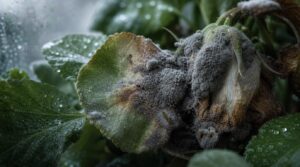
Gray mold—caused by Botrytis cinerea—spreads rapidly when humidity control is compromised. The fungus thrives in temperatures between 55–65°F, requiring only 8–12 hours of leaf wetness to initiate spore germination.
Watch for early signs like water-soaked spots turning fuzzy and brown. Remove infected leaves immediately to halt spread, and prioritize improving airflow around plants.
As part of an integrated pest management plan, consider applying biofungicide treatments. Proactive biological control reduces reliance on reactive chemical interventions later.
Rust Spots and Fungal Leaf Damage
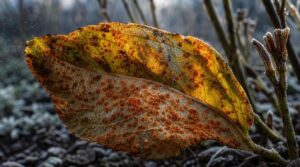
Rust spots are easy to miss at first — just a few pale yellow flecks on the upper leaf surface. But flip the leaf over, and you’ll see clusters of orange or brown pustules already releasing spores. Spore dispersal happens fast in a humid climate, especially when leaf wetness lingers overnight.
Keep an eye out for:
- Orange pustules on rose, hollyhock, or hawthorn undersides
- Premature yellowing and leaf curl from repeated infections
- New plants that haven’t been quarantined — a common entry point for plant disease transmission
Your best defense combines IPM principles with practical steps: improve airflow, choose resistant cultivars when replanting, and apply fungicides at the right stage. Fungicide timing matters more than quantity. Environmentally safe pesticides and organic pest control methods work well when host specificity is understood and treatments start early.
Root Rot From Poor Winter Drainage

Poor drainage is one of winter’s quietest threats. When water sits around roots too long, soil oxygen drops fast — and that’s when Pythium and Phytophthora move in. Wilting despite wet soil is your first warning.
Fix it with raised beds, organic amendments, and drainage tiles before planting. Implement these solutions proactively to prevent root diseases.
Moisture monitoring keeps you ahead of issues, while soil aeration matters more than most gardeners realize. Prioritize these practices for healthier plants.
Inspecting Plants During Winter
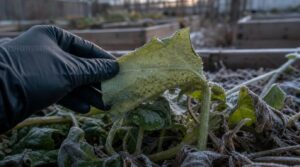
Winter is no time to look the other way in your garden. Pests don’t announce themselves — they hide, and the damage shows up long after they’ve gotten comfortable.
Garden pests don’t announce themselves — they hide until the damage is already done
Here’s what to check so you can catch problems before they get out of hand.
Checking Leaf Undersides for Sap-Sucking Pests
Most sap-sucking insects hide where you’d least expect — flip any suspicious leaf and examine the underside for early signs. Use bright oblique lighting to reveal details flat light misses. This method is your fastest early-warning tool.
Check for:
- Aphid clusters — pear-shaped, 1–3 mm soft bodies
- Stippling patterns left by spider mites
- Scale insects fixed along leaf veins
Honeydew detection confirms infestations: a sticky smear on your fingertip signals pest activity. Act promptly within your integrated pest management plan.
Examining Soil, Mulch, and Plant Bases
Once you’ve checked the leaves, move your attention down to soil level — that’s where hidden trouble often starts.
| Area | What to Look For | Action |
|---|---|---|
| Mulch depth | Slug trails, rodent tunnels | Reduce to 2–3 inches |
| Plant base | Gnaw marks, fungal growth | Clear for base ventilation |
| Soil texture | Pooling water, compaction | Improve drainage slope |
Good organic matter and consistent soil moisture regulation keep roots healthy all winter.
Spotting Webbing, Curling, and Yellowing Leaves
After inspecting the soil, look up — your leaves tell the next part of the story.
- Fine webbing patterns on leaf undersides signal spider mites thriving in dry winter air
- Curl direction matters: upward curling often means aphids or whiteflies are feeding underneath
- Yellowing zones near leaf edges suggest salt buildup or early pest pressure
Symptom correlation is key. In your winter garden, low humidity impacts these signs rapidly — integrated pest management starts here.
Identifying Rodent Droppings and Gnaw Marks
Once you’ve scanned the leaves, bring your attention down to soil level — rodents leave behind clear clues. Dropping size comparison tells you who’s visiting: mouse pellets are rice-grain small at 3–6 mm, while rat droppings reach 12–20 mm.
Fresh vs. dried texture also matters: dark and moist mean active. Gnaw mark width on bark or bulbs further confirms the culprit, guiding smarter rodent control.
Monitoring Greenhouses and Cold Frames Weekly
Every week, conduct weekly greenhouse inspections with a purpose. Check sticky traps and log trap capture data — rising counts signal seasonal pest activity before it spreads. These proactive measures enable early pest detection, forming the foundation of integrated pest management (IPM).
Record temperature and humidity trend analysis at canopy level, and conduct a quick audit of the irrigation system for uneven flow. Consistent monitoring of environmental conditions ensures climate data logs remain accurate, supporting informed decisions.
These routines—early pest detection, climate data tracking, and equipment maintenance—collectively reinforce the backbone of solid IPM, keeping operations resilient and proactive.
Preventing Winter Pest Problems

Prevention is your first line of defense against winter pests, and a few consistent habits go a long way. Most problems start before you ever spot an insect, which means the garden work you do now directly shapes what you’ll deal with later.
Here’s what to focus on to keep pests from getting a foothold this season.
Removing Dead Plants, Weeds, and Debris
Think of dead plant material as a welcome mat for pests. Clearing the leaf litter, spent annuals, and other debris before winter eliminates prime hiding spots for slugs, snails, voles, and cutworm larvae.
Bag diseased debris separately — don’t compost it. Sanitize your tools after each use to prevent pathogen spread, and apply mulch evenly for smart mulch management.
Timing your cleanup early is one of the most effective preventive strategies for garden pest management.
Pruning Diseased or Infested Growth
Act quickly once you spot diseased or infested growth — hesitation lets problems spread. Prune back to healthy wood, making cuts at least 15 cm below any visible symptoms.
- Sanitize tools between cuts using 70% isopropyl alcohol
- Bag and remove all pruned debris; never compost it
- Monitor for new symptoms over the next 2–3 weeks
Timing cuts during dry weather speeds wound healing and keeps your winter garden protected.
Using Row Covers and Insect Mesh
A simple layer of fabric can be your winter garden’s first line of defense. Protective coverings like row covers and fine insect mesh block aphids, whiteflies, and thrips before they reach your plants — no chemicals needed.
| Feature | Detail |
|---|---|
| Cover Installation | Anchor edges with soil or clips to prevent wind lift |
| Mesh Tension | Tension over hoops to eliminate pest entry gaps |
| Season Extension | Extends growing season by 1–4 weeks in cool weather |
| Ventilation Management | Lift edges on warm days to prevent heat buildup |
| Pollinator Access | Remove covers during flowering for bee access |
Use narrow-weave mesh (0.6–1.0 mm) for leafy greens and seedlings. Hardware cloth barriers work well around beds where larger pests are a concern. As part of integrated pest management, these tools reduce reliance on sprays while keeping plants protected all winter.
Improving Airflow Around Winter Crops
Stagnant air is a pest’s best friend. In a healthy winter garden, good airflow is one of the most underrated cultural practices in any IPM plan.
- Position canopy fan placement at 0.3–0.6 m/s for even temperature control
- Use ventilation burst timing to flush humidity without losing heat
- Apply air velocity monitoring and duct baffle layout to eliminate cold pockets
Managing Mulch to Reduce Pest Shelter
Mulch is a double-edged sword — done right, it protects your plants; done wrong, it rolls out the welcome mat for slugs, voles, and beetle grubs.
| Mulch Factor | Best Practice |
|---|---|
| Mulch Thickness | Keep layers 2–3 inches deep |
| Material Selection | Choose cedar or cypress chips |
| Color Temperature | Use lighter mulch in sun-exposed beds |
| Placement Gap | Keep 5–10 cm from plant crowns |
| Seasonal Raking | Turn mulch at winter’s start |
Smart mulching — part of any solid integrated pest management plan — promotes habitat modification to deter slugs, snails, and voles while improving soil preparation to reduce cutworm and beetle grub populations naturally.
Protecting Seedlings With Slug Barriers
Once the mulch is managed, your next line of defense is right at soil level. Copper tape wrapped around pots creates an electrochemical barrier slugs won’t cross. Plastic collars and a fiberglass edge guard individual seedlings tightly. A diatomaceous ring deters crawlers without chemicals, and mesh fleece blocks overnight access.
Combined with leaf litter removal and habitat modification to deter slugs, snails, and voles, these measures—protective collars seal the deal.
Safe Winter Control Methods
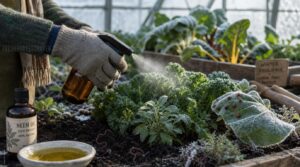
Once you’ve done the work of keeping pests out, the next step is knowing how to handle the ones that still show up.
The good news is you don’t need harsh chemicals to get results — several low-toxicity options work well in winter gardens without putting your plants, soil, or beneficial insects at risk. Here’s what you can reach for when it’s time to take action.
Applying Insecticidal Soap for Soft-Bodied Pests
Insecticidal soap is one of the most reliable tools against soft-bodied insects like aphids and spider mites in a Winter Garden. Follow dilution guidelines—one to two teaspoons per quart—and prepare a fresh batch each time.
Coverage technique matters: drench leaf undersides thoroughly. Apply during cooler hours for optimal timing.
Always conduct phytotoxicity testing first and maintain consistent equipment maintenance routines.
Using Dormant Oil on Overwintering Eggs
Soap controls the pests you can see. Dormant oil sprays target the ones you can’t — overwintering pests hiding as eggs on bark and in bud crevices.
Timing windows matter: Apply when plants are dormant and temperatures stay between freezing and 70°F. Ensure the oil concentration is correct (2–4%), and use spray equipment that delivers an even mist.
For successful egg coverage verification and integrated pest management for winter gardens:
- Test one branch first — phytotoxicity testing prevents tissue burn
- Work bottom-up for full bark contact
- Avoid evergreens and conifers sensitive to oil
- Recheck after 7–14 days for any missed clusters
- Choose organic pest control mineral oils for low environmental impact
Treating Fungal Diseases With Low-Toxicity Fungicides
Fungal diseases like powdery mildew and botrytis spread quickly in Winter Garden’s cool, damp months. These conditions demand proactive measures to protect plants.
Calcium carbonate sprays create an alkaline leaf surface, halting spore germination. For sensitive plants, copper-free formulations prevent leaf burn while maintaining protection. Biological bacterial fungicides, such as Bacillus subtilis, integrate seamlessly into Integrated Pest Management for cool-season crops. Finally, sulfur dust applications and essential-oil sprays complete a low-toxicity pesticides toolkit, ensuring organic disease control without accelerating transmission.
Encouraging Lady Beetles and Parasitic Wasps
Planting dill, fennel, and calendula promotes Nectar Plant Selection and Companion Planting strategies that draw ladybugs and parasitic wasps right to problem areas.
Leave some leaf litter for Overwintering Habitat, use Predator‑Friendly Mulch, and time your Release Timing when aphids first appear.
These Integrated Pest Management practices for cool‑season crops make encouraging beneficial insects to control aphids surprisingly effective.
Releasing Predatory Mites for Spider Mites
When spider mites take hold in your Winter Garden greenhouse, predatory mites are one of the most reliable biological pest control tools you have. Species selection matters — Phytoseiulus persimilis targets two-spotted spider mites aggressively, while Neoseiulus californicus copes with cooler, drier conditions better.
For Integrated Pest Management practices for cool-season crops, follow these steps:
- Check humidity levels before release — most predatory mites need 60–70%.
- Match application rates to infestation size, not guesswork.
- Time your release early, when mite populations are still low.
Using Traps and Barriers for Rodents
Rodents can quietly devastate a winter garden before you notice the damage. Place snap traps at right angles along walls — where mice and rats naturally travel. Electronic trap maintenance is simple: check weekly and reset promptly.
Pair these with exclusion mesh use and barrier tape installation around entry points for a continuous defense system.
Bait station safety matters too — always keep stations locked away from pets.
Humane traps work well where local rules allow rodent removal by relocation.
Frequently Asked Questions (FAQs)
How to get rid of overwintering garden pests?
Before spring arrives, pests are already waiting. Clearing debris, using beneficial nematodes, and trap cropping break their cycle early.
Integrated Pest Management for Winter Gardens gives you the upper hand before an overwintering pest infestation takes hold.
Which smell do termites hate?
Termites hate cedarwood aroma, orange oil, clove oil, and neem and garlic scents. Scent layering these repellents strengthens termite control naturally.
For serious concerns, professional termite inspection, monitoring, and remediation, termite damage prevention and treatment, and pest control services are your safest options.
What is the hardest bug infestation to get rid of?
Few infestations rival bed bugs for sheer stubbornness — they hide in cracks thinner than a credit card and survive over 300 days without feeding.
Integrated pest management principles and consistent monitoring are your strongest defense.
What is the bug that goes around every winter?
Every winter, aphids top the list — but cockroach havens, bed bug refuges, pantry moth infestations, and indoor fruit flies are close behind.
Cold weather drives them all inside, searching for warmth.
What month do you start a winter garden?
Start your winter garden 6 to 8 weeks before your frost date timing. Indoor seed start works best in late summer, so your transplant calendar stays on track before hard freezes arrive.
What does basil repel?
Basil repels mosquitoes, flies, whiteflies on tomatoes, aphids, fruit flies indoors, garden gnats, and Asian tiger mosquitoes.
Its essential oils — citronellal and linalool — naturally disrupt biting behavior, making it a smart companion plant for Winter Garden pest control.
How can I safely store leftover pesticides?
Keep leftover pesticides in a locked storage area, in their original containers with labels intact. Stick to a 40–90°F temperature range, choose a ventilated area.
Keep them away from children and pets.
What should I do after heavy rain in winter?
Heavy rain can drown your garden overnight.
Check drainage, monitor soil moisture, clear gutters, relocate containers to drier spots, and boost air circulation to stop fungal disease and common overwintering pests from taking hold.
Are homemade remedies effective for garden pest control?
Some homemade remedies genuinely work.
Garlic spray, pepper repellent, DIY neem oil, citrus peel spray, and baking soda spray all offer low-toxicity results when used consistently alongside cultural control methods and beneficial insects.
How do I protect pollinators during treatments?
Treating pests can protect your garden — and hurt it at the same time. Spray in the evening, use low-drift equipment, choose bee-friendly labels, and create a buffer zone around blooms.
Conclusion
Winter doesn’t hang a "closed" sign on your garden—it just dims the lights. Pests and pathogens keep working in the shadows, quietly setting the stage for spring damage you won’t see coming.
But so can you. Consistent inspection, smart prevention, and targeted low-toxicity treatments put you firmly in control. Solid winter garden pest and disease control isn’t about panic—it’s about staying one quiet, steady step ahead all season long.
- https://vocal.media/longevity/10-winter-garden-pests-and-how-to-fight-them
- https://www.almanac.com/how-we-keep-pests-out-garden
- https://mosquitojoe.com/blog/10-overwintering-insects-in-winter-garden/
- https://www.gardeningknowhow.com/plant-problems/insects/how-to-stop-overwintering-bugs
- https://www.dripworks.com/blog/4-natural-remedies-to-get-rid-of-fungal-disease-in-your-plants?srsltid=AfmBOoriVluV7ZoUvMMDo50TdlWwhNIcuDtU-01i0z3_Hxycu_pjAYrm