
This site is supported by our readers. We may earn a commission, at no cost to you, if you purchase through links.
Most grocery store citrus has traveled over 1,500 miles before reaching your kitchen, losing up to 50% of its vitamin C content along the way. When you’re growing citrus trees at home, you’re not just cultivating fruit—you’re seizing control over your food supply, slashing your environmental footprint, and creating a living system that produces fresh lemons, limes, or oranges right outside your door.
The process demands precision in watering schedules, soil pH between 6.0-7.0, and temperature management, but once you master these fundamentals, your trees will reward you with fragrant blooms and year-round harvests that no supermarket can match.
Table Of Contents
- Key Takeaways
- Why Grow Citrus Trees at Home
- Choosing The Right Citrus Tree
- Preparing The Ideal Planting Site
- Planting and Repotting Citrus Trees
- Essential Citrus Tree Care Tips
- Managing Pests, Diseases, and Deficiencies
- Top 10 Citrus Tree Products for Home Gardeners
- 1. Bellacat 7ft Artificial Citrus Tree
- 2. EZ Gro Citrus Tree Fertilizer
- 3. Haplant 6ft Faux Citrus Tree
- 4. Espoma Organic Citrus Tone Plant Food
- 5. Jobe’s Organics Fruit and Citrus Fertilizer
- 6. Gardenera Citrus Tree Fertilizer Mist Spray
- 7. Persian Lime Tree Indoor Fruit Tree
- 8. Nearly Natural Minimalist Citrus Tree
- 9. Growing Citrus Trees Home Garden
- 10. Citrus Trees in Pots and Containers
- Frequently Asked Questions (FAQs)
- Can citrus trees be grown from seed successfully?
- How long until a citrus tree produces fruit?
- What causes citrus leaves to turn yellow suddenly?
- Do citrus trees need pollination to set fruit?
- How long until my citrus tree bears fruit?
- Can citrus trees cross-pollinate with each other?
- What causes citrus fruit to drop prematurely?
- How do I propagate citrus from cuttings?
- Are citrus leaves safe for pets to eat?
- Conclusion
Key Takeaways
- Growing citrus at home gives you vitamin-rich fruit at peak ripeness while slashing your grocery miles and environmental footprint—store-bought citrus loses up to 50% of its vitamin C during the 1,500-mile journey to your kitchen.
- Success hinges on nailing three fundamentals: 6–8 hours of direct sunlight daily, soil pH between 6.0–7.0, and choosing grafted dwarf varieties that fruit within 2–3 years instead of waiting 5–15 years for unpredictable seedling harvests.
- Master precision watering by checking the top inch of soil before irrigating to a depth of 6–8 inches, apply citrus-specific fertilizer during active growth periods, and prune strategically in late winter to shape canopies and channel energy into larger fruit yields.
- Indoor citrus demands microclimate control—maintain 60–85°F with 40–60% humidity, supplement natural light with grow lamps during winter, and monitor weekly for aphids, scale, and spider mites to prevent infestations before they sabotage your harvest.
Why Grow Citrus Trees at Home
Growing citrus trees at home isn’t just about adding greenery—it’s about taking control of what you eat, how you eat it, and where it comes from. You’ll gain access to fresh fruit year-round while transforming your space into a functional, living ecosystem that works for you.
Growing citrus at home gives you fresh fruit year-round and transforms your space into a functional, living ecosystem
The benefits span health, aesthetics, sustainability, and a deeper connection to the natural world around you.
Health and Culinary Benefits
Nothing beats the vitamin C benefits and nutrient retention you’ll get from citrus fruit plucked right at peak ripeness.
With organic production under your control, you’re dodging pesticides while unlocking fresh fruit recipes that demand intense flavor—think Meyer lemon tarts or key lime marinades.
Indoor citrus and backyard citrus varieties put fruit production and citrus tree care directly in your hands, transforming every harvest into culinary firepower.
Enhancing Home Gardens and Interiors
Beyond taste, growing citrus trees indoors transforms your space into a living showcase of urban horticulture. Glossy foliage and vibrant fruit enhance indoor landscaping, turning container gardening into garden decor that doubles as home fragrance—think natural potpourri from dried peels.
Indoor citrus trees anchor fruit arrangements and brighten rooms, proving indoor growth isn’t just practical; it’s a bold design move.
Year-round Access to Fresh Fruit
You can harvest fresh citrus nearly every month when you pair multiple varieties with microclimate control. Dwarf trees thrive in containers, and with container gardening for citrus, harvest planning becomes simple—stagger early and late-season types for continuous fruit production.
Indoor citrus tree care includes supplemental light and stable humidity to extend pollination methods and fruiting windows. Growing citrus trees indoors means year-round fruit on your terms.
Connecting With Nature and Sustainability
Growing your own citrus promotes sustainable gardening and green living beyond fresh fruit alone. You’ll cut grocery miles, reduce packaging waste, and transform limited space into productive urban agriculture.
Indoor gardening purifies air while teaching gardening for beginners about plant physiology firsthand. Container citrus embodies eco-friendly choices with nature conservation impact—your dwarf tree becomes a living example of environmental benefits tied to sustainable living practices.
Choosing The Right Citrus Tree

Your success with citrus starts by matching the right tree to your home’s conditions and your growing goals. Climate, available space, and whether you’re planting indoors or out will shape which varieties thrive under your care.
Here’s what you need to keep in mind when selecting your tree.
Assessing Your Climate and Space
Your citrus tree’s success begins with two fundamental decisions: understanding your local climate and mapping your available space. Start by checking your USDA hardiness zone—most citrus thrives in zones 9–11, though container-grown dwarf varieties give you indoor gardening flexibility in colder regions.
Measure your space carefully: trees need 6–8 hours of direct sunlight daily, whether outdoors or near south-facing windows indoors.
To guarantee the best results, consider evaluating your approach using research methodology to improve growth.
Popular Beginner-friendly Varieties
You’ll want to start with proven performers that forgive beginner mistakes. Meyer lemon trees deliver aromatic, sweet-tart fruit in pots, while Valencia and Trovita orange varieties produce reliably outdoors.
For indoor limes, try Bearss lime or compact Key lime—both handle container life well. Seedless mandarins like clementine offer cold tolerance, and citrus hybrids such as calamondin thrive year-round indoors with proper citrus tree care.
When researching citrus tree care, it’s vital to grasp the significance of science writing guides.
Dwarf Vs. Standard Citrus Trees
Size matters when you’re choosing between dwarf and standard citrus trees—especially if space is your enemy. Dwarf varieties reach just 6 to 10 feet in ground, smaller in containers, while standards tower at 20 to 40 feet. Rootstock selection controls growth habits, making dwarfs ideal for indoor citrus trees and patios.
- Compact champions: Dwarfs stay under 8 feet with pruning, perfect for urban balconies and tight spaces.
- Fruit tree care flexibility: Move container dwarfs indoors during winter to dodge frost damage.
- Root zone reality: Standards demand outdoor root room; dwarfs thrive in 8- to 20-inch pots with proper citrus tree care.
Selecting Grafted Vs. Ungrafted Trees
Grafting techniques transform citrus tree cultivation by merging desirable fruit-bearing varieties onto hardy rootstock—a pivotal advancement for disease resistance and tree longevity. Grafted trees bear fruit within 2 to 3 years with excellent fruit quality, while ungrafted seedlings require 5 to 15 years and unpredictable harvests.
Rootstock selection governs size, cold tolerance, and pest resistance, making grafted specimens your key to efficient citrus tree care and maintenance.
Preparing The Ideal Planting Site

Your citrus tree won’t thrive without the right foundation—sunlight, soil, and placement make or break your harvest. Whether you’re planting outdoors or cultivating indoors, understanding these essentials puts you in control of your tree’s growth from day one.
Here’s what you need to nail down before your tree touches soil.
Sunlight Requirements for Optimal Growth
Think of sunlight as the fuel your citrus tree burns to produce those vibrant, juicy fruits you’re after. You’ll need to deliver 6–8 hours of direct sun exposure daily—anything less compromises photosynthesis and fruit set. Light intensity around 1,000–2,000 foot-candles drives healthy growth, while smart shade management prevents leaf scorch during peak heat.
- Position trees in south- or southeast-facing sites for maximum day length and sun exposure.
- Indoor growing citrus demands placement within 2–3 feet of south-facing windows to meet lighting requirements.
- Inadequate light causes weak, spindly growth and poor fruiting—supplemental full-spectrum grow lights fix winter deficits.
- Morning sun with afternoon shade balances strong photosynthesis against leaf burn in hot climates.
- Monitor temperature control and humidity levels alongside sunlight requirements for year-round success.
Selecting Outdoor or Indoor Locations
Choosing between outdoor spaces and indoor placement dictates your citrus tree’s long-term success. Outdoor trees deliver maximum yield when you nail climate considerations and sun exposure, while indoor citrus requires strategic location planning to replicate natural conditions.
| Factor | Outdoor Locations | Indoor Locations |
|---|---|---|
| Sunlight Requirements | 6–8 hours direct sun; southern exposure ideal | South-facing windows within 2–3 feet; supplement with grow lights |
| Temperature Control | Protect from frost below 28°F; use microclimates near walls | Maintain 60–85°F; avoid vents and drafts |
| Humidity Levels | Natural airflow; moderate humidity (40–60%) | Use humidifiers if below 40%; guarantee air circulation |
| Lighting Requirements | Full natural photoperiod; minimal shading | High-intensity LED or HID grow lights for winter deficits |
Outdoor spaces work best in frost-free zones with sheltered, well-drained sites.
Indoor gardening tips include rotating containers seasonally and monitoring microclimate stability to prevent shock.
Preparing Well-draining Soil
Let’s talk soil—because without proper aeration and drainage, your citrus tree roots suffocate. Test drainage by timing water percolation and checking soil porosity.
Mix loam with perlite for water retention and easy root movement. Layer in organic mulching to boost structure and moisture balance.
Maintain this soil mix, fertilizing as needed, for healthy, productive citrus.
Choosing Containers for Home Citrus
Once you’ve mastered soil basics, the container itself becomes your next strategic move in growing citrus in containers. Terracotta breathes and drains beautifully, while plastic retains moisture—choose based on your watering habits and climate.
Container materials directly influence indoor citrus success and citrus tree care and maintenance outcomes. Consider these container growing essentials for potted plants:
- Minimum 5-7 gallon volume fosters root health and development
- Multiple drainage systems prevent waterlogging and root rot
- Lighter colors reflect heat; darker absorb it
- Saucers protect surfaces without trapping excess water
Planting and Repotting Citrus Trees
You’ve picked your tree and prepped the perfect spot—now it’s time to get your hands dirty. Planting citrus correctly from day one sets the foundation for years of healthy growth and abundant fruit.
Let’s walk through the essential steps, from sizing your first pot to knowing when it’s time to upgrade.
Step-by-step Planting Instructions
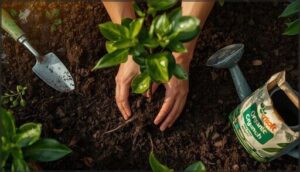
Your citrus tree deserves the perfect start—and you’re about to master it. Begin planting in early spring, after your last average frost, giving roots maximum establishment time before summer heat arrives.
| Step | Action |
|---|---|
| Prepare Site | Select container with drainage holes or garden bed; ensure loose, well-draining soil |
| Position Root Ball | Place at same depth as nursery pot; backfill with amended soil and lightly firm |
| Water Thoroughly | Saturate soil immediately after planting to settle and eliminate air pockets |
| Apply Mulch | Add 2–3 inch organic layer, keeping 2 inches from trunk |
This methodical approach guarantees proper planting depth, aids root care, and sets the foundation for thriving container growing or in-ground success.
How to Choose and Size Pots
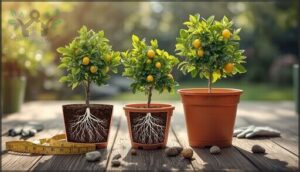
Your tree’s vigor hinges on pot size guidelines: select containers 1.5 to 2 times the root ball diameter with sturdy drainage systems for ideal root health. Wide, shallow pots promote fibrous development, while container materials like UV-stable plastic or porous terra cotta balance moisture retention and soil compatibility—critical for growing citrus in containers, especially during indoor citrus growing transitions.
Repotting Techniques and Timing

When spring’s warmth signals active growth—new leaf flush and lighter shoots—you’re witnessing the perfect repotting window for your citrus. Early spring, just before the growth surge, minimizes transplant shock and establishes vigorous root health.
- Gently tease circling roots and prune any dead tissue during transfer
- Use a fresh soil mix with good drainage and pH 6.0–6.5
- Select a pot only 1–2 inches larger to prevent overwatering
- Monitor moisture closely for 2–4 weeks post-repot to avoid root stress
Ensuring Proper Drainage and Root Health

Without proper drainage, your investment in premium soil mix and careful watering goes nowhere—waterlogged roots suffocate, rot takes hold, and growth stalls. Root health hinges on soil aeration and water management, so check drainage systems before trouble starts.
| Drainage Factor | Ideal Range | Root Health Impact |
|---|---|---|
| Pot drainage holes | 4–8 per container | Prevents standing water, maintains oxygen flow |
| Substrate particle size | 1/8–1/4 inch | Enhances soil aeration, reduces compaction |
| Watering interval | When top 2″ dry | Balances moisture without saturation stress |
| Repotting cycle | Every 2–3 years | Restores drainage, facilitates root pruning for vigor |
During soil maintenance and fertilization routines, monitor root color—firm, white roots signal success; dark, mushy tissue demands immediate action and possibly tree pruning to rebalance canopy load.
Essential Citrus Tree Care Tips

You’ve planted your citrus tree—now the real work begins. Keeping your tree healthy and productive requires consistent attention to watering, feeding, pruning, and environmental conditions.
Master these four essential care practices to transform your citrus from a struggling plant into a thriving fruit producer.
Watering Schedules and Methods
Your citrus tree won’t thrive on guesswork—mastering watering schedules means checking soil moisture before every irrigation. Water deeply when the top inch feels dry, targeting a watering depth of 6–8 inches to encourage strong roots.
Adjust irrigation timing based on humidity control needs: outdoor trees in full sunlight demand more frequent watering than indoor varieties. Proper drainage systems prevent root rot, while consistent humidity and sunlight for citrus guarantee vigorous growth year-round.
Fertilizing for Healthy Fruiting
Feeding your fruiting giants the right way unlocks massive harvests—balanced fertilizer timing and nutrient balance turn decent trees into powerhouses. Apply citrus-specific formulas from early spring through fruit set, adjusting for soil pH between 6.0–6.5 to optimize plant nutrition and fertilization efficiency.
- Boost potassium during fruiting for excellent fruit enhancement and size
- Monitor micronutrient role—zinc and manganese prevent deficiency yellowing
- Avoid nitrogen excess that delays flowering and weakens fruit development
- Test soil regularly to prevent salt buildup from Romeo plant food or similar products
Pruning for Shape and Productivity
Smart pruning techniques turn scraggly growth into a disciplined, fruit-loaded machine—you’re the architect of your tree’s destiny. Cut back to well-spaced shoots with 2–3 cm of new growth during late winter using sterilized pruning tools for canopy management.
Thin fruit to channel energy into larger yields, remove crossing branches for better light penetration, and maintain fruiting wood through strategic tree shaping that aids citrus tree care and maintenance mastery.
Temperature and Humidity Management
Think of temperature and humidity as the invisible hands shaping your citrus tree’s vitality—master these, and you’ve unlocked the secret to prolific fruiting year-round. Daytime warmth between 70–85°F and nighttime lows above 50–55°F define ideal Climate Zones for indoor citrus and outdoor cultivation alike.
- Maintain Humidity Levels between 40–60% to support Humidity and Pollination without inviting fungal diseases
- Use frost protection measures—fabric covers, strategic placement—to shield trees from cold snaps below 50°F
- Balance Lighting and Temperature Control with grow lights and circulation fans to prevent Heat Stress indoors
- Monitor relative humidity with hygrometers, adjusting with dehumidifiers or misting to stabilize microclimate conditions
Managing Pests, Diseases, and Deficiencies
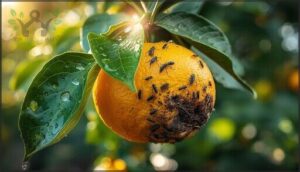
You can’t grow great citrus without dealing with the uninvited guests and challenges that come with the territory. Pests, diseases, and nutrient imbalances will test your skills, but catching problems early and responding with precision keeps your trees productive.
Here’s how to identify threats, correct deficiencies, and protect your citrus through every season.
Common Citrus Pests and Natural Controls
Your citrus trees won’t surrender to invaders if you know the enemy. Aphids cluster on tender shoots, curling leaves and stunting growth, while spider mites spin fine webbing beneath foliage, causing stippled bronzing. Scale insects and mealybugs drain sap, secreting honeydew that feeds sooty mold.
| Pest | Damage Signs | Natural Controls |
|---|---|---|
| Aphids | Curled leaves, stunted shoots | Neem oil spray, insecticidal soap |
| Spider Mites | Fine webbing, bronzed foliage | Water rinse, horticultural oil |
| Scale Insects | Honeydew, sooty mold | Manual removal, horticultural oil |
| Mealybugs | Reduced vigor, sticky residue | Alcohol swabs, beneficial insects |
| Fungus Gnats | Root damage in potted trees | Soil drying, sticky traps |
Integrated pest management combines organic remedies with cultural practices—routine leaf washing, proper pruning, and timely intervention—to maintain fruit tree health without harsh chemicals.
Preventing and Treating Citrus Diseases
You’ve beaten back the pests—now armor your trees against disease. Melanose, citrus canker, and root rot strike when moisture lingers and air stagnates.
Strip fallen leaves, space branches for airflow, and water at soil level to starve fungal infections. Copper-based fungicides halt canker on contact, while well-draining soil blocks root rot before it starts.
Strong disease resistance begins with vigilant citrus tree care and maintenance—your best defense is prevention, not reaction.
Nutrient Deficiencies and Soil PH Management
Yellowing leaves reveal what your soil withholds. Nitrogen deficiency drains foliage to pale green; iron deficiency narrows young leaves with green veins—common when soil pH climbs above 6.5.
Soil pH testing and micronutrient management expose hidden gaps, while fertilizer selection aligned with soil remediation corrects magnesium, zinc, and manganese shortfalls.
Master plant nutrition and fertilization through precise soil and fertilizer management—your fruit tree care hinges on what roots can actually absorb.
Seasonal Care and Winter Protection
Beyond leaf yellows and pH swings, frost shreds unprepared citrus. When forecasts dip below 32°F, move pots indoors or wrap trunks with frost protection cloth.
Indoor citrus needs 12–14 hours of indoor lighting from grow lamps, while cold hardiness varies by cultivar. Pause winter care fertilizer to halt tender growth, maintain soil barely moist, and practice seasonal pruning only after frost risk passes—smart winter gardening tips preserve your tree care and maintenance efforts.
Top 10 Citrus Tree Products for Home Gardeners
Equipping yourself with the right tools and products transforms citrus cultivation from guesswork into precision gardening. Whether you’re feeding your trees with specialized fertilizers, selecting a living specimen for your windowsill, or exploring decorative alternatives that skip the maintenance, quality products make the difference between struggling plants and thriving harvests.
Here are ten standout options that deliver real results for home citrus growers.
1. Bellacat 7ft Artificial Citrus Tree
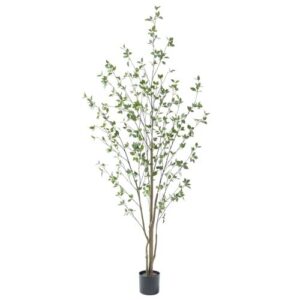
When you’re ready to skip the fuss of indoor citrus tree care but still crave that vibrant orchard aesthetic, the Bellacat 7ft Artificial Citrus Tree delivers instant greenery without watering schedules or fertilizer routines.
This silk-constructed decorative plant option stands 84 inches tall with realistic foliage and fruit accents, fitting seamlessly into living rooms or offices where growing citrus indoors isn’t practical.
You won’t wrestle with tree maintenance costs, pest management, or humidity requirements—just dust occasionally and enjoy the fake citrus benefits of year-round visual appeal minus the horticultural commitment.
- Zero maintenance required—no watering, fertilizing, or worrying about pests and diseases that plague real citrus plants
- Lifelike silk leaves and fruit accents create an authentic orchard vibe that works in any room with consistent visual appeal year-round
- Sturdy weighted base and flexible branches let you shape the tree to fit your space without tipping or stability issues
- Actual height may fall short of the advertised 7 feet, landing closer to 6 feet based on user reports
- Leaf color can look too bright or artificial green for some tastes, requiring extra styling with planters or moss to feel natural
- Artificial materials mean you miss out on the fresh citrus scent and air-purifying benefits of a living tree
2. EZ Gro Citrus Tree Fertilizer
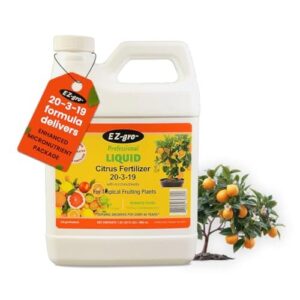
You’ll break free from guesswork when you reach for EZ-gro’s concentrated liquid citrus nutrition powerhouse. Its 20-3-19 NPK formula drives vigorous tree growth and citrus fruit production, while micronutrients like iron and magnesium tackle yellowing leaves before they sabotage your harvest.
Apply 7 ounces per watering can during active growth periods for ideal fertilizer application, and watch your potted lemons or outdoor grapefruit respond with lush foliage and improved fruiting cycles.
This soil enhancement tool works indoors and out, turning fertilizer benefits into tangible citrus care results.
- High-nitrogen formula (20-3-19) with micronutrients quickly addresses common citrus deficiencies like chlorosis and promotes lush foliage and better fruit yields.
- Concentrated liquid absorbs faster than granular options, making it ideal for container trees that need frequent feeding during growth seasons.
- Versatile enough for lemons, limes, mangoes, avocados, and other tropical species in various growing environments.
- The recommended 7-ounce dose per watering can feels excessive to some users, potentially leading to faster depletion and higher costs.
- Several customers report order cancellations due to shipping restrictions or “undeliverable address” errors, limiting availability.
- Results aren’t always immediate—some trees may take multiple applications before showing noticeable improvement.
3. Haplant 6ft Faux Citrus Tree
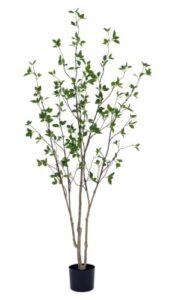
You don’t need soil, sunlight, or watering schedules to enjoy indoor citrus trees when artificial greenery offers the visual impact without the horticultural commitment. Haplant’s 6ft faux tree delivers decorative accents that mimic living citrus care outcomes—realistic emerald leaves and textured plastic trunk—while demanding zero maintenance protocols.
Its flame-retardant construction suits households with children or pets, and bendable branches let you shape the canopy to fit minimalist or modern interiors.
This low maintenance indoor decor option thrives where growing citrus indoors would fail: dim corners, drafty offices, or climates hostile to indoor citrus trees.
- Completely maintenance-free and stays green year-round, so you never have to water, fertilize, or worry about dead leaves
- Safe for homes with children and pets thanks to flame-retardant materials and no toxic parts
- Bendable branches let you customize the shape to fit your space, whether you want a fuller look or something more sparse
- Made of plastic, so it’s not an eco-friendly choice if sustainability matters to you
- Needs occasional dusting to keep looking fresh and realistic
- Some people find the branches too dense out of the box and have to remove a few to get the look they want
4. Espoma Organic Citrus Tone Plant Food

Fertilizer application drives citrus nutrition through balanced N-P-K ratios and micronutrients like iron and zinc, which support plant growth and fruiting cycles. Espoma Organic Citrus Tone delivers slow-release granules enriched with Bio-tone microbes that boost soil health over weeks, reducing burn risk while improving soil and fertilizer management.
Its 5-2-6 analysis with 5% calcium tackles deficiencies common in containerized trees, making it ideal for organic fertilizer advocates committed to soil science principles.
Apply in late winter, spring, and fall to fine-tune plant nutrition and fertilization timing for maximum yield.
- Slow-release formula with Bio-tone microbes feeds trees for weeks and reduces the risk of fertilizer burn
- Approved for organic gardening with a 5-2-6 analysis plus 5% calcium to address common nutrient deficiencies
- Easy to apply granules that work for both container and ground-planted trees
- Strong odor makes it unsuitable for indoor use and should be kept away from pets
- Requires multiple applications per year (late winter, spring, and fall) to maintain results
- The smell can be off-putting even for outdoor application
5. Jobe’s Organics Fruit and Citrus Fertilizer

You’re done feeding wimpy concentrations—Jobe’s Organics Fruit and Citrus Fertilizer brings bold 3-5-5 NPK granular fertilizers that rewrite citrus nutrition without synthetic shortcuts. This OMRI-listed organic fertilizer addresses fruit tree care through aggressive soil conditioning, packing micronutrients directly into the root zone for plant nutrition and fertilization that outpaces watered-down competitors.
Apply every 4-8 weeks during active growth, water thoroughly for citrus tree care, and watch indoor citrus tree care transform under nitrogen-driven foliage vigor—though that barnyard funk means outdoor soil and fertilization only, no exceptions for fertilizer application indoors.
- OMRI-listed organic formula with a strong 3-5-5 NPK ratio delivers serious nutrients for fruit production and vibrant foliage without synthetic additives
- Simple application every 4-8 weeks means less fussing around with complicated feeding schedules
- Safe for use around kids and pets once applied, giving you peace of mind in family gardens
- Strong manure-like smell makes it unsuitable for indoor plants and might attract curious dogs to your garden
- Quality control issues pop up in some batches, with powder instead of the expected granules
- Outdoor-only application limits its use if you’re growing citrus trees in containers indoors
6. Gardenera Citrus Tree Fertilizer Mist Spray
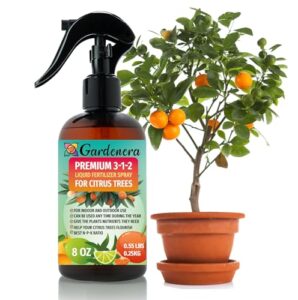
You want foliar spray benefits that hit citrus nutrient needs instantly? Gardenera Citrus Tree Fertilizer Mist Spray delivers plant nutrition and fertilization directly through leaves, bypassing sluggish soil and fertilization delays for a tree health boost when micronutrient deficiencies strike.
Apply every 2–4 weeks during active growth—early morning or late afternoon—for fruit tree care and maintenance that dodges leaf burn while respecting citrus tree care fundamentals.
Spray upper and lower surfaces, avoid flowering periods, and always test a small area first to prevent phytotoxicity during fertilizer application.
- Delivers nutrients directly to leaves for quicker uptake than traditional soil fertilizers, especially helpful when trees show signs of iron, magnesium, or zinc deficiency.
- Ready-to-use mist design makes application simple—just shake, spray both leaf surfaces, and you’re done in minutes.
- Works well as part of a regular feeding schedule during active growth, helping improve leaf color and support better fruit development.
- Spray bottle may arrive damaged or leak during shipping, based on user reports.
- Requires consistent reapplication every 2–4 weeks for best results, which adds up in time and cost over the season.
- Must avoid spraying during extreme heat or flowering periods to prevent leaf burn or interference with pollination.
7. Persian Lime Tree Indoor Fruit Tree
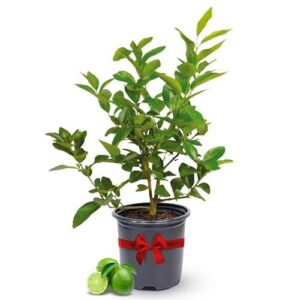
Indoor lighting pushes Persian lime tree fruit production beyond the guesswork—6 to 8 hours of direct sun daily through south-facing windows or supplemental grow lamps triggers flowering and sets fruit by year two or three under tight temperature control (65–75°F days, no lower than 50–55°F nights).
Maintain soil quality with a pH of 6.0–6.5 using well-draining potting media, and keep pest control simple: monitor for scale, spider mites, and aphids weekly.
Tree pruning improves light penetration, shaping compact indoor citrus trees for maximum yield in confined spaces.
- Compact size (18–22 inches) fits perfectly in kitchens, patios, or small apartments
- Produces seedless limes in 2–3 years with proper light and care
- Lower pest problems indoors compared to outdoor citrus trees
- Requires 6–8 hours of direct sunlight daily, which may need grow lights
- Can’t ship to CA, AZ, TX, or LA due to restrictions
- Customers report issues with falling leaves, broken branches, and dirt loss during shipping
8. Nearly Natural Minimalist Citrus Tree
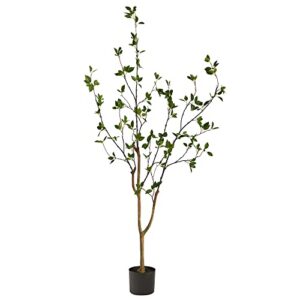
You don’t need living citrus trees for stunning indoor landscaping—Nearly Natural’s Minimalist Citrus Tree delivers citrus varieties in fake foliage form, standing 60 inches tall with bendable polyester branches and realistic trunk detail.
This artificial tree requires no plant care beyond monthly dusting, thriving in low-light zones where indoor citrus tree care becomes impractical.
At 6.1 pounds, the minimalist decor suits kitchens or bonus rooms without watering schedules, tree pruning and training, or pest monitoring—perfect for those craving citrus aesthetics minus the horticultural commitment.
- Requires virtually no maintenance beyond a quick monthly dusting
- Works perfectly in low-light spaces where real plants would struggle or die
- Bendable branches let you adjust the shape to fit your space or aesthetic
- Some customers report the base can be wobbly or uneven out of the box
- Leaf clusters may detach and can be tricky to put back on securely
- Not as full or lush as some other artificial tree options on the market
9. Growing Citrus Trees Home Garden

For readers craving deeper knowledge beyond faux foliage, the independently published Growing Citrus Trees Home Garden packs fruit gardening fundamentals into 45 pages—covering garden layout, citrus soil mix, and harvest timing with practical gardening techniques suited for beginners.
Released April 2024, this compact guide delivers tree maintenance protocols and indoor citrus essentials without overwhelming jargon, though its brevity may leave experienced growers wanting more.
At 3.68 ounces, it’s portable enough to consult mid-prune, equipping your growing citrus ambitions with straightforward home gardening intel.
- Covers the essentials—variety selection, soil prep, watering schedules, fertilization, and pruning—in a beginner-friendly format that won’t overwhelm newcomers.
- Portable size makes it easy to bring into the garden for quick reference while you’re actually working with your trees.
- Published recently (April 2024), so the advice reflects current best practices for home citrus cultivation.
- At only 45 pages, it lacks depth on advanced topics like disease diagnosis, specialized grafting techniques, or troubleshooting complex nutrient deficiencies.
- Assumes you already have basic gardening knowledge, so total beginners might need supplementary resources to fill in foundational gaps.
- Narrow focus on citrus means it won’t help if you’re looking to diversify into other fruit trees or broader garden planning.
10. Citrus Trees in Pots and Containers

Citrus Trees in Pots and Containers delivers 162 pages of container gardening essentials for beginners, covering indoor lighting, water management, and repotting and transplanting across Kumquats, Lemons, Limes, Oranges, and Mandarins.
Published in May 2021, it drills into container selection, potting mixes, and citrus pruning with step-by-step instructions suited for both novices and veterans growing citrus in containers.
A bonus espalier chapter rounds out this paperback, hardback, and Kindle resource. However, some readers found its detail level excessive for a quick indoor citrus reference.
- Covers all the basics for five popular citrus varieties plus a bonus chapter on espalier techniques
- Available in multiple formats including Kindle for digital convenience
- Includes practical troubleshooting for common pests and diseases in container environments
- Some readers find the writing overly detailed and wordy for a quick reference guide
- Paperback version only has black and white photos, which makes it harder to identify issues visually
- At 162 pages, it may be more comprehensive than needed for gardeners who prefer concise, visual instructions
Frequently Asked Questions (FAQs)
Can citrus trees be grown from seed successfully?
You can grow citrus trees from seed, but fruit quality varies unpredictably due to citrus genetics. Grafting methods guarantee consistency, while seedling care demands patience—seed germination to fruit-bearing maturity requires one to two years minimum.
How long until a citrus tree produces fruit?
Patience pays dividends when anticipating your first harvest—most grafted citrus trees deliver fruit within 2 to 3 years under ideal conditions, while dwarf varieties often reward diligent growers even earlier, around 1 to 2 years.
What causes citrus leaves to turn yellow suddenly?
Yellow leaves signal trouble—nutrient deficiencies like iron or nitrogen, water stress from overwatering or drought, pest infestations such as spider mites, environmental factors including cold snaps, or disease symptoms like citrus greening demand your immediate attention.
Do citrus trees need pollination to set fruit?
Most citrus trees produce fruit through self-fertilization, meaning cross-pollination isn’t required for fruit set. However, manual pollination with a small brush can boost fruit production when natural pollinators are limited indoors.
How long until my citrus tree bears fruit?
Most container citrus trees take 1–3 years to fruit after flowering begins, though dwarf varieties can deliver lemons and other citrus fruit faster with ideal care, consistent fertilization, and proper sunlight exposure.
Can citrus trees cross-pollinate with each other?
Most citrus trees are self-fertile, but cross-pollination between varieties can occur, creating citrus hybrids with altered seed formation.
While unnecessary for fruit set, cross-breeding influences seed content and may affect overall fruit production quality.
What causes citrus fruit to drop prematurely?
Fluctuating factors frequently force fruit from branches before ripening. Environmental stress, watering issues, nutrient deficits, pest infestations, and poor pollination disrupt citrus fruit production, triggering premature drop that undermines your harvest despite diligent pruning and care.
How do I propagate citrus from cuttings?
You can multiply your citrus collection using semi-hardwood cuttings dipped in rooting hormone and planted in a well-draining medium like perlite.
Node selection and humidity control determine successful propagation without grafting complications.
Are citrus leaves safe for pets to eat?
Like a bitter lemon in your pet’s mouth, citrus leaves aren’t exactly toxic but can irritate their stomach—causing vomiting or drooling.
Keep your indoor citrus trees and citrus plants out of reach for proper pet safety tips and household plant precautions.
Conclusion
Picture yourself stepping into your backyard on a February morning, plucking a Meyer lemon still warm from dawn sunlight—no grocery store, no middleman, just you and the tree you’ve nurtured through seasons of careful attention.
Growing citrus trees at home transforms your relationship with food from passive consumption to active stewardship. You’ve learned the science, mastered the technique, and built something that will outlast fleeting trends: a self-sustaining source of nourishment rooted in your own soil.
- https://californiacitrusthreat.org/
- https://academichelpexpress.blog/2024/08/please-use-the-bulleted-points-and-the-rubric-below-to-guide-your-work-your-pa/
- https://x.com/godofprompt/status/1990526288063324577
- https://www.writingclearscience.com.au/category/writing-guides/writing-research-papers/page/2/
- https://www.sciencedirect.com/science/article/pii/S0749208123000268