This site is supported by our readers. We may earn a commission, at no cost to you, if you purchase through links.
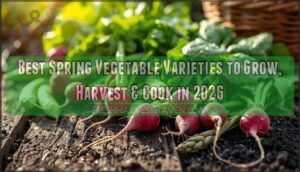
Most gardeners miss spring’s shortest planting window by waiting too long. The best spring vegetable varieties need cool soil between 40 and 65 degrees, and that window closes fast once summer heat arrives.
Asparagus crowns go dormant if planted late, snap peas turn bitter in warm weather, and radishes bolt before sizing up. You don’t get a second chance until next year. The varieties that thrive in spring demand different timing than summer crops, and choosing the right ones for your zone makes the difference between a bountiful harvest and bare beds.
Once you match cold-hardy varieties to your last frost date, you’ll fill your kitchen with fresh greens and crisp roots weeks before tomatoes even get transplanted.
Table Of Contents
- Key Takeaways
- Best Spring Vegetable Varieties to Grow
- Top 5 Products for Growing Spring Vegetables
- How to Grow Spring Vegetables Successfully
- Harvesting, Storing, and Cooking Spring Vegetables
- Frequently Asked Questions (FAQs)
- What are the best spring vegetables?
- What are the fastest growing spring vegetables?
- What is the most profitable vegetable in spring?
- How do I prevent pests in spring gardens?
- When should I water newly planted spring vegetables?
- Can spring vegetables tolerate late season frost?
- What companion plants work best with spring crops?
- How do I know when soil temperature is right?
- Can spring vegetables grow in partial shade?
- How often should spring vegetables be watered?
- Conclusion
Key Takeaways
- Spring vegetables need cool soil between 40 and 65°F, and you’ll lose your planting window fast once summer heat arrives—radishes bolt, snap peas turn bitter, and asparagus crowns go dormant if you plant late.
- Fast-maturing crops like radishes (20-30 days) and arugula (25-45 days) let you harvest multiple times through succession planting every 7-14 days, keeping fresh produce coming all season.
- Match your varieties to your USDA zone and last frost date—cold-hardy crops like spinach, peas, and beets can start 3-6 weeks before frost, while proper soil prep with compost and pH testing between 6.0-6.8 sets up strong root development.
- Harvest timing determines flavor—pull radishes at 1 inch for the best crunch, pick snap peas when pods snap crisply at 60-70 days, and cut asparagus spears during their 6-8 week spring window for maximum sweetness.
Best Spring Vegetable Varieties to Grow
Growing your own spring vegetables doesn’t require years of experience or a massive garden plot. You can start with a few tried-and-true varieties that thrive in cool weather and deliver fast results.
Beginners often find success by following simple planting guides for easy spring vegetables that tolerate cooler temperatures.
Here are six spring vegetables that grow well, taste great, and won’t test your patience.
Asparagus — a Perennial Spring Favorite
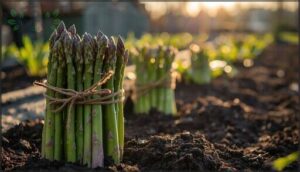
Asparagus stands apart from other spring vegetables because it’s a perennial plant that produces for 15 to 20 years once established. You plant crowns in well-drained soil with a pH around 6.5 to 7.5, then harvest tender spears for six to eight weeks each spring.
The nutrition is impressive too — folate, vitamins A, C, E, and K, plus fiber. Proper perennial care and garden planning guarantee decades of spring harvesting for your asparagus recipes.
Beets — Fast-Maturing and Sweet
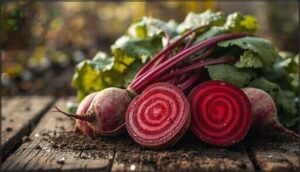
Beets stand out among cool weather crops for their fast maturation — most varieties reach harvest in 45 to 70 days. You’ll get the sweetest roots when soil temperatures hover around 50°F during spring planting. Their sugar content ranges from 12% to 21%, making them perfect for roasted beet recipes or raw salads.
- Plant seeds ½ inch deep in loose, fertile soil with pH 6.0-7.0 for ideal root development
- Choose sweet varieties like ‘Red Ace’ (50 days) or golden ‘Touchstone Gold’ (55 days) for quick harvests
- Prepare beds by turning soil 8-10 inches deep to remove rocks and improve drainage
- Sow three weeks before your last frost date, spacing seeds 2-3 inches apart
- Cool spring temperatures boost sugar production and intensify that signature earthy-sweet flavor
For essential tips on, you can improve your harvest and root quality.
Snap Peas — Sweetest in Spring
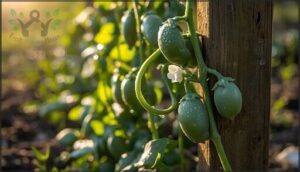
You’ll find snap peas deliver their sweetest flavor profile when spring temperatures stay cool. Their tender pod structure reaches peak sweetness 50 to 65 days after sowing—that’s when pods snap crisply and peas inside taste juicy.
Train vines on trellises for easy spring harvest, and you’ll enjoy fresh produce packed with vitamin C and fiber from your vegetable gardening efforts.
For more details on the unique traits of different snap pea varieties, explore their distinct flavors and growth habits.
Radishes — Spicy and Quick to Harvest
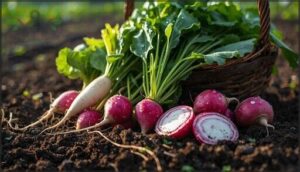
Once your snap peas finish, radishes offer quick-turn excitement—most varieties reach harvest size in 20 to 30 days. Their spicy bite comes from compounds that intensify as roots mature, so pull them early for mild crunch or later for bold heat.
Here’s what makes radishes essential for spring vegetable gardening:
- Rapid growth suits succession planting every 2 to 3 weeks
- Radish varieties range from French breakfast to Daikon, each with unique flavors
- Soil preparation with even moisture prevents woody, split roots
Keep your soil evenly moist and watch root vegetables thrive. Harvest when roots hit 1 inch diameter, remove greens promptly, and refrigerate for up to 2 weeks. Try radish nutrition in spicy recipes or pickle them for extended use—their crisp texture pairs well with salads. These gardening tips guarantee quick harvesting success.
Spinach, Swiss Chard, and Arugula — Nutritious Spring Greens
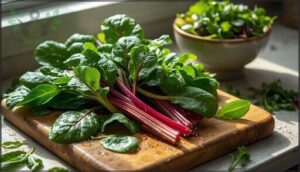
These three powerhouse greens anchor your spring salads and green smoothies with distinct leafy textures.
For best results, plant them early using proven spring gardening tips for beginners that focus on soil temperature and timing.
Spinach offers 24 milligrams of vitamin C and 839 milligrams of potassium per cooked cup, while Swiss chard delivers 30 milligrams of vitamin C.
Arugula’s peppery glucosinolates support detox pathways.
All three shine in spring vegetable recipes through healthy sauteing or quick wilts, giving you nutrient benefits and healthy food options.
Artichokes, Broccoli, and Carrots — Unique Spring Picks
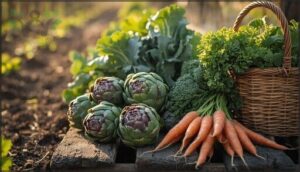
When daytime temperatures hold between 60 and 75°F, spring harvesting rewards you won’t find later in the year are delivered by artichokes, broccoli, and carrots. These crops anchor garden planning and crop rotation schedules.
- Artichokes need well-drained soil at pH 6.0–7.0 for healthy hearts
- Broccoli varieties like Calabrese set tight crowns in 55–70°F cool spells
- Nantes carrots develop sweet flavor in loose, stone-free beds
All three shine in seasonal recipes and boost vegetable nutrition.
Top 5 Products for Growing Spring Vegetables
Growing spring vegetables isn’t just about choosing the right seeds. You need a few key products to give your plants the best start and keep them thriving through unpredictable spring weather.
Here are five tools that make growing your spring garden easier and more successful.
1. Quictent Mini Greenhouse Shelter
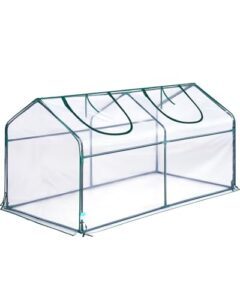
You can’t push your spring seedlings too early if they’re shielded from the unpredictable weather. The Quictent Mini Greenhouse Shelter offers a powder-coated steel frame paired with a transparent PVC cover that transmits 95% to 98% of available light.
At 71 by 36 by 36 inches, it accommodates multiple seed trays while roll-up vents prevent condensation buildup. Assembly takes around 20 to 40 minutes, and the waterproof design protects tender transplants from late frosts without blocking essential sunlight.
| Best For | Gardeners who want to start seeds early or protect young plants from unpredictable spring weather without investing in a permanent greenhouse structure. |
|---|---|
| Primary Use | Plant protection |
| Indoor/Outdoor | Both |
| Material | Metal & PVC |
| Weight | 7 pounds |
| Country Origin | Not specified |
| Season | All seasons |
| Additional Features |
|
- Clear PVC cover lets in 95-98% of sunlight while keeping plants warm and shielded from wind and frost
- Quick setup in under an hour with a lightweight frame that’s easy to move around your yard or patio
- Roll-up vents give you control over airflow and temperature so seedlings don’t overheat on sunny days
- The lightweight frame and PVC cover can struggle in strong winds and may need extra stakes or weights to stay put
- The cover and zippers are prone to tearing if you’re not careful during setup or daily use
- Not built for extreme weather—heavy snow or sustained wind can bend the poles or damage the structure
2. Seed Needs Paris Market Carrot Seeds
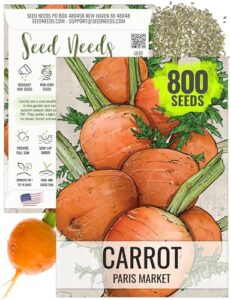
Round carrots might seem like a novelty, but Paris Market seeds deliver genuine garden value. These heirloom roots mature in 50 to 70 days and reach just 2 to 4 centimeters across, making them perfect for containers or shallow beds where standard varieties struggle.
You’ll get smooth orange skins and sweet tender flesh that chefs favor for baby carrot dishes. Sow directly after your last frost, thin to 2 to 3 centimeters apart, and keep the soil evenly moist to prevent cracking as the roots fill out.
| Best For | Gardeners with limited space or shallow soil who want sweet, tender carrots that grow quickly in containers or small plots. |
|---|---|
| Primary Use | Growing carrots |
| Indoor/Outdoor | Outdoor |
| Material | Heirloom seeds |
| Weight | 0.634 ounces |
| Country Origin | Not specified |
| Season | Spring/Fall |
| Additional Features |
|
- Matures in just 50-70 days, giving you fresh carrots faster than standard varieties
- Perfect for container gardening and rocky or shallow soil where regular carrots won’t grow
- Sweet, crisp taste with minimal peeling needed makes them ideal for raw snacking or roasting
- Some customers reported issues with germination rates or slower-than-expected growth
- Limited growing season means you’ll need to time plantings carefully for early spring and fall
- Needs proper seed storage and specific soil conditions to perform well
3. Cz Garden Tomato Fertilizer
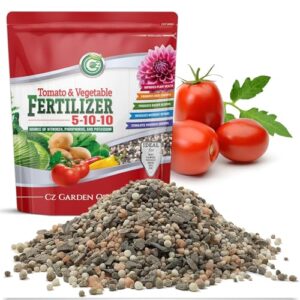
Spring vegetables need steady feeding without leaf overload, which is why Cz Garden’s 5-10-10 formula works. You get 5 percent nitrogen for green growth, 10 percent phosphorus for strong roots and blossoms, and 10 percent potassium for better water regulation and fruit quality.
The slow-release granules trickle nutrients over weeks rather than dumping everything at once, so your tomatoes, beets, and carrots won’t burn. The 4-pound resealable pouch stores easily and delivers enough to feed mixed beds through the season.
| Best For | Gardeners growing spring and summer vegetables like tomatoes, peppers, and root crops who want a balanced fertilizer that feeds steadily without burning plants. |
|---|---|
| Primary Use | Plant fertilization |
| Indoor/Outdoor | Both |
| Material | Granular fertilizer |
| Weight | 4 pounds |
| Country Origin | USA |
| Season | All seasons |
| Additional Features |
|
- 5-10-10 ratio emphasizes root development and fruiting over excessive leaf growth
- Slow-release granules prevent nutrient burn and reduce how often you need to reapply
- Resealable 4-pound bag is easy to store and handles multiple garden beds through the season
- No organic certification mentioned, which matters if you’re growing certified organic produce
- Lacks specific dosage instructions, so you’ll need to guess or look up rates elsewhere
- May not suit acid-loving plants or specialized crops that need different nutrient ratios
4. Aquadulce Fava Bean Seeds
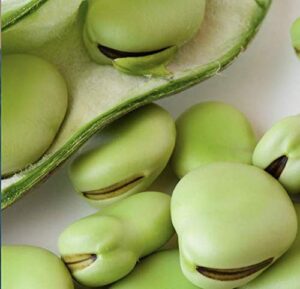
Aquadulce fava beans reach 3 to 4 feet tall and produce 5- to 8-inch pods filled with large, tender beans that work fresh or dried.
You’ll direct sow them 1 inch deep and 6 inches apart as soon as soil can be worked in early spring or 6 to 8 weeks before first frost for fall crops. The 25-seed packet matures in 70 to 90 days and thrives in full sun across zones 3 through 12, fixing nitrogen in your soil while delivering beans for soups, succotash, or storage.
| Best For | Gardeners who want a productive, low-maintenance bean that fixes nitrogen in the soil and provides large harvests for fresh eating or long-term storage. |
|---|---|
| Primary Use | Growing fava beans |
| Indoor/Outdoor | Outdoor |
| Material | Non-GMO seeds |
| Weight | Not specified |
| Country Origin | Not specified |
| Season | Spring/Fall |
| Additional Features |
|
- Grows well in poor soil without fertilizer and fixes nitrogen naturally
- Produces large beans (quarter-sized) in 5-8″ pods with reliable yields
- Works for both spring and fall planting across a wide range of zones (3-12)
- Some gardeners report low germination rates or inconsistent growth
- Can attract pests like rats and may need protection
- Seeds don’t always match expected flavor or color
5. Cosweet Biodegradable Peat Plant Pots
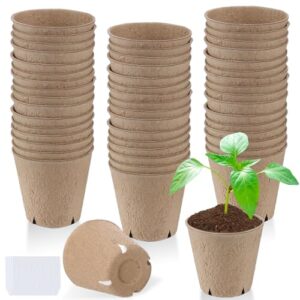
Once seedlings emerge, you’ll need containers that support root development without transplant shock. These 3.2-inch biodegradable pots hold asparagus, beet, or radish seedlings started indoors under grow lights, then plant directly into garden soil where the compressed peat decomposes naturally.
The 50-piece pack with drainage holes fits standard trays and works for shallow-rooted greens like spinach or arugula. Keep the peat moist but not waterlogged during germination, and transplant when roots reach pot edges—no removal needed, just bury the entire container.
| Best For | Gardeners starting multiple seedlings indoors who want to transplant directly into the ground without disturbing roots. |
|---|---|
| Primary Use | Seedling starting |
| Indoor/Outdoor | Both |
| Material | Recycled paper |
| Weight | 12.3 ounces |
| Country Origin | Not specified |
| Season | Spring |
| Additional Features |
|
- Biodegradable pots let you plant directly in the ground without removing seedlings, preventing transplant shock
- 50-pack with drainage holes and 100 plant markers gives you everything needed to start a variety of herbs, greens, and flowers
- Made from recycled paper, so they’re compostable and better for the environment than plastic pots
- Pots break down quickly when wet, so they’re not ideal for long-term use or plants that need extended indoor growing time
- 3.2-inch size is too small for larger plants like tomatoes and peppers that need more root space
- Peat material can promote mold growth if kept too moist, requiring careful watering balance
How to Grow Spring Vegetables Successfully
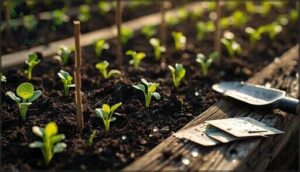
Growing spring vegetables doesn’t have to be complicated if you know the fundamentals. You need to understand soil prep, timing, and which varieties work in your climate.
Here’s what you should focus on to get a successful spring harvest.
Preparing Soil and Raised Beds for Spring
Before you plant anything, test your soil pH to check pH and nutrient levels—most cool-season crops thrive between 6.0 and 6.8.
Work 2 to 4 inches of compost into raised beds to improve drainage and structure.
Loosen compacted soil 8 to 12 inches deep, then add mulch around plants to regulate moisture and suppress weeds during your spring vegetable gardening season.
Starting Seeds Indoors Vs. Direct Sowing
Once your beds are ready, you’ll need to decide between seed starting indoors or direct sowing. Cool season crops like beets and spinach can be started indoors 4 to 6 weeks before the last frost, giving you earlier harvests and better germination rates in controlled soil temperature.
Direct sowing works well for radishes and peas once soil reaches 50 to 60 Fahrenheit, skipping transplant shock entirely. Match your seed selection and sowing depth to each vegetable variety for best results.
Succession Planting for a Continuous Harvest
To keep fresh greens coming all season, try succession planting every 7 to 14 days with fast crops like lettuce and arugula. Stagger small patches so one bed matures while the next is still sprouting.
Crop rotation between harvest waves protects soil nutrients and cuts pest pressure. Garden planning tools like a simple calendar help you track sow dates and nail your harvest scheduling without gaps.
Choosing Varieties That Suit Your USDA Zone
Zone selection starts with your USDA hardiness rating and local frost dates. In Zone 7a areas like Ashburn, Virginia, peas and spinach handle early springs well.
Climate considerations include soil temperature—cool-season crops need 40 to 45°F to germinate. Check frost tolerance on seed packets and watch for microclimate effects near walls or low spots that shift planting windows by days or weeks.
Harvesting, Storing, and Cooking Spring Vegetables
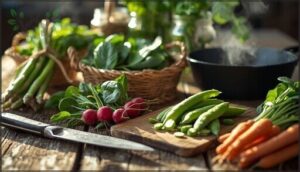
You’ve put the work in, now it’s time to enjoy the payoff. Knowing when to pick your vegetables makes all the difference in flavor and shelf life.
Here’s what you need to know about harvesting at the right time, keeping things fresh, and turning your spring haul into simple, tasty meals.
Optimal Harvest Times for Each Variety
Timing your spring harvests right makes all the difference between tender, flavorful crops and tough disappointments. Radishes mature fastest at 20 to 30 days when roots reach about 1 inch. Spinach leaves are ready in 30 to 45 days, while beets need 50 to 70 days for 1.5 to 3-inch roots.
Snap peas take 60 to 70 days, and asparagus spears emerge for 6 to 8 weeks each spring.
Proper Storage Methods to Keep Produce Fresh
After your spring vegetables come inside, you need storage solutions that preserve their freshness and nutrition. Store leafy greens in perforated bags at 32 to 40°F with humidity control around 90 to 95 percent.
For proper vegetable storage and handling, separate high-ethylene producers like apples from sensitive greens. Refrigeration tips matter: never wash produce before storing, and use breathable containers for ideal vegetable freshness.
Simple Cooking Techniques for Spring Vegetables
The secret to cooking fresh produce is matching the cooking method to each vegetable’s structure. Roasting methods at 400 to 425 degrees caramelize asparagus and radishes.
Steaming tips say cover tightly for two minutes to keep greens vibrant. Sauteing tricks involve preheating your pan until shimmering.
Blanching techniques preserve color with an ice bath. Quick pickling recipes brighten any meal.
Healthy Spring Recipes Featuring Top Varieties
Fresh produce transforms into nourishing meals when you pair simple techniques with quality ingredients. Spring recipes highlight what’s at peak flavor in your garden.
- Spring salads combine peppery arugula with citrus dressing and radish slices
- Roasted vegetables like beets with thyme cook perfectly at 425 degrees for 35 to 40 minutes
- Veggie stirfries use snap peas and greens sautéed quickly in preheated pans
- Fresh soups feature spinach or Swiss chard added just before serving
Healthy cooking starts with harvest-fresh ingredients.
Frequently Asked Questions (FAQs)
What are the best spring vegetables?
When frost finally retreats, your garden awakens with asparagus spears, crisp radishes, tender peas, peppery greens like arugula and spinach, plus nutrient-packed artichokes—each offering peak spring nutrition and fresh harvesting opportunities.
What are the fastest growing spring vegetables?
Radishes lead the pack, ready in just 20 to 30 days.
Arugula and spinach follow close behind at 25 to 45 days.
These quick maturing varieties let you enjoy early spring harvests and speedy crop rotation.
What is the most profitable vegetable in spring?
Strawberries lead spring profit margins, generating up to twenty thousand dollars per acre.
Early asparagus and spinach also command premium pricing due to limited availability, while baby greens and specialty varieties boost farm revenue through direct market channels.
How do I prevent pests in spring gardens?
Don’t let pests bug you—start with garden sanitation by clearing debris.
Use row covers early, apply coarse mulch, maintain even moisture, and monitor weekly.
These organic gardening practices build natural pest resistance effectively.
When should I water newly planted spring vegetables?
Water newly planted spring vegetables in the morning when soil moisture is ideal.
Check transplant care daily for the first week, keeping the top inch damp but not soggy to support root development.
Can spring vegetables tolerate late season frost?
Many spring vegetables handle late season frost surprisingly well.
Spinach, kale, and peas show strong cold hardiness, while beets and radishes tolerate light freezes.
Row covers boost weather resistance when frost threatens.
What companion plants work best with spring crops?
Your spring vegetable gardening success grows when you pair crops strategically.
Companion planting boosts pest control and soil health—onions near carrots deter flies, while basil protects tomatoes and marigolds repel nematodes naturally.
How do I know when soil temperature is right?
Use a garden thermometer at four inches depth to check soil temperature. Most cool season crops need 40 to 60 degrees Fahrenheit, while warm season varieties prefer 60 to 75 degrees for reliable germination.
Can spring vegetables grow in partial shade?
You might think sun rules spring gardens, but many varieties thrive in shade.
Greens like spinach adapt beautifully.
Root crops shift harvest times. Pea yields stay steady with three to six hours of light.
How often should spring vegetables be watered?
Check soil moisture levels one to two inches down. Water deeply every two to four days in cool weather, shifting to daily irrigation during hot spells.
Leafy greens and root crops need consistent watering schedules.
Conclusion
Spring’s short season separates successful growers from wishful planters. You’ve got the roadmap now—the best spring vegetable varieties matched to your zone, the timing that beats the heat, and the techniques that turn cold soil into crisp harvests.
Don’t wait until your neighbor’s peas are already climbing. Get your asparagus crowns in the ground, sow those radish seeds, and claim your spot at the front of the growing season.
- https://extension.umn.edu/vegetables/growing-asparagus
- https://health.clevelandclinic.org/artichoke-benefits
- https://www.simplyrecipes.com/recipes/how_to_cook_and_eat_an_artichoke/
- https://www.delish.com/cooking/recipe-ideas/recipes/a46500/spinach-artichoke-grilled-cheese-recipe/
- https://giphy.com/gifs/cartoon-popeye-spinach-l2R06kO1jE5hNHub6