
This site is supported by our readers. We may earn a commission, at no cost to you, if you purchase through links.

Most home gardeners approach growing grapes like it’s some mystical art reserved for vineyard owners—but here’s the truth: you don’t need acres of rolling hills or specialized equipment to harvest baskets of juicy grapes from your own backyard. The real secret isn’t complicated; it’s choosing varieties bred specifically for home cultivation that match your local climate.
While your neighbor struggles with finicky European wine grapes that demand constant attention, you could be growing disease-resistant varieties like Edelweiss or Reliance that practically take care of themselves.
Whether you’re dealing with harsh northern winters, steamy southern summers, or something in between, there are bulletproof grape varieties that’ll thrive in your conditions and reward you with pounds of fresh fruit year after year.
Table Of Contents
- Key Takeaways
- Top Grape Varieties for Home Gardens
- Concord – Best for Cooler Climates
- Himrod – Sweet, Seedless Option
- Edelweiss – Disease-Resistant Favorite
- Reliance – Reliable Red Seedless
- Venus – Musky Flavor for Milder Regions
- Canadice – Versatile Ruby Red Grape
- Einset – Crack-Resistant Red Grape
- Fredonia – Crisp, Flavorful Blue Grape
- Muscadine – Ideal for Hot, Humid Areas
- Thompson Seedless – Classic Table Grape
- Choosing Grapes for Your Climate
- Where and How to Plant Grapevines
- Essential Care for Healthy Grape Vines
- Protecting and Harvesting Your Grape Crop
- Frequently Asked Questions (FAQs)
- Conclusion
Key Takeaways
- Disease-resistant varieties like Edelweiss and Reliance slash fungicide use by 20-40% while delivering reliable harvests with minimal intervention, making home grape cultivation accessible for beginners.
- Matching grape varieties to your specific climate zone—whether cold-hardy Concord for northern gardens, heat-tolerant Muscadine for humid regions, or versatile Venus for moderate climates—is the single most critical factor for consistent fruit production.
- Proper site selection with 6-8 hours of direct sunlight, well-drained soil at pH 6.0-6.5, and strategic spacing (6-8 feet within rows) sets the foundation, while annual dormant pruning can boost yields by 15-40% in established vines.
- Most grapevines produce fruit within 2-4 years and require straightforward care—weekly watering of 1-1.5 inches during growth, split nitrogen applications, and basic trellising—proving you don’t need vineyard-scale resources to grow pounds of fresh grapes annually.
Top Grape Varieties for Home Gardens
Not all grapes are created equal, and the variety you choose can make or break your backyard vineyard dreams. Some thrive in frosty northern zones, others handle heat and humidity like champions, and a few are so forgiving they practically grow themselves.
Here are ten proven varieties that’ll give you everything from sweet snacking grapes to bold juice-makers, no matter where you’re planting.
Concord – Best for Cooler Climates
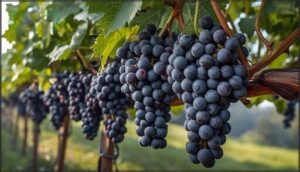
If you’re ready to break free from grocery store grapes and grow your own, Concord is your cold-climate champion. This variety thrives where growing season temps hover around 64–72°F, making it perfect for northern home gardens.
- Frost Protection Methods: Choose planting sites 2–4°C warmer during spring bud break to dodge frost damage
- Grape Ripening Tips: Expect 6–12 kg per vine with proper care and sunlight exposure
- Winter Care Strategies: Self-pollinating nature means 15–25% less fruit drop when spaced correctly
- Soil Temperature Management: pH levels at harvest sit between 3.0–3.4 for that signature flavor
Himrod – Sweet, Seedless Option
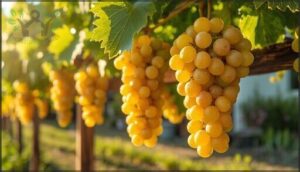
If you want sweet, seedless table grapes without the fuss, Himrod’s your rebel vine. These golden-yellow beauties hit 16–20 Brix—that’s seriously sweet—and ripen by mid-to-late August in zones 5–8.
Growing grapes at home gets easier with seedless varieties like this one, especially for beginners craving instant gratification. Vine training on a sturdy trellis maximizes your harvest timing, while grape nutrition stays strong with minimal intervention. Plus, natural disease resistance means fewer chemicals between you and fruit ripening excellence.
For ideal growth, consider the importance of full sun requirements when planting your grape vines.
Edelweiss – Disease-Resistant Favorite
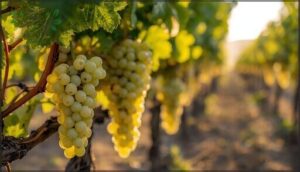
Edelweiss breaks the mold with disease resistance that slashes fungicide use by 20–30% in trials—your shortcut to low-maintenance grape care and maintenance. This white hybrid thrives in zones 4–8, delivering 18–22 Brix sweetness despite downy mildew pressure.
Fruit quality stays rock-solid with tight clusters, making it one of the smartest grape varieties for beginners tackling vine management and harvest techniques without the chemical treadmill.
By following a systematic review process, gardeners can make informed decisions about grape varieties and care techniques.
Reliance – Reliable Red Seedless
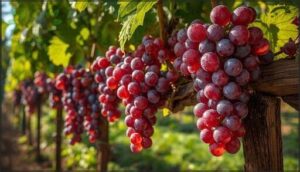
Reliance growth redefines what red grape cultivation can be—17–20% Brix sweetness wrapped in seedless benefits that make table grapes feel like a victory, not a chore.
This cultivar delivers fruit quality worthy of your backyard rebellion: 2–4 pounds per vine, moderate pest pressure, and vine management that won’t hijack your weekends.
Growing grapes at home just got easier with grape care and maintenance that respects your time while feeding your freedom.
Venus – Musky Flavor for Milder Regions
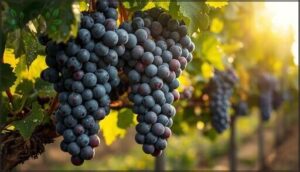
Venus unleashes that unmistakable musky flavor in milder regions—think consistent richness without the drama of fussy cultivars. Disease resistance runs deep here: up to 40% less powdery mildew compared to susceptible types, trimming fungicide applications by 20–30%.
Regional adaptation shines in warm, humid zones where flavor stability holds strong and berry quality stays market-ready.
Growing grapes at home with Venus means liberation from constant spraying—table grapes that actually reward your effort.
Canadice – Versatile Ruby Red Grape

Canadice delivers that burst of ruby red freedom: seedless berries that ripen mid-to-late season with sugars climbing to 18–22°Brix, perfect for fresh eating or preserves. This adaptable variety cuts powdery mildew incidence by 30–50% under standard programs—your vine management just got easier.
- Firm, sweet clusters that handle storage and transport without bruising
- Rising demand in cooler temperate gardens, accounting for 5–8% of home plantings
- Balanced grape nutrition with consistent flavor across diverse growing conditions
Einset – Crack-Resistant Red Grape
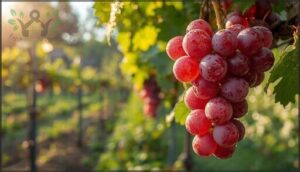
Crack resistance separates Einset from the pack—these bright red, seedless berries cut cracking incidents by 60% under rain and deliver 16–20 N fruit firmness even after cold storage.
You’ll harvest 18–22°Brix sweetness in cool-climate zones 5–7, with cold hardiness and rootstock compatibility that support reliable yields.
Grape skin integrity stays strong, making home garden cultivation forgiving and rewarding.
Fredonia – Crisp, Flavorful Blue Grape
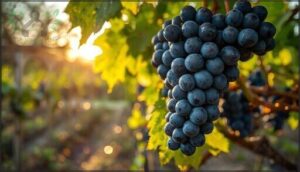
If you’re chasing inky-blue grapes with a satisfying snap, Fredonia delivers outstanding fruit quality. These seedless varieties produce 16–19°Brix sweetness and 0.8–1.2 kg clusters under straightforward grape cultivation techniques.
Blue grape benefits include 20–40% better powdery mildew resistance, making growing grapes easier.
You’ll nail the Fredonia harvest around 110–120 days post-bloom—grape care becomes more rewarding when grape nutrition and crispness align perfectly in your home garden tips playbook.
Muscadine – Ideal for Hot, Humid Areas
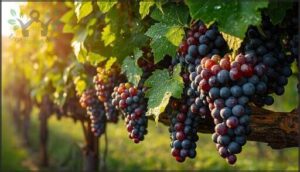
When hot, humid weather knocks out other grape varieties, Muscadine thrives where others fail. This powerhouse (Vitis rotundifolia) dominates zones 7–9 with natural grape disease resistance and 12–18% sugar content—perfect muscadine benefits for growing grapes without constant intervention.
- Break free from fungicide dependence with muscadine’s built-in mildew tolerance
- Master humid climate grape cultivation techniques beginners actually succeed with
- Harvest August through October while other vines struggle
- Simplify vine management with drought-tough roots and minimal fuss
Home garden tips don’t get more liberating than muscadine for hot weather dominance.
Thompson Seedless – Classic Table Grape
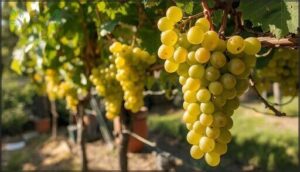
You’ll find Thompson Seedless dominating 70% of global seedless grape production for good reason—this table grape champion delivers 6–12 kg per vine with vineyard management tips even gardening for beginners can master.
Fresh market quality holds 14–21 days refrigerated, while grape harvest timing flexibility and proven grape growing techniques make seedless grape benefits accessible across temperate zones.
Classic table grape production starts here.
Choosing Grapes for Your Climate
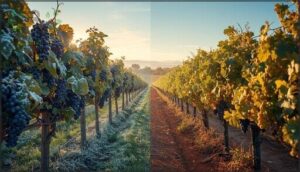
Your climate isn’t just a backdrop—it’s the rulebook for which grapes will thrive or merely survive in your garden. Some varieties laugh off frost while others demand long, sun-soaked summers to deliver their best fruit.
Your climate dictates which grape varieties will thrive or fail—some handle frost, others need relentless summer heat
Let’s break down which grapes match your growing zone so you can plant with confidence instead of crossing your fingers.
Best Grapes for Cool Climates
If you’re gardening where winter bites hard, you’ll want Cool Climate Grapes with serious Grape Cold Hardiness. Concord thrives where temperatures drop to -18°C, maintaining 60–80% bud viability—your ticket to reliable harvests without babying vines through cold snaps. Edelweiss and Himrod also handle frost like champions. Skip Thompson Seedless, Flame Seedless, and Black Monukka here; they’ll surrender before spring arrives.
Master Winter Pruning Techniques, Frost Protection Methods, and Soil Temperature Management, and you’ll harvest buckets while others struggle.
Best Grapes for Moderate Climates
Moderate zones give you freedom—Venus, Reliance, and Canadice deliver 16–20% sugar content and strong yields without pampering. You’re looking at zones 6–8, where Grape Variety Selection matters less than matching Climate Tolerance to your site.
Wine Grapes like Cabernet Sauvignon love this range. Flame Seedless and Black Monukka thrive here too. Nail Soil Preparation, Vine Training, and basic Pest Management, and you’ll pick heavy.
Best Grapes for Warm and Humid Climates
Humid climates? Muscadine dominates—it tolerates 90% humidity and hits 22–26 °Brix with thick skins that resist cracking. Heat Tolerance peaks at 100°F. Edelweiss cuts Grape Disease pressure by 40–60%, while Concord manages zones 5–6 with protection.
Vine Management and Soil and Climate Considerations matter—elevated, well-drained sites slash root stress 30%. These Grapevine Varieties deliver Fruit Quality without fungicide overload.
Where and How to Plant Grapevines
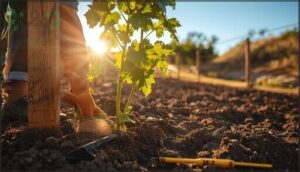
Getting your grapevines off to a strong start means picking the right spot and preparing it properly. Location matters more than you might think—grapes are sun-loving plants that won’t tolerate shade or soggy soil.
Here’s what you need to know about site selection, soil prep, and timing to set your vines up for years of productive growth.
Site Selection and Sunlight Needs
Your grapevines need full sun—think 6 to 8 hours of direct light daily—to pump out those sweet, juicy clusters. Here’s what matters when you’re scouting your site:
- Terrain Orientation – South or southeast-facing slopes capture more warmth and drain better
- Microclimate Factors – Avoid frost pockets and shade from trees or buildings
- Sunlight Hours – Continuous exposure from bud break through ripening maximizes sugar development
- Climate Zones – Match your cultivar to your region’s thermal time and frost-free days
- Soil and Climate Considerations – Well-drained sites with good air movement prevent disease pressure
Proper site selection can boost your yields by 10–20% while reducing headaches down the road.
Soil Requirements and Preparation
Before your vines hit the ground, dial in the soil. Shoot for a pH between 6.0 and 6.5—soil testing reveals where you stand.
Build in 2–5% organic matter to fuel nutrient cycling and drainage systems that move 1–2 inches per hour. Loosen compacted layers 12–18 inches deep, and amend with compost to boost soil health and plant nutrition from day one.
Planting Timing and Spacing Guidelines
In temperate zones, late winter to early spring—February through April—opens the prime planting window once soil hits 50°F.
Space your vines 6–8 feet apart within rows and 8–12 feet between rows for air circulation and future trellis design.
Orient rows east-west in hot climates to dodge afternoon heat stress while supporting strong grapevine care and long-term grape cultivation success.
Essential Care for Healthy Grape Vines
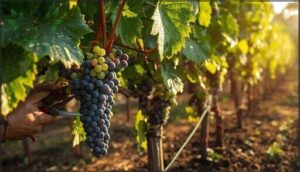
Getting your vines in the ground is just the beginning—the real magic happens in how you care for them through the seasons. Your grapevines need consistent attention to watering, feeding, and shaping if you want those heavy clusters come harvest time.
Let’s break down the essential practices that’ll keep your vines thriving and productive year after year.
Watering and Fertilization Tips
Water stress monitoring isn’t just for commercial vineyards—you can master it too. Your vines need around 1–1.5 inches weekly during active growth, with soil moisture management keeping levels at 60–70% of field capacity. Here’s your freedom formula:
- Irrigation scheduling: Deep, infrequent watering builds sturdy roots
- Fertilizer application: Apply 40–80 kg nitrogen per hectare in split doses
- Nutrient balance optimization: Test soil annually to avoid excess phosphorus runoff
Annual Pruning for Maximum Yields
Think of annual pruning as your liberation from mediocre harvests—it’s the single technique that boosts yield by 15-40% in established vines. Late winter pruning, before budbreak, is your window for grape vine management mastery.
During dormancy periods, you’ll remove weak wood and balance renewal canes for fruit quality enhancement. Master these pruning techniques, and you’re commanding grapevine cultivation on your terms, optimizing every cluster for maximum yield potential and premium grape harvesting.
Training and Trellising Techniques
Proper vine training transforms your grape vines into productive powerhouses—trellising can boost yields by 30% in moderate climates. Here’s your blueprint for grapevine pruning mastery:
- Install sturdy trellis designs with 60-90 cm wire spacing before planting grapes for 12-18% better first-year fruiting
- Practice cane pruning or spur-pruning based on your variety’s needs for balanced canopy control
- Master wire management by retraining shoots monthly during growing season
- Refine canopy control through vertical shoot positioning to reduce disease risk by 45%
These gardening tips give you command over vine training fundamentals.
Protecting and Harvesting Your Grape Crop
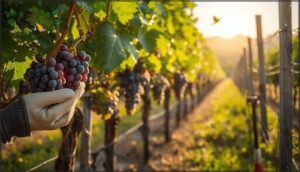
You’ve put in the work to grow those vines—now it’s time to protect your crop from the freeloaders and bring it home at peak ripeness.
A few smart strategies will keep pests and diseases at bay without turning your backyard into a chemistry lab.
Here’s what you need to know to safeguard your grapes and harvest them like a pro.
Common Pests and Natural Controls
Pests like leafhoppers and grape phylloxera can slash your harvest by 25% if left unchecked—but you don’t need harsh chemicals.
Integrated strategies work: companion planting cuts aphid pressure by 40%, while mesh netting blocks 55% of thrips damage. Lady beetles and lacewings double predation rates on common grape pests.
Organic pesticides and biological solutions like parasitic wasps offer 60–70% control, keeping your vines healthy without the toxic baggage.
Disease Prevention and Management
Fungal control is your real battle—powdery mildew hits 25–35% of leaves in dew-prone springs, while downy mildew can chop yields by half. Botrytis bunch rot thrives in crowded canopies, affecting 10–15% of clusters.
Smart sanitation practices and dormant pruning slash disease pressure by 30–40%, protecting root health and keeping your vines vigorous without constant chemical warfare.
Harvest Timing and Proper Techniques
Once you’ve beaten back disease, harvest scheduling becomes your ticket to flavor freedom. Grab a refractometer and test sugar levels—most table grapes hit their sweet spot around 20–22°Brix, signaling grape maturity.
Taste-test a few clusters across the vine; if they’re candy-sweet with balanced acidity, you’re golden.
Ripening control matters: harvest during cool mornings using sharp shears, cutting clusters cleanly to protect next year’s fruiting wood and guarantee proper post-harvest care.
Storing and Using Homegrown Grapes
Once your grape harvesting and processing wraps up, you’ll discover serious grape storage tips: refrigerate clusters at 0–4°C in perforated bags to maintain peak freshness for three weeks.
Try fresh grape recipes, freeze batches for smoothies, or explore grape preservation methods like jam and home winemaking basics. Each grape variety offers unique flavors—experiment with grape juice production or air-dry seedless types into homemade raisins.
Frequently Asked Questions (FAQs)
Can grapes grow in containers or pots?
Yes, you can grow grapes in pots. Choose compact varieties, use containers holding 5–10 gallons with well-draining soil mix, and guarantee strong sunlight plus consistent water management for healthy, productive vines.
How long until a new vine produces fruit?
Most home vines start fruiting in 2–4 years with proper pruning and vine maturity. Growth factors like full sun, consistent watering, and grape varieties affect harvest timing—yield optimization depends on patience and solid grape growing fundamentals.
Do grapevines need cross-pollination to fruit?
Most cultivated grape varieties are self-fertile and don’t require cross-pollination. However, planting compatible varieties nearby can boost fruit set by 5-15% in certain climates.
This practice improves berry numbers and cluster weight through enhanced pollen viability and fertilization.
What happens if I skip pruning for a year?
Skipping pruning for one year triggers a 15–30% yield reduction, increases powdery mildew by up to 28%, and compromises fruit quality.
Your vine’s canopy sprawls, shading clusters and forcing costly recovery pruning the following season.
Can I grow grapes from grocery store seeds?
Technically, you can sprout grocery store grape seeds, but germination rates hover around 1-5%.
Even successful seedlings won’t produce fruit matching the parent—genetic variability means you’re basically breeding unpredictable new grape varieties, not cloning favorites.
Conclusion
Your backyard doesn’t need to stay stuck in the ornamental-only mindset—you can absolutely turn it into productive edible space with the best grapes for home garden cultivation.
Stop overthinking the process: pick a variety that matches your climate zone, give it decent sun and well-drained soil, then watch it deliver year after year.
The vineyard mystique? Just marketing. You’ve got everything needed to grow outstanding grapes right where you’re standing. Plant one this spring.
- https://www.slideshare.net/slideshow/week-4-part-4-research-analysisi-have-identified-one-topidocx/253550516
- https://www.sciencedirect.com/science/article/pii/S0304389420327606
- https://library.sacredheart.edu/c.php?g=29803&p=185905
- https://www.sharkpapers.com/blog/research-paper-writing-guides/literature-research-paper-topics
- https://www.youtube.com/watch?v=fwbc7SHDHBo