This site is supported by our readers. We may earn a commission, at no cost to you, if you purchase through links.

Most gardeners spend spring frantically trying to fix soil that’s compacted, nutrient-depleted, or pH-challenged—problems that could’ve been solved the previous October for a fraction of the effort.
Fall is when soil actually works with you: cooler temperatures slow evaporation, earthworms are still active near the surface, and amendments have months to break down before roots need them.
A half-inch of compost worked in now is worth three times that amount scrambled in two weeks before transplanting.
When you amend soil for fall, you’re basically setting up a slow-cooker meal—everything melds together over winter so spring planting hits the ground running.
Table Of Contents
- Why Amend Soil for Fall Gardening
- When and How to Test Garden Soil
- Essential Organic Amendments for Fall
- Using Cover Crops and Mulches
- Step-by-Step Guide to Amending Soil
- Common Fall Soil Amendment Mistakes
- Top Products for Fall Soil Amendment
- 1. Wiggle Worm Organic Worm Castings Fertilizer
- 2. Organic Bone Meal Fertilizer Powder
- 3. Organic Fish Bone Meal Fertilizer
- 4. Crimson Clover Garden Seeds
- 5. Dr Earth Alfalfa Meal Fertilizer
- 6. Natural Bat Guano Fertilizer Powder
- 7. Natural Chicken Manure Fertilizer
- 8. Electric Wood Chipper Shredder Machine
- Frequently Asked Questions (FAQs)
- Should you amend soil in fall or spring?
- How to amend soil after winter?
- Is October too late to fertilize plants?
- Should you amend soil in the fall?
- What to add to my garden soil in the fall?
- Should I put manure in my garden in the fall?
- Can I amend soil in containers and pots?
- How do cover crops protect soil over winter?
- Should I remove old mulch before adding amendments?
- How does fall amendment affect beneficial soil microbes?
- Conclusion
Why Amend Soil for Fall Gardening
Fall is actually the best time to get your soil ready — not spring, even though that’s when most people think about it.
Working compost and amendments into your beds now gives everything time to break down before planting season, and fall garden soil preparation tips can help you figure out exactly what your soil needs.
While your garden winds down, the ground is doing its quiet, important work. Here’s why amending in fall makes such a difference.
Benefits of Fall Soil Amendment
Fall is actually the perfect time to feed your soil — not your plants. When you add organic amendments now, you’re setting up a slow, steady process that works all winter long.
Here’s what fall amendment does for your beds:
- Microbial Activity Boost — Fresh compost and leaf mold fuel bacteria and fungi, keeping nutrient cycling active until the ground freezes.
- Improved Water Retention — Organic matter acts like a sponge, giving your soil Enhanced Soil Structure that holds moisture without getting waterlogged.
- Nutrient Release Timing — Bone meal and aged manure break down gradually, delivering Root Development Support exactly when spring arrives.
Fall garden soil preparation isn’t extra work. It’s smarter work.
Impact on Spring Planting Success
fall garden soil preparation pays off the moment spring arrives.
soil porosity means seeds push through faster, and stronger microbial balance keeps nutrients cycling right when young roots need them most.
Improved root penetration, steady soil fertility, and pH stability from your organic amendments can push germination rates noticeably higher — sometimes getting your first harvest a week or two ahead of schedule.
How Fall Amendment Improves Soil Health
That earlier spring harvest is just one part of the story. What happens underground during fall is where the real magic kicks in. Organic amendments for autumn gardening quietly reshape everything:
- Microbial activation — bacteria and fungi feast on compost and leaf residue, driving nutrient cycling all winter
- Humus formation — stable humus builds soil structure enhancement that resists compaction
- Water retention boost — organic matter holds moisture like a sponge
- Nutrient cycling — improving soil structure and fertility in fall means nutrients stay put instead of leaching away
Following the NRCS principles for soil can further boost these benefits.
Healthier soil, ready when you’re.
When and How to Test Garden Soil

Before you reach for a single bag of compost, it’s worth knowing what your soil actually needs. A basic test takes the guesswork out of fall amendments and saves you from fixing problems you don’t have.
Here’s what to know about timing your test and reading the results.
Timing Soil Tests for Fall Amendments
Harvest is over—now’s the time to get your soil tested before the ground locks up. Aim for late summer through early fall, when the Sample Timing Window is ideal: soil is workable, moisture is stable, and seasonal soil testing delivers consistent results.
Factor in Lab Processing Lag (often 1–2 weeks) and build a Result Interpretation Schedule that leaves room for Winter Reaction Planning, like lime applications and Regional Climate Adjustments.
Timing your amendments to the optimal amendment window maximizes nutrient uptake.
| Timing Phase | Action | Purpose |
|---|---|---|
| Late Summer | Begin soil testing | Stable moisture for accurate samples |
| Early Fall | Submit to lab | Account for Lab Processing Lag |
| Mid-Fall | Review results | Build Result Interpretation Schedule |
| Late Fall | Apply lime/sulfur | Support Winter Reaction Planning |
| Pre-Freeze | Incorporate amendments | Allow pH adjustment over winter |
Don’t skip soil testing before amendment application—guessing costs you time and money.
Interpreting Soil Test Results
Your soil test report isn’t intimidating once you know what you’re looking at. Think of it as a nutrition label for your beds — specific, actionable, and surprisingly telling. Here’s what to focus on:
- pH Adjustment needs — most vegetables thrive between 6.0 and 7.0; outside that, soil nutrient availability drops fast.
- Nutrient Ratios — compare your N-P-K and calcium/magnesium readings against crop-specific targets to avoid over-fertilizing.
- Cation Exchange Capacity — higher CEC means your soil holds amendments longer and more effectively.
- Organic Matter Evaluation — low percentages signal poor structure; watch for Micronutrient Deficiencies in iron, zinc, and manganese too.
Soil testing and pH adjustment together give your fall amendments real direction.
Essential Organic Amendments for Fall
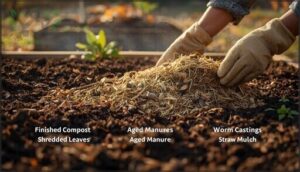
Fall is actually the perfect time to load your beds with the good stuff — organic amendments that break down slowly over winter and hit the ground running come spring. The options aren’t overwhelming, but knowing which ones to reach for makes a real difference.
Here’s what to work with.
Compost Application Tips
Compost is the cornerstone of any solid fall soil strategy.
Spread a half to one inch layer across your beds, keeping particle size consistent for even breakdown. Rake it into the top two to three inches — incorporation timing matters here, since warm soil still has microbial activity working in your favor.
Water it in well. That moisture content helps everything settle before the ground freezes.
Benefits of Worm Castings and Grass Clippings
Worm castings and grass clippings are two of fall soil preparation’s most underrated workhorses.
Together, they handle a surprising range of jobs:
- Soil Aeration – Castings loosen compacted ground, opening pore space for root development.
- Carbon Enrichment – Clippings feed microbial communities with their 20:1 carbon-to-nitrogen ratio.
- Disease Prevention – Chitinase enzymes in castings actively suppress aphids and fungal pathogens.
- Temperature Regulation – A 2–3 inch clipping layer keeps soil 5–10°F cooler, stabilizing conditions for fall transplants.
Both organic matter sources integrate beautifully with your existing soil amendment routine.
Using Leaf Mold and Fallen Leaves
Those bags of leaves piling up at the curb? That’s someone else’s loss and your garden’s gain.
Leaf mold production is simple: shred fallen leaves, keep the pile moist and shaded, and let fungal digestion do the work over twelve to eighteen months.
The result is dark, crumbly organic matter that dramatically boosts moisture retention in sandy beds.
Apply a two- to three-inch layer for winter soil insulation and steady nutrient release timing all spring.
Safe Use of Manure in Fall
Raw manure is a powerhouse — but only when handled right during fall soil preparation.
For safe use as an organic fertilizer, follow these organic amendments for autumn rules:
- Pathogen Management: Compost chicken manure to 131°F before applying.
- Cool Temperature Application & Rainfall Timing Avoidance: Apply to unfrozen soil; never before heavy rain.
- Nutrient Leaching Prevention & Application Rate Guidelines: Incorporate six inches deep within 24 hours.
Using Cover Crops and Mulches
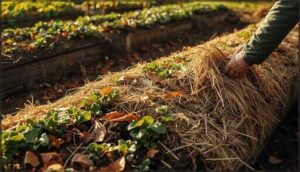
Cover crops and mulches are two of the most underrated tools in the fall gardener’s kit — low effort, high payoff. Used right, they do the work of protecting and feeding your soil all winter long without you lifting a finger.
Here’s what you need to know to make them work for you.
Best Cover Crops for Fall Soil Health
Think of cover crops as your soil’s winter workforce. Cool-season grasses like winter rye establish fast, building deep biomass while Winter Rye Residue protects bare beds from erosion.
Legume nitrogen fixation happens quietly — crimson clover and field beans replenish nutrients without a bag of synthetic fertilizer in sight.
Add Brassica soil loosening through daikon radish, and you’ve got seasonal cover cropping working every angle before spring arrives.
Mulching Strategies to Protect and Enrich Soil
Cover crops handle the underground shift — now it’s mulch’s turn to work the surface. A 2–3 inch layer of organic mulch cuts soil evaporation by up to 70 percent, and that’s not a small thing in a dry spring.
depth optimization checklist:
- Spread leaf mold 2–3 inches deep for rich nutrient cycling and moisture retention
- Use wood chips for stronger thermal insulation over winter
- Try living mulch ground covers between perennials for added stability
- Keep mulch off crowns to prevent rot
- Replenish as it breaks down to maintain soil moisture retention all season
Preventing Erosion and Suppressing Weeds
Mulch protects the surface — but what’s holding the slope together?
That’s where cover crops earn their keep.
Rye root barriers extend 3–6 feet deep, binding soil against winter rains.
Daikon soil loosening breaks compacted layers while anchoring topsoil.
Living barrier crops and windbreak plantings cut erosion by up to 80 percent.
Pair them with silage tarps to knock out weed seeds before winter mulching begins.
Step-by-Step Guide to Amending Soil
Now that you know what to add, it’s time to actually do the work. Amending soil doesn’t have to be complicated — it just needs to happen in the right order.
Here’s how to move through it, bed by bed.
Preparing Beds and Removing Weeds
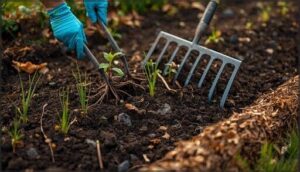
Before you spread a single scoop of compost or tuck in a cover crop, your beds need a clean foundation. Weed seed prevention starts here — and it’s easier than you think.
Follow these soil loosening techniques to prep beds right:
- Use hand pulling methods to extract weeds root-first, especially after rain when moist soil releases taproots cleanly up to 12 inches deep.
- Clear debris, stones, and dead plant material so tools move freely and organic matter can integrate evenly.
- Rake the surface smooth using bed leveling practices that break up clumps for uniform soil amendment coverage.
- Loosen the top 10–12 inches with a garden fork — your tool selection guide starts here — without collapsing soil structure.
- Apply a light mulch layer immediately to block cool-season weed germination while beds settle.
Choosing and Applying Amendments

Now that your beds are cleared, match your amendments to what your soil actually needs — that’s Soil Texture Matching in action.
Sandy beds drink up compost fast; clay benefits from worm castings to improve friability.
Follow Amendment Rate Guidelines: 1–2 inches of organic soil amendments for autumn, worked in based on your soil testing before amendment application.
Good Nutrient Balancing and pH Adjustment Strategies guarantee slow-release nutrients hit their peak come spring.
Incorporating Amendments and Watering Techniques

Once amendments are spread, grab a garden fork and work everything into the top six to twelve inches — that’s your layered amendment integration sweet spot for even nutrient distribution.
Timing water application right after incorporation triggers microbial activation strategies that kick decomposition into gear without flushing nutrients away. Deep soil moisture penetration seals the deal.
Finish with mulch to lock in water-holding capacity and protect your fall garden soil amendment strategies all winter.
Common Fall Soil Amendment Mistakes

Even experienced gardeners slip up regarding fall amendments — and a few of those mistakes can quietly undo months of good work. The good news is that most are easy to avoid once you know what to watch for.
Here are the most common ones worth keeping an eye on.
Over- or Under-Applying Amendments
Too much of a good thing is still too much. Overapplying amendments triggers nutrient runoff, soil crusting, and salt accumulation that scorches seedlings. starves roots and stalls soil health gains.
Nail your nutrient load with these basics:
- Match NPK ratios to your crop’s actual needs
- slow-release nutrients to avoid salt buildup
- micronutrient imbalance from excess phosphorus
- soil testing guide every application
Ignoring Soil PH and Nutrient Imbalances
Skipping soil pH is like ignoring the lock on a treasure chest — your amendments sit there, useless. When pH drifts too low, micronutrient lockout sets in and phosphorus gets trapped at the root zone. Too high, and crop chlorosis risk climbs fast. Both scenarios trigger microbial activity decline, nutrient leaching spikes, and real yield quality loss. Test before you add anything.
Ignore soil pH and your amendments are wasted — test first, or fix nothing
| pH Problem | Consequence |
|---|---|
| Low pH | Phosphorus lockout, stunted roots |
| High pH | Crop chlorosis, weak foliage |
| Ignored imbalance | Microbial decline, yield loss |
Balanced fertilizer and correct NPK ratios only work when soil pH is dialed in first.
Improper Mulching Practices
Too thick mulch around stems is one of the fastest ways to undo good fall work. Pile it past three inches and you’re trapping moisture against bark, inviting rot and fungal problems you didn’t plant for.
Wrong mulch type — rubber, fresh clippings, dense bark — stifles soil oxygen.
Pull mulch two to three inches from stems, keep layers breathable, and let leaf mold do the heavy lifting for winter mulching and soil erosion control.
Top Products for Fall Soil Amendment
Not all amendments are created equal, and the right product can make a real difference in how your soil performs come spring. These eight options cover everything from slow-release nutrients to soil structure support, so there’s something here for every bed type and budget.
what’s worth having on hand this fall.
1. Wiggle Worm Organic Worm Castings Fertilizer
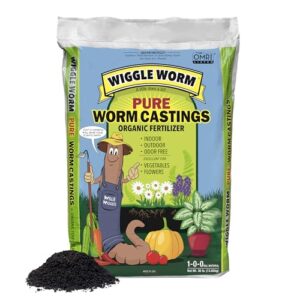
Think of worm castings as concentrated soil intelligence — and Wiggle Worm delivers it in its purest form. These 100% pure earthworm castings are OMRI-listed organic, meaning no fillers, no vermicompost bedding, just dense, nutrient-rich excrement shaped into tiny football-like granules that open up soil structure beautifully.
What makes this product worth keeping in your fall toolkit? It’s genuinely adaptable. Work a small handful into transplant holes, topdress your perennial beds, or blend it into container mix — the same bag covers all of it.
That 30-lb bag at $33.97 goes surprisingly far since you only need about half a cup per application, three times a year.
It’s odorless, non-toxic, and safe indoors. For building living soil before spring, this is a smart starting point.
| Best For | Home gardeners and organic growers who want a low-effort, long-lasting soil boost for vegetables, fruit trees, or container plants without synthetic chemicals. |
|---|---|
| Organic | Yes |
| Application Method | Topdress/Mix |
| Intended Use | Soil Amendment |
| Coverage | Multiple Beds |
| Odor | Odorless |
| Safety | Non-toxic |
| Additional Features |
|
- Pure worm castings with no fillers — a little goes a long way (just half a cup, three times a year)
- Improves soil structure, drainage, and microbial life all at once
- Odorless and safe to use indoors or out, across almost any plant type
- Doesn’t replace a full N-P-K fertilizer for heavy feeders — you may need to pair it with bone meal or kelp
- A 30-lb bag is bulky to store and haul around
- Needs reapplication two to three times per season to keep the benefits going
2. Organic Bone Meal Fertilizer Powder
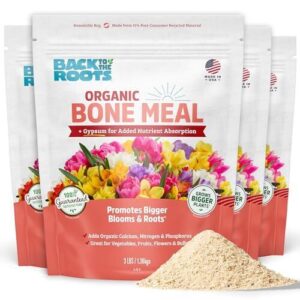
Phosphorus quietly runs the show for root development — and if your spring bulbs keep underwhelming you, that’s the first place to look. Back to the Roots Organic Bone Meal Fertilizer delivers exactly what’s missing: a 100% USA-sourced, certified organic powder packed with phosphorus and calcium that strengthens cell walls and drives root branching where it counts.
The N-P-K sits around 3-15-0, so this isn’t your all-purpose fertilizer. It’s targeted nutrition — ideal for bulbs, perennials, and flowering vegetables that need strong root anchoring before winter sets in. The added gypsum helps enhance nutrient absorption even further.
Work one to two tablespoons per square foot into your fall beds, water it in, and let soil microbes break it down gradually over three to six months. Spring will tell the difference.
| Best For | Home gardeners focused on growing bulbs, flowering vegetables, or fruiting plants who want a slow-release, certified organic boost for root development. |
|---|---|
| Organic | Yes |
| Application Method | Mix/Water In |
| Intended Use | Root Development |
| Coverage | Square Foot Beds |
| Odor | Low |
| Safety | Certified Organic |
| Additional Features |
|
- 100% USA-sourced and certified organic — great if you care about what goes into your soil
- Slow-release formula means you apply it once and let it work for months
- Gypsum helps your plants actually absorb the nutrients instead of just letting them sit in the soil
- Not a complete fertilizer — fast-growing crops may need extra nitrogen on the side
- Powder form can get dusty, so you’ll want to be careful applying it on a windy day
- Phosphorus availability drops in acidic soils, so it may underperform if your pH is off
3. Organic Fish Bone Meal Fertilizer
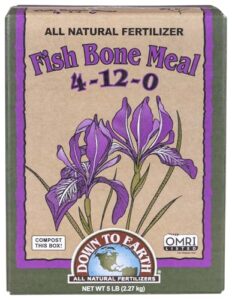
Bone meal manages phosphorus from land-based sources just fine — but if you want marine-derived calcium and phosphorus working together, Down To Earth’s Fish Bone Meal is worth your attention.
The 4-12-0 NPK formula leans heavily on phosphorus and calcium, which is exactly what fruiting plants and perennial beds need heading into winter. Tomatoes get help fending off blossom end rot. Bulbs and roses build stronger root architecture before the ground freezes. It’s OMRI-certified, granular, and straightforward to apply — mix a tablespoon or two per planting hole, or broadcast three to six pounds per 100 square feet and water it in.
Fair warning: it smells like the docks at low tide. Store it indoors or raccoons will find it before your garden does. The odor fades in a few days — the root growth doesn’t.
| Best For | Gardeners growing tomatoes, roses, bulbs, or fruit trees who want an organic, marine-derived boost to root development and bloom production. |
|---|---|
| Organic | Yes |
| Application Method | Mix/Broadcast |
| Intended Use | Root/Bloom Boost |
| Coverage | 100 Sq Ft Beds |
| Odor | Strong |
| Safety | OMRI-certified |
| Additional Features |
|
- High phosphorus and calcium formula is great for fruiting plants, helping prevent issues like blossom end rot
- OMRI-certified for organic gardening and made from sustainably sourced fish bone meal
- Easy to apply — just mix into soil or broadcasting before watering in
- Strong fishy odor that can linger for a few days after application
- Low nitrogen means you’ll likely need a separate fertilizer to round out your feeding program
- Pricier than conventional bone meal at around $23.99 for 5 lbs
4. Crimson Clover Garden Seeds
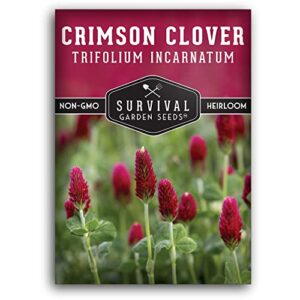
Amendments feed your soil — but crimson clover lets the soil feed itself. Survival Garden Seeds’ heirloom, non-GMO crimson clover is one of the smartest fall investments you can make for under five dollars.
As a nitrogen-fixing legume, it works with rhizobia bacteria in its root nodules to pull atmospheric nitrogen directly into the soil — up to 125 pounds per acre in field trials. For a home garden, that’s free fertilizer, banking up all winter. Broadcast seeds about two inches apart and half an inch deep into cultivated soil while temperatures stay cool. It’ll suppress weeds, protect bare soil from erosion, and attract pollinators once those vivid red blooms open in spring.
Seeds store for years if you keep them cool and dry. One packet, multiple seasons of benefit.
| Best For | Home gardeners and hobby farmers who want to improve their soil naturally, attract pollinators, and get multiple seasons of value from a single low-cost packet. |
|---|---|
| Organic | Yes |
| Application Method | Broadcast Seed |
| Intended Use | Nitrogen Fixing |
| Coverage | Small to Medium Beds |
| Odor | Low |
| Safety | Non-GMO |
| Additional Features |
|
- Fixes nitrogen in the soil for free, reducing the need for added fertilizers
- Heirloom and non-GMO, with seeds you can save and replant year after year
- Under five bucks and beginner-friendly with clear planting instructions included
- Germination can be hit or miss depending on soil conditions and planting timing
- One packet may not cover much ground — larger gardens will need several
- Not a hybrid, so performance can vary compared to commercial cultivars
5. Dr Earth Alfalfa Meal Fertilizer
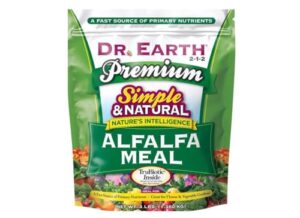
Crimson clover manages the nitrogen-fixing — but alfalfa meal manages almost everything else. Dr. Earth’s Alfalfa Meal comes in at a 2-1-2 NPK ratio, which sounds modest until you realize it’s also delivering magnesium, iron, sulfur, and manganese alongside a microbial workforce that gets to work the moment moisture hits.
Work half a cup to a full cup per planting hole in your fall beds, or broadcast and rake it into the top six to eight inches. Either way, it conditions as it feeds — improving friability, feeding soil microbes, and setting up root systems to hit the ground running come spring.
It’s plant-derived, so no rodent drama, no odor issues. Safe for raised beds, roses, and garlic alike. One bag, a lot of ground covered.
| Best For | Home gardeners and hobbyists who want an organic, odor-free fertilizer for raised beds, container plants, roses, or vermicomposting setups. |
|---|---|
| Organic | Yes |
| Application Method | Mix/Broadcast |
| Intended Use | Soil Conditioning |
| Coverage | Multiple Beds |
| Odor | Odorless |
| Safety | Pet Safe |
| Additional Features |
|
- Plant-derived formula won’t attract rodents or create unpleasant smells around your garden
- Works as both a fertilizer and soil conditioner, boosting microbial activity while feeding your plants
- Versatile enough for vegetables, houseplants, roses, garlic beds, and even worm bins
- Purely plant-based, so it may be missing some nutrients you’d get from fish or animal-based fertilizers
- At 3 lbs, the bag runs out fast if you’re working with larger garden beds
- Effectiveness can vary depending on your soil type, so you may need to supplement with other nutrients
6. Natural Bat Guano Fertilizer Powder
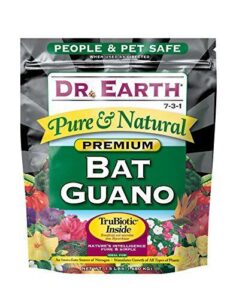
Alfalfa meal conditions from the ground up — bat guano goes straight for the throttle.
Dr. Earth’s Natural Bat Guano Fertilizer Powder runs a 7-3-1 NPK ratio, meaning nitrogen is doing the heavy lifting here. It wakes up soil microbes fast, deepens foliage color, and pushes root development without a single synthetic compound in sight. One 1.5 lb bag feeds up to twelve 5-gallon containers for roughly two months — solid value for a product that also happens to be pet-safe and USA-sourced.
Work it into the top 6 to 8 inches of fall beds, or brew a teaspoon per gallon as a nutrient tea for quicker uptake. Fair warning: the smell is real. But so are the results.
| Best For | Gardeners who want a fast-acting, organic nitrogen boost for vegetables, herbs, houseplants, or cannabis without reaching for synthetic fertilizers. |
|---|---|
| Organic | Yes |
| Application Method | Mix/Brew Tea |
| Intended Use | Nitrogen Boost |
| Coverage | Containers/Beds |
| Odor | Strong |
| Safety | Pet Safe |
| Additional Features |
|
- High 7-3-1 NPK ratio kicks vegetative growth and foliage color into gear quickly
- One bag covers up to twelve 5-gallon containers for about two months — pretty good stretch for the price
- Certified organic, pet-safe, and made in the USA from sustainable ingredients
- The smell is strong and can attract pets or just be flat-out unpleasant indoors
- Easy to overdo it — too much nitrogen will damage your plants, so dosing matters
- Pricier than generic bat guano options, and the inconsistent labeling (weight, powder vs. liquid) adds unnecessary confusion
7. Natural Chicken Manure Fertilizer

If bat guano is the espresso shot, chicken manure is the slow-brewed pot that keeps giving all season long.
True Organic’s composted chicken manure granules bring a 3-3-2 NPK ratio — balanced enough for most beds, strong enough to matter. That nitrogen fraction is split between fast-available and slow-release forms, so you’re not flooding roots all at once. The phosphate and calcium support root development and help bulbs push hard come spring. One 25 lb bag covers 650 square feet, which makes this genuinely cost-effective at roughly a dollar per pound.
Work it into the top 8 inches of cleared fall beds, water it in well, and let winter do the rest. The odor fades fast. The soil improvement doesn’t. For vegetables, flowers, and shrubs alike, this one earns its spot in the amendment lineup.
| Best For | Home gardeners, vegetable growers, and anyone who wants a reliable, season-long organic fertilizer without the guesswork of synthetic blends. |
|---|---|
| Organic | Yes |
| Application Method | Mix/Water In |
| Intended Use | Balanced Fertilizer |
| Coverage | 650 Sq Ft |
| Odor | Fades Fast |
| Safety | Pet Safe |
| Additional Features |
|
- Balanced 3-3-2 NPK with both fast and slow-release nitrogen — feeds plants steadily instead of all at once
- Improves soil structure over time, boosting drainage, aeration, and microbial life in the root zone
- Cost-effective at around $1 per pound, with one bag covering up to 650 square feet
- Comes with a noticeable odor at first — it fades, but it’s there
- Coverage per bag is limited, so larger gardens will need multiple bags
- Slow-release nature means patience is required — don’t expect overnight results
8. Electric Wood Chipper Shredder Machine
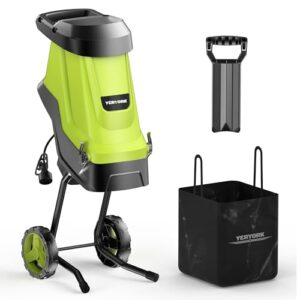
Branch piles don’t have to be a headache. A good electric chipper shredder turns that autumn debris into something genuinely useful — and the YERYORK YE004 manages that job well for most residential yards.
It runs a 15-amp motor at 4,000 RPM with a 21:1 reduction ratio, chipping branches up to 1.8 inches thick into fine wood chips ready for your beds or compost pile. The anti-jamming discharge chute and dual feed design keep frustration low and throughput steady. At 21.6 pounds with 7-inch wheels, you’re not wrestling it around the yard either.
Those chips aren’t just tidy — they feed soil microbes, build structure, and conserve moisture through winter. Spread them 2 to 3 inches deep over amended beds, and you’ve turned yard waste into a genuine soil asset.
| Best For | Homeowners with medium-sized yards who want a quiet, easy-to-move chipper for turning branches, shrubs, and garden scraps into usable mulch or compost. |
|---|---|
| Organic | No |
| Application Method | Feed/Chipper |
| Intended Use | Mulching/Composting |
| Coverage | Medium Yards |
| Odor | Moderate |
| Safety | cTUVus Certified |
| Additional Features |
|
- Handles branches up to 1.8 inches thick and churns out fine wood chips fast, thanks to a 15-amp motor and 21:1 reduction ratio
- Anti-jamming chute and dual feed design keep things running smoothly without constant babysitting
- Lightweight at 21.6 lbs with 7-inch wheels, so moving it around the yard is actually painless
- Corded electric setup means you’re limited by how far your extension cord reaches
- Thick or heavily branched limbs over 1.8 inches need pre-trimming before they’ll feed through cleanly
- Assembly instructions are reportedly sparse, so you’ll likely want to pull up a video before you start
Frequently Asked Questions (FAQs)
Should you amend soil in fall or spring?
Think of soil like a bank account—fall amendments are your slow, steady deposits, building fertility through winter. Spring amending is more like a quick cash infusion.
Both matter, but fall sets you up for richer, resilient spring growth.
How to amend soil after winter?
After winter, loosen compacted soil with a garden fork or broadfork. Test pH and nutrients, then spread 3–4 inches of compost or aged manure.
Mix amendments into the top 8 inches, then mulch for moisture and weed control.
Is October too late to fertilize plants?
October isn’t too late to fertilize, but timing and product matter. Use slow-release or organic options—like compost or worm castings—to support root growth without spurring tender new shoots that won’t handle frost.
Always check your soil test first.
Should you amend soil in the fall?
If Julius Caesar had garden beds, he’d have amended them in fall.
You should, too—autumn’s warmth lets compost, manure, and leaves break down, boosting soil structure and nutrients, so your spring crops launch strong and healthy.
What to add to my garden soil in the fall?
Add finished compost, worm castings, or aged manure for steady nutrients.
Sow crimson clover or hairy vetch to fix nitrogen.
Layer shredded leaves or straw as mulch—these protect soil, feed microbes, and boost spring growth.
Should I put manure in my garden in the fall?
Absolutely—aged or composted manure is like rocket fuel for your fall garden. Spread 1–2 inches, work it into the topsoil, and let microbes do their thing.
Avoid fresh manure; it’ll scorch roots and leach nutrients.
Can I amend soil in containers and pots?
You can—and should—amend soil in containers. Each pot is a micro-ecosystem that benefits from annual renewal.
Refresh the top third with new potting mix, compost, and worm castings to boost fertility and prevent compaction.
How do cover crops protect soil over winter?
Cover crops act like a living winter coat for your soil—they shield against freeze-thaw cycles, slow down runoff, and keep soil anchored with their roots.
Rye and clover, for example, prevent erosion and suppress winter weeds beautifully.
Should I remove old mulch before adding amendments?
If mulch is thick, matted, or hiding compaction, pull it back before adding amendments. Exposing the soil lets nutrients reach roots and prevents issues like nutrient tie-up or patchy coverage.
Thin, healthy mulch can usually stay put.
How does fall amendment affect beneficial soil microbes?
Ever wonder what happens underground when you feed your soil in fall?
Those organic amendments spark a microbial party—bacteria, fungi, and earthworms feast, multiplying and breaking down nutrients, building humus, and prepping your beds for spring success.
Conclusion
Think of your soil like a cocoon this season—quietly transforming beneath the surface. By taking time now to amend soil for fall, you’re not just feeding plants; you’re rebuilding the foundation of your garden.
Those compost layers, cover crops, and careful mulching. They’ll weave resilience into every inch of earth.
Come spring, while neighbors scramble to fix depleted beds, your soil will breathe deep, dark, and fertile. This isn’t just prep work—it’s your future harvest, already taking root.
- https://news.clemson.edu/its-time-for-fall-soil-testing-clemson-experts-say/
- https://www.gardeningknowhow.com/garden-how-to/soil-fertilizers/supercharge-your-soil-amend-soil-in-fall
- https://gardeningsolutions.ifas.ufl.edu/care/fertilizer/organic-matter/
- https://www.vermontwildflowerfarm.com/pages/fall-soil-amending
- https://extension.unr.edu/publication.aspx?PubID=3028