This site is supported by our readers. We may earn a commission, at no cost to you, if you purchase through links.
Most gardeners pack up their tools when summer winds down, but that’s exactly when your soil hits its sweet spot for planting fall seasonal crops. Cooler air, warm earth, fewer pests—August through September offers conditions that spring can only dream about.
The secret? Those declining daylight hours that stressed your tomatoes will actually coax sweeter flavors from carrots, intensify the snap of fresh greens, and turn your kale downright buttery after the first light frost. You don’t need a greenhouse or special skills, just a shift in timing.
Count backward from your first frost date, pick varieties bred for speed, and you’ll be harvesting crisp radishes and tender spinach while your neighbors are buying wilted grocery store lettuce.
Table Of Contents
- Key Takeaways
- Planning Your Fall Vegetable Garden
- Preparing Soil for Fall Planting
- Best Crops to Plant in Fall
- Planting Techniques for Fall Success
- Caring for and Harvesting Fall Crops
- Frequently Asked Questions (FAQs)
- What crops can you plant in the fall?
- When should you start planting fall crops?
- How to plant vegetables in the fall?
- How do I plant cool season crops in the fall?
- Which vegetables grow best in the fall?
- When should I plant seeds for my Fall Garden?
- When is the best time to plant a fall garden?
- Are fall vegetables a good time to grow?
- What crops should be planted in the fall?
- When should I start my fall garden?
- Conclusion
Key Takeaways
- Fall gardening outperforms spring because warm soil, cooler air, and fewer pests create ideal conditions for cool-season crops like kale, spinach, and carrots—which actually taste sweeter after light frost.
- Calculate your planting date by counting backward from your first frost date, adding each crop’s days to maturity plus an extra 7–14 days since cooler temperatures slow growth.
- Quick-maturing varieties (30–60 days) and frost-tolerant crops like broccoli, cabbage, and radishes give you the best chance of harvesting before winter arrives.
- Soil preparation with 2–3 inches of compost, succession planting every 10–14 days, and row covers for frost protection extend your harvest by weeks while keeping your garden productive.
Planning Your Fall Vegetable Garden
Getting your fall garden right starts long before you push a single seed into the soil. You’ll need to work backwards from your first frost date, choose varieties that can handle the cooler weather, and time everything just right so your crops mature before winter settles in.
For perennials like fruit trees, you’ll want to adjust your fertilizing schedule since late-season feeding can weaken them heading into dormancy.
Let’s walk through the key planning steps that’ll set you up for a successful fall harvest.
Once you’ve gathered your crops, simple garden-to-table recipes can help you turn fresh produce into quick weeknight meals without extra shopping trips.
Determining First Frost Dates
Your fall garden success hinges on one critical number: your first frost date. Check your local extension office or use a frost date calculator with your ZIP code—they pull from 30-plus years of weather data.
Once you know your frost date, learn how to protect plants from frost in winter to extend your growing season by several weeks.
Don’t forget, climate variability means frost dates can shift, and your backyard microclimate might differ from the county average by a week or more.
For detailed guidance on timing cuts around your local frost windows, check out these proven fruit tree pruning techniques that account for regional weather patterns.
To understand additional influences on timing, consider how location and elevation impact frost dates.
Calculating Planting Times
Once you’ve got your frost date, it’s time to work backward. Grab your seed packet and find “days to maturity“—that’s your baseline. Count back from the frost date, then add the “fall factor”: an extra week or two since cooler temps slow growth.
Here’s your calculation checklist:
- Subtract days to maturity from your frost date
- Add 7–14 days for the fall factor
- Include another week for staggered harvesting
This gives you your seeding date—mark your gardening calendar now. If you want detailed guidance on figuring out your schedule, consult these garden timeline calculations.
Choosing Quick-Maturing Varieties
Your seeding date is set—now comes seed selection. Look for varieties labeled 30 to 60 days to maturity; these cool season crops fit fall’s shorter window perfectly.
Quick-maturing lettuce, spinach, and radishes give you harvest timing flexibility for crop rotation. Check packets for weather tolerance, especially cold resistance. Fast growers also dodge disease pressure since they’re not sitting vulnerable for months. Speed matters in fall planting—choose accordingly.
Fast-maturing fall crops like lettuce, spinach, and radishes offer flexible harvests and outpace disease—speed is your advantage
Selecting Fall-Hardy Crops
Speed isn’t everything—cold hardiness separates crops that thrive from those that merely survive. Spinach and kale handle frost like champs, staying tender through nights near freezing. Broccoli and cabbage form tight heads even as temperatures drop.
Look for varieties labeled frost tolerant; they’ll slow bolting in cool season conditions. Your microclimate matters too—south-facing beds warm soil faster, giving brassicas the head start they need before hard freeze-ups arrive.
Preparing Soil for Fall Planting
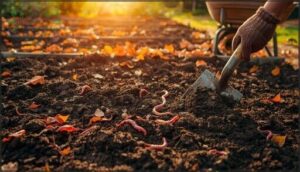
Your summer garden just wrapped up, and now it’s time to give that tired soil some love before fall planting begins. Think of this step as hitting the reset button—you’re clearing out the old and bringing in fresh nutrients to fuel your cool-season crops.
Here’s how to prep your beds so everything from lettuce to broccoli has the best shot at thriving.
Adding Compost and Organic Fertilizer
Your soil’s about to work overtime, so give it a boost before planting. Layer 2 to 3 inches of mature compost across your bed—it introduces beneficial soil microbes that jumpstart nutrient cycling and improve structure.
Follow with organic fertilizer like blood meal for nitrogen or bone meal for root development. This sustainable gardening practice transforms depleted summer soil into a thriving fall garden foundation.
Removing Weeds and Debris
Before you plant, clear the stage. Pull weeds when soil’s moist—you’ll snag entire root systems in one motion, not just leafy tops. A hori-hori knife slices under stubborn invaders with minimal disruption.
Rake out fallen leaves and spent plants within 24 hours to deny pests their winter hideout. Proper debris removal and weed identification now means cleaner beds and healthier fall crops later.
Raised Beds and Container Options
When space is tight or your native dirt won’t cooperate, raised beds and container options give you full control over fall planting conditions. Cedar beds last 7–12 years and resist rot, while powder-coated steel containers handle heavy soil mixtures for 15–20 years.
Choose 5–15 gallon pots for quick-growing greens, position south-facing beds for maximum light, and layer compost-rich blends with drainage systems to prevent waterlogging in wet fall weather.
Best Crops to Plant in Fall
Not all vegetables are created equal in the context of cool-weather growing. Some crops actually prefer the crisp fall air, developing sweeter flavors and sturdier leaves than their summer counterparts ever could.
Let’s look at the top performers that’ll fill your baskets right up until the first hard freeze.
Cold-Tolerant Greens (Lettuce, Spinach, Kale)
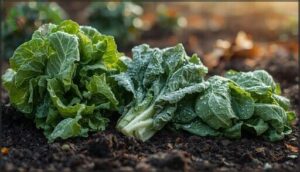
Think of cold-tolerant greens as your gateway to Winter Gardening Tips—they practically thrive when most plants throw in the towel. For successful Cool Season Crop Selection in your Fall Garden, focus on these champions:
- Lettuce matures in 30–45 days, perfect for quick Fall Harvesting
- Spinach loves cool soil and won’t bolt like spring plantings
- Kale gets sweeter with frost, making Leafy Crop Care worthwhile
These Cold Weather Strategies deliver fresh greens well into chilly months—even greenhouse growing feels optional.
Cool-Weather Brassicas (Broccoli, Cabbage, Brussels Sprouts)
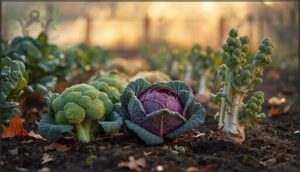
Brassicas shine when cooler weather rolls in—you’ll get tighter broccoli heads, sweeter cabbage, and Brussels sprouts that actually taste good.
For your Fall Gardening Guide, plant broccoli varieties 85–100 days before frost, cabbage for excellent storage potential, and Brussels sprouts that improve with cold nights. These Cool Season Crop stars deliver serious Brassica Nutrition and endless recipe possibilities through winter.
Root Vegetables (Radishes, Carrots, Beets)
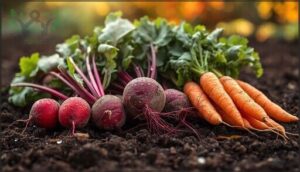
Root crops are your underground insurance policy for fall. Radishes sprint to the finish in 25–40 days—perfect for impatient gardeners testing their Root Crop Selection.
Carrots need 60–80 days but reward you with sweet flavor after frost, plus excellent Vegetable Storage potential. Beets deliver double duty: nutritious greens and roots in 50–70 days.
Plant Radish Varieties like ‘Cherry Belle’, watch for Carrot Diseases in wet soil, and enjoy outstanding Beet Nutrition all season.
Fast-Growing Asian Greens
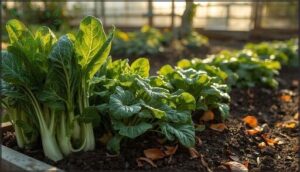
Want even faster results? Asian Greens Varieties like bok choy and mizuna race to harvest in 25–45 days—perfect for Cool Season Crop Selection. Tatsoi tolerates frost while mustard greens add peppery punch to Fall Garden Tips.
These powerhouses fit any Crop Rotation Strategies, thrive in Greenhouse Growing conditions, and love smart Microclimate Management. They’re your secret weapon for succession planting between Lettuce, Spinach, and Kale rounds.
Planting Techniques for Fall Success
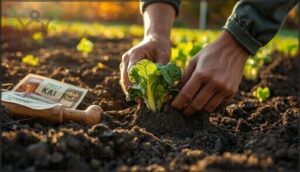
Getting seeds in the ground is where the real magic happens, but fall planting has its own rhythm compared to spring.
The soil’s warm, the air’s cooling, and your timing needs to be spot-on if you want those veggies to thrive before frost rolls in.
Let’s walk through the techniques that’ll set your fall garden up for success.
Direct Sowing Vs. Transplanting
When fall garden planning begins, you’ll face a choice: drop seeds right in the ground or start with transplants? Both work, but each shines in different scenarios.
- Direct sowing suits root vegetables like radishes and carrots—they hate transplanting and establish strong root development when seed germination happens in place, especially when soil temperature hits that sweet 55–75°F range.
- Transplants give cool-season crop selection a head start—think broccoli and cabbage—letting you skip the guesswork on seed starting and transplanting timing while their established roots handle chilly air better.
- Growth rates differ substantially: transplants recover faster from weather hiccups after plant hardening, while direct-sown greens take longer but skip transplant shock entirely, making them ideal for quick-turnover crops in your fall garden.
Proper Seed Depth and Spacing
Once you’ve chosen your method, getting seed depth guidelines right matters—a lot. Plant most seeds two to three times their diameter deep; tiny lettuce seeds barely get covered, while larger ones like beans go deeper.
Spacing techniques prevent crowding: give leafy greens 1–2 inches, brassicas 12–18. Thinning strategies after emergence keep your fall garden healthy, boosting emergence rates and cutting disease pressure in one swoop.
Succession Planting for Continuous Harvest
After you’ve nailed proper spacing, succession planting keeps fresh greens rolling in all season. Plant a new wave every 10–14 days for cool-season crops, 7–14 for fast-growing greens.
Here’s how to make it work:
- Schedule multiple sowings aligned with local frost forecasts to avoid crop damage
- Rotate plant families between cycles to reduce pest buildup
- Mix quick and slow maturing varieties for extended harvests
- Mark sowing dates clearly on each bed to track progression
This harvest scheduling strategy, paired with smart crop rotation and seed selection, transforms your fall gardening tips into a steady supply. Growth stages overlap beautifully when you’ve done your soil preparation right—suddenly you’re harvesting baby kale while mature broccoli heads up nearby. Cool-season crop selection matters here; choose varieties with staggered days to maturity. These seasonal gardening strategies and vegetable gardening tips turn one planting into weeks of abundance.
Using Row Covers and Mulch
Beyond smart succession schedules, row cover materials and mulching create garden microclimates that shield cool-season crop selection from early freezes. Lightweight fabric offers 4–6°F frost protection while blocking cabbage moths—just anchor edges securely.
Meanwhile, a 2–3 inch mulch layer delivers soil insulation, conserves moisture, and suppresses weeds. These seasonal gardening strategies extend your harvest by weeks, making frost protection and mulching essential fall gardening tips.
Caring for and Harvesting Fall Crops
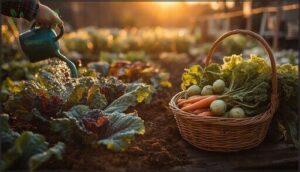
Getting your fall crops in the ground is just the beginning—the real work happens in the weeks that follow.
Your seedlings need consistent care to thrive as temperatures drop and daylight shrinks.
Let’s walk through the key tasks that’ll keep your garden productive right up until frost.
Watering and Fertilizing Needs
Your fall veggies need steady soil moisture—aim for 1 to 1.5 inches weekly, including rain. Water deeply in the morning so roots dig down and leaves dry before nightfall.
Drip irrigation methods deliver water right where it counts. For fertilizer types, use balanced granular feeds at planting, then side-dress nitrogen every 3 to 4 weeks during rapid growth. Stop heavy feeding 2 to 3 weeks before frost to prevent tender new shoots.
Protecting Against Frost and Pests
When nighttime temps dip, row covers become your best friend—lightweight fabric traps warmth and blocks cabbage moths in one move.
Cold frames raise the microclimate by 5 to 10 degrees, perfect for frost protection and mulching around tender greens. Weigh down edges with bricks so wind won’t steal your heat, and you’ll master pest control while keeping frost at bay.
Monitoring for Disease
Early disease surveillance means walking your fall vegetable garden weekly, checking leaves for spots, mold, or odd color shifts. Visual scouting catches fungal coatings and root rot before they spread.
When symptoms hit your threshold management trigger, adjust irrigation, apply row covers, or rotate beds. Integrated prevention—clean tools, proper spacing, beneficial microbes—keeps pathogen control simple and your cool-season crop selection thriving.
Harvesting and Storing Fall Vegetables
Timing your fall harvest right makes all the difference—pick leafy greens in the cool morning when texture peaks, and wait for root vegetables after a light frost when sugars concentrate.
Handle crops gently to avoid bruising, then store roots at 32–40°F with high humidity while winter squash prefers drier, warmer spots. Smart post-harvest care turns your fall garden bounty into months of eating.
Frequently Asked Questions (FAQs)
What crops can you plant in the fall?
Fall gardens thrive on cool-weather crops like lettuce, spinach, and kale—all cold-tolerant greens perfect for seasonal harvest.
Brassicas such as broccoli and cabbage, plus root vegetables like radishes and carrots, also flourish.
When should you start planting fall crops?
You should start planning your fall garden 4 to 6 weeks before your area’s first frost date.
Count backward from that date, factoring in each crop’s days to maturity plus cooler autumn growth rates.
How to plant vegetables in the fall?
Prep your beds with 2 to 3 inches of compost, pull weeds, and direct sow or transplant cool-season crops like lettuce, broccoli, and radishes—timing them 4 to 8 weeks before frost.
How do I plant cool season crops in the fall?
Cool-season crops thrive when soil temperature drops below 70°F.
Calculate your first frost date, then count backwards using each variety’s days to maturity—adding two weeks for slower fall growth and proper garden planning.
Which vegetables grow best in the fall?
Lettuce, spinach, and kale thrive as cool-season crops, while broccoli, cabbage, and radishes handle frost beautifully.
These cold-weather vegetables sweeten with chilly nights, making fall garden planning rewarding for seasonal gardening enthusiasts seeking winter harvests.
When should I plant seeds for my Fall Garden?
Time your fall garden planning by counting backwards from frost—here in Ashburn, that’s mid-to-late October.
Most cool-season crops need sixty to seventy-five days, so late July through August works perfectly.
When is the best time to plant a fall garden?
Start your fall garden six to eight weeks before your area’s first frost, usually late summer.
That window gives cool-season crops enough time to mature before temperatures drop too low for growth.
Are fall vegetables a good time to grow?
While summer gardens hog the spotlight, fall’s the underdog season that quietly outperforms.
Cool-season crops thrive in 50–70°F temps, dodging pests and heat stress—making fall gardening surprisingly productive and rewarding.
What crops should be planted in the fall?
Focus on cool-season crops like spinach, kale, and radishes—they love chilly nights.
Broccoli, cabbage, and carrots also thrive when frost-tolerant plants meet shorter days, giving you winter harvesting options through seasonal planting.
When should I start my fall garden?
Plan to get your fall garden going 6 to 8 weeks before your first expected frost date—usually late October or early November here in Ashburn, Virginia, depending on your microclimate.
Conclusion
Spring gardening means fighting weeds and pests, and unpredictable weather.
Planting fall seasonal crops? You get nature’s assist—warm soil, fewer bugs, and vegetables that taste better with every cool night.
Your neighbors will winterize their beds while you’re stacking fresh kale and carrots in the kitchen. Count back from frost, plant fast varieties, and prepare for the easiest, most rewarding harvest you’ll grow all year.
Fall doesn’t end the season—it perfects it.