This site is supported by our readers. We may earn a commission, at no cost to you, if you purchase through links.

Some plants are natural allies. Tuck basil near your tomatoes, and its volatile oils confuse the aphids and whiteflies that would otherwise move in. Let pole beans climb your corn stalks, and they quietly fix nitrogen into the soil the whole season.
These aren’t gardening myths—they’re relationships plants have developed over millennia, and smart gardeners have been borrowing from them ever since.
Knowing which plants grow well together means less time fighting pests, less fertilizer, and more food from the same patch of ground. The right pairings are simpler than you’d expect.
Table Of Contents
- Key Takeaways
- Best Vegetable Companion Plant Pairings
- Herbs That Help Vegetables Thrive
- Flowers That Support Garden Crops
- Soil-Building Plant Combinations
- Space-Saving Companion Planting Ideas
- Plant Pairings to Avoid
- Frequently Asked Questions (FAQs)
- Are companion plants good for your garden?
- What vegetables can you grow with a companion plant?
- What are the best companion planting strategies?
- What plants are safe for dementia patients?
- When should I start companion planting in spring?
- Can companion planting work in raised beds or containers?
- Do companion plants help with disease prevention?
- Which companions work best for fruit trees?
- How do I rotate companion plant combinations each season?
- Conclusion
Key Takeaways
- Planting basil near tomatoes and oregano near squash uses their natural oils to confuse and repel common pests without any sprays.
- Beans fix nitrogen into the soil as they grow, giving hungry crops like corn a steady, free nutrient boost all season.
- Pairing plants with different root depths — like carrots and onions — means they share space without fighting over the same nutrients.
- Keep tomatoes away from potatoes and corn, since shared pests and diseases spread quickly when these crops grow side by side.
Best Vegetable Companion Plant Pairings
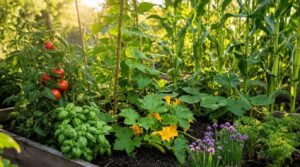
Some vegetables just do better when they’re not growing alone. The right neighbors can keep pests away, share nutrients, and make the most of your garden space.
Pairing the right plants is one of the best summer vegetable gardening strategies you can use to naturally boost your harvest.
Here are five pairings worth trying.
Tomatoes With Basil
Tomatoes and basil are one of the best companion planting strategies you can try. The flavor synergy is real — but so is the pest protection. Basil’s aroma chemistry confuses whiteflies and aphids, acting as natural pest control in gardens.
Here’s what to do:
- Plant basil 18–24 inches from tomatoes
- Choose Genovese basil for the highest pest-repelling oils
- Tear leaves by hand to preserve volatile compounds
- Time harvest timing together for fresh preparation dishes
- Drizzle olive oil over both for a nutritional boost
This pairing delivers a sweet bright herbal balance that enriches both taste and nutrition.
Corn With Pole Beans
Corn and beans are a classic duo for good reason. As corn stalks grow, pole beans climb them for vertical support — no extra trellis needed. Beans also fix nitrogen into the soil, giving corn a steady nutrient boost.
Use staggered planting, waiting until corn hits 6–12 inches before adding beans. This intercropping for nutrient cycling is the heart of the Three Sisters method.
Carrots With Onions
Carrots and onions work their magic underground, unlike beans climbing corn. Their roots occupy different soil layers — carrots dig deeply while onions stay shallow — ensuring no nutrient competition. This partnership exemplifies nutrient complementarity at its best.
Intercropping them also improves soil moisture retention, creating a more resilient growing environment.
Harvest timing aligns well, streamlining the cultivation process for both crops.
The flavor synergy when roasting both at 425°F is truly worth it, elevating their natural sweetness and depth.
Radishes With Lettuce
While carrots and onions team up underground, lettuce and radishes demonstrate how smart intercropping works both above and below the soil simultaneously. This pairing delivers real companion planting benefits:
- Seedling Shade — Radish tops shelter young lettuce from heat, preventing bolting naturally.
- Rapid Harvest Cycle — Radishes mature in 20–30 days, freeing space for lettuce to fill in.
- Soil Moisture — Their differing root depths improve soil health and retain moisture without nutrient competition.
Pumpkins With Oregano
Pumpkins and oregano are a natural match — both in the garden and in the kitchen. Oregano’s aromatic oils provide pest deterrence, keeping squash bugs at bay all summer. That’s harvest timing synergy at its best.
Come fall, the herb companion delivers autumn flavor balance too. Try oregano-infused oil drizzled over roasted pumpkin — the companion planting benefits follow you right to the table.
Herbs That Help Vegetables Thrive
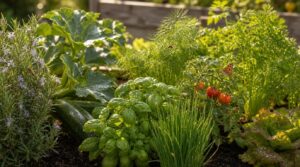
Herbs do more than flavor your food — they quietly protect the vegetables growing beside them. A few well-placed plants can keep pests away without any sprays or chemicals.
Here are five herbs worth adding to your vegetable garden.
Basil for Pest Protection
Basil is one of the hardest-working herbs in your garden. Its essential oils — eugenol, linalool, and citronellal — create an aromatic pest barrier that confuses and repels aphids, whiteflies, and hornworms. Flowering basil also pulls double duty: the nectar draws beneficial predators like lacewings that hunt pests naturally.
Keep plants 40–60 cm apart for effective, garden-wide pest deterrence without crowding your vegetables.
Dill for Cabbage Crops
Dill is a quiet powerhouse in cabbage and dill partnerships. Its scent confuses cabbage moths and draws beneficial insects — parasitic wasps and hoverflies — that tackle pests naturally, making biological pest control almost seamless.
Keep plantings well-spaced to maximize airflow, since crowded beds invite the fungal issues covered in this guide to fall garden pests and diseases.
Dill for Cabbage: Quick Guidelines
- Space dill 12–18 inches from cabbage for maximum pest deterrence
- Match soil pH 6.5–7.0 for soil pH compatibility with cabbage
- Plant borders, not centers, to protect heads from shading
- Snip regularly to slow bolting in warm spells
- Rotate yearly for lasting soil health improvement
Garlic Near Beets
Garlic is one of the best-kept secrets in companion planting. Planted 4–6 inches from beet rows, it delivers powerful sulfur pest control, masking beet scents and deterring aphids, rabbits, and root maggots. This pairing also delivers a soil microbial boost, improving soil health through plant pairings.
Harvest beets first to avoid disturbing garlic bulbs — and enjoy a subtle flavor infusion in your beet greens.
Oregano With Squash
Oregano serves a dual role in the garden, functioning as both a flavor-enhancing companion and a natural pest repellent. Plant it along the edges of summer squash beds to leverage its aromatic oils, which effectively deter aphids and cucumber beetles.
Its strategic placement also fosters microclimate benefits, attracting pollinators while safeguarding nearby plants. This symbiotic relationship between the herb and vegetables further enhances soil health, creating a resilient garden ecosystem.
Harvest timing remains flexible—snip sprigs anytime to maintain pest deterrence through the herb’s potent aromatic properties.
Chamomile With Brussels Sprouts
Chamomile is a quiet workhorse in companion planting. Tuck it between your Brussels sprouts and it pulls double duty — attracting beneficial insects like hoverflies while its aromatic oils disrupt pest deterrence against aphids and cabbage moths.
It spreads low for ground cover, promotes soil microbiome health during bloom, and offers subtle flavor enhancement to young sprouts.
Harvest timing is simple: snip flowers anytime.
Flowers That Support Garden Crops
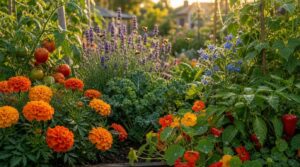
Flowers do more than look pretty in a garden — they pull their weight in real, practical ways. The right blooms can draw in helpful insects, keep pests away, and give your crops a better shot at thriving.
Here are five flowers worth planting alongside your vegetables.
Marigolds for Nematodes
If nematodes are wrecking your tomatoes, marigolds might be your best ally. French marigolds release root compounds that suppress nematode populations by up to 90%. Variety selection matters here — Tagetes patula outperforms others.
French marigolds suppress nematode populations by up to 90% — your tomatoes’ most powerful natural ally
Follow a smart planting schedule: start them two months early, in the same bed. Soil temperature affects their efficacy, so nematode monitoring and proper rotation timing keep soil health improvement through plant pairings working season after season.
Borage for Zucchini
Marigolds work below the soil, while borage manages conditions above ground.
Zucchini and borage form a natural partnership: Borage attracts bees to zucchini blooms, delivering a pollinator boost during peak harvest. Its deep roots break up soil and release minerals as their leaves decompose. This living mulch effect also deters squash bugs, maintaining pest control.
Calendula With Kale
Borage tends to the zucchini patch — but kale needs its own ally. That’s where calendula steps in.
Kale and calendula make a quietly powerful team:
- Beneficial insects like hoverflies and lady beetles arrive for the continuous bloom
- Pest masking from aromatic leaves reduces aphid pressure naturally
- Pollinator attraction using companion plants improves your whole bed
- Edible flower garnish adds color straight from garden to salad
- Soil organic boost builds as spent plants decompose nearby
Lavender Near Melons
Kale found its match — now melons get theirs with lavender. Plant lavender 18–36 inches from melon rows for optimal results. Its pest-deterrent aromas create a natural barrier against pests, while pollinator attraction draws bees directly to melon blooms.
| Lavender Benefit | Effect on Melons |
|---|---|
| Pollinator Boost | Improves fruit set |
| Microclimate Enhancement | Increases airflow |
| Pest Barrier | Reduces aphid pressure |
| Water Conservation | Facilitates drip irrigation systems |
Good soil drainage ensures both plants withstand summer heat, fostering healthy growth.
Alyssum for Brassicas
Sweet alyssum is one of the hardest-working flowers you can tuck into a brassica bed. It stays low, covers bare soil, and keeps beneficial insects close all season long.
- Hoverfly Attraction draws natural aphid predators right to your crops
- Early Season Nectar feeds beneficials when brassicas need protection most
- Weed Suppression through cool‑season groundcover keeps beds tidy
- Alyssum Spacing: one patch per eight brassica plants works well
- Flower attractants broaden your pest control without extra chemicals
Soil-Building Plant Combinations
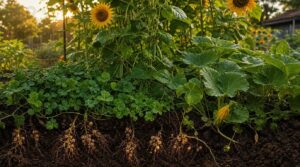
Some plants do more than grow — they actually improve the soil for everything around them.
The secret is in their roots, which pull nitrogen from the air and share it with neighboring crops.
Here are the best soil-building pairs worth adding to your garden.
Beans With Corn
Corn and beans are one of nature’s smartest partnerships. Through nitrogen fixation, beans pull nitrogen from the air and share it with nearby corn — boosting leaf area by up to 15 percent. That’s nitrogen transfer doing real work. Corn returns the favor with vertical stacking support, acting as a living trellis.
Together, they improve moisture management, enable pest disruption, and support harvest synchronization — pure plant synergy for higher yields.
Peas With Turnips
Peas and turnips make a quiet but powerful team in your soil-building rotation. Peas bring nitrogen fixation to the table, feeding the soil while turnips bulk up beside them. Their staggered harvest keeps your bed productive across the season.
Toss in some turnip greens for extra nutrition, and use a quick cook method to enjoy both vegetables at peak freshness — savory sweetness at its best.
Fava Beans for Nitrogen
Few nitrogen fixing legumes match what fava beans bring to your soil. Through Rhizobium inoculation, their roots pull atmospheric nitrogen directly into the ground — eliminating the need for synthetic fertilizer.
Plant them as a winter cover crop, then mow them down and practice biomass mulching before your next planting. This process prepares the soil for subsequent crops.
Nitrogen mineralization completes the cycle, quietly fueling soil fertility through natural intercropping, aiding nutrient cycling and delivering genuine rotational benefits.
Alfalfa as Cover Crop
Alfalfa pulls its weight like few other cover crops can. It can fix nitrogen at 250–500 pounds per acre, building real nitrogen credits for your next vegetable bed.
Its deep roots handle deep soil aeration naturally, breaking up compaction while improving moisture retention. This root system strengthens soil health through enhanced structure and water efficiency.
Dense growth delivers solid weed suppression, while the flowers create beneficial insect habitat. These features quietly support intercropping and nutrient cycling throughout the season.
Three Sisters Planting
The Three Sisters planting method is one of the oldest living examples of plants working together as a team. This system demonstrates how crop diversification for pest management and intercropping for nutrient cycling can occur simultaneously.
Follow this sequence to implement it correctly:
- Planting Sequence – Plant corn first, then beans at 4–6 inches tall, then squash a week later.
- Mound Design – Use 18–24 inch raised mounds for improved drainage and warmth.
- Nutritional Synergy – Corn, beans, and squash collectively provide carbohydrates, protein, and vitamins.
- Moisture Management – Squash leaves shade the soil, helping to retain water.
- Pollinator Habitat – The open canopy naturally attracts beneficial insects.
This integrated approach highlights the mutual benefits of intercropping, where each plant supports the others’ growth and resilience.
Space-Saving Companion Planting Ideas
Small gardens reward smart planning more than extra square footage. The right plant pairings let you stack functions — one plant bolsters, shades, or protects another — so nothing goes to waste.
Here are some of the best space-saving combinations worth trying.
Sunflowers Supporting Cucumbers

Sunflowers make surprisingly good neighbors for cucumbers. Their sturdy stalks act as a natural vertical trellis, letting vines climb up and off the soil. That airflow cuts disease risk fast.
Tall sunflowers also provide heat mitigation by casting afternoon shade, while their blooms deliver a real pollinator boost nearby.
Their deep roots handle soil loosening and even work as a pest barrier — smart companion planting at its best.
Spinach Beneath Strawberries
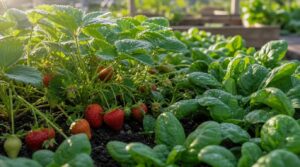
Strawberries love a cool, moist root zone — and spinach delivers exactly that. Plant spinach 4 to 6 inches apart between your strawberry rows.
Its dense canopy manages weed suppression naturally and locks in soil moisture. As leaves break down, nutrient cycling kicks in, quietly feeding your bed.
This companion planting duo also enhances soil health and plant diversity without stealing space.
Squash as Living Mulch

Spinach keeps things cool below, but squash takes ground cover to another level.
Squash summer vines spread fast, acting as living mulch and moisture retention all in one. Here’s what that dense canopy does for your beds:
- Canopy Moisture — Reduces soil evaporation by up to 40%
- Soil Temperature Moderation — Drops surface temps several degrees at peak sun
- Weed Suppression — Blocks light before weeds can take hold
- Disease Splash Reduction — Shields soil from rain-driven pathogen spread
- Organic Matter Recycling — Dying vines feed the soil naturally
No mulch bags needed — companion planting does the work.
Lettuce With Radishes
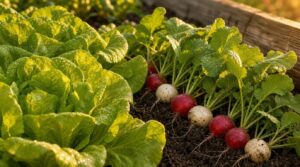
Squash covers ground well, but lettuce and radishes demonstrate how companion planting can work above and below the soil simultaneously.
Radishes mature in 22–30 days, freeing space before lettuce requires it. This harvest timing creates natural pest deterrence, soil moisture retention, and nutrient synergy in a single bed.
The culinary pairing is a bonus—fresh, peppery, and ready together.
Deep and Shallow Roots
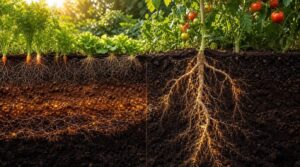
Root depth layering is one of the smartest companion planting strategies for vegetable gardens. When you intercrop deep and shallow-rooted plants together, they tap different soil layers — no root zone competition, no crowding.
- Complementary root zones mean drought-resilient rooting across both levels
- Lateral root stability in shallow plants holds topsoil moisture
- Soil moisture harvesting improves when root exudates from deep roots redistribute water upward
Plant Pairings to Avoid
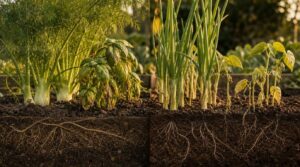
Not every plant makes a good neighbor — some combinations actually hurt your garden more than help it. Knowing what to keep apart is just as important as knowing what to put together.
Here are the pairings worth avoiding.
Tomatoes With Potatoes
Tomatoes and potatoes look like natural neighbors, but they’re actually bad roommates. Both belong to the Solanaceae family, so they share the same diseases — late blight, early blight, and Fusarium wilt can jump between them fast. That’s a real threat to soil health improvement through plant partnerships you’re trying to build.
| Risk Factor | What Happens | What to Do |
|---|---|---|
| Disease Cross‑Risk | Blight spreads between crops quickly | Separate beds entirely |
| Soil Nutrient Competition | Both drain similar nutrients | Use rotation strategies |
| Spacing Recommendations | Keep several meters apart | Use raised beds or containers |
| Integrated pest management | Shared pests multiply faster | Practice 3–4 year crop rotation |
| Alternative Companions | Tomatoes thrive with basil or marigolds | Swap potatoes for better plant synergy |
Lean into the benefits of mixed planting by pairing your tomatoes with companion plants that actually help them grow.
Tomatoes With Corn
Corn and tomatoes might seem like a great team, but they’re actually poor companions. Both crops compete heavily for nutrients, creating nutrient competition that starves each other out.
Poor air circulation in dense plantings speeds up disease overlap, further stressing the plants.
Shared pests like corn earworm and tomato hornworm thrive when planted nearby, increasing infestation risks.
To protect both harvests, keep them separated — use staggered planting in different beds.
Peppers With Beans
Peppers and beans might sound like a smart pairing, but this combo comes with real trade-offs worth knowing.
Key challenges include:
- Shade Management – Bean canopies can overshadow peppers, reducing fruit set.
- Nitrogen Boost – Nitrogen fixation benefits beans more than peppers need.
- Pest Reduction – Shared pests spread easily between crops.
- Harvest Timing – Different maturity windows complicate bed management.
- Support Structures – Pole beans compete for vertical space peppers require.
Carrots With Dill
Dill and carrots seem like a dream team — and in the kitchen, they are. That flavor balance and aromatic boost when roasting carrots with fresh dill? Unbeatable. But in the garden, they are rivals.
| Factor | Carrots | Dill |
|---|---|---|
| Harvest Timing | 70–80 days | 40–60 days |
| Pest Influence | Attracts carrot flies | Draws same pests |
| Nutrient Synergy | Heavy feeder | Competes directly |
Keep them apart for better companion planting results.
Overcrowded Mixed Plantings
Packing too many plants together feels productive, but it often backfires. Poor airflow management invites fungal disease, and light penetration can drop 20–40%, starving your crops. Nutrient competition grows fierce when roots tangle in the same soil layer.
Intercropped beds thrive when you plan spacing carefully:
- Apply thinning techniques regularly
- Use drip irrigation planning to reduce moisture stress
- Enhance plant spacing and proportions for each pairing
Frequently Asked Questions (FAQs)
Are companion plants good for your garden?
Yes, companion plants pull their weight in the garden. They boost yield, cut pest pressure, improve soil health, and draw in beneficial insects — all while saving you money on inputs.
What vegetables can you grow with a companion plant?
Most vegetables thrive with the right neighbor. Think Peppers with Basil, Cabbage with Nasturtium, or Spinach with Garlic.
These vegetable pairings deliver real companion planting benefits — less pest pressure, better yields, healthier soil.
What are the best companion planting strategies?
The best companion planting strategies combine timing intercropping, root zone partitioning, volatile compounds, insect habitat creation, and multi-layered canopy design. These methods work together to enhance garden ecosystems.
This integrated approach increases natural pest control, pollinator attraction, and intercropping benefits across your vegetable garden, fostering a healthier and more productive environment.
What plants are safe for dementia patients?
Stick to non‑toxic herbs like basil, low‑maintenance foliage such as spider plants, and thornless succulents. These safe, sensory garden plants reduce injury risk and stay manageable for caregivers.
When should I start companion planting in spring?
Start when soil temperature hits 40°F and frost risk fades. Harden off indoor seedlings over three to four weeks before transplanting. Staggered sowing keeps harvests rolling all season.
Can companion planting work in raised beds or containers?
Yes, companion planting works great in raised beds and containers. You get soil warmth, root zone layering, and microclimate control in one spot — making small space companion planting surprisingly effective and easy to manage.
Do companion plants help with disease prevention?
Think of companion plants as a living shield.
They use volatile antimicrobials, beneficial insect lures, and microclimate management to suppress fungal disease, disrupt pathogen cycles, and prevent disease with strategic plant combinations naturally.
Which companions work best for fruit trees?
Fruit trees thrive with a two-tier guild beneath them.
Use comfrey mulch to feed roots and lavender repellent to deter moths.
Incorporate legume nitrogen to enrich soil and yarrow mineralizer to boost trace elements.
How do I rotate companion plant combinations each season?
As the old saying goes, don’t put all your eggs in one basket.
Rotate your crop rotation schedule each season, shifting companions alongside crops to keep pests guessing and soil balanced.
Conclusion
Like a well-matched team, plants that grow well together make the whole garden stronger than any single plant could alone. You’ve seen how basil shields tomatoes, how beans feed corn, and how marigolds quietly guard the roots below.
None of it requires fancy tools or expert training. Just thoughtful placement, a little observation, and trust in what nature figured out long ago. Your best harvests often start with who you plant next to whom.
- https://www.nal.usda.gov/collections/stories/three-sisters
- https://modernfarmer.com/2018/06/three-sisters-garden-planting-corn-beans-squash-together/
- https://gardening.cals.cornell.edu/lessons/curriculum-classics/the-three-sisters-exploring-an-iroquois-garden/how-to-plant-the-three-sisters/
- https://www.oneearth.org/three-sisters-gardens/
- https://northerngardener.org/companion-planting/