
This site is supported by our readers. We may earn a commission, at no cost to you, if you purchase through links.

Blight doesn’t announce itself—it creeps in quietly, starting with a few brown spots on a lower leaf, then spreads fast enough to gut an entire plant within days. Most gardeners misidentify it early on, confusing it with nutrient deficiencies or sunscald, and that delay costs them the harvest.
The frustrating part isn’t losing a plant. It’s a plant you could have saved.
Treating blight on tomato plants takes more than spraying something on the leaves and hoping for the best—it takes knowing exactly what you’re dealing with, removing the right material, and hitting it with the right treatment at the right time.
Table Of Contents
- Key Takeaways
- Identify Tomato Blight Before Treating
- Remove Infected Plant Material
- Apply Blight Treatments Correctly
- Organic Copper Fungicide for Prevention
- Biofungicides for Early Disease Pressure
- Baking Soda Spray for Mild Symptoms
- Neem Oil Use and Application Timing
- When Chemical Fungicides May Be Needed
- Fungicide Timing After Rain or Watering
- Why Infected Tissue Cannot Be Reversed
- Reapply Treatments on a Regular Schedule
- Prevent Blight From Returning
- Use Crop Rotation for Three Years
- Improve Spacing and Airflow Around Plants
- Water With Drip Irrigation or Soaker Hoses
- Mulch Soil to Reduce Splashback
- Remove Volunteer Tomatoes and Nightshade Weeds
- Solarize Contaminated Garden Soil
- Use Compost to Improve Drainage
- Choose Resistant Tomato Varieties When Possible
- Inspect Plants Weekly for Early Detection
- Top 3 Products for Soil Recovery
- Frequently Asked Questions (FAQs)
- How do you get rid of tomato blight?
- What is the best fungicide for early and late blight in tomatoes?
- Does hydrogen peroxide stop tomato blight?
- Can a tomato plant come back from blight?
- Can blight spread from tomatoes to other vegetables?
- How long does blight take to kill plants?
- Is it safe to eat tomatoes from infected plants?
- Can blight contaminate greenhouse structures or pots?
- Should I test my soil after a blight outbreak?
- Can blight spread to other vegetable plants nearby?
- Conclusion
Key Takeaways
- Identifying the exact blight type—early, late, or Septoria—before you treat is the single most important step, since each one responds to different products and methods.
- Physical removal of infected leaves, stems, and fruit must happen first and fast, because no spray can save tissue that’s already dead or stop the spread if diseased debris stays on the plant.
- Copper fungicides work best as a preventive barrier applied every 7–14 days, while chemical options like chlorothalonil or metalaxyl-M are your backup when humidity is high and disease is moving quickly.
- Long-term blight control comes down to crop rotation, drip irrigation, and weekly scouting to catch new symptoms before they get a foothold.
Identify Tomato Blight Before Treating
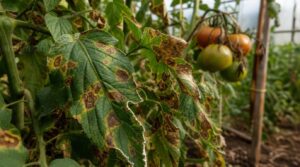
Before you treat blight, you need to know exactly what you’re dealing with. Each type looks different and require different treatments, so guessing wrong wastes time and can make things worse.
Matching the treatment to the blight type is the real game-changer, so identifying each tomato blight type before you spray saves you time, money, and a lot of frustration.
Here’s how to read the signs your tomato plants are showing you.
Early Blight Symptoms on Leaves and Fruit
Early blight, caused by Alternaria solani, announces itself with a signature you won’t miss. Look for these three signs first:
- Lower leaf spotting — brown lesions appear on older leaves first, then creep upward
- Bulls-eye pattern — concentric ring lesions with a yellow halo development around each spot
- Sunken fruit lesions — dark, ringed spots forming near the stem end
Practicing crop rotation reduces inoculum helps keep the disease in check.
Late Blight Signs on Foliage and Tomatoes
Late blight, caused by Phytophthora infestans, moves faster and hits harder than early blight. Water-soaked lesions appear on leaf margins within 48 hours, quickly turning brown. Flip the leaf over — that cottony undersurface growth confirms it.
On fruit, watch for greasy shoulder spots and brownish rot.
Stems show purple stem lesions and petiole water-soaked, causing whole clusters to droop.
Septoria Leaf Spot Versus Tomato Blight
Septoria leaf spot is easy to confuse with blight, but symptom differentiation matters. Septoria shows up as numerous tiny, round spots with tan centers and dark margins — think scattered freckles, not rings. A diagnostic hand lens reveals dark pycnidia inside each lesion.
High humidity influence drives both diseases, but integrated pest management strategies, fungicides, and resistant tomato varieties address each differently.
Leaf, Stem, and Fruit Damage Indicators
Once you know what disease you’re dealing with, it’s time to read the plant more carefully. Concentric leaf rings point to early blight. Water-soaked lesions with yellow halo edges suggest late blight.
Look lower first — leaf tissue wilting and drop starts there. Check stems for stem canker exudate and fruit for corky lesions.
Regular blight symptom scouting and leaf spot identification make identifying tomato blight symptoms far easier.
How Fast Tomato Blight Spreads
Blight moves faster than most gardeners expect. Spore Release Timing is tight — late blight sporangia appear within four to five days of wet conditions. Windborne Dispersal then carries them miles away, while Rain Splash Speed deposits new spores on healthy leaves within hours.
When Temperature-Humidity Thresholds align — such as cool nights above 90% humidity — the disease cycle accelerates sharply. Plant Density Impact also plays a critical role: crowded plants trap moisture, turbocharging the pathogen lifecycle.
When Infected Plants Can Be Saved
Not every sick plant is a lost cause. If you catch blight early — before it reaches the vascular tissue — plant vigor becomes your best ally. Your recovery window is real.
Catch blight before it reaches the vascular tissue, and the plant can still fight back
Selective pruning of damaged lower leaves, consistent moisture management through proper irrigation techniques for tomatoes, and balanced fertilization can stabilize struggling plants.
Treatment options for tomato blight, from biofungicides to biological controls and fungicides, do the rest.
Remove Infected Plant Material
Once you’ve identified the problem, your next move is physical removal — and it matters more than most people realize. Getting the infected material off the plant quickly is what keeps blight from spreading to healthy growth.
Here’s exactly how to do it right.
Prune Spotted or Dying Lower Leaves First
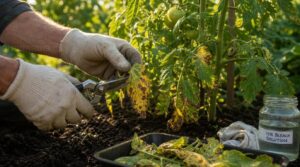
Think of your lower leaves as the front line — they’re the first to fall. Start your morning pruning schedule when temperatures are cooler and the foliage is dry. Gently remove spotted or lower leaves that touch the soil, since they’re prime targets for soil splash. Sanitize blades between plants, and toss removed leaves in the trash — never the compost.
This simple garden hygiene step opens the canopy for better airflow immediately.
Remove Severely Infected Stems and Fruit
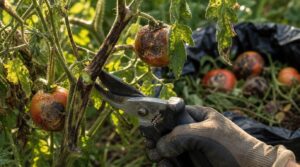
When stems show widespread lesions, don’t hesitate — cut below the lesion into clean, healthy tissue. Inspect adjacent branches before moving on, since infection travels fast.
Wearing gloves protects you from direct pathogen contact. Remove infected fruit at the stem attachment point and seal disposal bags immediately.
Track removal dates in a simple notebook — it helps you spot patterns and catch recurring problems early.
Bag and Discard Diseased Debris Safely
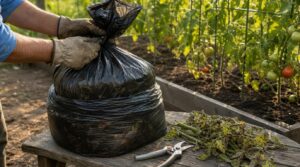
Once debris is cut, treat it like a biohazard — seal it immediately. Use secure seal bags, and double-bag heavy debris to prevent leaks. Label disposal bags with the date and plant location, then transport them to the trash the same day.
Keep bags elevated off the ground until pickup.
Good crop sanitation and garden hygiene stop spores from cycling back into your soil.
Avoid Composting Blighted Tomato Plants
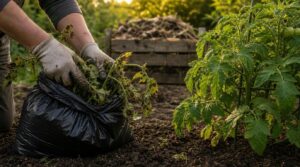
Your compost pile isn’t hot enough to kill blight. Most home piles never reach the 140°F needed for pathogen heat kill — meaning soilborne pathogens survive and return next season.
Skip the compost and use sealed waste bags instead. Check your local disposal regulations; many municipal green waste programs accept diseased material safely.
That small step protects everything you’ve worked to grow.
Sanitize Pruners Between Every Plant

Your pruners can carry blight from plant to plant as easily as infected leaves do. Every cut is a potential transfer point — so sanitizing between plants isn’t optional.
- Wipe blades with 70% isopropyl alcohol for fast, residue-free sterilization.
- Soak in bleach solution (1:9 ratio) for 30 seconds as an alternative.
- Rinse and dry blades completely — blade drying prevents rust and preserves sharpness.
- Keep your sanitizer within arm’s reach for true sanitizer accessibility between cuts.
- Sharpen regularly — regular sharpening means cleaner cuts and less tissue damage.
Both alcohol and bleach work effectively; alcohol wins on convenience and rust prevention.
Monitor Plants After The First Cleanup
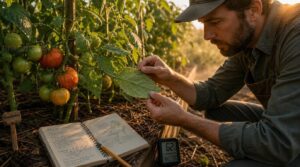
Once your tools are clean and the cleanup is done, the real work begins — watching. Keep a weekly symptom log and check the tops and bottoms of leaves for new spots or lesions.
Practice canopy humidity monitoring by noting dew formation and airflow.
Try root health scouting and mulch moisture evaluation weekly. Weather risk scoring helps you act before conditions turn dangerous again.
Apply Blight Treatments Correctly
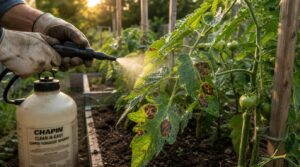
Once you’ve cleared the infected material, the next step is treating what’s left. Not every product works the same way, and using the wrong one at the wrong time won’t do much good.
Here’s what you need to know about each option before you reach for the sprayer.
Organic Copper Fungicide for Prevention
Copper-based fungicides are your first line of defense — and one of the most reliable organic fungicide options available. Products like Bonide Liquid Copper Fungicide and Capt Jack’s Copper Fungicide work by leaving a protective film persistence on leaf surfaces that blocks spore germination before infection takes hold.
Follow these Rate Guidelines to use copper safely:
- Apply preventively every 7–14 days during wet conditions
- Reapply after heavy rain — copper washes off
- Watch for Phytotoxicity Risks; don’t exceed label rates
- Limit applications to avoid Soil Copper Accumulation and disrupting soil life
Biofungicides for Early Disease Pressure
When copper isn’t quite enough on its own, biological controls can fill the gap — especially early in the season.
Products like CEASE Biological Fungicide rely on Bacillus subtilis and Trichoderma, using microbial antagonism and induced systemic resistance to suppress early blight before it spreads.
Apply as a soil drench or foliar spray, check formulation shelf-life before use, and confirm compatibility with copper if you’re rotating both.
Baking Soda Spray for Mild Symptoms
For mild early blight, a simple baking soda spray fits right into your organic control methods toolkit. The mix ratio is straightforward: 1 teaspoon of sodium bicarbonate per quart of water, plus a few drops of dish soap as your surfactant choice. Early-season use provides the best results as a prevention strategy for tomato blight and integrated pest management in home gardens.
- Apply to dry leaves, covering both sides
- Avoid midday application — sunlight sensitivity can cause leaf scorch
- Storage duration tops out at one week, refrigerated
- Reapply every 7–14 days or after rain
Neem Oil Use and Application Timing
Neem oil serves as both a pest deterrent and blight suppressant in organic control methods. To prepare, mix it at 2% with water and always add a surfactant—a few drops of dish soap keep the emulsion stable.
Apply before 10 a.m., maintain temperatures below 85°F, and practice strict rain avoidance to ensure effectiveness.
Reapplication is needed every 7–10 days for ongoing protection.
When Chemical Fungicides May Be Needed
Sometimes organic options just aren’t enough. When weather forecasts show prolonged humidity, or disease is advancing fast, chemical fungicides become the practical call. Economic thresholds matter here—if your yield is at serious risk, synthetic fungicide use is justified.
Always rotate between protective vs systemic options for resistance management, and respect pre-harvest intervals so your tomatoes stay safe to eat.
Fungicide Timing After Rain or Watering
Rain washes away your protection faster than you’d think. Nail the rainfast period—apply at least 12–24 hours before forecasted rain so the product bonds to leaves before moisture hits.
- Pre-Rain Scheduling: Spray the day before rain, never the morning of.
- Post-Rain Residue: Reapply after heavy rain once foliage dries completely.
- Leaf Wetness Timing: Match your weather window to low-humidity mornings for best absorption.
Why Infected Tissue Cannot Be Reversed
Once blight damages a leaf, that tissue is gone for good. Necrotic cell death destroys cell membranes beyond any repair, and irreversible scar formation replaces healthy cells with non-functional fibrous tissue. Vascular ischemia cuts off nutrient flow, while chronic inflammatory destruction and structural matrix collapse spread the damage further.
That’s why identifying tomato blight symptoms early — and acting fast — is everything.
Reapply Treatments on a Regular Schedule
Think of your treatment schedule like a subscription — let it lapse, and protection disappears fast.
- Rain-triggered intervals: Reapply within 24 hours after foliage dries
- Growth-stage timing: Increase humidity-adjusted frequency during rapid canopy expansion
- Product rotation schedule: Alternate fungicide classes each cycle to delay resistance
- Treatment log tracking: Record dates, products, and weather to adjust your foliar spray schedule
Prevent Blight From Returning

Treating blight buys you time, but prevention is what saves next season’s harvest. The good news is that most of what works is simple and doesn’t cost much. Here’s what to put in place now so blight doesn’t get a second invitation.
Use Crop Rotation for Three Years
Crop rotation is one of the most reliable ways to reduce blight pressure over time. By keeping tomatoes out of the same bed for three full years, you break the disease cycle before it can rebuild.
Rotating in legumes adds Nitrogen Enrichment and Beneficial Microbe Boost to the soil, enhancing its fertility and health.
Diversified plantings further improve Soil Organic Matter and Root Zone Diversification, ensuring next season’s tomatoes start in much cleaner conditions.
Improve Spacing and Airflow Around Plants
Rotation cleans up the soil, but spacing keeps it clean above ground. A grid planting layout with 18–24 inches between plants gives space for air to circulate. Use trellis spacing of 12–24 inches and practice canopy pruning, regularly removing low-hanging leaves.
A raised bed layout naturally improves both drainage and airflow. Ventilation fans are helpful for indoor setups.
Improving airflow to prevent disease starts with giving plants room to breathe.
Water With Drip Irrigation or Soaker Hoses
How water lands on your plants matters just as much as how often you water. Drip irrigation and soaker hoses deliver moisture directly to the root zone, keeping foliage dry where blight spores take hold.
Bury soaker hoses under mulch to cut evaporation. Use emitter spacing suited to your bed layout, add timer scheduling for consistency, and flush the system monthly. These practices ensure efficient water delivery and system longevity.
Smart water management for disease prevention starts at ground level, prioritizing targeted hydration and minimizing conditions that foster pathogens.
Mulch Soil to Reduce Splashback
Mulching is the next line of defense after smart watering. A 2–4 inch layer of fine-texture mulch—straw, wood chips, or pine needles—blocks soil splash during rain and irrigation.
Mulch depth matters: too thin, and spores still bounce up onto leaves.
Apply at planting and top off mid-season for consistent mulching benefits, ensuring disease suppression throughout your garden.
Remove Volunteer Tomatoes and Nightshade Weeds
Hidden plants are often blight’s best allies. Volunteer tomatoes and nightshade relatives — including black nightshade, jimsonweed, and ground cherry — quietly harbor pathogens between seasons. Nightshade spotting and volunteer identification should be weekly habits.
- Pull volunteers when soil is moist for clean root excavation
- Bag all nightshade family material — never compost it
- Practice tool sanitation between beds using 70% isopropyl alcohol
- Apply mulch after removal for seed suppression
Solarize Contaminated Garden Soil
Think of soil solarization as hitting the reset button on a contaminated bed. This heat treatment technique for soil sanitation uses clear plastic and summer sun to cook blight pathogens at depths of 6–12 inches.
Moisture preparation is key — wet the soil first.
| Step | Detail |
|---|---|
| Moisture Preparation | Saturate soil 1–2 inches deep before covering |
| Plastic Sealing Tips | Seal edges with soil or bricks to trap heat |
| Heat Monitoring | Surface temps should exceed 120°F for full efficacy |
| Post‑Solarization Amendments | Add compost immediately after removal to rebuild biology |
Seasonal timing matters — apply during your hottest 4–8 weeks for best results with this nonchemical soil treatment.
Use Compost to Improve Drainage
Good drainage is your first line of defense against blight — and compost delivers exactly that. Work it into the top 6–8 inches at around 30% by volume in clay soils to open up soil structure and move water down, not sideways.
- Use compost with a carbon ratio of 25–30:1 for proper aeration
- Add bulking agents like shredded bark to improve compost texture
- Match your application rate to soil type — 20% for sandy, 30% for clay
- Choose organic amendments that feel crumbly, not sticky or compacted
This incorporation depth and approach builds lasting soil health.
Choose Resistant Tomato Varieties When Possible
Your variety choice is your first line of defense before a single spore lands.
Cultivar comparisons show that blight-resistant tomato varieties like Mountain Magic and Defiant PhR — built with stacked resistance genes and hybrid vigor — cover a broad disease spectrum, including both early and late blight.
Always buy from seed certification sources to guarantee those resistant traits are intact.
Inspect Plants Weekly for Early Detection
Weekly scouting is your earliest warning system against blight. A quick walk-through every seven days — using a simple inspection checklist — catches problems before they spiral.
Focus on:
- Symptom date logging: note new spots with dates to track spread
- Humidity monitoring: flag any leaf wetness lasting beyond 12 hours
- Early pest scouting: check undersides for damage that opens infection points
Consistent monitoring and early detection of blight saves plants that others lose.
Top 3 Products for Soil Recovery
Once you’ve dealt with the blight itself, the soil still needs some attention before your next planting. Starting with a quality growing mix gives roots a clean, healthy foundation to work from.
Here are three solid options worth considering.
1. FoxFarm Ocean Forest Potting Soil
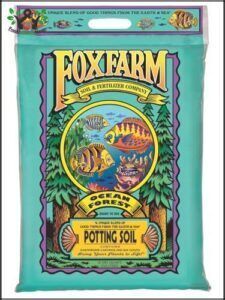
FoxFarm Ocean Forest is an excellent choice for rebuilding soil after blight damage. It combines aged forest products, sandy loam, Sphagnum peat moss, and earthworm castings into a light, well-aerated mix that ensures reliable drainage—ideal for stressed tomato roots.
The inclusion of fish meal and crab meal provides slow-release nutrients, eliminating the need for immediate fertilization.
For use in containers or raised beds, particularly in humid environments, mix in 10–20% perlite to enhance aeration and prevent waterlogging.
| Best For | Gardeners growing houseplants, vegetables, or cannabis in containers who want a rich, ready-to-use mix without the hassle of early fertilizing. |
|---|---|
| Brand | FoxFarm |
| Volume | 12 qt |
| Drainage Aid | Sphagnum peat moss |
| Feed Duration | Not specified |
| Container Use | Yes |
| Moisture Retention | High |
| Additional Features |
|
- Packed with natural amendments like fish meal, crab meal, and earthworm castings — your plants get a solid nutrient head start right out of the bag.
- Light, fluffy texture holds moisture well while still draining properly, so overwatering is less of a disaster.
- Works for a wide range of plants and setups — containers, fabric pots, or blended with perlite or Happy Frog to dial in drainage.
- It’s pricey compared to standard potting mixes, which adds up fast if you’re filling multiple large containers.
- The "hot" nutrient load can stress very young seedlings — you may need to cut it with a milder mix early on.
- High moisture retention can attract fungus gnats, and some growers notice a longer time to flower on certain plants.
2. Miracle Gro Potting Mix
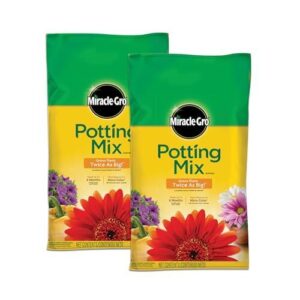
If FoxFarm feels like a premium rebuild, Miracle-Gro Potting Mix is your reliable everyday option. It blends peat moss, perlite, and built-in fertilizer that feeds your tomatoes for up to six months — no extra products needed right away. The light texture drains well in containers and promotes healthy root development.
However, the mix isn’t sterile. To address this, adding 10–15% extra perlite helps prevent compaction and maintains airflow around recovering roots.
| Best For | Gardeners who want a no-fuss, all-in-one potting mix for containers without the hassle of separate fertilizing. |
|---|---|
| Brand | Miracle-Gro |
| Volume | 8 qt per bag |
| Drainage Aid | Perlite |
| Feed Duration | Up to 6 months |
| Container Use | Yes |
| Moisture Retention | Moderate |
| Additional Features |
|
- Built-in fertilizer feeds plants for up to six months, so you can skip extra products for a while.
- Light, fluffy texture helps with drainage and makes repotting way less of a chore.
- Works across a wide range of plants — veggies, herbs, flowers, shrubs, you name it.
- Not sterile, so you might occasionally find soil mites or debris in the bag.
- Can compact over time, which means your roots may need extra perlite to keep breathing.
- The bag doesn’t reseal well, making storage a bit awkward after you’ve opened it.
3. Miracle Gro Houseplant Potting Mix
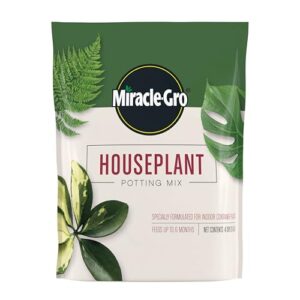
Now, if your tomatoes are growing indoors or in a contained setup where fungus gnats have been a recurring headache, Miracle-Gro Houseplant Potting Mix is worth a look. It skips compost and bark entirely — the main gnat hangouts — and uses coconut coir and perlite instead, so drainage stays solid without inviting pests.
Built-in fertilizer covers your plants for up to six months. Just note: this mix shines best for smaller pots around 8 inches.
| Best For | Indoor plant growers dealing with fungus gnats who want a low-maintenance mix that feeds their plants for months without extra effort. |
|---|---|
| Brand | Miracle-Gro |
| Volume | 4 qt |
| Drainage Aid | Perlite & coir |
| Feed Duration | Up to 6 months |
| Container Use | Yes |
| Moisture Retention | Moderate |
| Additional Features |
|
- Skips compost and bark, so it’s way less likely to attract fungus gnats
- Built-in fertilizer keeps plants fed for up to six months — no extra feeding needed right away
- Coir and perlite combo gives you solid drainage without drying out too fast
- Very fluffy texture means you’ll probably go through more of it than you’d expect
- One 4 qt bag is really only enough for a single 8-inch pot, so larger setups get pricey fast
- Nutrients run out after six months, and gnats can still show up if humidity or standing water is an issue
Frequently Asked Questions (FAQs)
How do you get rid of tomato blight?
Catching, cutting, and controlling — those three steps are your best defense. Remove infected leaves, apply copper fungicide or neem oil, and stay consistent with weekly treatments to stop the spread.
What is the best fungicide for early and late blight in tomatoes?
For early blight, chlorothalonil or mancozeb works best. Late blight calls for metalaxyl-M plus mancozeb, or mandipropamid. Copper-based fungicides help both — use them preventively, before symptoms appear.
Does hydrogen peroxide stop tomato blight?
Hydrogen peroxide can reduce surface spores temporarily, but it won’t stop an active infection.
Think of it as a surface rinse, not a cure.
Copper fungicides and biofungicides work far better.
Can a tomato plant come back from blight?
It depends on the blight type and how far it’s spread. Early blight caught early gives plants a fighting chance. Late blight moves fast and rarely allows full recovery.
Can blight spread from tomatoes to other vegetables?
Yes, blight can spread to nearby peppers, eggplants, and potatoes — especially under humid conditions.
Shared pathogens move by wind, rain splash, and dirty tools, so treat your whole bed, not just the tomatoes.
How long does blight take to kill plants?
Late blight can kill a tomato plant in just 7 to 10 days under cool, wet conditions. Early blight moves slower, taking 2 to 3 weeks to cause serious collapse.
Is it safe to eat tomatoes from infected plants?
In most cases, yes. If the fruit is firm, unblemished, and shows no rot or cracks, it is safe to eat after a thorough wash — even when the plant itself looks rough.
Can blight contaminate greenhouse structures or pots?
Blight doesn’t stay on the plant. Spores hitchhike onto pots, benches, and tools, surviving for weeks. Disinfect everything with a 10% bleach solution before your next growing season.
Should I test my soil after a blight outbreak?
Absolutely — soil testing after a blight outbreak is smart planning. It reveals critical insights into pH imbalances, nutrient gaps, and conditions that invite pathogens back, ensuring your next planting starts on solid, informed ground.
Can blight spread to other vegetable plants nearby?
Yes, blight can spread to nearby plants. Wind carries spores several meters, rain splashes soil-borne inoculum into adjacent beds, and contaminated tools move pathogens to peppers, potatoes, and eggplants fast.
Conclusion
Blight is like a slow leak in a roof—ignore it long enough, and the damage spreads far beyond the original problem. But catch it early, act with precision, and you protect everything underneath.
Treating blight on tomato plants isn’t about flawlessness; it’s about staying one step ahead. Remove what’s lost, treat what remains, and build conditions where disease can’t easily return. Do that consistently, and your harvest stays yours.
- https://growincrazyacres.com/homemade-organic-insect-disease-sprays/
- https://www.rhs.org.uk/disease/tomato-blight
- https://extension.umn.edu/disease-management/early-blight-tomato-and-potato
- https://anoregoncottage.com/tgp-7-08-14-fighting-early-tomato-blight/
- https://www.usda.gov/about-usda/news/blog/tomato-plant-diseases-and-how-stop-them