This site is supported by our readers. We may earn a commission, at no cost to you, if you purchase through links.
Most gardeners reach for a spray bottle at the first sign of trouble—and then wonder why the pests keep coming back. The difference usually isn’t the product. It’s understanding what the spray actually does once it hits a leaf.
Organic pest sprays work through several distinct mechanisms: some suffocate soft-bodied insects on contact, others disrupt molting hormones so larvae never mature, and a few hijack the nervous system fast enough to cause paralysis within minutes. Each active ingredient has a specific target—and when you match the right one to the pest you’re fighting, control becomes far more predictable.
Knowing how these compounds work shapes every decision, from which product you choose to how thoroughly you cover the undersides of leaves.
Table Of Contents
Key Takeaways
- Different organic sprays kill pests in completely different ways — suffocation, hormone disruption, dehydration, or nerve overload — so matching the right one to your specific pest makes all the difference.
- Coverage isn’t optional: missing leaf undersides or leaving gaps let survivors breed right back, undoing everything you just sprayed.
- Rotating between spray types with different mechanisms is your best defense against resistance, since aphids and whiteflies can adapt within just a few generations.
- Sprays work hardest when your garden is already set up well — healthy soil, crop rotation, and beneficial insects mean pests arrive in smaller numbers and you spend less time fighting them.
How Organic Pest Sprays Work

Organic pest sprays don’t all fight bugs the same way — and knowing the difference changes how well they work for you. Some kill on contact, others mess with how pests feed, move, or reproduce. Here’s a breakdown of the main ways these sprays get the job done.
Pairing the right spray type with good timing and safe organic pest control for fruit trees gives you a much stronger defense than any single method alone.
Contact Versus Systemic Action
When you spray a contact spray directly on a pest, the kill is fast — often within hours. That’s the core difference between contact and systemic action.
- Contact sprays hit pests on the surface immediately
- Systemic pesticides absorb into plant tissue
- Xylem transport mechanics carry protection to new growth
- Sap-sucker targeting improves with systemic reach
- Foliage coverage gaps leave pests untouched
Using both closes that gap.
Pyrethroids are non‑systemic pyrethroid action causing rapid knock‑down paralysis.
Feeding and Egg Disruption
Beyond killing pests outright, organic pesticides do something even more valuable — they interrupt the insect lifecycle before the subsequent brood takes hold. Azadirachtin in neem oil is the clearest example.
It scrambles oviposition cue interference, so females skip treated foliage entirely. Sublethal feeding reduction kicks in fast too, cutting bite rates up to 60 percent within 24 hours.
Dehydration and Desiccation Effects
Some organic pesticides don’t stop at feeding — they pull moisture from pests directly. Insecticidal soaps break down the lipid layer on soft-bodied insects like aphids and mites, pushing them past their critical water thresholds fast. Diatomaceous earth works similarly, abrading the exoskeleton so moisture escapes freely.
Once those membranes lose integrity, desiccation stress pathways take over, and there’s no recovery.
Nervous System Pest Control
Moisture loss breaks pests down physically — but some organic pesticides go straight for the command center. Pyrethrin and spinosad disrupt insect nervous systems by overstimulating acetylcholine receptors, triggering paralysis fast.
That’s why rotating plant-based insecticides with different nerve targets matters — pests can develop resistance through behavioral avoidance and enzyme adaptation, making chemistry rotation your best long-term defense.
Why Coverage Matters
Even a great spray fails if it misses its mark. Pest coverage gaps let survivors breed in untreated refuges, undoing your effort fast. With insecticidal soaps and neem oil sprays, leaf underside protection is non-negotiable — mites and aphids hide there.
- Target undersides deliberately
- Use fine mist for canopy penetration
- Apply evenly to prevent phytotoxic hotspots
- Overlap neighboring plants
- Scout afterward for missed areas
Common Organic Spray Ingredients

Not all organic sprays are built the same — what’s inside the bottle determines which pests you’ll stop and how fast. Each active ingredient works through a different mechanism, so knowing what you’re spraying helps you pick the right tool for the job. Here are the five most common ingredients you’ll find in organic vegetable sprays and what each one actually does.
Neem Oil Mechanisms
Neem oil works like a biological saboteur. Its key compound, azadirachtin, mimics insect hormones, blocking the signals that trigger molting and reproduction.
Soft-bodied pests like aphids and whiteflies stop feeding, lay fewer eggs, and produce weaker offspring. Supporting compounds like salannin and nimbin extend this disruption further, making neem a true multi-mechanism plant-based insecticide.
Insecticidal Soap Action
Insecticidal soap targets soft-bodied insects through direct contact. Potassium fatty acids dissolve the waxy cuticle, triggering cellular fluid leakage and rapid dehydration within 24–48 hours.
For best results, apply in calm, dry conditions—timing and technique matter as much as the spray itself, as covered in this guide to safe insecticide use in vegetable gardens.
The soap film also clogs spiracles, cutting off oxygen. Smaller, immature pests die fastest — their surface area works against them.
This plant-based insecticide won’t linger, so thorough coverage is non-negotiable.
Pyrethrin Knockdown Effects
Pyrethrin works fast — often knocking pests down within minutes. Extracted from chrysanthemum flowers, this plant-based insecticide disrupts sodium channel function in nerve cells, causing uncontrolled firing and rapid paralysis.
Here’s what drives its effectiveness:
- Pyrethrin I and II work together — their ratio affects how hard different pests are hit
- Synergist enhancement blocks insect detoxification, amplifying the knockdown
- Sunlight degrades pyrethrins quickly — plan evening applications
- Thorough coverage is essential for uniform results
Spinosad for Chewing Pests
Spinosad hits chewing pests like caterpillars, hornworms, and flea beetles where it hurts most — their nervous system. It binds to nicotinic acetylcholine receptors, causing paralysis and death within hours.
Apply it as a foliar spray in early larval stages, covering upper and lower leaf surfaces. Rotate it with non-spinosyn products (IRAC Group 5) to prevent resistance.
Diatomaceous Earth Abrasion
Think of diatomaceous earth as nature’s razor wire for crawling pests. Food‑grade DE’s silica particles physically abrade insect exoskeletons on contact, causing moisture loss and death — no chemicals needed.
It works best dry; wet conditions clump the powder, dulling those microscopic edges instantly.
Reapply after rain and target soil surfaces, stems, and leaves where ants, beetles, and slugs travel.
Top 7 Vegetable Pest Sprays
Now that you know what’s in these sprays and how they work, it’s time to put that knowledge to use. The seven products below cover a range of pest problems, application styles, and budgets — so there’s something here whether you’re dealing with a minor aphid outbreak or a full-scale caterpillar invasion. Here’s what’s worth keeping on your shelf.
1. Sevin Ready-to-Use Insect Killer
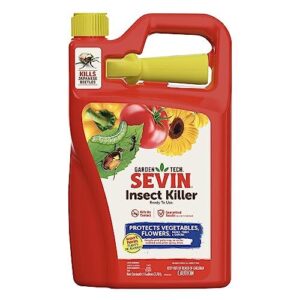
Sevin Ready-to-Use Insect Killer brings broad-spectrum synthetic control to your vegetable garden, targeting over 700 insect species on contact. Its active ingredient, zeta-cypermethrin, disrupts insect nervous systems fast — ideal when Japanese beetles or whiteflies are hitting plants hard.
The 1-gallon ready-to-spray bottle makes application simple. Shake it well, set the valve to "Open," and spray foliage thoroughly, including leaf undersides. Reapply after rain to restore coverage. Keep children and pets away until the spray dries.
| Best For | Gardeners dealing with heavy pest infestations who want a fast-acting, ready-to-use solution that’s safe for edible crops and won’t harm plants. |
|---|---|
| Form | Liquid spray |
| Ready to Use | Yes |
| Vegetable Safe | Yes |
| Target Pests | 700+ species |
| Application Method | Hand sprayer |
| Reapplication Needed | Yes |
| Additional Features |
|
- Kills on contact across 700 insect species, including tough pests like Japanese beetles, aphids, and whiteflies
- Ready-to-use formula with no mixing required — just shake, set the valve, and spray
- Safe for vegetables, fruits, and ornamentals, with a short re-entry window once the spray dries
- Sprayer setup isn’t intuitive — you’ll need to extend the internal tubing and open the bottle valve manually before it works properly
- Some users report it’s less effective than older Sevin formulas, with spotty results on pests like mole crickets and spiders
- A few buyers have received leaky or empty bottles, so check the valve position and shake well before each use
2. Garden Safe Insecticidal Soap Spray
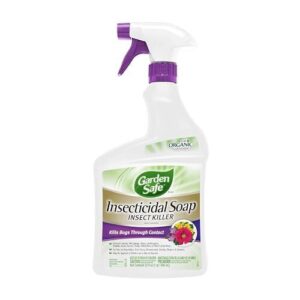
If Sevin’s synthetic approach feels too heavy for your garden, Garden Safe Insecticidal Soap Spray is a gentler step down. Its potassium fatty acid salts work on direct contact, dissolving the protective outer layer of soft-bodied pests like aphids, mites, whiteflies, and mealybugs — causing them to dehydrate fast.
The 32 fl oz ready-to-use bottle (model HG-93216) needs no mixing. Spray thoroughly, hitting leaf undersides where pests hide. Reapply every 7–14 days or after rain. It’s OMRI-listed and safe for edible crops right up to harvest day.
| Best For | Organic gardeners and pet owners who want a gentle, chemical-free way to tackle soft-bodied pest infestations on edibles, houseplants, or ornamentals without harsh residues. |
|---|---|
| Form | Liquid spray |
| Ready to Use | Yes |
| Vegetable Safe | Yes |
| Target Pests | Soft-bodied insects |
| Application Method | Spray bottle |
| Reapplication Needed | Yes |
| Additional Features |
|
- Ready-to-use with no mixing — just grab and spray
- Safe for edible crops all the way up to harvest day, plus pet- and indoor-friendly
- OMRI-listed for organic gardening and works across a wide range of soft-bodied pests
- Only kills on direct contact, so full, thorough coverage is a must every single time
- Repeated use can cause resistance buildup, especially with spider mites
- The spray nozzle has a reputation for being flimsy, and there’s little residual effect — heavy infestations may need frequent reapplication
3. Bonide Ready to Use Insecticidal Soap
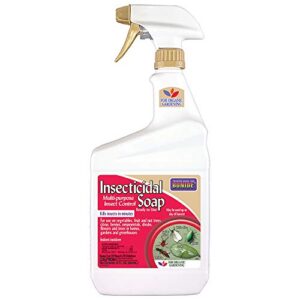
Bonide Ready to Use Insecticidal Soap works on the same contact-kill principle as Garden Safe — potassium salts of fatty acids break down the outer layer of soft-bodied pests, leaving aphids, spider mites, whiteflies, and mealybugs unable to retain moisture.
The 32 fl oz ready-to-spray bottle needs no mixing. Coat both leaf surfaces thoroughly, reapply weekly as needed, and don’t worry about harvest timing — it’s approved for use up to day of harvest.
| Best For | Home gardeners and indoor plant enthusiasts who want a no-fuss, ready-to-use solution for controlling soft-bodied pests on vegetables, houseplants, and fruit trees without any mixing or prep. |
|---|---|
| Form | Liquid spray |
| Ready to Use | Yes |
| Vegetable Safe | Yes |
| Target Pests | Soft-bodied insects |
| Application Method | Spray bottle |
| Reapplication Needed | Yes |
| Additional Features |
|
- No mixing required — just grab the bottle and spray, making it ideal for quick pest control indoors or out
- Approved for organic gardening and safe to use right up to harvest day, so you never have to pause before picking
- Broad-spectrum coverage takes out aphids, spider mites, whiteflies, mealybugs, thrips, and more with a single product
- Contact-only formula means pests hiding inside buds or blooms are completely protected from treatment
- No residual effect — rain or irrigation washes it away quickly, so repeat applications are often necessary
- Requires careful application technique: calm days, avoid open flowers, and use protective gloves and eyewear
4. Sevin Insect Killer Dust
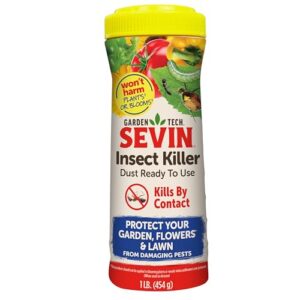
If soft-bodied pests aren’t your problem, Sevin Insect Killer Dust takes a different approach. It targets over 150 pest species — including Japanese beetles, ants, aphids, and stink bugs — on contact. The 0.1% bifenthrin dust comes ready to use: just shake a thin, even layer onto leaf surfaces, stems, and surrounding soil.
Avoid open blooms to protect pollinators, and wait 24 hours before watering. Reapply after rain to maintain coverage.
| Best For | Gardeners dealing with a wide range of hard-bodied and crawling pests across lawns, vegetable beds, flower gardens, and fruit trees. |
|---|---|
| Form | Dust powder |
| Ready to Use | Yes |
| Vegetable Safe | Yes |
| Target Pests | 150+ species |
| Application Method | Shake-on dust |
| Reapplication Needed | Yes |
| Additional Features |
|
- Kills over 150 pest species on contact, including Japanese beetles, ants, aphids, and stink bugs
- Ready-to-use dust with no mixing required — just shake and apply
- Plant-safe formula works across a variety of garden settings, from veggie beds to ornamental borders
- Must be kept away from open blooms to avoid harming bees and other pollinators
- Needs reapplication after rain, and a 24-hour watering hold after each treatment
- May require multiple applications for deep-buried nests or heavily infested areas
5. Garden Safe Neem Fungicide Spray
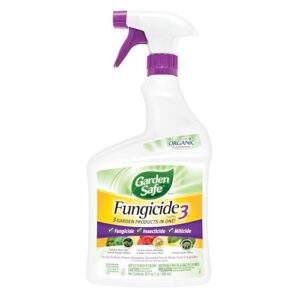
When fungal disease and insects attack at the same time, you need a spray that manages both. Garden Safe Neem Fungicide Spray uses clarified hydrophobic neem oil extract to control black spot, powdery mildew, rust, aphids, whiteflies, and spider mites in one application.
The ready-to-use 32 oz trigger bottle makes it easy to thoroughly wet all leaf surfaces, including undersides. Reapply every 7–14 days during active pressure, and mix fresh each time.
| Best For | Home gardeners dealing with simultaneous fungal and pest problems on roses, vegetables, fruit trees, or houseplants — especially those who prefer organic solutions. |
|---|---|
| Form | Liquid spray |
| Ready to Use | Yes |
| Vegetable Safe | Yes |
| Target Pests | Insects and fungus |
| Application Method | Trigger spray |
| Reapplication Needed | Yes |
| Additional Features |
|
- Triple-action formula tackles fungal diseases and insects in one spray, saving time and money
- Ready-to-use trigger bottle means no mixing — just point and spray
- Approved for organic gardening and reported to be safe around birds and bees
- The spray nozzle can be weak and fiddly to adjust, making thorough coverage a bit frustrating
- Has a strong neem odor and should be kept away from pets and children
- Low neem concentration may limit effectiveness against tougher pests like red spider mites, requiring multiple repeat applications
6. GrowSafe Organic Plant Protector
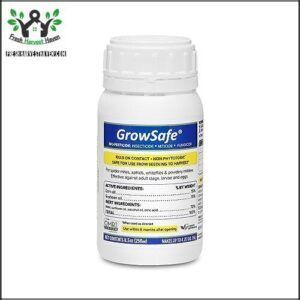
GrowSafe Organic Plant Protector earns its place in your spray rotation if you’re dealing with spider mites, whiteflies, or aphids without wanting harsh chemicals near your edibles. Its food-grade oil blend — mainly corn and soybean oils — coats pest bodies on contact, breaking down their protective layer fast.
You can use it from seedling right through harvest day. Apply during cooler evening hours to avoid phytotoxicity above 80°F, and reapply after rain to keep that protective film intact.
| Best For | Home growers and small-farm operators who want an organic, chemical-free way to protect vegetables, fruits, and ornamentals from common pests without compromising flavor or harvest safety. |
|---|---|
| Form | Oil emulsion |
| Ready to Use | Yes |
| Vegetable Safe | Yes |
| Target Pests | Mites and mildew |
| Application Method | Pump sprayer |
| Reapplication Needed | Yes |
| Additional Features |
|
- Safe for humans, pets, bees, and beneficial insects — you can spray right up to harvest day without worry
- Tackles a wide range of pests and fungal issues (spider mites, whiteflies, aphids, powdery mildew, and more) in one product
- Stable emulsion that won’t separate, burn, or suffocate your plants when applied correctly
- Sticky residue builds up with repeated use and can be tough to wash off leaves and surfaces
- Risk of phytotoxicity if applied when temperatures exceed 80°F — timing your sprays matters
- The spray nozzle can be frustrating to use, often requiring extra pumping or a container swap for easier application
7. Pure Cold Pressed Neem Oil
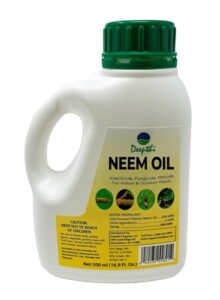
Pure cold-pressed neem oil is about as close to a garden Swiss Army knife as you’ll find. This 500 ml bottle contains no added solvents — just raw, OMRI-listed oil with azadirachtin levels of 1,500–3,000 ppm, enough to disrupt pest feeding, egg-laying, and larval development on contact.
It combats aphids, mites, and powdery mildew in one spray. Dilute to 1–2% in water with a drop of mild soap, and apply in cooler morning or evening hours.
| Best For | Home gardeners and organic growers who want a chemical-free, all-in-one solution for managing common pests and fungal diseases on vegetables, herbs, fruits, and houseplants. |
|---|---|
| Form | Concentrated oil |
| Ready to Use | No, requires dilution |
| Vegetable Safe | Yes |
| Target Pests | Insects and fungus |
| Application Method | Diluted spray |
| Reapplication Needed | Yes |
| Additional Features |
|
- 100% cold-pressed with no added solvents or chemicals, making it safe for edible crops and OMRI-certified for organic use
- Pulls double duty as both an insecticide and fungicide, tackling everything from aphids and mites to powdery mildew and black spot
- Biodegradable and suitable for both indoor and outdoor plants, giving it real versatility around the home and garden
- Requires mixing with water and a surfactant before use — it can’t be applied straight from the bottle
- Can thicken or solidify in cooler temperatures (below 70°F), so you may need to warm it up before it’s usable
- Has a strong, distinctive odor and can cause allergic reactions, so protective gear is a must when spraying
Applying Sprays Safely on Vegetables
Even the best organic spray can fall short if you apply it the wrong way. Timing, dilution, and a few simple precautions are what separate a successful treatment from a wasted one. Here’s what you need to know before you start spraying.
Best Spraying Times

Spray in the morning — but wait until the dew has dried, usually 30–60 minutes after sunrise. Wet leaves dilute insecticidal soaps and neem oil, reducing contact.
Aim for temperatures between 60–85°F for best efficacy.
Avoid windy conditions to prevent drift.
If rain is forecast within 24 hours, hold off entirely and reschedule.
Label Dilution Rates
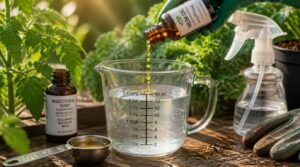
The label isn’t a suggestion — it’s your formula for success. Getting dilution math right protects both your plants and your results.
- Measure precisely using a graduated syringe or measuring cup
- Add water first, then concentrate
- A common ratio is 1:40 concentrate to water
- Insecticidal soaps: 1 Tbsp per quart
- Neem oil sprays: commonly 2 Tbsp per gallon
Avoiding Leaf Burn
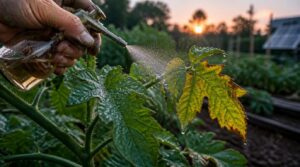
Leaf burn — or phytotoxicity — sneaks up on you fast, especially with insecticidal soaps and neem oil sprays. Spray during low-light hours, ideally early morning or late afternoon, never between 11 am and 3 pm.
Hydrate plants the day before applying anything. Always test a small leaf area first and watch for damage within 24 hours before treating the whole bed.
Reapplying After Rain

Rain washes away contact sprays quickly. Wait 6–12 hours after rain stops, then reapply once leaf surfaces are dry.
Focus on undersides and leaf edges — spots rain hits hardest. If more rain is forecast within 24 hours, do a light touch-up rather than a full application.
Always check that your reapplication interval matches the product label.
Harvest-day Safety Checks

Harvest day is when every earlier choice — the timing, the reapplication, the right dilution — either pays off or causes problems.
- Confirm no sprays within 24 hours of picking
- Inspect all equipment for leaks before entering the field
- Require workers to wash hands thoroughly before handling produce
- Log container batch numbers and seal any open products
Supporting Sprays With Garden Prevention

Sprays do the heavy lifting, but they work best when your garden isn’t fighting uphill battles. A few smart prevention habits can cut pest pressure before it even starts, which means less spraying and healthier plants overall. Here are the key strategies worth building into your routine.
Row Covers and Barriers
Before reaching for another spray bottle, consider that the right physical barrier can stop pests before they ever touch your plants.
Floating row covers made from spunbonded polyester are your first line of defense. Lightweight and durable across multiple seasons, they block aphids, thrips, cabbage moths, and carrot flies without chemicals.
| Barrier Type | Pest Blocked | Key Benefit |
|---|---|---|
| Floating row cover | Aphids, thrips, cabbage moths | No-chemical pest exclusion |
| Hoop tunnel setup | Flying insects, small mammals | Microclimate temperature control |
| Copper tape | Slugs, snails | Chemical-free ground barrier |
Hoop tunnel setups lift fabric off foliage, improving airflow and light transmission optimization while maintaining warmth during cool nights. Secure edges firmly with soil, rocks, or landscape staples — any gap becomes an open door for pests.
Beneficial Insect Habitats
Physical barriers keep pests out, but beneficial insects work from the inside, actively hunting down what slips through.
Give them somewhere to live. Undisturbed bare soil patches, dense native ground cover, and hollow-stemmed plants provide nesting and overwintering sites for lady beetles, lacewings, and parasitic wasps — your garden’s natural cleanup crew.
Plant wildflower border strips and pollinator flower islands near crop edges to keep them close and well-fed.
Crop Rotation Basics
Beneficial insects help, but crop rotation does the groundwork.
Moving plant families — brassicas, nightshades, legumes, root crops — to different beds each season breaks pest life cycles before they establish. A four-year minimum cycle disrupts colonization patterns and lowers overall pressure, so your sprays don’t have to work as hard.
Soil Health Defenses
Healthy soil is your garden’s first line of defense. Compost applied annually boosts microbial diversity, and those microbes actively suppress root pathogens through competitive exclusion. Soil organic matter also improves root vigor, making plants structurally tougher — less attractive to pests.
Healthy soil isn’t just dirt — it’s a living defense that feeds your plants and starves your pests
Stable aggregates support beneficial nematodes that target soil-dwelling larvae, adding a layer no insecticidal soap or neem oil spray can replicate underground.
Pest Scouting Routines
Scouting your beds regularly is what separates reactive gardeners from confident ones. Walk an X or W transect pattern weekly, stopping every five to ten meters to inspect leaves and stems closely. After rain, scout immediately — pest activity spikes fast.
- Identify pests to species level before acting
- Use action thresholds to decide when to spray
- Track temperature and humidity alongside pest counts
- Revisit hotspot zones each session to monitor trends
Frequently Asked Questions (FAQs)
Can organic sprays harm earthworms or soil fungi?
Yes, they can. Organic residue runoff from insecticidal soaps and neem oil can stress soil microorganisms and reduce earthworm survival rates. Keep sprays on foliage — not bare soil — to protect your garden’s living foundation.
Do organic sprays expire or lose potency over time?
Organic sprays do expire. Neem oil and pyrethrins degrade fastest when exposed to light and heat. Insecticidal soaps lose stability within weeks once opened. Store all formulations cool, dark, and sealed.
Which pests develop resistance to organic sprays fastest?
Aphids and whiteflies adapt fastest — often within a few generations. Thrips shift detox enzymes in a single season. Rotating spray types helps slow resistance before it takes hold.
Can organic sprays be mixed together for broader coverage?
Mixing sprays is possible, but always run a jar test first. Combine small amounts and watch for separation or clumping. When in doubt, apply products separately to avoid crop damage.
Conclusion
Think of your garden as a system, not just a collection of plants. Once you understand how organic pest sprays work on vegetables—whether they’re suffocating aphids, halting larval growth, or disrupting feeding cycles—you stop guessing and start making decisions that actually hold.
Match the mechanism to the pest, cover every surface thoroughly, and stay consistent. The spray bottle you already own becomes far more powerful when the knowledge behind it finally clicks.