This site is supported by our readers. We may earn a commission, at no cost to you, if you purchase through links.
A spider mite infestation can wipe out a thriving indoor plant collection in under two weeks — and by the time you spot the fine webbing on leaf undersides, the population has already exploded. Pests like these don’t announce themselves until the damage is done.
The good news is that you don’t need harsh synthetic chemicals to take back control. Organic pest sprays for indoor gardens have come a long way, and the best ones combine proven botanical compounds — think neem oil, potassium fatty acid soaps, and essential oil blends — that disrupt pest life cycles without putting your family, pets, or edible harvests at risk.
Knowing which spray to reach for, and how to use it correctly, makes all the difference between a quick knockdown and a months-long battle.
Table Of Contents
- Key Takeaways
- Top 10 Organic Indoor Pest Sprays
- 1. Earths Ally 3 In 1 Plant Spray
- 2. Bonide Ready to Use Insecticidal Soap
- 3. Wondercide Natural Outdoor Pest Spray
- 4. Mighty Mint Peppermint Repellent Spray
- 5. Garden Safe Insecticidal Soap Spray
- 6. Trifecta Natural Plant Protectant
- 7. Garden Safe Insect Killer Spray
- 8. Bonide Neem Fruit Tree Spray
- 9. Organic Garden Insect Spray
- 10. Garden Safe Neem Fungicide Spray
- Identify Indoor Garden Pests First
- Choose Safe Organic Spray Types
- Apply Sprays Without Plant Damage
- Build an Indoor Pest Routine
- Frequently Asked Questions (FAQs)
- What is the best natural pesticide for indoor plants?
- What bug spray prevents malaria?
- Can organic insecticide be used indoors?
- Can organic sprays harm indoor beneficial insects?
- How should organic sprays be stored long-term?
- Are these sprays safe around pets and children?
- Do organic sprays work against soil-dwelling pests?
- Can multiple organic sprays be combined safely?
- Conclusion
Key Takeaways
- Spider mite and aphid infestations can collapse a healthy indoor garden quickly, so catching them early — before webbing or leaf curl shows up — is the difference between a quick fix and a months-long battle.
- Rotating between insecticidal soaps, neem oil, and essential oil sprays every 7–14 days prevents pests from building resistance, which is the most common reason organic treatments stop working over time.
- Thorough coverage matters more than frequency — tilting your nozzle upward to coat leaf undersides is where most pests actually hide, and skipping that step leaves the infestation largely untouched.
- A consistent weekly routine — inspecting plants, improving airflow, isolating any infested pots, and cleaning dust off leaves — does more to protect your indoor garden long-term than any single spray ever could.
Top 10 Organic Indoor Pest Sprays
Not every organic spray works the same way, and choosing the right one for your indoor garden can make all the difference. The products below cover a range of pest types, plant needs, and application styles — so there’s genuinely something here for every setup.
Understanding how organic pest sprays work on vegetables helps you match the right product to the right problem — and get better results from the start.
Here are ten organic sprays that consistently deliver results.
1. Earths Ally 3 In 1 Plant Spray
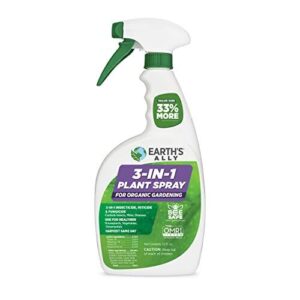
Earth’s Ally 3-in-1 Plant Spray does the work of three products in a single 32 oz bottle. It combines insecticidal, fungicidal, and miticidal action using thyme, rosemary, clove, and peppermint essential oils — targeting aphids, whiteflies, thrips, powdery mildew, and spider mites without synthetic chemicals.
It’s OMRI-listed for organic use, safe around pets, children, and pollinators, and approved right up to harvest day. Just agitate before spraying and coat both sides of each leaf.
| Best For | Organic gardeners and plant lovers who want a single spray that tackles pests, mites, and fungal issues all at once — indoors or out, right up to harvest day. |
|---|---|
| Volume | 32 fl oz |
| Form | Ready-to-Use |
| Organic Safe | OMRI Listed |
| Edible Crop Safe | Up to harvest |
| Active Ingredient | Essential oil blend |
| Reapplication Needed | Yes |
| Additional Features |
|
- Replaces three separate products by combining insecticidal, miticidal, and fungicidal action in one bottle
- OMRI-listed and approved for edible crops up to the day of harvest, with no synthetic chemicals
- Safe for pollinators, pets, and children, making it a worry-free choice for homes and gardens
- Strong essential oil scent can be overwhelming when used on indoor plants in enclosed spaces
- Results against tougher pests like mealybugs can be hit-or-miss, often requiring multiple applications
- The spray bottle may lose suction as it empties, so you’ll need to keep it upright to get the last bit out
2. Bonide Ready to Use Insecticidal Soap
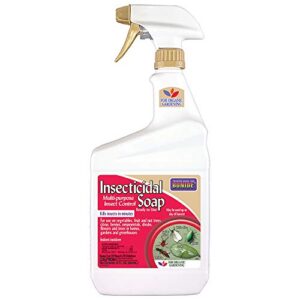
Where Earth’s Ally leans on essential oils, Bonide takes a simpler approach: potassium salts of fatty acids — a plant-derived compound that breaks down the soft membranes of aphids, spider mites, whiteflies, mealybugs, and thrips on contact.
The 32 oz ready-to-use bottle means no measuring or mixing. Shake it, spray both leaf surfaces, and you’re done. It’s approved for organic gardening and safe right up to harvest day — a practical pick for edible indoor plants.
| Best For | Gardeners who want a no-fuss, organic-approved solution for tackling soft-bodied pests on both edible and ornamental plants — indoors or out. |
|---|---|
| Volume | 32 fl oz |
| Form | Ready-to-Use |
| Organic Safe | Approved Organic |
| Edible Crop Safe | Up to harvest |
| Active Ingredient | Insecticidal soap |
| Reapplication Needed | Yes |
| Additional Features |
|
- Ready-to-use spray means zero mixing or prep — just grab and go
- Approved for organic gardening and safe to use right up to harvest day
- Effective against a wide range of common pests, including aphids, spider mites, whiteflies, and mealybugs
- No residual effect — rain or watering can wash it off, requiring repeat applications
- Only kills pests it directly contacts, so insects hiding inside buds or blooms are safe from it
- Requires calm conditions at application time and some personal protective gear to use safely
3. Wondercide Natural Outdoor Pest Spray
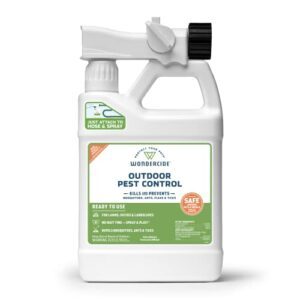
Bonide manages foliage pests brilliantly, but what about the bigger picture — mosquitoes, ticks, and fleas around your outdoor growing spaces?
Wondercide Natural Outdoor Pest Spray uses cedarwood oil as its star ingredient, drawn from Texas and Virginia cedar species. The 32 oz concentrate covers up to 5,000 sq ft for mosquitoes and gnats, attaches directly to your hose, and needs no drying time. It’s safe for pets, children, bees, and butterflies when used as directed.
| Best For | Homeowners who want a family- and pet-safe way to keep mosquitoes, ticks, and fleas out of their yard without resorting to harsh chemicals. |
|---|---|
| Volume | 32 oz |
| Form | Concentrate |
| Organic Safe | Plant-Based |
| Edible Crop Safe | Yes |
| Active Ingredient | Cedarwood oil |
| Reapplication Needed | Every 4 weeks |
| Additional Features |
|
- Plant-based cedarwood formula is safe for kids, pets, bees, and butterflies when used as directed
- Easy hose-attachable application with no drying time needed before re-entry
- One 32 oz bottle covers up to 5,000 sq ft — great for average-sized yards
- Less effective than DEET-based products, acting more as a repellent than a killer for mosquitoes
- Rain or watering washes it away, so you’ll need to reapply roughly every four weeks
- Large properties may need multiple bottles to get full coverage, which adds up cost-wise
4. Mighty Mint Peppermint Repellent Spray
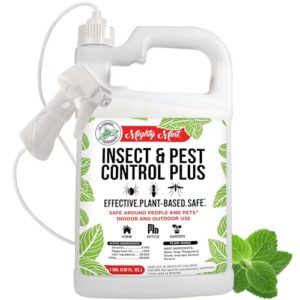
Where Wondercide covers your outdoor perimeter, Mighty Mint steps inside with a different approach — scent-based repulsion rather than chemical knockdown.
The 128 oz gallon bottle holds enough to refill smaller spray bottles for months, making it genuinely cost-effective. Its concentrated peppermint oil (~4% by weight) targets spiders, ants, and roaches without synthetic pesticides. Certified pet- and child-safe, it leaves a mild mint scent most people don’t mind. Expect repeat applications during heavy infestations.
| Best For | Budget-conscious households who want a natural, scent-based pest deterrent that’s safe around kids and pets for ongoing indoor use. |
|---|---|
| Volume | 128 oz |
| Form | Concentrate |
| Organic Safe | Plant-Based |
| Edible Crop Safe | Yes |
| Active Ingredient | Peppermint & geraniol |
| Reapplication Needed | Yes, heavy infestations |
| Additional Features |
|
- Gallon size means you’re stocked for months — just refill a smaller spray bottle and go
- Plant-based formula with concentrated peppermint oil keeps things chemical-free and family-safe
- Works on a wide range of common pests including spiders, ants, and roaches
- Potency can be hit or miss — some users find it weaker than expected
- Heavy infestations may need multiple rounds of treatment before you see results
- The bulk gallon jug is awkward to handle and store if you’re tight on space
5. Garden Safe Insecticidal Soap Spray
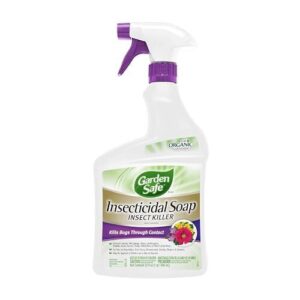
If you’re dealing with aphids, whiteflies, or spider mites on your indoor plants, Garden Safe Insecticidal Soap Spray cuts straight to the problem. Its active ingredient — potassium salts of fatty acids — disrupts insect membranes on contact, bringing visible pest populations down within 24 to 48 hours.
Since aphids and whiteflies also leave behind sticky honeydew that can trigger sooty mold, pairing this spray with environmentally friendly pest control solutions helps you stay ahead of secondary damage too.
The 32 oz ready-to-use bottle means no mixing. Spray thoroughly, especially leaf undersides, and reapply every 7 to 14 days. Safe for edible crops right up to harvest day.
| Best For | Home gardeners who want a safe, ready-to-use solution for controlling soft-bodied pests on edible plants, houseplants, or ornamentals without mixing chemicals or worrying about pet and family safety. |
|---|---|
| Volume | 32 fl oz |
| Form | Ready-to-Use |
| Organic Safe | Organic Compliant |
| Edible Crop Safe | Up to harvest |
| Active Ingredient | Fatty acid salts |
| Reapplication Needed | Yes |
| Additional Features |
|
- No mixing needed — just grab and spray, making it genuinely convenient for quick pest control
- Safe to use on vegetables and fruit trees right up to harvest day, with no waiting period
- Works across a wide range of pests and environments, including indoors, outdoors, and greenhouses
- Only kills insects it directly contacts, so thorough coverage is essential or you’ll miss pests hiding on leaf undersides
- Repeated use can cause resistance buildup, especially with spider mites, reducing how well it works over time
- The spray nozzle has a reputation for being flimsy, and the lack of residual activity means frequent reapplication during heavy infestations
6. Trifecta Natural Plant Protectant
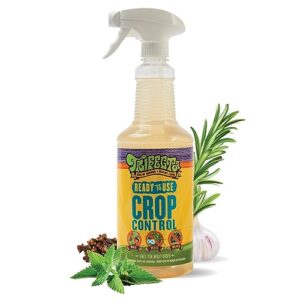
Trifecta Natural Plant Protectant is built to tackle multiple threats at once — pests, mold, and mildew — without synthetic chemicals. Its essential-oil blend uses nano-emulsification technology to improve how evenly the formula coats foliage, so active ingredients actually reach spider mites, aphids, thrips, and powdery mildew hiding on leaf surfaces.
At roughly half an ounce per gallon, the 32 oz concentrate stretches further than most ready-to-use sprays. Apply at the end of your light cycle, wet both sides of every leaf, and repeat every five to seven days.
| Best For | Organic gardeners, indoor plant enthusiasts, and small-scale growers who want a chemical-free way to fight pests and fungal issues on edible crops and houseplants alike. |
|---|---|
| Volume | 32 fl oz |
| Form | Ready-to-Use |
| Organic Safe | Organic Compatible |
| Edible Crop Safe | Yes, no residues |
| Active Ingredient | Essential oil blend |
| Reapplication Needed | Yes |
| Additional Features |
|
- Tackles pests, mold, and mildew all in one spray — no need to juggle multiple products
- Leaves no detectable residue after 72 hours, making it safe for vegetables, herbs, and fruit right up to (within two weeks of) harvest
- Ready to use straight from the bottle, with no mixing required for standard applications
- Doesn’t kill pest eggs, so you’ll need repeated applications to fully break the life cycle
- The strong essential-oil smell can be off-putting, especially indoors or in enclosed grow spaces
- Higher cost per ounce than conventional pesticides, which can add up quickly for larger gardens or commercial use
7. Garden Safe Insect Killer Spray
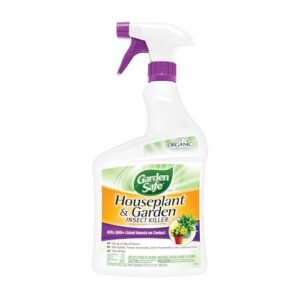
When pests show up on your houseplants, Garden Safe Insect Killer Spray gives you a straightforward, organic option. Its active ingredient, pyrethrins derived from chrysanthemum flowers, disrupts insect nervous systems on contact, knocking down aphids, hornworms, gnats, and thrips fast. The 32 oz ready-to-use bottle keeps things simple — no mixing required.
It’s also approved for use through harvest day, so edible herbs and vegetables stay safe to eat. The low-odor formula makes indoor application genuinely comfortable.
| Best For | Home gardeners and organic growers who want a fast-acting, ready-to-use spray for controlling common pests on houseplants, edible crops, and greenhouse plants without compromising organic standards. |
|---|---|
| Volume | 32 fl oz |
| Form | Ready-to-Use |
| Organic Safe | Organic Approved |
| Edible Crop Safe | Up to harvest |
| Active Ingredient | Fatty acid salts |
| Reapplication Needed | Yes |
| Additional Features |
|
- Kills over 100 insect species on contact, including aphids, gnats, thrips, and hornworms — no mixing needed
- Safe for edible plants right up to harvest day, so you don’t have to pause or plan around treatment
- Low-odor formula makes it comfortable to use indoors without ventilating the whole house
- Doesn’t penetrate soil, so eggs and larvae hiding underground may survive and require follow-up treatments
- The active ingredient breaks down in direct sunlight, limiting how effective it is during peak outdoor hours
- Heavy infestations may need repeated applications — it’s not a one-and-done fix for serious pest pressure
8. Bonide Neem Fruit Tree Spray
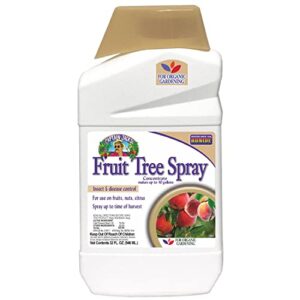
Bonide Neem Fruit Tree Spray packs genuine versatility into a 32 oz concentrate. Its cold-pressed neem oil — sitting at roughly 70% by weight — works as a fungicide, insecticide, miticide, and nematicide all at once. One bottle dilutes to yield up to 40 gallons of spray, making it surprisingly economical.
Apply it to both leaf surfaces, avoid peak sunlight hours, and reapply every 10–14 days. It’s safe right up to harvest.
| Best For | Gardeners and small-scale growers who want a single organic solution to handle pests, mites, fungal diseases, and nematodes across fruit trees, citrus, vines, and ornamentals. |
|---|---|
| Volume | 32 oz |
| Form | Concentrate |
| Organic Safe | Certified Organic |
| Edible Crop Safe | Up to harvest |
| Active Ingredient | Cold-pressed neem oil |
| Reapplication Needed | Every 10–14 days |
| Additional Features |
|
- Four-in-one formula replaces multiple products, saving time and money across the growing season
- Extremely economical — one 32 oz bottle yields up to 40 gallons of ready-to-use spray
- Certified organic and safe to apply right up to harvest day, indoors or out
- Timing matters a lot — it works best as a preventative, so late applications may fall short
- Requires careful measuring and mixing; too much or too little can reduce effectiveness or damage plants
- Repeat applications every 10–14 days are necessary, which adds up in time and product over a full season
9. Organic Garden Insect Spray
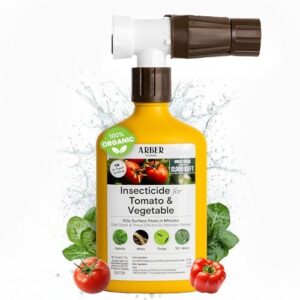
If you’re growing edible crops indoors and want something that covers a lot of ground fast, the Organic Garden Insect Spray is worth a close look. Its certified organic formula targets aphids, mites, thrips, and whiteflies — the usual suspects that creep into raised beds and greenhouse rows. One 16 oz bottle treats up to 2,500 sq ft, and you can harvest as soon as 30 minutes after application.
That said, it won’t stop mealybugs or fungus gnats reliably, so pair it with a complementary treatment if those are your problem pests.
| Best For | Gardeners growing edible crops in raised beds, trellised rows, or greenhouses who want a fast, large-area organic treatment with minimal pre-harvest wait time. |
|---|---|
| Volume | 16 oz |
| Form | Ready-to-Use |
| Organic Safe | Certified Organic |
| Edible Crop Safe | 30 min pre-harvest |
| Active Ingredient | Organic soap formula |
| Reapplication Needed | Every 7–14 days |
| Additional Features |
|
- Covers up to 2,500 sq ft with a single 16 oz bottle, making it practical for bigger growing spaces
- Certified organic and pollinator-friendly, so it’s safe to use around edible crops like tomatoes, peppers, and leafy greens
- Ready-to-spray hose-end design means no mixing — just attach and go
- Unreliable against mealybugs and fungus gnats, so it won’t cover all pest problems on its own
- Needs repeated applications every 7–14 days (or after rain), which adds up in time and product use
- The hose attachment’s high flow rate can make it easy to over-apply and burn through the bottle faster than expected
10. Garden Safe Neem Fungicide Spray
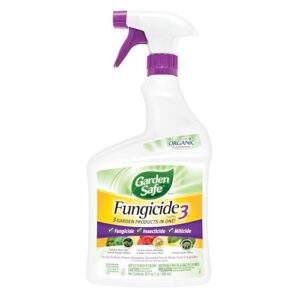
Garden Safe Neem Fungicide Spray earns its spot here because it pulls triple duty — fungicide, insecticide, and miticide — in one ready-to-use 32 oz bottle. The active ingredient is clarified hydrophobic neem oil, which disrupts pests at every life stage, from eggs to adults. It treats powdery mildew, black spot, aphids, and spider mites on houseplants and edible crops alike.
It’s OMRI-listed for organic use, but test a small leaf area first — neem can stress tender new growth, especially in direct sunlight.
| Best For | Home gardeners who want an all-in-one organic solution for fighting common fungal diseases and pests on vegetables, flowers, and houseplants without using synthetic chemicals. |
|---|---|
| Volume | 32 fl oz |
| Form | Ready-to-Use |
| Organic Safe | Organic Formula |
| Edible Crop Safe | Yes |
| Active Ingredient | Clarified neem oil |
| Reapplication Needed | Yes |
| Additional Features |
|
- Triple-action formula handles fungal diseases, insects, and mites in a single product, saving you from buying multiple treatments
- Ready-to-use spray bottle means no mixing or measuring — just pick it up and go
- OMRI-listed for organic gardening and reported safe for birds and bees, making it a solid choice for eco-conscious gardeners
- The spray nozzle can produce a weak, inconsistent mist and may be frustrating to adjust
- Neem oil has a strong, distinctive odor that some find unpleasant, and the product should be kept away from pets and children
- May require repeated applications to see results, and some users report limited effectiveness against certain pests like red spider mites
Identify Indoor Garden Pests First
Before you reach for any spray, it helps to know exactly what you’re dealing with. Different pests respond to different treatments, so misidentifying the problem can mean wasted time and money. Here are the most common indoor garden pests you’re likely to encounter.
Aphids and Whiteflies
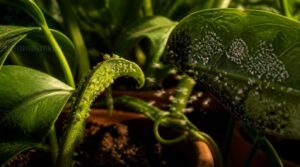
Two pests show up early and often in indoor gardens: aphids and whiteflies.
- Aphid clusters target new growth, curling leaves and secreting sticky honeydew that breeds black sooty mold
- Whiteflies scatter in a cloud when disturbed, draining plant sap from leaf undersides
- Both reproduce rapidly — making early detection and insecticidal soap sprays your best defense
They also exhibit parthenogenetic reproduction in pests, allowing multiple generations without mating.
Spider Mites
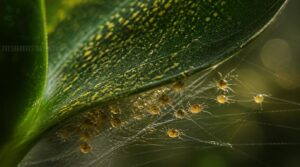
Spider mites are barely visible to the naked eye — under 1 mm — but the damage they leave behind tells you they’ve been busy. Look for fine yellow stippling on upper leaf surfaces, or flip the leaf and check for delicate white webbing underneath. That webbing is the real giveaway.
Hot, dry indoor air is exactly what they thrive in, and they can go from a few individuals to hundreds within weeks. Raising humidity even slightly slows their reproduction cycle, since eggs hatch faster in warm, arid conditions. Rotating organic pest control sprays like neem oil or insecticidal soap keeps resistance from building up.
Fungus Gnats
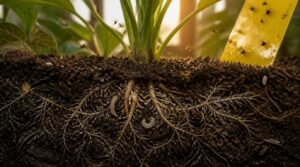
Unlike spider mites, which live above the soil, fungus gnats are a root-level problem. Larvae feed on root hairs in moist potting mix, stunting growth before you even notice the small black flies hovering nearby.
Letting soil dry between waterings cuts off their breeding habitat. Sticky traps catch adults, while beneficial nematodes target larvae directly.
Mealybugs and Thrips
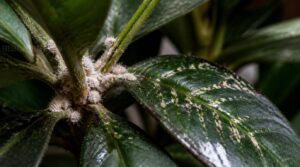
When you spot white waxy clusters tucked into leaf joints or new growth, mealybugs have moved in. They suck plant fluids, leaving honeydew behind — and that sticky residue quickly turns into black sooty mold.
Thrips are harder to see but just as damaging, rasping tissue until leaves show silvery streaking across the surface.
Watch for:
- Cottony white masses at stem joints (mealybug nymphs in protective waxy sacs)
- Pale silvery streaks or stippling on leaf faces (thrips feeding damage)
- Sticky black residue building on lower leaves (sooty mold from honeydew)
Indoor Fungal Issues
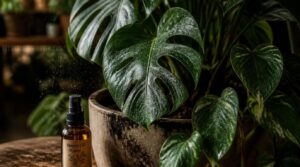
Fungal problems don’t always announce themselves the way pests do. Instead of moving insects, you get a slow creep — white powdery coating on leaves, musty odors, or dark patches spreading across soil. High indoor humidity above 60 percent is usually the culprit, giving molds like Aspergillus and Cladosporium exactly what they need to thrive.
| Fungal Sign | Likely Cause |
|---|---|
| White powdery leaf coating | Powdery mildew |
| Dark sooty surface patches | Botrytis or mold buildup |
| Musty smell near pots | Soil moisture and poor airflow |
| Yellowing with fuzzy growth | Penicillium or Aspergillus |
| Persistent leaf spots | Fungal spore accumulation |
Poor ventilation lets spores settle undisturbed, so improving air circulation can slow spread before you reach for a spray. Neem oil and botanical 3-in-1 sprays like Earth’s Ally both offer nontoxic, organic fungicide action against common indoor fungal diseases — without harming your houseplants or you.
Choose Safe Organic Spray Types
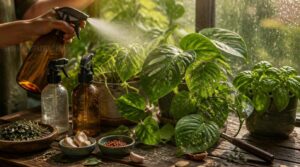
Not every pest problem calls for the same fix, and that’s where choosing the right type of organic spray makes all the difference. Each formulation works differently — some kill on contact, others repel, and a few tackle both insects and fungal issues at once. Here are the five main types worth knowing before you reach for a bottle.
Insecticidal Soap Sprays
Think of insecticidal soap as a targeted strike rather than a chemical blanket. The active ingredient — potassium salts of fatty acids — penetrates soft-bodied pests on contact, disrupting their cell membranes before they can escape. It won’t touch hard-shelled beetles or eggs, but for the pests most likely to invade your indoor houseplants, it’s remarkably effective.
The pests it manages best:
- Aphids clustering on new growth
- Whiteflies hiding on leaf undersides
- Spider mites forming fine webbing
- Mealybugs tucked into stem joints
- Thrips rasping across leaf surfaces
Keep concentration around 1 to 2 percent soap diluted in soft water — hard water causes fatty acids to precipitate and lose potency. Catch pests during their nymph stage when their cuticles are thinnest, and you’ll see the best results. As a nontoxic insecticide safe around children and pets, it’s a reliable foundation for organic pest control indoors.
Neem Oil Sprays
Neem oil is widely considered the most multi-purpose tool in your organic pest control arsenal. Its primary active compound, azadirachtin, doesn’t just kill on contact — it disrupts insect hormone systems, preventing immature pests from molting and reproducing. That’s why a single well-timed application can break an entire pest cycle before it spirals.
Neem oil’s azadirachtin disrupts insect hormones so completely that one well-timed application can collapse an entire pest cycle
Cold-pressed neem oil preserves the full spectrum of active compounds, including salannin and nimbin, which add repellent action. Emulsifying it with a mild dish soap helps the oil mix into water properly — skip that step and it won’t coat leaves evenly. You can also apply it as a neem soil drench to reach fungus gnats at the root level, where foliar sprays simply can’t reach.
One caution worth keeping: neem can block stomata if applied too heavily, so stick to concentrations between 0.5 and 2 percent. Reapply every seven to fourteen days during active infestations, and always wash edible crops before harvest.
Essential Oil Sprays
Essential oil sprays work differently than soaps or neem — they repel rather than kill. Peppermint, cedarwood, and lemongrass create a natural essential oil pest shield that discourages ants, spiders, and flies from settling on your indoor houseplants.
- Mix 10–15 drops peppermint oil per cup of distilled water
- Add a teaspoon of dish soap as a natural dispersing agent
- Shake well before every application
- Store in a dark glass bottle, away from heat
- Patch test fabrics to avoid staining
Botanical 3-in-1 Sprays
Botanical 3-in-1 sprays are the closest thing to a Swiss Army knife in your indoor plant care toolkit. A single bottle addresses insects, spider mites, and fungal threats simultaneously — using plant-derived oils like thyme, rosemary, and clove for direct contact control. No systemic uptake, no harmful residues on edible harvests.
| What It Targets | How It Works |
|---|---|
| Aphids & whiteflies | Contact kill via botanical oils |
| Spider mites & eggs | Miticidal disruption on foliage |
| Powdery mildew | Fungicidal suppression on contact |
| Scale & mealybugs | Fatty acid membrane disruption |
| Fungal leaf spots | Preventive botanical coating |
Diatomaceous Earth Options
Diatomaceous earth takes a purely physical approach — no chemicals, just razor‑sharp silica particles that pierce insect exoskeletons and cause dehydration.
Always use food‑grade DE indoors, and wear a mask during application since fine dust irritates lungs.
Dust lightly onto leaf undersides where pests hide, or mix the wettable powder form with water for even coverage across foliage.
Apply Sprays Without Plant Damage
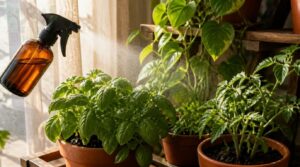
Even the best organic spray can backfire if you apply it the wrong way. A few simple habits make all the difference between healthier plants and damaged ones. Here’s what to keep in mind before you reach for that bottle.
Test Leaves First
Before reaching for that spray bottle, take a moment to do a leaf sensitivity test — one small step that can save an entire plant from unnecessary damage.
Pick a hidden leaf, mist a small area, and wait 24 hours. If no spotting, curling, or wilting appears, you’re clear to treat the whole plant.
Spray Full Leaf Coverage
Once you’ve confirmed your test leaf is clear, the real work begins — and how you apply the spray matters just as much as what’s in the bottle.
Coat both leaf surfaces every time you spray. Pests like aphids, spider mites, and whiteflies almost always cluster on the underside of leaves, where they’re shielded from a standard top-down mist. Tilt your nozzle upward and work from the bottom of the plant up to reach those hidden faces.
A surfactant — the soap component in most organic pest control sprays — reduces surface tension so droplets spread into a thin, even film rather than beading up and rolling off waxy leaves. That uniform coating is what gives natural insecticides their contact-kill power. Without it, you’re leaving dry patches where pests survive.
Keep these four points in mind for full, effective coverage:
- Angle the nozzle upward to penetrate dense canopy and reach leaf undersides
- Use a fine mist setting for even droplet distribution across the entire leaf surface
- Work methodically from the base upward so no section gets skipped
- Check leaf margins and veins where small crevices can hide surviving pests
After spraying, do a quick visual inspection of representative leaves on both sides. If any areas look dry or untouched, go back over them before the solution dries. That second pass isn’t wasted effort — it’s what separates a partial treatment from one that actually protects your plant health.
Avoid Direct Sunlight
Once your coverage is thorough, timing becomes the next variable to get right.
Applying organic pest control sprays under direct sun is one of the fastest ways to cause leaf scorch — the oils and soaps heat up on the leaf surface before they can work, leaving brown edges behind. Aim for early morning or evening instead.
Repeat Every Few Days
Getting the timing right is only half the battle. Pests reproduce fast indoors, so reapply every 3–4 days while an infestation is active.
A single application of insecticidal soap or nontoxic garden spray rarely finishes the job — eggs hatch, survivors rebound, and the cycle restarts. Staying consistent breaks that cycle before pests can recover their foothold.
Protect Edible Harvests
When you’re growing herbs, tomatoes, or vegetables indoors, what goes on the leaves matters as much as what ends up on your plate. Always choose sprays labeled for edible plants and respect pre-harvest intervals — that buffer between your last application and picking day keeps residue off your food and your family safe.
- Rotate organic treatments to prevent pest resistance
- Apply during early morning to reduce sunlight interaction
- Avoid spraying newly forming fruits directly
Build an Indoor Pest Routine
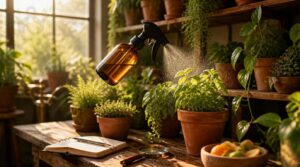
Spraying alone won’t keep pests away for good — what really makes the difference is having a consistent routine around your plants. Think of it less like fighting fires and more like building habits that stop problems before they start.
Here are five simple practices that will keep your indoor garden healthier all year long.
Inspect Plants Weekly
Think of your weekly plant check as a quiet conversation with your garden.
Walk through each plant slowly, inspecting leaf undersides for tiny specks or webbing, and scanning new growth for aphids.
Catching problems early keeps organic pest sprays effective and your plants healthy before a small problem becomes a serious infestation.
Isolate Infested Plants
When you spot an infestation, your first move is to move the plant immediately — away from everything else. A separate shelf or spare room works well as a dedicated quarantine space.
Slide a tray underneath to catch soil drips and stop pests from hitchhiking onto nearby surfaces. Label the pot with the date and whatever organic pest control spray you’ve applied, so you can track treatment progress without guessing.
Clean Leaves Regularly
Dust is quietly working against you — even when you can’t see it building up. A thin layer on leaves can cut photosynthetic efficiency by up to 15 percent, and clogged stomata slow gas exchange enough to visibly stunt growth.
Every two to four weeks, wipe smooth leaves with a damp microfiber cloth. For fuzzy varieties, use a soft brush instead.
Retained moisture from unclean surfaces also raises fungal infection risk, so keep it consistent.
Improve Airflow Indoors
Poor airflow is one of the most overlooked invitations for pests and fungal problems indoors. Stagnant air lets humidity settle in pockets, creating exactly the damp conditions that spider mites and mold thrive in.
- Position ceiling intake vents above floor-level outlets to create vertical air currents that cut stagnant zones by up to 60 percent.
- Run a ceiling fan alongside vertical flow for a 25 percent boost in perceived air velocity.
- Open doors between rooms during ventilation cycles to reduce tracer gas age by around 20 percent through cross ventilation.
- Place a portable fan three feet from your plants, angled toward a corner, to improve air mixing without creating harsh drafts.
- Change HVAC filters every 90 days and seal duct leaks with mastic tape to prevent up to 15 percent conditioned air loss.
Better airflow doesn’t just keep your plants comfortable — it makes your organic sprays work harder by drying foliage faster after application, which reduces reinfection risk.
Rotate Organic Treatments
Using the same product week after week is one of the fastest ways to lose the upper hand. Pests adapt.
That’s why rotating active ingredients every 7 to 14 days — cycling through contact soaps, neem oil, and essential oil sprays — keeps populations off balance and prevents pesticide resistance from taking hold.
Frequently Asked Questions (FAQs)
What is the best natural pesticide for indoor plants?
Neem oil sprays top the list for most indoor gardeners — they control aphids, spider mites, and scale while doubling as a fungicide, all in a nontoxic formula safe for kids, pets, and pollinators.
What bug spray prevents malaria?
Malaria is spread by mosquito bites, so EPA-registered repellents are your best defense. DEET and picaridin top the list for proven protection, while oil of lemon eucalyptus offers a plant-based alternative worth considering.
Can organic insecticide be used indoors?
Yes, organic insecticides can be used indoors. Look for labels that specifically state indoor application approved — products like insecticidal soaps and neem-based sprays are safe for houseplants, kids, and pets when directions are followed.
Can organic sprays harm indoor beneficial insects?
Even organic sprays can harm beneficial insects like ladybugs, parasitic wasps, and hoverflies. Timing your application at dusk reduces contact risk, and spot-treating rather than blanket-spraying helps protect resident predators.
How should organic sprays be stored long-term?
Keep your sprays in a cool, dark spot — between 50 and 70°F, with humidity around 40–60%. Seal original containers tightly. Discard anything that smells off or separates.
Are these sprays safe around pets and children?
Most organic sprays are low-toxicity when dry, but wet surfaces pose real risks. Keep pets and children away until treated areas are fully dry and ventilated, and always follow re-entry intervals on the label.
Do organic sprays work against soil-dwelling pests?
Soil-dwelling pests are like icebergs — the real damage hides below the surface. Neem oil drenches and insecticidal soap reach the root zone, disrupting larval survival and protecting rhizosphere health effectively.
Can multiple organic sprays be combined safely?
Yes, some organic sprays can be combined, but always check label compatibility first. Mixing oil-based and water-based formulas can cause separation. Test on a single leaf before treating the whole plant.
Conclusion
Persistent pests will always find a way in, but a well-prepared grower closes the door long before damage gets a real foothold. Knowing which organic pest sprays for indoor gardens to reach for — and using them on a consistent schedule — turns reactive panic into calm, confident control.
Test before you spray. Cover every leaf surface thoroughly. Rotate products so pests can’t adapt.
That steady rhythm, week after week, is what keeps your indoor garden thriving.
- https://permies.com/t/25083/permaculture-house-plants/spider-mites-die-Organic-solutions
- https://raiseyourgarden.com/home/homemade-neem-oil-spray-for-organic-pest-control
- https://homegrown-garden.com/blogs/blog/homemade-garden-pest-repellent
- https://plantify.co.za/blogs/my-plant-decor/8-homemade-pesticides-sprays-for-indoor-plants
- https://www.theprairiehomestead.com/2021/06/aphid-spray-recipe.html