This site is supported by our readers. We may earn a commission, at no cost to you, if you purchase through links.

Synthetic pesticides don’t discriminate. They kill the aphids, yes—but they also take out the wasps hunting those aphids, the bees working your squash flowers, and quietly accumulate in the soil your vegetables grow through. For a raised bed, where you’ve built something intentional and contained, that tradeoff rarely makes sense.
The good news: organic pest sprays have come a long way. Neem oil, spinosad, Bt, insecticidal soaps—these aren’t folk remedies anymore. They’re backed by solid entomology and used by commercial organic growers at scale.
What follows covers the best organic pest sprays for raised bed gardens, matched to real pests, with homemade recipes and timing guidance so nothing goes to waste.
Table Of Contents
- Key Takeaways
- Best Organic Sprays for Raised Beds
- Top 9 Organic Pest Spray Products
- 1. Earths Ally 3 In 1 Plant Spray
- 2. Wondercide Natural Outdoor Pest Spray
- 3. Bonide Ready to Use Insecticidal Soap
- 4. Garden Safe Insect Killer Spray
- 5. Bonide Neem Fruit Tree Spray
- 6. Organic Garden Insect Spray
- 7. Garden Safe Neem Fungicide Spray
- 8. Bonide Captain Jack Rose Rx Spray
- 9. Organic Labs QT Organocide Spray
- Match Sprays to Garden Pests
- Homemade Sprays for Vegetable Beds
- Spray Safely and Prevent Reinfestation
- Frequently Asked Questions (FAQs)
- Conclusion
Key Takeaways
- Neem oil, Bt, spinosad, and insecticidal soap each target specific pests differently — matching the right spray to the right pest is what actually gets results.
- Timing is everything: spray at dawn or dusk, never in midday heat, and reapply within 24 hours of rain or your coverage is basically gone.
- Resistance is real — aphids, mites, and whiteflies adapt fast, so rotating between spray types keeps them from catching up with you.
- Sprays work best as part of a bigger system: pair them with companion planting and yearly crop rotation, and you’ll need far less of everything.
Best Organic Sprays for Raised Beds

Not every pest problem needs the same fix. These five organic sprays are the workhorses of raised bed pest control — each one targets a specific threat without harming your soil or your harvest. Here’s what they are and when to reach for them.
Understanding how organic pest sprays work on vegetables helps you choose the right one at the right moment — so you’re not just spraying and hoping.
Neem Oil Sprays
Cold-pressed neem oil is one of the most reliable tools in organic pest control. Its active compound, azadirachtin, disrupts insect feeding and hormone cycles — stopping pests before they multiply.
It also provides fungal disease prevention by inhibiting spore germination.
Mix 1–2% neem oil with water and a few drops of mild soap. The surfactant helps it stick. Spray both leaf sides. Apply at dawn or dusk.
Insecticidal Soap
Where neem works on hormones, insecticidal soap works on contact. It uses potassium salts of fatty acids to break down soft insect cell membranes — killing aphids, whiteflies, and spider mites on the spot.
Mix 2–3 tbsp per quart of water. Use distilled or soft water. Hard water kills efficacy fast. Spray leaf undersides thoroughly. Apply in early morning or evening to avoid leaf burn.
Bt for Caterpillars
Soap experiences soft bodies. Bt experiences chewers.
Bacillus thuringiensis kurstaki targets caterpillars only — cabbage worms, hornworms, loopers. Safe for bees, pets, and you.
It works when caterpillars eat it. The toxin ruptures their gut. They stop feeding within hours.
Apply in late evening. Spray both leaf sides. Reapply every 7 days — sunlight and rain break it down fast.
Spinosad for Leaf Miners
Bt stops chewers. Spinosad stops hiders.
Leaf miners burrow inside leaves — impossible to spray directly. Spinosad reaches them anyway. It disrupts their nervous system on contact and through ingestion, causing rapid paralysis within 24–48 hours.
Apply to both leaf surfaces. Reapply weekly during peak activity. Sunlight breaks it down fast, so timing matters.
Diatomaceous Earth Spray
Think of food-grade DE as microscopic broken glass for pests. Silica particles from fossilized diatoms scratch through exoskeletons, triggering fluid loss until the pest dehydrates and dies — no chemicals involved.
Food-grade DE works like microscopic broken glass — scratching through pest exoskeletons until they dehydrate and die
Spray onto both leaf surfaces. The mist dries into a fine powder layer within minutes. Wear a mask. Reapply after rain — moisture kills effectiveness fast.
Top 9 Organic Pest Spray Products
Not all organic sprays are created equal — some are ready to use straight from the bottle, while others pack more punch for specific pests. These nine products cover the full range of raised-bed threats, from soft-bodied aphids to hard-to-kill caterpillars. Here’s what’s worth keeping on your shelf.
1. Earths Ally 3 In 1 Plant Spray
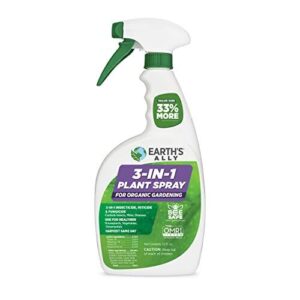
Earth’s Ally 3-in-1 does the job of three products at once. One bottle combats insects, mites, and fungal disease — no juggling multiple sprays. It blends thyme, rosemary, clove, and peppermint oils into a formula that disrupts pest feeding and kills on contact.
It’s OMRI listed and safe up to harvest day. Spray in the morning or evening. Watch for leaf tip burn if you over-apply — less is more here.
| Best For | Organic gardeners and houseplant enthusiasts who want a single spray that handles insects, mites, and fungal problems without harsh chemicals. |
|---|---|
| Organic Status | OMRI Listed |
| Volume | 32 fl oz RTU |
| Application Form | Ready-to-Use Spray |
| Primary Action | Insecticide, Miticide, Fungicide |
| Reapplication Needed | As needed; repeat for mealybugs |
| Edible Crop Safe | Day of harvest |
| Additional Features |
|
- Replaces three separate products — one bottle covers insects, mites, and common fungal diseases like powdery mildew and blight
- OMRI listed and safe to use on edible crops right up to harvest day, with no worries about pollinators
- Ready-to-use formula with a fine-mist nozzle means no mixing or measuring required
- The essential oil scent is strong and can feel overwhelming when used on indoor plants in small spaces
- Results against tougher pests like mealybugs can be hit or miss, often needing multiple applications
- Easy to over-apply — too much can cause leaf tip burn, so you have to stay conservative with each use
2. Wondercide Natural Outdoor Pest Spray
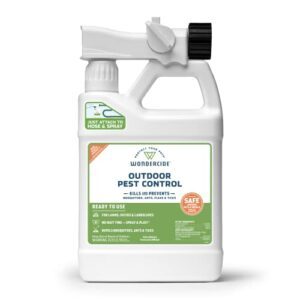
Wondercide takes a different angle than most organic sprays. Its cedarwood oil formula — sourced from Texas and Virginia cedars — kills and repels mosquitoes, ants, ticks, and fleas without synthetic chemicals.
Attach it to your hose and spray directly onto raised beds, patios, or garden borders. No drying time needed before you or your kids head back outside.
One 32 oz concentrate covers up to 5,000 sq ft. Reapply every four weeks or after heavy rain.
| Best For | Families with kids and pets who want a chemical-free way to control mosquitoes, ticks, and other yard pests without worrying about re-entry wait times. |
|---|---|
| Organic Status | Organic Formula |
| Volume | 32 oz concentrate |
| Application Form | Hose-End Concentrate |
| Primary Action | Repellent, Insecticide |
| Reapplication Needed | Every 4 weeks or after rain |
| Edible Crop Safe | Yes, including vegetable beds |
| Additional Features |
|
- Plant-derived cedarwood formula kills and repels mosquitoes, ticks, fleas, and ants — no synthetic chemicals or DEET
- Safe for kids, pets, bees, and butterflies when used as directed, with no drying time needed after application
- One 32 oz bottle covers up to 5,000 sq ft and works on lawns, patios, garden beds, and hardscapes
- Less effective than DEET-based products, acting more as a repellent than a true eliminator for mosquitoes
- Rain or watering washes it away, so you’ll need to reapply roughly every four weeks
- Large yards may require multiple bottles to get full coverage, which adds up in cost
3. Bonide Ready to Use Insecticidal Soap
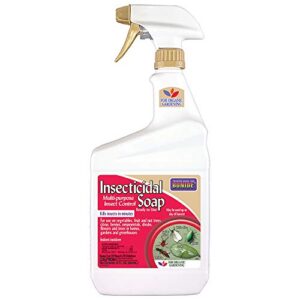
If you want no-fuss pest control, Bonide’s ready-to-use insecticidal soap is hard to beat. No mixing. No measuring. Just grab the bottle and spray.
Potassium salts of fatty acids kill aphids, whiteflies, spider mites, mealybugs, and thrips on contact. Coverage matters — hit the undersides of leaves where pests hide.
It’s approved for organic gardens and safe up to harvest day. Reapply every 7–14 days. Skip hot afternoons; heat increases leaf burn risk.
| Best For | Gardeners who want a quick, organic-friendly way to knock out soft-bodied pests on houseplants, vegetables, or fruit trees without any mixing or prep work. |
|---|---|
| Organic Status | Organic Approved |
| Volume | 32 fl oz RTU |
| Application Form | Ready-to-Use Spray |
| Primary Action | Contact Insecticide |
| Reapplication Needed | After rain or irrigation |
| Edible Crop Safe | Day of harvest |
| Additional Features |
|
- Kills a wide range of common pests — aphids, spider mites, whiteflies, mealybugs, and thrips — on contact
- Ready to use straight out of the bottle, so there’s zero measuring or mixing involved
- Organic-approved and safe to use right up to harvest day, making it a solid choice for edible gardens
- No residual protection — rain or irrigation washes it off, so you’ll need to reapply regularly
- Only works on pests it directly contacts, so anything hiding inside buds or blooms will escape treatment
- Needs to be applied carefully around open flowers and on cooler parts of the day to avoid harming beneficial insects or burning leaves
4. Garden Safe Insect Killer Spray
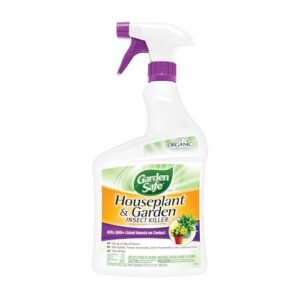
Pyrethrin meets canola oil in this ready-to-use spray — a combo that knocks out over 100 insect species on contact. Aphids, whiteflies, gnats, hornworms, thrips: it takes care of them fast.
The 32 oz trigger bottle makes spot treatment easy. No mixing. Aim directly at pests and leaf undersides.
Apply during cooler hours. Pyrethrin degrades in direct sunlight, so mornings or evenings work best. Safe on edible crops up to harvest day.
| Best For | Home gardeners and indoor plant enthusiasts who want a fast-acting, ready-to-use organic-friendly spray for edible crops and houseplants without the hassle of mixing. |
|---|---|
| Organic Status | Organic Approved |
| Volume | 32 fl oz RTU |
| Application Form | Ready-to-Use Spray |
| Primary Action | Contact Insecticide |
| Reapplication Needed | As needed for heavy pressure |
| Edible Crop Safe | Day of harvest |
| Additional Features |
|
- Kills over 100 insect species on contact, tackling common pests like aphids, thrips, and hornworms quickly
- Safe to use on edible plants right up to harvest day, making it ideal for vegetable and herb gardens
- Low-odor formula and convenient trigger bottle make it easy and comfortable to use indoors
- Pyrethrin breaks down in direct sunlight, so outdoor effectiveness drops during peak sun hours
- Won’t reach eggs or larvae hiding below the soil surface, meaning heavy infestations may need additional treatments
- Pests tucked into crevices or sheltered plant parts can escape contact, limiting its reach in dense foliage
5. Bonide Neem Fruit Tree Spray
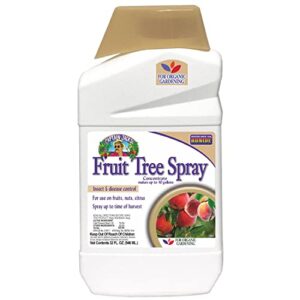
One bottle, four jobs. Bonide Neem Fruit Tree Spray works as a fungicide, insecticide, miticide, and nematicide — all from cold-pressed neem oil.
The 32 oz concentrate stretches far. One quart makes up to 40 gallons of spray or soil drench.
Use it on aphids, whiteflies, spider mites, scale, and caterpillars. It also grips powdery mildew, apple scab, and rust.
Reapply every 10–14 days. Avoid spraying in heat or on stressed plants.
| Best For | Home gardeners and small-scale growers who want a single organic solution to manage insects, mites, fungal disease, and nematodes on fruit trees, citrus, and ornamentals. |
|---|---|
| Organic Status | Organic Approved |
| Volume | 32 oz concentrate |
| Application Form | Spray Concentrate |
| Primary Action | Insecticide, Miticide, Fungicide, Nematicide |
| Reapplication Needed | Every 10–14 days |
| Edible Crop Safe | Day of harvest |
| Additional Features |
|
- Four-in-one formula means fewer products to buy — one bottle handles insects, mites, fungi, and nematodes
- Cold-pressed neem oil is OMRI-approved for organic use and safe to apply right up to harvest day
- Excellent value — a single 32 oz bottle yields up to 40 gallons of spray or soil drench
- Preventive timing matters a lot; applying after an infestation or disease has taken hold delivers noticeably weaker results
- Requires accurate mixing — too strong and you risk burning plants, too weak and it won’t work
- Multiple applications every 10–14 days are needed throughout the season, which adds up in time and effort
6. Organic Garden Insect Spray
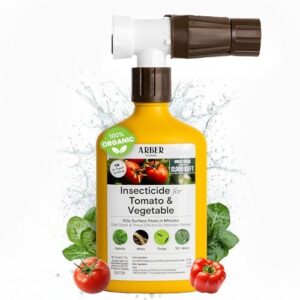
Pyrethrin-based, this one goes beyond oils and soaps. Organic Garden Insect Spray uses plant-derived pyrethrins for fast knock-down of aphids, thrips, beetles, and caterpillars.
It works on contact. Pests stop feeding within minutes.
Apply to leaf undersides and stems where insects hide. Spray in the evening — pyrethrins break down quickly in sunlight.
Reapply every 7–10 days. Not for use near ponds or waterways. Safe for edible crops when label directions are followed.
| Best For | Gardeners growing edible crops who want fast-acting, organic pest control across large planting areas without worrying about synthetic chemicals. |
|---|---|
| Organic Status | Certified Organic |
| Volume | 16 oz RTU |
| Application Form | Hose-End Spray |
| Primary Action | Insecticide, Miticide |
| Reapplication Needed | Every 7–14 days or after rain |
| Edible Crop Safe | 30 minutes pre-harvest |
| Additional Features |
|
- Ready-to-spray hose-end design makes treating large areas like raised beds and trellised vines quick and effortless
- Safe to harvest just 30 minutes after application, so you’re never waiting long to pick your vegetables
- Targets a wide range of common pests — aphids, thrips, whiteflies, and mites — with a certified organic formula
- Results can be inconsistent, especially against pests like mealybugs and fungus gnats
- The hose attachment’s high flow rate makes it easy to over-apply and burn through the bottle faster than expected
- Needs repeat applications every 7–14 days and breaks down quickly in sunlight, so timing and persistence really matter
7. Garden Safe Neem Fungicide Spray
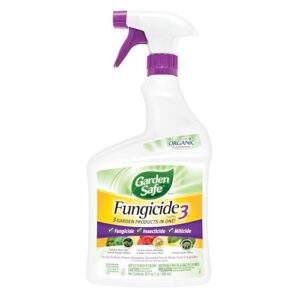
Where pyrethrins hit hard and fast, neem takes a slower, steadier approach. Garden Safe Neem Fungicide Spray controls aphids, whiteflies, and spider mites — but also fungal diseases like powdery mildew, black spot, and rust. That triple action makes it worth keeping on the shelf.
Apply every 7–14 days until pressure drops, then shift to a 14-day prevention cycle. Spray in the morning or evening. Avoid heat above 90°F.
| Best For | Home gardeners who want an organic, all-in-one solution for managing both fungal diseases and common pests on vegetables, flowers, and houseplants. |
|---|---|
| Organic Status | Organic Formula |
| Volume | 32 fl oz RTU |
| Application Form | Ready-to-Use Spray |
| Primary Action | Insecticide, Miticide, Fungicide |
| Reapplication Needed | As needed; repeated for mites |
| Edible Crop Safe | Day of harvest |
| Additional Features |
|
- Triple-action formula fights fungi, insects, and mites in a single product — no need to buy separate treatments
- OMRI-listed for organic gardening and reported safe for birds and bees, making it a low-guilt choice for eco-conscious gardeners
- Ready-to-use trigger spray means no measuring or mixing — just grab and go
- The spray nozzle tends to produce a weak, misty output and can be frustrating to adjust
- Neem oil has a strong, distinctive smell that some find unpleasant, and the product should be kept away from pets and children
- Low neem concentration limits effectiveness against tougher pests like red spider mites, and repeated applications are often needed to see results
8. Bonide Captain Jack Rose Rx Spray
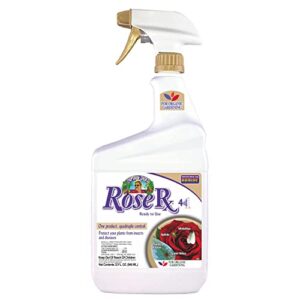
Rose Rx does what most sprays can’t — it pulls four jobs at once. One bottle covers insects, mites, nematodes, and fungal disease. No stacking products. No mixing.
The active ingredient is clarified hydrophobic neem oil extract, applied as a ready-to-use foliar spray. Hit the tops and undersides of leaves. Spray until wet, not dripping.
Reapply every 7–14 days. Safe up to harvest day. Works indoors and out.
| Best For | Gardeners who want an all-in-one organic spray that handles pests, mites, and fungal disease on edible and ornamental plants without mixing multiple products. |
|---|---|
| Organic Status | Certified Organic |
| Volume | 32 fl oz RTU |
| Application Form | Ready-to-Use Spray |
| Primary Action | Insecticide, Miticide, Fungicide, Nematicide |
| Reapplication Needed | Every 7–14 days |
| Edible Crop Safe | Day of harvest |
| Additional Features |
|
- Four-in-one formula tackles insects, mites, nematodes, and fungal diseases in a single ready-to-use bottle
- Certified organic and safe to use right up to harvest day, indoors or out
- No mixing required — just shake and spray for fast, convenient application
- Results can take several days to show, and multiple applications are often needed to clear eggs and newly hatched pests
- Thorough coverage of both leaf surfaces is required for the spray to work effectively, which can be time-consuming on larger plants
- Re-application every 7–14 days means ongoing commitment rather than a one-and-done treatment
9. Organic Labs QT Organocide Spray
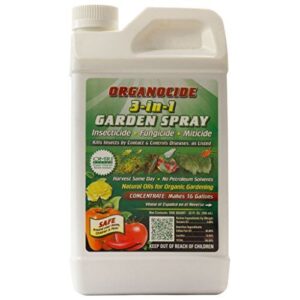
If Rose Rx covers four jobs, Organocide goes even further — insecticide, miticide, and fungicide in a single bottle.
The formula uses sesame and fish oils instead of neem. Heavier oils mean better coverage on soft-bodied pests like aphids, mites, and whiteflies.
Dilute at 3 oz per gallon. Shake often while spraying — the oils separate. No re-entry time. Safe indoors, safe at harvest.
OMRI-listed. EPA-exempt. Bee-safe when applied as directed.
| Best For | Gardeners and growers who want an all-in-one organic solution to tackle pests, mites, and fungal issues across vegetables, fruit trees, and ornamentals — especially those who need something safe enough to use indoors or right before harvest. |
|---|---|
| Organic Status | OMRI Listed |
| Volume | 1 lb concentrate |
| Application Form | Spray Concentrate |
| Primary Action | Insecticide, Miticide, Fungicide |
| Reapplication Needed | Periodically; shake before each use |
| Edible Crop Safe | Day of harvest |
| Additional Features |
|
- Three-in-one formula handles insects, mites, and fungal diseases so you’re not buying separate products
- No re-entry time and harvest-safe, making it one of the most flexible organic sprays available
- OMRI-listed and EPA-exempt, so it fits confidently into organic growing programs
- Strong fish and sesame oil odor makes mixing and spraying unpleasant without gloves and protective gear
- Oils separate during use, so you have to shake the sprayer constantly to maintain an even mix
- Over-dilution mistakes can burn leaves or damage plants, so precise measuring is a must
Match Sprays to Garden Pests
Not every spray works on every pest — using the wrong one is just wasted effort. Matching your spray to the specific invader in your bed is what actually gets results. Here’s how to pair the right treatment with each of the five most common raised-bed troublemakers.
Aphids and Whiteflies
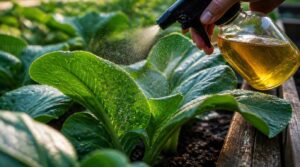
Aphids and whiteflies are a matched pair of trouble. Both suck plant sap, stunt growth, and leave behind sticky honeydew that turns into sooty mold.
Spray leaf undersides with neem oil or insecticidal soap — that’s where they hide.
Check weekly. Early treatment stops populations before they explode.
Cabbage Worms and Hornworms

These caterpillars chew hard. Cabbage worms eat ragged holes in brassicas; hornworms strip tomato plants fast. Look for windowpane feeding and black frass on leaves — both signal active larvae.
Bt kurstaki is your best spray. Apply it in the evening. Reapply every seven days. Handpick large hornworms when you spot them.
Slugs and Snails

Slugs and snails feed at night, using a toothed radula to scrape tender leaves clean. You won’t see them — just the damage.
Copper tape around your bed’s perimeter delivers a mild deterrent. They hate crossing it. Iron phosphate bait is safe for pets and controls heavy pressure fast.
Leaf Miners

Those winding trails in your leaves aren’t random — they’re serpentine leaf miner tunnels cut by tiny larvae feeding inside the tissue.
Spinosad is your best spray. Apply it early, when mines first appear. Neem oil works too. Pull and destroy badly mined leaves. That removes larvae before they pupate and restart the cycle.
Spider Mites

Look close at the underside of leaves. See pale speckling or fine webbing? Spider mites are there. They’re tiny — barely visible — but they reproduce fast. A full generation in 7–10 days.
Neem oil or insecticidal soap stops them. Spray undersides directly. Heat and drought push populations up fast, so water your beds consistently.
Homemade Sprays for Vegetable Beds

You don’t need a store run to protect your raised beds. A few kitchen staples can handle most common pests just as well as commercial sprays. Here are five easy homemade options worth keeping in your rotation.
Garlic Cayenne Spray
Garlic and cayenne make a surprisingly effective team. Allicin from garlic confuses aphids and whiteflies; capsaicin from cayenne irritates soft-bodied pests on contact.
Mix one garlic bulb, 1 tsp cayenne, 1 Tbsp dish soap, and four cups water. Strain well.
Spray leaf undersides every five to seven days.
Test a small leaf area first — phytotoxicity can appear within 24 hours.
DIY Neem Oil Mix
Neem oil is your next step up in strength.
Mix 1–2 Tbsp neem oil with 1 gallon of warm water and ½ tsp mild liquid soap. Add the soap first — it helps the oil emulsify. Shake for 30–60 seconds until milky.
Use it within 8 hours. It degrades fast once mixed. Spray leaf undersides in early morning.
Castile Soap Solution
If neem felt like serious artillery, castile soap is your reliable everyday tool.
Mix 2 Tbsp castile soap per quart of water. That’s roughly a 1–2% solution — enough to break down soft-bodied pests like aphids and whiteflies without harming your plants.
Hard water weakens it. Use filtered water. Before full application, test on one leaf first.
Chili Pepper Repellent
Soap controls soft-bodied pests well. But capsaicin — the compound that makes chili peppers hot — takes a different approach. It irritates insect sensory receptors, pushing pests off your plants fast.
Basic chili spray recipe:
- Crush 6–8 hot peppers
- Steep in 4 cups water overnight
- Strain, add 1 tsp dish soap
- Spray leaf undersides weekly
Essential Oil Blend
Essential oils take pest control one step further.
Mix ½ tsp each of clove, thyme, and rosemary oils with 3 Tbsp castile soap and 5 Tbsp sunflower oil in 4 gallons of water.
Apply every two weeks. Spray in the evening.
This natural essential oil pest shield protects foliage without harming pollinators or scorching leaves.
Spray Safely and Prevent Reinfestation
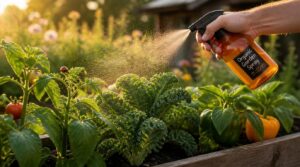
Getting the spray right is only half the battle. How and when you apply it — and what you do between applications — determines whether pests come back. These five practices will keep your raised beds protected for the long haul.
Morning or Evening Application
Timing your spray matters more than most gardeners realize. Apply early morning or late evening — never midday.
Heat above 90°F causes leaf burn, and direct sun degrades neem oil fast. Evening lets residues dry overnight.
Caterpillars feed at night, so a dusk application hits them at their worst. Bees forage later, so morning works too without harming pollinators.
Reapply After Rain
Rain washes away residue fast — sometimes within minutes.
Before reapplying, wait for dry surfaces. Wet foliage dilutes sprays and causes runoff, wasting product and reducing contact.
- Check leaves for soap film or oil sheen
- Reapply only when 24 hours rain-free is forecast
- Inspect for thin or missed coverage spots
- In humid climates, reapply every 7–10 days
Protect Pollinators
Every spray you use reaches beyond your pest — bees and butterflies are in that same airspace. Apply sprays at dusk or dawn, when pollinators aren’t active. Avoid spraying open flowers directly.
- Keep buffer zones around flowering plants
- Choose low-residue, pollinator-safe formulas
- Plant native flowers to support beneficial insects year-round
Use Companion Planting
Sprays fix problems. Plants prevent them.
Nasturtiums lure aphids away from lettuce and beans — a classic trap crop move. Let them take the hit so your food crops don’t.
- Dill and basil attract parasitic wasps that target hornworms
- Marigolds deter nematodes and draw in lady beetles
- Garlic and onions confuse carrot flies with scent alone
Rotate Crops Yearly
Don’t just spray — change the game with crop family rotation.
- Move brassicas, nightshades, cucurbits, and alliums to new beds each season
- Follow heavy feeders with legumes to fix soil nitrogen
- Alternate deep- and shallow-rooted crops to improve root architecture diversity
- Wait 3–4 years before returning the same family to a bed
No host plant, no pest cycle.
Frequently Asked Questions (FAQs)
Can organic sprays harm beneficial soil microorganisms?
Yes, they can — but briefly. Most organic sprays cause short-term microbial suppression, then microbes rebound within days to weeks. Soil respiration and beneficial fungi recover quickly once applications stop.
Are organic sprays safe for container-grown edibles?
Safe, sensible, and simple to use — organic pest control sprays are food-safe for container edibles. Always check the harvest withholding period on the label. Rinse edible surfaces before eating.
Which pests develop resistance to repeated spray use?
Aphids and whiteflies build metabolic resistance fast. Thrips and mites mutate target sites. Leaf miners survive through rapid cycles and low spray contact. Rotate your sprays to stay ahead.
Do organic sprays work in cold or rainy climates?
They can, but rain and cold cut effectiveness. Wash-off happens fast — reapply within 24 hours of rain. Below 50°F, neem and Bt lose activity. Time sprays between storms.
Can sprays be combined with physical pest barriers?
Sprays and barriers work best together. Barriers cut initial pest pressure. Sprays handle what slips through. Together, they form a complete defense system — less spray needed, better results overall.
Conclusion
Your raised bed is a closed environment—what goes in shapes everything that grows. The organic pest sprays for raised bed gardens covered here aren’t compromises; they’re precision tools.
Neem controls fungi and insects. Bt stops caterpillars cold. Soap knocks out soft-bodied pests without collateral damage.
Pick the right spray, time it right, and your bed works with nature instead of against it. Protect the soil you built. Everything else follows.
- https://homegrown-garden.com/blogs/blog/homemade-garden-pest-repellent
- https://raiseyourgarden.com/home/homemade-neem-oil-spray-for-organic-pest-control
- https://www.coghillfarm.com/my-guide-to-organic-pest-control-in-your-garden
- https://garden.org/thread/view/181909/Mixing-Multiple-Organic-Pesticides-Together
- https://unsolicitedplanttalks.com/blogs/upt-blog/best-homemade-insecticide-for-your-houseplants