This site is supported by our readers. We may earn a commission, at no cost to you, if you purchase through links.
Your squash blossoms open at dawn, but if no one shows up to the party, those flowers wither without setting fruit. That’s the quiet crisis playing out in gardens everywhere: plenty of vegetables, not enough visitors to pollinate them.
The fix isn’t a spray bottle or a store-bought hive. It’s strategic planting. Borage, alyssum, and calendula work like a welcome mat, drawing in bees, hoverflies, and other beneficial insects while your tomatoes and beans quietly reap the rewards.
Pair the right vegetable garden pollinator companion plants with your crops, and you’ll build a living network where pest control and pollination happen almost automatically, season after season.
Table Of Contents
- Key Takeaways
- Best Pollinator Companion Plants
- Match Flowers to Pollinators
- Plant for Season-Long Blooms
- Pair Companions With Vegetables
- Build a Pollinator-Friendly Garden
- Frequently Asked Questions (FAQs)
- What plants are pollinator friendly for vegetable gardens?
- What is the 70 30 rule in gardening?
- What are good companion planting pairs for a vegetable garden?
- What vegetable plants cannot be planted next to each other?
- How does garlic repel pests without harming pollinators?
- Can the Three Sisters method boost pollinator activity?
- Why do squash bees need specialized nesting conditions?
- Does compost improve blooming for pollinator-friendly plants?
- Conclusion
Key Takeaways
- Interplanting flowers like borage, alyssum, calendula, marigolds, and nasturtiums with vegetables draws in bees and beneficial insects, boosting pollination and natural pest control at the same time.
- Matching flower colors and shapes to specific pollinators—blue and purple for bees, bright reds and tubular blooms for hummingbirds, and flat umbels for hoverflies—maximizes visits from the right visitors.
- Planning for blooms across every season, from early spring bulbs through fall asters and goldenrods, keeps a steady food supply for pollinators and supports your crops all year long.
- Building pollinator-friendly habitat—bare soil patches for ground-nesting bees, shallow water dishes, and pesticide-free bloom periods—turns your vegetable garden into a self-sustaining ecosystem rather than just a planting bed.
Best Pollinator Companion Plants
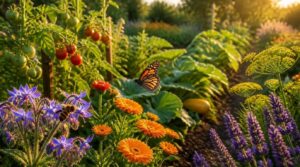
Some plants just have a knack for pulling their weight in the garden, feeding pollinators while keeping pests in check. You don’t need a huge list to see real results—just a handful of proven performers planted in the right spots. Here are five companion plants worth making room for this season.
For a deeper dive into which pairings work best, this guide to companion planting for bee attraction breaks down the science behind why certain plant combos keep pollinators coming back.
Borage for Tomatoes
If your tomatoes struggle with poor fruit set, borage might be the fix. Its edible blue blossoms attract bees for days, boosting pollination and uniform ripening. Borage roots pull minerals up through nutrient exchange, feeding tomatoes when composted nearby.
This plant also acts as an effective natural pest control by deterring various garden pests.
It also deters hornworms and draws hoverflies to hunt aphids. Bonus: borage self-seeds, returning year after year with barely any effort.
Alyssum for Brassicas
Cabbage and broccoli beds get a low, frothy border with sweet alyssum — and it pulls its weight fast. Its tiny blooms draw hoverflies whose larvae devour aphids, giving you real pest control without sprays. Beneficial insects tend to stick around, too, patrolling your beds like tiny bodyguards.
The dense mat also conserves soil moisture and may mask brassica odors that attract pests.
Calendula for Beneficial Insects
Alyssum controls aphids, but calendula plays a bigger recruitment game. Its cheery yellow-orange blooms fuel Predator Recruitment Strategies, drawing lacewings and Orius bugs that deliver real Thrips Suppression Benefits.
- Blooms 6-8 weeks
- Feeds Orius predators
- Shelters beneficial insects
- Boosts Natural Biocontrol Amplification
- Aids Soil Microbe Support
These Calendula Microhabitats make companion planting smarter, not harder, for any vegetable garden.
Marigolds for Pest Support
Marigolds pull double duty. Their roots release alpha terthienyl, a compound that scrambles pest senses and suppresses root knot nematodes. Above ground, they act as trap crops, luring thrips away from prized vegetables.
Space plants 12-18 inches apart for full effect, and let a few blooms stay—they’re calling in lacewings and ladybugs, nature’s pest patrol, right into your vegetable garden.
Dill and Lovage Flowers
Let dill and lovage go to flower, and you’ve built a landing pad for beneficial insects. Their flat umbels offer easy nectar access for tiny bees and hoverflies alike.
Dill blooms early, lovage lingers into fall—together they stretch your pollinator support across the whole season. Bonus: leftover flowers turn into seeds you can harvest for cooking.
Match Flowers to Pollinators
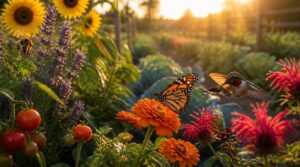
Not every pollinator sees your garden the same way. Bees, butterflies, and hummingbirds each key in on different colors and shapes when they’re hunting for nectar. Here’s how to match your flowers to the visitors you want buzzing around.
Planting perennial favorites like coneflower and bee balm gives pollinators a reliable base, while tucking in annuals lets you experiment with color each year, and if frost threatens early blooms, protecting tender plants with cold-weather cloches can stretch the nectar season by weeks.
Bee-Friendly Flower Colors
Ever wonder why bees seem to skip your red blooms entirely? Their eyes are wired for blue and purple hues, with white and yellow rounding out the favorites.
Bee vision leans toward the ultraviolet spectrum, so petals often flash hidden UV patterns that scream "nectar here!" Plant salvia, lavender, or alyssum for color contrast that pollinators simply can’t resist.
Butterfly Nectar Favorites
Sixty species deep into your garden’s guest list, butterflies still play favorites regarding nectar. Zinnias, cosmos, and lantana offer rich sugar ratios in easy-to-reach blooms, while colorful petal patterns act like landing strips guiding wings to the good stuff.
For companion planting success, pair these with butterfly host plants like milkweed, and you’ll close seasonal nectar gaps while boosting pollen and pollinator traffic naturally.
Hummingbird Tubular Blooms
Picture a tiny helicopter with a built-in straw, and you’ve got the hummingbird’s whole game plan. Tubular bloom anatomy matches their long beaks perfectly—narrow tubes, deep nectar.
- Bright reds signal readiness from afar
- Coiled tubes create a landing platform
- Nectar replenishes fast for repeat visits
- Foraging timing lines up with peak secretion
Penstemon and cardinal flower deliver reliably in any pollinator-friendly vegetable garden.
Daisy Family Flowers
What looks like one flower is actually dozens working together. That’s composite flower structure—a central disk packed with tiny florets, ringed by sterile ray florets acting as pollinator billboards.
| Species | Height | Bloom Color |
|---|---|---|
| Bellis perennis | Low mat | White |
| Leucanthemum vulgare | 30-90 cm | White |
| Coreopsis | Medium | Yellow-orange |
These Asteraceae species thrive in wildflower habitat plantings, boosting biodiversity throughout your vegetable garden.
Mint Family Herbs
Square stems are your first clue—snap a mint leaf and you’ll smell why bees can’t resist it. This family (Lamiaceae) packs aromatic oils into whorled verticillasters that bloom purple, pink, or blue.
- Basil
- Oregano
- Thyme
- Rosemary
- Sage
Most are perennial growers, though mint spreads fast—contain those runners, or it’ll take over your vegetable garden entirely.
Plant for Season-Long Blooms
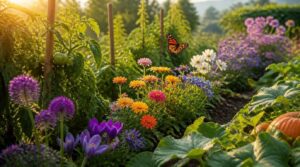
A garden that blooms for one week won’t keep your pollinators around for long. You need flowers opening their petals from the first spring thaw right through fall’s last warm days. Here’s how to plan that kind of nonstop buffet.
Early Spring Nectar Plants
Queen bumble bees emerge starving after winter, and your early spring nectar plants are their first lifeline. Snowdrops, hellebores, and primroses bloom when little else offers food, packing high sugar concentrations for rapidly expanding colonies. Cooler temperatures may shrink nectar volume, not sweetness.
Tuck bulbs along south-facing microclimates near your vegetable garden—early foraging fuels the pollinators your summer crops will depend on.
Summer Flowering Companions
Once those early bulbs fade, your garden hits a midsummer bloom gap right when heat-tolerant pollinators need steady fuel. Keep nectar supply continuous with zinnias, cosmos, and bee balm—all thriving in scorching weather.
These summer flowering companions also pull in predatory insects for pest management, sustaining insect activity through your vegetable garden’s busiest, buggiest stretch.
Fall Pollinator Support
As zinnias fade, don’t put your garden to bed just yet. Asters, goldenrods, and sedums deliver late-season nectar exactly when bees and monarchs need fuel for migration.
- Leave seed heads standing for overwintering shelter
- Skip heavy pruning near blooms
- Group plants for warmer fall microclimates
- Let leaf litter build natural nesting habitat
These autumn foraging clusters keep pollinator plants working right through October.
Mix Annuals and Perennials
Once autumn habitat is set, think about the backbone holding it all together. Perennial structure benefits your garden by returning yearly with steady color, while annuals fill any bloom gaps fast.
Pairing both prevents seasonal color continuity from stalling. Annual replanting strategies let you refresh worn spots, adding layered garden depth so pollinator plants never run short on nectar.
Succession Planting Tips
Rarely do gardeners realize that succession times apply to flowers just like vegetables.
Stagger your bee balm, cosmos, and alyssum plantings every 2 weeks alongside lettuce and radishes. This interval planting schedule keeps nectar flowing continuously.
- Sow quick bloomers with rapid turnover varieties
- Track bloom dates through garden journaling methods
- Time sowings against frost date timing
- Stagger pollinator plants with vegetable pairings
Staggered harvest planning rewards patient growers—nectar and produce, together, all season.
Pair Companions With Vegetables
Some plants just work better as neighbors than others. When you pair the right companions with your vegetables, you get built-in pest control, better pollination, and healthier harvests all at once. Here are five combinations worth planting side by side this season.
Basil With Tomatoes
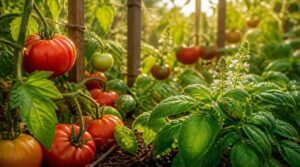
Ever wonder why old-timers always tuck basil next to their tomatoes? It’s not just tradition—basil draws hoverflies whose larvae devour aphids, while its scent confuses pests.
Space plants 12-18 inches apart, pinch regularly to prevent mildew, and harvest before flowering for peak flavor.
The payoff? Sweeter tomatoes, thanks to basil’s aromatic compounds enhancing taste right in your sauce pot.
Nasturtiums With Beans
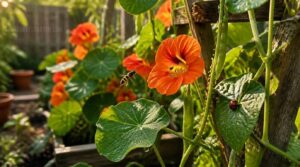
Toss nasturtium seeds right into your bean rows and watch the magic unfold. Their peppery blooms act as an aphid trap crop, luring pests away while feeding hoverflies and lady beetles that patrol for weeks.
Shallow roots won’t compete with beans, and beans return the favor through nitrogen fixing cooperation. Bonus: those spicy flowers taste great tossed into salads with your fresh harvest.
Chives With Lettuce
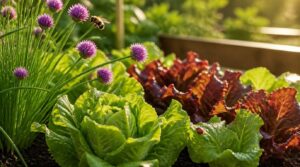
A borderline plant with more benefits than its size suggests: chives quietly protect your lettuce while doubling as garnish. Their aphid deterrence keeps pests at bay, and both share similar soil needs, thriving in full sun.
Snip sprigs regularly for flavorful salad pairings, or toss in edible chive flowers for a mild onion kick that brightens every leafy bowl.
Beans With Squash
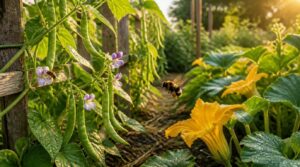
Beans and squash make a classic team for a reason: beans fix nitrogen while squash soaks up those nutrients for vitamin-rich fruit.
Both share sunny, well-drained beds and similar harvest windows—50 to 60 days for beans, 45 to 60 for squash. Let beans climb trellises while squash sprawls below, saving space and drawing in pollinators for better fruit set on both crops.
Sunflowers With Cucumbers
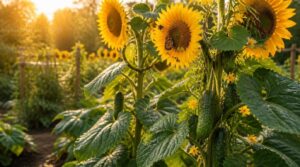
Ever wondered why sunflowers make such great garden bodyguards? They give cucumber vines a living trellis to climb, save space, and cast light shade that prevents leaf scorch.
Sunflowers act as garden bodyguards, giving cucumber vines a living trellis while shading them from leaf-scorching sun
Their deep roots handle nutrient mining while cucumbers stay shallow, easing competition. Sunflowers pull in pollinators and beneficial insects, boosting fruit set—true companion planting magic for any vegetable garden.
Build a Pollinator-Friendly Garden
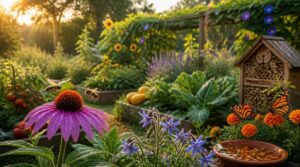
Picking the right plants is only half the job—the way you set up your garden matters just as much. A few smart habitat choices can turn your veggie patch into a pollinator hotspot that keeps buzzing all season. Here’s what to keep in mind as you design the space.
Interplant Flowers in Beds
Weave flowers right into your vegetable rows instead of banishing them to a separate patch. This dense hotspot approach draws more pollinators per square foot.
Layer plants vertically:
- Tall borage or sunflowers
- Mid-height marigolds
- Low alyssum
- Trailing nasturtiums
- Clustered dill
This overlapping bloom strategy keeps nectar flowing while boosting your intercropped vegetables’ fruit set.
Leave Bare Ground Patches
Not every inch of your garden needs a plant in it. Leaving small, irregular bare ground patches gives ground-nesting bees like Andrena and Halictus a place to burrow each spring.
These sunny patches warm up fast, speeding larval development and adding microhabitat complexity to your garden’s natural environment. Bonus: exposed soil holds moisture better during dry spells, quietly supporting biodiversity while bees and butterflies do their work nearby.
Add Shallow Water Sources
Bare soil works for nesting, but bees and butterflies still need somewhere to drink. A shallow dish, just 1 to 6 inches deep, with smooth stones for landing zones, gives them safe access without drowning risk.
Refresh the water weekly in hot months to stop mosquito breeding, and skip soap when cleaning. Ring the edges with marginal plants like creeping jenny for shade and shelter.
Avoid Spraying During Bloom
Even a good pest control plan can hurt pollinators if timing’s off. Spray before blossoms open or after petals drop — never during full bloom.
- Best spray timing: early morning or dusk
- Choose organic products like neem oil
- Keep a buffer zone around flowering beds
- Watch weather drift risks; skip windy days
- Try cultural control methods first
Grow Spreading Herbs Carefully
Mint and oregano pull in pollinators like nobody’s business, but give them an inch and they’ll take the whole bed.
Rhizome control is non-negotiable — sink a container or edging barrier before planting. Divide clumps every year or two, prune runners regularly, and space plants 12-18 inches apart. Contained herbs still feed bees without swallowing your vegetable garden whole.
Frequently Asked Questions (FAQs)
What plants are pollinator friendly for vegetable gardens?
Plant it and they will come" rings true here. Borage, alyssum, calendula, marigolds, dill, and nasturtiums deliver nectar source diversity, matching pollinator color preferences while attracting bees and butterflies through beneficial insect attraction alongside your tomatoes, brassicas, beans, and squash.
What is the 70 30 rule in gardening?
Think of it as your garden’s budget: 70 percent goes to structural backbone—perennials and natives—while 30 percent stays flexible for seasonal fillers, giving you resilient landscape planning with room to experiment, reduce maintenance, and still boost biodiversity year-round.
What are good companion planting pairs for a vegetable garden?
Peas and carrots on a plate — but in the garden, try beans with squash for nitrogen fixing, basil with tomatoes for pest deterrence, and sunflowers with cucumbers for sturdy vertical growing structures.
What vegetable plants cannot be planted next to each other?
Skip pairing tomatoes with potatoes (Solanaceae disease risks), beans with alliums (nitrogen fixation interference), or repeated brassicas (clubroot pathogen buildup).
Dill near carrots invites pests, and sage’s allelopathic oils can stunt cucumbers—smart companion planting keeps your vegetable garden and pollinators thriving.
How does garlic repel pests without harming pollinators?
Garlic works like a bouncer with bad breath—unwelcome to pests, invisible to friends.
Garlic sulfur compounds disrupt pest feeding without lingering long enough to bother bees, especially when you dilute sprays properly and mind pollinator safety timing during application.
Can the Three Sisters method boost pollinator activity?
Absolutely — corn, beans, and squash create polyculture nectar diversity with overlapping blooms. This timing helps squash bee synchronization and strengthens native bee networks, especially when paired with nearby hedgerow setup for richer, season-long pollinator activity.
Why do squash bees need specialized nesting conditions?
Think of an underground apartment building set to exact specs: soil depth of 6–12 inches, moisture that’s just right, and 70–95°F nesting temperature. Compaction or tillage collapses homes instantly, while ground predators and drought add constant risk to survival.
Does compost improve blooming for pollinator-friendly plants?
Yes — compost boosts nectar quality and blooming by feeding soil microbes, intensifying petal pigment, and preventing nutrient leaching. This sustains bloom duration, giving your companion plants the vigor they need to attract pollinators reliably throughout the growing season.
Conclusion
Like the Garden of Eden, your plot thrives on relationships, not solitude. Every borage bloom, every alyssum patch, is an invitation your vegetables can’t extend alone. Master the art of vegetable garden pollinator companion plants, and you’re not just growing food; you’re building a living, buzzing economy of give and take.
Skip the chemicals, plant with purpose, and watch idle soil become a world of its own. Bees show up. Harvests follow. That’s the deal nature’s always offered—you just had to ask.
- https://sowrightseeds.com/blogs/planters-library/companion-planting-hacks-to-attract-more-pollinators
- https://www.gooseberrygardens.ca/post/companion-planting-for-the-veggie-garden
- https://www.almanac.com/companion-planting-guide-vegetables
- https://www.growjourney.com/best-garden-herbs-to-attract-pollinators
- https://www.gardentowerproject.com/blogs/learning-center/companion-planting-and-pollinators