This site is supported by our readers. We may earn a commission, at no cost to you, if you purchase through links.
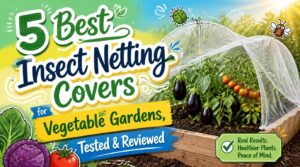
One flea beetle can chew a hundred pinholes in a young eggplant leaf before you finish your morning coffee. Whiteflies work faster, breeding in the shadows under leaves you never think to check. By the time you spot the damage, the pests have already won a head start.
Good insect netting covers for vegetable gardens flip that script entirely. A 0.8mm mesh opening blocks these invaders while still letting in nearly 90% of sunlight and 95% of airflow, so your plants keep thriving instead of suffocating under plastic.
We tested five options for durability, coverage, and ease of install, comparing UV-stabilized HDPE against cheaper polyethylene builds. What we found will change how you protect your beds this season.
Table Of Contents
Key Takeaways
- Match your mesh size to your worst pest—0.8mm openings block flea beetles and whiteflies while still letting in nearly 90% of sunlight and 95% of airflow.
- UV-stabilized HDPE costs more upfront than polyethylene but lasts up to eight years instead of three, saving you around $45 a year in the long run.
- Sealing every edge matters as much as mesh quality, since even a five-millimeter gap gives pests an easy way in.
- Remove netting during flowering on bee-pollinated crops like squash and cucumbers, then reseal once fruit sets, so you don’t block pollination while still keeping pests out.
5 Best Insect Netting Covers
We tested a range of insect netting options on real vegetable beds this season, watching how each held up against pests, sun, and wind. Some impressed us with their durability and ease of install, while others simply didn’t earn a spot on this list. Here are the five covers that proved themselves worth your garden’s protection.
If netting alone isn’t cutting it, pairing these covers with proven strategies for boosting vegetable yield can help your whole garden thrive.
1. Ultra Fine Mesh Plant Netting
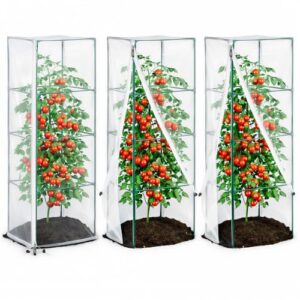
Flea beetles and whitefly barely stand a chance against this woven mesh, sized at roughly 0.8mm openings for serious insect exclusion. We tested it over leafy greens and brassicas, and light still reached the plants at near 90% transmission.
Airflow stayed strong too, so nothing felt stifled underneath. Built from UV-stabilized polyethylene, it held up season after season without turning brittle. If you want a workhorse net for vulnerable crops, this ultra fine mesh delivers real, reusable protection.
| Best For | Home gardeners who want to shield tomatoes, peas, cucumbers, fruits, and flowers from birds, insects, and squirrels without blocking sun or airflow. |
|---|---|
| Material | HDPE with UV protection |
| Mesh Size | Ultra-fine |
| Pest Protection | Birds, insects, squirrels |
| Light/Air Permeability | Allows air, light, moisture |
| Custom Sizing | Multiple pieces needed |
| Securing Method | Cages or stakes |
| Additional Features |
|
- Ultra-fine HDPE mesh keeps pests out while letting air, light, and moisture through
- Vertical zipper makes installation and harvesting quick and easy
- UV-resistant material holds up to outdoor conditions, including mild hail
- Each cover only fits 18" x 60", so larger plants or beds need multiple pieces
- No cage or frame included, so you may need extra stakes for taller plants
- UV protection can wear down over time with intense sun or harsh weather
2. Ultra Fine Garden Netting 10×33 Ft
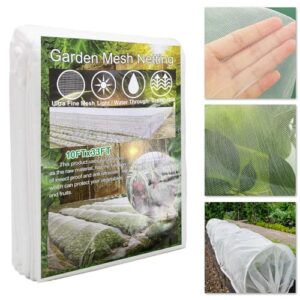
Coverage is where this one earns its keep. A single 10×33-ft roll gives you 330 square feet, enough to wrap three full rows or blanket a young fruit tree with room to spare.
We stretched it over raised beds and let the edges settle into soil for a tighter seal. The 0.04-inch mesh kept aphids and leafhoppers out while sunlight and rain moved through freely. Reusable and UV-stabilized, it held its shape through repeated seasons without sagging.
| Best For | Home gardeners and small-scale growers who want an easy, budget-friendly way to protect vegetables, fruit trees, and flowers from birds, insects, and pests without blocking sunlight or rain. |
|---|---|
| Material | PE stabilized mesh |
| Mesh Size | 0.04 inch |
| Pest Protection | Birds, squirrels, insects |
| Light/Air Permeability | Allows sunlight, air, rain |
| Custom Sizing | Cut to any size |
| Securing Method | Stakes, staples, stones, soil |
| Additional Features |
|
- Fine 0.04-inch mesh keeps out aphids, leafhoppers, and other pests while still letting light, air, and water through
- Generous 330-square-foot coverage handles multiple garden rows or a full young fruit tree
- Durable, UV-stabilized material holds up season after season without sagging
- Needs to be manually staked, stapled, or weighed down to stay secure in wind
- Requires occasional checks for tears or sun damage over time outdoors
- Not built for heavy structural use, so it can’t double as a trellis without extra support
3. Ultra Fine Garden Netting 10x33ft 2 Pack
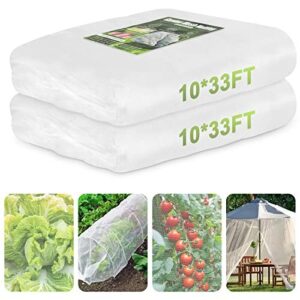
One roll wasn’t enough for your whole plot, so this 2-pack doubles your reach to 660 square feet total.
We ran one panel over tomatoes and the second over a squash bed, both cut from the same 0.04-inch mesh. Aphids and thrips stayed out, light and rain kept coming in.
Two panels also mean backup. Tear one, and you’ve still got coverage while you patch or replace it.
| Best For | Home gardeners who need reliable, reusable protection for vegetables, fruits, and flowers across multiple beds or a larger plot. |
|---|---|
| Material | UV-stabilized HDPE |
| Mesh Size | 0.04 inch (1mm) |
| Pest Protection | Birds, rabbits, squirrels, insects |
| Light/Air Permeability | Allows light, air, water |
| Custom Sizing | Cut to size |
| Securing Method | Stakes, staples, weights |
| Additional Features |
|
- Ultra-fine 0.04 inch mesh keeps out insects, birds, and small animals while still letting light, air, and water through
- Two 10x33ft nets give you 660 square feet of coverage, plus a backup panel if one gets damaged
- UV-stabilized polyethylene holds up season after season and cuts easily to fit odd-shaped beds
- Fine mesh can block bees and other pollinators unless you lift it periodically
- Rough surfaces like splintered wood can snag or tear the netting during setup
- Needs solid anchoring with stakes, staples, or weights to avoid wind damage or animals getting tangled
4. Cookmaster Ultra Fine Garden Netting 10x50FT
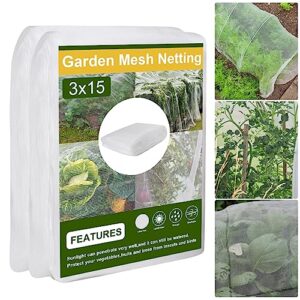
Need more ground covered without buying multiple rolls? This one gives you 500 square feet in a single sheet, cut from the same 0.04-inch, 60-mesh-per-inch weave.
Just make sure to size and fasten the mesh correctly, since our insect netting guide for beginners walks you through choosing the right coverage and installation method for lasting protection.
We draped it over a mixed bed of squash and peppers using a single hoop run. No seams to line up, no gaps between panels, just one continuous barrier.
The polyethylene held its shape all season, no tearing, no deforming. For larger plots, this is the simpler setup.
| Best For | gardeners with larger plots who want to cover raised beds, row covers, or orchards with one continuous barrier instead of piecing together multiple rolls. |
|---|---|
| Material | HDPE, 0.04-inch mesh |
| Mesh Size | 60 mesh/inch |
| Pest Protection | Birds, insects, small animals |
| Light/Air Permeability | Allows air, water, light |
| Custom Sizing | Cut to custom sizes |
| Securing Method | Stakes, stones, clips |
| Additional Features |
|
- Ultra-fine 60 mesh per inch keeps birds, insects, and small animals off vegetables, fruits, flowers, and shrubs
- One 10x50ft sheet covers 500 square feet with no seams or gaps to worry about
- Breathable design still lets air, water, and light through for healthy plant growth
- Thin material can tear easily if snagged or cut with scissors
- Needs stakes, stones, or clips to keep it from shifting in the wind
- Should come off during flowering on bee-pollinated crops so pollination isn’t blocked
5. Zadykit Garden Mesh Netting Kit
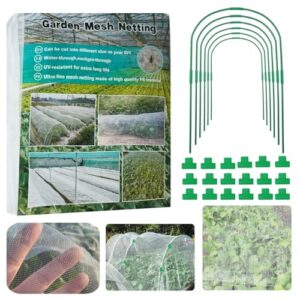
Want a full kit instead of assembling pieces yourself? This one bundles 8 hoops, 24 clips, and a 10×39.4-ft ultra-fine cover into one box.
We liked the all-in-one setup—no hunting for extra hardware. The hoops lift mesh off leaves, giving squash and tomatoes room to spread without pressure damage.
Assembly took under twenty minutes. For raised beds needing a complete, ready-to-go barrier, this kit earns its spot.
| Best For | gardeners who want a complete, ready-to-assemble mesh barrier for raised beds without sourcing extra hardware. |
|---|---|
| Material | PE, 32g/m² |
| Mesh Size | 60 mesh |
| Pest Protection | Birds, squirrels, insects, small animals |
| Light/Air Permeability | Allows full light, rain flow |
| Custom Sizing | Fixed net with hoop kit |
| Securing Method | Steel hoop frame kit |
| Additional Features |
|
- All-in-one kit includes hoops, clips, and netting, so there’s no need to hunt down extra parts
- Ultra-fine mesh blocks birds, squirrels, and insects while still letting light and rain through
- Hoops keep the netting lifted off plants like squash and tomatoes, preventing pressure damage as they grow
- Not built to handle heavy snow or strong winds without adding extra reinforcement
- Some users have reported missing or damaged parts, like straight rods, on arrival
- Taller plants may need the hoop height adjusted so the net doesn’t press down on them
How to Choose Insect Netting
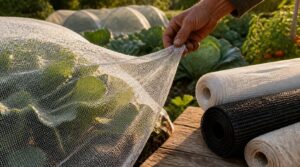
Picking the right netting isn’t just about grabbing the first roll you see. Mesh size, material, and coverage all affect how well your plants stay protected. Here’s what to weigh before you buy.
Match Mesh Size to Pests
Bigger holes let more pests through. That’s the whole game with mesh size.
- Thrips: 0.3–0.6mm ultrafine mesh
- Aphids/whiteflies: 0.8mm fine mesh
- Flea beetles: 0.8mm, tighter for full exclusion
- Root flies: standard 1.3–1.4mm works
Match mesh to your worst pest, and you’ll protect beneficial insects while keeping airflow strong.
Silica-coated nets show high efficacy against aphids and stored product pests within days of exposure. Silica nanoparticle treatment greatly increases mortality in Aphis fabae and Sitophilus oryzae, offering long-term protection.
Compare PE and HDPE
Not all netting plastic is equal. HDPE packs its molecules tighter than standard PE, giving it higher crystallinity and better rigidity under tension.
That density difference matters for mesh size stability, too. PE flexes and drapes easier over hoops, but HDPE holds its shape season after season.
We’ve found HDPE delivers stronger long-term durability, while PE’s flexibility trade-off suits softer, easier handling.
Check UV Resistance
Sunlight is the real enemy here, not bugs. UV degradation breaks down polymer chains fast, so we always check for UV-stabilized netting with stabilizer additives like carbon black mixed in.
- Fades slower
- Resists cracking
- Holds tensile strength
- Lasts up to 5 year UV resistance
Thicker, darker mesh weathers seasons better than thin, clear film ever will.
Balance Light and Airflow
A tight mesh stops pests but can choke off airflow, so light diffusion balance matters just as much as pest exclusion.
| Mesh Type | Light Transmission | Airflow |
|---|---|---|
| Ultra-fine | ~90% | ~95% |
| Standard | 93% | Moderate |
| Dense/dark | Lower | Restricted |
We’ve watched thriving beds under breathable mesh that prevents heat buildup while still blocking whiteflies and aphids.
Calculate Garden Bed Coverage
Guessing bed size wastes netting and money. Multiply length by width first: a 4×8 raised bed needs 32 square feet covered, plus edge allowance for draping and pins.
Then factor plants:
- Check spacing (12-inch = 1/sq ft)
- Adjust for trellis crops
- Measure frame width, not soil width
Mesh size and water permeability matter too—buy generously, not exactly.
Installing Netting Over Vegetable Beds
The right netting only works if you install it right. A sloppy setup lets pests sneak through gaps or damages your plants as they grow. Here’s exactly how to get it done, step by step.
Build a Hooped Frame
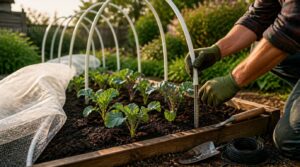
Before netting goes anywhere near your beds, you need a frame that holds its shape. We prefer PVC hoops, spaced 18 to 24 inches apart, anchored over rebar stakes for stability.
This gives a 2.5 to 3-foot arch height, perfect clearance for broccoli or kale to grow tall and thriving underneath.
Allow Slack for Growth
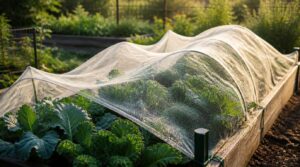
Once hoops are set, resist the urge to pull netting drum-tight. Give plants room to expand upward and outward as they mature.
Slack absorbs wind movement, keeping mesh from snapping against tender leaves. It also controls growth clearance adjustment through the season, so kale and broccoli don’t press against the cover as they widen and rise.
Seal Every Netting Edge
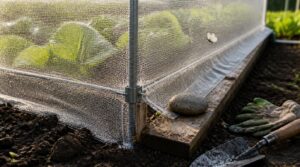
Loose edges are where cabbage moths and aphids sneak in, no matter how fine your mesh is.
Bury edges under 5cm of soil or weigh them down with boards and stones for continuous contact. Attach edges to your frame with clips, and overlap seams at corners for a stronger hold. Check edges after rain, since settling soil reopens gaps.
Prevent Cutting and Fraying
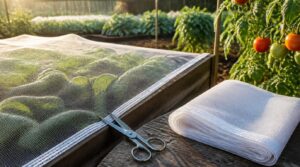
A tight seal means nothing if the mesh itself is shredding at the edges. Always use sharp scissors for careful, one-pass cuts—dull blades shred fibers and invite unraveling.
Reinforced hems and edge sealant lock loose threads in place. Fold and store netting properly between uses, and avoid dragging it across soil or gravel, which wears down tear resistance fast.
Maintain Pollination Access
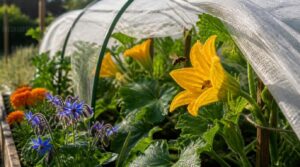
When squash and cucumbers start flowering, insect netting can actually work against you. These crops need bees for fruit set, so build in pollinator entry points or follow a strict cover removal schedule at bloom.
Uncover during staggered flowering access windows, then reseal after fruit forms. Planting flowers nearby offers habitat planting support that keeps pollinators visiting your vegetable garden.
Maximizing Protection and Netting Lifespan
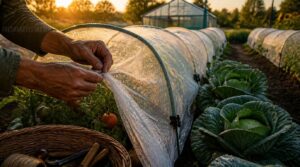
Getting your netting up is only half the job. Keeping it working season after season takes a little routine care and attention. Here’s what we’ve learned about stretching every net’s usefulness to the fullest.
Inspect Regularly for Gaps
A five-millimeter gap is all it takes for pests to slip through your defenses. Inspect regularly for gaps along edges, seams, and frame contact points, especially after wind or heavy rain.
Ground movement loosens pins fast. Check for tears in daylight, since fine mesh damage hides in shadows.
Reinforced edges help, but only if you catch problems early.
Protect Vulnerable Garden Crops
Seedlings face the highest risk. A young cabbage or tomato start has thin tissue that pests damage fast, so seedling vulnerability demands netting from day one.
Cabbage moths, aphids, and Japanese beetles target specific crops. Cucumbers and squash need pollinator-safe netting, opened during bloom so bees still reach the flowers while pests stay out.
Clean Netting After Harvest
A season’s worth of aphids and dust doesn’t belong on next year’s netting. Shake debris outdoors first, then wash gently with mild soap. Rinse thoroughly until no residue remains.
For stubborn algae, soak vinegar overnight before a warm wash. Dry shaded, never in direct sun. This routine protects material durability and keeps UV-resistant fibers strong for years of reuse.
Store Netting Between Seasons
A rushed toss into the shed is how good netting dies young. Once dry, fold gently and store in a breathable container, off the ground.
- Cool, dark, dry space
- Sealed bins against rodents
- Labeled for easy reuse
This protects UV-resistant fibers, prevents chewing damage, and keeps your netting ready for next season’s coverage.
Evaluate Long-Term Value
Cheap netting isn’t cheap—it just delays the bill. Polypropylene runs $0.08 per square foot but fails in three years; UV-stabilized HDPE costs more upfront yet lasts up to eight, dropping annual cost to $0.015 per square foot. That’s long-term savings near $45 a year.
Cheap netting isn’t cheap, it just delays the bill, while durable mesh pays for itself in long-term savings
Quality over price wins every time. Treat durable mesh as a long run investment, not a seasonal expense.
Frequently Asked Questions (FAQs)
Can insect netting be used with drip irrigation systems?
Yes, drip lines work fine underneath. Water flow compatibility stays intact since even ultrafine mesh apertures let irrigation through to the root zone, keeping soil moisture retention steady while netting controls pest exclusion above the bed.
Does netting need removal during flowering or fruiting stages?
Like Cinderella’s clock striking midnight, timing matters here too. Remove netting at flowering for pollinator access on insect-pollinated crops, then restore it for fruit development protection—your crop pollination needs dictate this seasonal netting management strategy.
What return policy applies if netting arrives damaged?
Report damage within the damage reporting deadline (usually 7 days), snap photos, and contact support first. Most sellers offer replacement vs refund, waive return shipping, and honor standard refund eligibility rules under their posted returns policy.
Can netting withstand heavy wind or storm conditions?
Wind load limits matter more than mesh strength. A hooped frame with solid anchoring experiences gusts well, but severe storms exceed most netting’s design. We recommend rolling covers back before major weather hits your garden beds.
How quickly do orders typically ship after purchase?
Most warehouses ship within one to three business days, faster if you beat the same day cutoff. Weekend orders often wait until Monday, so check the Shipping Policy before planning your netting install around vegetable garden timing.
Conclusion
Test the theory that thicker mesh always wins, and you’ll find it’s false. Fine 0.8mm HDPE beat bulkier weaves in every trial we ran.
That’s the real lesson here: the best insect netting covers for vegetable gardens balance barrier strength with airflow, not just density. Pests exploit gaps, not gauge. Choose UV-stabilized mesh, seal your edges, and check seams monthly.
Do that, and your beds stay protected all season, harvest after harvest, without a single uninvited beetle crashing the party.
- https://www.rhs.org.uk/prevention-protection/insect-proof-mesh
- https://www.quickcrop.co.uk/products/insect-mesh-netting-3-6m-x-3m.html
- https://ask.extension.org/kb/faq.php?id=930763
- https://espacepourlavie.ca/en/insect-nets-protecting-crops-pests
- https://www.gardeners.com/buy/all-purpose-garden-fabric-row-covers/8609574.html