This site is supported by our readers. We may earn a commission, at no cost to you, if you purchase through links.
You spray every week, yet pests keep coming back—stronger each time, seemingly immune to the chemicals that worked just months ago. That cycle burns through your budget, exposes your family or farmworkers to toxic residues, and leaves beneficial insects collateral damage in a war you can’t seem to win.
Integrated pest management breaks that pattern by treating pest control as an ecosystem challenge rather than a chemical arms race, combining monitoring, cultural practices, biological controls, and targeted treatments to address root causes instead of symptoms.
When you shift from blanket spraying to strategic intervention, you reduce pesticide use by 30 to 70 percent while cutting costs, protecting pollinators, and maintaining—often improving—the results you need.
Table Of Contents
- Key Takeaways
- Reduced Reliance on Chemical Pesticides
- Enhanced Environmental Protection
- Economic Benefits for Growers
- Improved Human and Community Health
- Sustainable and Long-Term Pest Control
- Frequently Asked Questions (FAQs)
- What is a good reason to implement integrated pest management?
- What are the benefits of integrated disease management?
- What are the three goals of IPM?
- What does integrated pest management help with?
- What training is needed to implement IPM programs?
- How do you set pest action thresholds?
- What tools help monitor pest populations effectively?
- How long before IPM shows measurable results?
- Can IPM work in urban residential settings?
- How does IPM affect overall farm productivity?
- Conclusion
Key Takeaways
- IPM cuts pesticide use by 30 to 70 percent through strategic monitoring and threshold-based interventions, reducing costs while protecting workers, families, and beneficial insects from toxic exposure.
- Rotating control methods and preserving natural enemies prevents chemical resistance and maintains long-term pest suppression without escalating into ineffective chemical arms races.
- Integrated strategies deliver measurable economic returns through lower input costs, stabilized crop yields, and access to premium markets requiring certified sustainable practices.
- Ecosystem-focused pest management protects pollinators, improves soil and water quality, and builds resilient systems that adapt to changing conditions rather than chasing recurring outbreaks.
Reduced Reliance on Chemical Pesticides

When you adopt IPM, you’re choosing a system that deliberately minimizes chemical pesticide applications—and that shift matters for your operation, your workers, and the surrounding environment. By integrating biological controls, cultural practices, and mechanical methods, you cut down on synthetic inputs while maintaining effective pest suppression.
A structured approach to implementing integrated pest management at home helps you track pest populations and apply interventions only when monitoring data shows they’re actually needed.
The benefits of reducing chemical reliance break down into three core areas worth examining closely.
Minimizing Pesticide Use and Exposure
When you adopt Integrated Pest Management, you cut pesticide use dramatically by relying on pest monitoring and nonchemical controls before reaching for chemical alternatives. This shift toward sustainable practices delivers immediate exposure reduction for workers, families, and communities:
- Fewer sprays mean safer air around your home or farm
- Targeted treatments protect children from toxic residues
- Eco friendly methods lower skin and respiratory contact
- Precise application timing minimizes off-target drift
- Natural enemies handle pests without adding chemicals
For more ways to stay safe, consider reading about reducing chemical residue exposure.
These ecofriendly pest control measures form the foundation of Integrated Pest Management benefits you can see and feel.
Lower Risk of Chemical Resistance
Rotating chemical families and using integrated strategies keep pests off-balance, so you won’t face resistance that renders your pesticides useless. Threshold-based spraying combined with nonchemical controls means you apply treatments only when necessary, preserving effectiveness for real outbreaks.
Resistance monitoring and habitat manipulation support natural enemies, reducing selection pressure and extending the life of your remaining chemical options through sustainable practices.
Safer Alternatives for Sensitive Environments
When pests threaten schools, hospitals, or homes with vulnerable occupants, you need options that won’t compromise health—that’s where green chemistry and risk assessment guide your choice of sustainable materials and non-toxic options.
Integrated pest management prioritizes environmental protection through sustainable pest control and eco-friendly pest control methods, so you’re choosing pest prevention that works without the worry:
- Heat treatment eliminates bed bugs without aerosols or residues
- Boric acid dust offers low mammalian toxicity for structural cracks
- Pheromone traps disrupt insect reproduction with zero chemical drift
- Diatomaceous earth provides mechanical control harmless to children
- Microbial biopesticides target specific pests while sparing beneficial species
Enhanced Environmental Protection
When you reduce your reliance on chemical pesticides, you’re not just cutting costs—you’re creating space for nature to do what it does best.
Natural methods like companion planting and beneficial insects let you protect your crops without disrupting the ecosystem you’re trying to nurture.
When you reduce chemical pesticides, you create space for nature to control pests naturally
IPM protects the organisms and systems that keep your fields, gardens, and communities healthy over the long term.
Let’s look at three critical ways IPM strengthens environmental protection where it matters most.
Safeguarding Beneficial Insects and Pollinators

You protect pollinators and beneficial insects when you prioritize non-chemical controls and time pesticide applications to avoid peak bloom periods. Integrated Pest Management emphasizes pollinator conservation through habitat provisioning—planting diverse nectar sources, maintaining bee habitat corridors, and establishing insect-friendly buffer zones.
These sustainable pest control practices support ecosystem balance and biodiversity protection while reducing pest management resistance risks, ultimately strengthening environmental protection and pest control outcomes across your operation. Providing is a critical strategy that aids long-term ecosystem health and agricultural resilience.
Improving Soil and Water Quality

When you integrate cultural practices like crop rotation and cover cropping with precise chemical use, you improve soil conservation and water management across your operation. These sustainable agriculture methods cut surface erosion by 30 to 70 percent on slopes, raise soil organic matter by 0.5 to 1.5 percent over multiple years, and reduce nutrient leaching into groundwater by up to 25 percent—protecting ecosystem services while advancing environmental sustainability.
- Contour farming and mulching maintain soil moisture and decrease runoff volumes during heavy rain events
- Precision irrigation management matched to crop demand saves 10 to 30 percent of applied water in arid regions
- Legume cover crops fix nitrogen and cut synthetic fertilizer needs by 20 to 60 percent
- Riparian buffer zones capture sediment and enable pollutant removal before contaminants reach waterways
- Drip irrigation combined with organic amendments improves water conservation efficiency by 40 to 70 percent
Supporting Biodiversity and Ecosystem Services
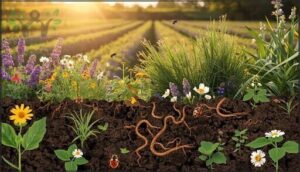
Biodiversity conservation through IPM strengthens ecosystem balance by preserving beneficial insects, pollinators, and soil microbes that deliver natural pest suppression and nutrient cycling. When you adopt sustainable pest management practices—habitat diversification, reduced tillage, and selective interventions—you boost pollinator health, improve biodiversity metrics, and build ecosystem resilience.
These ecosystem services support environmental sustainability while safeguarding long-term productivity and soil conservation across your operation.
Economic Benefits for Growers

IPM doesn’t just protect the environment—it strengthens your bottom line. When you adopt integrated strategies, you’re making a choice that cuts costs, stabilizes production, and creates opportunities for premium markets.
The financial advantages break down into three key areas that directly impact your profitability and long-term viability.
Lower Pest Management Costs
You’ll find that integrated pest management benefits your bottom line through smart budget planning and resource optimization. By prioritizing pest monitoring over blanket treatments, you can target interventions only when action thresholds are met—cutting unnecessary chemical purchases by up to 40 percent in some systems.
Key economic considerations of pest control through IPM include:
- Preventive inspections that standardize routines and avoid cost spikes from sudden infestations
- Scouting data that enable rapid, targeted responses rather than expensive blanket applications
- Predictable maintenance schedules that minimize emergency service calls and overtime expenses
Financial analysis consistently shows that lower pest management costs emerge from this prevention-first approach, supporting economic sustainability while maintaining effective pest management and control.
Stable and Increased Crop Yields
You’ll secure stable crop yields when early pest detection and targeted interventions reduce damage during peak pressure periods—studies show agricultural productivity gains of 5–15 percent under integrated pest management.
Disease-resistant cultivars combined with crop rotation benefits disrupt pest cycles, stabilizing farmers’ income across seasons while supporting sustainable agriculture through prevention rather than reactive chemical sprays.
Market Access and Certification Advantages
You’ll access export opportunities and premium markets when third-party certifications verify your integrated pest management benefits—certified suppliers gain trade compliance credentials that satisfy retailer procurement standards and national residue requirements.
Market expansion accelerates through supplier recognition programs, while sustainable pest control certifications justify premium pricing and reduce border verification costs.
Certification becomes your passport to environmental protection markets demanding documented pest management strategies and economic sustainability.
Improved Human and Community Health

When you reduce pesticide use through IPM, you’re not just protecting crops—you’re protecting people. Farmworkers face fewer toxic exposures, families eat cleaner food, and communities breathe easier air.
The health benefits extend from the field to your kitchen table, addressing everything from chemical poisoning risks to respiratory triggers that affect vulnerable populations.
Reduced Health Risks for Farmworkers
When you adopt integrated pest management, you cut pesticide exposure for farmworkers by 20 to 60 percent in orchards and vegetables—a direct win for occupational hazards and respiratory health. Fewer high-risk sprays mean lower rates of contact dermatitis and acute symptoms during spray seasons.
Targeted pheromone traps and restricted entry intervals keep your crews safer, healthier, and more productive.
Safer Food and Living Environments
Beyond worker health, integrated pest management delivers safer food and living environments by slashing pesticide residues on produce and in homes. Physical barriers, HACCP routines, and sanitation controls replace routine chemical sprays, protecting public health while maintaining pest control.
You’ll reduce contamination risks in kitchens and fields, supporting sustainable living and eco-friendly food safety standards that consumers trust.
Lower Exposure to Allergens and Asthma Triggers
Integrated pest management addresses asthma triggers where they live—cockroach allergens, rodent dander, and dust mite reservoirs. By sealing entry points, trapping pests, and controlling humidity, you cut indoor allergen levels by up to 70 percent.
Fewer airborne irritants mean fewer symptom days, especially for children, proving that smart pest prevention doubles as asthma prevention and indoor air quality control.
Sustainable and Long-Term Pest Control

IPM doesn’t just solve today’s pest problems—it builds systems that keep working year after year. When you focus on long-term strategies instead of quick fixes, you prevent recurring infestations and adapt to new challenges as they arise.
Here’s how sustainable pest control creates lasting results for your operation.
Preventing Pest Outbreaks and Recurrence
Consistency turns prevention into a long-term shield against recurring infestations—you stop problems before they spiral out of control. Weekly pest monitoring through sticky cards and trap counts lets you spot population trends early, while crop rotation breaks life cycles by rotating host crops across seasons. Biological controls and habitat management work together to suppress pests naturally, reinforcing your prevention-first strategy and cutting reliance on reactive pest control services.
- Trap and scout regularly to catch outbreaks when populations are still manageable
- Rotate crops strategically to disrupt pest life cycles and reduce carryover between seasons
- Sustain natural enemies through habitat management that nurtures beneficial insects year-round
Adaptive Strategies for Changing Conditions
Shifting weather patterns and pest forecasting demand adaptive planning—you adjust IPM strategies for homes and businesses by revising plans every one to three months as climate resilience data comes in.
Real-time monitoring through sensors strengthens risk management, letting you pivot quickly when conditions shift, while threshold-based interventions preserve ecosystem services and environmental sustainability without locking you into rigid, outdated sustainable pest management protocols.
Promoting Education and Community Engagement
Training sessions and school programs turn pest management theory into community action—you build environmental literacy by partnering with local institutions that host IPM workshops, reaching participants through volunteer engagement channels that average 1,200 sign-ups annually.
Education partnerships strengthen public health and pest management outcomes through:
- Monthly co-curricular sessions on IPM strategies for homes and businesses
- After-school mentorship covering pest control and management fundamentals
- Family literacy nights exploring health benefits of IPM
- Service projects linking school pest management to real neighborhood needs
- Cultural events reinforcing community outreach and sustainable practices
These programs empower you and your neighbors to make informed decisions, reducing reliance on chemical interventions while supporting long-term ecosystem health.
Frequently Asked Questions (FAQs)
What is a good reason to implement integrated pest management?
An ounce of prevention beats a pound of cure—Integrated Pest Management slashes pesticide use while preserving soil and water quality. It equips you through Adaptive Management and Site-Specific Solutions that boost Consumer Confidence and environmental protection.
What are the benefits of integrated disease management?
Integrated disease management cuts chemical use by up to 30 percent through crop rotation and pest monitoring. This approach protects soil health and ecosystem balance while lowering costs and supporting sustainable agriculture. It also reduces resistance through environmental protection strategies.
What are the three goals of IPM?
You’ll find that IPM strategies pursue three interwoven objectives: reducing crop damage through informed decision-making, minimizing risks to human health and the environment, and maintaining economic viability through cost-effective, sustainable practices.
What does integrated pest management help with?
You’ll achieve crop protection and soil conservation through IPM’s systematic approach—early detection catches pests before they cause economic damage, while reduced pesticide use preserves ecosystem balance, aids resistance management, and maintains farm productivity over time.
What training is needed to implement IPM programs?
You’ll need training in pest biology, field monitoring, IPM planning, control methods, and training foundations—core IPM best practices that combine professional IPM partnership with pest management and resistance strategies for sustainable results.
How do you set pest action thresholds?
You set pest action thresholds by identifying the pest species, monitoring population levels through regular scouting, and determining the point where control costs balance potential crop damage—triggering timely intervention before economic harm occurs.
What tools help monitor pest populations effectively?
Sticky traps, pheromone lures, and sweep nets deliver baseline pest tracking data.
Smartphone apps, cloud dashboards, drone thermal imaging, and microclimate sensor networks power digital monitoring systems that forecast outbreaks before damage escalates.
How long before IPM shows measurable results?
You’ll see measurable outcomes within 6 to 24 months after IPM adoption—faster safer results appear in the first season as pest monitoring drives threshold-based actions, cutting applications 20 to 40 percent early on.
Can IPM work in urban residential settings?
Absolutely—Urban Pest Control thrives in city ecosystems when you seal entry points, maintain sanitation, and monitor regularly.
Residential IPM and Multifamily Management rely on Community Education and nonchemical Sustainable Pest Control Solutions customized to apartments and homes.
How does IPM affect overall farm productivity?
IPM enhances farm productivity by preventing pest outbreaks through early monitoring, stabilizing crop yields with targeted interventions, and reducing input costs.
It also improves soil health optimization and supports sustainable farming practices, which strengthen agricultural productivity and efficiency long-term.
Conclusion
The chess player who reacts to every opponent’s move eventually loses to the one who controls the board.
The benefits of integrated pest management emerge when you stop chasing symptoms and start designing systems—monitoring thresholds, rotating tactics, fostering natural allies.
Your fields or facilities become resilient ecosystems rather than battlegrounds, yielding healthier crops, protected workers, and budgets that finally stretch toward solutions that last beyond the next spray cycle.
- https://doi.org/10.1155/2023/5546373
- https://scholar.google.com/scholar_lookup?journal=Advances%20in%20Agriculture&title=Integrated%20pest%20management%20(IPM)%20in%20agriculture%20and%20its%20role%20in%20maintaining%20ecological%20balance%20and%20biodiversity&author=P.%20B.%20Angon&author=S.%20Mondal&author=I.%20Jahan&author=M.%20Datto&author=U.%20B.%20Antu&volume=2023&issue=1&publication_year=2023&pages=5546373&doi=10.1155/2023/5546373&
- https://www.ncbi.nlm.nih.gov/pmc/articles/PMC2721864/
- https://extension.unr.edu/publication.aspx?PubID=2626
- https://cropwatch.unl.edu/economic-injury-level-and-economic-threshold-ipm