
This site is supported by our readers. We may earn a commission, at no cost to you, if you purchase through links.

Most people think fruit trees need sprawling backyards. Wrong. Some of the most productive fruit plants alive are natural climbers—vines that evolved to reach upward, not outward.
A single trellis, fence, or even a balcony railing becomes a living food source when you pair it with the right plant.
Kiwi berries can push 50 pounds of fruit from one mature vine. Dragon fruit crawls six meters high and drops 600-gram fruits.
The best fruit for vertical gardening doesn’t just survive in small spaces—it thrives there, turning bare walls into something you can actually eat.
Table Of Contents
- Key Takeaways
- 12 Best Fruits for Vertical Gardening
- More Space-Saving Fruiting Climbers
- How to Grow Vertical Fruit
- Top 5 Vertical Gardening Supports
- Frequently Asked Questions (FAQs)
- What fruits and vegetables are best for a vertical garden?
- What is the easiest fruit to grow on a patio?
- What is the best vegetable to grow on a trellis?
- How many fruits & vegetables can you grow vertically?
- What fruits can you grow in a small garden?
- Which vegetables can be grown vertically?
- Can vine vegetables grow in a vertical garden?
- Can vegetables grow vertically on a trellis?
- What is a vertical vegetable garden?
- What fruit grows vertically?
- Conclusion
Key Takeaways
- Climbing fruits like kiwi berries, passionfruit, and dragon fruit don’t just survive in small spaces—they actually thrive there, turning a single trellis or fence into a serious food source.
- You can pack 6 to 12 fruiting plants per linear meter on a trellis, which means vertical growing is one of the smartest space hacks available to urban gardeners.
- Getting the basics right—at least six hours of sun, soil pH between 6.0 and 6.8, and proper trellis support rated for heavy loads—makes the difference between a struggling vine and a productive one.
- Pruning is your secret weapon: removing a third of canes each late winter and thinning crowded growth can boost sunlight penetration by 20% and push significantly higher yields.
12 Best Fruits for Vertical Gardening
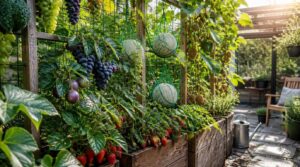
Not every fruit needs a garden bed — some of the best ones grow up. These five vertical growers punch way above their weight when given a trellis and a little care. Here’s what made the top of the list.
If you’re tight on horizontal space too, small-garden fruit trees are worth a look alongside your vertical picks.
Kiwi Berries
Kiwi berries are basically grapes that went to culinary school. These climbing fruit vines (Actinidia arguta) produce smooth-skinned fruits you can pop in your mouth whole — no peeling needed.
Train them up a sturdy trellis, and they’ll reward you with sweet, tropical-flavored berries packed with vitamin C.
Bonus: they’re surprisingly frost-tolerant perennial vines that come back stronger every year.
They perform best in a sunny sheltered location for ideal fruit ripening.
Passionfruit
Want fruit that tastes like a tropical vacation? Passionfruit vines deliver bold, citrusy-sweet pulp with floral notes of guava.
These climbing fruit vines thrive on trellises, needing full sun and humidity to set fruit. Ripe when wrinkled and fragrant, they’re packed with vitamin C and fiber.
Try purple or yellow varieties drizzled over yogurt or pavlova.
Grapes
From tropical vines, let’s go classic. Grapes are the OG vertical fruit, and they’re built for it.
Each cluster hangs from a woody cordon, dotted with berries on tiny pedicels.
Terroir shapes flavor: red types lean plummy, whites go citrusy.
One cup packs fiber, potassium, and resveratrol.
Train them on sturdy trellises, and they’ll fruit for decades.
Strawberries
Grapes get all the glory, but strawberries are quietly stealing the show. Small-space gardening just got tastier.
Hang them in hanging fruit baskets or train runners along a trellis. They spread fast via runners, making propagation almost automatic. Pick when fully red — strawberries won’t ripen after harvest. That sweet-tart punch, loaded with vitamin C and anthocyanins, is worth every bit of effort.
Raspberries
Raspberries are one of the best perennial vines for vertical growing — and they keep coming back year after year. Train them up a trellis and let cane renewal do the heavy lifting.
Pick when drupelets pull free cleanly. Rich in anthocyanins and ellagic acid, they’re basically a superfood you grew yourself.
More Space-Saving Fruiting Climbers

The fun doesn’t stop there. Beyond the classics, a whole crew of climbers and trailing plants are just waiting to take over your trellis. Here are five more space-saving fruiting options worth growing.
Blackberries
Blackberries are practically made for vertical growing. These perennial fruiting vines send up arching canes that love a trellis. Train them upward and you reclaim serious ground space.
Thornless cultivars make harvesting way easier on your hands. Pick when berries pull off with zero resistance — that’s peak ripeness.
Bonus: those deep black drupelets are loaded with manganese and anthocyanins.
Goji Berries
Goji berries have been grown across Asia for centuries — and they’re surprisingly great climbers. Train them on a trellis and you’ll get bright red berries packed with vitamin A, vitamin C, and zeaxanthin for eye health.
- Harvest after first frost for peak antioxidant content
- Snack on them dried, or toss into tea, trail mix, or smoothie bowls
- A 28g serving delivers roughly 3–4g of protein
Cucamelons
Cucamelons look like tiny watermelons, but taste like cucumber kissed with lime. That combo alone makes them worth growing.
They’re tropical vines (Melothria scabra) that climb naturally, so your trellis does half the work. Keep soil pH around 6.0–6.5, mulch the base, and watch for aphids early.
Eat them raw, toss into salads, or pickle them for a punchy summer condiment.
Small Melons
Think melons can’t climb your trellis? Think again, friend.
Melon variety selection matters most: try Sugar Baby watermelon, Golden Midget watermelon, Golden Jenny melon, Charentais melon, or Edens Gem melon.
- Train compact vines weekly for compact vine training
- Watch ideal temperature ranges, 78–95°F
- Check harvesting maturity signs: hollow sound, sweet aroma
Small melon flavors stay bright, juicy, fresh, and memorable.
Dragon Fruit
Dragon fruit is basically a cactus that thinks it’s a vine — and it climbs like one too. Its aerial stem hooks latch onto vertical poles, reaching 6–8 meters when trellised well.
Fruits weigh up to 600 grams and pack vitamin C, fiber, and betalains.
One catch: flowers open at night and last only hours, so hand pollination often seals the deal.
How to Grow Vertical Fruit
Growing vertical fruit isn’t complicated — it just takes a few smart habits. Get these basics right and your vines will practically take care of themselves. Here’s what to focus on.
Sunlight and Soil Needs
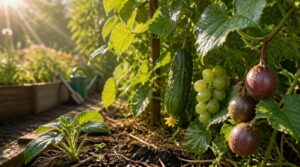
Your vines are hungry for light. Most climbing fruits need at least six hours of direct sun daily — morning light is gentler and cuts fungal risk.
Aim for soil pH 6.0–6.8 with loamy, well-draining mix rich in organic matter.
Water in the morning and mulch well to lock in moisture without drowning roots.
Trellis Training Basics
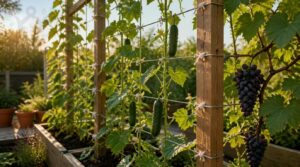
Pivot from soil to structure: your trellis support systems guide vines upward.
Optimizing Sun Exposure starts with wire spacing tips — wires 2–4 inches apart, posts every 6–8 feet.
Stem Attachment Methods matter; soft ties beat tight twine.
Canopy Balance and Annual Growth Adjustments keep vine training techniques, fruit trellising methods, and plant training methods aligned neatly for vertical planting methods.
Pruning for Better Yields
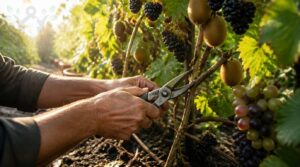
Once your trellis is set, pruning becomes your secret weapon. Remove one-third of canes each late winter to push fresh, productive shoots.
- Prune after flowering to redirect energy into remaining fruiting wood
- Clip shoot tips by a quarter to strengthen laterals
- Thin crowded growth to boost sunlight penetration by 20%
Never cut into flowering wood mid-season — that’s yield gone.
Supporting Heavy Fruit
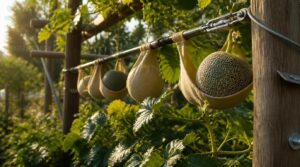
Heavy fruit needs backup—think tensioned wires rated for at least 200 pounds per strand. Spread the load with spreader bars or fabric slings under clusters. Go for galvanized steel or treated wood to handle wind and rain.
Angle posts into the breeze, anchor deep, and use soft plant ties so branches don’t snap.
Strong structure, happy harvest.
Harvest Timing Tips

Timing your harvest right is the difference between magic and mush. Each fruit gives you signals — learn to read them.
Every fruit signals its own perfect moment — learn to read them before the harvest turns to mush
- Strawberries: pick every 2–3 days when fully red, no white shoulders
- Grapes: taste-test weekly; target 16–25 Brix
- Passionfruit: wrinkled skin and easy detachment mean it’s ready
- Kiwi berries: check every 5–7 days for slight give under pressure
Top 5 Vertical Gardening Supports
The right support makes all the difference between a thriving vertical garden and a tangled mess. Your vines need something sturdy, reliable, and sized for the job. Here are five solid options worth considering.
1. Vertical Garden Techniques Guide
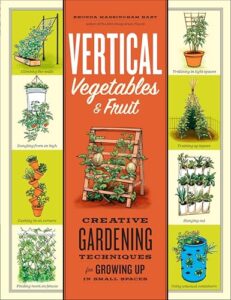
If you’re serious about growing fruit vertically, you need a solid game plan — and that’s exactly what the Vertical Garden Techniques Guide delivers.
This 177-page book from Storey Publishing covers over 20 DIY structures, from trellises to wall pockets, with step-by-step instructions. At just $12.99, it’s a steal.
You’ll find illustrated plant charts, zone info, and self-watering device ideas. Perfect for balconies, patios, or tight yards where every square foot counts.
| Best For | Small-space gardeners who want to grow more food on a balcony, patio, or compact yard without breaking the bank. |
|---|---|
| Product Type | Gardening Guide Book |
| Primary Material | Paper (Print Book) |
| Plant Support Type | DIY Structures & Tips |
| Best Use Setting | Small Yards & Patios |
| Maintenance Level | Varies by Method |
| Portability | Not Applicable |
| Additional Features |
|
- 20 DIY structures with clear, step-by-step instructions make it easy to get started even if you’ve never built anything before
- Illustrated plant charts and zone info take the guesswork out of figuring out what will actually grow where you live
- At $12.99 for 177 pages, the value is hard to beat — especially with self-watering device ideas thrown in
- Published in 2011, so newer vertical gardening products and plant varieties won’t be covered
- Some techniques like trellising beans or cucumbers take real time and consistent upkeep — not exactly set-it-and-forget-it
- Crop success will vary depending on your local climate, so not every recommendation will work for every reader
2. Cambaverd Bamboo Garden Plant Stakes
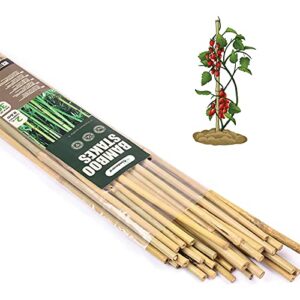
Sometimes the simplest tool wins. Cambaverd’s bamboo stakes come 30 to a pack, each one 2 feet long and fumigated twice for durability.
They’re sturdy enough for beans, peppers, and small climbing vines, yet light enough to cut and angle into soil in seconds. Bamboo nodes grip your ties naturally, so vines stay put without fancy hardware.
Best part? They’re compostable. When the season ends, just toss them back into the earth.
| Best For | Gardeners who want a simple, natural way to support tomatoes, beans, peppers, vines, or potted trees without reaching for plastic or metal. |
|---|---|
| Product Type | Bamboo Garden Stakes |
| Primary Material | Natural Bamboo |
| Plant Support Type | Individual Stakes |
| Best Use Setting | Containers & Garden Beds |
| Maintenance Level | Low Maintenance |
| Portability | Lightweight & Portable |
| Additional Features |
|
- Sturdy bamboo holds up through multiple growing seasons, even with regular wear.
- Fumigated twice and easy to cut, so you can size them to fit any plant.
- Eco-friendly and blends right into your garden instead of standing out like plastic stakes.
- Fixed 2-foot length means taller plants may need extra ties or extensions.
- Thickness and strength can vary a bit from stake to stake.
- Untreated edges can splinter, so handle them with care when cutting or pushing into soil.
3. Green Mount Trellis Garden Bed
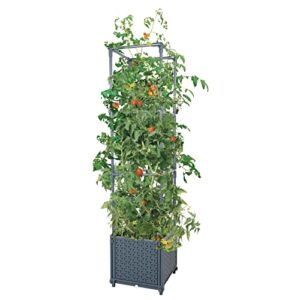
Want a trellis and a garden bed in one? That’s the Green Mount.
It’s a raised planter with a built-in vertical trellis, so your tomato or climbing veggie gets support without extra stakes. Modular panels and connector rods adjust the height as plants grow taller.
A water reservoir tray keeps roots evenly moist and drains clean. Some models roll on wheels, so rearranging your patio takes seconds, not muscle.
| Best For | Anyone with a small patio or deck who wants to grow a single climbing plant without juggling separate containers and stakes. |
|---|---|
| Product Type | Self-Watering Trellis Planter |
| Primary Material | Metal & Polypropylene |
| Plant Support Type | Integrated Trellis Frame |
| Best Use Setting | Patios & Decks |
| Maintenance Level | Low (Self-Watering) |
| Portability | Compact & Movable |
| Additional Features |
|
- The built-in trellis and self-watering reservoir mean less fussing — your plant has support and moisture handled in one unit.
- Tool-free assembly with everything included, so you’re up and growing fast.
- Lightweight at under 4 lbs, making it easy to move around your outdoor space.
- Only fits one plant, so if you’re thinking bigger, you’ll need multiple units.
- The tall, narrow design can tip over on windy days or uneven surfaces — worth keeping in mind on an exposed balcony.
- The printed instructions are tiny and hard to read, so budget some time to find a video walkthrough before you start.
4. Foldable Metal Garden Trellis
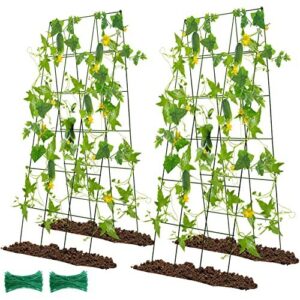
This trellis is the set-it-and-forget-it option for small-space growers. Each unit stands 48 inches tall with a 4-inch grid that guides cucumbers, peas, and climbing fruit without tangling. The alloy steel frame has a rust-resistant coating, so rain won’t wreck it. Setup takes about a minute — just push the stakes into soil and go.
It folds flat when the season ends. Compact, lightweight, and honestly kind of genius for balcony gardens.
| Best For | Small-space gardeners — balcony growers, raised bed fans, or anyone who needs a quick, no-fuss trellis for cucumbers, peas, or climbing veggies. |
|---|---|
| Product Type | A-Frame Trellis Set |
| Primary Material | Alloy Steel |
| Plant Support Type | A-Frame Trellis |
| Best Use Setting | Raised Beds & Balconies |
| Maintenance Level | Low Maintenance |
| Portability | Foldable for Storage |
| Additional Features |
|
- Sets up in about a minute — push the stakes in and you’re done
- Folds flat for easy storage when the season wraps up
- Keeps fruit off the ground, which means less rot and fewer pest problems
- Only two end stakes included, even though product images suggest four
- Lightweight build can struggle in strong wind or with heavier crops
- A few buyers have reported rust showing up early despite the coating
5. Cedar Raised Garden Bed Trellis
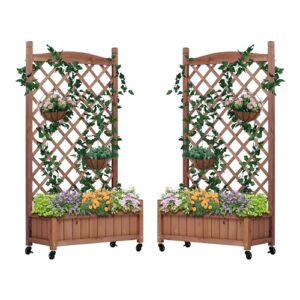
This one’s a two-in-one win.
The cedar raised bed trellis combines a planter box with a built-in vertical grid — so your kiwi berries or climbing raspberries grow up while roots dig down.
Each box supports 100 lb of fruit load, and the natural cedar resists rot for up to 12 years.
Wheels let you chase sunlight or dodge storms.
Compact footprint, serious output.
| Best For | Gardeners with limited patio or deck space who want to grow climbing plants like tomatoes or vines without bending over constantly. |
|---|---|
| Product Type | Cedar Planter Box Set |
| Primary Material | Cedar Wood |
| Plant Support Type | Integrated Trellis |
| Best Use Setting | Patios & Decks |
| Maintenance Level | Low Maintenance |
| Portability | Wheeled for Mobility |
| Additional Features |
|
- The built-in trellis means you don’t need to buy a separate support structure — it’s all one compact setup
- Lockable wheels make it easy to follow the sun or pull things inside when a storm rolls in
- Raised height takes the strain off your back, which makes a real difference during longer gardening sessions
- The shallow depth isn’t ideal for deep-rooted crops, so you’ll want to stick to plants that don’t need much downward room
- Thin cedar boards can weather fast without a sealant or coat of paint, so plan for a little extra maintenance
- The trellis might need some added support if you’re in a windy spot — it’s not built for rough conditions on its own
Frequently Asked Questions (FAQs)
What fruits and vegetables are best for a vertical garden?
Climbing vines and compact berries thrive best. Think kiwi berries, passionfruit, grapes, raspberries, and strawberries. They naturally reach upward, saving ground space while delivering real harvests.
What is the easiest fruit to grow on a patio?
Patio growing sounds complicated. It doesn’t have to be. Strawberries are your easiest bet — they thrive in containers, need just 6–8 hours of sun, and fruit in as little as 60 days.
What is the best vegetable to grow on a trellis?
Pole beans take the crown here. They climb fast, hit 6 to 8 feet, and keep producing all season long. Cucumbers and tomatoes are close runners-up, staying cleaner and easier to prune when trained upward.
How many fruits & vegetables can you grow vertically?
Think of your trellis as a skyscraper for snacks. You can pack 6 to 12 fruiting plants per linear meter, or squeeze in 20 strawberry crowns per square meter. Going vertical isn’t just neat — it’s a serious space hack.
What fruits can you grow in a small garden?
Small spaces still pack a punch. Try kiwi berries, passionfruit, dwarf grapes, strawberries, and raspberries on trellises or cages. Each thrives vertically, saving ground space while delivering sweet, homegrown harvests right on your patio or balcony.
Which vegetables can be grown vertically?
Cucumbers, pole beans, peas, and tomatoes all climb happily on a trellis. Squash and cucamelons work too, freeing up ground space while keeping leaves dry and harvests easy to spot.
Can vine vegetables grow in a vertical garden?
Vine vegetables thrive vertically. Cucumbers, beans, and peas climb naturally on trellises, saving ground space. They grow upward fast, fruit heavily, and are easier to harvest than sprawling ground plants.
Can vegetables grow vertically on a trellis?
The smaller the footprint, the bigger the harvest. That’s the trick with trellises. Peas and beans climb easiest, but tomatoes and cucumbers thrive too. Squash needs sturdier support. Twining stems just need a frame and a little guidance upward.
What is a vertical vegetable garden?
A vertical vegetable garden grows plants upward instead of outward. You use trellises, towers, or wall planters to stack or climb crops — saving ground space while keeping things tidy and easy to reach.
What fruit grows vertically?
Plenty of fruit actually climbs naturally. Grapes, passionfruit, kiwi berries, raspberries, and blackberries all grow upward on vines or canes — making them perfect candidates for trellises, fences, or walls.
Conclusion
Here’s what nobody tells you: walls were always meant to feed people. The best fruit for vertical gardening isn’t some rare discovery—it’s been climbing fences and trellises for centuries, patiently waiting for someone clever enough to use it.
You don’t need land. You need a trellis, the right vine, and a little patience.
Start with one plant. Watch it climb. Then more than you expected. Your wall just became a harvest.
- https://www.gardenguides.com/99814-grow-cucumbers-hanging-baskets.html
- https://abundantminigardens.com/growing-watermelon-on-trellises/
- https://www.rareseeds.com/store/vegetables/bulk-vegetables/melon/charentais-melon
- https://eattheplanet.org/the-native-grape-vines-of-north-america/
- https://pixabay.com/users/planet_fox-4691618/?utm_source=link-attribution&utm_medium=referral&utm_campaign=image&utm_content=6614241