This site is supported by our readers. We may earn a commission, at no cost to you, if you purchase through links.
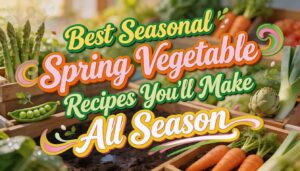
There’s a small window every year when farmers markets smell like wet soil and possibility—that’s spring produce at its peak, and it doesn’t wait around.
Carrots pulled young from cold ground taste nothing like their grocery store cousins.
Asparagus snapped fresh bends with a clean crack.
Leeks, peas, artichokes—they all show up at once, almost daring you to keep up.
The best seasonal spring vegetable recipes don’t just taste good; they taste like a specific moment that won’t repeat for another year.
Here’s how to make the most of every one of them.
Table Of Contents
- Key Takeaways
- Spring Vegetable Side Dishes
- Seasonal Main Courses
- Spring Soups and Salads
- Cooking Spring Vegetables
- Spring Vegetable Nutrition
- Frequently Asked Questions (FAQs)
- What are the best spring vegetables?
- What are the best spring vegetable recipes?
- How long does it take to cook vegetables in spring?
- What do spring vegetables taste like?
- Are spring vegetables easy to grow?
- Are spring vegetables good for a weeknight dinner?
- What vegetable is best in spring?
- What are cool season vegetables in spring?
- What vegetables are in season in spring?
- What are some interesting spring vegetables?
- Conclusion
Key Takeaways
- Spring produce is fleeting and tastes best when you let peak-season vegetables like asparagus, peas, leeks, artichokes, and young carrots stay the star of the dish.
- The strongest recipes here keep things simple, using easy sides, pastas, tarts, soups, and salads to highlight fresh flavor, crisp texture, and quick cooking.
- A few core techniques make the biggest difference, especially roasting, braising, griddling, blending vegetables into risotto, and using starchy pasta water to build silky sauces.
- Spring vegetables are not only versatile and weeknight-friendly, but also nutritious, budget-friendly, and easy to turn into balanced vegetarian meals.
Spring Vegetable Side Dishes
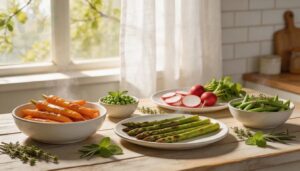
Side dishes are where spring really gets to show off. From honey-glazed carrots to crispy roasted asparagus, these recipes are simple enough for a weeknight, but good enough to steal the spotlight.
Whether you’re working with tender asparagus or sweet spring peas, seasonal produce side dish recipes make it easy to let fresh ingredients do the heavy lifting.
Here are some of the best spring vegetable sides to keep in your rotation.
Carrot Recipes and Variations
Carrots might be the most underrated spring vegetable on your cutting board. With just a little heat and the right seasoning, they go from ordinary to genuinely memorable. For a quick sweet‑savory side, try the classic brown sugar glazed carrots. Here are five delicious ways to use them:
- Roasted Carrot – Toss with olive oil, roast at 425°F, finish with fresh parsley.
- Glazed Carrot – Simmer with butter and brown sugar for 15 minutes until tender.
- Pickled Carrot – Pack into jars with garlic, cumin brine, and refrigerate overnight.
- Carrot Cake or carrot cake muffins – Grated carrots folded into warmly spiced batter.
- Carrot Tzimmes – Baked with prunes, honey, and orange juice until caramelized.
Don’t overlook carrot soup or a bright carrot salad dressed with cumin and lemon either.
Pea Salad Ideas and Tips
Peas might just be the fresh spring vegetable on the table. Thaw your frozen peas well and drain them — extra moisture thins the dressing fast.
For Pea Texture Tips, keep them raw so they stay firm and bright. Classic Flavor Pairings include crispy bacon, sharp cheddar, and red onion, but don’t sleep on feta or fresh mint for something lighter.
Herb Dressing Variations like a creamy mayo-vinegar base with dill or chives turn simple light salads into something people ask about. Nail your Crisp Topping Timing by adding bacon right before serving.
For Make Ahead Storage, refrigerate up to three days — these herb-infused dishes genuinely get better overnight.
Asparagus Preparation Methods
Now that your peas are sorted, it’s time to give asparagus its moment — and honestly, it deserves one.
Start with Trim & Peel Techniques: snap each spear where it naturally breaks, then peel thicker stalks for even cooking.
Three ways to cook it well:
- Steamed Asparagus Tips stay bright green and tender — just don’t walk away from the pot.
- Grilled Asparagus Flavor brings smoky char that makes any asparagus salad worth talking about.
- Baked asparagus at high heat coaxes out natural sweetness, perfect for asparagus risotto or an asparagus goat cheese tart.
Seasoning Asparagus Ideas: lemon, garlic, and Parmesan. Simple wins. Sautéed Asparagus Variations with shallots round out any weeknight asparagus recipe beautifully.
Leek and Artichoke Recipes
Leeks and artichokes are two of spring’s quieter MVPs — mild, a little sweet, and endlessly adaptable. For Frittata Fillings, try the Sweet Potato Leeks and Greens Frittata with feta and rosemary.
Herb Accents like tarragon keep things bright. Cheese Selections such as Parmesan or Gruyère add richness to Tart Toppings on a flaky crust.
For Dip Serving Ideas, Lemony Artichoke Crostini or Parmesan Stuffed Artichokes hit every time — simple Fresh Vegetable Dishes for Spring that belong in your Seasonal Spring Produce Recipes rotation.
Other Spring Vegetable Options
Spring’s lineup doesn’t stop at asparagus and leeks. There’s a whole bench of seasonal stars worth exploring:
- Kohlrabi Slaw and Radish Pickles add crunch and tang to any plate
- Swiss Chard Sauté with garlic or Fava Bean Hummus brings earthy, satisfying depth
- Mizuna Greens tossed with citrus makes simple Fresh Vegetable Dishes for Spring
These spring vegetable cooking ideas round out your Seasonal Spring Produce Recipes beautifully.
Seasonal Main Courses
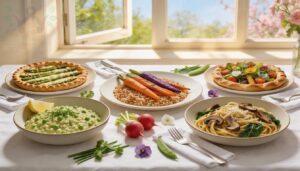
Spring deserves a main course that actually tastes like the season. These dishes put fresh vegetables front and center — not as a side thought, but as the whole point.
If you’re growing your own, spring vegetable garden planning makes all the difference in getting produce that’s genuinely worth cooking around.
Here are five mains worth adding to your regular rotation.
Spring Vegetable Pasta Primavera
Few dishes capture the feeling of spring quite like a good pasta primavera. It’s bright, fresh, and honestly pretty hard to mess up.
Start with a generous pour of olive oil and build your lemon garlic base — that duo does most of the heavy lifting. From there, your roasted vegetable pasta primavera comes together fast.
Toss in asparagus, sweet peas, and broccolini, keeping each one crisp‑tender so you get that satisfying bite. A proper olive oil emulsion, loosened with a splash of starchy pasta water, coats every noodle without feeling heavy.
Your pasta shape matters too — penne and rigatoni grab the sauce better than long noodles. Finish with fresh herbs for that herb finishing touch, and you’ve got one of the best spring pasta and risotto dishes for seasonal cooking.
A real nutrient boost with zero fuss.
North African-Inspired Green Sauce
Chermoula is basically the North African answer to chimichurri — and once you taste it, you’ll wonder where it’s been all your life.
Build your herb base variations from parsley, cilantro, and mint, then lean into citrus flavor balance with lemon juice and preserved lemon zest.
A generous olive oil emulsion pulls everything together into something glossy and spoonable.
Dial your chili heat levels up or down, then use it for marinade applications on fish, roasted spring vegetables, or grain bowls.
Asparagus and Goat Cheese Tart
Nothing says farm-to-table elegance quite like an Asparagus Goat Cheese Tart. This Vegetarian Spring Meal Idea is simpler than it looks:
- Pastry Techniques – Roll thawed puff pastry to 10×10 inches, score a border, and prick the center.
- Cheese Variations – Blend 4–7 oz goat cheese with crème fraîche, thyme, and a garlic clove.
- Flavor Pairings – Add lemon zest for brightness against the creamy filling.
- Baking Tips – Bake at 425°F for 20–30 minutes until deeply golden.
- Serving Suggestions – Slice into 6–8 pieces and drizzle with honey.
Seasonal produce never looked so good.
Vegan Chickpea Patties With Avocado
These vegan chickpea patties might just become your new weeknight obsession. Mash one can of chickpeas, mix in panko breadcrumbs, diced red bell pepper, green onion, and nutritional yeast — your Patty Binding Techniques do the heavy lifting here.
Spice Blend Ideas, like cumin, paprika, and garlic, add real warmth. Pan-fry, bake, or air-fry — each Cooking Method Comparison gives a slightly different result.
Top with creamy Avocado Mayo Variations for richness. These plant-based spring recipes deliver 15 grams of protein and 33% of your daily fiber per serving.
Grilled Cauliflower With Teriyaki Glaze
Cauliflower steaks might be the most satisfying Vegetarian Spring Meal Ideas you’ll try this season.
Cut your cauliflower into half-inch slices, brush with a Low‑Sodium Soy teriyaki glaze — soy sauce, ginger, garlic, a little brown sugar — and grill over medium-high heat for five to seven minutes per side. Grill Mastery comes down to patience: don’t move the steaks.
Finish with Sesame Seed Crunch, a Citrus Zest Finish, and Fresh Herbs.
Quick Weeknight Dinner Recipes don’t get better than this.
Spring Soups and Salads
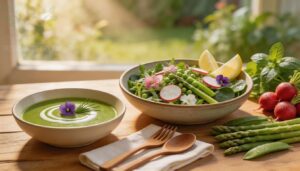
Spring isn’t just about what’s on your plate — it’s also what’s in your bowl. These soups and salads bring together the season’s brightest flavors in ways that feel both fresh and satisfying.
Here’s a handful of recipes worth adding to your rotation.
Lemon Chicken Soup and Variations
Lemon chicken soup might just be the most underrated bowl in your spring rotation. The Greek-inspired avgolemono technique is the secret here — you whisk eggs with lemon juice, then temper the mixture with hot broth before stirring it back into the pot. No cream needed. The result is silky, glossy, and bright.
Avgolemono’s secret is simple: whisk eggs with lemon, temper with hot broth, and skip the cream entirely
Try these variations to keep things interesting:
- Stir in orzo integration for a hearty, satisfying finish.
- Add fresh herbs like dill or parsley for a clean herb garnish.
- Use cauliflower rice as a smart low carb alternative.
- Finish with farm-fresh spring ingredients to honor the season.
This is lemon chicken orzo soup at its most welcoming — light and citrus-forward spring flavors that feel like sunshine in a bowl.
Sugar Snap Pea Salad and Combinations
Sugar snap peas are spring salads in a single bite — sweet, crisp, and ready to play with almost anything.
Toss them with Citrus Vinaigrette Pairings, like a bright lemon-olive oil dressing, then fold in Crunchy Veggie Addins like radishes or cucumber.
Herb Nut Mixes with mint and pistachios add freshness, while Cheese Crumble Options like feta bring that salty contrast.
Seasonal Fruit Twists — think mandarin slices — make it light and colorful.
Lemony White Bean Salad With Broccoli
From those crisp snap peas, it’s a short hop to something heartier — and this lemony white bean salad with broccoli delivers exactly that.
Roast your broccoli until the edges go golden, let it cool, then toss it with creamy cannellini beans and a punchy Lemon Dressing made with fresh juice, zest, garlic, and olive oil. The Bean Texture is smooth against the tender florets, and a Crunchy Topping — toasted nuts or breadcrumbs — seals the deal. Fresh herbs like parsley or dill pull the light and citrus forward spring flavors together beautifully.
- Stunning Flavor Balance with just five pantry staples
- bright citrus bright flavors that wake up your taste buds
- Packed with protein and fiber — around 19g and 13g per serving
- Built for Meal Prep; stays fresh and crisp for days
- Endlessly flexible with fresh spring vegetables and seasonal swaps
Spring Salad With Berries and Bacon
From hearty beans to something bright and playful — meet your new favorite light and colorful spring meal.
A Strawberry Fields Salad with fresh produce like sliced strawberries and spinach is pure spring on a plate.
Bacon Crunch Technique matters here: cook it low and slow until truly crisp.
Candied Pecans add sweetness, Blue Cheese Tang adds bite, and a Lemon Maple Vinaigrette ties everything together.
Follow these Strawberry Prep Tips for Spring Soups and Salads success:
| Element | Choice | Why It Works |
|---|---|---|
| Greens | Fresh spinach | Holds up under dressing |
| Cheese | Blue cheese or feta | Balances berry sweetness |
| Dressing | Lemon Maple Vinaigrette | Brightens every bite |
Creamy Kale and Pasta Bake
When comfort food meets spring, you get this creamy kale and pasta bake — and honestly, it’s a keeper.
Start with a roux base, fold in your cheese blend, then toss with al dente pasta and kale. A panko crunch topping finishes it beautifully. One-pot prep means less cleanup.
Think of it as a lighter spin on kale lasagna — cozy, vegetable-forward, and weeknight-ready.
Cooking Spring Vegetables
Spring vegetables are only as good as how you cook them. A few smart techniques make a real difference — whether you’re after caramelized edges, silky texture, or a little smoky depth.
Here are five methods worth keeping in your back pocket.
Roasting Asparagus for Natural Sweetness
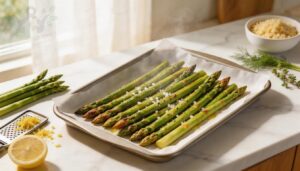
Want asparagus that tastes sweet? Roast it at 425°F, and you get the magic of Maillard Caramelization and High Heat Sweetening in about 10 to 12 minutes.
Trim the woody ends, pat the spears dry, then use an Oil Coating Technique with olive oil, salt, and pepper. Single-layer baking matters more than people think; crowded spears steam, not roast. When the tips turn golden and the stalks stay a little snappy, you’re there.
Finish with Fresh Herbs and lemon zest for the kind of light and citrus-forward spring flavors that make Spring Produce shine.
- Try dill or thyme for a Flavorful Finish
- Add to Citrus Asparagus Couscous
- Serve beside Air Fryer Crispy Asparagus Fries
- Rotate the pan halfway
Braising Spring Onions for Added Flavor
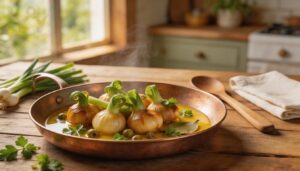
Braising spring onions might just change how you think about this humble spring produce. Brown them first in butter and olive oil — about five minutes — then add stock partway up the bulbs.
Cover and let them become tender for 10 to 20 minutes. Herb Infused Braise with parsley or bay leaf deepens everything.
Finish with a Lemon Butter Finish or Capers and Mustard for a glossy, flavorful sauce.
| Technique | Key Ingredients | Result |
|---|---|---|
| Herb Infused Braise | Broth, parsley, bay leaf | Deeply savory, farm-to-table flavor |
| Reduced Glaze Technique | Stock, butter, lemon | Glossy, rich coating |
| Capers and Mustard | Braising liquid, capers | Briny, bold edge |
| Oven vs Stovetop | Same base, different heat | Oven = slower, even; stovetop = quicker |
| Lemon Butter Finish | Butter, lemon zest | Bright, silky finish |
Blending Vegetables in Risotto
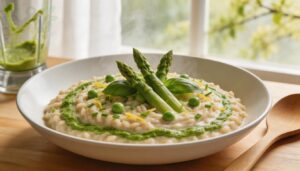
Blending spring vegetables into risotto is one of those small moves that changes everything. The Purée Technique is simple: cook your Seasonal Greens until soft, then blend a portion until smooth before stirring it back in. That’s your secret weapon for Texture Balance — creamy without heaviness. Think of it as Flavor Layering from the inside out.
- Asparagus purée for vivid green color
- Sweet peas blended with herbs for Light and citrus-forward Spring Flavors
- Herb Infusion using basil or chives
- Whole pieces reserved on top for contrast
Adding Starchy Pasta Water to Sauces
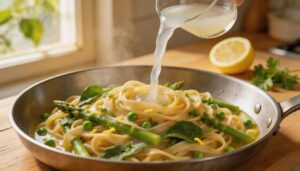
Don’t drain that pasta water — it’s doing more work than you think. That cloudy, starch-rich liquid is your best emulsification technique for spring sauces. The starch emulsifier role here is real: it binds fat and liquid together so your sauce turns glossy instead of greasy.
Water addition timing matters too — add it near the end, a splash at a time. Since seasoned pasta water carries salt, it adjusts flavor automatically.
Perfect for light pasta dishes with fresh herbs or spring vegetable fideos.
| Sauce Type | How Much to Add | What It Does |
|---|---|---|
| Olive oil-based | 2–3 tablespoons | Creates silky emulsion |
| Cheese-based | 1–2 tablespoons | Prevents clumping |
| Tomato-based | 1 tablespoon | Loosens and binds |
| Butter sauce | 2 tablespoons | Adds body and gloss |
| Herb purée | 1–2 tablespoons | Smooths texture out |
Sauce texture adjustment has never been simpler.
Griddling Broccoli for Smoky Flavor
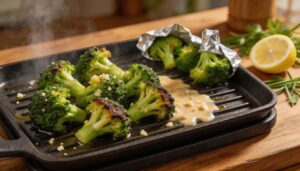
Griddling broccoli is one of those simple moves that completely changes the vegetable. Medium-high heat is your best friend here — around 400°F gets those charred edges without turning the inside to mush. Start with an olive oil coating, then add garlic pepper seasoning before it hits the pan. Charred edge timing matters, so give it 5 to 7 minutes without crowding. Finish with a lemon finish garnish and fresh herbs. Perfect alongside other roasted vegetable sides.
- Crispy smashed broccoli gets extra char from flattening first.
- Tenting with foil softens centers beautifully.
- Parmesan melts into the smoky bits perfectly.
- Spring recipes feel complete with this on the plate.
Spring Vegetable Nutrition
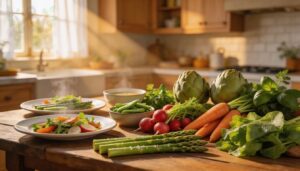
Spring vegetables aren’t just tasty — they’re genuinely good for you, and that’s a nice bonus when dinner already looks this good. knowing what’s in season helps you cook smarter and eat better without overthinking it.
Here’s what you need to know about spring produce, balanced meals, and getting the most out of your vegetable haul.
Key Spring Produce and Benefits
Spring is basically nature’s reset button, and the produce coming up right now is worth getting excited about.
Asparagus delivers folate support and vitamin K boost in every bite. Fresh peas bring fiber richness and plant protein that actually keep you full. Radishes add antioxidant power and crunch with almost zero calories — serious low calorie density wins there. Leafy greens like spinach and arugula round everything out with vitamins A and C.
These nutrient-dense foods aren’t just healthy spring meals. They taste delicious, too.
Seasonal Recipes for Balanced Diets
All those nutrients are great — but let’s talk about putting them to work in real meals.
Seasonal produce fits naturally into balanced nutrition when you plan around it:
- Pasta primavera with whole-wheat noodles and olive oil for Plant-Based Protein Pairings
- Pea and fava bean salads for Seasonal Micronutrient Balance
- Roasted asparagus with lemon as Low-Sodium Flavor Boosters
- Spinach frittatas for easy Meal Prep Timing
- Lentil patties for smart Portion Control Strategies
Vegetarian Easter Ideas and Inspiration
Easter doesn’t have to revolve around a roast. Vegetarian Easter Ideas come together beautifully when you lean into what’s already in season.
Think Easter Brunch Boards loaded with radishes, asparagus, and herby dips, or a golden Asparagus Goat Cheese Tart straight from the oven. Herb Quiches, Spring Vegetable Fideos, and Easter Salad all bring color without the fuss.
Finish with Rhubarb Tart Variations or Eggless Easter Cakes, and nobody misses the meat. Spring Brunch and Lunch Options have honestly never looked better.
High-Protein Vegetarian Options and Meals
Eating well doesn’t have to mean skimping on protein. Plant-based spring recipes can hit 20 to 30 grams per serving when you build smart. Lentil Pasta, a Tempeh Grain Bowl, or a Quinoa Bean Salad all deliver real staying power.
Try these vegetarian options:
- Toss a Tofu Stir-Fry with snap peas and sesame
- Layer a Greek Yogurt Parfait with seeds and fruit
- Build a Quinoa Bean Salad with roasted spring vegetables
Budget-Friendly Spring Vegetable Recipes
Good news: spring is basically the best time to eat well without spending much.
Carrots, leeks, potatoes, and eggs are pantry staples that anchor quick and easy spring meals all season.
Lean into one-pot meals, seasonal bulk cooking, and leftover transformations — last night’s roasted vegetables become tomorrow’s egg-based frittatas in minutes.
Farm-to-table doesn’t have to be fancy. With smart seasonal produce choices and simple vegetarian options, your wallet stays happy too.
Frequently Asked Questions (FAQs)
What are the best spring vegetables?
Spring’s best vegetables hit their stride in April: asparagus, sweet peas, crisp radishes, tender leeks, and young carrots.
Each brings peak freshness, bold flavor profiles, and serious nutrient density straight from the garden to your table.
What are the best spring vegetable recipes?
What’s easier than letting the season do the heavy lifting?
Think asparagus-lemon pasta, honey-glazed roasted carrots, or a creamy spinach casserole—spring vegetable recipes practically write themselves with fresh spring produce and herb-infused dressings.
How long does it take to cook vegetables in spring?
Most spring vegetables cook surprisingly fast. Peas steam in 3 minutes, asparagus roasts in 10 to 12, and carrots need 25 to Match your method to the vegetable, and dinner practically makes itself.
What do spring vegetables taste like?
Expect fresh spring flavors: Bright Earthy Notes, Sweet Grassy Flavors, Peppery Radish Bite, Nutty Artichoke Undertone, Lemony Herb Accents, fresh herbs, bright herbs, aromatic herbs, and citrus bright flavors from asparagus, peas, radishes, and leeks.
Are spring vegetables easy to grow?
Start small, and confidence grows: Soil Preparation, Seed Timing, Frost Protection, and Watering Needs make Beginner Crops like peas, radishes, lettuce, and fresh herbs garden vegetables, bringing seasonal spring produce and a farm-to-table spring harvest.
Are spring vegetables good for a weeknight dinner?
Yes, they suit Quick Prep, Time Efficiency, and Meal Planning: Low-calorie healthy meals, Flavor Boost included, plus quick dinner ideas, One-Pot Spring Dinner Recipes, quick weeknight dinner recipes, and vegetarian spring meals after work.
What vegetable is best in spring?
Good things come to those who wait: asparagus is spring’s star, thanks to its nutrient density, sweet flavor profile, culinary versatility, seasonal availability, and quick cooking.
Grill it, roast it, or shave it into salads.
What are cool season vegetables in spring?
Cool-season spring vegetables—lettuce, peas, spinach, broccoli, carrots, radishes, kale, and chard—prefer Temperature Requirements around 7–24°C, a 0–0 Soil pH Range, and Early Planting Tips.
Nutrient Profiles make them prized seasonal produce for crisp meals.
What vegetables are in season in spring?
Spring means spinach, watercress, radishes, carrots, new potatoes, asparagus, peas, and rhubarb.
Check radish harvest timing, note watercress flavor profile, and use farmers’ market ingredients for fresh produce, spring herb pairings, and farm-to-table meals now.
What are some interesting spring vegetables?
Like a garden waking, discover Ramps Wild Garlic, Nettle Greens, Kohlrabi Crunch, Swiss Chard Color, and Fava Bean Harvest gems.
creative uses of asparagus in dishes, radishes in salads, or Herby Spring Pea Dip tonight.
Conclusion
Make the most of spring’s fleeting flavors with these best seasonal spring vegetable recipes.
When life gives you lemons, make lemonade—but when life gives you fresh asparagus, toss it with olive oil and roast it to the ideal result.
Savor each bite of spring’s sweet harvest. With these recipes, you’ll enjoy the season’s freshest produce in every dish.
Your taste buds—and your guests—will thank you for the effort. Happy cooking!
- https://www.feastingathome.com/12-delicious-spring-recipes/
- https://thelemonapron.com/celebrating-spring-vegetables/
- https://www.wyseguide.com/asparagus-radish-snap-pea-salad/
- https://www.mondaycampaigns.org/meatless-monday/celebrate-spring-vegetables-with-these-10-seasonal-recipes
- https://chefsbliss.com/spring-vegetable-recipes/