This site is supported by our readers. We may earn a commission, at no cost to you, if you purchase through links.
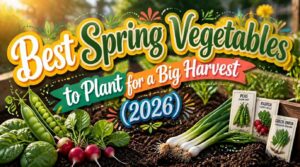
The window between late winter and early spring is shorter than most gardeners realize—and the ones who move first almost always end up eating best. A packet of peas tucked into cold ground while your neighbors are still browsing seed catalogs can mean fresh pods on the table a full month ahead of schedule.
Spring vegetables don’t just reward patience. They reward timing. Crops like spinach, radishes, and green onions thrive in soil that would make a tomato plant weep, and they can handle a light frost without flinching.
Knowing which of the best spring vegetables to plant—and exactly when—turns a modest patch of dirt into something that actually feeds you.
Table Of Contents
- Key Takeaways
- Best Spring Vegetables to Plant First
- Top Leafy Greens for Spring
- Early Spring Root Vegetables
- Cool-Season Crops for Bigger Harvests
- Spring Planting Tips for Success
- Frequently Asked Questions (FAQs)
- What vegetables can you plant in the spring?
- How do you grow vegetables in spring?
- Which vegetables should you plant in the ground first?
- Is spring a good time to grow vegetables?
- What is the easiest vegetable to grow in spring?
- When should I start planting spring vegetables?
- What vegetables to plant first in spring?
- What is the 70 30 rule for gardening?
- What vegetables do I plant in October?
- What vegetables should I plant in spring?
- Conclusion
Key Takeaways
- Peas, radishes, spinach, and green onions go in first — they handle frost and germinate once the soil hits 40–45°F, giving you a harvest weeks before summer crops even leave the seed packet.
- Radishes are your fastest win at 25–30 days from seed to table, but succession planting every 2–3 weeks is what keeps the harvests rolling instead of hitting one big wave and going quiet.
- Soil temperature matters more than the calendar — stick a thermometer 4–6 inches deep and aim for that 45–55°F sweet spot before you sow anything.
- Leafy greens like kale, Swiss chard, and cut-and-come-again lettuce keep producing all spring if you harvest outer leaves regularly and don’t let them bolt in the heat.
Best Spring Vegetables to Plant First
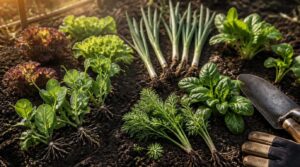
If you want to get a head start on your garden, a few vegetables are basically born ready for cool soil and chilly mornings. Planting these early gives you a longer harvest window — and honestly, nothing beats pulling something from the ground in April.
For a deeper dive into timing and soil prep, this guide to spring vegetable garden maintenance walks you through exactly what cool-season crops need to thrive.
Here are the best ones to get in the ground first.
Peas
Few spring vegetables reward you faster than peas. Sow them 4–6 weeks before last frost — they actually shrug off light freezes down to the high 20s °F.
Climbing varieties need a 3–4 ft trellis; bush types don’t.
As a bonus, peas fix their own nitrogen, so skip the fertilizer. You get roughly 8 grams of protein per cooked cup, too. Peas also provide lutein and zeaxanthin, which protect eye health.
Radishes
If peas are the slow-burn starter, radishes are the sprint. They’re ready in 22–30 days — faster than almost anything else in the garden.
Sow seeds ¼–½ inch deep and thin to 2–3 inches apart. Crowded radishes fork and disappoint. Keep moisture even or roots turn woody and sharp.
Don’t toss the greens — they’re edible, tasty sautéed.
Lettuce
Radishes are done in a month — lettuce takes a bit longer, but rewards patience.
Leaf types mature in 30–50 days, while head varieties need 50–70.
Sow seeds shallowly and thin as you go, using those thinnings as early baby greens.
To prevent bolting, pick outer leaves regularly and keep roots cool.
Store in a perforated bag in your crisper drawer.
Spinach
Lettuce hands off the baton nicely to spinach — another cool-season champ that’s just as easy to grow.
Sow seeds 4–6 weeks before your last frost, with soil at least 45°F. Spinach bolts fast in heat, so timing matters.
- Baby spinach — harvest young for tender, mild leaves
- Savoy types — crinkled leaves that grip dressings beautifully
- Heat-tolerant varieties — your best bet as temperatures climb
It delivers over 100% daily vitamin K per cup, plus iron and folate. Toss it raw or wilt it into soups — it cooks down to a quarter of its volume.
Green Onions
Green onions might be the most rewarding thing in your early spring vegetable garden — harvest-ready in weeks and useful in almost every dish.
Sow sets 1–2 inches apart in rich, well-drained soil. Succession planting every two weeks keeps bunches coming all season. Harvest when bulbs stay under 13 mm — any bigger and you’ve missed the sweet spot.
Top Leafy Greens for Spring
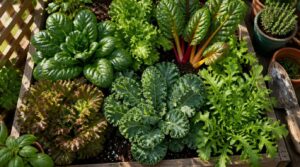
Spring is basically leafy green season — the cool air is practically begging you to fill your beds with them. Whether you’ve got a raised bed or a few containers on the porch, these greens thrive before summer heat shuts the party down. Here are five worth growing right now.
Cool-Weather Spinach
Spinach might be the most forgiving green you’ll ever grow. It germinates in soil as cool as 35°F and bounces back fast after a frost — and here’s the good part: cold actually makes the leaves sweeter.
Plant varieties like Bloomsdale or Teton for best results.
Harvest baby greens at 3–6 inches, and sow a fresh batch every two weeks to keep it coming.
Cut-And-Come-Again Lettuce
If spinach is the reliable veteran, cut-and-come-again lettuce is the overachiever.
Snip outer leaves 2 inches above the crown, and new growth returns in 7–14 days.
Try Salanova, Buttercrunch, or Red Sails — all vigorous regrowth varieties.
Harvest leaves at 3–5 inches for best flavor.
Stagger sowings every 2–3 weeks, and bolting won’t catch you off guard.
Nutrient-Dense Kale
Kale punches way above its weight. One cup delivers 684% of your daily vitamin K — critical for bone health and blood clotting — plus 206% vitamin A and 134% vitamin C, all for roughly 33 calories.
Kale delivers 684% of your daily vitamin K, plus massive doses of vitamins A and C, all for just 33 calories a cup
Frost actually sweetens its flavor. Pair it with citrus when cooking to promote better iron absorption from those leaves.
Colorful Swiss Chard
Think of Swiss chard as your garden’s built-in art installation. Rainbow chard varieties like Bright Lights bring red, yellow, pink, and white stalks — grown together, they look almost too pretty to eat. Here’s what makes each color pop:
- Red stems — packed with betalain pigments
- Yellow stalks — carotenoids at work
- Purple hues — antioxidant-rich pigments
- White stems — crisp and mild-flavored
Continuous leaf harvesting means you cut outer leaves and the plant just keeps going — great for succession planting across your spring vegetable beds. Chard thrives as a cool season vegetable, hitting maturity in 50–60 days. Sauté it with garlic and lemon, and those leafy greens practically cook themselves.
Peppery Arugula
If you’ve ever bitten into a leaf that tasted like wasabi’s laid-back cousin, that’s arugula. The peppery bite comes from glucosinolates — natural compounds that get sharper as leaves age.
Harvest baby leaves early, and you’ll get something milder, almost nutty.
Toss them with lemon and parmesan, and it’s genuinely one of spring’s quickest rewards.
Early Spring Root Vegetables
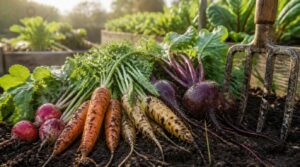
Root vegetables are some of the most rewarding things you can grow in early spring — they work underground while you’re barely paying attention. The key is getting the soil right and timing your planting before the heat settles in. Here are the best root crops to start this spring and exactly how to grow them well.
Quick-Harvest Radishes
Few spring vegetables reward impatience quite like radishes. Cherry Belle and Early Scarlet Globe are ready in just 25–30 days.
Loosen soil 6–8 inches deep, keep pH around 6.0–7.0, and water consistently — skipping that last part causes cracking. Plant a fresh row every 7–10 days for continuous succession harvests all season long.
Sweet Spring Carrots
Radishes come up fast, but carrots are worth the wait. Go with a Nantes variety — Nelson or Yaya Hybrid hit maturity in 55–58 days and delivers naturally sweet, slender roots.
Loose, sandy-loam soil at pH 6.0–6.8 keeps roots straight. Thin seedlings to 2–3 inches apart.
Store harvested carrots cool and humid to lock in that sweetness.
Tender Garden Beets
Beets deserve more credit than they get. Detroit Red and Chioggia are your best bets — both deliver tender, uniform roots in 45–60 days. Harvest at 1–2 inches for sweetness.
- Loose, well-drained soil prevents stubby, woody roots
- Consistent watering keeps them juicy
- Clip young tops early — those greens are worth sautéing
Crisp Japanese Turnips
If beets are the workhorse, Japanese turnips are the sleeper hit. These small, globe-shaped roots hit harvest size — roughly golf-ball diameter — in just 30 to 38 days. Plant them early on your spring planting calendar and they’re done before summer even shows up.
| Feature | Detail |
|---|---|
| Flavor | Mild, sweet, faintly peppery |
| Harvest Size | 2–5 cm diameter |
| Days to Harvest | 30–38 days |
| Best Pairing | Miso soup, dashi braise |
Eat the greens too — they’re tender, peppery, and go straight into a sauté pan. No peeling needed; just wash the roots and go.
Loose Soil Preparation
Roots go nowhere in compacted ground — that’s the first rule of root vegetables. Till 8–12 inches deep, break up clumps, and pull out any stones. Work in compost to loosen things up.
- Test soil texture before planting
- Remove obstructions blocking root growth
- Rake the bed surface smooth
- Amend with organic matter
Loose soil = straight roots.
Cool-Season Crops for Bigger Harvests
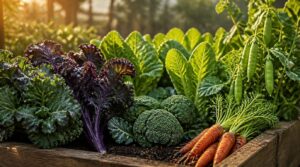
Cool-season crops are where spring gardening really hits its stride. With the right picks and a little planning, you can stack your harvest before summer heat even shows up. Here’s what to grow if you want more from your garden this spring.
Sugar Snap Peas
If you only grow one thing this spring, make it sugar snap peas. They’re sweet, crisp, and ready in 60–70 days.
Sow seeds about an inch deep once soil hits 45–75 °F, then train the shoots up a 3–4-foot trellis.
Good airflow keeps powdery mildew away.
Pick pods at 4–8 cm — still firm, not bulging — and toss extras into a quick snap pea pesto.
Broccoli Transplants
Unlike sugar snap peas, broccoli takes a little more prep — but the payoff is worth it.
Start transplants indoors 6–8 weeks before your last frost. Once seedlings have 4–5 true leaves, begin hardening off over 7 days, easing them into outdoor conditions gradually.
Space plants 18–24 inches apart for airflow. Watch for cabbage worms early — they’ll wreck a head fast.
Spring Cabbage
Spring cabbage is the underdog of cool-season crops — sown in late summer, it quietly overwinters and rewards you with tender, loose heads by early spring.
Aim for a soil pH of 6.0–6.8, keep it moist, and watch for cabbage white butterflies.
Harvest at 60–90 days, when heads feel firm.
Cauliflower Starts
Cauliflower is the diva of cool-season vegetables — but totally worth it.
Start with young transplants 4–6 weeks old and space them 18–24 inches apart so each head gets room to develop. Keep soil between 60–65°F for proper curd initiation.
Uneven temperatures cause buttoning. Consistent watering and a nitrogen-balanced feed early on make all the difference.
Trellises and Row Covers
Think of trellises and row covers as your garden’s best defense system. Vining crops like peas and cucumbers climb a 3–4 ft trellis, boosting airflow and yields.
Drape a lightweight fabric row cover over hoops spaced every 2–4 feet — it blocks flea beetles and cabbage moths while letting light through.
Secure edges with rocks every 3 feet so wind can’t sneak underneath.
Spring Planting Tips for Success
Getting the most out of your spring garden comes down to a handful of habits that make a real difference. Nail these, and you’ll sidestep the most common mistakes that leave beds half-empty by June. Here’s what actually works.
Check Soil Temperature
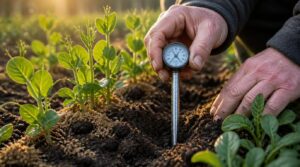
Before you sow a single seed, stick a soil thermometer probe 4–6 inches deep and actually read it.
Here’s what to watch for:
- 40°F minimum — the floor for cool-season germination
- 45–55°F sweet spot — ideal for peas and spinach
- Sandy soils warm faster than clay, so check both if your garden has mixed texture
Take readings in a few spots and average them — microclimates are real.
Plant Before Last Frost
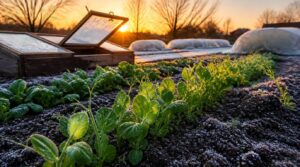
Now that you know your soil’s ready, timing your planting around the last frost date is your next move.
Cool-season crops like peas and spinach handle light frosts — down to 28°F — but young seedlings still need a little backup.
| Protection Method | Benefit |
|---|---|
| Row covers | Guard against freezing nights |
| Cold frames | Create a warmer microclimate |
Plant 2–3 weeks before your last expected frost, and you’re golden.
Use Succession Planting
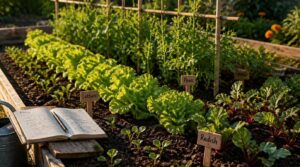
Once you’ve nailed your frost timing, succession planting is what keeps your garden from going feast-or-famine.
- Sow radishes every 2–3 weeks
- Stagger lettuce rounds for cut-and-come-again cycles
- Follow peas with a quick beet sowing
- Record dates so gaps don’t sneak up on you
- Rotate cool-season crops through beds between rounds
Water Consistently
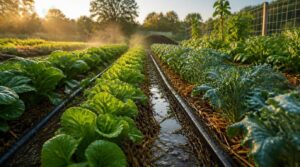
Succession planting keeps crops coming — but none of that matters if your soil dries out between sowings. Consistent moisture is what ties it all together.
Aim for soil that feels like a wrung-out sponge. Use drip irrigation or soaker hoses to deliver water slowly at root level, and mulch your beds to lock that moisture in and prevent surface crusting.
Water early in the day.
Harvest at Peak Size
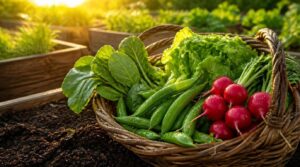
Don’t wait too long — that’s where most gardeners lose the game. Radishes peak at 1 to 1.5 inches across, peas when pods are plump and glossy, and lettuce before it bolts and turns bitter.
Harvest in the morning while plants are cool, then refrigerate quickly to lock in crispness. Pick often. Picking signals the plant to produce more.
Frequently Asked Questions (FAQs)
What vegetables can you plant in the spring?
Spring is prime time for cool-season vegetables — peas, radishes, lettuce, spinach, and green onions all thrive before summer heat arrives. Most go straight into the ground as soon as soil hits 40°F.
How do you grow vegetables in spring?
Start when the soil hits 40 °F — most cool-season seeds won’t even try below that. Till in compost, check your pH (aim for 0–0), and you’re ready.
Which vegetables should you plant in the ground first?
The cold-hardy crowd goes in first — peas, radishes, spinach, lettuce, and green onions. These thrive in 40–50°F soil and tolerate light frosts, giving you a head start weeks before warmer crops even think about going outside.
Is spring a good time to grow vegetables?
Yes — spring is one of the best times to grow vegetables. Soil warms to 45–60 °F, moisture stays consistent, and cool-season crops thrive in the mild days before summer heat arrives.
What is the easiest vegetable to grow in spring?
Radishes are your best bet. They go from seed to harvest in 25 days, need almost no fuss, and they’ll grow happily in any loose, cool spring soil.
When should I start planting spring vegetables?
Spring planting kicks off as soon as your soil hits 45–50 °F — usually 4–6 weeks before your last frost date. Grab a soil thermometer and don’t guess.
What vegetables to plant first in spring?
Start with peas, radishes, and spinach — they handle light frosts and germinate once soil hits 40–45 °F. Radishes are ready in 25 days. Hard to beat that kind of speed.
What is the 70 30 rule for gardening?
Think of your garden like a band — 70% reliable rhythm section, 30% flashy solos. Perennials anchor the space; seasonal fillers add the spark. Less chaos, more harvest.
What vegetables do I plant in October?
October is prime time for cool-season vegetables. Sow spinach, lettuce, radishes, and kale now. Tuck in autumn garlic planting too — it roots all winter and rewards you come July.
What vegetables should I plant in spring?
Funny how spring and a good garden plan arrive at the same time. Cool-season vegetables like peas, radishes, lettuce, and spinach are your best first bets.
Conclusion
Spring is calling—you’d better kale it while you can. The best spring vegetables to plant are already out there waiting, and every week you delay is a week without fresh food from your own soil.
Start with peas and radishes. Layer in leafy greens. Check your soil temp, plant before that last frost, and keep the water steady.
A little effort now means a table full of food that actually tastes like something.
- https://yardandgarden.extension.iastate.edu/how-to/early-spring-planting-vegetables
- https://www.almanac.com/soil-temperature-chart
- https://scottsmiraclegro.com/en-us/learn/gardening/veggies-that-prefer-cool-weather.html
- https://gardenbetty.com/cold-hardy-vegetables
- https://www.creativevegetablegardener.com/frost-tolerant-vegetables