
This site is supported by our readers. We may earn a commission, at no cost to you, if you purchase through links.

Zucchini has a way of humbling even experienced gardeners. One week you’re watching a slender, glossy fruit develop perfectly—and three days later, it’s a baseball bat you can barely lift. That window between ideal and overripe closes faster than most people expect.
The timing isn’t arbitrary. Flavor, texture, and plant productivity are all tied directly to when you cut that fruit from the vine. Miss the peak, and you’re not just stuck with watery, seed-heavy flesh—you’re also signaling the plant to slow down and stop producing.
Knowing the best time to harvest zucchini means reading both the fruit and the plant. Size, skin texture, blossom behavior, and even the time of day all factor in.
Table Of Contents
- Key Takeaways
- Best Time to Harvest Zucchini
- Signs Zucchini is Ready
- Harvest Sizes by Zucchini Type
- How to Pick Zucchini
- Keep Plants Producing Longer
- Frequently Asked Questions (FAQs)
- When should you harvest zucchini?
- When is zucchini Harvest Day?
- Can you harvest zucchini fruit from a plant?
- How long should a zucchini plant be?
- When to harvest zucchini?
- When is the best time to pick zucchini?
- Does harvest time affect the taste of zucchini?
- How often should you pick zucchini?
- Can you harvest small zucchini?
- When should I plant zucchini?
- Conclusion
Key Takeaways
- Harvest zucchini at 6 to 8 inches long, 45 to 60 days after sowing, to capture peak flavor, tender texture, and the highest sugar concentration in the flesh.
- Morning is the best time to pick — cooler temperatures keep fruit firm, moisture retention high, and flavor compounds intact before midday heat takes over.
- Leaving fruit on the vine past its prime doesn’t just ruin that zucchini — it signals the plant to stop flowering and redirects energy away from new production.
- Picking every one to two days during peak season is the single most effective way to keep a zucchini plant continuously productive through the entire growing season.
Best Time to Harvest Zucchini

Knowing when to harvest zucchini makes all the difference between tender, flavorful fruit and a plant that stops producing altogether. Timing isn’t just about the calendar — it depends on a few key factors working together. Here’s what to pay attention to so you don’t miss that sweet spot.
Each variety ripens on its own schedule, so checking zucchini harvest timing by variety can help you catch that narrow window before the squash turns seedy and tough.
45 to 60 Days
Most zucchini varieties reach harvestable size 45 to 60 days after sowing. ‘Black Beauty’ and ‘Emerald Delight’ are ready in 50 to 55 days, while ‘Round Zucchini’ matures faster at 45.
Think of this window like a focused skill-building cycle — consistent attention yields real results. Mark your sowing date, then start checking plants daily as that time approaches.
Morning Harvests
Once you’ve marked that 45-to-60-day window on your calendar, timing within the day matters too. Harvest zucchini in the morning, when cooler air slows respiration and overnight hydration keeps fruit firm and crisp.
Lower temperatures preserve flavor compounds and vitamin C before midday heat shifts them. Your cuts will be cleaner, moisture retention higher, and the fruit simply tastes better. Plus, picking early helps maintain peak nutrient retention throughout the produce.
Dry Weather Picking
Timing isn’t just about the hour — conditions matter too. When you harvest zucchini in dry weather, skin firmness stays intact, making clean cuts easier and reducing crushed stems.
- Dry surfaces limit moisture-related decay during short-term storage
- Lower surface moisture improves handling fruit quality
- Quick sap drying after cutting keeps field sanitation straightforward
Pick after sun and a light breeze for best results.
Daily Plant Checks
Daily checks are what separate a productive harvest from a missed one. Each morning, scan leaves for yellowing or spots, press the top inch of soil to confirm it’s moist but not waterlogged, and flip leaves to inspect undersides for aphids or mites.
Track temperature around the canopy too — consistent conditions directly support steady fruit ripening and reliable plant maturity.
Peak Flavor Window
The peak flavor window lasts only a few days, when sugar content rises, acidity softens, and aroma compounds reach their highest concentration in the flesh. At 6 to 8 inches long, the skin stays tender and the bite is juicy.
Zucchini’s peak flavor lasts just days — catch it at 6 to 8 inches, when the bite is juicy and the skin still yields
Wait beyond that, and enzymatic changes accelerate — texture turns spongy, aroma fades, and the fruit loses its best flavor fast.
Signs Zucchini is Ready
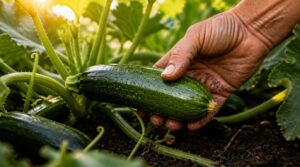
Zucchini doesn’t announce itself — you have to know what to look for. A few reliable signals tell you when the fruit is at its best, before it slips past peak and starts working against your plant. Here are the key signs to check on every pass through the garden.
6 to 8 Inches
For most standard elongated varieties, 6 to 8 inches is the sweet spot you’re aiming for when you harvest zucchini. At this size, the skin holds a satisfying glossiness, flesh stays pale and tender near the center, and seeds are barely noticeable — all signs of peak perfect flesh texture.
Once you know what to look for, spotting the difference between peak and past-prime is easy — this guide to harvesting zucchini at the right time walks through every visual cue worth checking before you cut.
Flavor sweetness peaks here too, making culinary versatility a breeze whether you’re roasting, sautéing, or stuffing.
Firm, Tender Skin
Run your thumbnail gently across the rind — it should resist denting while still feeling smooth and elastic. That tender-crisp texture tells you the skin is acting as a natural moisture barrier, keeping internal flesh firm and flavorful.
When you cut the fruit from the plant at this stage, the edible skin holds its integrity through handling, storage, and the plate.
Mature Cultivar Color
Color is your cultivar’s signature. Black Beauty runs deep forest green, while Emerald Delight leans slightly lighter. Round Zucchini shifts toward pale to mid-green at peak ripeness. Each variety tells you when it’s ready — but only if you know what you’re looking for.
A uniform hue across the skin signals balanced pigment development. Patchy or faded areas often mean the fruit isn’t quite there yet.
Blossom Falls Easily
Watch the tip of the fruit — when the blossom detaches with barely a touch, the zucchini is telling you it’s ready. Postpollination senescence naturally loosens the flower as fruit development completes.
Windy days or light handling can pull it free even sooner. If it clings stubbornly, give the fruit another day before cutting.
Avoid Oversized Fruit
A zucchini left too long becomes a liability. Once past 8 inches, flavor dilution sets in — sugars spread thin, flesh turns watery, and the rind toughens beyond ideal tenderness.
Worse, oversized fruit diverts plant energy away from new blossoms, stalling your crop yield. Seed buildup also degrades texture, and large fruit stores poorly. Pick promptly.
Harvest Sizes by Zucchini Type

Not all zucchini are built the same, and the right harvest size depends entirely on which type you’re growing. Picking at the wrong size means missing peak flavor or accidentally stalling your plant’s production. Here’s what to look for across the most common varieties.
Elongated Zucchini Size
Most elongated varieties hit their sweet spot at 8 to 12 inches long, with a diameter of roughly 1.5 to 2.5 inches. At that size, the flesh stays tender, the seeds remain immature, and the skin yields just enough under light pressure.
That cylindrical profile isn’t just aesthetically tidy — it means uniform slices every time, whether you’re roasting, grilling, or sautéing.
Round Zucchini Size
Round zucchini summer squash plays by different rules. Harvest at 3 to 4 inches in diameter — roughly the size of a tennis ball — when the skin stays dark green, smooth, and firm under light pressure.
- Weight usually falls between 0.5 and 1.5 pounds at peak
- Flesh turns fibrous past 5 inches diameter
- Thin, edible skin signals ideal harvest dimensions
Miss that window, and you’re left stuffing a sponge.
Pattypan Squash Size
Pattypan’s scalloped disc shape changes the sizing game entirely. Aim for 3 to 4 inches in diameter while the skin stays pale and firm under light pressure.
| Variety | Ideal Diameter | Best Culinary Use |
|---|---|---|
| White pattypan | 2–3 inches | Stuffing whole |
| Yellow pattypan | 3–4 inches | Sautéing or roasting |
| Dwarf cultivars | 1.5–2.5 inches | Roasting whole |
Past 4 inches, flesh turns fibrous fast.
Baby Zucchini Picking
Baby zucchini demands a different standard — pick at 4 to 5 inches, while the skin stays glossy and firm under light pressure.
- Harvest in the morning after dew dries for peak crispness.
- Check plants daily since warm days push rapid growth.
- Look for vibrant, glossy skin matching your cultivar’s color.
- Cut the stem cleanly; never twist the fruit free.
Overripe Zucchini Clues
Once a zucchini passes its window, the signs are hard to miss. Skin sheen loss is the first red flag — that glossy surface dulls and the color flattens noticeably. Press the rind, and you’ll feel tough skin texture instead of the slight give that signals peak ripeness.
Inside, large seed development and fibrous flesh quality make cooking frustrating, draining moisture fast and turning stringy.
How to Pick Zucchini
Picking zucchini the right way protects your plant just as much as it benefits your harvest. A few simple habits — the tools you use, how you cut, and where you look — make a real difference in keeping vines healthy and productive. Here’s what to keep in mind each time you head out to harvest.
Use Sharp Garden Snips
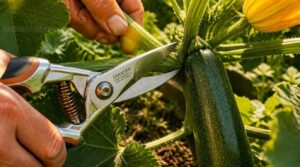
The right tool makes all the difference in zucchini harvesting. High carbon stainless steel blades stay sharp through repeated cuts and resist corrosion season after season.
Three reasons sharp snips outperform bare hands:
- Clean cuts reduce disease entry at wound sites
- Micro tip blades reach stems precisely without disturbing nearby fruit
- Ergonomic grips reduce hand fatigue during extended vegetable gardening sessions
Keep your snips oiled, dry, and ready.
Cut Above Fruit Stem
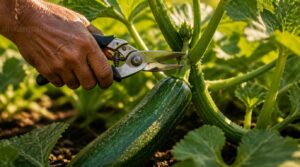
Grip your bypass pruners and hold the blade perpendicular to the stem, then cut about one inch above the fruit. That angle limits exposed inner tissue, protecting the vascular system of your zucchini plant and allowing the cut site to heal faster. Sterilize your blades with diluted bleach or alcohol between cuts to stop pathogens from spreading across plants.
| Cut Method | Vascular Damage | Healing Speed |
|---|---|---|
| Perpendicular cut | Minimal | Fast |
| Angled cut | Moderate | Moderate |
| Torn by hand | Severe | Slow |
Avoid Twisting Vines
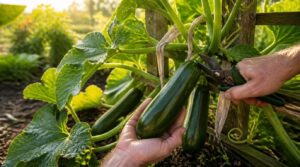
When you twist a vine to free a zucchini, you risk girdling the stem — compressing the vascular tissue that carries water and nutrients to developing fruit. That torsional stress cracks bark, slows healing, and can stop production mid-season.
Guide stems along trellises using soft plant ties, letting tendrils grip naturally. Let the plant climb; don’t force it.
Check Under Large Leaves

Large leaves are natural hiding spots. The underside of foliage stays cooler and more humid, sheltering spider mites, aphids, and hidden fruit from view.
Lift leaves gently along the stem and tilt slowly to inspect below:
- Look for webbing or pale stippling — early signs of mite activity
- Check for sticky honeydew residue indicating aphid or scale feeding
- Use a 10x magnifying glass to spot minute pests before infestations spread
Remove Hidden Fruit

Zucchini squash can double in size within 24 hours, so hidden fruit left unchecked quietly drains the plant’s energy. Removing hidden fruit promptly keeps zucchini plants focused on new fruit production rather than feeding oversized, forgotten squash buried in the canopy.
During morning harvests, when light is diffused and shadows are softer, bend aside large leaves and feel along stems for smooth, firm surfaces.
Keep Plants Producing Longer

Zucchini plants are wired to keep producing, but only if you keep up with them. The moment fruit is left too long on the vine, the whole plant shifts its energy toward seed development and slows down. A few consistent habits are all it takes to keep that harvest coming all season long.
Harvest Often
The more you pick, the more your plant gives back — that’s the main idea behind continuous yield strategies for high yielding zucchini.
Regular harvesting signals zucchini plants to keep setting new flowers rather than pouring energy into maturing existing fruit. Aim to harvest every one to two days during peak season.
A simple routine makes all the difference:
- Check plants each morning before heat sets in
- Pull fruit at 6–8 inches for best flavor
- Never skip a day during peak production cycles
Remove Oversized Zucchini
When a zucchini swells past 12 inches, it shifts from productive to parasitic — the plant stops flowering and funnels everything into that one oversized fruit. Cut it off immediately, even if you can’t use it right away.
Oversized fruit loses flavor concentration and develops tough seeds, bitter skin, and watery flesh. If you do cook it, squeeze out moisture first and peel the thick rind.
Protect Developing Blossoms
Once oversized zucchini is gone, protect developing blossoms — both the large male and female flowers — to keep production rolling.
- Mulch the base to stabilize root temperature
- Cover flowering stems with frost cloth before a freeze
- Remove covers at dawn for pollinators and airflow
- Install row covers against hail and wind
- Check open blooms for aphids and thrips
Water Consistently
Blossoms need stable roots as much as they need overhead protection. Consistent soil moisture — one to two inches per week — keeps your zucchini flowering and fruiting without interruption. Drip irrigation delivers water directly to the root zone, cutting waste and maintaining even soil moisture. Water early in the day, and lay straw mulch around the base to slow surface evaporation.
| Method | Key Benefit | Best Used For |
|---|---|---|
| Drip irrigation | Targets root zone, reduces waste | All soil types |
| Soaker hose | Even, low-pressure distribution | Row planting |
| Morning watering | Foliage dries before nightfall | Disease prevention |
| Straw mulching | Slows evaporation, steadies moisture | Sandy, fast-draining soils |
| Soil moisture meter | Tracks root-zone levels accurately | Hot spells and heat waves |
Store Harvest Properly
Good storage starts the moment you bring zucchini in from the garden. Keep it unwashed in perforated plastic bags in the crisper drawer, away from ethylene-producing fruits like bananas, and it’ll stay firm for up to seven days.
For longer shelf life, blanch slices for one to three minutes, cool them in an ice bath, then freeze in airtight bags for up to three months.
Frequently Asked Questions (FAQs)
When should you harvest zucchini?
Miss the window by even a single day, and a tender 6-inch fruit can swell into something woody and seedy. Harvest zucchini 45 to 60 days after sowing, checking vines daily during the peak season.
When is zucchini Harvest Day?
Harvest Day lands somewhere between 45 and 60 days after planting. Check your plants every one to two days once that window opens — zucchini can double in size overnight.
Can you harvest zucchini fruit from a plant?
Yes, you absolutely can — and a single prolific zucchini plant can produce 30 to 40 fruits per season. Regular harvesting keeps the plant productive and ensures you’re pulling zucchini at peak flavor.
How long should a zucchini plant be?
Bush varieties stay under 2 feet wide, while vining types can sprawl 3 to 4 feet or stretch 6 feet when trellised. Variety choice determines spread more than height.
When to harvest zucchini?
Think of zucchini like a ticking clock — wait too long and the window closes fast. Pick 6 to 8 inches long, 45 to 55 days after planting, ideally in the morning for peak firmness and flavor.
When is the best time to pick zucchini?
Morning hours are ideal — fruits are cool, firm, and at peak texture. Aim to pick when zucchini reach 6 to 8 inches, before heat accelerates growth and toughens the skin.
Does harvest time affect the taste of zucchini?
Two zucchini from the same plant can taste remarkably different. Harvest timing shapes flavor, texture, and moisture — fruits picked at 6 to 8 inches deliver tender, mild flesh, while overripe ones turn bitter and spongy.
How often should you pick zucchini?
Pick zucchini every 2 to 3 days during peak season. That frequency keeps the plant redirecting energy into new fruit rather than swelling a few oversized ones past their prime.
Can you harvest small zucchini?
Yes, you can harvest small zucchini. Baby zucchini, picked at 4 to 5 inches, offer a tender-crisp texture and delicate flavor that larger fruit simply can’t match — making early harvest a smart culinary choice.
When should I plant zucchini?
Plant zucchini once soil temperatures reach 65–70°F and your last frost date has passed. In most temperate zones, that means mid to late spring, when the ground is consistently warm enough for reliable germination.
Conclusion
Zucchini won’t wait a lifetime—it practically doubles overnight if you blink. Knowing the best time to harvest zucchini is what separates a productive, generous plant from one quietly shutting down under the weight of forgotten fruit.
Cut early, cut often. Every zucchini you pull at peak size is an instruction to the plant: keep going. Stay consistent, stay attentive, and your garden will reward that discipline with harvests that last the entire season.