This site is supported by our readers. We may earn a commission, at no cost to you, if you purchase through links.

Planting a fruit tree at the wrong time can set it back an entire growing season—or worse, leave it struggling to survive. The difference between a thriving orchard and a year of disappointment often comes down to a few critical weeks on the calendar.
Most growers assume spring is the universal answer, but soil temperature, dormancy cycles, and regional climate patterns tell a more nuanced story. Bare-root trees demand precision timing, while container-grown stock offers more flexibility, yet both require you to work with nature’s rhythms rather than against them.
Understanding when your specific tree type, rootstock, and local conditions align creates the foundation for strong root development, minimal transplant stress, and fruit production that starts years ahead of poorly timed plantings.
Table Of Contents
- Key Takeaways
- Best Time to Plant Fruit Trees
- Planting Bare-Root Vs. Container-Grown Trees
- Regional and Climate Considerations
- Choosing and Preparing Fruit Trees
- Preparing Site and Caring for New Trees
- Frequently Asked Questions (FAQs)
- What month is good to plant fruit trees?
- Is it better to plant fruit trees in the fall or spring?
- What is the easiest fruit tree to grow?
- What not to plant next to fruit trees?
- What month should fruit trees be planted?
- What month is best to plant fruits?
- Is it better to plant fruit trees in the spring or fall?
- What is the fastest fruit tree to plant?
- How far apart should fruit trees be planted?
- Can I graft fruit trees after planting?
- Conclusion
Key Takeaways
- Bare-root trees demand precise dormant-season planting (late winter through early spring in most zones) to achieve 77% survival rates, while container-grown trees offer year-round flexibility with lower transplant stress.
- Soil temperature above 10°C triggers root growth before shoots emerge, making this threshold more critical than calendar dates for establishing strong root systems that support future fruit production.
- Regional climate dictates whether spring or fall planting succeeds—cold zones (3-7) favor early spring to maximize growing season, while warmer regions benefit from fall’s cooler conditions that encourage root expansion before dormancy.
- Late spring and summer planting expose trees to heat stress, shallow root development, and increased pest vulnerability that can set back production by an entire season or more.
Best Time to Plant Fruit Trees
Timing makes all the difference when planting fruit trees, shaping how well they settle in and start to grow. Certain windows in the year offer clear advantages, while others can hold them back before they even begin.
Here’s what you’ll want to think about as you weigh your best options.
Early Spring Vs. Fall Planting
When you weigh early spring planting against fall planting, think about root establishment, climate suitability, and your region’s rhythms. Early spring favors strong root growth as trees wake. Fall planting encourages root expansion before dormancy. Regional variations matter, so pay heed to local planting time. Planting in the fall allows for winter root growth, giving trees a head start.
Your priorities should center on:
- Dormancy advantages
- Consistent watering needs
- Adapting to seasonal planting windows
Dormancy and Transplant Stress
Understanding dormancy stages helps you avoid transplant shock and build stronger trees. When you plant bare-root trees during their dormancy period, survival rates climb to 77%, since roots endure less desiccation and stress.
Planting bare-root trees during dormancy greatly boosts survival, helping them avoid shock and build stronger roots
Chilling requirements matter too—apples need 800 to 1750 hours between 32°F and 45°F, while peaches require 375 to 1000 hours. Understanding fruit tree dormancy is key to successful planting.
Managing transplant stress through dormant planting minimizes root damage and sets your trees up for success.
Avoiding Late Spring and Summer Planting
Planting fruit trees in late spring or summer sets them up for struggle. Summer heat puts fresh roots at risk for heat stress, root rot danger, and watering challenges.
Environmental stress often brings increased pest vulnerability and lower yields. Unlike dormant planting, late starts can trigger transplant shock and cause shallow root development, making it much tougher for your trees to thrive.
Planting Bare-Root Vs. Container-Grown Trees

When you’re deciding between bare-root and container-grown fruit trees, the planting window changes considerably. Bare-root trees demand a tighter schedule since they’re sold dormant and need to go into the ground before they wake up for spring.
Container-grown trees offer more breathing room, but that flexibility doesn’t mean the timing stops mattering.
Ideal Planting Windows for Bare-Root Trees
Ever noticed how bareroot trees come bundled up, dormant and waiting for the right moment? The best planting time hinges on Dormancy Importance and local Soil Temperature. Early spring, as soon as the ground is workable, gives roots a head start. Regional Variations matter: in some areas, fall planting works if handled swiftly.
| Zone | Preferred Window | Dormancy Status |
|---|---|---|
| Zone 3–5 | Mid-March–Early April | Fully dormant |
| Zone 6–7 | Feb.–Mid March (Spring) / Nov. (Fall) | Strictly dormant |
| Zone 8–9 | Nov.–Dec. (Fall) | Always dormant |
| All Zones | After thaw, before bud break | Dormancy critical |
| All Zones | Soil above freezing | Essential for roots |
Flexibility With Container-Grown Trees
With containergrown trees, you gain real year-round planting flexibility. Since their roots stay undisturbed, they adapt quickly and experience minimal transplant stress—ideal for spring or fall planting, even as local climate shifts. This adaptability, along with easier handling, lets you choose the best planting time for root establishment to suit regional species needs.
| Attribute | Bare-Root Trees | Container-Grown Trees |
|---|---|---|
| Planting Time | Dormant period | Year-round |
| Handling Flexibility | Moderate | High |
| Transplant Stress | Higher | Lower |
| Root Establishment | Slower | Faster |
| Regional Species Fit | Limited | Broad |
Regional Recommendations for Each Type
Across the country, regional variations shape planting decisions for both bare-root and container-grown fruit trees. In maritime climates and much of the northern U.S.—USDA zones 3–7—bare-root trees thrive in early spring, while in Mediterranean climates, subtropical regions, and tropical zones, the local climate and containerized stock allow for broader, state-specific planting advice.
| Climate Zone | Best Option |
|---|---|
| USDA 3–7 | Spring Bare-Root |
| Maritime Climates | Fall to early Spring |
| Mediterranean | Winter/Early Spring Bare-Root |
| Subtropical Regions | Spring Container-Grown |
| Tropical Regions | Year-Round Container-Grown |
Regional and Climate Considerations
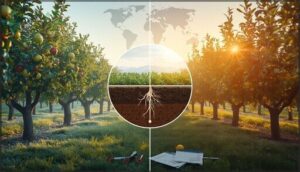
Where you plant makes all the difference for fruit trees. Your local climate, soil temperature, and the risk of late frosts all play a part in getting the timing right.
Here’s what you’ll want to keep in mind as you plan your planting.
USDA Hardiness Zones and Planting Dates
Ever wonder why Zone-Specific Dates matter for planting fruit trees? USDA Hardiness Zones set the baseline, but Regional Variations, Microclimate Impact, and First Frost dates improve your approach.
Follow these guidelines:
- Match hardiness zone planting times.
- Monitor local frost dates.
- Count Chill Hours for your variety.
- Adjust Planting Times using Climate Zones.
Local Soil Temperature and Rainfall Patterns
Soil temperature thresholds dictate root growth more than calendar dates. When soil warms above 10°C in spring, roots start growing before shoots, making spring planting ideal. Root system architecture develops fastest when conditions match your tree’s needs.
Rainfall distribution effects determine moisture availability, so monitor soil moisture during dry spells. Seasonal planting schedules work best when you align them with local climate considerations, measuring soil temperature at planting depth.
Managing Frost and Freeze Risks
Spring frost damage poses your greatest risk when planting fruit trees, particularly as climate change advances bud break by 1-2 weeks while increasing late freeze frequency. Minimizing tree stress through strategic planting and frost protection methods preserves your investment.
- Check frost dates using interactive maps before scheduling planting
- Select varieties with varietal frost tolerance matched to your region’s late-bloom risks
- Apply frost protection like sprinkler systems or wind machines during vulnerable flowering stages
- Use breathable covers for cold weather protection on newly planted specimens
- Plant hardy stock after peak freeze windows to reduce cold damage exposure
Choosing and Preparing Fruit Trees
Picking the right tree is half the battle when it comes to successful planting. Not all fruit trees are created equal, and what works in one climate or garden might struggle in another.
Let’s walk through the key factors you’ll need to think about before you bring a tree home and put it in the ground.
Selecting Tree Size and Species
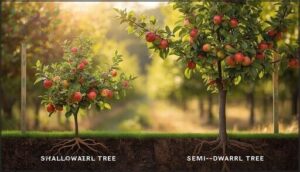
When selecting tree species and varieties, dwarf varieties offer a practical starting point if you’re managing limited space. These compact trees mature at 8-10 feet, requiring just 2-2.5 square meters, while semi-dwarf options reach 12-15 feet and need 4.5 square meters.
Rootstock influence directly affects tree size considerations, yield expectations, and lifespan considerations. Dwarf trees produce 1-4 bushels and live 20-30 years, whereas semi-dwarf varieties yield 5-10 bushels over 30-40 years.
Disease-Resistant and Climate-Suited Varieties

Breeding advances now deliver climate adaptation that matches your USDA hardiness zone, while disease-resistant varieties like scab-resistant apples cut pesticide applications by more than half.
Cultivar evaluation across 680 fruit tree varieties shows that low-chill peaches requiring 150–200 hours suit warming regions, whereas high-chill apples need 800–1000 hours.
Shifting suitability under climate zones demands you select tree varieties based on future, not just current, conditions.
Tree Inspection and Pre-Plant Storage
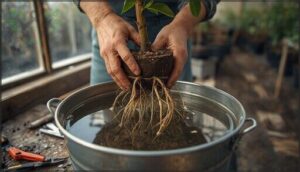
Once you’ve chosen your variety, inspect the tree before planting. Check for three critical zones:
- Root zone: Look for broken, circling, or damaged roots that need trimming back to sound tissue.
- Trunk base: Verify a visible flare; reject stock showing cankers or girdling.
- Canopy: Remove deadwood and assess overall vigor.
For bare-root trees, soak roots for 24–48 hours before planting—hydration methods matter. Store unplanted stock at 4°C in dark, cool spaces to maintain dormancy.
Container-grown trees need root inspection too; slice matted roots to encourage outward growth. Nursery standards require you to reject severely circling potted trees, since defects persist underground and compromise long-term stability.
Preparing Site and Caring for New Trees
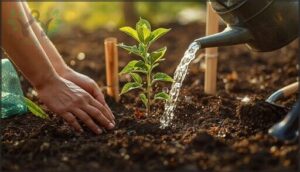
Getting your tree in the ground is just the beginning. What happens in those first few weeks and months can make or break establishment, so you’ll need a solid plan for water, nutrients, and protection.
Let’s walk through the essentials that give your young trees the best shot at thriving.
Watering and Fertilizing Newly Planted Trees
Though growth above ground may seem slow at first, watering fruit trees deeply at planting is essential. Over the first twelve weeks, keep soil moisture steady for root development—skip watering only after soaking rains. Hold off on fertilizer timing until you see new leaf growth, then select a balanced, granular mix. Always fertilize fruit trees away from the trunk.
| Initial Watering | Soil Moisture | Fertilizer Timing |
|---|---|---|
| Daily, then 2–3x weekly | Keep top 30 cm moist | Start after bud break |
| 15–38 L/week | Avoid waterlogging | Granular, balanced mix |
| Rainfall counts | Mulch helps retain | Apply at dripline |
| Check before watering | Root growth signals needs | Don’t over-fertilize |
Protecting Young Trees From Stress and Pests
Once your tree is watered and fed, turn your attention to pest control and tree health. Young bark is vulnerable to sunscald, rodent damage, and environmental stress during the establishment phase. Effective pest management reduces chemical risks while supporting long-term resilience.
To address these challenges, consider the following measures:
- Wrap trunks with white guards to prevent sunscald and pest entry
- Install ventilated barriers at soil level to block vole girdling
- Apply dormant oil sprays in early spring for scale insects
Frequently Asked Questions (FAQs)
What month is good to plant fruit trees?
For most regions, spring planting—usually in March or April—aligns with the ideal month for success, taking advantage of tree dormancy and workable soil conditions.
Still, regional variations and local frost dates shape the planting season each year.
Is it better to plant fruit trees in the fall or spring?
Think of fall and spring like rival starting lines: fall’s cooler soils boost root establishment in milder regions, while spring’s Dormancy Advantage lets roots wake gently in colder zones.
Local climate, timing, and watering needs drive the best choice.
What is the easiest fruit tree to grow?
Figs and Asian persimmons stand out as beginner-friendly trees because they need minimal sprays, tolerate containers well, and yield fruit within two seasons. Both self-fruitful options fit compact spaces better than cross-pollination-dependent apples.
What not to plant next to fruit trees?
Picture a thriving orchard choked by hidden invaders. Allelopathic species like black walnut, dense grass competition, brassica disruption of mycorrhizal networks, disease hosts such as junipers, and invasive herbs all threaten fruit trees when planted nearby.
What month should fruit trees be planted?
Your planting time depends on your climate and tree type. Bare-root stock goes dormant in late winter through early spring—February to April in zones 5–7—while container trees offer fall planting flexibility.
What month is best to plant fruits?
Your nursery calendar doesn’t care about your weekend plans—root growth does. The ideal month shifts by regional variations and dormancy impact: spring planting (March–April) suits colder zones, while fall planting works in milder climates.
Is it better to plant fruit trees in the spring or fall?
Your region determines whether spring or fall planting works best. Cold zones favor early spring for root establishment before heat arrives, while warmer climates often benefit from fall’s cooler conditions and reduced transplant stress.
What is the fastest fruit tree to plant?
If you’re keen for quick fruit production, papaya wins hands down. In warm climates, this tropical champion can deliver harvestable fruit in just seven to eleven months from germination—no other tree comes close to that growing season timeline.
How far apart should fruit trees be planted?
You might assume identical varieties need identical gaps, yet rootstock considerations completely reshape your layout. Dwarf tree spacing runs 6–10 feet, while standards demand 25–35 feet.
Climate adjustments, espalier spacing, and pollination distance further shape fruit tree planting guide decisions.
Can I graft fruit trees after planting?
You can graft fruit trees after planting, though most arborists recommend waiting at least one full growing season.
This delay allows root establishment to buffer stress, particularly when grafting timing, climate factors, and method suitability align for success.
Conclusion
Picture roots stretching into warming soil, anchoring your tree before summer’s demands arrive. Timing determines whether those roots establish quickly or spend months recovering from transplant shock.
The best time to plant fruit trees isn’t arbitrary—it’s when dormancy, soil conditions, and your climate converge to support vigorous growth. Master that window, respect your region’s patterns, and you’ll set the stage for harvests that reward precise planning with years of reliable production.
- https://www.jacksonandperkins.com/best-time-plant-fruit-trees/a/best-time-plant-fruit-trees/
- https://www.starkbros.com/growing-guide/article/fruit-tree-care-planting-in-your-zone
- https://waynesborogardens.com/2025/03/10/fruit-tree-planting-time/
- https://www.ftonly.com/planting.html
- https://raintreenursery.com/blogs/pnw-edible-plant-blog/when-to-plant-apple-trees