This site is supported by our readers. We may earn a commission, at no cost to you, if you purchase through links.
Your first harvest hits differently when you grew it yourself. Something about pulling a radish from soil you prepared, or snapping a bean from a vine you planted as a seed, rewires how you think about food.
Most beginners assume gardening demands expertise, expensive tools, or perfect conditions—but the right vegetable choices make that learning curve nearly invisible.
Radishes reach harvest size in 21–25 days. Kale shrugs off light frosts. Beans practically grow themselves.
Choosing the best vegetables for beginner gardeners isn’t about settling for easy—it’s about stacking early wins that build real confidence.
Table Of Contents
- Key Takeaways
- What Makes Vegetables Beginner-Friendly?
- Top 10 Beginner Vegetable Picks
- 1. The Old Farmers Almanac Cherry Belle Radish Seeds
- 2. Gardeners Basics Pumpkin Seed Variety
- 3. Organic Scarlet Nantes Carrot Seeds
- 4. Old Farmer’s Almanac Detroit Dark Red Beet Seeds
- 5. Burpee Three Color Bush Bean Seeds
- 6. Bonnie Green Bell Pepper Live Plants
- 7. Live Aromatic Edible Herb Assortment
- 8. Burpee Straight Eight Heirloom Cucumber Seeds
- 9. Sow Right Rainbow Swiss Chard Seeds
- 10. Burpee Kale Blend Seed Mix
- Best Growing Conditions for Beginners
- Simple Planting and Care Steps
- Harvesting and Storing First Crops
- Frequently Asked Questions (FAQs)
- What are the best vegetables to grow in a starter garden?
- What vegetables are good for lazy gardeners?
- What should I grow as a beginner gardener?
- What is the easiest vegetable garden for beginners?
- What is the most common mistake of first time gardeners?
- What do beginner gardeners need?
- How often should I water my vegetables?
- When is the best time to plant?
- What tools do beginner gardeners need most?
- How do I know when vegetables are ripe?
- Conclusion
Key Takeaways
- Radishes, bush beans, kale, and lettuce are your best starting picks — they’re fast, forgiving, and don’t need much to thrive.
- Speed matters early on: radishes are ready in 21–25 days, bush beans in 50–60 days, and that quick payoff keeps you motivated to keep going.
- Getting the basics right — 6+ hours of sun, loose well-draining soil, and 1–2 inches of water per week — does more for your garden than any fancy tool or product.
- Container gardening works surprisingly well for beginners, with shallow-rooted crops like lettuce and spinach thriving in just 6–8 inches of soil depth.
What Makes Vegetables Beginner-Friendly?
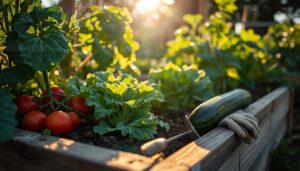
Not every vegetable plays nice with beginners, and that gap can make or break your first season. The good news is that a handful of clear traits separate the easy wins from the frustrating flops.
Knowing which traits to look for makes it easier to choose beginner-friendly vegetables that actually thrive without constant attention.
Here’s what to look for before you put a single seed in the ground.
Fast Growth and Quick Harvests
Start with radishes — they germinate in 5 to 10 days at 60 to 75°F and reach your plate in just 25 days. Providing well‑drained soil conditions helps radishes develop quickly.
That fast-growing nature is what makes quick‑harvest vegetables perfect for beginner gardeners.
Try staggered sowing every two weeks, dense planting to make the most of your space, and the pinch harvest technique on leafy greens. Succession planting keeps things coming all season long.
Low-maintenance Care Needs
Quick harvests feel great — but low-maintenance care is what keeps beginner gardeners coming back. Easy vegetables for beginner gardeners like beans, kale, and spinach genuinely don’t require much:
- Natural mulch manages weed suppression and locks in moisture
- Companion planting deters pests without sprays
- Low fertilizer use keeps root zone aeration steady and soil balanced
These low-maintenance crops for first-time growers practically look after themselves.
Tolerance for Variable Weather
Weather rarely cooperates — and that’s fine. The beginner vegetables handle temperature swing resilience naturally, shrugging off a surprise frost or sudden heat wave.
Cool-season crops like kale, a true cold-hardy superfood, tolerate dips to -2°C. Heat-loving summer crops like zucchini push through 30°C days.
strong sunlight variability handling, humidity fluctuation adaptation, and solid wind stress tolerance built in, these plants do the heavy lifting.
Pest and Disease Resilience
Good news — beginner vegetables come with built-in armor. Resistant Varieties naturally limit pest pressure, while Beneficial Microbes in healthy soil quietly outcompete root pathogens.
- Practice Integrated Pest Management with simple crop rotation
- Try Habitat Diversification by planting flowers nearby
- Use Soil Health Monitoring to catch problems early
- Apply organic pest management like Bacillus thuringiensis for caterpillars
- Pick pest resistant varieties for disease prevention in vegetable crops
Space-saving Growth Habits
Even a tiny balcony can feed you well. Vertical Stacking systems hold 3–5 containers per column, turning bare walls into productive space. Pocket Planters and Balcony Rail Gardens keep lettuce and herbs within arm’s reach. Square Foot Gardening and Intercropping Layers make the most of every inch, while container-friendly crops like radishes thrive in small spaces.
| Space-Saving Method | Best Crops | Space Required |
|---|---|---|
| Vertical Stacking | Lettuce, herbs | 2 sq ft floor space |
| Pocket Planters | Spinach, green onions | Wall-mounted, minimal |
| Balcony Rail Gardens | Radishes, low-maintenance herb blends | Railing width only |
| Square Foot Gardening | Beans, kale | 4×4 ft bed |
Top 10 Beginner Vegetable Picks
These ten picks take the guesswork out of your first garden season.
Each one is forgiving, fast-growing, and easy to find at most garden centers or online.
Here’s what made the cut.
1. The Old Farmers Almanac Cherry Belle Radish Seeds
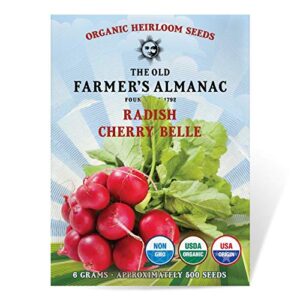
Few vegetables reward beginners faster than a radish, and the Old Farmer’s Almanac Cherry Belle is about as reliable as they come. These certified organic, heirloom seeds sprout in roughly 9 days and hit harvest-ready size — a crisp, 1‑inch round root — in just 21 to 25 days.
At $5.49 for 400 to 500 seeds, you get excellent value. Direct sow them ½ inch deep, keep the soil evenly moist, and they’ll reward you with mildly zesty, beautiful red‑skinned radishes perfect for salads or quick pickling.
| Best For | Home gardeners of any skill level who want fast, reliable harvests and a versatile radish for salads, roasting, or pickling. |
|---|---|
| Seed Type | Heirloom Open-Pollinated |
| Non-GMO | Yes |
| Days to Harvest | 21–28 days |
| USDA Zones | 4–9 |
| Price | $5.49 |
| Beginner Friendly | Yes |
| Additional Features |
|
- Sprouts in about 9 days and reaches harvest size in 3–4 weeks — one of the fastest vegetables you can grow
- Certified organic, non-GMO, and heirloom, so you know exactly what you’re planting
- Great value at $5.49 for up to 500 seeds, with a reported germination rate of 80–100%
- Flavor runs a bit hotter than milder radish varieties, which won’t be everyone’s cup of tea
- Needs consistently moist soil — skip the watering schedule and growth can suffer
- Germination isn’t perfectly even, so expect a few weaker seedlings in the mix
2. Gardeners Basics Pumpkin Seed Variety
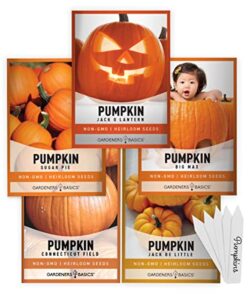
If you want a pumpkin patch that does double duty — decoration and dinner — the Gardeners Basics five-variety pack delivers both. You get heirloom, non-GMO seeds for Baby Boo, Sugar Pie, Jack Be Little, Jack O’Lantern, and Giant Big Max, all in one $9.95 pack.
To get the most out of these varieties, brush up on common vegetable garden mistakes and how to avoid them before your first seeds go in the ground.
Sow them directly after your last frost, give each hill 4 to 6 feet of space, and expect mature fruit in about 120 days.
Just make sure bees can reach your flowers, or plan to hand-pollinate.
| Best For | Home gardeners who want a mix of decorative and edible pumpkins — especially families looking for a fun seasonal project with something for everyone. |
|---|---|
| Seed Type | Heirloom Open-Pollinated |
| Non-GMO | Yes |
| Days to Harvest | ~120 days |
| USDA Zones | Not specified |
| Price | $9.95 |
| Beginner Friendly | Yes |
| Additional Features |
|
- Five varieties in one pack for under $10 — solid value if you want a diverse patch without buying multiple bags.
- Heirloom, non-GMO seeds you can save and replant year after year.
- Covers all the bases: tiny decorative pumpkins, classic carvers, and big showstoppers like Giant Big Max.
- You’ll need real estate — these vines spread wide and need a full 120-day season to finish.
- Germination rates are hit or miss; some gardeners get near-perfect sprouting, others see as low as 20%.
- Without bees nearby, you’ll need to hand-pollinate, which adds a step most beginners don’t expect.
3. Organic Scarlet Nantes Carrot Seeds
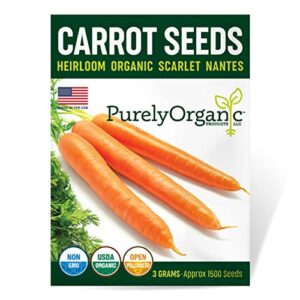
Carrots have a reputation for being fussy, but Scarlet Nantes makes that worry disappear. These USDA-certified organic, heirloom seeds trace back to 1850s France — and they still deliver.
Sow them ½ inch deep in loose, well-drained soil about 3–5 weeks before your last frost.
Each packet holds roughly 1,500–1,800 seeds, so you’ll have plenty to work with.
Expect 7‑inch, nearly coreless roots in about 70 days — sweet, crisp, and perfect for snacking straight from the garden.
| Best For | Home gardeners who want a reliable, sweet heirloom carrot that works well for snacking, juicing, and cooking — especially those growing organic. |
|---|---|
| Seed Type | Heirloom Open-Pollinated |
| Non-GMO | Yes |
| Days to Harvest | ~70 days |
| USDA Zones | Not specified |
| Price | Not listed |
| Beginner Friendly | Yes |
| Additional Features |
|
- USDA-certified organic and non-GMO, so you know exactly what you’re growing
- Up to 1,800 seeds per packet gives you serious coverage without buying multiple packs
- A light frost actually improves the flavor — great for fall harvests
- Needs loose, well-prepared soil to thrive; heavy or compacted ground will slow things down
- Takes more time to mature than some modern varieties, and thinning is a must
- A small number of growers report spotty germination, so planting conditions really do matter
4. Old Farmer’s Almanac Detroit Dark Red Beet Seeds
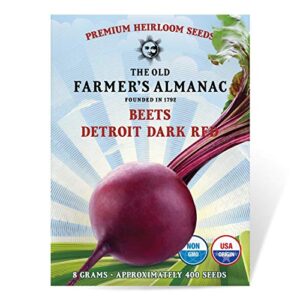
Beets pull double duty in the garden — you get the root and the greens. The Old Farmer’s Almanac Detroit Dark Red variety is an heirloom classic that’s surprisingly forgiving for first-timers.
Each $6.49 packet holds about 360 seeds, and you can sow every 2–3 weeks for a continuous harvest. Roots reach 2–3 inches in 55–70 days. The deep-green tops cook just like spinach. Watch for leaf black spots — a simple Borax solution fixes that fast.
| Best For | Home gardeners who want a reliable, low-fuss crop that delivers both roots and greens from a single planting. |
|---|---|
| Seed Type | Heirloom Open-Pollinated |
| Non-GMO | Yes |
| Days to Harvest | 45–55 days |
| USDA Zones | Not specified |
| Price | $6.49 |
| Beginner Friendly | Yes |
| Additional Features |
|
- Around 360 seeds for $6.49 is solid value — plenty of room to stagger sowings every 2–3 weeks for a steady harvest
- Heirloom, open-pollinated variety means you can save seeds year after year
- The edible tops are a bonus harvest — cook them just like spinach or Swiss chard
- Cool-weather crop only — summer heat will hurt your yield, so timing matters
- Needs proper spacing for those 2–3 inch roots, which eats up more bed space than you might expect
- Can’t rush the planting — put them in too early before frost danger passes and germination takes a hit
5. Burpee Three Color Bush Bean Seeds
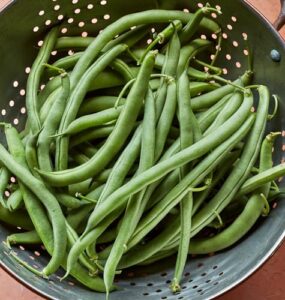
Three colors in one harvest — that’s what makes the Burpee Three Color Bush Bean Seeds stand out on any beginner’s list.
Purple, yellow, and green pods all come from the same planting, and they’re ready in about 50–60 days.
Plants stay compact at 18–24 inches, so no trellising needed.
Space seeds 4–6 inches apart and keep the soil evenly moist.
Harvest frequently once pods reach 4–6 inches — the more you pick, the more they produce.
| Best For | Home gardeners with limited space who want a quick, easy harvest without the hassle of building trellises or supports. |
|---|---|
| Seed Type | Heirloom Open-Pollinated |
| Non-GMO | Yes |
| Days to Harvest | ~58 days |
| USDA Zones | 1–11 |
| Price | $4.95 |
| Beginner Friendly | Yes |
| Additional Features |
|
- Ready to pick in about 58 days, so you’re not waiting all season
- Compact plants (~15 inches tall) work great in containers or small garden beds
- Non-GMO heirloom variety with mild, sweet flavor — good fresh or frozen
- Germination can be hit or miss; some growers report rates as low as 10%
- Pods have strings, which adds prep time for canning or eating whole
- A few plants may develop a light vining habit and need a small stake for support
6. Bonnie Green Bell Pepper Live Plants
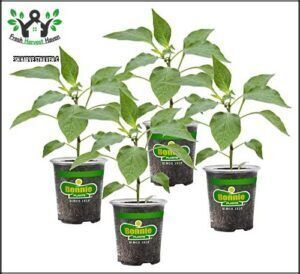
After beans, it’s nice to step up to something that rewards patience — and bell peppers do exactly that.
The Bonnie Green Bell Pepper Live Plants come as a 4-plant pack, already 2–3 feet tall and ready to go in the ground or a 12–18 inch pot. You’re looking at 75–83 days to harvest. Give them full sun, consistent moisture, and a cage for support as fruits fill out. Expect crisp, 4.5-inch peppers, great for fresh eating or stir-fries.
| Best For | Home gardeners and families who want a high-yielding pepper plant that works just as well in a container on the patio as it does in a full garden bed. |
|---|---|
| Seed Type | Live Plant (Non-GMO) |
| Non-GMO | Yes |
| Days to Harvest | 75–83 days |
| USDA Zones | Not specified |
| Price | $25.44 |
| Beginner Friendly | Yes |
| Additional Features |
|
- Already 2–3 feet tall when they arrive, so you’re not starting from scratch — just plant and go
- Produces big, crunchy peppers that are great straight off the plant or tossed into a stir-fry
- Works well in pots, making it a solid pick if you’re short on yard space
- Plants can show up a little stressed from shipping and may need some TLC right away
- Fruits get heavy, so you’ll need a cage or stake to keep branches from snapping
- Results can vary if your climate runs hot and dry or your soil doesn’t drain well
7. Live Aromatic Edible Herb Assortment

peppers test your patience, herbs reward it daily. The Live Aromatic Herb Assortment gives you six fully rooted plants — rosemary, lavender, mint, lemon balm, thyme, and more — for $29.23.
Set them on a sunny windowsill or balcony, and you’ll be clipping fresh leaves within days.
Rosemary pairs beautifully with roasted potatoes, mint brightens teas, and lavender blossoms go straight into syrups. Keep mint contained — it spreads fast — and make sure all six get good drainage and bright sun.
| Best For | Home cooks and beginner gardeners who want fresh herbs on hand without starting from seed. |
|---|---|
| Seed Type | Live Plant (Assorted) |
| Non-GMO | Yes |
| Days to Harvest | Varies |
| USDA Zones | Not specified |
| Price | $29.23 |
| Beginner Friendly | Yes |
| Additional Features |
|
- Six fully rooted plants ready to use right away — great for cooking, teas, or just making your space smell nice.
- At $29.23, you’re getting a solid variety of aromatic herbs without hunting them down individually at a nursery.
- Works well on a windowsill or balcony, so you don’t need a yard or much space at all.
- The plant mix rotates weekly, so what shows up may not match the photos or what you were hoping for.
- Shipping can stress delicate herbs like mint and sage — some arrive wilted or damaged and need immediate attention.
- Budget a little extra for soil, bigger pots, and nutrients, since the plants will likely outgrow the starter packaging quickly.
8. Burpee Straight Eight Heirloom Cucumber Seeds
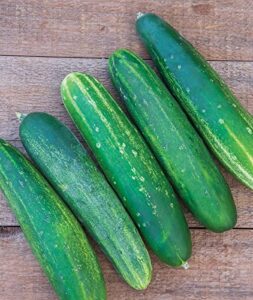
If herbs are the daily reward, cucumbers are the summer payoff. Burpee’s Straight Eight Heirloom Cucumber seeds give you crisp, uniform 8-inch fruits in about 58 days.
This All-America Selections winner grows compact 6-inch vines that spread roughly 36 inches, so a trellis or fence netting keeps things tidy.
Sow seeds directly outdoors 4 weeks after your last frost in full sun. With 200 seeds per packet and consistent watering, you’ll have fresh cucumbers for salads all season.
| Best For | Home gardeners with limited space who want a reliable, fast-growing cucumber that works great for fresh eating, salads, or pickling. |
|---|---|
| Seed Type | Heirloom Open-Pollinated |
| Non-GMO | Yes |
| Days to Harvest | ~58 days |
| USDA Zones | 1–11 |
| Price | Not listed |
| Beginner Friendly | Yes |
| Additional Features |
|
- Compact vines fit easily on a trellis or fence, so you don’t need a huge garden to grow them
- 58-day harvest window means you can squeeze in multiple rounds of cucumbers in a single season
- Heirloom variety with crisp, fresh flavor — plus 200 seeds per packet gives you plenty to work with
- Some buyers report getting fewer seeds than advertised and inconsistent germination rates
- Standard tomato cages might not cut it — the vines may need sturdier vertical support as they grow
- Needs steady watering to thrive, and hot or humid climates can make things tricky without extra shade or moisture retention
9. Sow Right Rainbow Swiss Chard Seeds
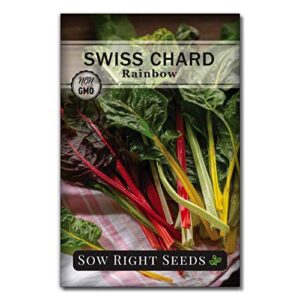
After the quick reward of cucumbers, Swiss chard keeps your momentum going all season long. Sow Right’s Rainbow Swiss Chard seeds give you green leaves with bold red, gold, and magenta stalks — genuinely striking in a garden bed or container.
Each packet holds around 140 seeds at $4.94, and germination happens in 7–14 days.
Leaves are ready to harvest in 55–65 days. Snip outer leaves regularly, and the plant just keeps producing through cool fall weather.
| Best For | Home gardeners of any skill level who want colorful, productive greens that grow well in beds or containers across most climates. |
|---|---|
| Seed Type | Heirloom Open-Pollinated |
| Non-GMO | Yes |
| Days to Harvest | 55–65 days |
| USDA Zones | 3–12 |
| Price | $4.94 |
| Beginner Friendly | Yes |
| Additional Features |
|
- About 140 seeds for under $5 — solid value, and germination kicks in within 7–14 days
- Harvests start in 55–65 days, and snipping outer leaves keeps the plant producing all season
- Handles both heat and cold well, so it works across a wide range of climates (zones 3–12)
- Some growers got mostly red stalks instead of the full color mix advertised
- Germination can be uneven — a few buyers saw low sprout rates, especially after transplanting from AeroGarden setups
- Needs full sun and the right soil temp (70–80 °F) to really take off; crowd them too close and growth suffers
10. Burpee Kale Blend Seed Mix
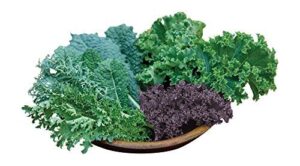
Kale might be the most underrated pick on this list. Burpee’s Kale Blend combines four varieties — Lacinato, Winterbor, Redbor, and Dwarf Curled Vates — so you get a mix of textures and colors from one packet.
Baby leaves come in around 25–30 days; full leaves by 60–90 days. At $6.69 for 100 non-GMO seeds, it’s solid value.
Frost actually sweetens the flavor, so don’t pull plants too early. It works in zones 1–11, including containers.
| Best For | Home gardeners who want nutritional variety and color in their kale patch without buying multiple seed packets. |
|---|---|
| Seed Type | Non-GMO Blend |
| Non-GMO | Yes |
| Days to Harvest | 60–90 days |
| USDA Zones | 1–11 |
| Price | $6.69 |
| Beginner Friendly | Yes |
| Additional Features |
|
- Four kale varieties in one packet means different textures, colors, and flavors from a single $6.69 purchase
- Works across all USDA zones (1–11) and thrives in containers, making it flexible for almost any setup
- Packed with 45 flavonoids that support everything from cholesterol levels to immune health — serious nutritional bang for your buck
- All four varieties are mixed together, so you can’t control which ones go where or grow them separately
- Germination can be hit or miss — some growers report as few as 2 out of 12 seeds sprouting
- Annual lifecycle means you’ll be re-buying and replanting every year, which adds up over time
Best Growing Conditions for Beginners
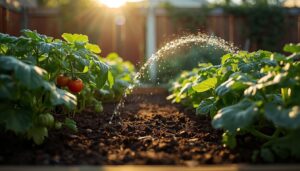
Getting the conditions right doesn’t have to be complicated. A few simple things — sun, soil, water, and space — make the biggest difference for beginners.
Here’s what to know before you plant your first seed.
Sunlight Needs for Easy Vegetables
Most beginner-friendly vegetables need at least 6 hours of full sun daily — that’s your baseline for Full Sun Requirements. Tomatoes and cucumbers want 8–10 hours.
Lettuce and kale handle partial shade gracefully, making them smart picks for shadier spots.
Use simple Sun Mapping Techniques: walk your yard hourly and note where light lands.
Morning Sun Benefits include drier leaves and fewer disease problems.
Soil Type and Drainage Basics
Your soil texture matters more than most beginners expect. Loamy, loose soil drains well while holding enough moisture — that’s the sweet spot.
Sandy soils drain fast but dry out quickly; clay holds water too long.
Raised bed design solves both problems beautifully.
Mix in organic amendment like compost to improve drainage layers, and target a soil pH between 6.0 and 7.0 for most vegetables.
Watering Without Overdoing It
Too much water kills more seedlings than drought ever will — so let’s fix that from the start.
Overwatering kills more seedlings than drought ever will
Good water management isn’t complicated once you know what to watch for:
- Water in the morning — morning watering slows evaporation and keeps fungal disease away.
- Check root zone moisture first — push a finger an inch into the soil before reaching for the hose.
- Use drip irrigation — it delivers water right to the roots, cutting waste and hit-or-miss watering guesswork.
- Add mulch retention — a 2‑inch layer slows moisture loss and stretches your watering schedule naturally.
A moisture meter takes the guesswork out completely.
Container Sizes for Small Spaces
You don’t need a backyard to grow real food.
Shallow pot depth of 6–8 inches suits lettuce and spinach perfectly, while carrots need 12–18 inches.
Stackable container systems and vertical planter options double your growing area without extra floor space. Self-watering pot sizes under 12 inches keep moisture steady.
Balcony trellis containers support beans and cucumbers beautifully — container-friendly vegetable options that make growing vegetables in small spaces genuinely rewarding for beginner gardeners.
Warm-season Versus Cool-season Crops
Think of your garden as having two personalities.
Cool-season crops like kale and lettuce thrive when daytime temps hover around 60–70°F, germinating in soil as cold as 40°F.
Warm-season crops — zucchini, beans, cucumbers — need 75–90°F days and soil above 60°F to get going.
A simple seasonal planting calendar keeps pest pressure lower and harvest seasonality predictable for beginner gardeners.
Simple Planting and Care Steps
Getting your plants off to a good start comes down to a handful of simple habits. You don’t need a master gardener’s toolkit — just a few basics done consistently.
Here’s what to focus on from seed to harvest.
Direct Sowing Versus Transplants
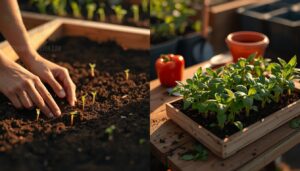
When to direct sow versus transplant can make or break your first season. Some vegetables hate having their roots disturbed, while others actually benefit from a head start indoors.
Direct sow these crops:
- Radishes, carrots, and beans — root development suffers with transplanting
- Lettuce and spinach — germinate fast in cool soil
- Zucchini — thrives with soil warmth timing around 60°F
For tomatoes and peppers, seedling transplanting wins every time. Transplant hardening over 7–14 days prevents seedling shock and improves yield timing dramatically.
Spacing Seeds and Seedlings Properly
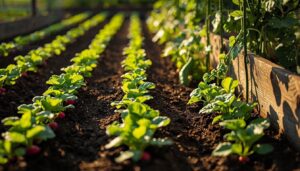
Once your seeds are in the ground, spacing makes all the difference.
Radishes and lettuce do well just 1–2 inches apart in-row, while beans need 3–6 inches with 18–24 inches between rows.
Vining crops like cucumbers want 12–18 inches along a trellis.
Root vegetables need room for straight growth, so follow crop-specific spacing on your seed packet every time.
Thinning for Stronger Growth
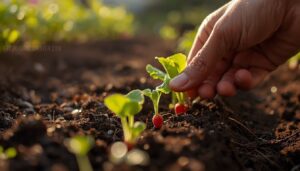
Once your plants start crowding each other, it’s time to thin them out — one of the most overlooked gardening basics for beginner gardeners.
Good plant density management means cutting weaker seedlings at soil level after true leaves appear, around 2–4 weeks.
- Thinning Timing: Thin radishes and lettuce to 2–3 inches apart
- Root Development Boost: Give carrots 1–2 inches of breathing room
- Airflow Enhancement: Wider spacing lowers fungal disease risk naturally
Thinning practices also open beds for succession planting sooner.
Trellising and Support for Climbers
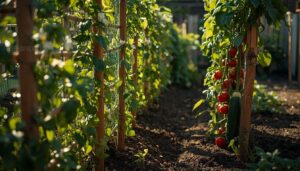
Once your beds are thinned and breathing, climbers need somewhere to go. Snap peas, cucumbers, and pole-style green beans climb 6–8 feet, so give them real support early.
Wood vs metal or composite trellises both work — sink posts 2–3 feet deep and space mesh openings 4–6 inches wide. Check for loose posts each season.
Tomatoes and zucchini need staking too, not just vines.
Basic Pest Prevention Methods
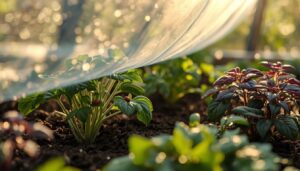
Keeping pests out starts before you see a single bug. Sanitation practices matter most — wipe counters, seal food, and clear fallen fruit within 24 hours.
Lay row cover or insect netting over young plants as physical barriers.
For organic pest and disease management, release beneficial insects like ladybugs to handle aphids. Set monitoring traps near entrances and add natural repellents like basil nearby.
Harvesting and Storing First Crops
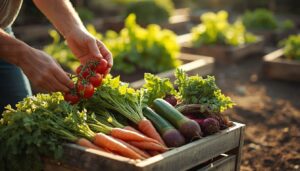
Getting your first harvest right makes all the difference between vegetables that taste delicious and ones that go to waste. From knowing when to pick to keeping produce fresh for days, there’s a short learning curve — and it’s a satisfying one.
Here’s what you need to know about harvesting and storing your first crops.
Signs Vegetables Are Ready to Pick
Your senses are your best harvest tools.
Color change tells you a lot — tomatoes should have no green shoulders, and cucumbers want bright, even skin.
Check texture firmness with a gentle squeeze; zucchini yields slightly, while beans snap crisply when bent.
Size shape matters too: radishes at 1 inch, carrots around 1.5–2 inches across.
Trust these plant vigor cues, and harvest timing becomes second nature.
Harvest Windows for Quick-growing Crops
Knowing your harvest windows makes all the difference.
Radishes are ready in just 21–30 days, while bush beans take 50–60 days.
That fast-growing nature rewards staggered planting schedules — sow every 7–14 days for continuous harvest timing.
Temperature-dependent maturity matters too; cool weather speeds leafy greens.
With smart seasonal window planning and crop rotation timing, even beginners stay consistently productive.
Best Ways to Store Fresh Produce
Fresh produce is almost living — treat it that way.
Leafy green harvesting should end with unwashed leaves stored in perforated bags lined with a damp paper towel, maintaining about 95% humidity for up to five days.
Temperature Management matters too: keep most vegetables between 32–40°F.
For Ethylene Separation, move apples and bananas away from cucumbers and lettuce.
Root vegetable storage extends carrots and beets to two to four weeks in the crisper.
Keeping Plants Productive Longer
Your garden’s best days don’t have to end with the first harvest.
- Mulch Management locks in moisture and steadies soil temperature, adding 7–14 extra productive days.
- Nutrient Timing — side-dress with 10-10-10 fertilizer mid-season to keep fruiting going 2–3 weeks longer.
- Succession Planting staggers your harvest timeline so something’s always ready to pick.
Pruning Longevity means snipping spent flowers regularly, which redirects energy into new growth instead of seed set.
Easy Ways to Use Your Harvest
Your first harvest deserves a real celebration — not just a photo.
Toss radish slices and grated carrots into Quick Salads in under five minutes. Simmer zucchini with garlic for Fast Soups or One-Pan Dinners in about 20 minutes.
Make Easy Pickles with cucumbers, vinegar, and salt. Fresh Snacks like carrot sticks with hummus need zero cooking.
Simple wins, every time.
Frequently Asked Questions (FAQs)
What are the best vegetables to grow in a starter garden?
Radishes, leaf lettuce, bush beans, zucchini, and kale are your best starting points. Most mature in 25–60 days, need minimal fuss, and fit perfectly into any beginner vegetable gardening guide.
What vegetables are good for lazy gardeners?
Lazy gardening works best with low-maintenance garden vegetables like kale, bush beans, and lettuce — crops with a high forgiveness score that tolerate missed waterings and still deliver quick-harvest vegetables for new gardeners.
What should I grow as a beginner gardener?
Start with quick wins. Radishes sprout in days, lettuce is ready in 30, and beans need almost no fuss. Pick low-maintenance crops that match your seasonal planting calendar and local zone.
What is the easiest vegetable garden for beginners?
A mix of radishes, lettuce, and bush beans gives you the easiest beginner vegetable garden — low maintenance, quick harvest, and a surprisingly high forgiveness score when life gets busy.
What is the most common mistake of first time gardeners?
Overwatering tops the list. Hit-or-miss watering causes root rot risk quickly.
Space mismanagement crowds plants, while soil amendment omission drains nutrients.
Fix your soil preparation, planting schedule, and plant spacing first — everything else follows naturally.
What do beginner gardeners need?
Beginner gardeners need a few budget-friendly supplies: a soil testing kit, seed starting kits, and basic tools.
Good garden planning and soil preparation early on save you weeks of frustration later.
How often should I water my vegetables?
Most vegetables need 1 to 2 inches of water weekly. Do a quick Soil Moisture Check by pressing your finger 4 inches deep — if it’s dry, it’s time to water.
When is the best time to plant?
Timing is everything. Plant cool-season crops like lettuce and peas when soil hits 40–50°F. Wait until after your last frost date for warm-season crops like zucchini and tomatoes.
What tools do beginner gardeners need most?
You don’t need much. A hand trowel, pruners, gloves, and a watering can cover most jobs. Add a moisture meter and some plant stakes, and you’re genuinely set.
How do I know when vegetables are ripe?
Watch for color cues, texture firmness, and aroma clues.
Skin tension tells a lot — taut means ready, shriveled means wait.
Match size benchmarks from your seed packet for confident harvest timing.
Conclusion
Picture your hands brushing soil from a radish you grew from seed—that moment belongs entirely to you.
The best vegetables for beginner gardeners aren’t just easy crops; they’re confidence builders that turn hesitation into habit. Start with two or three from this list, learn what your space and schedule can handle, then expand from there.
Every gardener you admire started exactly where you’re now—one small patch, one good harvest.
- https://planthardiness.ars.usda.gov/
- https://www.fs.usda.gov/wildflowers/pollinators/pollinator-of-the-month/hawk_moths.shtml
- https://extension.unh.edu/sites/default/files/migrated_unmanaged_files/Resource005477_Rep7652.pdf
- https://yourgardenadvisor.com/how-to-read-a-seed-packet/
- https://www.scribd.com/document/720525367/final-exam-2nd-sem-crop-sci