This site is supported by our readers. We may earn a commission, at no cost to you, if you purchase through links.
Most gardeners write off shady spots as dead zones—patches of wasted potential where nothing useful grows. That’s a costly assumption.
Shade-tolerant vegetables don’t just survive with less sun; some actually produce better in it. Lettuce stays sweeter longer. Spinach skips the bolt. Brassicas like broccoli use cooler, filtered light to push out more side shoots than they’d ever manage baking in full afternoon heat.
The catch? Not all shade is equal, and planting the wrong crop in the wrong light level wastes an entire season. Once you understand the difference between partial sun, dappled shade, and deep shadow, your "problem" spots start looking like prime growing real estate.
Table Of Contents
- Key Takeaways
- Best Shade Vegetables by Sunlight Level
- Best Leafy Greens for Shade
- Best Root Vegetables for Shade
- Best Brassicas for Shady Beds
- Shade Garden Harvest Tips
- Frequently Asked Questions (FAQs)
- Which vegetables do not need sunlight to grow?
- Which vegetables grow in shade?
- Can you grow vegetables in a full shade garden?
- What plants can be grown in shade?
- Are shade tolerant vegetables good for a garden?
- What is the most shade tolerant vegetable?
- What will grow in 100% shade?
- What vegetable requires the least amount of sunlight?
- Which vegetables require the least amount of sun?
- Do any edible plants grow in full shade?
- Conclusion
Key Takeaways
- Leafy greens like lettuce, spinach, and Swiss chard don’t just tolerate shade — they actually produce sweeter, longer-lasting harvests in it than they would under full sun.
- The key to success is matching your crop to your exact light level: 4–6 hours suits partial sun crops, 2–4 hours works for radishes and beets, and dappled filtered light keeps greens from bolting.
- Fruiting vegetables — tomatoes, peppers, cucumbers, and corn — need 8–10 hours of direct sun and simply can’t be coaxed into performing in shade, no matter the workaround.
- Compost-rich soil, consistent moisture, 2–3 inches of mulch, and slightly wider plant spacing are the four practical habits that turn a shady bed from marginal to genuinely productive.
Best Shade Vegetables by Sunlight Level
Not all shade is created equal — and that distinction matters more than most gardeners realize. The amount of sun your space gets each day determines which vegetables will actually thrive there, not just survive. Here’s how the main light levels break down, and which crops fit each one best.
Before diving into plant selection, it helps to accurately track how many hours of sunlight your garden receives each day — because guessing often leads to mismatched plants and disappointing harvests.
Partial Sun Vegetables
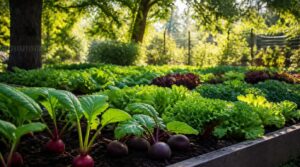
Most gardeners don’t realize that 4 to 6 hours of sun is enough to grow a surprisingly productive vegetable bed. Morning sun is ideal — it warms the soil gently while afternoon shade reduces heat stress and slows bolting.
Leafy greens like lettuce and spinach thrive here. Keep soil rich with compost and space plants well to prevent disease in humid, shaded spots. You can also plant shade-tolerant vegetables like root crops to encourage better underground growth.
Partial Shade Crops
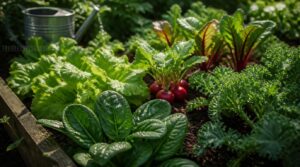
Partial shade — just 2 to 4 hours of sun — opens the door to a solid harvest if you pick the right crops. These vegetables prioritize leaves and roots over fruit, so light isn’t everything.
Your best bets here:
- Spinach stays tender and sweet
- Loose-leaf lettuce resists bitterness
- Radishes mature in 25 to 40 days
- Beets yield greens and roots
- Kale keeps producing through cooler spells
Consistent soil moisture matters most in these conditions.
Dappled Shade Options
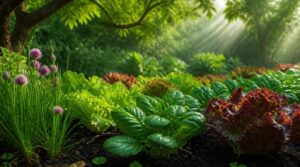
Dappled shade sits between partial shade and deeper shadow — filtered light through foliage, shifting across the ground as the sun moves. That fluid pattern delivers roughly 1,000 to 4,000 lux depending on canopy density, keeping soil 2–6°F cooler than open beds.
Leafy greens love it. Loose-leaf lettuce, spinach, and chives all perform well here, staying tender where direct sun would push them to bolt.
Minimum Light Needs
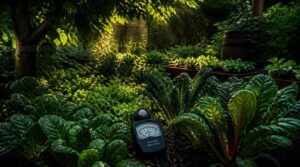
Even dappled shade has a floor. Below 1,000 lux, most vegetables slow dramatically — though leafy greens like spinach and lettuce can still produce with extended harvest windows.
- West- or south-facing spots shorten time to first harvest
- 2,000–5,000 lux artificial light fills gaps in deeper shade
- Consistent daily exposure beats occasional intense bursts every time
Keep soil moisture steady in low light — stress hits faster when roots sit unevenly watered.
Vegetables to Avoid
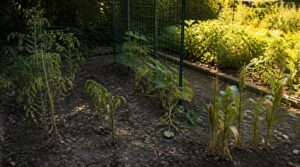
Why fight for tomatoes in a shady spot? Fruiting vegetables — tomatoes, peppers, cucumbers — demand full sun: 8–10 hours of direct sunlight. No workaround changes that. Nightshade sensitivity aside, these crops can’t compensate for inadequate light.
| Vegetable | Sun Needed | Shade Problem |
|---|---|---|
| Tomatoes | 8–10 hrs | Won’t fruit |
| Peppers | 8+ hrs | Stunted pods |
| Cucumbers | 8+ hrs | Low yields |
| Corn | 8–10 hrs | Poor pollination |
Best Leafy Greens for Shade
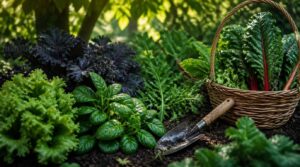
Leafy greens are hands-down the most forgiving crops you can grow in a shaded spot — many actually prefer it. Too much sun turns them bitter and bolty, so that tree casting a shadow over your bed might be doing you a favor.
Cooler autumn temps make this even better — check out these top leafy greens for autumn harvest that thrive in low-light conditions.
Leafy greens don’t just tolerate shade — they thrive in it, turning your garden’s weakness into its greatest harvest
Here are five leafy greens that thrive with limited light and reward you with a steady, flavorful harvest.
Loose-Leaf Lettuce
Loose-leaf lettuce might be the most forgiving plant you’ll ever grow in shade. Varieties like Green Leaf, Red Leaf, and Oak Leaf thrive in 3–4 hours of sun, producing tender leaves in as little as 25–40 days.
Use cut-and-come-again harvesting — snip outer leaves, leave the center, and the plant keeps giving. Store harvested leaves in a humid crisper drawer; they’ll stay crisp for up to 10 days.
Tender Spinach
Spinach thrives where most vegetables struggle. In cooler, shaded spots, it produces 4–9 inch leaves with a mild sweetness you won’t get in full sun.
Harvest young — baby leaves under 10 cm are silkier, less fibrous, and loaded with iron, folate, and lutein. Handle gently; they bruise easily. Mix extras into smoothies before they wilt, usually within hours of picking.
Baby Kale
Baby kale punches well above its weight. Those 2–4 inch leaves are milder and sweeter than mature kale — no bitterness, no tough chewing.
Harvest before leaves hit 6 inches and you’ll keep that tender texture. Green or purple cultivars both work in dappled shade. Toss fresh with citrus and olive oil, or mix straight into smoothies. Refrigerate in a bag; use within 3–5 days.
Swiss Chard
Swiss chard thrives where many vegetables struggle. It tolerates partial shade well, producing broad, colorful leaves at temperatures between 60–75°F — cool conditions that suit shady beds perfectly.
Harvest outer leaves when they reach 6–8 inches to keep new growth coming. Watch for leaf miners and remove damaged leaves promptly. Sauté with garlic, fold into frittatas, or slice the vivid petioles into stir-fries raw.
Bok Choy
Bok choy might be the most underrated shade-tolerant vegetable in this whole list.
- Harvest baby greens in just 45–60 days
- Thrives in soil pH 6.0–7.5
- Packed with vitamins A, C, and K
- Contains glucosinolates — compounds linked to immune support
- Try Shanghai or green stem varieties for different textures
Stir-fry stems with garlic; leaves wilt beautifully into soups.
Best Root Vegetables for Shade
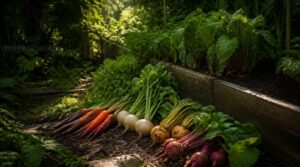
Root vegetables might surprise you — several of them actually thrive with just 3–5 hours of sun a day. The trick is knowing which ones adapt well and what to expect from your harvest. Here are the best root crops worth growing in your shadier beds.
Fast-Growing Radishes
Radishes are the sprinters of the shade garden. Cherry Belle and French Breakfast reach harvest in 22–25 days, even in 3–5 hours of sun. Loose, well-drained soil helps roots size up fast.
| Variety | Days to Harvest |
|---|---|
| Cherry Belle | 22–30 |
| French Breakfast | 23–25 |
| White Icicle | 25–30 |
Thin seedlings to 2–3 inches apart to prevent pithy cores. Sow every 7–14 days for a steady, rolling harvest, and watch for flea beetles in damp, shaded beds.
Beets and Beet Greens
Where radishes sprint, beets take a steadier pace — but the payoff is double. You get both roots and greens from a single plant.
Harvest roots at 1–3 inches in diameter for tender, earthy sweetness. The greens, loaded with vitamin K and beta-carotene, sauté beautifully with garlic. Remove them before refrigerating roots to prevent moisture loss.
Partial-Shade Carrots
Beets give you two harvests; Nantes-type carrots offer something else — genuine sweetness even from 4–6 hours of shade-filtered light. Keep soil loose and well-draining, targeting a pH of 6.0–6.8.
- Choose Nantes cultivars for best shade tolerance
- Prioritize morning sun over afternoon exposure
- Water evenly to prevent forked, misshapen roots
- Mulch deeply for consistent moisture
- Harvest early — shade extends maturity time
Turnips for Roots
Carrots need patience; turnips pay you back twice — edible greens and roots from a single plant. In partial shade, globe varieties like Purple Top White Globe stay compact and reliably sweet, rarely exceeding 8 centimeters in diameter. Keep soil pH between 6.0 and 7.5 and moisture consistent, harvest before roots turn woody. Store at 0–4°C for several weeks of crunch.
| Variety | Root Size | Best Use |
|---|---|---|
| Purple Top White Globe | 8–10 cm | Roasting, mashing |
| Tokyo Cross | 5–7 cm | Raw, salads |
| Seven Top | Light roots | Greens harvest |
| Scarlet Queen | 6–8 cm | Soups, stews |
| Hakurei | 5–6 cm | Fresh eating |
Shade Effects on Size
Wonder why your shaded turnips stay petite while sun-grown ones bulk up? Hormonal growth shifts redirect energy toward stem stretch instead of root storage. Lower light means photosynthetic rate decline, capping the sugars roots need to swell.
Root vegetables show real species size variation here—some shrug off shade, others sulk. Choose shade-tolerant crops, and smaller harvests become reliably sweet ones.
Best Brassicas for Shady Beds
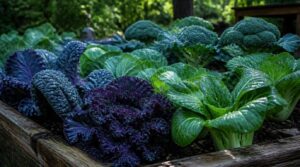
Brassicas have a reputation for being sun-hungry, but that’s not the whole story. Many of them actually thrive with a bit of afternoon shade, especially during the cooler months when heat is more enemy than friend. Here are the best brassicas to try in your shadier beds.
Broccoli in Cool Shade
Broccoli is one of those cruciferous vegetables that genuinely thrives with less sun than you’d expect. Cool shade buffers heat stress, keeping heads dense and tight rather than loose and bolted.
You’ll wait an extra 7–21 days compared to full-sun crops, but side shoot production increases after the main harvest. Shaded beds also hold moisture longer, so you’ll water less.
Cauliflower Head Protection
Cauliflower is the most demanding brassica in a shaded bed — and the most rewarding when you get it right. Its tight curd needs microclimate stability to stay white and firm.
Shade naturally controls what full-sun growers wrestle with manually:
- Prevents curd bleaching from UV exposure
- Reduces head surface temperature during midday heat
- Maintains consistent soil moisture beneath the canopy
- Enhances leaf color intensity, signaling healthy nitrogen uptake
A 30–60% shade cloth density hits the sweet spot — enough filtered light for steady growth, enough protection to prevent ricing or bitterness.
Cabbage in Partial Shade
Cabbage shrugs off shade better than its picky cousin cauliflower — it just wants 6 to 8 hours of sun when possible. Morning sun paired with filtered afternoon light balances growth nicely.
In hot regions, afternoon shade actually helps: it prevents bolting and tightens head density. Just watch shaded moisture closely — soggy soil invites rot faster than dry heads ever could.
Kohlrabi for Low Light
Kohlrabi, a quietly tough cruciferous vegetable, tolerates low light better than its bulb suggests — growth just slows.
Give it 4 to 6 hours daily; full-spectrum LED lighting boosts swelling indoors, and red-blue spectrum mixes speed things along. Cool temps, 15–20°C, suit shade well. Expect smaller bulbs, 2–4 inches, and watch for fungal trouble in damp beds.
Brassica Spacing Tips
Crowding kills heads before pests do. Cruciferous vegetables need elbow room — 18 to 24 inches between most brassicas, 24 to 30 for brussels sprouts, with row width near 24 inches for airflow management.
Shade traps moisture, so widen spacing slightly versus full-sun beds. Why does this matter?
- Better head expansion
- Real disease prevention
- Higher actual vegetable yield
Stagger plants to balance growing conditions with light access.
Shade Garden Harvest Tips
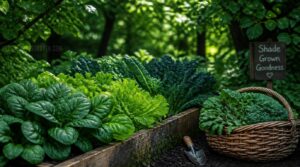
Picking the right vegetables for your shady beds is only half the job. The other half is knowing the small habits that turn a so-so harvest into a great one. Here are five tips that’ll help you get the most out of every shady corner.
Compost-Rich Soil
Shade gardens demand more from your soil because less light means slower plant energy production. That’s why compost-rich soil becomes your biggest advantage.
Aim for 25–50% organic matter by volume — it improves soil structure, boosts microbial nutrient cycling, and feeds beneficial fungi networks that quietly deliver nutrients to roots. Even a 2–3 inch annual top-dress makes a measurable difference in vegetable yield.
Moisture and Mulching
Good soil sets the foundation, but moisture keeps everything moving. A 2–3 inch mulch layer — straw, wood chips, or composted leaves — cuts evaporation by up to 40% and steadies soil temperature by several degrees. That means less watering, fewer stress spikes, and happier roots.
Apply mulch after watering to lock existing moisture in. Then let it work quietly beneath your shade crops.
Reflect More Light
Mulch controls moisture — but light is still the limiting factor in low-sun gardens. A simple fix? White or light-colored planters bounce sunlight directly onto your shade-tolerant crops, warming the canopy without extra effort.
- Position large wall mirrors near beds to redirect outdoor light inward
- Use reflective garden mulch or pale stone paths to brighten lower growth
- Paint nearby walls white to boost ambient brightness by up to 20%
- Angle reflective surfaces carefully — avoid direct glare into work areas
- Light-colored paving under trees lifts overcast-day visibility noticeably
Even small changes add up fast in low-light gardens.
Container Mobility
Reflective surfaces redirect light — but sometimes the smartest move is literally moving the plant.
Rolling saucers let you shift shade-tolerant vegetables like lettuce or spinach to follow sunlight through the day. Think of it as your own modular configuration for portable gardening. A few hours of morning sun in one spot, afternoon brightness in another. Container relocation takes minutes and can meaningfully boost your harvest.
Slug and Snail Control
Damp, shaded beds are a slug’s paradise — and your leafy greens pay the price. Keep them back with:
- Copper tape barriers — reduces slug contact by 90%
- Iron phosphate bait — pet-safe and effective within 7 days
- Beneficial nematodes — apply when soil temperature hits 10°C
- Beer traps — drain and refill them daily
- Morning watering — lets the soil dry before evening slug feeding
Frequently Asked Questions (FAQs)
Which vegetables do not need sunlight to grow?
Truthfully, no vegetable thrives in total darkness — all need some ambient light. That said, shade-tolerant vegetables like lettuce, spinach, and kale manage beautifully on just 3–4 hours of indirect sunlight daily.
Which vegetables grow in shade?
Leafy greens, root vegetables, and cool-season herbs are your best options. Spinach, lettuce, kale, radishes, and beets all tolerate 3–5 hours of sun — enough to grow a real, harvestable crop.
Can you grow vegetables in a full shade garden?
Technically yes, but don’t expect much. Full shade caps photosynthesis hard, so stick to shade-tolerant vegetables and leafy greens.
Even a sliver of indirect light boosts edible plant viability—without it, low-light growth constraints make real harvests nearly impossible.
What plants can be grown in shade?
Plenty, actually. Leafy vegetables like spinach and kale, shade-tolerant legumes such as peas, root crops like beets and radishes, plus low-light herbs like parsley and cilantro all thrive growing in dappled light without much fuss.
Are shade tolerant vegetables good for a garden?
Yes — shade-tolerant vegetables boost garden productivity by maximizing shaded space that’d otherwise go unused. They offer real edible garden versatility, often matching the nutritional value of sun-grown crops while needing less water and attention overall.
What is the most shade tolerant vegetable?
Funny thing about shade gardens: the toughest crop isn’t some exotic find, it’s humble Swiss chard.
This leafy green hardiness champion tolerates minimal sun, keeps producing colorful leaves through warm spells, and outlasts pickier shade-tolerant vegetables when light gets scarce.
What will grow in 100% shade?
Radishes are the one true exception — they can produce edible roots in 100% shade, provided the soil stays consistently moist. Spinach thrives on 1–2 hours of indirect light. Mustard greens, endive, and chicory also cope surprisingly well.
What vegetable requires the least amount of sunlight?
Spinach and lettuce tolerate as little as 3 to 4 hours of direct sun daily, making them the lowest-light options. Both still produce tender, harvestable leaves without much sun at all.
Which vegetables require the least amount of sun?
Leafy greens and root vegetables need the least sun. Spinach, lettuce, and radishes thrive with just 3–4 hours of daily light, making them ideal minimal sunlight varieties for low-sun gardens.
Do any edible plants grow in full shade?
Some plants genuinely thrive where sunlight barely reaches. Edible mushrooms, mint, and shade-tolerant alliums like garlic chives all produce in full shade — though expect smaller yields and gentler flavors than sun-grown crops.
Conclusion
The worst garden spots often hide the best harvests. That’s the quiet truth most gardeners miss—chasing full sun while shaded beds sit idle.
The best vegetables to grow in the shade don’t need blazing light; they need the right match between crop and conditions. Get that right, and lettuce stays sweet, brassicas keep producing, and roots develop without bolting or bitterness.
Your shady corners aren’t problems. They’re untapped growing ground waiting for you.