This site is supported by our readers. We may earn a commission, at no cost to you, if you purchase through links.

There’s something almost magical about snipping fresh rosemary from your windowsill and watching it transform a simple roasted chicken into something restaurant-worthy. The difference between store-bought and homegrown herbs isn’t subtle—it’s the gap between flat, faded flavors and bright, aromatic ingredients that make your taste buds sit up and pay attention.
Your herb garden is basically a flavor lab waiting to be explored, full of combinations you won’t find in any spice aisle. Once you start playing with fresh herbs in your cooking, you’ll wonder how you ever settled for those dusty jars.
From morning omelets to compound butters that’ll make you famous at dinner parties, your garden holds more culinary potential than you might realize.
Table Of Contents
- Key Takeaways
- Benefits of Cooking With Homegrown Herbs
- Essential Herb Cooking Techniques
- Creative Herb Combinations and Pairings
- Innovative Herb-Infused Recipes
- Preserving and Extending Herb Harvests
- Frequently Asked Questions (FAQs)
- Which herbs repel garden pests naturally?
- How do herbs affect soil health?
- Can herbs cross-pollinate with vegetables?
- Which herbs attract beneficial pollinators?
- Do companion herbs improve vegetable yields?
- Can herbs be used in cocktails and beverages?
- How do you make herb-infused honey or syrup?
- What herbs work best for grilling and smoking?
- Can you bake desserts using savory herbs?
- How do you create decorative herb garnishes?
- Conclusion
Key Takeaways
- Fresh homegrown herbs deliver significantly more intense flavor and aroma than dried store-bought versions while providing genuine nutritional benefits like vitamin K, antioxidants, and memory-boosting compounds.
- Timing matters critically when cooking with herbs—add delicate varieties like basil and cilantro at the very end to preserve their aromatic oils, while hardy herbs like rosemary and thyme should simmer early for deeper flavor infusion.
- You can extend your herb harvest year-round through smart preservation methods like freezing herbs in ice cube trays with oil, creating compound butters that store for months, or making infused oils and vinegars that capture peak-season flavors.
- Growing your own herbs transforms your kitchen into a creative flavor lab where you control ingredient quality, slash grocery costs, and unlock unexpected culinary combinations that simply aren’t available in any spice aisle.
Benefits of Cooking With Homegrown Herbs
Growing your own herbs transforms your kitchen in ways you mightn’t expect. Beyond the joy of snipping fresh sprigs from your windowsill, you’ll discover real advantages that touch everything from your wallet to your well-being.
You’ll find endless inspiration in simple herb-to-table recipes that let fresh flavors shine without complicated techniques.
Let’s explore why homegrown herbs are a culinary revolution for creative cooks.
Fresh basil, thyme, and rosemary from your windowsill bring unmatched flavor and nutrition to everyday meals, making sustainable cooking with garden herbs easier than ever.
Enhanced Flavor and Aroma
There’s something almost magical about snipping a few sprigs of basil or rosemary from your garden and watching them transform a simple dish into something unforgettable. Fresh aromatic plants deliver flavor profiles you just can’t get from dried versions—it’s a whole sensory experience!
If you’re ready to take the plunge, growing herbs in raised beds makes it easier to control soil quality and drainage for healthier, more abundant plants.
Fresh homegrown herbs transform simple dishes into unforgettable experiences with flavor profiles dried versions can’t match
Here’s what makes homegrown herbs game-changers for culinary innovation:
- Intense aroma therapy straight from stem to plate
- Flavor enhancement that store-bought can’t match
- Culinary herb usage with peak-potency extracts
- Flavor and aroma enhancement you control completely
Nutritional and Health Advantages
Beyond those remarkable flavors, your garden herbs are quietly packing a serious nutritional punch with every leaf you harvest. Basil delivers vitamin K while potentially easing depression. Rosemary’s scent boosts memory and focus—talk about wellness effects! Oregano brings antibacterial antioxidant benefits to your healthy recipes.
These nutrient boosters aren’t just herbal remedies or health supplements; they’re genuine nutritional benefits woven into everyday healthy eating and herb cooking techniques you’ll master.
Cost Savings and Sustainability
Your wallet will thank you when you swap those pricey plastic clamshells of wilted supermarket herbs for a thriving windowsill garden that keeps giving all season long.
Growing your own herbs for culinary use means you’ll always have fresh basil, rosemary, and thyme packed with the aromatic oils that make food taste incredible.
Sustainable gardening and organic gardening practices slash your cost reduction needs while eco-friendly herb recycling feeds your compost.
Smart herb garden maintenance delivers sustainable harvest after sustainable harvest, building genuine sustainable food systems and sustainable cooking habits right from your kitchen!
Creative Control Over Ingredients
Growing your own culinary herbs unlocks true flavor profiling freedom—you choose the varieties that match your aromatic blending dreams. Harvest timing becomes your secret weapon for flavor enhancement techniques, since you pick at peak essential oil levels.
Ingredient sourcing? Totally in your hands. Fresh herbs mean seasonal menus shift with your garden’s rhythm, and you can experiment with herb recipes without compromise!
Essential Herb Cooking Techniques
Cooking with fresh herbs isn’t complicated, but a few simple techniques can make a huge difference in how your dishes turn out. Knowing when to add different herbs, how to prep them properly, and how to keep them fresh will release flavors you didn’t know were hiding in your garden.
Let’s walk through the basics that’ll turn you into an herb-cooking pro in no time!
When to Add Delicate Vs. Hardy Herbs
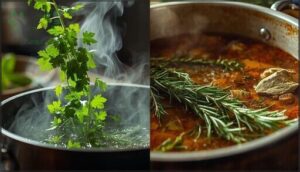
Timing is everything when cooking with herbs—add them at the wrong moment and your flavor profiles vanish into thin air. Delicate herbs like basil and cilantro lose their aromatic punch above 140°F, so toss them in during the final minute or after you’ve turned off the heat. Meanwhile, hardy herbs such as rosemary and thyme thrive in longer cooking methods, releasing deeper flavor when simmered early.
Once you’ve mastered timing, check out this summer herb gardening guide to learn how proper storage keeps your fresh herbs vibrant for weeks.
Master these herb timing basics and you’ll discover remarkable aroma release in every dish:
- Add delicate herbs (mint, parsley, dill) at the very end to preserve bright, fresh notes
- Introduce hardy herbs (sage, oregano, bay leaf) early for fuller infusion
- Chop delicate culinary herbs finely to boost quick flavor enhancement techniques
- Use whole hardy sprigs during braising, then remove before serving
- Adjust herb ratios based on cooking duration—brief heat needs bolder amounts
Fresh herbs transform ordinary recipes into restaurant-worthy creations when you respect their temperature sensitivity.
Chopping and Prepping Fresh Herbs
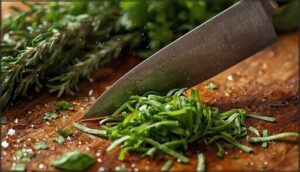
A sharp chef knife is your best friend when you’re chopping fresh herbs—it crushes fewer cells and keeps those precious aromatic oils intact. Rinse gently, pat dry, then strip tender leaves from woody stems.
Chop quickly to preserve volatile compounds, and finish with a light chiffonade for delicate varieties. These herb knife skills reveal maximum aroma preservation in every herb recipe.
Storing Herbs for Maximum Freshness
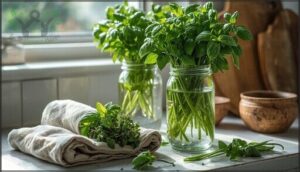
You can keep leafy herbs fresh for up to two weeks by standing them upright in a jar of cool water, just like a bouquet! Change the water every couple of days and trim stems to boost uptake.
For delicate varieties like basil and mint, wrap gently in damp towels before refrigerating—this simple herb storage method locks in aroma and extends shelf life beautifully.
Substituting Fresh for Dried Herbs
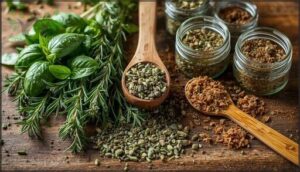
When swapping dried for fresh herbs in your culinary herb garden recipes, the magic ratio is roughly 3:1—three tablespoons fresh equals one tablespoon dried. Fresh herbs pack vibrant volatile oils that shine in finishing touches, while dried versions concentrate flavor profiles for long simmers.
Fresh storage matters too; wilted basil won’t match dried shelf life, so choose wisely based on your cooking timeline and herb ratios!
Creative Herb Combinations and Pairings
Now that you know the basics of working with herbs, it’s time to get a little creative. The real fun begins when you start mixing and matching different herbs to discover bold, unexpected flavors.
We’ll explore classic combos that always work, adventurous blends for sides and salads, international mixes that bring global flair, and even surprising ways to pair herbs with fruit and desserts.
Classic Pairings for Main Dishes
You’ve grown the herbs—now let’s release their full potential in your main course creations! Pairing the right herb with your protein or vegetables transforms ordinary meals into flavor-packed experiences. Here are four classic culinary matches that’ll enhance your cooking with herbs:
- Thyme with chicken, turkey, and pork brings earthy, savory notes to roasts
- Rosemary recipes shine with lamb, beef, and potatoes
- Basil pesto complements tomato-based dishes and seafood beautifully
- Sage and herb butter harmonize with pork and roasted squash
Unique Herb Blends for Salads and Sides
Want to turn your greens from bland to vibrant? These aromatic blends are your secret salad boosters! Chives, parsley, and tarragon brighten leafy greens with a fresh onion-like kick. Basil and mint create zesty flavor profiles for cucumber-tomato combos.
Try dill, cilantro, and mint in yogurt dressings—perfect recipe inspiration for potato salads. Cooking with herbs means endless herb pairing possibilities that transform everyday sides into flavor-packed showstoppers!
International Herb Mixes for Global Flavors
You can discover regional flavors through global spice blends that bring international cuisine straight to your kitchen! Herbes de Provence and za’atar showcase Mediterranean herbs beautifully, while gremolata adds an herbal twist to Italian dishes.
These herb fusion combinations make cooking with herbs easier—just sprinkle ready-made cultural cuisine blends onto weeknight meals. Try mixing fresh parsley with sumac for authentic international recipes!
Pairing Herbs With Fruits and Desserts
Beyond savory blends, fruit herb pairings reveal delightful dessert infusions! Fresh mint brightens strawberries and blueberries, while basil balances citrus combinations like lemon and orange beautifully.
Thyme enhances stone fruits in baked treats, and rosemary accents grilled pears with floral flavors.
Your herb garden makes herbal syrups for panna cotta too—cooking with fresh herbs transforms the culinary arts completely!
Innovative Herb-Infused Recipes

Once you’ve got the hang of pairing herbs, it’s time to put them to work in actual recipes.
Your herb garden can transform everything from breakfast to appetizers with just a handful of fresh leaves. Here are some delicious ways to bring those flavors straight from your garden to your table.
Herb Omelets and Breakfast Ideas
Imagine your morning meal planning transformed by a simple two-egg creation that delivers 12 to 14 grams of protein and unlimited flavor enhancement. Fresh herbs enrich breakfast nutrition beyond basic egg cooking methods—toss delicate parsley or chives into your omelet just before folding, or blend hardy rosemary into compound spreads.
These herb omelet fillings turn everyday culinary arts into Mediterranean-inspired masterpieces that clock in under 100 calories when you skip heavy cheese. For a nutritious start, consider exploring herb omelet recipes to boost your breakfast.
Savory Herb Breads and Butters
Your kitchen becomes a bakery the moment you fold fresh rosemary into cornbread batter or whip thyme into softened butter—these aromatic upgrades cost pennies but taste like artisan magic. Using herb butter recipes can enhance your dishes to the next level.
Try these crowd-pleasers from your culinary herb garden:
- Herb focaccia with olive oil and sea salt
- Garlic butters blended with parsley or chives
- Rosemary breads perfect for dinner parties
- Herb crostini topped with fresh basil
Cooking with fresh herbs transforms ordinary baking into savory muffins that’ll disappear fast!
Fresh Herb Sauces, Pestos, and Dressings
A handful of basil leaves, a drizzle of good olive oil, and thirty seconds in the blender—that’s all it takes to create pesto so vibrant it’ll make store-bought jars weep with envy. Once you’ve nailed basil pesto, explore variations with arugula or cilantro, whip up herb aioli for sandwiches, or blend green goddess dressing that’ll transform boring salads into crave-worthy bowls.
| Sauce Type | Star Herbs | Perfect With |
|---|---|---|
| Fresh Pestos | Basil, arugula, parsley | Pasta, grilled chicken |
| Herb Aioli | Dill, tarragon, chives | Fries, seafood |
| Green Goddess | Parsley, chives, tarragon | Salads, veggie platters |
| Herb Emulsions | Cilantro, mint, basil | Drizzling over proteins |
| Fresh Salsa | Cilantro, oregano | Tacos, chips |
Store extra fresh herbs in ice cube trays with olive oil, create herb butters for quick flavor bombs, or add sprigs to infused vinegars—your harvest won’t go to waste!
Herb-Enhanced Snacks and Appetizers
Cooking with fresh herbs transforms simple crackers and dips into show-stopping appetizers. Herb pairings like basil pesto on crostini or dill-spiked cream cheese bring flavor profiles that pop without extra salt.
Fresh combinations of mint and citrus enliven fruit salads, while rosemary-infused oils drizzle perfectly over warm flatbreads.
Your herb garden becomes a snack-time treasure chest, delivering creative appetizer ideas with textures that crunch, spread, and satisfy.
Preserving and Extending Herb Harvests
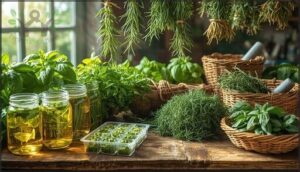
Your herb garden hits peak season, and suddenly you’ve got more basil and rosemary than you can use in a week. Don’t let that fresh bounty go to waste! Here are four smart ways to capture those flavors and keep your herbs working for you all year long.
Freezing and Drying Techniques
Once your culinary herb garden explodes with basil, thyme, and cilantro, you’ll want to preserve that bounty! Freezing and drying techniques lock in fresh flavors for year-round cooking with fresh herbs. Here’s how to master herb preservation:
- Freeze herbs in ice cube trays with water or oil for easy portioning in herb recipes
- Air-dry sturdy varieties like oregano when humidity stays below 60%
- Use dehydration methods at 95°F–115°F for concentrated flavor
These drying techniques and frozen storage options keep your harvest fantastic!
Making Herb-Infused Oils and Vinegars
Infusing oils and vinegars with fresh herbs turns ordinary pantry staples into flavor powerhouses that’ll make your taste buds do a happy dance! Oil infusion methods transform your culinary herb garden harvest into aromatic extracts perfect for flavorful cooking.
Try these herb vinegar blends and infused oil recipes:
| Infusion Type | Best Herbs |
|---|---|
| Olive Oil | Rosemary, thyme, garlic |
| Red Wine Vinegar | Oregano, basil, peppercorns |
| White Wine Vinegar | Tarragon, dill, shallots |
| Vegetable Oil | Chili peppers, cilantro, ginger |
These flavor enhancement tricks bring your herb recipes to life year-round!
Storing Compound Butters and Pastes
You’ve rolled softened butter with fresh herbs into flavorful logs—now let’s lock in that flavor preservation magic! Proper freezer storage in airtight containers keeps your compound butters tasting garden-fresh for months.
Master these fresh herb storage essentials from your culinary herb garden:
- Wrap tightly in parchment, then foil to prevent freezer burn
- Label each portion with herb blend and date for easy rotation
- Store at 1–4°C in the fridge for up to one month
- Freeze for 3–6 months to extend shelf life dramatically
Portion control means you’ll always have the perfect amount ready!
Tips for Year-Round Herb Use in Cooking
Think of your culinary herb garden as a year-round flavor bank—you just need the right withdrawal strategies! Mastering seasonal herb rotation and smart herb storage methods keeps fresh herbs ready whenever inspiration strikes.
| Season | Fresh Herbs to Grow | Preservation Strategy |
|---|---|---|
| Spring | Cilantro, parsley, chives | Freeze in ice cube trays with stock |
| Summer | Basil, oregano, dill | Air-dry or make infused oils |
| Fall | Rosemary, thyme, sage | Bundle and hang in cool, dark spots |
| Winter | Indoor parsley, mint | Grow under lights; refrigerate in damp towels |
| Year-Round | Microgreens, sprouts | Rotate plantings every 2–3 weeks |
For freshness preservation during food preparation, trim stems and stand leafy herbs upright in water—just like fresh flowers! Freeze chopped portions in small batches for quick cooking access.
Indoor gardening tips include using adequate light and rotating containers weekly. Label everything with dates to track potency, and you’ll never miss a beat in year-round harvesting from your kitchen garden!
Frequently Asked Questions (FAQs)
Which herbs repel garden pests naturally?
Basil, rosemary, and mint are natural pest control powerhouses in your herb garden.
These organic methods work through companion planting—basil repels aphids, rosemary deters bean beetles, and mint discourages ants, offering effective garden protection naturally.
How do herbs affect soil health?
Herb roots improve soil structure by breaking up compacted earth, while organic matter from decaying leaves feeds soil microbes.
Companion planting strategies in herb gardens boost nutrient cycling. Try sustainable gardening practices for healthier, richer ground!
Can herbs cross-pollinate with vegetables?
In your garden, cross pollination between herbs and vegetables won’t happen—they’re too genetically different.
Companion planting strategies work through allelopathy effects and pest control, not cross breeding, keeping your harvests predictably delicious.
Which herbs attract beneficial pollinators?
You’ll attract bees and butterflies when you let oregano, basil, rosemary, and thyme flower in your culinary herb garden—these nectar plants double as pollinator magnets.
Cilantro and fennel draw beneficial hoverflies.
Do companion herbs improve vegetable yields?
You’ll sometimes see better vegetable growth with companion planting—certain herbs like basil or oregano offer pest control benefits that protect crops, though yield improvements vary by pairing and garden conditions.
Can herbs be used in cocktails and beverages?
A sprig of rosemary transforms a glass like magic! Fresh herbs enhance cocktails and beverages beautifully.
Mint chiller, basil mojitos, and botanical mixology showcase flavor profiles. Herb infusions, cocktail garnishes, and beverage pairings bring herbal medicine and herb gardening into creative drinking.
How do you make herb-infused honey or syrup?
You can cold-infuse honey by steeping dried herbs for two to four weeks, or warm-infuse gently below 110°F for quicker flavor.
For syrup, boil equal parts sugar and water, pour over herbs, steep, then strain.
What herbs work best for grilling and smoking?
Rosemary and thyme are your top picks for grilling—their woody stems handle high heat beautifully. Sage adds savory depth to pork, while oregano shines on vegetables.
For smoking, try basil or tarragon for gentle flavor infusion.
Can you bake desserts using savory herbs?
You can absolutely bake desserts using savory herbs! Basil shines in berry tarts, thyme brightens lemon bars, and rosemary adds complexity to shortbread.
These aromatic herb blends create surprising flavor enhancement techniques that refine herbal confectionery trends beautifully.
How do you create decorative herb garnishes?
Picture a delicate basil ribbon curled atop creamy pasta—stunning, right? You can master the chiffonade technique by rolling fresh herbs tightly and slicing thin.
Add microherb plating, edible flowers, or frozen garnishes for impressive finishing touches!
Conclusion
Think of your herb garden as a living spice rack that never runs out of inspiration. Once you master creative herb garden cooking uses—from timing delicate basil to building bold compound butters—you’ll release flavors that transform everyday meals into something memorable.
Your windowsill isn’t just growing plants; it’s growing possibilities. So snip, experiment, and trust your instincts. The best recipes often start with a handful of fresh leaves and a little curiosity.