
This site is supported by our readers. We may earn a commission, at no cost to you, if you purchase through links.

Most herb gardens fail the same way—rich soil, plenty of water, good intentions, and still, soggy roots and sluggish growth by midsummer. The culprit is almost always poor drainage and compacted ground.
Raised beds fix both problems before you plant a single seed. Soil warms up two to three weeks earlier in spring, roots breathe freely, and you’re harvesting basil and thyme without bending down to ground level.
Growing herbs in raised beds also gives you control over the one thing most gardeners overlook: the exact soil conditions each herb actually needs. Get that right, and the flavors alone will convince you to never go back.
Table Of Contents
- Key Takeaways
- Why Raised Beds Suit Herbs
- Choose The Best Bed Location
- Build or Select The Bed
- Mix Soil for Healthy Herbs
- Pick Herbs for Your Space
- Plant Herbs With Proper Spacing
- Water, Mulch, and Feed Herbs
- Prune, Harvest, and Replant
- Protect Herbs Through Every Season
- Frequently Asked Questions (FAQs)
- Do herbs grow well in raised beds?
- What should you not grow in a raised bed?
- What herbs cannot be planted next to each other?
- Can I start an herb garden in September?
- Which herbs grow best in raised garden beds?
- Can you grow herbs in a raised garden bed?
- Is Basil suitable for growing in a raised bed?
- What is a raised bed herb garden?
- How tall should a raised bed be for herbs?
- Can a raised bed herb garden elevate your cooking?
- Conclusion
Key Takeaways
- Raised beds fix the two biggest herb killers—poor drainage and compacted soil—before you even plant a single seed.
- Controlling your soil mix, sun exposure, and watering schedule is what separates flavorful, thriving herbs from sad, leggy ones.
- Grouping herbs by water needs and spacing them properly saves you time, reduces disease, and keeps every plant producing longer.
- Consistent pruning, seasonal care, and succession planting are what turn a one-time harvest into a kitchen staple that lasts all year.
Why Raised Beds Suit Herbs
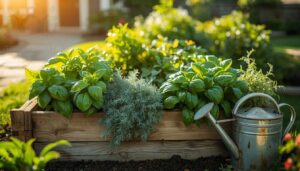
Raised beds aren’t just a trend — they’re genuinely one of the smartest ways to grow herbs. The structure gives you more control over your soil your space, and your harvest than growing in the ground ever will.
If you’re ready to put that control to work, these herb garden layout ideas show exactly how to make the most of every inch in your raised bed.
Here’s exactly why herbs thrive in them.
Faster Spring Warm-up
Raised beds give you a head start that ground-level gardens simply can’t match. The shallow, loose soil warms up fast in spring — and if you add dark mulch or position the bed near a brick wall, radiant wall heat pushes soil temperature even higher.
Use row cover on cool mornings, pre-warm soil before planting, and swap in early seedling transplants. You’ll gain two to three weeks easily.
Better Drainage for Herb Roots
Good drainage is honestly the secret weapon of raised beds.
Soggy soil suffocates roots fast — but a proper Gravel Base Layer, Landscape Fabric Barrier, and Perforated Drain Pipe give your herbs Root Airflow Zones that ground beds rarely offer.
Pair that with well-draining soil prep, a slight Bed Surface Slope, and a smart soil mix, and root rot doesn’t stand a chance.
proper drainage prevents root rot
Easier Access and Lower Back Strain
Beyond keeping roots happy, raised garden beds do something your back will thank you for. Beds built 12 to 24 inches high mean less stooping on every visit.
Pair that height with Long-Handled Tools, a Rolling Garden Stool, and Knee Pad Support, and gardening becomes genuinely comfortable. A Hose Reel Mount and Step-Assist Ladder round out smart ergonomic gardening solutions that make every session easier.
Improved Weed and Pest Control
Weeds hate raised beds. The defined edges and loose, well-drained soil make it easy to spot invaders early and pull them before they set seed.
Mulch layers block light from reaching the soil, so fewer weeds sprout in the first place.
Add companion planting and natural pest control methods like Biocontrol Insect Release, and your organic gardening setup stays cleaner with far less effort.
Better Flavor From Controlled Growing Conditions
Control over your growing environment is where raised beds really shine for flavor. Stable daytime warmth around 22°C, proper Airflow Optimization, and smart Light Management all support essential oil production in your herbs — that’s what makes basil smell like basil.
- Temperature Control keeps volatile flavor compounds intact
- Nutrient Balance prevents bitter, diluted taste
- Harvest Timing in the early morning captures peak aroma
- Well-draining Ideal Soil Composition for Herbs reduces stress on roots
Choose The Best Bed Location

Before you hammer together a single board or haul in a bag of soil, the spot you choose will make or break your herb garden. Sun, drainage, and access all depend on where you set up.
Here’s what to look for when scouting the right location.
At Least 6 Hours of Sun
Sun is everything for herbs. Most need full sun — at least six hours of direct light daily — to produce the essential oils that make them flavorful.
Sunlight mapping your yard for a week helps you find the sweet spot. Morning vs afternoon exposure both count, and reflective surfaces like white walls can stretch available light.
| Sun Condition | What Happens to Herbs |
|---|---|
| 6+ hours full sun | Strong flavor, sturdy growth |
| 3–5 hours partial | Leggy stems, milder taste |
| Under 3 hours | Poor yield, disease risk |
Seasonal sun variation matters too — your summer bed location might be shadier in spring.
Avoiding Low, Soggy Areas
Picking the wrong spot is one of the fastest ways to lose your herbs. Walk your yard after heavy rain and mark any low spots where water pools — those areas are off-limits.
Proper bed elevation, slope grading, and runoff channel design keep roots from drowning. Well-draining soil and smart soil preparation only work when your raised beds aren’t sitting in nature’s puddle.
Placing Beds Near a Water Source
A nearby tap or hose bib is worth its weight in thyme.
Place your raised garden beds within 6 to 12 feet of a water source — it makes garden irrigation faster and keeps moisture consistent without stressing your herbs.
- Install drip lines for irrigation zoning and precise water delivery
- Use moisture sensors to avoid overwatering and root rot
- Add drainage barriers to prevent splash-back from heavy watering
- Apply mulch for microclimate cooling and moisture retention
- Scatter diatomaceous earth for slug prevention near damp areas
Using Wind Protection Without Blocking Light
Wind can quietly stress your herb garden more than you’d think. The good news is you don’t have to choose between shelter and full sun.
Perforated screens and transparent wind panels let light pour through while cutting gusts. Living bamboo barriers filter wind naturally. Adjustable louvers let you fine-tune airflow seasonally. And diffusing fabric shields soften harsh gusts without dropping your raised beds into partial shade.
Matching Location to Herb Heat Needs
Not all herbs want the same real estate. Heat-loving Mediterranean varieties — rosemary, thyme, oregano — thrive in full sun spots where microclimate mapping reveals the warmest thermal soil amendments near walls or concrete.
Cool-season herb varieties like cilantro and parsley prefer sun exposure zones with afternoon relief. Use shade buffer strategies and heat tolerant pairings to match each plant’s hardiness zone needs naturally.
Build or Select The Bed

Once you’ve picked your spot, it’s time to think about the bed itself. The right setup depends on your space, budget, and how hands‑on you want to get with building.
Here are a few solid options to explore.
Ideal Bed Height and Width
Get the height-to-width ratio right, and everything else gets easier. For user comfort height, aim for 18 to 24 inches — deep enough for roots, low enough to reach without straining.
Keep width at 3 to 4 feet so you can reach the center from either side.
That access path width matters too: leave 24 inches between beds so you’re never squeezing past.
Best Materials for Herb Safety
Once you’ve nailed the dimensions, material choice is next — and it matters more than most people think.
What you grow your herbs in affects what ends up on your plate. Here’s what works:
- Cedar or bamboo frames — naturally rot-resistant and safe when sealed with a zero-VOC, non-toxic coating
- Food-grade planters — unglazed terracotta or lead-free glazed ceramic are solid picks
- PFAS-free liners — breathable fabric liners keep roots healthy without leaching persistent chemicals
- Certified wood frames — look for suppliers providing material safety data sheets confirming no heavy metals
- Metal beds — fine if they’re food-grade, zinc-free, and corrosion-coated
Quality raised beds built from these materials make soil and bed preparation cleaner from day one.
Drainage Features That Prevent Root Rot
Good materials get you halfway there — but without smart drainage, even the best bed can drown your herbs.
Start with a gravel drain layer at the base, then add a geotextile filter to keep soil from clogging it. A perforated base and proper weep hole placement move excess moisture out fast. Even a slight slope angle helps well-draining soil do its job.
Small-space and Backyard Bed Layouts
Now that drainage is sorted, it’s time to think about layout.
A 4×8-foot rectangular bed is your workhorse, but don’t stop there:
- L-shaped Corner Beds tuck neatly into fence angles.
- Modular Bed Shapes let you reconfigure as plants grow.
- Tiered Planter Levels stack herbs without losing ground space.
- Vertical Herb Towers free up room for Pathway Width Optimization.
Smart herb garden design makes space-efficient gardening feel simple.
Deep-bed Filling Methods to Save Soil
Deep raised garden beds don’t need to be filled top to bottom with expensive soil mix.
Start with a Gravel Base Layer for drainage, then add Coarse Porosity Layers — straw, wood chips, or logs — to support Capillary Rise Elevation. Layer in Compost Interlayers for nutrients, and finish with your soil mix on top. A Mulch Cap Strategy locks in moisture and completes your soil and bed preparation.
Mix Soil for Healthy Herbs

Getting your soil right is honestly the most important thing you can do before a single herb goes in the ground. The mix you use will affect drainage, root health, and how well your plants hold up season after season.
Here’s what you need to know to build a blend your herbs will thrive in.
Best Soil Blend for Raised Herbs
soil mix Think of your soil mix as the foundation everything else depends on. A well-draining soil blend keeps roots breathing and nutrients moving.
soil preparation in raised beds, you want good soil texture optimization — loamy structure that holds just enough moisture without getting soggy. Factor in pH adjustment, microbial inoculants, and nutrient release timing, and your herbs practically tend themselves.
Compost, Garden Soil, and Sand Ratios
A 1:1:1 mix of compost, garden soil, and sand gives your raised bed herbs a strong start. That compost ratio feeds soil life, the garden soil adds structure, and your sand ratio keeps drainage moving.
Aim for 25–40% organic matter ratio overall.
This soil preparation for raised beds creates well-draining soil that facilitates seasonal nutrient tuning as plants grow.
Improving Drainage for Mediterranean Herbs
Mediterranean herbs like rosemary, thyme, and oregano hate wet feet. They thrive in well-draining soil that mimics their native rocky hillsides.
In your raised garden beds, build a gravel base layer at the bottom, then mix in perlite amendments and a touch of diatomaceous earth to open root aeration channels. A gentle bed slope of 2–3% moves excess water away naturally — no soggy roots, no rot.
When to Add Organic Matter
Timing your organic matter additions is half the battle. In early spring, work compost 6–8 inches deep — that’s your Pre-Planting Enrichment move, warming soil and kickstarting germination.
After harvest, a Post-Harvest Top-up restores nutrients without slowing your next round. Come autumn, a 2–3 cm layer delivers a Seasonal Microbial Boost all winter long.
- Feed your soil before it begs for it
- Layer in compost like you’re tucking the bed in for winter
- Deep Bed Incorporation keeps roots breathing through summer’s heat
Refreshing Soil Every Few Seasons
Even the best soil gets tired. Every two to three seasons, your raised bed needs a full Seasonal Soil Renewal — think of it as a reset button for soil quality.
| Refresh Step | What It Does |
|---|---|
| Organic Matter Boost | Compost restores nutrients and microbial life |
| Mineral pH Adjustment | Lime or gypsum balances calcium levels |
| Mulch Layer Refresh | Reduces crusting and locks in moisture |
A Soil Microbe Inoculation with beneficial fungi rounds out your soil and bed preparation beautifully.
Pick Herbs for Your Space
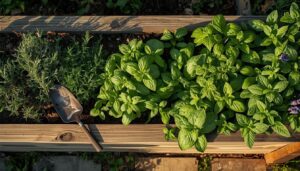
Not every herb belongs in every garden, and choosing the right ones for your space makes all the difference.
Your raised bed has its own personality — sun exposure, size, and how much time you want to spend maintaining it, all play a role.
Here are the best herbs to think about based on how they grow and what you actually need from them.
Best Annual Herbs for Raised Beds
Annual herbs are where most raised bed gardens really come alive. With smart Herb Varietal Selection and attention to Bolting Prevention, you can keep fresh flavors flowing all season long.
Here are five annuals that thrive in raised garden beds:
- Basil – Loves warm soil and full sun; pinch tips for bushy Flavor Development
- Cilantro – Fast-cycling; Seed Starting every 2–3 weeks prevents gaps
- Dill – Tall and feathery; stagger sowings for steady Harvest Timing
- Parsley – Long harvest window; cut freely without harming the plant
- Chervil – Mild anise flavor; bolts slowly in partial shade
Good herb planting and care starts with matching soil and sun requirements to each variety’s needs.
Best Perennial Herbs for Raised Beds
Unlike annuals, perennial herbs are the gift that keeps giving. Plant them once, and they’ll show up every spring like reliable old friends.
| Herb | Height Management | Flavor Peaks |
|---|---|---|
| Rosemary | 2–4 ft; trim after flowering | Summer–fall |
| Thyme | 6 in. mat; drought-tolerant | Pre-bloom |
| Lavender | 1–3 ft; needs gritty soil | Early summer |
Good herb planting and care with Mediterranean herbs means well-drained soil, proper Root Depth, and the right Soil pH — usually slightly alkaline.
Biennial Herbs and Second-year Flowering
Biennials are the slow-burn players of herb life cycles and planting strategies. Parsley, for example, gives you leaves all season in year one, then flowers in year two — a pattern called vernalization requirements at work.
Plan around this with these raised bed gardening techniques:
- Save seeds after second-year flowering for next season’s free plants.
- Protect flower stalks from wind to support post-flowering care.
- Harvest heavily in year one to delay bolting.
Grouping Herbs by Water Needs
Once you know your herbs’ lifecycles, grouping them by thirst level is your next smart move. Think of it as Moisture Tiering — basil, cilantro, and parsley share one zone in your raised beds, while rosemary, thyme, and lavender get their own well-draining soil corner.
This Hydrozone Mapping approach turns water-efficient gardening systems into something simple: less guesswork, better-tasting herbs, healthier roots.
Choosing Culinary Herbs for Frequent Harvests
If you want a steady supply of fresh flavor, a few herbs practically beg to be grown in raised beds. The best picks for frequent harvests share one thing: they bounce back quickly after cutting.
- Mint, oregano, chives, and thyme are reliable cut-and-come-again performers with a compact growth habit.
- Basil and cilantro are fast-growing varieties ideal for succession planting every 2–3 weeks.
- Parsley delivers high-yield leaf production across both seasons.
Plant Herbs With Proper Spacing
Spacing your herbs well is one of those things that looks simple on paper but makes a real difference once plants start growing.
Crowd them together and you get a tangled mess, poor airflow, and unhappy roots.
Here’s what you need to know to get the layout right from day one.
Spacing Small Versus Large Herbs
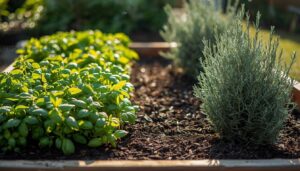
Think of your raised bed like prime real estate — every inch counts.
Small herbs like basil, cilantro, and chives thrive at 6 to 8 inches apart, forming a dense canopy that enables cut-and-come-again harvests.
Larger herbs like rosemary and sage need 12 to 18 inches for airflow optimization and to prevent root zone competition.
Mulch depth between plants conserves moisture while keeping harvest pathways clear.
Positioning Tall Herbs to Avoid Shade
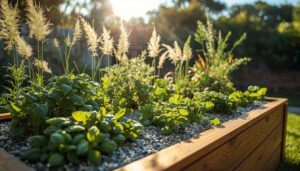
Tall herbs like fennel and dill can quietly steal light from everything around them. That’s why north side placement matters — put your tallest plants there, and the rest of your bed stays in full sun.
Use staggered rows so shorter herbs catch light between gaps.
Reflective mulch bounces extra light onto lower leaves, and seasonal herb relocation keeps your plant spacing working as sun angles shift through the year.
Direct Sowing Versus Transplants
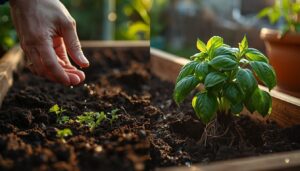
Direct sowing and transplanting each have a place in raised garden beds — it really comes down to timing and the herb you’re growing.
- Direct sowing suits cilantro and dill; root development is stronger with no transplant shock
- Transplants offer timing flexibility for slow starters like basil
- Seedling shock is real — harden seedlings 7–10 days before moving outdoors
- Cost efficiency favors direct sowing; seed starting indoors adds labor intensity
Interplanting Herbs With Lettuce and Greens
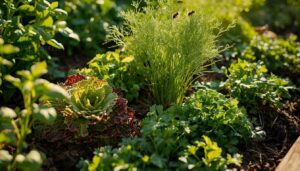
Pairing herbs with lettuce and greens is one of the smartest moves in space-efficient gardening. Basil offers natural aphid deterrence, while dill and cilantro create beneficial insect habitats right inside your raised garden beds.
Microclimate shading from taller herbs slows lettuce bolting in warm spells. You also get real flavor synergy at harvest.
Smart companion planting timing makes interplanting herbs with vegetables genuinely rewarding.
Succession Planting Basil, Cilantro, and Dill
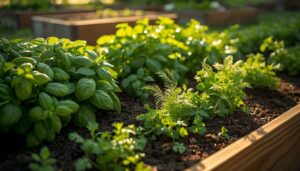
Without a Sowing Calendar, you’re just guessing — and gaps in your herb supply show it. Succession planting keeps basil, cilantro, and dill producing steadily in your raised garden beds all season long.
- Basil: transplant every 3–4 weeks once the soil hits 60°F
- Cilantro: direct sow every 14–21 days for Bolting Management in heat
- Dill: stagger seed rate every 21–28 days for continuous foliage
- Harvest Timing: begin clipping dill when 12 inches tall
- Row Rotation: replant cleared spots immediately after harvesting
Water, Mulch, and Feed Herbs
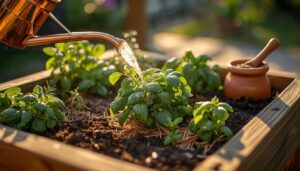
Once your herbs are in the ground, keeping them healthy comes down to three simple habits: watering right, mulching smart, and feeding just enough. Get these wrong, and even a well-built bed can let you down.
Here’s what you need to know to keep your herbs thriving.
How Often Raised Bed Herbs Need Water
Most raised bed herbs do well with a deep soak every three to seven days during warm weather — that’s your baseline watering schedule. Check soil moisture four inches down before reaching for the hose. Morning watering works best, giving foliage time to dry out.
Drought tolerant herbs like rosemary need far less attention.
Irrigation timer keeps things consistent without the guesswork.
Preventing Overwatering in Well-drained Beds
Even well-drained soil can’t save herbs if you keep watering on autopilot.
Waterlogging indicators like yellowing lower leaves, musty soil smell, or soft stems tell you the roots aren’t breathing.
Root zone aeration depends on capillary break layers — that gravel base does real work. sensor-driven scheduling and seasonal irrigation adjustments beat guesswork every time.
Watch for these overwatering red flags:
- Yellow or drooping lower leaves despite recent rain
- Soil that stays wet more than 48 hours after watering
- Musty or sour smell from the bed surface
- Stems that feel soft or spongy near the base
- Fungal patches or algae forming on the soil surface
Mulching Without Trapping Excess Moisture
Mulch is a gift — until it becomes a soggy blanket, your herbs suffocate under. The trick is mulch thickness: a 2–3 inch layer of coarse materials like bark chips keeps moisture in without sealing out air.
Use the donut ring method — keep stem clearance of 1–2 inches around each plant. Regular moisture monitoring every few days keeps drainage working the way your raised bed was designed for.
Annual Compost Applications in Spring
Spring is when your raised beds wake up hungry. A 2–4 cm layer of mature compost raked lightly into the top 2 inches kicks off serious Spring Nutrient Release and delivers a Microbial Inoculation Boost that gets soil biology humming within two weeks.
Three reasons this matters:
- Soil Porosity Enhancement improves root penetration for herbs like thyme
- Disease Reducing Microbes crowd out early-season pathogens naturally
- Compost Moisture Management buffers spring rain and dry spells equally
Light Feeding to Preserve Herb Flavor
Think of your herbs like a campfire — too much fuel, and you lose control.
Stick to Low Nitrogen Feeding with compost tea or worm castings, every four to six weeks, for solid Feeding Frequency Control.
Morning Nutrient Timing helps leaves absorb nutrients at peak activity.
Stop feeding two weeks before harvest — that Harvest Pre-Feed pause locks in your herb flavor profiles naturally.
Prune, Harvest, and Replant

Once your herbs are growing strong, the way you harvest and prune them makes all the difference between a plant that thrives and one that gives up on you. A few simple habits keep your bed productive from the first snip of the season to the last.
Here’s what to know before you cut.
Harvesting Without Removing Too Much Growth
Harvesting herbs feels satisfying—until you take too much and the plant just stalls. The key is restraint. Follow the one-third Leaf Pruning Ratio rule: never remove more than a third of the plant at once. Use Node Cutting Technique by snipping just above a leaf pair, and practice Growth Point Pinching to encourage bushier regrowth.
Harvest herbs with restraint: never cut more than a third, or the plant stops giving
- Tip Harvest Timing: Pick in the morning after dew dries.
- Leaf Pruning Ratio: Remove no more than one-third of foliage.
- Node Cutting Technique: Cut just above a leaf node to trigger branching.
- Post-Harvest Mulching: Mulch the base to retain moisture and support recovery.
Pruning Woody Herbs After Flowering
Once your woody herbs finish flowering, that’s your window — don’t wait. Pruning timing matters more than most gardeners realize.
For rosemary, sage, and lavender, old wood removal should happen in late spring while green shoots are still emerging.
Always cut at a slight angle above a healthy bud.
This small detail helps regrowth assessment and keeps growth hormone balance working in your favor.
Using Clean, Sharp Tools
A dull blade doesn’t just cut poorly — it tears, bruises, and opens the door to disease. Good tool ergonomics start with a consistent sharpening routine: touch up high-use pruners every one to three weeks during peak season.
For blade sanitation and disease control, wipe down after every plant, especially if something looks off. Clean tools are the simplest herb care and maintenance habit you’ll build.
Replacing Short-lived Annual Herbs
Annual herbs don’t last forever — that’s just how their life cycles work. Basil, cilantro, and dill bolt and fade fast, so your Herb Swap Calendar should account for that gap.
Succession planting every two to three weeks keeps your raised beds productive.
As annuals wind down, start easing in perennial herbs, giving the soil a brief rest with Interim Soil Amendments before replanting.
Encouraging Bushier, More Productive Plants
Think of your herbs like a small business — the more branches you open, the more they produce.
Pinching young shoots monthly during the growing season is one of the best herb pruning methods you can use.
It redirects energy into bushier, fuller growth instead of one tall, leggy stem.
Pair that with these habits:
- Apply side dressed fertilizer every 6–8 weeks during active growth to keep new stems coming strong.
- Use reflective mulch around your raised beds to bounce light onto lower growth, supporting denser canopies.
- Arrange plants in staggered planting rows with strategic herb spacing techniques to fill gaps and encourage root zone aeration naturally.
Protect Herbs Through Every Season

Your herbs don’t take a break between seasons, and neither should your care routine. Each time of year brings its own challenges, from summer heat that pushes plants to bolt early to winter cold that can wipe out tender varieties overnight.
Here’s what to do to keep your raised bed thriving all year long.
Summer Watering and Bolt Prevention
Summer heat can sneak up on your herbs fast. Water early in the morning using a deep soaker hose so moisture reaches the roots before the day turns brutal.
Well-draining soil in your raised beds prevents soggy stress that speeds up bolting. Shade cloth helps cool-season herbs like cilantro stay productive longer.
Try bolting resistant varieties, and keep up with pruning to delay flowering.
Fall Cleanup and Perennial Care
Once the heat fades, fall is your window to reset. Clear spent stems and fallen leaves from your raised beds — that debris is where fungal spores and pests love to overwinter.
A light soil topdress of compost restores nutrients before the ground hardens.
Divide overgrown perennial herbs like chives now, and lay ground cloth around crowns for extra insulation.
Winter Protection for Tender Herbs
Cold snaps hit tender‑stemed herbs hard. A 2–4 inch mulch insulation depth around roots guards against freeze‑thaw heaving. Toss a frost blanket over vulnerable plants on bad nights, and remove it when temps climb again.
DIY cloche tips: old plastic bottles work down to -3°C. Microclimate positioning near south‑facing walls adds surprising warmth.
Cold frame construction takes it further — sheltering multiple herbs efficiently.
Managing Pests and Fungal Diseases Naturally
Once your herbs are tucked in for winter, don’t let pests and fungal diseases catch you off guard when warmer days return.
Your best defense combines Beneficial Insect Allies like ladybugs and lacewings with Soil Microbial Boosters such as Trichoderma.
Apply neem oil weekly for fungal diseases, use Physical Barrier Techniques like copper tape, and follow Cultural Disease Prevention basics — water at soil level, space well, rotate crops.
Letting Some Herbs Flower for Pollinators
Don’t clip every bloom — your raised beds can become a pollinator haven with a little restraint. Let cilantro, chive, and lavender flowers open freely.
Focus on these three moves:
- Pollinator timing — stagger your flowering mix so blooms run spring through summer
- Selective deadheading — trim spent flowers gradually, never all at once
- Nectar corridor — line walkway edges with pollinator plants
Add a shallow pollinator water dish nearby. Done.
Frequently Asked Questions (FAQs)
Do herbs grow well in raised beds?
Yes — smaller the space, the bigger the results.
Raised beds give herbs exactly what they crave: warm root zone temperature, well-draining soil, and the air circulation benefits that keep them thriving.
What should you not grow in a raised bed?
Skip fruit trees, aquatic species, invasive spreaders like mint, high nitrogen crops such as corn, and deep-rooted veggies. They’ll overwhelm your raised bed and crowd out everything else.
What herbs cannot be planted next to each other?
Some pairings just don’t get along. The Mint‑Rosemary Conflict is a classic example — mint spreads aggressively and loves damp soil, while rosemary needs it dry. Keep them apart.
Can I start an herb garden in September?
Absolutely — September isn’t too late. Hardy cool-season herbs like parsley, thyme, and chives thrive in fall’s cooler temps.
Start greenhouse seedlings indoors, manage soil warmth, and use frost-resistant varieties for a strong finish.
Which herbs grow best in raised garden beds?
Most culinary herbs thrive in raised garden beds. Basil, cilantro, and dill are top annuals, while rosemary, thyme, and oregano return year after year with minimal fuss in well-drained soil.
Can you grow herbs in a raised garden bed?
Yes, and it’s one of the smartest moves you can make for herb cultivation. Raised beds offer well-drained soil, warmer roots, and easier access — everything herbs quietly beg for.
Is Basil suitable for growing in a raised bed?
Basil thrives in raised garden beds.
It loves full sun, well‑drained soil, and warm roots — all conditions a raised bed delivers naturally, boosting flavor intensity and simplifying herb planting and care.
What is a raised bed herb garden?
Think of it as a garden that plays by your rules.
A raised bed herb garden is an elevated, bordered planting space filled with custom soil, designed for drainage, root aeration, and herb diversity — all within arm’s reach.
How tall should a raised bed be for herbs?
For most herbs, 12 to 18 inches hits the sweet spot. It covers shallow root systems, suits ergonomic access height, and manages drainage well. Mediterranean herbs appreciate the deeper end.
Can a raised bed herb garden elevate your cooking?
Absolutely.
Fresh culinary herbs from raised garden beds sharpen every dish — better herb oil extraction, faster cooking prep speed, and taste consistency that store-bought simply can’t match.
That’s the garden-to-table workflow at its finest.
Conclusion
A single raised bed can completely transform the way you cook, eat, and experience your own backyard. Growing herbs in raised beds puts you in control of everything that actually matters—drainage, soil quality, spacing, and season length.
What once felt like guesswork becomes a system that works. Tend it consistently, harvest often, and adjust as you learn.
Your herbs will reward that attention with flavors so vivid; every meal feels like it came straight from a professional kitchen.
- https://planthardiness.ars.usda.gov/
- https://ucanr.edu/site/uc-master-gardeners-santa-clara-county/herb-gardening-basics
- https://extension.uga.edu/publications/detail.html?number=C1027-4&title=raised-garden-bed-dimensions
- https://gardenplanner.almanac.com/
- https://raisedbedguide.com/blog/understanding-perennial-and-annual-herbs-key-differences/