This site is supported by our readers. We may earn a commission, at no cost to you, if you purchase through links.

You don’t need a backyard to break free from grocery store prices and wilted herb bundles wrapped in plastic. A sunny windowsill and the right plants can transform your kitchen into a year-round supply station for fresh flavor.
The easiest herbs to grow indoors ignore neglect better than houseplants, bounce back from aggressive harvesting, and forgive beginners who still think “drainage” is optional. Basil, mint, and chives lead the pack because they adapt to indoor conditions without fussy demands, while parsley and cilantro reward patience with months of steady production.
Your countertop holds more potential than the produce aisle ever will once you know which herbs actually want to grow indoors.
Table Of Contents
- Key Takeaways
- Easiest Herbs to Grow Indoors
- Essential Indoor Herb Growing Conditions
- Top 10 Indoor Herb Garden Products
- 1. Indoor Herb Garden Kit
- 2. Bonnie Plants Sweet Basil Herb
- 3. Heirloom Chives Live Plant
- 4. Live Aromatic Mint Herb Plant
- 5. Bonnie Curled Parsley Live Herb Plant
- 6. Cilantro Live Seedlings
- 7. Bonnie Plants German Thyme Herb
- 8. Bonnie Plants Greek Oregano Herb
- 9. Live Rosemary Herb Plant
- 10. Live Sage Herb Plant
- Care and Maintenance Tips for Indoor Herbs
- Common Indoor Herb Growing Mistakes to Avoid
- Frequently Asked Questions (FAQs)
- Which herb is easiest to grow indoors?
- What are the best herbs to grow for beginners?
- What is the easiest herb to keep alive?
- What is the easiest herb plant to grow indoors?
- What is the mother of all herbs?
- What herbs are low maintenance to grow?
- What herbs are hardy indoors?
- How often should I fertilize indoor herbs?
- Can I grow herbs without drainage holes?
- What temperature range do herbs need indoors?
- Conclusion
Key Takeaways
- Basil, mint, chives, parsley, and cilantro top the list for indoor growing because they tolerate beginner mistakes, bounce back from aggressive harvesting, and thrive in basic windowsill setups without fussy demands.
- Your herbs need 12 to 16 hours of bright light daily, temperatures between 65 and 75°F, well-draining soil with a 6.0 to 7.0 pH, and containers with drainage holes to prevent the root rot that kills more indoor herbs than any other mistake.
- Overwatering, insufficient light exposure, overcrowding containers, and skipping regular harvests are the four deadliest mistakes that sabotage indoor herb gardens—most herbs need the top inch of soil to dry between waterings and benefit from frequent trimming to stay productive.
- Strategic pruning techniques transform struggling plants into productive powerhouses by removing no more than one-third of growth at a time, pinching stems above leaf nodes to trigger bushier growth, and harvesting in the morning when essential oils peak.
Easiest Herbs to Grow Indoors
You don’t need a green thumb to grow your own herbs—just a sunny spot and the right picks. Some herbs practically raise themselves, bouncing back from every snip and thriving in small pots.
Plus, homegrown herbs cut grocery costs since store-bought bunches often carry steep markups for something you can snip fresh daily.
Here are ten resilient varieties that turn anyone into a confident indoor gardener.
Basil
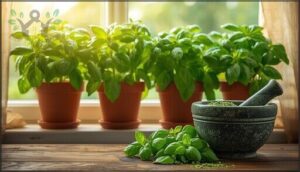
Basil is your ticket to freedom from store-bought herbs. This warm-season powerhouse thrives with 6 to 8 hours of light daily and delivers bold fragrance uses in culinary herbs like pesto recipes. Pinch back flower buds to keep it producing—you’re in charge of the harvest schedule.
Toss fresh basil into your homemade tomato sauce right at the end to preserve its vibrant flavor and aroma.
- Genovese and Thai basil varieties put endless flavor at your fingertips
- Indoor herb gardening means fresh leaves whenever you want them
- Growing herbs at home beats relying on overpriced grocery store bundles
Chives
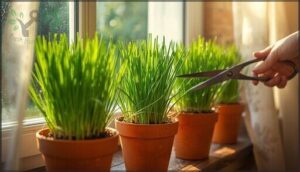
Chives give you total control over fresh flavor without the fuss. These hardy perennial clumps tolerate light shade, need minimal soil preferences beyond decent drainage, and bounce back fast after each cut.
They’re also excellent companion plants for strawberry gardens, where their pest-repelling properties help protect your berry crop naturally.
Harvest timing is flexible—snip leaves at 6 to 8 inches for peak chive nutrition and reliable leaf regrowth.
Unlike fussy chive varieties, standard Allium schoenoprasum manages indoor gardening tips like a champ, making herb garden care almost easy when growing herbs indoors.
Mint
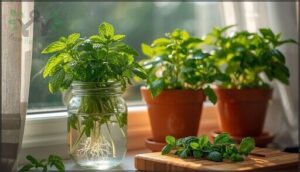
Mint varieties like peppermint and spearmint break free from store-bought limits when you master mint cultivation indoors. This herb spreads fast through underground runners, so keep it solo in its own container—one pot prevents takeover.
Mint propagation is simple:
- Snip a stem cutting
- Place in water for 1 to 3 weeks
- Transplant once roots form
Regular trimming unlocks bushier growth for endless mint recipes and mint benefits in your indoor herb garden.
Parsley
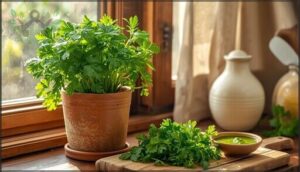
Parsley takes its sweet time sprouting—2 to 3 weeks at 70 to 75°F—but rewards you with fresh storage potential and parsley nutrition that packs vitamin K, vitamin C, and iron into every stem.
Flat leaf varieties dominate herb pairing in chimichurri and tabbouleh, while parsley recipes shine when you add leaves late to preserve their bright flavor.
Regular snips fuel parsley benefits and keep your indoor herb garden producing all season.
Cilantro
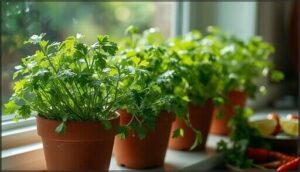
Cilantro bolts fast in warm spots—3 to 4 weeks if you’re not careful—so grab that cooler window and harvest outer leaves early to keep production rolling.
Pair those quick harvests with proper indoor temperature and humidity control to give your cilantro the stable environment it craves year-round.
Its limey aroma and peppery kick anchor cilantro recipes from salsa to curry, while cilantro benefits include vitamins A and C.
Pair it with lime and chili for herb pairings that transform your indoor herb garden into flavor-profile gold.
Oregano
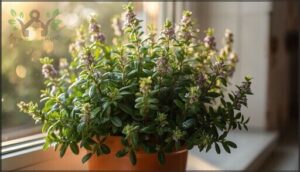
Oregano thrives indoors with minimal fuss, delivering that bold, peppery punch Greek cuisine demands.
Its aromatic properties and medicinal uses—think carvacrol’s antimicrobial kick—make it a powerhouse in your indoor herb garden.
Pinch tips regularly to keep growth bushy, water when the top inch dries, and place it near bright light. You’re growing herbal remedies and flavor in one compact pot.
Thyme
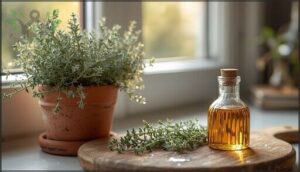
Thyme cultivation indoors gives you control over fresh flavor and medicinal thyme year-round. This drought-tolerant warrior loves bright light and dry conditions—water only when soil’s bone-dry.
Common and lemon varieties offer distinct aromatic profiles perfect for thyme recipes, from roasted meats to infused oils. Pinch tips often to encourage bushy herb garden growth and keep those potent leaves coming.
Rosemary
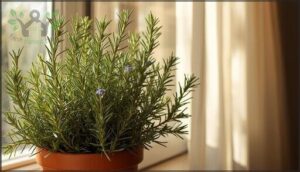
This woody Mediterranean rebel brings herbal remedies and culinary uses straight to your indoor herb garden. Rosemary benefits include powerful aromatic properties that enhance roasted meats and vegetables while offering medicinal value for digestion.
Give it 6+ hours of bright light and well-draining soil—water only when the top inch dries out. Regular pruning keeps your indoor gardening champion compact and productive through every season.
Sage
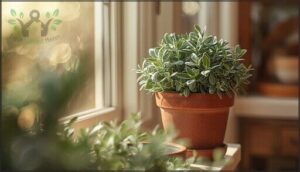
Sage delivers bold herbal remedies with intense aromatic profiles that break the mold—perfect for anyone craving control over their indoor gardening setup. Sage varieties like common and pineapple sage bring medicinal uses straight to your herb garden, from soothing sore throats to elevating savory dishes.
- Give sage cultivation 6+ hours of bright light and well-draining soil
- Water sparingly once established—drought tolerance sets it apart
- Pair with pork, poultry, and butter-based sauces for maximum impact
- Prune after flowering to encourage bushier, more productive growth
- Harvest leaves for herbal remedies or cooking year-round
Master sage herb care and you’ll release aromatic power for growing herbs indoors.
Lemon Balm
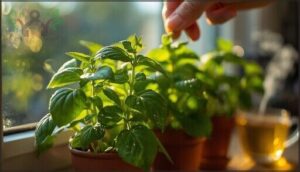
Lemon balm care unlocks citrus-scented freedom in your indoor herb garden—just crush a few leaves and let that bright aroma transform your space.
This vigorous grower prefers evenly moist soil and bright light while tolerating partial shade. Pinch stems regularly for bushier growth and continuous leaf harvesting.
Use fresh leaves in herbal remedies, teas, and salads to enjoy fragrance benefits that’ll keep you coming back for more aromatic uses.
Essential Indoor Herb Growing Conditions
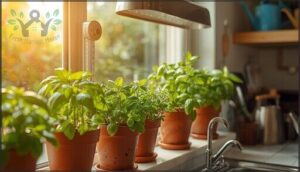
Growing herbs indoors isn’t complicated, but you can’t just stick a plant on any shelf and expect it to thrive. Your herbs need the right light, temperature, soil, and containers to stay healthy and productive year-round.
Let’s break down the essential conditions that’ll set you up for success.
Sunlight and Lighting Requirements
Your herbs need 12 to 16 hours of bright light daily to thrive and keep photosynthesis humming along. Natural sunlight from south or west windows works if you’ve got the real estate, but LED grow lights placed 6 to 12 inches above your plants deliver consistent light intensity without the guesswork.
- Position grow lights to bathe basil in 8,000 to 12,000 lux for bushy, flavorful leaves
- Use full spectrum bulbs around 6500 Kelvin to promote compact growth and sturdy stems
- Stick to regular lighting schedules so your indoor herb garden stays on track year-round
Ideal Temperatures and Humidity
Once the light’s dialed in, temperature control and humidity levels shape how your herbs actually perform. Keep daytime temperatures between 65 and 75 degrees Fahrenheit, then let things cool 5 to 10 degrees at night. Aim for 40 to 60 percent humidity and use a small fan for air circulation—steady conditions mean your indoor herb growing stays predictable, and you stay in charge.
Best Soil and Drainage Practices
A loamy blend—40 percent sand, 40 percent silt, 20 percent clay—gives you the soil composition and drainage systems your herbs need for root health.
Mix in 10 to 20 percent perlite for water retention without sogginess. Keep pH between 6.0 and 7.0 for nutrient balance and herb nutrition.
Add 15 to 25 percent compost to support soil quality and plant care.
Choosing The Right Containers
Your container materials determine whether your indoor garden thrives or dies. Pick pots 6 to 8 inches deep with multiple drainage holes—terracotta breathes but dries fast, while plastic holds moisture longer. Self-watering containers simplify herb care for busy schedules.
Keep pots lightweight so you can chase the sun, and always pair container gardening success with proper soil selection and mobility options.
Top 10 Indoor Herb Garden Products
You don’t need a complicated setup to grow fresh herbs in your kitchen. The right products make indoor gardening almost easy, whether you’re starting from scratch or adding to your windowsill collection.
Here are ten practical options that’ll get your herbs thriving without overthinking it.
1. Indoor Herb Garden Kit
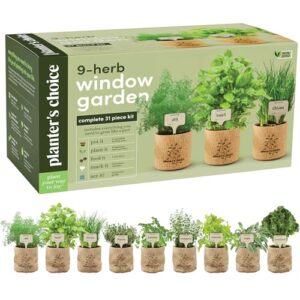
Starting your windowsill garden doesn’t have to feel like launching a science experiment. The Planters’ Choice Indoor Herb Garden Kit brings everything together in one box—nine heirloom seed varieties including basil, cilantro, and oregano, plus nutrient-rich soil discs and a simple setup guide.
At $29.98, you’re looking at a compact 9x4x3-inch system that fits snug on your counter. Just add a bright window or grow light, and you’ve got fresh herbs year-round without the guesswork.
| Best For | Home cooks and beginners who want fresh herbs on hand without needing outdoor space or green thumb expertise. |
|---|---|
| Brand | Planters’ Choice |
| Color | Green |
| Sunlight Needs | Bright window or grow light |
| Weight | 15.8 ounces |
| Plant Type | Seed kit |
| Unit Count | 9 |
| Additional Features |
|
- Complete starter kit with nine different herb varieties, soil, and instructions—no extra shopping needed
- Compact design fits easily on kitchen windowsills or countertops in apartments
- Heirloom seeds offer better flavor and higher quality than standard grocery store herbs
- Some users report inconsistent germination rates and seed quality issues
- Requires a bright window or you’ll need to buy a separate grow light
- Certain herbs grow slower or need more attention than others, which can be frustrating for beginners
2. Bonnie Plants Sweet Basil Herb
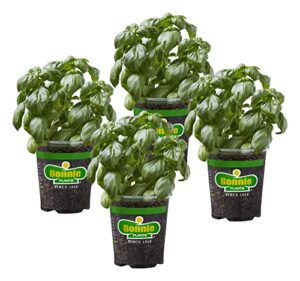
Bonnie Plants Sweet Basil delivers big, glossy leaves packed with that peppery, clove-tinged punch you want for pesto and caprese. At three pounds for a four-count, you’re getting sturdy transplants that hit 12 to 18 inches tall with regular pinching.
Keep them in full sun, water when the top inch dries, and snip the flowers before they steal energy from your harvest. They’re temperamental about dryness and heat, but dial in 65 to 75 degrees and you’ll pull fresh leaves all season.
| Best For | Home cooks who want restaurant-quality basil for pesto, Italian dishes, and fresh garnishes and have a sunny spot with consistent care routines. |
|---|---|
| Brand | Bonnie Plants |
| Color | Green |
| Sunlight Needs | Full Sun |
| Weight | 3 Pounds |
| Plant Type | Live plant |
| Unit Count | 4.0 |
| Additional Features |
|
- Large, intensely flavored leaves perfect for pesto and Italian cooking
- Slow to bolt when you pinch blooms regularly, extending your harvest window
- Versatile for containers, herb beds, or flower gardens in full sun
- Temperamental about dryness and needs attentive watering when soil surface dries
- Struggles in extreme heat or cold outside the 65-75°F sweet spot
- Some buyers report receiving smaller or less vigorous plants than expected
3. Heirloom Chives Live Plant
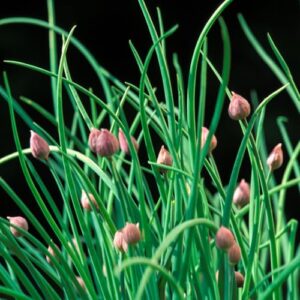
Chives are the quiet powerhouse of any indoor herb setup. Their slender, green leaves and punchy purple flowers add both flavor and flair—think mild onion for soups or salads, plus edible blooms for garnish.
You’ll need a sunny windowsill or grow light, and a six-inch deep pot with well-draining soil. Water when the top inch dries out, snip leaves as needed, and watch the clump fill out.
Low maintenance, high reward—chives make fresh flavor feel almost easy.
| Best For | Home gardeners and cooks who want fresh, mild onion flavor year-round and have a sunny outdoor space or bright windowsill. |
|---|---|
| Brand | TANKDA |
| Color | Green |
| Sunlight Needs | Full Sun |
| Weight | 1 pound |
| Plant Type | Live plant |
| Unit Count | 2 |
| Additional Features |
|
- Easy to grow with minimal fuss—just sun, water, and occasional snips
- Dual-purpose plant with flavorful leaves and edible purple flowers for garnish
- Thrives in garden beds or pots, giving you flexibility in how you grow
- Needs full sun and zones 3–9, so indoor growing requires strong light
- Limited to 4–5 inch starter size, meaning you’ll wait a bit for a full harvest
- Won’t tolerate low-light spots without supplemental grow lights
4. Live Aromatic Mint Herb Plant
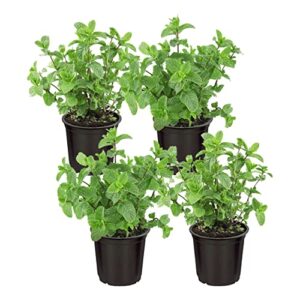
Mint spreads like wildfire—underground runners turn a single stem into a dense jungle of fragrant leaves. That’s exactly why you’ll want to keep it solo in its own six- to eight-inch pot with drainage holes.
Give it bright, indirect light for six to eight hours, room temps around 65–75°F, and soil that stays moist but never soggy. Snip stems above leaf pairs to encourage branching, and you’ll have fresh leaves for tea, salads, or mojitos whenever you need them.
| Best For | Home cooks and tea lovers who want a steady supply of fresh mint without worrying about it taking over their garden. |
|---|---|
| Brand | The Three Company |
| Color | Mint |
| Sunlight Needs | Full Sun, Partial Sun |
| Weight | 12 ounces |
| Plant Type | Live plant |
| Unit Count | 4 |
| Additional Features |
|
- Fast-growing and productive—regular trimming gives you constant fresh leaves for cooking and drinks
- Low-maintenance once you nail the watering routine—just keep soil moist and give it decent light
- Natural air freshener that doubles as a digestive aid when used in teas or recipes
- Aggressively spreads through underground runners, so it needs its own container to stay controlled
- Some buyers received plants in rough shape or already dying on arrival
- Needs consistent moisture and can get finicky if the soil gets too dry or waterlogged
5. Bonnie Curled Parsley Live Herb Plant
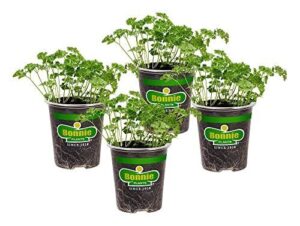
Dark green, tightly curled leaves make Bonnie Curled Parsley a kitchen staple that stays compact on windowsills. You’ll get a dense rosette of bright foliage under 12 inches tall, perfect for garnishing deviled eggs or mixing into tabbouleh.
Keep the soil evenly moist with bright light—indirect sun works fine—and trim regularly to push bushier growth. Feed it balanced liquid fertilizer every four to six weeks, and those sturdy leaves will hold their shape whether you chop them fresh or dry them for later.
| Best For | Home cooks who want a low-maintenance, compact herb that thrives indoors and delivers fresh garnish or seasoning year-round. |
|---|---|
| Brand | Bonnie Plants |
| Color | Green |
| Sunlight Needs | Part shade |
| Weight | 3 pounds |
| Plant Type | Live plant |
| Unit Count | 4.0 |
| Additional Features |
|
- Stays compact under 12 inches, making it ideal for windowsills or small kitchen spaces
- Dense, tightly curled leaves hold up well for both fresh use and drying
- Regular trimming encourages bushier growth, so you get more usable foliage over time
- Needs consistent watering and can struggle if the soil dries out
- Sensitive to extreme heat, which may limit success in hotter climates
- Requires regular feeding every four to six weeks to maintain vigorous growth
6. Cilantro Live Seedlings
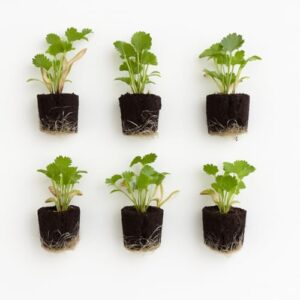
If you want salsa-ready leaves without the wait, cilantro live seedlings cut your timeline in half. These tender plants arrive with their first true leaves already formed, so you’ll harvest citrusy greens in about four weeks instead of waiting two months from seed.
Keep daytime temps between 65 and 75°F, water when the top inch dries, and give them bright indirect light for 12 to 16 hours daily. Pinch back new stems to encourage bushier growth, and you’ll pull fresh flavor for tacos and curries all season long.
| Best For | Home gardeners who want fresh cilantro for cooking without waiting months to grow from seed. |
|---|---|
| Brand | Bonnie Plants |
| Color | Green |
| Sunlight Needs | Cool weather |
| Weight | 12 ounces |
| Plant Type | Live seedlings |
| Unit Count | Not specified |
| Additional Features |
|
- Harvest tender leaves in just 4 weeks instead of 8 from seed
- Continuous harvests throughout the season with regular pinching
- Works in both soil gardens and hydroponic setups
- Only cold-hardy in zones 9–11, limiting outdoor growing in colder climates
- Annual herb that requires replanting each year
- Needs specific temperature range (65–75°F) and 12–16 hours of light daily to thrive
7. Bonnie Plants German Thyme Herb
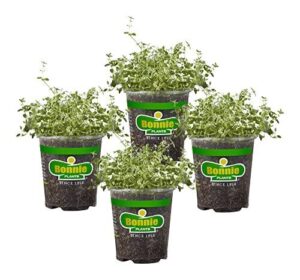
Bonnie Plants German Thyme brings classic European flavor to your indoor herb lineup with zero fuss. This compact grower stays under 12 inches, forms a dense mat of glossy green leaves, and thrives in a 6-inch pot on your brightest windowsill.
Water when the top inch feels dry, give it six hours of direct light, and pinch stems after flowering to keep growth tight. You’ll harvest enough for Herbes de Provence, roast chicken, and slow-cooked stews all year long.
| Best For | Home cooks who want fresh, aromatic thyme year-round for European recipes and herb blends without needing outdoor garden space. |
|---|---|
| Brand | Bonnie Plants |
| Color | Green |
| Sunlight Needs | Full Sun to Part Shade |
| Weight | 19.3 Ounce |
| Plant Type | Live plant |
| Unit Count | 1 |
| Additional Features |
|
- Compact growth stays under 12 inches, perfect for small indoor spaces and windowsill pots
- Highly fragrant leaves ideal for cooking, potpourri, and homemade soap projects
- Thrives in various light conditions from full sun to partial shade, making it adaptable
- Some customers report receiving plants that arrive dead or damaged during shipping
- Requires consistent watering and care, which may be challenging for beginners
- Not cold-hardy in all climates, limiting outdoor use in certain zones
8. Bonnie Plants Greek Oregano Herb
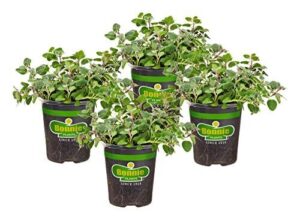
If thyme covers your European classics, Greek oregano owns the Mediterranean.
Bonnie Plants Greek Oregano delivers those bold, aromatic dark green leaves you crush into pizza sauce, spanakopita, and Sunday marinara—all from a compact perennial that thrives in zones 5 to 9.
Water when the top inch dries, keep humidity low with solid air circulation, and harvest freely once stems stretch tall. You’ll get consistent flavor in an 11-inch pot without babysitting.
| Best For | Home cooks who want a low-maintenance perennial herb that delivers bold Mediterranean flavor for Italian, Greek, and Spanish dishes. |
|---|---|
| Brand | Bonnie Plants |
| Color | Green |
| Sunlight Needs | Full Sun |
| Weight | 3 units |
| Plant Type | Live plant |
| Unit Count | 4 |
| Additional Features |
|
- Strong aromatic leaves perfect for pizza, tomato sauces, and egg dishes with authentic Greek oregano flavor
- Hardy perennial that returns year after year in zones 5 to 9, works in containers or ground plantings
- Harvest anytime, especially productive when stems grow tall before flowering
- Struggles in high-humidity climates and needs good air circulation to thrive
- Watering requires a balance—needs moisture but sensitive to overwatering
- Some customers report receiving plants in poor condition upon delivery
9. Live Rosemary Herb Plant
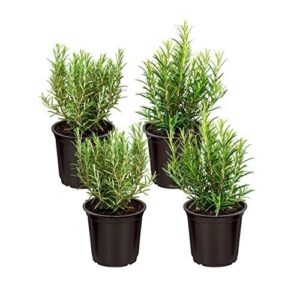
Greek oregano spices up your Italian nights, but rosemary brings the firepower—bold, resinous, and nearly bulletproof once you nail the setup.
The Three Company’s four-pack arrives fresh from the greenhouse at 8 inches tall, ready for a sunny windowsill or grow light pulling six to eight hours daily. Use well-draining potting mix with perlite, water when the top inch dries, and skip the misting—rosemary hates humidity. Snip sprigs from stem tips to keep growth compact and flavorful year-round.
| Best For | Home cooks and gardeners who want fresh, fragrant herbs year-round and have a sunny spot or grow light to keep rosemary thriving. |
|---|---|
| Brand | The Three Company |
| Color | Rosemary |
| Sunlight Needs | Full Sun |
| Weight | 8 ounces |
| Plant Type | Live plant |
| Unit Count | 4 |
| Additional Features |
|
- Ships fresh from the greenhouse in a convenient four-pack, ready to cook with or transplant
- Thrives indoors or outdoors with minimal fuss once you dial in full sun and well-draining soil
- Packed with antioxidants and anti-inflammatory compounds that support immune health and air quality
- Demands at least six hours of direct sunlight daily, so low-light spaces won’t cut it
- Can arrive wilted or damaged from shipping and may need immediate repotting and trimming
- Sensitive to overwatering and humidity, making it less forgiving than hardier herbs like mint or basil
10. Live Sage Herb Plant
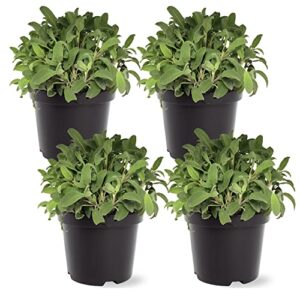
Rosemary tolerates neglect, but sage rewards it—gray-green fuzzy leaves on woody stems that get tougher with each harvest.
The Three Company’s four-pack ships at 8 inches tall in 1-pint pots, designed for bright light and evenly moist soil. Set them where six hours of sun hits daily, water when the top inch dries, and keep temps between 60 and 75 degrees.
Snip leaves once plants hit 6 to 8 inches to trigger bushier growth and sharper flavor for poultry, butter, or roasted vegetables.
| Best For | Home cooks who want fresh culinary sage for the kitchen and have a sunny spot with consistent watering habits. |
|---|---|
| Brand | The Three Company |
| Color | Sage |
| Sunlight Needs | Full Sun |
| Weight | 12 ounces |
| Plant Type | Live plant |
| Unit Count | 4.0 |
| Additional Features |
|
- Ships as a four-pack so you get multiple plants to harvest from or spread around your garden
- Supports memory and brain health while adding robust flavor to poultry, butter, and roasted vegetables
- Grows into a substantial bush (up to 2.5 feet tall and 3 feet wide) that attracts pollinators
- Some plants arrive damaged or wilted from shipping and need extra care to bounce back
- Requires full sun and evenly moist soil, so it’s not ideal if you lack bright light or forget to water
- A few customers report difficulty getting the plants to thrive even with proper care
Care and Maintenance Tips for Indoor Herbs
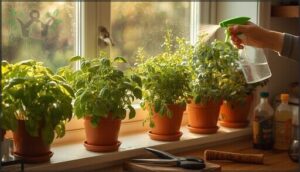
Getting your herbs to thrive indoors isn’t complicated, but it does require a few consistent habits. The difference between a struggling plant and one that produces fresh leaves all year comes down to how you water, feed, prune, and protect your greens.
Here’s what you need to know to keep your indoor herb garden flourishing.
Watering Techniques and Schedules
Your indoor herb garden thrives when you nail watering frequency and soil moisture levels. Check the top inch of soil—water every 2 to 3 days in warm rooms, 4 to 6 days in cooler spots.
Use pots with drainage systems to protect root health and prevent rot. Water at the base slowly, skip overhead methods, and adjust for seasonal shifts to master herb care year-round.
Fertilizing Indoor Herbs Safely
You’ll want to feed your herbs strategically, not obsessively—organic fertilizers work best for household safety and nutrient balance. Apply diluted liquid formulas to prevent herb toxicity and root burn, transforming ordinary soil nutrition into a foundation for bold flavors. For practical guidance on avoiding over-fertilization and recognizing, consult reputable sources.
Master herb care with these indoor gardening tips:
- Dilute liquid fertilizer to half-strength before applying to moist soil
- Feed fast growers like basil every 2-3 weeks during active growth
- Use balanced organic options to maintain proper nutrient balance
- Scale back fertilizer dilution frequency in winter months for ideal plant care
Pruning and Harvesting for Growth
Strategic herb care transforms your indoor herb garden from surviving to thriving through intelligent pruning and harvesting. Remove no more than one third of new growth at a time, and pinch tips just above leaf sets to spark dense, bushy plants. Morning harvests capture peak essential oils while frequent light cuts—never more than half the foliage—keep production rolling strong.
| Herb | Pruning Techniques | Harvest Timing |
|---|---|---|
| Basil | Pinch above leaf pairs to trigger two new shoots | Just before flowering for maximum flavor |
| Mint | Cut stems to first 5-7 leaf pairs safely | Morning, after dew dries |
| Parsley | Harvest outer leaves first, protect inner crown | Remove stems when plant is established |
Managing Pests and Diseases
Healthy herb gardening means keeping pests and diseases from hijacking your indoor herb garden before they take hold. Weekly inspections catch aphids and spider mites early, while smart sanitation cuts off their supply lines.
- Check leaf undersides during watering—pests hide where you’re not looking, and sticky traps catch adults before they multiply.
- Quarantine new plants for two weeks—indoor sanitation protects your collection from hitchhiking invaders.
- Use insecticidal soap on contact—organic remedies and natural pesticides work fast without contaminating edible herbs.
Remove infected leaves immediately, keep air moving with a low fan, and water at the base to prevent fungal disease. These indoor gardening tips give you real pest control and disease prevention that keeps your herb garden care simple and your plants thriving year-round.
Common Indoor Herb Growing Mistakes to Avoid
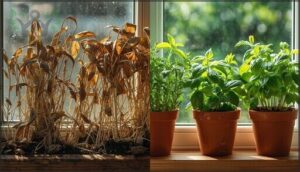
Even the easiest herbs won’t thrive if you’re making a few common mistakes that trip up most beginners.
The good news is that once you know what to watch for, you can avoid these common mistakes and keep your indoor garden producing fresh flavor year-round.
Here are the most frequent issues that can sabotage your herb-growing success.
Overwatering or Poor Drainage
Overwatering kills more herbs than anything else—it’s the silent assassin of your indoor herb garden.
Overwatering is the silent assassin of indoor herbs, killing more plants than any other mistake
When soil stays waterlogged, roots suffocate and rot takes hold, turning leaves yellow and stems mushy.
Choose containers with drainage holes, use a light potting mix, and check soil moisture before watering. Let the top inch dry out between drinks—your herbs will thank you.
Insufficient Light Exposure
When herbs stretch tall and weak, reaching desperately toward windows, you’re witnessing a light crisis in action.
Insufficient light exposure robs your indoor herb garden of essential oils and flavor, leaving you with pale, lifeless leaves. Most herbs demand six-plus hours of bright light daily—south or west windows paired with grow lights deliver the natural light optimization your herb garden care routine needs to thrive year-round.
Overcrowding Herbs in Containers
Cramming too many plants into one pot creates a root-bound disaster where herbs compete for nutrients and water. Your indoor garden needs proper herb spacing—give each plant its own 4 to 6 inch container to maintain healthy soil quality and air circulation.
Container size directly impacts root growth, and when roots strangle each other in overcrowded conditions, you’ll watch your herb garden wither despite perfect container gardening techniques everywhere else.
Neglecting Regular Harvesting
Beyond giving your herbs space, you need to cut them regularly or watch them bolt and fade. Harvest timing matters because skipping it redirects energy from leaf regrowth to seed production, killing flavor enhancement and stressing your indoor herb garden.
Smart herb care means trimming often:
- Pinch stems above leaf nodes to trigger root development and bushier growth
- Remove 20-30% at once to avoid plant stress
- Cut flowering shoots immediately to maintain leaf production in your indoor garden
Frequently Asked Questions (FAQs)
Which herb is easiest to grow indoors?
For most beginners, basil takes the crown. It thrives with basic care, loves bright light, and rewards you with rapid growth—making it the perfect gateway to indoor herb gardening success.
What are the best herbs to grow for beginners?
Start small, grow steady—that’s the golden rule for herb gardening success.
Basil, chives, and mint make perfect beginner plants because they forgive mistakes and thrive in basic indoor gardening setups with minimal fuss.
What is the easiest herb to keep alive?
Mint tops the list for indoor herb growing—it bounces back from neglect, tolerates imperfect watering, and thrives in bright indirect light, making it nearly foolproof for beginners mastering indoor gardening tips.
What is the easiest herb plant to grow indoors?
Chives claim the crown for beginners—they tolerate low light better than most herbs, thrive in cooler rooms around 60 to 70 degrees, and bounce back quickly after each snip with minimal fuss.
What is the mother of all herbs?
Oregano earns the title “mother of all herbs” in Mediterranean cuisine and folk medicine because of its versatility in herbal remedies and aromatic appeal, alongside basil, rosemary, thyme, parsley, and chives.
What herbs are low maintenance to grow?
Ironically, the hardiest indoor herbs—oregano, thyme, chives, and mint—require less fussing than houseplants.
These low maintenance champions tolerate irregular watering, modest light, and beginner mistakes while delivering fresh flavor year-round.
What herbs are hardy indoors?
Basil, rosemary, thyme, and parsley are among the hardiest herb types for indoor climate conditions.
These herbs indoors handle varied temperatures and lighting while requiring minimal space, making indoor herb growing accessible even in tight quarters.
How often should I fertilize indoor herbs?
Your indoor herb garden thrives when you fertilize every 2 to 4 weeks during active growth. Use balanced, half-strength liquid fertilizer to maintain nutrient balance without overfeeding your plants.
Can I grow herbs without drainage holes?
You can grow herbs in holeless potting setups, but water management and soil selection become critical for root health.
Use breathable containers, airy mixes, and controlled watering to prevent rot during indoor herb growing.
What temperature range do herbs need indoors?
Like tending a Victorian conservatory, your indoor herb growing thrives when thermostat settings maintain 60 to 75°F. This indoor climate fosters herb hardiness while cooling systems prevent heat stress, ensuring proper temperature control for healthy herb care year-round.
Common issues such as yellowing leaves and spindly growth can be avoided by addressing key indoor herb care problems.
Conclusion
Your kitchen doesn’t need a telegraph to send the message that grocery store markups are over.
Growing the easiest herbs to grow indoors hands you control over freshness, flavor, and your wallet without requiring a green thumb or outdoor space. Start with basil or mint, follow the light and drainage basics, and you’ll harvest more than leaves—you’ll claim independence one snip at a time.
- https://extension.umn.edu/planting-and-growing-guides/growing-vegetables
- https://extension.psu.edu/container-vegetable-gardening-four-keys-to-success
- https://hgic.clemson.edu/factsheet/growing-herbs/
- https://jobescompany.com/do-herbs-need-special-food-to-thrive/
- https://farmonaut.com/blogs/best-house-plant-fertilizer-2026-top-indoor-picks