This site is supported by our readers. We may earn a commission, at no cost to you, if you purchase through links.
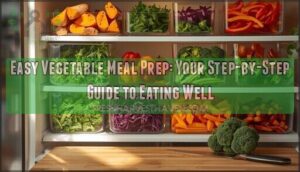
Most people don’t fail at eating vegetables because they lack willpower—they fail because raw broccoli at 7 PM after a long day is a losing battle. That’s where easy vegetable meal prep changes the game.
When your fridge holds roasted sweet potatoes, chopped greens, and ready-to-go veggies, healthy eating stops feeling like a chore and starts feeling automatic. As a dietitian, I’ve watched this single habit do more for people’s nutrition than any diet overhaul.
The steps are straightforward, the payoff is real, and you don’t need hours in the kitchen to make it work.
Table Of Contents
- Key Takeaways
- Benefits of Easy Vegetable Meal Prep
- Best Vegetables for Meal Prep
- Essential Tools and Storage Solutions
- Step-by-Step Vegetable Prep Techniques
- Easy Vegetable Meal Prep Recipes
- Frequently Asked Questions (FAQs)
- What’s a good vegetable to meal prep?
- Can I meal prep veggies for the week?
- What vegetables can be prepped in advance?
- How long do meal prepped veggies last in the fridge?
- How can I add more flavor to prepped veggies?
- What are safe reheating methods for vegetables?
- Can I freeze prepped vegetables without losing quality?
- How do I meal prep for special diets?
- What are budget-friendly tips for vegetable meal prep?
- How do I reheat vegetable meals without overcooking?
- Conclusion
Key Takeaways
- Prepping vegetables once a week—just 1–2 hours on the weekend—cuts your active cooking time to under 20 minutes on busy weeknights.
- Smart meal prep can drop your grocery bill from around $100 to $40 a week by reducing waste and keeping you out of the takeout lane.
- The best veggies for meal prep are sturdy ones like carrots, broccoli, and root vegetables, which stay fresh and tasty for three to five days when stored in airtight glass containers.
- Balancing your prepped meals is simpler than it sounds: fill half your plate with veggies, a quarter with whole grains, and a quarter with plant protein like chickpeas or lentils.
Benefits of Easy Vegetable Meal Prep
Meal prepping your vegetables isn’t just a trend — it’s genuinely one of the easiest ways to take the stress out of eating well. And the benefits go beyond just saving time on a Tuesday night.
When you’re ready to build that habit, these fresh produce meal prep ideas make it way easier to get started without overcomplicating things.
Here’s what you’ll gain when you make it a regular habit.
Saves Time and Simplifies Healthy Eating
Most weeknights, dinner stress comes down to one thing: you’re tired, hungry, and starting from zero. That’s where vegetarian meal prep changes everything. Spend 1–2 hours on the weekend, and your healthy eating basically runs itself.
- Chop once, cook all week with minimal effort
- Cut active cooking time from 45 minutes to under 20
- Turn nutrition strategies into automatic, low-stress habits
- Build balanced meals faster than ordering takeout
Reduces Food Waste and Grocery Costs
Meal prep doesn’t just save time — it saves real money. Families who plan their veggie meals can cut grocery spending from around $100 to $40 a week. That’s because you buy only what you’ll actually use. Building meals around the same vegetables, like broccoli or carrots, means fewer forgotten bags wilting in the back of your fridge.
Smart vegetable meal prep can slash your grocery bill from $100 to just $40 a week
| Without Meal Prep | With Meal Prep | Savings |
|---|---|---|
| $100/week groceries | $40/week groceries | ~$60/week |
| Frequent takeout | Home-cooked meals | ~$4,000/year |
| Wasted produce | Used-up ingredients | ~$750/year |
Supports a Balanced Plant-Based Diet
Saving money is great, but what you’re actually building with vegetarian meal prep is a diet that works for your body. When your fridge is stocked with prepped veggies, whole grains, and plant proteins, balanced macros happen naturally — no nutrition planning spreadsheet needed.
Here’s what a plant-based diet looks like in practice:
You’ll find plenty of inspiration in this seasonal vegetarian meal planning guide that makes eating more plants surprisingly simple.
- Half your plate filled with non-starchy vegetables for fiber and micronutrients
- One quarter whole grains like quinoa or brown rice for steady energy
- One quarter plant proteins — chickpeas, lentils, or tofu — to keep you satisfied
That’s nutrient balance without the guesswork.
Best Vegetables for Meal Prep
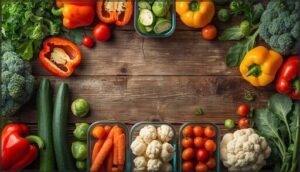
Not every vegetable holds up well in the fridge for days, so picking the right ones makes a real difference. Some prep beautifully on Sunday and still taste great by Thursday — others, not so much. Here’s what actually works.
Long-Lasting and Fresh-Tasting Veggies
Some vegetables are practically built for meal prep. Whole carrots, cabbage, potatoes, and winter squash can last weeks — even months — when stored right. Humidity control is key: root vegetables thrive near 32°F with high moisture, while potatoes prefer a cool, dark spot around 40–45°F.
Good food storage solutions protect both shelf life management and nutrient retention, keeping your vegetables fresher and more flavorful longer.
Using Frozen and Pre-Cut Vegetables
Frozen and pre-cut vegetables are honestly one of the best meal prep hacks you’re probably underusing. Frozen vegetable benefits are real — nutrients stay locked in because they’re frozen within hours of harvest.
Pre-cut safety is simple: keep them cold and use within 10–14 days. Both options make vegetarian meal prep and easy vegetarian meal prep faster, supporting smart meal planning without sacrificing quality.
Tips for Choosing Seasonal Produce
Seasonal produce is your secret weapon for better meal planning. Fresh picks at peak harvest mean more flavor, more nutrients, and less money spent. Use online vegetable guides to quickly check what’s growing near you each month.
Here are five harvest tips to shop smarter:
- Shop farmers markets for truly local, in-season finds
- Look for vibrant color and firm texture
- Check country-of-origin labels — local usually means seasonal
- Match your prep to the season: light salads in spring, hearty soups in winter
- Print a seasonal chart and keep it on your fridge
Essential Tools and Storage Solutions
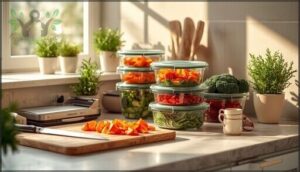
Having the right tools on hand makes meal prep so much easier — and honestly, it’s the part most people skip over. You don’t need a fully stocked professional kitchen, just a few key items that actually do the job.
Here’s what’s worth having before you get started.
Glass Vs. Plastic Containers for Freshness
Glass wins in terms of container safety and long-term freshness. Unlike plastic, glass doesn’t absorb odors, leach chemicals, or let oxygen sneak in — so your prepped veggies stay crisp and clean-tasting all week.
Plastic is lighter and fine for quick transport, but repeated heating speeds up quality loss.
For serious meal prep and food storage, glass is worth the investment.
Portioning, Labeling, and Organization Tips
A little organization goes a long way in meal prep. When your fridge is sorted, healthy eating stops feeling like a chore.
- Follow the 50/25/25 rule: 50% veggies, 25% protein, 25% grains per container
- Label every container with the name and date
- Color-code lids for faster meal planning and organization
- Use FIFO — newest items go behind older ones
- Batch separate components for flexible vegetarian meal prep all week
Must-Have Kitchen Tools for Prep
The right kitchen tools turn a chaotic prep session into something almost enjoyable. Here are three essentials worth having:
| Tool | Best Use | Why It Helps |
|---|---|---|
| Sharp Knives | Slicing firm veggies | Less force, safer cuts |
| Cutting Boards | Batch food preparation | Non-slip base, juice grooves |
| Food Processors & Vegetable Choppers | Quick dicing | Uniform cuts in seconds |
Kitchen shears also earn their spot — snip herbs and trim greens without extra cleanup during meal prep.
Step-by-Step Vegetable Prep Techniques
Good prep work in the kitchen makes everything else easier. Once you nail a few basic techniques, getting vegetables ready for the week becomes almost automatic.
Here’s what you need to know to get started.
Washing, Peeling, and Chopping Tips
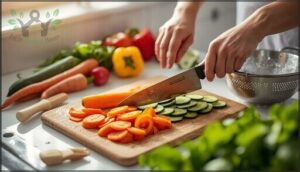
Good produce handling starts before you ever pick up a knife. Rinse vegetables under cool running water — no soap needed — and scrub firm ones like carrots and cucumbers with a brush.
Smart knife skills matter too: curl your fingertips into a claw when chopping. Same-sized cuts aren’t just pretty; they’re a smart meal preparation strategy for even cooking later.
Batch Cooking: Roasting, Steaming, Sautéing
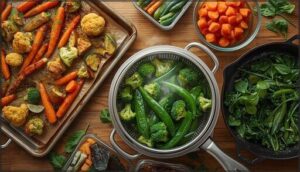
Once your vegetables are chopped, batch cooking takes over. Roasting vegetables at 400–425°F gives you caramelized edges that reheat beautifully — dense ones like carrots need 30–45 minutes, while zucchini finishes in about 15.
Steaming methods preserve more nutrients than boiling. Sautéing techniques work best for quick, flavorful greens.
Smart batch cooking strategies mean mixing all three vegetable cooking methods so your meal prep stays interesting all week.
Preventing Soggy or Wilted Vegetables
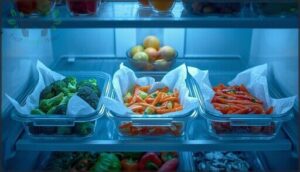
Now that your veggies are cooked, keeping them that way takes a little strategy. Good fridge storage tips start with cooling methods — get hot vegetables into shallow containers within two hours. From there, moisture management is your best friend:
- Line containers with paper towels to absorb condensation
- Use airtight container selection, like glass, to lock in crispness
- Practice ethylene control by keeping fruits far from your prepped veggies
Easy Vegetable Meal Prep Recipes
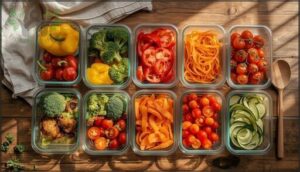
Now comes the fun part — actually putting your prepped veggies to work. These recipes are built around real life, meaning they’re simple, flexible, and genuinely good to eat.
Here’s what you can make ahead for breakfast, lunch, and dinner.
Make-Ahead Breakfasts With Veggies
Mornings don’t have to be chaotic. With a little veggie breakfast ideas planning, you’ve got options. Veggie egg muffin cups store up to 4 days in the fridge — or freeze them for a month. Breakfast casseroles are solid freezer meals too, lasting up to 3 months.
These vegetarian meal prep ideas make healthy mornings feel genuinely doable, not stressful.
Grain Bowls, Salads, and Wraps for Lunch
Lunch is where meal prep really shines. Build grain bowl varieties using quinoa or brown rice, then layer on roasted veggies and beans for plant protein.
For salads, store your salad dressing separately until you’re ready to eat.
Wraps stay neat with simple wrap folding techniques: fill, fold, wrap tight.
Lunch portion control and meal prep safety both win.
Sheet Pan Dinners and Hearty Soups
Dinner just got easier. Sheet pan meals and hearty soups are your meal prep MVPs — minimal effort, maximum flavor. Roast at 400°F for even cooking and golden edges. Here’s how to nail both:
- Cut vegetables into 1-inch pieces for even cooking
- Use flavorful seasoning — herbs, spices, a drizzle of oil
- Add softer vegetables later to preserve texture and nutrients
- Store soups safely within two hours of cooking
- Freeze extra portions for up to three months
Frequently Asked Questions (FAQs)
What’s a good vegetable to meal prep?
Broccoli is a meal prep MVP. It roasts beautifully, holds its texture for days, and fits into healthy recipes from grain bowls to wraps — making it a smart pick for vegetarian meal prep beginners.
Can I meal prep veggies for the week?
Yes, you can absolutely meal prep vegetables for the week. With the right food storage and safety habits, most veggies stay fresh three to five days — keeping your weekly meals stress-free and nutritious.
What vegetables can be prepped in advance?
Plenty of vegetables hold up well when prepped ahead. Root vegetables, cruciferous veggies, leafy greens, allium prep, and mushroom prep all store nicely, giving you a solid head start on the week.
How long do meal prepped veggies last in the fridge?
Most cooked veggies last 3 to 4 days in the fridge. Raw cut vegetables stay fresh about 2 to 3 days. Label everything with a date so you never have to guess.
How can I add more flavor to prepped veggies?
Try herb blends, citrus zest, or umami richness from soy sauce or parmesan. Flavor boosters like spice combinations and chimichurri sauce take prepped veggies from bland to genuinely crave-worthy.
What are safe reheating methods for vegetables?
Reheating methods matter more than most people think. For stovetop methods, a splash of broth over low heat works great. Oven reheating at 325°F keeps edges crisp. Always hit 165°F internally — food thermometers don’t lie.
Can I freeze prepped vegetables without losing quality?
Yes — freezing actually preserves what freshness can’t. Blanching tips matter here: a quick boil plus ice bath locks in color and frozen texture.
Most veggies hit a solid vegetable shelf life of 8–18 months with proper meal prep safety.
How do I meal prep for special diets?
Start with your restrictions. List everything — gluten free, dairy free, low carb — then build meals around safe staples like quinoa, beans, and tofu.
Good special diet strategies make vegan nutrition and healthy eating habits genuinely stress-free.
What are budget-friendly tips for vegetable meal prep?
Smart Shopping starts with a plan. Pick 3 to 5 meals, build around budget staples like carrots and lentils, and your vegetarian meal prep practically pays for itself.
How do I reheat vegetable meals without overcooking?
The trick is low and slow. Use microwave settings at 50–70% power in short bursts, stovetop methods over medium heat, or oven reheating at 400°F — all solid reheating tips that protect texture without sacrificing food safety.
Conclusion
A single prep session can completely transform how you eat for the entire week. That’s not an overstatement—it’s what easy vegetable meal prep actually delivers.
When your fridge is stocked and ready, you stop negotiating with yourself at dinnertime and just eat well.
The techniques, tools, and recipes in this guide exist for one reason: to make vegetables the easiest choice you make all day. Start small, stay consistent, and watch it stick.
- https://www.adashofmegnut.com/meal-prep-sheet-pan-roasted-rainbow-vegetables/
- https://ohmyveggies.com/vegetable-and-chickpea-sheet-pan-meal/
- https://www.meghantelpner.com/5-tips-for-easy-veg-prep/
- https://pickyeaterblog.com/how-to-meal-prep-vegetables-for-easy-meals/
- https://nomadette.com/vegetable-meal-prep/